
Reed Farrel Coleman
Author of Robert B. Parker's Blind Spot
About the Author
Reed Farrel Coleman is the author of Robert B. Parker's Jesse Stone series, the Moe Prager series, short stories, and poetry. He is a three-time Edgar Award nominee in three different categories - Best Novel, Best Paperback Original, Best Short Story - and a three-time recipient of the Shamus Award show more for Best Detective Novel of the Year. He has also won the Audie, Macavity, Barry, and Anthony Awards. He is an adjunct instructor of English at Hofstra University and a founding member of MWA University. Reed's novels are perennial bestsellers featured on the New York Times, USA Today and other bestseller lists. (Bowker Author Biography) show less
Image credit: flickr user Mark Coggins
Series
Works by Reed Farrel Coleman
Requiem For Spider 1 copy
Associated Works
Books to Die For: The World's Greatest Mystery Writers on the World's Greatest Mystery Novels (2012) 279 copies, 10 reviews
In Pursuit of Spenser: Mystery Writers on Robert B. Parker and the Creation of an American Hero (2012) — Contributor — 81 copies, 6 reviews
Crimespree Magazine #41 Mar/Apr 5 copies
Crimespree Magazine #50 — Contributor — 1 copy
Crimespree Magazine #13 and 14 — Contributor — 1 copy
Tagged
Common Knowledge
- Other names
- Spinosa, Tony
Coleman, Reed Farrel - Birthdate
- 1956
- Gender
- male
- Places of residence
- New York, USA
- Associated Place (for map)
- New York, USA
Members
Reviews

When Robert B. Parker died in 2010, his estate sought to keep his book series going by hiring a string of second- and third- rate writers. The Jesse Stone series fell to Michael Brandman, who barely managed to keep it on life support for three books (2011- 2013). In 2014, the series was farmed out to Reed Coleman. Blind Spot is his first Jesse Stone attempt.
Blind Spot bears no resemblance whatsoever to the writing of Robert B. Parker. In place of snappy dialogue, we have awkward prose; and show more in place of fast action, we get verbose, clumsy descriptions. There’s more sex than in all of Parker’s novels put together; and profanity (which Parker eschewed) abounds.
The continuing characters are unrecognizable, not only Jesse himself, but the supporting characters of Molly Crane and Suitcase Simpson – the latter of whom barely makes an appearance. Jesse (a recovered alcoholic in Parker’s series) now drinks Black Label to excess. In contrast to Parker’s taciturn Jesse, he’s now verbose, with none of the wit. And instead of mooning about over his ex-wide Jenn (as he did to a tiresome degree in Parker’s novels) now constantly mopes around about how an injury kept him from a career in major league baseball. Over and over we get scenes of how he sits and broods, repeatedly throwing a baseball from one hand into the other. In Coleman’s version, Jesse is a pathetic, self- pitying lush. Little wonder that his assistant Molly treats him with disdain. Many a reader probably wants to slap him silly.
Aside from its failure as continuation of Parker’s series, Blind Spot is just plain bad writing. The plot is convoluted, and few readers will care through its 338 pages who has done what to whom. Character dialogue is replaced with long pointless descriptions and irrelevant commentary. Further, each of male leads has either had sexual relations with each of the four or so promiscuous women, or wants to. Everyone’s cheating on everyone with someone, or used to have a sexual relationship with someone, or wanted to, with all the attendant subterfuge and jealousies. The sex scenes are excruciating. For example, Ben Salter is about to have sex with Martina.
She swayed while she unhinged the silvery silken bra. She swung it over her head and threw it at him. He snatched her bra out of the air, took in her scent, and stared at her pert breasts. Her nipples were red, erect, perfect, and he said so. (p. 5) Try to imagine a young Lothario seducing his girlfriend with the line “Your nipples are red, erect, and perfect.” Good luck with that.
The action scenes are also badly written. He took a deep breath and opened the door. Though Jesse was slow to react to the punch out of confusion at seeing Vic Prado on the other side of his threshold, he jerked his head quickly enough to the left so that Vic’s haymaker didn’t connect squarely. Instead it was more of a glancing blow to Jesse’s right cheek. (p 185). The awkward description reads less like exciting action than a movie choreography.
Here’s an inner dialogue of Joe Breen, the hitman. He had always hated that expression about pinching yourself to make sure you weren’t dreaming. He hated it because he couldn’t understand the concept. His life could never be confused with a dream. And though he hadn’t pinched himself yet, he was tempted. (p 247). and on the same page, the vicious assassin ruminates: When the dead hit a hard surface, they made a sound like no other, for they were completely at the sway of gravity (sic). They did not tense to self-protect. There was always that hollow thud. And no thud had gutted him like the sound the girl’s body had made. He had never wanted redemption before. He had never wanted forgiveness. Now he thought there would be no moving forward without it. (p 247).
Parker was at his laziest in the Jesse Stone novels but they were saved to a degree by witty dialogue, fast paced action, and the occasional interesting character. Blind Spot is a weak attempt to continue the series, and it does not succeed. It is no better than mediocre and amateurish, and without Parker's name to carry it, it surely would never have been published. show less
Blind Spot bears no resemblance whatsoever to the writing of Robert B. Parker. In place of snappy dialogue, we have awkward prose; and show more in place of fast action, we get verbose, clumsy descriptions. There’s more sex than in all of Parker’s novels put together; and profanity (which Parker eschewed) abounds.
The continuing characters are unrecognizable, not only Jesse himself, but the supporting characters of Molly Crane and Suitcase Simpson – the latter of whom barely makes an appearance. Jesse (a recovered alcoholic in Parker’s series) now drinks Black Label to excess. In contrast to Parker’s taciturn Jesse, he’s now verbose, with none of the wit. And instead of mooning about over his ex-wide Jenn (as he did to a tiresome degree in Parker’s novels) now constantly mopes around about how an injury kept him from a career in major league baseball. Over and over we get scenes of how he sits and broods, repeatedly throwing a baseball from one hand into the other. In Coleman’s version, Jesse is a pathetic, self- pitying lush. Little wonder that his assistant Molly treats him with disdain. Many a reader probably wants to slap him silly.
Aside from its failure as continuation of Parker’s series, Blind Spot is just plain bad writing. The plot is convoluted, and few readers will care through its 338 pages who has done what to whom. Character dialogue is replaced with long pointless descriptions and irrelevant commentary. Further, each of male leads has either had sexual relations with each of the four or so promiscuous women, or wants to. Everyone’s cheating on everyone with someone, or used to have a sexual relationship with someone, or wanted to, with all the attendant subterfuge and jealousies. The sex scenes are excruciating. For example, Ben Salter is about to have sex with Martina.
She swayed while she unhinged the silvery silken bra. She swung it over her head and threw it at him. He snatched her bra out of the air, took in her scent, and stared at her pert breasts. Her nipples were red, erect, perfect, and he said so. (p. 5) Try to imagine a young Lothario seducing his girlfriend with the line “Your nipples are red, erect, and perfect.” Good luck with that.
The action scenes are also badly written. He took a deep breath and opened the door. Though Jesse was slow to react to the punch out of confusion at seeing Vic Prado on the other side of his threshold, he jerked his head quickly enough to the left so that Vic’s haymaker didn’t connect squarely. Instead it was more of a glancing blow to Jesse’s right cheek. (p 185). The awkward description reads less like exciting action than a movie choreography.
Here’s an inner dialogue of Joe Breen, the hitman. He had always hated that expression about pinching yourself to make sure you weren’t dreaming. He hated it because he couldn’t understand the concept. His life could never be confused with a dream. And though he hadn’t pinched himself yet, he was tempted. (p 247). and on the same page, the vicious assassin ruminates: When the dead hit a hard surface, they made a sound like no other, for they were completely at the sway of gravity (sic). They did not tense to self-protect. There was always that hollow thud. And no thud had gutted him like the sound the girl’s body had made. He had never wanted redemption before. He had never wanted forgiveness. Now he thought there would be no moving forward without it. (p 247).
Parker was at his laziest in the Jesse Stone novels but they were saved to a degree by witty dialogue, fast paced action, and the occasional interesting character. Blind Spot is a weak attempt to continue the series, and it does not succeed. It is no better than mediocre and amateurish, and without Parker's name to carry it, it surely would never have been published. show less
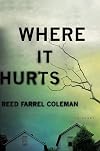
I’m a Reed Farrel Coleman mystery fan, especially the Moe Prager WhereItHurtsseries. So I was saddened when that series came to a sad but honest end. But Coleman has followed it up with a new protagonist, different but equally as good, Gus Murphy. While Moe was based in Brooklyn, Gus is based in Suffolk County, Long Island, much closer to my home and much more familiar, which always makes for fun reading.
Gus is ex-Suffolk County police. It’s been two years since his son suddenly died and show more Gus’ life has been a disaster. He dealt with bouts of depression. His marriage collapsed. His daughter, Kristy, once a ‘good girl’, has been acting up. He lives in the low class hotel for which he drives the van to and from the Long Island Railroad Station. Things really couldn’t get much more depressing.
When, an ex-con, Tommy Delcamino, who Murphy arrested several times, approaches him to find the killers of his lowlife, druggie son, TJ, because the police haven’t followed up on any leads, Murphy thinks he’s playing the ‘dead son’ card and tells him to fuck off. However, after ruminating over it and discussing it with his therapist, he realizes Delcamino had no one else to turn to. So, he decides to apologize to Delcamino for his insensitivity. However, arriving at his trailer, Murphy finds it tossed and Delcamino brutally murdered. So, of course, Murphy has no option but to pursue both Tommy and TJ’s murder. Being warned off by both policemen and drug dealers alike only reinforces Murphy’s resolve.
Murphy is a real person in the sense that he goes through a range of emotions. He’s lost his faith in God. He’s been wallowing in self pity for the past two years. And when his investigation seems to give him renewed life, he doesn’t understand it and finds it hard to swallow.
I particularly like Murphy’s cynicism regarding God and religion, the various inequities on Long Island, police corruption and life in general. His descriptions of various Long Island neighborhoods, the rich ones and the poor ones, is spot on, cynicism included. The ancillary characters are a mixed bunch, from honest to corrupt police, savage drug dealers, and folks down on their luck. All of this makes for good reading. I’m trying to think of who to compare Gus Murphy to, but can’t come up with anyone.
After reading the Moe Prager series, I read all of Coleman’s other series, which is probably something you should do. It won’t take long to read, but the enjoyment should keep going for a long time.
According to Coleman’s website, this is Book 1 of the Gus Murphy series. That’s good to know. It gives me something to look forward to. show less
Gus is ex-Suffolk County police. It’s been two years since his son suddenly died and show more Gus’ life has been a disaster. He dealt with bouts of depression. His marriage collapsed. His daughter, Kristy, once a ‘good girl’, has been acting up. He lives in the low class hotel for which he drives the van to and from the Long Island Railroad Station. Things really couldn’t get much more depressing.
When, an ex-con, Tommy Delcamino, who Murphy arrested several times, approaches him to find the killers of his lowlife, druggie son, TJ, because the police haven’t followed up on any leads, Murphy thinks he’s playing the ‘dead son’ card and tells him to fuck off. However, after ruminating over it and discussing it with his therapist, he realizes Delcamino had no one else to turn to. So, he decides to apologize to Delcamino for his insensitivity. However, arriving at his trailer, Murphy finds it tossed and Delcamino brutally murdered. So, of course, Murphy has no option but to pursue both Tommy and TJ’s murder. Being warned off by both policemen and drug dealers alike only reinforces Murphy’s resolve.
Murphy is a real person in the sense that he goes through a range of emotions. He’s lost his faith in God. He’s been wallowing in self pity for the past two years. And when his investigation seems to give him renewed life, he doesn’t understand it and finds it hard to swallow.
I particularly like Murphy’s cynicism regarding God and religion, the various inequities on Long Island, police corruption and life in general. His descriptions of various Long Island neighborhoods, the rich ones and the poor ones, is spot on, cynicism included. The ancillary characters are a mixed bunch, from honest to corrupt police, savage drug dealers, and folks down on their luck. All of this makes for good reading. I’m trying to think of who to compare Gus Murphy to, but can’t come up with anyone.
After reading the Moe Prager series, I read all of Coleman’s other series, which is probably something you should do. It won’t take long to read, but the enjoyment should keep going for a long time.
According to Coleman’s website, this is Book 1 of the Gus Murphy series. That’s good to know. It gives me something to look forward to. show less
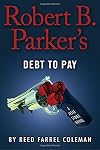
Well, I asked for it, I suppose. I grumbled in my review of the last Coleman outing, [The Devil Wins], that he didn't follow up in any way on the terrifying loose end he left at the conclusion of the first Jesse Stone novel he wrote, [Blind Spot]. He made up for it here, but man, I did not like it. I'm going to get spoilery here, and I'm not going to hide it, so if you think you're going to read this novel, maybe don't read any more of my review. Or maybe, if you love Jesse Stone, don't read show more this novel. I'm serious. Coleman has gone to places Parker would never have gone, and it isn't pretty. It looks to me like he means to discard just about everything that was distinctly Parker, and run his own Jesse Stone franchise without regard to the fundamentals. The only thing he seems to want to keep is Jesse's alcohol problem, and he's even changed the dynamics of that. The old Jesse never lied to himself about his addiction, nor to anyone else, really. Coleman preaches to us about how no drunk can be trusted not to lie to himself and deny he has a problem, and then he makes Jesse illustrate the sermon. This is not my Jesse Stone. What I loved about him was that he was not a typical drunk. He had a problem, he wrestled with it with varying degrees of success, we never expected him to completely lick it, but we were rooting for him. Coleman seems to want us not to care for his Jesse the way we cared for Parker's, and dammit, by the end of this novel I almost didn't. The story line here involves a sadistic killer who means to punish Jesse by hurting the people closest to him, starting with ex-wife Jenn, whose upcoming wedding is the perfect opportunity for revenge. I did not enjoy watching this psychopath torture and kill, and I felt Coleman was doing much the same thing to Parker's loyal readers--every time I saw a bad thing coming, and said "Oh, don't do that to him/her", he did it. Coleman has pretty much ignored Dix, one of my favorite characters, and implies that Jesse doesn't intend to see him anymore. He has eliminated Gino Fish (and I wonder how Ace Atkins is going to deal with that in the Spenser series he's writing), and put Captain Healey into an uncomfortable retirement. He got Luther shot again. He has given Jesse a new love, who was introduced a book ago, was mostly absent from the last one, but now turns up here as if their relationship has been going on and heating up behind our backs. She is a match for Jesse in almost every way, but Coleman senselessly kills her off, and leaves Jesse in guilt-ridden stuporous misery on the last page. I hate to give up Jesse, but I'm done with Coleman.
(I give the novel one star, only because I did think the Gino Fish episode rang true, and it happened early in the book, before the extent of the authorial treachery became apparent.) show less
(I give the novel one star, only because I did think the Gino Fish episode rang true, and it happened early in the book, before the extent of the authorial treachery became apparent.) show less
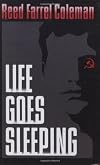
As you already know, I'm a fan of Reed Farrel Coleman, having just finished his Moe Prager series. His earlier series, Dylan Klein, consists of three books, the first being Life Goes Sleeping. Only Mr. Coleman can open a book at a funeral, make it funny and then lead you through a series of mysterious twists and turns, end up back at the cemetery a year later for a denouement and again make it funny.
It appears that Life Goes Sleeping is Mr. Coleman's first book and it's noticable. It's that show more whole international spy thing. I guess I'm just not buyiing it. BUT...the main reason I read Reed Farrel Coleman is for his words, use of language, humor, philosophy and these components are there in full force. His description of various relatives at his mother's funeral are outright funny. His description of Klein's friend and Sound Hill tavern owner, Johnny MacClough, and their friendship is something to write about. We all need friends like Johnny. Coleman's discussion of family, how Klein doesn't talk to his two brothers, wasn't that close to his parents, reeks of the reality of so many family dynamics. In Life Goes Sleeping, you see the hint of the later Reed Farrel Coleman, as he hones his craft.
The other reason I read Mr. Coleman is Brooklyn and Long Island, where his novels take place. Living in Roslyn, I was surprised to find the motel under the Roslyn viaduct make an appearance in Life Goes Sleeping, as do Hempstead Harbor and Glen Cove. My grandparents lived in Brighton Beach and Klein's description of the intersection of Brighton Beach Avenue and Coney Island Avenue and Ms. Stahl's Knishes (I used to go there as a kid) brought back wonderful memories. I can picture certain locales that are described in the book. That's always fun.
So, I encourage you to read Life Goes Sleeping and plot Mr. Coleman's growth as a writer. show less
It appears that Life Goes Sleeping is Mr. Coleman's first book and it's noticable. It's that show more whole international spy thing. I guess I'm just not buyiing it. BUT...the main reason I read Reed Farrel Coleman is for his words, use of language, humor, philosophy and these components are there in full force. His description of various relatives at his mother's funeral are outright funny. His description of Klein's friend and Sound Hill tavern owner, Johnny MacClough, and their friendship is something to write about. We all need friends like Johnny. Coleman's discussion of family, how Klein doesn't talk to his two brothers, wasn't that close to his parents, reeks of the reality of so many family dynamics. In Life Goes Sleeping, you see the hint of the later Reed Farrel Coleman, as he hones his craft.
The other reason I read Mr. Coleman is Brooklyn and Long Island, where his novels take place. Living in Roslyn, I was surprised to find the motel under the Roslyn viaduct make an appearance in Life Goes Sleeping, as do Hempstead Harbor and Glen Cove. My grandparents lived in Brighton Beach and Klein's description of the intersection of Brighton Beach Avenue and Coney Island Avenue and Ms. Stahl's Knishes (I used to go there as a kid) brought back wonderful memories. I can picture certain locales that are described in the book. That's always fun.
So, I encourage you to read Life Goes Sleeping and plot Mr. Coleman's growth as a writer. show less
Lists
to get (1)
Awards


You May Also Like


Associated Authors
Statistics
- Works
- 38
- Also by
- 23
- Members
- 3,770
- Popularity
- #6,722
- Rating
- 3.7
- Reviews
- 257
- ISBNs
- 247
- Languages
- 4
- Favorited
- 3

