
Donald E. Westlake (1933–2008)
Author of The Hunter
About the Author
Author Donald E. Westlake was born in Brooklyn, New York on July 12, 1933. He attended colleges in New York, but did not graduate. He wrote more than 100 novels and 5 screenplays throughout his lifetime. He also wrote under numerous pseudonyms including Richard Stark, Tucker Coe, and Samuel Holt. show more Almost 20 of his novels were adapted into films and he created the television series, The Father Dowling Mysteries. He is a three-time winner of the Edgar Award from the Mystery Writers of America and was nominated for an Academy Award for his screenplay for The Grifters. He was also named a Mystery Writers of America Grand Master in 1993. He died of a heart attack on December 31, 2008 at the age of 75. (Bowker Author Biography) Donald E. Westlake has won three Edgar Awards & was nominated for an Academy Award for Best Adapted Screenplay for "The Grifters". He lives in upstate New York. (Publisher Provided) show less
Image credit: Donald Westlake, in 2001
Series
Works by Donald E. Westlake
THE CURIOUS FACTS PRECEDING MY EXECUTION: You Put on Some Weight; Sniff; Good Night Good Night; Devilishly; Murder in Outer Space; No Story; The Sincerest Form of Flattery; Just… (1968) 49 copies, 1 review
galaxy 14 Auswahl der besten Stories aus dem Science Fiction Magazine Galaxy (1970) — Contributor — 5 copies
Galaxy 11 - Eine Auswahl der besten Stories aus dem Schience Fiction Magazine GALAXY (1968) — Contributor — 5 copies
The Winner 5 copies
Walking Around Money {story} 4 copies
DAS GANGSTERSYNDIKAT - 3 Kriminalromane : Das Gangstersyndikat / Der Wahrsager / Ich nicht, Inspektor! (1962) 3 copies
Horse Laugh and Other Stories 3 copies
Interstellar Pigeon 3 copies
Here's Looking at You 3 copies
Good Night! Good Night! 2 copies
GENDARMES ET Voleurs 2 copies
Short Science Fiction Collection 057 2 copies
Art and Craft 2 copies
Take It Away 2 copies
The World's a Stage 2 copies
Hitch Your Spaceship to a Star 2 copies
Nackles 2 copies
Skeeks 2 copies
Power Play 2 copies
El despido 1 copy
Now What? 1 copy
Fugue For Felons 1 copy
Le divan indiscret 1 copy
Sous pression 1 copy
De wreker 1 copy
Party Animal 1 copy
Las estatuas dolientes 1 copy
Uma Mulher sózinha 1 copy
Carrera messicana 1 copy
Fatti sotto, Parker! 1 copy
Jumble Sale 1 copy
Πως να κλέψετε μια τράπεζα 1 copy
O CASO DOS DIAMANTES NEGROS 1 copy
Apprentice Virgin 1 copy
Gutter Boy 1 copy
Sex Tripper 1 copy
A Midsummer Daydream 1 copy
The Question [short story] 1 copy
Dortmunder and Me in Short 1 copy
Ask a Silly Question 1 copy
Sin Prowl 1 copy
This is Death 1 copy
La pietra che scotta 1 copy
Place au gang ! 1 copy
Too much 1 copy
Parker The Outfit 1 copy
The Smashers 1 copy
O Pombo Fugitivo 1 copy
El gemelo singular 1 copy
Love in the Lean Years 1 copy
Starship Hopeful 1 copy
While I was gone 1 copy
E bravo Dortmunder 1 copy
Don't You Know There's a War On? — Author — 1 copy
Too Many Crooks 1 copy
Ordo (Rivages/Noir t. 221) 1 copy
Associated Works
The Best of Mystery: 63 Short Stories Chosen by the Master of Suspense (1982) — Contributor; Contributor — 428 copies
Great Detectives: A Century of the Best Mysteries from England and America (1984) — Contributor — 408 copies, 4 reviews
Writers on Writing, 2: More Collected Essays from the New York Times (2003) — Contributor — 202 copies, 3 reviews
Alfred Hitchcock Presents : A Hangman's Dozen (1962) — Contributor; Contributor — 160 copies, 3 reviews
The Perfect Murder: Five Great Mystery Writers Create the Perfect Crime (1991) — Contributor — 107 copies, 2 reviews
Alfred Hitchcock's Mystery Magazine Presents Fifty Years of Crime and Suspense (2006) — Contributor — 78 copies, 1 review
The World's Finest Mystery and Crime Stories: First Annual Collection (2000) — Contributor — 68 copies, 1 review
The World's Finest Mystery and Crime Stories: Second Annual Collection (2001) — Contributor — 57 copies, 1 review
A Taste of Murder: Diabolically Delicious Recipes from Contemporary Mystery Writers (1999) — Contributor — 48 copies, 1 review
Simply the Best Mysteries: Edgar Award Winners and Front-Runners (1998) — Contributor — 45 copies, 1 review
City Sleuths and Tough Guys: Crime Stories from Poe to the Present (1989) — Contributor — 32 copies, 1 review
Great American Ghost Stories Volume 1 (Anthology 16-in-1) (1992) — Contributor — 25 copies, 2 reviews
Tricks and Treats: An Anthology of Mystery Stories by the Mystery Writers of America (1976) — Contributor — 16 copies
Academy Mystery Novellas: Women Sleuths, Police Procedurals, Locked Room Puzzles, Great British Detectives (1991) — Contributor — 13 copies
The Year's 25 Finest Crime and Mystery Stories: Seventh Annual Edition (1998) — Contributor — 9 copies
The Year's 25 Finest Crime and Mystery Stories: Sixth Annual Edition (1997) — Contributor — 5 copies, 1 review
Crimes and Misfortunes: The Anthony Boucher Memorial Anthology of Mysteries — Contributor — 5 copies
Rod Serling's the Twilight Zone Magazine 1987 01 January-February — Contributor — 1 copy
Tagged
Common Knowledge
- Canonical name
- Westlake, Donald E.
- Legal name
- Westlake, Donald Edwin
- Other names
- Stark, Richard
Allan, John B.
Carmichael, Judson Jack
Clark, Curt
Coe, Tucker
Culver, Timothy J. (show all 12)
Cunningham, J. Morgan
Holt, Samuel
Lord, Sheldon
Marshall, Alan
West, Edwin
Westlake, Donald - Birthdate
- 1933-07-12
- Date of death
- 2008-12-31
- Gender
- male
- Education
- Harpur College, Binghamton, New York, USA
Champlain College, Plattsburgh, New York, USA - Occupations
- author
screenwriter - Organizations
- U. S. Air Force
- Awards and honors
- MWA Grand Master(1993)
Gumshoe Award(Lifetime Achievement ∙ 2008)
Shamus Award(The Eye for Lifetime Achievement ∙ 2004)
Bouchercon Lifetime Achievement Award (1997)
Edgar Award (3x) - Cause of death
- heart attack
- Nationality
- USA
- Birthplace
- Brooklyn, New York, USA
- Places of residence
- Manhattan, New York, New York, USA
Brooklyn, New York, New York, USA
Albany, New York, USA - Place of death
- San Tancho, Mexico
- Map Location
- New York, USA
Members
Reviews
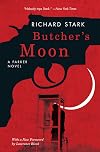
“Call him and ask him,” the voice said, “what you should do if you owe some money to a guy named Parker.”
Boom! And off we go! THE Parker book!!! Almost twice the length of the previous books!
Parker, with Grofield, are back at Fun Island Amusement Park to retrieve the money they left behind from the armored car heist in “Slayground”. The local ‘ boss’ , Lozini, is still there too, and he’s still mad! When things get heavy, Parker calls on an army of former “co-workers” show more - basically everyone who he’s pulled jobs with in the first 15 books! Well, everyone that’s still alive, that is...
I loved this book! It's like a greatest hits volume of the series up until that point! I'd reccommend reading the first 15 books before this, but it isn't totally neccessary. Unless, of course, you owe Parker money. Then, you'd better just pay him, as all previous stories have taught us. $73,000 in this book, or $45,000 in the first book. Just pay the man. It just ain't worth it not to...
“I’m only the messenger!”
“Now you’re the message,” Parker told him, and shot him.
THAT’S my Parker! show less
Boom! And off we go! THE Parker book!!! Almost twice the length of the previous books!
Parker, with Grofield, are back at Fun Island Amusement Park to retrieve the money they left behind from the armored car heist in “Slayground”. The local ‘ boss’ , Lozini, is still there too, and he’s still mad! When things get heavy, Parker calls on an army of former “co-workers” show more - basically everyone who he’s pulled jobs with in the first 15 books! Well, everyone that’s still alive, that is...
I loved this book! It's like a greatest hits volume of the series up until that point! I'd reccommend reading the first 15 books before this, but it isn't totally neccessary. Unless, of course, you owe Parker money. Then, you'd better just pay him, as all previous stories have taught us. $73,000 in this book, or $45,000 in the first book. Just pay the man. It just ain't worth it not to...
“I’m only the messenger!”
“Now you’re the message,” Parker told him, and shot him.
THAT’S my Parker! show less

Dortmunder falls into a convent full of silent nuns who, despite just about everything about him, see him as a Godsend, just the man they need to rescue their sister, kidnapped by her obscenely wealthy father and held for deprogramming on the top floor of a Manhattan skyscraper. This is not the sort of thing John does. It's not even the sort of thing John approves of, but he hatches a scheme and puts together a string and before you know it there's burgling and rescuing going on and show more everything might even work out for the best. Except the obscenely rich father is planning a coup in a South American country and figures the floor below the top floor is as good a place as any to keep his mercenary army for the weekend before flying them out. And that's what Dortmunder's got to get through to get to the nun and then back down through again to get her out, and soon the nun's rescuing John and everyone's rescuing each other and there's mercenaries and security guards and cops everywhere and a ton of loot and one nun and Dortmunder and pals all wondering who's going to rescue them.
All-time classic comedy crime caper. You cannot do better for lifting rainy-day blues. show less
All-time classic comedy crime caper. You cannot do better for lifting rainy-day blues. show less
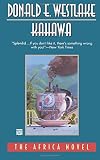
Westlake's big blockbuster commercial international thriller: a heist with aspects much too dark and horrible for Dortmunder but an adventure too exuberant and freewheeling for Parker; instead we get one of those unique Westlake creations full of sly humour and with but with horror and violence lurking not far into the shadows. Mercenaries and corrupt operators and ousted Asian businessmen conspire to rob Idi Amin of a train full of coffee. It's a big, complex operation full of many moving show more parts with plenty of opportunities for betrayal and setbacks and a nasty price to pay when things do go wrong. Fantastic characters, intricate plotting, hair-raising situtations and unusually, for Westlake, graphic sex, all combine in a pot-boiler executed with rare craft and competency. show less

"The Hook" is a clever and amusing work that seems like it could have been as much fun to write as it is to read. It features two writers of fiction who make a Faustian deal that gets the better of them. Bryce Proctorr is a successful author with a bad case of writer's block, not to mention a trophy wife who is taking him for all she can get in their pending divorce. Wayne Prentice is a fading author who can't interest publishers in his manuscripts. Bryce offers a deal: if Wayne gives him is show more unpublished manuscript, he'll publish it under his own name, and the two can split the profits. But there's a catch: Wayne also has to murder Bryce's soon-to-be ex wife.
Things go right, up to a point, and then they go very wrong -- the plan was a good one, but didn't take into account the flaws and peculiarities in the two protagonists. To say more would ruin the story, but suffice to say that the ending -- five chilling words -- is both shocking and funny.
The similarity to Highsmith's "Strangers on a Train" is purposeful, and gives the tale a Hitchcockian flavor, but with elements of wit. Westlake has fun with his two main characters; they are (in effect) two sides of same coin, or better still, represent the two personas that each struggling writer wrestles with. The characters have similar names (Proctorr and Prentice), and tongue-in-cheek hints to their twinness abound, e.g., with titles of their past books ("The Two Faces in the Mirror," "The Shadowed Other," "The Domino Doublet, "An Only Twin," "Two of a Kind," and "The Pollux Perspective.").
Westfall is a novelist that I've only recently sampled, but he is now on my list of popular writers not to miss. show less
Things go right, up to a point, and then they go very wrong -- the plan was a good one, but didn't take into account the flaws and peculiarities in the two protagonists. To say more would ruin the story, but suffice to say that the ending -- five chilling words -- is both shocking and funny.
The similarity to Highsmith's "Strangers on a Train" is purposeful, and gives the tale a Hitchcockian flavor, but with elements of wit. Westlake has fun with his two main characters; they are (in effect) two sides of same coin, or better still, represent the two personas that each struggling writer wrestles with. The characters have similar names (Proctorr and Prentice), and tongue-in-cheek hints to their twinness abound, e.g., with titles of their past books ("The Two Faces in the Mirror," "The Shadowed Other," "The Domino Doublet, "An Only Twin," "Two of a Kind," and "The Pollux Perspective.").
Westfall is a novelist that I've only recently sampled, but he is now on my list of popular writers not to miss. show less
Lists
Awards


You May Also Like


Associated Authors
Statistics
- Works
- 270
- Also by
- 105
- Members
- 27,968
- Popularity
- #726
- Rating
- 3.8
- Reviews
- 896
- ISBNs
- 1,486
- Languages
- 18
- Favorited
- 92

