
Barbara Hambly
Author of Children of the Jedi
About the Author
Series
Works by Barbara Hambly
The Darwath Series: The Time of the Dark, The Walls of Air, and The Armies of Daylight (1984) 129 copies, 4 reviews
The Sun Wolf and Starhawk Series: The Ladies of Mandrigyn, The Witches of Wenshar, and The Dark Hand of Magic (2013) 72 copies
Anne Steelyard and The Garden of Emptiness, Act II: The Gate of Dreams and Starlight (2009) 13 copies
Der Zauberturm * Der Megabyte Magier * Das Dämonentor * (Die Chroniken von Windrose Bände 1-3) (1999) 6 copies
Each Damp Thing 2 copies
Changeling {short story} 1 copy
Repossession 1 copy
fantasy 1 copy
Associated Works
Night's Edge (Her Best Enemy | Someone Else's Shadow | Dancers in the Dark) (2004) — Contributor — 672 copies, 19 reviews
Chicks Unravel Time: Women Journey Through Every Season of Doctor Who (2012) — Contributor — 103 copies, 3 reviews
My Sherlock Holmes: Untold Stories of the Great Detective (2003) — Contributor — 99 copies, 1 review
Shapers of Worlds Volume II: Science fiction and fantasy by authors featured on The Worldshapers podcast (2021) — Contributor — 9 copies
Tagged
Common Knowledge
- Other names
- Hamilton, Barbara
- Birthdate
- 1951-08-28
- Gender
- female
- Education
- University of California, Riverside (MA|Medieval History)
- Occupations
- novelist
- Organizations
- Science Fiction and Fantasy Writers of America (SFWA, past President)
- Awards and honors
- Guest of Honour, Eastercon, UK (1994)
Romantic Times Career Achievement Award (Historical Mystery ∙ 2004)
Lord Ruthven award (1996) - Relationships
- Effinger, George Alec (spouse) (divorced)
- Short biography
- Black belt in Shotokan karate.
- Nationality
- USA
- Birthplace
- San Diego, California, USA
- Places of residence
- Montclair, California, USA
Los Angeles, California, USA
Bordeaux, Gironde, Nouvelle-Aquitaine, France - Associated Place (for map)
- California, USA
Members
Discussions
Vampire seeks help of Englishman with red haired wife in Name that Book (January 2020)
Standalone Group Read - January - Stranger at the Wedding / Sorcerer's Ward by Barbara Hambly in The Green Dragon (May 2015)
MARCH - SPOILERS - A Free Man of Color in The Green Dragon (March 2014)
MARCH - NO SPOILERS - A Free Man of Color in The Green Dragon (March 2014)
Star Trek Spocks mothers family in Name that Book (December 2012)
Fantasy - homeless man and fairies after calamity in Name that Book (July 2011)
evil wizard plots to live forever as a computer? in Name that Book (February 2009)
Reviews
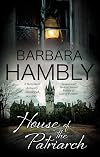
I arrived late to Barbara Hambly's Benjamin January historical mystery series. I've only read volumes 17 and 18. Seventeen (Lady of Perdition) was good, but was set up as a Western, which just isn't my genre of choice, so while I enjoyed it, I wasn't sure if I was sold on the series. Volume 18 (House of the Patriarch) has answered that question. I'm going back to read the series from the beginning.
Benjamin January is a free man of color living in pre-Civil War New Orleans. Trained as a show more surgeon, but also a fine musician, he makes his living giving music lessons, since it is impossible for him to work as a surgeon as a black man. When he does offer medical advice, he has to couch it in phrases like "I was once the valet for a surgeon, and he...." He gets angry a lot. There's no way to take the treatment he faces with equanimity. His wife, a scientist, runs their home as a boarding school for young women of not-quite-top-tier young women whose families are willing to give them an education beyond dancing and embroidery and provides special effects for a local theatre.
The plots are good. But what I most appreciate—if that's the world—is spending time in January's shoes. As a free black man, his freedoms are very limited. He cannot testify in court. If he attacks a white man, that's a hanging offense, regardless of what preceded the attack. And any time he travels away from home, he must be continuously on the lookout for "blackbirders." Toughs who make their money seizing blacks from the street—free or not—and selling them into (or back into) slavery. With many clients, he also has to do a lot of work to meet the social norms of the time. Even with clients who privately treat him as an equal, he has to pass as a slave in public. As I said, he gets angry.
I recommend this series for anyone who reads historical mysteries. It will pull you into a time and a role that can change the way you see the world. Particularly now, when we are living in the era of Black Lives Matter, we need to see what life is like when one is marked and treated as inferior on a daily basis.
I received a free electronic review copy of this book from the publisher via NetGalley. The opinions are my own. show less
Benjamin January is a free man of color living in pre-Civil War New Orleans. Trained as a show more surgeon, but also a fine musician, he makes his living giving music lessons, since it is impossible for him to work as a surgeon as a black man. When he does offer medical advice, he has to couch it in phrases like "I was once the valet for a surgeon, and he...." He gets angry a lot. There's no way to take the treatment he faces with equanimity. His wife, a scientist, runs their home as a boarding school for young women of not-quite-top-tier young women whose families are willing to give them an education beyond dancing and embroidery and provides special effects for a local theatre.
The plots are good. But what I most appreciate—if that's the world—is spending time in January's shoes. As a free black man, his freedoms are very limited. He cannot testify in court. If he attacks a white man, that's a hanging offense, regardless of what preceded the attack. And any time he travels away from home, he must be continuously on the lookout for "blackbirders." Toughs who make their money seizing blacks from the street—free or not—and selling them into (or back into) slavery. With many clients, he also has to do a lot of work to meet the social norms of the time. Even with clients who privately treat him as an equal, he has to pass as a slave in public. As I said, he gets angry.
I recommend this series for anyone who reads historical mysteries. It will pull you into a time and a role that can change the way you see the world. Particularly now, when we are living in the era of Black Lives Matter, we need to see what life is like when one is marked and treated as inferior on a daily basis.
I received a free electronic review copy of this book from the publisher via NetGalley. The opinions are my own. show less
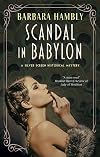
British widow Emma Blackstone has found herself in Hollywood as a companion to her sister-in-law Kitty Flint aka Camille de la Rose. Kitty is a movie actress and Emma makes herself useful caring for Kitty's three Pekinese, balancing her checkbook, and writing some of the scripts for Kitty's movies.
While living in Hollywood in 1924 wasn't what the scholarly young woman from Oxford had in her future plans, the deaths of her husband in World War I and her brother in England of grave wounds he show more suffered during the war, and the loss of her parents in the flu epidemic along with her own case of the flu changed all of her plans.
After a horrible stint as a companion for a woman in England, being swept off to Hollywood by Kitty was a welcome change. She enjoys riding herd on her free-spirited sister-in-law and helping to hide all of her romantic relationships from the press and her powerful lovers. She has even developed a friendship of her own with cameraman Zal Rokatansky. But things get complex in a hurry when Kitty's maybe-ex husband Rex Festraw is found shot to death in Kitty's dressing room.
The studio wants this covered up. They don't want to lose their star to a prison sentence, but Kitty isn't saying where she was during the crucial time period when Rex was shot. Emma wants to figure out who killed Rex and who is trying to frame Kitty for the crime. With the help of Zal and a mobster imported from New York, Emma is on the case despite being run off the road and shot at.
This was an excellent historical mystery set in a very glamorous time period and setting. I liked that Emma could see the underbelly of the world she was living in. I liked that she was smart and a nice person. I liked the conflict she was facing about whether to stay in Hollywood or accept her aunt's invitation to return to Oxford and the life she left behind. show less
While living in Hollywood in 1924 wasn't what the scholarly young woman from Oxford had in her future plans, the deaths of her husband in World War I and her brother in England of grave wounds he show more suffered during the war, and the loss of her parents in the flu epidemic along with her own case of the flu changed all of her plans.
After a horrible stint as a companion for a woman in England, being swept off to Hollywood by Kitty was a welcome change. She enjoys riding herd on her free-spirited sister-in-law and helping to hide all of her romantic relationships from the press and her powerful lovers. She has even developed a friendship of her own with cameraman Zal Rokatansky. But things get complex in a hurry when Kitty's maybe-ex husband Rex Festraw is found shot to death in Kitty's dressing room.
The studio wants this covered up. They don't want to lose their star to a prison sentence, but Kitty isn't saying where she was during the crucial time period when Rex was shot. Emma wants to figure out who killed Rex and who is trying to frame Kitty for the crime. With the help of Zal and a mobster imported from New York, Emma is on the case despite being run off the road and shot at.
This was an excellent historical mystery set in a very glamorous time period and setting. I liked that Emma could see the underbelly of the world she was living in. I liked that she was smart and a nice person. I liked the conflict she was facing about whether to stay in Hollywood or accept her aunt's invitation to return to Oxford and the life she left behind. show less

One of my favorite fantasy series begins with Barbara Hambly's Dragonsbane. Here's the basic plot: John Aversin is the only man who's ever slain a dragon. He lives in the remote Winterlands, leader of a people struggling on the outskirts of the kingdom. Gareth shows up unexpectedly, a young prince from the king's court, seeking help against a dragon that has seized part of the city. It's not an easy task for Gareth to convince John -and his wife Jenny, a half-trained witch- to return with show more him, and when they do get there, things quickly get complicated. The court is riddled with perfidy and corruption. The Gnomes- a separate race of oppressed people, owners of the area now held by the dragon- are in the middle of a revolt. It seems that John and Jenny will never even get near the dragon, but when they finally do, that encounter is nothing like they'd expected, either.
Hambly is one of those amazing storytellers I never tire of reading again and again. I love how realistic everything in this novel feels, even though it's fantasy. The characters all struggle with personal issues. I love the fact that John is something of a self-taught philosopher, always dabbling in old books, searching for archaic knowledge, curious about inventions and how things work. Jenny wrestles with trying to pursue her art of witchcraft, a dedication which usually takes up a person's life entirely, while at the same time raising a family. Even Gareth turns out to be a sympathetic character, though at first he comes off as just a spoiled brat. Another really intriguing thing about the story is all its unexpected turns. Gareth didn't expect to find his hero standing in a pigpen of mud when he arrived in the Winterlands, and it really throws him for a while. John is dismayed to find the court full of conniving elite who don't really care about the dragon- but I love how he handles it! Jenny didn't foresee being able to communicate with the dragon, much less that it would make her a tempting offer, in bargain for its life, one of the most fascinating parts of the story... Well, all I can say is that if you like fantasy, particularly dragon books, I highly recommend this one!
from the Dogear Diary show less
Hambly is one of those amazing storytellers I never tire of reading again and again. I love how realistic everything in this novel feels, even though it's fantasy. The characters all struggle with personal issues. I love the fact that John is something of a self-taught philosopher, always dabbling in old books, searching for archaic knowledge, curious about inventions and how things work. Jenny wrestles with trying to pursue her art of witchcraft, a dedication which usually takes up a person's life entirely, while at the same time raising a family. Even Gareth turns out to be a sympathetic character, though at first he comes off as just a spoiled brat. Another really intriguing thing about the story is all its unexpected turns. Gareth didn't expect to find his hero standing in a pigpen of mud when he arrived in the Winterlands, and it really throws him for a while. John is dismayed to find the court full of conniving elite who don't really care about the dragon- but I love how he handles it! Jenny didn't foresee being able to communicate with the dragon, much less that it would make her a tempting offer, in bargain for its life, one of the most fascinating parts of the story... Well, all I can say is that if you like fantasy, particularly dragon books, I highly recommend this one!
from the Dogear Diary show less
Drinking Gourd: A Benjamin January historical mystery (A Benjamin January Mystery) by Barbara Hambly
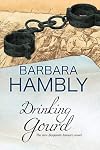
Once again, a one-sitting read from Barbara Hambly.
Ben is called to Vicksburg, where the Underground Railroad is in need of a surgeon. So off Ben goes, accompanied by Hannibal - necessary protection for a black man in that time and place.
Like many of the books in this series, particularly the later ones, the morality/ethics of the situations in which the characters find themselves are almost more important than the murder-mystery. This is one of the reasons why I think the series as a whole show more is so good.
Hambly does not write characters who are wholly good or wholly bad (except maybe Ben!), but instead shows the more realistic situation - even "good" people do bad things, and "bad" people do good things. That being the case, how many bad things can a "good" person do before he becomes a "bad" person? And what about the people who know what that person is doing, but don't stop him or her? Does standing by make you complicit?
Then, of course, there is today's regrettable tendency to put people in a simple hierarchy, from top to bottom, starting from the most powerful and going down to the least. Hambly demonstrates that power is multifaceted - a person who is in a fortunate, powerful position in some ways, may not be in others. Furthermore, a person's position on the greasy pole may be dictated just as much by who they know - and how much they are valued by those people - as who they are.
Ethics and morality are rather complicated concepts in the real world, where there are no perfect people, or perfect choices. And Ben, too, has to confront the fact that his and Rose's own relatively happy and secure situation in New Orleans means that he often just isn't faced with the difficult choices that others have to make on a daily basis. show less
Ben is called to Vicksburg, where the Underground Railroad is in need of a surgeon. So off Ben goes, accompanied by Hannibal - necessary protection for a black man in that time and place.
Like many of the books in this series, particularly the later ones, the morality/ethics of the situations in which the characters find themselves are almost more important than the murder-mystery. This is one of the reasons why I think the series as a whole show more is so good.
Hambly does not write characters who are wholly good or wholly bad (except maybe Ben!), but instead shows the more realistic situation - even "good" people do bad things, and "bad" people do good things. That being the case, how many bad things can a "good" person do before he becomes a "bad" person? And what about the people who know what that person is doing, but don't stop him or her? Does standing by make you complicit?
Then, of course, there is today's regrettable tendency to put people in a simple hierarchy, from top to bottom, starting from the most powerful and going down to the least. Hambly demonstrates that power is multifaceted - a person who is in a fortunate, powerful position in some ways, may not be in others. Furthermore, a person's position on the greasy pole may be dictated just as much by who they know - and how much they are valued by those people - as who they are.
Ethics and morality are rather complicated concepts in the real world, where there are no perfect people, or perfect choices. And Ben, too, has to confront the fact that his and Rose's own relatively happy and secure situation in New Orleans means that he often just isn't faced with the difficult choices that others have to make on a daily basis. show less
Lists
Books Read in 2013 (11)
SFFCat 2015 (1)
Sense of place (1)
Tagged Doctors (1)
Epistolary Books (1)
Comfort Reads (1)
Favourite Books (1)
Gaslamp Fantasy (1)
al.vick-series (1)
music to my eyes (1)
Books Read in 2015 (11)
Urban Fiction (2)
Read in 2014 (3)
Female Author (3)
Horror Books (2)
Autumn books (1)
Five star books (1)
Read in 2003 (2)
1990s Star Wars (2)
Guilty Pleasures (2)
Opera in fiction (1)
Awards


You May Also Like


Associated Authors
Statistics
- Works
- 142
- Also by
- 26
- Members
- 35,884
- Popularity
- #522
- Rating
- 3.7
- Reviews
- 584
- ISBNs
- 600
- Languages
- 10
- Favorited
- 92

