
Louise Penny
Author of Still Life
About the Author
Louise Penny was born in Toronto, Canada in 1958. She earned a Bachelor of Applied Arts (Radio and Television) from Ryerson Polytechnical Institute (now Ryerson University) in 1979. Before she turned to writing mystery novels in 2004, she was a journalist and radio host for the Canadian show more Broadcasting Corporation in various cities across Canada for 25 years. She writes the Chief Inspector Gamache Novel series. She has won numerous awards including the New Blood Dagger, Arthur Ellis, Barry, Anthony, and Dilys awards for Still Life and the 2007 Agatha Award for Best Novel for A Fatal Grace. Louise's title, The Long Way Home, made the Hot Mystery Title's List for Summer 2014. Her titles The Nature of the Beast made The New York Times best seller list in 2015 and A Great Reckoning made The New York Times best seller list in 2016. (Bowker Author Biography) show less
Image credit: Louise Penny on 2022
Series
Works by Louise Penny
Brutal Telling & Bury Your Dead 2 copies
Associated Works
The Mystery Writers of America Cookbook: Wickedly Good Meals and Desserts to Die For (2015) — Contributor — 142 copies, 20 reviews
Tagged
Common Knowledge
- Birthdate
- 1958-07-01
- Gender
- female
- Education
- Ryerson Polytechnical Institute (BA|Radio and Television)
- Occupations
- journalist
radio host
mystery novelist - Agent
- Teresa Chris
- Short biography
- I'd like to tell you a little bit about myself. I was born in Toronto in 1958 and became a journalist and radio host with the Canadian Broadcasting Corporation, specializing in hard news and current affairs. My first job was in Toronto and then moved to Thunder Bay at the far tip of Lake Superior, in Ontario. It was a great place to learn the art and craft of radio and interviewing, and listening. That was the key. A good interviewer rarely speaks, she listens. Closely and carefully. I think the same is true of writers.
From Thunder Bay I moved to Winnipeg to produce documentaries and host the CBC afternoon show. It was a hugely creative time with amazingly creative people. But I decided I needed to host a morning show, and so accepted a job in Quebec City. The advantage of a morning show is that it has the largest audience, the disadvantage is having to rise at 4am.
But Quebec City offered other advantages that far outweighed the ungodly hour. It's staggeringly beautiful and almost totally French and I wanted to learn. Within weeks I'd called Quebecers 'good pumpkins', ordered flaming mice in a restaurant, for dessert naturally, and asked a taxi driver to 'take me to the war, please.' He turned around and asked 'Which war exactly, Madame?' Fortunately elegant and venerable Quebec City has a very tolerant and gentle nature and simply smiled at me.
From there the job took me to Montreal, where I ended my career on CBC Radio's noon programme.
In my mid-thirties the most remarkable thing happened. I fell in love with Michael, the head of hematology at the Montreal Children's Hospital. He'd go on to hold the first named chair in pediatric hematology in Canada, something I take full credit for, out of his hearing.
It's an amazing and blessed thing to find love later in life. It was my first marriage and his second. He'd lost his first wife to cancer a few years earlier and that had just about killed him. Sad and grieving we met and began a gentle and tentative courtship, both of us slightly fearful, but overcome with the rightness of it. And overcome with gratitude that this should happen to us and deeply grateful to the family and friends who supported us.
Eleven years later we live in an old United Empire Loyalist brick home in the country, surrounded by maple woods and mountains and smelly dogs.
There are times when I'm in tears writing. Not because I'm so moved by my own writing, but out of gratitude that I get to do this. In my life as a journalist I covered deaths and accidents and horrible events, as well as the quieter disasters of despair and poverty. Now, every morning I go to my office, put the coffee on, fire up the computer and visit my imaginary friends, Gamache and Beauvoir and Clara and Peter. What a privilege it is to write. I hope you enjoy reading the books as much as I enjoy writing them. - Nationality
- Canada
- Birthplace
- Toronto, Ontario, Canada
- Places of residence
- Québec City, Québec, Canada
Thunder Bay, Ontario, Canada
Winnipeg, Manitoba, Canada
Montréal, Québec, Canada
Knowlton, Canada - Map Location
- Ontario, Canada
Members
Discussions
Spoiler Thread Bury Your Dead by Louise Penny Spoiler Thread in 75 Books Challenge for 2010 (July 2023)
Has anyone listened to How the Light Gets In by Louise Penny? in Audiobooks (September 2013)
Reviews
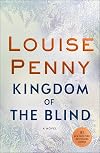
A mysterious letter summons Armand Gamache to an abandoned farmhouse, where he and two other people discover they have been named executors for the will of a woman whom none of them knew. Why did she leave them this task, rather than entrusting it to her adult children? Did she really have enough money for the bequests listed? What kinds of secrets are lurking in this family? At the same time, Gamache is still under suspension, and the investigation is taking a long time to wrap up, leading show more Beauvoir to suspect that there is a political angle to it. Gamache is being made a scapegoat, and those around him are being offered easy ways out of the blame parade.
It would probably help to have read Glass Houses before this one, although I hadn't read it for over a year and was still able to figure out what was going on. The book is skilfully constructed, with information being presented in ways that lead to a real "aha!" moment once the perspective changes. As always, I laughed out loud at moments from Beauvoir (being in his head is always amusing), and the descriptions of food are perfectly delicious. The storyline related to Glass Houses is pretty dark, so those who like their mysteries on the lighter, cozier side may have a harder time with this one. That said, this is a solid entry in the series, and a book that Penny herself was not expecting to have written. Perhaps that lends it even more emotional richness. show less
It would probably help to have read Glass Houses before this one, although I hadn't read it for over a year and was still able to figure out what was going on. The book is skilfully constructed, with information being presented in ways that lead to a real "aha!" moment once the perspective changes. As always, I laughed out loud at moments from Beauvoir (being in his head is always amusing), and the descriptions of food are perfectly delicious. The storyline related to Glass Houses is pretty dark, so those who like their mysteries on the lighter, cozier side may have a harder time with this one. That said, this is a solid entry in the series, and a book that Penny herself was not expecting to have written. Perhaps that lends it even more emotional richness. show less

"Dead Cold" (published in the US under the less pleasingly ambiguous and less accurate title of "A Fatal Grace") surprised me by being qualitatively very different from "Still Life", the first book in the series.
"Still Life" was a comforting, almost wistful, book in which a wise detective gently unravels the deceptions hiding a murder and, in the process, falls in love with the village of Three Pines and its inhabitants.
"Dead Cold" takes us back to Three Pines and the villagers who brought show more the last book to life. It captures their reactions to CeeCee, a new arrival so cold and cruel, that when she dies a dreadful death the village almost celebrates, as if a house had just landed on the Wicked Witch of the West. Once again, Chief Inspector Gamache is called to Three Pines to discover the murderer.
Despite having the same setting and characters as "Still Life" and a similarly complex plot, rolled out with at a similarly leisurely pace with regular pauses for food and philosophical reflection, "Dead Cold" sets off in a new direction. It sets this direction in a beautiful and compelling way, but I found the direction itself hard to accept.
As Chief Inspector Gamache says more than once, this case is about our beliefs and how they shape our actions and define our lives. In this book, the characters hunt not only for a murderer but for the numinous. Psalm 46 is quoted repeatedly
"Be still and know that I am God"
Gamache and a number of the other characters in the book actively seek the presence of God to provide them with direction or purpose. The God is not necessarily a Christian God. There is a nod towards other religions, including a translation of the traditional Indian greeting, Namaste, as "The God in me greets the God in you." Leonard Cohen is also enlisted in the search for the numinous, with a quote from the lyrics of Anthem:
"Forget your perfect offering
There is a crack in everything
That's how the light gets in."
Light becomes central to the discussion of the divine and the language used in the book is often truly luminous, glowing with beauty and joy. The passage in which Clara's painting of "The Three Grace's" is described is wonderful as are some of the physical descriptions of Three Pines.
Despite the beauty of the language and the skill of the exposition, I struggled with the strong influence of the divine in this book. At times, I felt as if I had wandered into a modern allegory, exploring a seeker's path through the tribulations a long life, rather than a murder mystery.
The struggle arose partly from my expectation that I WAS reading a murder mystery and not a parable and partly because I am so deeply unconvinced by the possibility of the personal experience of God in my Louise Penny led.
I resolved the struggle by accepting that I WASN'T reading a murder mystery but rather a novel that seeks to illustrate the possibility of belief as a source of good or evil that has a real impact on who we become. I allowed that the characters described here sincerely believe in the existence of the God they seek and the Three Pines is more than a place, it is an aspiration for what a community should be.
Taken on these terms, "Dead Cold" became a delightful read with a murder mystery and a little internal Police political intrigue added as seasoning.
I ended the book feeling glad that I'd heard Louise Penny's unique voice and wondering what intent is driving this series.
Adam Sims did a great job narrating "Dead Cold". Click on the SoundCloud link below to hear a sample.
[soundcloud url="https://api.soundcloud.com/tracks/138..." params="color=#ff5500&auto_play=false&hide_related=false&show_comments=true&show_user=true&show_reposts=false&show_teaser=true&visual=true" width="100%" height="300" iframe="true" /] show less
"Still Life" was a comforting, almost wistful, book in which a wise detective gently unravels the deceptions hiding a murder and, in the process, falls in love with the village of Three Pines and its inhabitants.
"Dead Cold" takes us back to Three Pines and the villagers who brought show more the last book to life. It captures their reactions to CeeCee, a new arrival so cold and cruel, that when she dies a dreadful death the village almost celebrates, as if a house had just landed on the Wicked Witch of the West. Once again, Chief Inspector Gamache is called to Three Pines to discover the murderer.
Despite having the same setting and characters as "Still Life" and a similarly complex plot, rolled out with at a similarly leisurely pace with regular pauses for food and philosophical reflection, "Dead Cold" sets off in a new direction. It sets this direction in a beautiful and compelling way, but I found the direction itself hard to accept.
As Chief Inspector Gamache says more than once, this case is about our beliefs and how they shape our actions and define our lives. In this book, the characters hunt not only for a murderer but for the numinous. Psalm 46 is quoted repeatedly
"Be still and know that I am God"
Gamache and a number of the other characters in the book actively seek the presence of God to provide them with direction or purpose. The God is not necessarily a Christian God. There is a nod towards other religions, including a translation of the traditional Indian greeting, Namaste, as "The God in me greets the God in you." Leonard Cohen is also enlisted in the search for the numinous, with a quote from the lyrics of Anthem:
"Forget your perfect offering
There is a crack in everything
That's how the light gets in."
Light becomes central to the discussion of the divine and the language used in the book is often truly luminous, glowing with beauty and joy. The passage in which Clara's painting of "The Three Grace's" is described is wonderful as are some of the physical descriptions of Three Pines.
Despite the beauty of the language and the skill of the exposition, I struggled with the strong influence of the divine in this book. At times, I felt as if I had wandered into a modern allegory, exploring a seeker's path through the tribulations a long life, rather than a murder mystery.
The struggle arose partly from my expectation that I WAS reading a murder mystery and not a parable and partly because I am so deeply unconvinced by the possibility of the personal experience of God in my Louise Penny led.
I resolved the struggle by accepting that I WASN'T reading a murder mystery but rather a novel that seeks to illustrate the possibility of belief as a source of good or evil that has a real impact on who we become. I allowed that the characters described here sincerely believe in the existence of the God they seek and the Three Pines is more than a place, it is an aspiration for what a community should be.
Taken on these terms, "Dead Cold" became a delightful read with a murder mystery and a little internal Police political intrigue added as seasoning.
I ended the book feeling glad that I'd heard Louise Penny's unique voice and wondering what intent is driving this series.
Adam Sims did a great job narrating "Dead Cold". Click on the SoundCloud link below to hear a sample.
[soundcloud url="https://api.soundcloud.com/tracks/138..." params="color=#ff5500&auto_play=false&hide_related=false&show_comments=true&show_user=true&show_reposts=false&show_teaser=true&visual=true" width="100%" height="300" iframe="true" /] show less
Rating: 4.875* of five
The Book Report: At the end of [Bury Your Dead], Clara Morrow learned some news that sets in motion the plot of this latest Gamache-in-Three-Pines book. It is the kind of news that leads a person to plan a big, exciting party in her back garden, inviting tout le monde to share food and drink. The party was a smashing success, that is, until the next morning: Peter and Olivier are returning from a very important errand when their return is interrupted by the discovery of show more a body in the garden. Ye gods and little fishes! Murder is, as Inspector Jean-Guy Beauvoir says, "a cottage industry" in Three Pines. It's a woman, dressed to thrill in a neon-red dress...and it's a woman well-known to Clara and Peter, a horrible memory buried in their shared past. Lillian Dyson, the victim, is a terrible, terrible person, a tornado in the lives of others, a destroyer without a creative bone, or so she was when Clara and Peter knew her. She found her way to obscure little Three Pines, and Clara, by means unknown and for motives unclear.
What Gamache does is, as always, slow and patient and meticulous: He talks, asks, and listens carefully to everyone he can find. (His discoveries about the dead bitch...I mean, the victim...are such that I, for one, was damned good and glad she was dead.) He thinks his fast-moving thoughts. He worries about those he loves more in this book than in any previous one (and for good reason). He makes his discoveries with a sense of triumphant gloom, a species of miserable rightness that is Penny's most enduring gift to the mystery genre. He isn't defeated by his sadness over human nature, but he is weighed down by his knowledge of what hearts can contain and what eyes can conceal.
When, in the end, the devil of a killer is caught, I was SO HAPPY I CHEERED (to the dismay of my previously sleeping housemates), and was also reminded yet again that no one is safe in the Pennyverse. Another example of this truth is the union of Clara and Peter, which ends this installment of the series in very serious peril; the cracks and fissures in the characters of each spouse are, at last and under the pressure of extreme events, forced to the surface. The end of this book is, naturellement, the set-up for the next. However fast La Penny writes, it's torturously slow from the PoV of the Three-Pinesians like me.
My Review: Joyously returning to Three Pines. It's like going to my oldest friend's house for a Scotch. Much chat, no sense of hurry or rush, but the ever-mounting urgency of sharing the news and hearing the news and expressing the passing thought and sometimes, unexpectedly, sharing a memory that makes us go quiet and pensive, makes time zip past and the minutes seem unending.
Just marvelous. I want more. show less
The Book Report: At the end of [Bury Your Dead], Clara Morrow learned some news that sets in motion the plot of this latest Gamache-in-Three-Pines book. It is the kind of news that leads a person to plan a big, exciting party in her back garden, inviting tout le monde to share food and drink. The party was a smashing success, that is, until the next morning: Peter and Olivier are returning from a very important errand when their return is interrupted by the discovery of show more a body in the garden. Ye gods and little fishes! Murder is, as Inspector Jean-Guy Beauvoir says, "a cottage industry" in Three Pines. It's a woman, dressed to thrill in a neon-red dress...and it's a woman well-known to Clara and Peter, a horrible memory buried in their shared past. Lillian Dyson, the victim, is a terrible, terrible person, a tornado in the lives of others, a destroyer without a creative bone, or so she was when Clara and Peter knew her. She found her way to obscure little Three Pines, and Clara, by means unknown and for motives unclear.
What Gamache does is, as always, slow and patient and meticulous: He talks, asks, and listens carefully to everyone he can find. (His discoveries about the dead bitch...I mean, the victim...are such that I, for one, was damned good and glad she was dead.) He thinks his fast-moving thoughts. He worries about those he loves more in this book than in any previous one (and for good reason). He makes his discoveries with a sense of triumphant gloom, a species of miserable rightness that is Penny's most enduring gift to the mystery genre. He isn't defeated by his sadness over human nature, but he is weighed down by his knowledge of what hearts can contain and what eyes can conceal.
When, in the end, the devil of a killer is caught, I was SO HAPPY I CHEERED (to the dismay of my previously sleeping housemates), and was also reminded yet again that no one is safe in the Pennyverse. Another example of this truth is the union of Clara and Peter, which ends this installment of the series in very serious peril; the cracks and fissures in the characters of each spouse are, at last and under the pressure of extreme events, forced to the surface. The end of this book is, naturellement, the set-up for the next. However fast La Penny writes, it's torturously slow from the PoV of the Three-Pinesians like me.
My Review: Joyously returning to Three Pines. It's like going to my oldest friend's house for a Scotch. Much chat, no sense of hurry or rush, but the ever-mounting urgency of sharing the news and hearing the news and expressing the passing thought and sometimes, unexpectedly, sharing a memory that makes us go quiet and pensive, makes time zip past and the minutes seem unending.
Just marvelous. I want more. show less
At the end of the last book, Jean Guy Beauvoir walked away from Inspector Gamache to follow after his addictions and Chief Superintendent Sylvain Francour. As the Christmas season gets closer, Gamache's department has been completely decimated and only Isabel Lacoste is left standing with him. Meanwhile, Myrna Landers calls from Three Pines when a friend of hers goes missing.
I finished this book two days ago, but just couldn't bring myself to review it right away. This was partly because I show more didn't want to "finish" the book and move on like I sometimes do, and partly because I just couldn't think of a way to share my reactions without spoilers. Now, I think I'm ready to try to do both. This series has been incredible in the way I've come to know and care about these characters almost as much as friends. The end of The Beautiful Mystery left me incredibly unsettled (should books be getting these reactions out of me?), and I couldn't wait to pick this up and find out what would happen next. Many of the storylines that have been threaded through previous books come to a head in this one, in a way I found incredibly satisfying. After reading only three books this month, I was a little afraid my book funk would make me overly critical of one of my favorite series, but I needn't have worried. I gobbled it up in three days, became invested even when I'd already figured out part of the solution, and found myself swinging from emotional extremes of fear and joy. I wasn't sure she could top Bury Your Dead for my all-time favorite in the series, but I do believe Louise Penny has done it with this one. show less
I finished this book two days ago, but just couldn't bring myself to review it right away. This was partly because I show more didn't want to "finish" the book and move on like I sometimes do, and partly because I just couldn't think of a way to share my reactions without spoilers. Now, I think I'm ready to try to do both. This series has been incredible in the way I've come to know and care about these characters almost as much as friends. The end of The Beautiful Mystery left me incredibly unsettled (should books be getting these reactions out of me?), and I couldn't wait to pick this up and find out what would happen next. Many of the storylines that have been threaded through previous books come to a head in this one, in a way I found incredibly satisfying. After reading only three books this month, I was a little afraid my book funk would make me overly critical of one of my favorite series, but I needn't have worried. I gobbled it up in three days, became invested even when I'd already figured out part of the solution, and found myself swinging from emotional extremes of fear and joy. I wasn't sure she could top Bury Your Dead for my all-time favorite in the series, but I do believe Louise Penny has done it with this one. show less
Lists
Books Read in 2021 (18)
Winter Books (1)
Drugs Books (1)
Forest Books (1)
Canada (1)
Best Audiobooks (1)
Same Title (1)
MysteryCAT 2014 (1)
Christmas Books (1)
Books Read 2026 (1)
Will Books (1)
Reunion Books (1)
Simon & Schuster (1)
2000s decade (1)
Summer 2026 (1)
Murder Mysteries (1)
To Read (1)
Books Read 2025 (1)
Favourite Books (2)
To be read (2)
Water Books (2)
Female Author (2)
Read in 2014 (4)
Louise Penny (8)
Carole's List (5)
Community Books (4)
Secrets Books (4)
Books Read 2024 (4)
Remote Books (1)
Evan's Wish List (1)
Party Books (1)
First Novels (1)
Spring Books (1)
Five star books (1)
Favorite Series (1)
Great Audiobooks (1)
Memorial Books (1)
Summer Books (1)
Overdue Podcast (1)
Awards


You May Also Like


Associated Authors
Statistics
- Works
- 40
- Also by
- 5
- Members
- 63,512
- Popularity
- #224
- Rating
- 4.0
- Reviews
- 3,596
- ISBNs
- 883
- Languages
- 21
- Favorited
- 147


