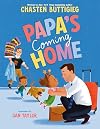
Rosie and Jojo are excited: Papa is soon coming home from a big trip! As they and Daddy (and Butter!) prepare to meet him at the airport, the children keep thinking of more special items to bring along to make Papa's welcome extra special. A sweet story about anticipation, thoughtfulness, love and family.
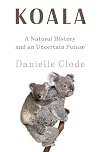
In this fascinating, easily readable microhistory, biologist Danielle Clode takes us through the anatomy, physiology, behavior (including some myth-busting), history and current concerns of Australia's arguably most adorable creature, the koala. I squeed just imagining living in a place where koalas are seen roaming the neighborhood like squirrels or raccoons. Great for fans of natural history and marsupials.
The anxious generation : how the great rewiring of childhood is causing an epidemic of mental illness by Jonathan Haidt
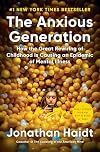
It has taken some time to gather empirical evidence, to perform research, and to compose and publish papers, but the conclusive truth about our new reality is now emerging: technology — smartphones specifically — are, globally, having a profound effect on the mental health, social and neurological development, and cognitive stamina of children and adolescents. In this groundbreaking, compelling book, psychologist Jonathan Haidt describes in great details these causes and effects, and why we (humanity) should be concerned. Very concerned.
I selected this title to fulfill the Read Harder 2026 category "a nonfiction book about AI or social media," and while I'm glad I did, as it is topical and enlightening, it also made me feel depressed and concerned about ways I may have already failed my child by being too permissive with screen time and access. This is a book which should be a must-read for parents, educators, teenagers, and anyone seeking to understand how these younger generations are functionally and psychologically different from previous generations. There are endless "Aha!" and "Of course!" and "Oh, no!" moments. The "Spiritual Elevation and Degradation" chapter provides insight into precisely why social media comment sections are overwhelmingly toxic. Here's a librarian pro tip: Right now (June 2026) you can bypass waiting lists and read The Anxious Generation through the Ebooks Minnesota website. An important and necessary, but not at all a feel-good, read.
I selected this title to fulfill the Read Harder 2026 category "a nonfiction book about AI or social media," and while I'm glad I did, as it is topical and enlightening, it also made me feel depressed and concerned about ways I may have already failed my child by being too permissive with screen time and access. This is a book which should be a must-read for parents, educators, teenagers, and anyone seeking to understand how these younger generations are functionally and psychologically different from previous generations. There are endless "Aha!" and "Of course!" and "Oh, no!" moments. The "Spiritual Elevation and Degradation" chapter provides insight into precisely why social media comment sections are overwhelmingly toxic. Here's a librarian pro tip: Right now (June 2026) you can bypass waiting lists and read The Anxious Generation through the Ebooks Minnesota website. An important and necessary, but not at all a feel-good, read.
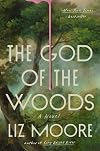
When Barbara, the daughter of a wealthy Adirondack family, is discovered missing from summer camp one morning, the ensuing investigation leaves no stone unturned, from her fellow campers, the counselors, the camp staff, and her own family. And it is lost on no one that Barbara's older brother also disappeared in the very same area over a decade ago.
I selected this title for our local library book club and it was a hit, inspiring a lengthy and engaging discussion. (The best discussions are when as a facilitator I begin by asking a single question and then never have to speak again for the rest of the meeting.) Though I as a reader don't often gravitate toward mysteries, both the story and characters are well-developed and interesting, and I found it difficult to put down. Highly recommended for book clubs.
I selected this title for our local library book club and it was a hit, inspiring a lengthy and engaging discussion. (The best discussions are when as a facilitator I begin by asking a single question and then never have to speak again for the rest of the meeting.) Though I as a reader don't often gravitate toward mysteries, both the story and characters are well-developed and interesting, and I found it difficult to put down. Highly recommended for book clubs.
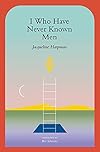
An unnamed adolescent narrator lives in an underground cell with 39 older women. Male guards continuously patrol the outside of the area, providing food daily and, more irregularly, cooking implements or worn cloth for the prisoners to care for themselves. The guards never speak, and the women are forbidden from touching one another. The older women remember something of their lives before, but the narrator remembers only the cell. Monotonous days turn into monotonous years...until one day a siren sounds as their food is being delivered. The guards rush out, leaving keys behind in the cell door.
I loved the originality of the premise as well as the unusual narrative style. The story also ticked a few other boxes for me, including its dystopian setting and the element of survival. The narrative flows uninterrupted by any chapter breaks, which can make the pacing feel challenging with nothing to break up text periodically, but the book is relatively short and so not too grueling. I'm drawn to stories where the secret nature of the world in which it takes place is part of the overall mystery, and I enjoyed that aspect very much, but in this case I ultimately found myself kind of disappointed that there was no big reveal explaining the circumstances.
I loved the originality of the premise as well as the unusual narrative style. The story also ticked a few other boxes for me, including its dystopian setting and the element of survival. The narrative flows uninterrupted by any chapter breaks, which can make the pacing feel challenging with nothing to break up text periodically, but the book is relatively short and so not too grueling. I'm drawn to stories where the secret nature of the world in which it takes place is part of the overall mystery, and I enjoyed that aspect very much, but in this case I ultimately found myself kind of disappointed that there was no big reveal explaining the circumstances.
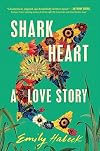
Newlyweds Wren and Lewis are just starting to settle into married life when Lewis begins to notice changes taking place in his body. His nose becomes more flexible, he begins to feel a constant, unquenchable thirst and, alarmingly, new, razor-sharp teeth are starting to come in. Alarmed, Lewis makes an appointment with a doctor and eventually receives a diagnosis: Carcharodon carcharias mutation. He is turning into a great white shark.
This sounds like it's going to be a delightfully wacky story, and at first it is. But just a few chapters into Lewis' diagnosis the mood becomes much more serious. Reactions from family, friends and colleagues are not, "But that's impossible!" but rather, "Oh, how terrible. I'm so sorry." In this world, mutations like this are clearly a known, devastating phenomenon. There are heartbreaking conversations surrounding what Lewis hopes to do with the time he has left and preparations to be made before he will inevitably have to be "released" into the sea, making the story feel very much like a metaphor for any number of terminal illnesses. Once that realization hits, the story becomes deeply reflective and gut-wrenching.
This sounds like it's going to be a delightfully wacky story, and at first it is. But just a few chapters into Lewis' diagnosis the mood becomes much more serious. Reactions from family, friends and colleagues are not, "But that's impossible!" but rather, "Oh, how terrible. I'm so sorry." In this world, mutations like this are clearly a known, devastating phenomenon. There are heartbreaking conversations surrounding what Lewis hopes to do with the time he has left and preparations to be made before he will inevitably have to be "released" into the sea, making the story feel very much like a metaphor for any number of terminal illnesses. Once that realization hits, the story becomes deeply reflective and gut-wrenching.
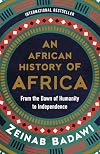
Rarely has the history of Africa been told from an African perspective. Sudanese-born Zeinab Badawi seeks to rectify this imbalance in this work, which spans from humanity's earliest origins to the present day, as well as an optimistic, if cautious, look toward Africa's future.
High praises for Badawi in ensuring this book does not read overly academic, making it fully accessible and immediately engaging for any reader with sincere historical interest. It is a bleak, though brutally honest, read. I'd even go so far as to suggest that it be required reading for European and American high schoolers. Be prepared to experience renewed outrage at the many and continuously reprehensible ways Africans and people of African descent have been exploited by outsiders. In addition to providing rich, comprehensive historical accounting, Badawi excels in illustrating the many ways that past abuses have had far-reaching, catastrophic reverberations to the present day, in many cases crippling economies, devastating and severely unbalancing populations, arresting development and causing lasting distrust of one's closest neighbors. A tangential detail that shocked me was that Haiti, upon gaining independence, was required to take out a loan from France in order to compensate(!) their former enslavers — a loan which they were repaying until 1947 (and Haiti was not alone in this perversion of justice). Also, according to Biblical texts, Moses married a Kushite, but you don't hear racists show more mention that much! Despite its heft at over 500 pages the narrative moves along at a relatively quick pace and is full of fascinating historical accounts seldom mentioned in Western classrooms. Highly recommended. show less
High praises for Badawi in ensuring this book does not read overly academic, making it fully accessible and immediately engaging for any reader with sincere historical interest. It is a bleak, though brutally honest, read. I'd even go so far as to suggest that it be required reading for European and American high schoolers. Be prepared to experience renewed outrage at the many and continuously reprehensible ways Africans and people of African descent have been exploited by outsiders. In addition to providing rich, comprehensive historical accounting, Badawi excels in illustrating the many ways that past abuses have had far-reaching, catastrophic reverberations to the present day, in many cases crippling economies, devastating and severely unbalancing populations, arresting development and causing lasting distrust of one's closest neighbors. A tangential detail that shocked me was that Haiti, upon gaining independence, was required to take out a loan from France in order to compensate(!) their former enslavers — a loan which they were repaying until 1947 (and Haiti was not alone in this perversion of justice). Also, according to Biblical texts, Moses married a Kushite, but you don't hear racists show more mention that much! Despite its heft at over 500 pages the narrative moves along at a relatively quick pace and is full of fascinating historical accounts seldom mentioned in Western classrooms. Highly recommended. show less
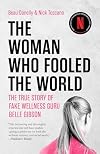
In 2009, at the age of only 18, Belle Gibson began dropping comments about her severe health problems into online forums, claiming that she had undergone multiple heart surgeries and that she had died twice on the operating table. A few years later, she had upgraded her story with new claims: she had been diagnosed with a brain tumor but was eschewing conventional treatments in favor of natural remedies. It wasn't long before she launched a wellness app, secured a book deal, hosted charity fundraisers, and glamorously jetted across the globe. There was just one enormous problem: Gibson was not, nor was she ever, ill.
This story is wild. It's absolutely mind-boggling that not a single person at Apple or Penguin considered for a single moment that it would be a good idea to verify any of Gibson's claims before rushing full steam ahead to publish her app and book no-questions-asked. The entire narrative is just one jaw-dropping event after another. It's reprehensible that Gibson is not being held accountable for the harm she has done (not to mention the deaths she has likely had a hand in). Big yikes.
This story is wild. It's absolutely mind-boggling that not a single person at Apple or Penguin considered for a single moment that it would be a good idea to verify any of Gibson's claims before rushing full steam ahead to publish her app and book no-questions-asked. The entire narrative is just one jaw-dropping event after another. It's reprehensible that Gibson is not being held accountable for the harm she has done (not to mention the deaths she has likely had a hand in). Big yikes.
With a wink to grown-ups familiar with the classic Melville tale, this picture book tells the story of a curious, well-meaning white whale who just wants to be friends, but (understandably) not everyone is receptive to its overtures. The story (and Moby!) is cute and entertaining, and it contains positive and encouraging messages about navigating social situations.
When trees testify : science, wisdom, history, and america's black botanical legacy by Beronda L. Montgomery
In this collection of botanical essays Montgomery, a Black plant biologist, reacquaints us with a number of trees and shrubs, including pecan, sycamore, willow, poplar, mulberry, oak, apple and cotton, to which she personally has a connection, and she further explores these plants' resonations — some joyful, many traumatic — with Black Americans and their shared cultural history. This work both educates and encourages a new awareness of the way a seemingly innocuous tree such as the poplar is regarded very differently through another cultural lens. The focus on botanical relationships with a specific culture or people also reminded me a little of another suggested essay collection, My Father's Smokehouse by Vivian Faith Prescott. I only found out while halfway through reading that Montgomery was speaking locally back in February, and I now wish I'd known. Recommended for students of natural and cultural history.
I received this ARC via LibraryThing's Early Reviewers program.
I received this ARC via LibraryThing's Early Reviewers program.
 This review was written for LibraryThing Early Reviewers.
Following the rather traumatic events (he died and was resurrected, after all) in Cemetery Boys, Julian just wants life to return to normal, or as normal as it can be with a brujx boyfriend. But as this sequel begins, Julian begins having nightmarish visions of things that aren't there and, more horrifyingly, he notices a black, empty void in his own chest that no one else appears to be able to see.
I was excited to gain access to an advance copy in order to fulfill the category "a YA book by a Latine author" in this year's Read Harder challenge. I have so far enjoyed Thomas' writing, and being immersed into this world where both the real and fantastical elements of the culture are a new perspective for me. It was lovely to watch Julian and Yadriel's relationship grow stronger, as well as that of their closest friends and family, as they came together to solve the mystery and vanquish a great evil, risking their lives for one another. Regrettably, what I didn't find that this sequel held up to its predecessor in is story. It felt like it relied too heavily on the non-communication plot device (i.e., characters making kind of flimsy excuses for not telling other characters important information) and one character acting an apologist for the antagonist's behavior far longer than seemed natural. For this reader, both landed on the wrong side of realistic.
I received this ARC via NetGalley.
I was excited to gain access to an advance copy in order to fulfill the category "a YA book by a Latine author" in this year's Read Harder challenge. I have so far enjoyed Thomas' writing, and being immersed into this world where both the real and fantastical elements of the culture are a new perspective for me. It was lovely to watch Julian and Yadriel's relationship grow stronger, as well as that of their closest friends and family, as they came together to solve the mystery and vanquish a great evil, risking their lives for one another. Regrettably, what I didn't find that this sequel held up to its predecessor in is story. It felt like it relied too heavily on the non-communication plot device (i.e., characters making kind of flimsy excuses for not telling other characters important information) and one character acting an apologist for the antagonist's behavior far longer than seemed natural. For this reader, both landed on the wrong side of realistic.
I received this ARC via NetGalley.
Sixteen-year-old Liz awakens in a berth aboard a ship with no recollection of how she arrived there, and her fellow passengers initially seem to be as disoriented as she is. Over time, though, as they interact with one another and share their stories some of their most recent memories return, and they come to the reluctant conclusion that they have died. Eventually, the ship docks in Elsewhere, and Liz's grandmother, who passed away before she was born, is there on the dock to welcome her to this new place where everyone is dead and aging backward.
Though a somewhat dark premise on its surface, the story is told in a lighthearted style and is a sweet, poignant and enjoyable page-turner. I laughed out loud (rare for me!) when Liz is apprised of what her last words in life had been. Zevin presents some interesting ideas and moral/existential dilemmas to consider as Liz navigates this new "life" and attempts to reconcile it with the one of which she feels she was robbed.
Though a somewhat dark premise on its surface, the story is told in a lighthearted style and is a sweet, poignant and enjoyable page-turner. I laughed out loud (rare for me!) when Liz is apprised of what her last words in life had been. Zevin presents some interesting ideas and moral/existential dilemmas to consider as Liz navigates this new "life" and attempts to reconcile it with the one of which she feels she was robbed.
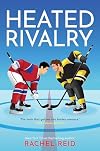
Two young hockey up-and-comers, Canadian Shane Hollander and Russian Ilya Rozanov, first encounter one another at the junior world championships. As the two of the most highly-anticipated prospects of their generation, they are constantly compared to one another over the next few years by the media, who delight in contrasting the cocky and standoffish Rozanov with wholesome, charismatic Hollander. But what the media doesn't know, and can never, ever find out, is that Shane and Ilya have also been hooking up privately.
I selected this book for the 2026 Read Harder challenge. It tidily fit the category "a sports book by a woman, trans, or nonbinary writer," and I was also curious what the fuss is about as it's insanely popular right now at the public library where I work and was recently adapted into a TV series. Well, it certainly was great fun! It's an absolutely wild and delightful, (mostly) lighthearted romp that will tug on your heartstrings throughout. Reid uses a simple language and narrative style, possibly even leaning a tad toward an amateur/fanfic feel, but it is super easy to get lost in the experience and overlook that. My biggest complaint really is finding Ilya's handle on the English language to be wildly inconsistent — he's seemingly fluent for years but two chapters later speaking in a somewhat cringily-depicted simplified language. I had to suspend my disbelief a bit in chapter 27, after 7+ years playing professional hockey in the U.S., when we are told show more that his grip on the English language is merely "tenuous." Quibbles aside, this story is pure entertainment, and it would make an excellent vacation read. show less
I selected this book for the 2026 Read Harder challenge. It tidily fit the category "a sports book by a woman, trans, or nonbinary writer," and I was also curious what the fuss is about as it's insanely popular right now at the public library where I work and was recently adapted into a TV series. Well, it certainly was great fun! It's an absolutely wild and delightful, (mostly) lighthearted romp that will tug on your heartstrings throughout. Reid uses a simple language and narrative style, possibly even leaning a tad toward an amateur/fanfic feel, but it is super easy to get lost in the experience and overlook that. My biggest complaint really is finding Ilya's handle on the English language to be wildly inconsistent — he's seemingly fluent for years but two chapters later speaking in a somewhat cringily-depicted simplified language. I had to suspend my disbelief a bit in chapter 27, after 7+ years playing professional hockey in the U.S., when we are told show more that his grip on the English language is merely "tenuous." Quibbles aside, this story is pure entertainment, and it would make an excellent vacation read. show less
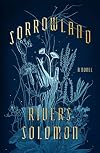
The story opens with teenage Vern giving birth alone in the forest. She has been living on her own in the wilderness for months after fleeing the religious compound where she grew up, despite the efforts of "the fiend" who has been in near-constant pursuit of her. Somehow Vern manages to continue to elude her pursuer and care for her twin boys for several years, trying to avoid thinking about the unsettling protuberances that have begun to emerge from her torso.
I finished this book still somewhat unsure how I felt about it. The writing style was all right. I found the premise intriguing at first, and I was relatively strongly engaged first third or so, but it sort of lost me with the hauntings and body horror. I really struggle with magical realism, but I selected this to fulfill the Read Harder category "a gothic novel published in the last ten years." It was, unfortunately, ultimately not for me.
I finished this book still somewhat unsure how I felt about it. The writing style was all right. I found the premise intriguing at first, and I was relatively strongly engaged first third or so, but it sort of lost me with the hauntings and body horror. I really struggle with magical realism, but I selected this to fulfill the Read Harder category "a gothic novel published in the last ten years." It was, unfortunately, ultimately not for me.
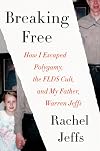
In this memoir of growing up in the FLDS church, Rachel Jeffs holds back nothing as she describes her childhood as the daughter of "prophet" Warren Jeffs. In the strict, religiously conservative cult, Rachel had plural mothers and dozens of siblings, all under the same roof and all vying for her father's approval and favor. When her father married her off, it was to a man who already had two wives.
Jeffs' narrative is accessible and straightforward, engaging but without a ton of complexity. Her experience illustrates the psychological, emotional and sexual abuse rampant in the FLDS cult for decades. There are passages that are positively sickening, so fair warning for any survivors (or survivors-adjacent) of abuse. I do find it rather mind-boggling that Jeffs still considers herself a Christian. I've read a fair number of "I escaped a religious cult"-themed memoirs and am always kind of surprised (and, if I'm honest, disappointed) that when these long-suffering individuals finally summon sufficient critical thinking to finally accept that what they've believed all their lives is a scam, they also somehow fail to take that revelation one step further and logically apply that to religion as a whole. Overall, an enlightening but quite disturbing read. I wish Rachel and her family the best in what is probably a long journey of healing ahead.
Jeffs' narrative is accessible and straightforward, engaging but without a ton of complexity. Her experience illustrates the psychological, emotional and sexual abuse rampant in the FLDS cult for decades. There are passages that are positively sickening, so fair warning for any survivors (or survivors-adjacent) of abuse. I do find it rather mind-boggling that Jeffs still considers herself a Christian. I've read a fair number of "I escaped a religious cult"-themed memoirs and am always kind of surprised (and, if I'm honest, disappointed) that when these long-suffering individuals finally summon sufficient critical thinking to finally accept that what they've believed all their lives is a scam, they also somehow fail to take that revelation one step further and logically apply that to religion as a whole. Overall, an enlightening but quite disturbing read. I wish Rachel and her family the best in what is probably a long journey of healing ahead.
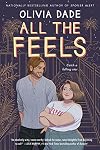
When Lauren booked what was supposed to be a relaxing vacation in Spain, she wasn't counting on her annoying cousin to rope her into babysitting Alex Woodroe, an irritating and childish actor who just got himself into a PR mess. Alex is insulted that his team now feels he needs a nanny and also feeling rather wounded that no one has yet to ask him for his side of the story.
This is a decent vacation read, as long as you don't dig into or think too deeply about it. Alex was pretty obnoxious at the beginning of the story, to the point where I was not convinced redemption was possible. Ultimately he turned out OK (I guess?), though I wasn't keen on his ADHD diagnosis having been used to excuse some of his thoughtless (at best) and offensive remarks and behavior. As a whole, I could root for Lauren and Alex, and I'd recommend with reservations.
This is a decent vacation read, as long as you don't dig into or think too deeply about it. Alex was pretty obnoxious at the beginning of the story, to the point where I was not convinced redemption was possible. Ultimately he turned out OK (I guess?), though I wasn't keen on his ADHD diagnosis having been used to excuse some of his thoughtless (at best) and offensive remarks and behavior. As a whole, I could root for Lauren and Alex, and I'd recommend with reservations.
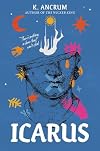
We first meet Icarus in the middle of an art heist. His father Angus, a professional art restorer, has been training Icarus for years in not only restoration, but also in breaking and entering undetected into the mansion of Mr. Black, a man against whom Angus has vowed revenge. The two have spent years replacing Black's authentic works of art with replicas. But during one of his clandestine missions inside the mansion, Icarus is startled by the presence of someone who shouldn't be there: another teenage boy, Helios.
This is an achingly sad and beautiful story. The writing is poetic, and I found myself returning to reread earlier passages to savor them again. Icarus and Helios are both prisoners in their own way, each wounded and hurting and finding in each other a kindred soul. I so wanted them just to experience some happiness! It's really a lovely, lovely book. Highest recommendations.
This is an achingly sad and beautiful story. The writing is poetic, and I found myself returning to reread earlier passages to savor them again. Icarus and Helios are both prisoners in their own way, each wounded and hurting and finding in each other a kindred soul. I so wanted them just to experience some happiness! It's really a lovely, lovely book. Highest recommendations.
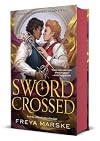
Matti's family's business is on questionable footing, so he agrees to marry the heir of a wealthy family in order to help right their ship. In preparation for his upcoming nuptials, during which he expects a challenge to the marriage, Matti enlists the services of a duelist. But when he meets the swordsman for the first time to arrange details, he is astonished to discover that Luca is the wily, handsome rogue who swindled him out of two hundred gold mere hours earlier.
Yes! This was a perfect vacation read. The writing is top-notch and sucked me in immediately. I adored the story, and the relationships are healthy, sweet and genuine. All of the characters are amazing. I guessed successfully some of the plot twists ahead of time, but that didn't detract at all from satisfaction. In fact, it was the opposite: hey, I'm as clever as the author! Highly, highly recommended, and I will watch for more titles by this author.
Yes! This was a perfect vacation read. The writing is top-notch and sucked me in immediately. I adored the story, and the relationships are healthy, sweet and genuine. All of the characters are amazing. I guessed successfully some of the plot twists ahead of time, but that didn't detract at all from satisfaction. In fact, it was the opposite: hey, I'm as clever as the author! Highly, highly recommended, and I will watch for more titles by this author.

In this volume the focus returns to Henry and Talas, who have made the long journey back to England. Henry's family is understandably shocked that he has returned a married man, and even more shocked (I would say his mother is actually appalled and clutching at her pearls) at whom he has married. Everything in England is new and strange to Talas, until the day she lays eyes on some sheep grazing in a meadow.
I truly love this series. It's like meeting up with old friends, and now that we're on book 15 and having to wait in between the publication of new volumes, I find I'm savoring each page. Hope there are many more volumes to come.
I truly love this series. It's like meeting up with old friends, and now that we're on book 15 and having to wait in between the publication of new volumes, I find I'm savoring each page. Hope there are many more volumes to come.
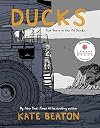
Cartoonist Kate Beaton recounts her time working in the Athabascan oil sands region of Alberta in this memoir told in graphic novel format. Beaton knew that as a woman she would be in a stark minority in the mining camps, but earning good money and paying off her student loans were a top priority.
I found it rather fascinating to learn about the unique way of life in the Alberta mining camps, and about the types of people who have opted to work in isolated environments, each for their own reasons. Beaton's narrative is inspiring in some ways as she forges some strong, genuine friendships and takes pride in her work. However, it is also heartbreaking and infuriating as Beaton illustrates the constant disrespect (at best) she experienced, and (at worst) the manner in which sexual assault is accepted as a given in these communities where men outnumber women 3 to 1. Excellent memoir, but super depressing.
I found it rather fascinating to learn about the unique way of life in the Alberta mining camps, and about the types of people who have opted to work in isolated environments, each for their own reasons. Beaton's narrative is inspiring in some ways as she forges some strong, genuine friendships and takes pride in her work. However, it is also heartbreaking and infuriating as Beaton illustrates the constant disrespect (at best) she experienced, and (at worst) the manner in which sexual assault is accepted as a given in these communities where men outnumber women 3 to 1. Excellent memoir, but super depressing.
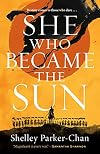
When the local fortune-teller pronounced that Zhu's brother would achieve great things it seemed his fate was set in stone. But when both he and their father die unexpectedly Zhu, a girl, sets out for the securest place she can think of in this time of famine and dangerous brigands on the roads — a monastery — where she enrolls as a novice. There Zhu lays claim her brother's fate as well as his identity.
I really enjoyed Parker-Chan's worldbuilding, which combines events and figures from the real Red Turban Rebellions during the 14th-century Yuan dynasty with sprinkled elements of fantasy. During the first half I found it somewhat challenging to keep track of the many, many characters and which factions they represented, but eventually the names and relationships began to cohere. I do have to say I was ultimately disappointed (maybe even a little devastated) with several sudden acts of violence that occurred in the final few chapters, which felt both out of character and yet at the same time contradictorily, disturbingly inevitable. Overall, I enjoyed the book, and in particular immersing myself in another time, place and culture. However, I would find it hard to root for the main characters going forward, so as a result I likely won't be seeking out the second book.
I really enjoyed Parker-Chan's worldbuilding, which combines events and figures from the real Red Turban Rebellions during the 14th-century Yuan dynasty with sprinkled elements of fantasy. During the first half I found it somewhat challenging to keep track of the many, many characters and which factions they represented, but eventually the names and relationships began to cohere. I do have to say I was ultimately disappointed (maybe even a little devastated) with several sudden acts of violence that occurred in the final few chapters, which felt both out of character and yet at the same time contradictorily, disturbingly inevitable. Overall, I enjoyed the book, and in particular immersing myself in another time, place and culture. However, I would find it hard to root for the main characters going forward, so as a result I likely won't be seeking out the second book.
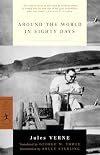
A wager in a London gentlemen's club is the catalyst for this 19th-century adventure story in which Phileas Fogg and his valet Passepartout embark on a journey eastward around the globe. They are trailed every step of the way by Fix, a detective who has identified Fogg as the prime suspect in a recent bank robbery, who is convinced the true purpose of their travels is to flee the law.
At fewer than 200 pages, this is a quick, entertaining read, and the writing style holds up very well 150 years after publication. Some of the place names have changed and political borders redrawn in the intervening years, but it's still easy for the reader to follow along geographically without necessarily consulting a map. Recommended for fans of classic adventure tales.
At fewer than 200 pages, this is a quick, entertaining read, and the writing style holds up very well 150 years after publication. Some of the place names have changed and political borders redrawn in the intervening years, but it's still easy for the reader to follow along geographically without necessarily consulting a map. Recommended for fans of classic adventure tales.
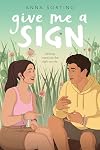
Lilah is thrilled to land a job as junior counselor at a summer camp for deaf and blind children. Though she has significant hearing loss, she isn't completely deaf, and her memories of her time at the camp when she was younger are one of the only times in her life she truly felt a part of the community. Of course, not everything is as rosy as her memories — Camp Gray Wolf nowadays is suffering from financial difficulty and feels a bit more run-down than she remembers, some of the older counselors are irritating or cold toward her, and the younger campers can be needy and clingy, but Lilah is really starting to bond with a few of the other counselors and learning to sign with guidance from the super-cute Isaac.
Give Me a Sign was fun and engaging, and it offered real, thoughtful insight into deaf community and challenges its members routinely face in what non-deaf folks would consider otherwise unremarkable situations. Overall, the characters were likeable and felt genuine, though Lilah tends to overreact a bit and in some situations acts a little immaturely. Some aspects of camp life ring may false or feel contrived to folk experienced with summer camp, and there were a handful of moments when I had to suspend my disbelief in favor of staying within the narrative (underage counselors sleeping coed feels like a liability, and if a camp is under financial strain they would probably make sure their counselors are also trained as lifeguards rather than hiring two extra show more lifeguards who have zero other responsibilities other than lifeguarding). There is some manufactured drama, and a few chars seem like caricatures at first, but Sortino eventually rights the ship, and Lilah's summer adventures had me looking back fondly on my own summer camp experiences. Recommended highly! show less
Give Me a Sign was fun and engaging, and it offered real, thoughtful insight into deaf community and challenges its members routinely face in what non-deaf folks would consider otherwise unremarkable situations. Overall, the characters were likeable and felt genuine, though Lilah tends to overreact a bit and in some situations acts a little immaturely. Some aspects of camp life ring may false or feel contrived to folk experienced with summer camp, and there were a handful of moments when I had to suspend my disbelief in favor of staying within the narrative (underage counselors sleeping coed feels like a liability, and if a camp is under financial strain they would probably make sure their counselors are also trained as lifeguards rather than hiring two extra show more lifeguards who have zero other responsibilities other than lifeguarding). There is some manufactured drama, and a few chars seem like caricatures at first, but Sortino eventually rights the ship, and Lilah's summer adventures had me looking back fondly on my own summer camp experiences. Recommended highly! show less
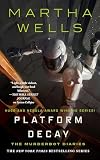
In this latest book in the Murderbot Diaries series, the reader is launched immediately into the middle of a tense and daring mission in which Murderbot is attempting to rescue members of Dr. Mensah's family from a safehouse before vengeful members of the Barish-Estranza corporation locate them.
Wow, it just jumps right in, doesn't it? Most readers familiar with this series will be used to (and possibly even relish!) the often immediate sense of disorientation by now, at once both dizzying and thrilling. Even here on book #8 a fair amount of the worldbuilding, lingo and technology continue to go over my head, but I have to admit that's also part of its charm. This whole series has felt like an exciting roller coaster ride where I am trying to absorb the most important details and enjoy brief glimpses of scenery moving past, all while holding on as tightly as I can. Fun and recommended for already-fans of the series. Looking forward to the next!
I received this ARC via NetGalley.
Wow, it just jumps right in, doesn't it? Most readers familiar with this series will be used to (and possibly even relish!) the often immediate sense of disorientation by now, at once both dizzying and thrilling. Even here on book #8 a fair amount of the worldbuilding, lingo and technology continue to go over my head, but I have to admit that's also part of its charm. This whole series has felt like an exciting roller coaster ride where I am trying to absorb the most important details and enjoy brief glimpses of scenery moving past, all while holding on as tightly as I can. Fun and recommended for already-fans of the series. Looking forward to the next!
I received this ARC via NetGalley.
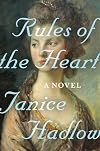
Frequently taking a backseat in history to her trend-setting sister, Georgiana the Duchess of Devonshire, Lady Harriet Bessborough narrates this fictionalized memoir of her middle-aged years, focusing primarily on her 17-year-long affair with Granville Leveson-Gower, 1st Earl Granville, the love of her life.
I'd read a biography of Georgiana back in 2018 and thought a novel about her sister, whom I scarcely remembered from the book, would be interesting as well. Hadlow certainly had her work cut out for her in painstakingly fleshing out what must ultimately have been somewhat sparse source material, given that Harriet's family destroyed all of her correspondence following her death in 1821. Full praise for that monumental endeavor! It took me some time to really get into the narrative, finding it kind of plodding and noting a lot of tell but not much show (probably extra challenging when writing in first person). After three weeks I think I'd made it only to page 50. The story began to grow on me maybe 200 pages in, enough that I was actively interested in finding out what happens next, but ultimately fizzled out again. I found Harriet's personality both irritating and boring, and I did not find Granville to be a very sympathetic character, either, so it was a struggle to really care what happened to them. Maybe a heavier edit (maybe 100 fewer pages?) and some tightening up would have made it a more engaging read.
I received this ARC via LibraryThing's Early Reviewers program.
I'd read a biography of Georgiana back in 2018 and thought a novel about her sister, whom I scarcely remembered from the book, would be interesting as well. Hadlow certainly had her work cut out for her in painstakingly fleshing out what must ultimately have been somewhat sparse source material, given that Harriet's family destroyed all of her correspondence following her death in 1821. Full praise for that monumental endeavor! It took me some time to really get into the narrative, finding it kind of plodding and noting a lot of tell but not much show (probably extra challenging when writing in first person). After three weeks I think I'd made it only to page 50. The story began to grow on me maybe 200 pages in, enough that I was actively interested in finding out what happens next, but ultimately fizzled out again. I found Harriet's personality both irritating and boring, and I did not find Granville to be a very sympathetic character, either, so it was a struggle to really care what happened to them. Maybe a heavier edit (maybe 100 fewer pages?) and some tightening up would have made it a more engaging read.
I received this ARC via LibraryThing's Early Reviewers program.
This review was written for LibraryThing Early Reviewers.
In this reimagining of the classic novel Moby-Dick, we first meet Ishmaelle in England, an orphaned teenager living with her older brother Joseph following the deaths of their parents and baby sister. Joseph goes off to sea and, after a time, Ishmaelle ultimately opts to do the same, chopping off her hair and disguising herself as a teenage boy. She sails across the Atlantic and gets herself hired aboard the whaling ship Nimrod, captained by the eccentric and mysterious Seneca, whose obsession with the white whale to which he lost his leg drives him to find it above all else.
I'm a big Moby-Dick fan, and I do love a good retelling, so this book seemed written just for me. It's done really well. The story is engaging and moves along at a decent pace, while still offering up faithful descriptions of what life aboard a whaling ship was like (and what it would have been like for a woman, no less). Two instances of violence (well, one was ongoing) blindsided me and left me somewhat devastated and heartbroken, and which immediately altered how I felt about the book. I absolutely don't want to go down the road of victim-blaming, but why didn't she immediately cry out and wake everyone else up as soon as she was aware something was wrong? Who cares at this point if everyone became aware of her true nature? They also deserved to learn that Flaherty was a gross weasel. This and a scene involving violence to the ship's cat hit me surprisingly hard in a way I'm not usually affected by show more a book. Highly recommended for fans of retellings and Moby-Dick enthusiasts, with caveats concerning violence toward women and felines (and, obviously, whales).
I received this ARC via NetGalley. show less
I'm a big Moby-Dick fan, and I do love a good retelling, so this book seemed written just for me. It's done really well. The story is engaging and moves along at a decent pace, while still offering up faithful descriptions of what life aboard a whaling ship was like (and what it would have been like for a woman, no less). Two instances of violence (well, one was ongoing) blindsided me and left me somewhat devastated and heartbroken, and which immediately altered how I felt about the book. I absolutely don't want to go down the road of victim-blaming, but why didn't she immediately cry out and wake everyone else up as soon as she was aware something was wrong? Who cares at this point if everyone became aware of her true nature? They also deserved to learn that Flaherty was a gross weasel. This and a scene involving violence to the ship's cat hit me surprisingly hard in a way I'm not usually affected by show more a book. Highly recommended for fans of retellings and Moby-Dick enthusiasts, with caveats concerning violence toward women and felines (and, obviously, whales).
I received this ARC via NetGalley. show less
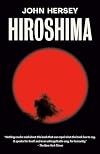
On August 6, 1945, the United States dropped an atomic bomb on the Japanese city of Hiroshima, the first time nuclear weapons had ever been used in war and upon an entire city. War correspondent John Hersey was one of the first Western journalists to view its devastation, and he immediately set to work preserving for history interviews with eyewitnesses and victims. This work focuses on six survivors of Hiroshima – their backgrounds, what they were doing just prior to the event, what they experienced when the bomb went off, and what the aftermath was like for them and their loved ones.
Working in a public library, I'm noticing that Hiroshima is increasingly being assigned as required high school reading, which is how it ended up on my TBR. I recall very little on the topic of Hiroshima or WWII in the Pacific Theatre in my early-1990s high school history classes. We certainly did not discuss it in any ethical terms, only the role it played in accelerating the end of the war. I felt a moral obligation to read this, heavy and uncomfortable as it was. The details are horrifying, but Hersey's writing puts real human faces on suffering, closing the distance between the reader and what would otherwise have been anonymous victims. A must-read for any American, even (especially?) 80 years later.
Working in a public library, I'm noticing that Hiroshima is increasingly being assigned as required high school reading, which is how it ended up on my TBR. I recall very little on the topic of Hiroshima or WWII in the Pacific Theatre in my early-1990s high school history classes. We certainly did not discuss it in any ethical terms, only the role it played in accelerating the end of the war. I felt a moral obligation to read this, heavy and uncomfortable as it was. The details are horrifying, but Hersey's writing puts real human faces on suffering, closing the distance between the reader and what would otherwise have been anonymous victims. A must-read for any American, even (especially?) 80 years later.
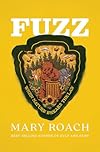
Imagine: Besides humankind, the world is populated by over 7 million species of animals, very few of which understand any human-created laws or expectations. It's no surprise, then, that there is frequent and often violent conflict when animal and human populations collide and compete for habitats. In this light-hearted book Mary Roach highlights (lowlights?) some of the more egregious rulebreakers in the animal kingdom.
I'd long been aware of Roach's playful but informative nonfiction works, but this was the first I picked up to sample. I learned a good deal about some quite naughty animals (or are we the naughty animals?). It was moderately amusing and entertaining but also fell a bit short of my expectations, as I didn't find it as engaging (meaty?) as I'd hoped. Roach often inserts random, amusing tidbits about the people she's interviewing or the circumstances surrounding her experiences while researching the book. Often these add flavor to the story, but sometimes the details hit a bit ... weird (in one chapter there was an offhand comment about someone's chest hair blowing in the breeze). Overall, I think I'd still recommend it to nonfiction readers or someone looking to get into nonfiction, as it's sort of a nonfiction equivalent of a beach read.
I'd long been aware of Roach's playful but informative nonfiction works, but this was the first I picked up to sample. I learned a good deal about some quite naughty animals (or are we the naughty animals?). It was moderately amusing and entertaining but also fell a bit short of my expectations, as I didn't find it as engaging (meaty?) as I'd hoped. Roach often inserts random, amusing tidbits about the people she's interviewing or the circumstances surrounding her experiences while researching the book. Often these add flavor to the story, but sometimes the details hit a bit ... weird (in one chapter there was an offhand comment about someone's chest hair blowing in the breeze). Overall, I think I'd still recommend it to nonfiction readers or someone looking to get into nonfiction, as it's sort of a nonfiction equivalent of a beach read.
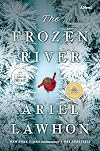
This historical novel focuses on Martha Ballard, a practiced midwife living with her family in Hallowell, Maine, and a real historical figure. Martha has just delivered a child and getting some much-needed rest when she is suddenly called to assess the body of a man found that night in the Kennebec River — a man the minister's wife had accused of raping her.
I selected this book for the library book club I would be facilitating, and it made for a lively discussion about women's rights, midwifery, life and social norms in the 1700s. Though I quite enjoyed Lawhon's writing, the first thing that stood out to me was how oddly contemporary the author's inner monologue sounds to our ears when the reader knows neither thought nor speech would have sounded quite so modern. I fully understood but had to keep reminding myself that the author elected to do so in order to make the text easier to quickly mentally parse (this is, after all, popular fiction rather than an academic work). I chuckled a little at how often everyone seemed to "eat out" at the local tavern. Perhaps this is accurate, I just never imagined folks in the 18th century indulging in such a convenience. Some of the moral messages felt kind of heavy-handed at times, but it was also refreshing to see relatively forward-thinking men represented during this era. Most bizarre moment: at one point a baby's birthmark is cited proof of its parentage (what?). Overall, a good read with lots to chew on, highly recommended for show more book clubs. show less
I selected this book for the library book club I would be facilitating, and it made for a lively discussion about women's rights, midwifery, life and social norms in the 1700s. Though I quite enjoyed Lawhon's writing, the first thing that stood out to me was how oddly contemporary the author's inner monologue sounds to our ears when the reader knows neither thought nor speech would have sounded quite so modern. I fully understood but had to keep reminding myself that the author elected to do so in order to make the text easier to quickly mentally parse (this is, after all, popular fiction rather than an academic work). I chuckled a little at how often everyone seemed to "eat out" at the local tavern. Perhaps this is accurate, I just never imagined folks in the 18th century indulging in such a convenience. Some of the moral messages felt kind of heavy-handed at times, but it was also refreshing to see relatively forward-thinking men represented during this era. Most bizarre moment: at one point a baby's birthmark is cited proof of its parentage (what?). Overall, a good read with lots to chew on, highly recommended for show more book clubs. show less
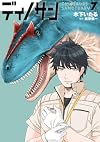
This continuation of the cute, low-stakes manga series featuring Suzume Suma and her fellow dinosaur keepers at Enoshima Dinoland features Benkei the Troodon, Roy the Dilophosaurus, Trom the Deinonychus, and preparations for a new Psittacosaurus petting area at the sanctuary. My favorite aspect of this series is how realistically the day-to-day zoological care is presented, as though dinosaurs were in fact here with us today. If only!