
I can see why Stephen King praised Melanie Tem's first (1991) novel. Tem does for the working class family under pressure what King did for the ideal of the American small town - exploring its anxieties through cosmic horror that erupts from within and against which there seems to be no recourse.
Tem draws on her own experience as a social worker. The dark implication of her story is that social work itself can hide the monstrous and that monsters can exploit the imbalance of power between the State and the family within its institutional structures.
She shows courage in opening this up to scrutiny. Given the time when it was written before much had been exposed to view about child abuse as far as the public was concerned, her story is very much grounded in the business of grooming children by vampiric paedophiles sucking out their life force.
The 'horror' is far from gross despite the descriptions of bodily matters but is rather an exercise in deep unease as (given the time) the reader is introduced to the trialectic of child, institutional and family impotence before institutions unwittingly sanctioning predatory hunger.
However, Tem, in order perhaps to be authentic, makes a narrative error in deciding to see everything through the eyes of an eleven year old victim on two grounds - the sterling attempt to do so results in the prose becoming a little plodding and she cannot sustain belief in that intended authenticity.
Tem (this is a first novel) is not yet so accomplished show more that she can get away with this. The adult trying to get inside the head of a groomed child in fact creates a dark fantasy version of her condition in order to match the darker fantasy of the predator.
Where we needed a credible reality to contrast with the cosmic darkness that envelops children from a hollowed out predator and some stronger sense of a process by which the predator seduces a child into false belief, we get a child who is already interpreting the world like an adult being a child.
The net result is that this is a very interesting and worthwhile novel of unease and disturbance but it is not a 'classic' nor, because of the slow build-up to its dramatic ending, a true 'entertainment' but , instead, falls somewhere between the two, yet remains a serious attempt to say something important.
Having said that, the descriptions of family interactions from the perspective of a child are finely done. This is a good family of many children that finds it hard to control their condition in the face of economic reality, social pressures and, finally, manipulative exploitation.
King (he is not the only significant admirer of Tem) is quite right to praise this application of horror tropes to social problems and to introduce the genre as metaphor in dealing with difficult issues that perhaps only later could be spoken of more openly. show less
Tem draws on her own experience as a social worker. The dark implication of her story is that social work itself can hide the monstrous and that monsters can exploit the imbalance of power between the State and the family within its institutional structures.
She shows courage in opening this up to scrutiny. Given the time when it was written before much had been exposed to view about child abuse as far as the public was concerned, her story is very much grounded in the business of grooming children by vampiric paedophiles sucking out their life force.
The 'horror' is far from gross despite the descriptions of bodily matters but is rather an exercise in deep unease as (given the time) the reader is introduced to the trialectic of child, institutional and family impotence before institutions unwittingly sanctioning predatory hunger.
However, Tem, in order perhaps to be authentic, makes a narrative error in deciding to see everything through the eyes of an eleven year old victim on two grounds - the sterling attempt to do so results in the prose becoming a little plodding and she cannot sustain belief in that intended authenticity.
Tem (this is a first novel) is not yet so accomplished show more that she can get away with this. The adult trying to get inside the head of a groomed child in fact creates a dark fantasy version of her condition in order to match the darker fantasy of the predator.
Where we needed a credible reality to contrast with the cosmic darkness that envelops children from a hollowed out predator and some stronger sense of a process by which the predator seduces a child into false belief, we get a child who is already interpreting the world like an adult being a child.
The net result is that this is a very interesting and worthwhile novel of unease and disturbance but it is not a 'classic' nor, because of the slow build-up to its dramatic ending, a true 'entertainment' but , instead, falls somewhere between the two, yet remains a serious attempt to say something important.
Having said that, the descriptions of family interactions from the perspective of a child are finely done. This is a good family of many children that finds it hard to control their condition in the face of economic reality, social pressures and, finally, manipulative exploitation.
King (he is not the only significant admirer of Tem) is quite right to praise this application of horror tropes to social problems and to introduce the genre as metaphor in dealing with difficult issues that perhaps only later could be spoken of more openly. show less
Regarded as a classic of 'serious' science fiction, Huxley's 1932 novel of an alternative future is a didactic, sometimes satirically funny, British elite polemic that grossly simplifies the issues it deals with in order to make its impact. What that impact was intended to be may have been misunderstood.
Like Orwell's '1984' and 'Animal Farm', it is speaking to the converted or rather it is articulating the barely spoken fears of an educated liberal upper middle class about their relevance in a world of rapid technological and political change in which their only potency lies in 'writing' and 'reading'.
We are now going through another phase of intellectual anxiety amongst the entitled 'educated' scribbling subalterns below those who rule us where the issue has become the cognitive revolution promised by AI and the fear is of populism and the voice of the people rather than communism.
In Huxley's case, the evident target is not so much any particular ideology but the general ideological trend towards seeing technology alone as the means of bettering society. It is, in short, another strike, much like E. M. Forster's, at the presumption of that petit-bourgeois Mr. Wells.
The book certainly has merits. It is often witty in its war on the progressives, Huxley has a novelist's eye that mitigates the tendency to stereotype and the Huxley family tradition of innovation in the biological sciences is put to good use ... the early chapters are 'hard science fiction'.
But we are left show more not only with social stereotypes (albeit that the 'hard science' enables him to fix these as 'truths' in his progressive dystopia) but with ideological stereotypes - the ultimate 'pursuit of happiness' commercial culture, the brutish savagery of his Indian culture and the 'Savage'.
These are as extreme and simplistic in their expression as the totalitarian nightmare in '1984' and the simple fable told in 'Animal Farm'. They are not possible real states of social being (even the New Mexico Indian polar opposite to England) but symbolic states to be argued over didactically.
In fact, the 'free' New Mexico alternative to the England of happy totalitarian class structures is not presented as better. It has its communal horrors as well as a needless level of human suffering and obscurantism. But what does Huxley offer against both? Very little in the event.
His 'hero', the Savage, is actually just an Englishman raised in the savage society instead of the public school system. He takes all his thoughts from Shakespeare, quite literally since quotations from the bard take up rather a large part of his conversation. Is this man free in his rebellion?
The Savage turns out to be a disturbed masochist type who belongs to neither world and who descends into the quasi-madness of sexual disgust, barely concealed misogyny and a belief in redemption through suffering. He certainly gets his comeuppance eventually.
So where does the story leave us, with none of the worlds on offer - brutish and communal, technologically 'perfect' but soulless or as semi-deranged quasi-religious negative ecstasy - presenting a solution. In the event, Huxley proves himself a cynic.
It seems that the very top of the happy tree in the perfect guided society is not run by sinister murderous men with secret police on hand (the police handle riots with consummate skill and kindness) but by calculating cynics who know precisely what is true and what is not true.
The rationalising super-elite know all about God, art, literature, science and what-not but this is regarded as pornography locked away like heresy in the Vatican Library. Naturally they can access it but they have reasoned its value (rather articulately in fact) out of existence.
If 'alphas' emerge who question things or want to write poetry or think, the solution to the problem is simple - not drugs, not prison camps, not the barbarity Orwell was to concentrate on but exile to islands where they can be non-conformist without disrupting the totality.
There is thus an ambiguity in Huxley's messaging. While his audience of literary types in London is picking up one thing (the terror of technology at the service of mass society), he seems to be saying that, wrong as it all is, there is a home for intellectuals outside the social. Alphas can rebel safely.
The Platonic Guardians can thus go on doing their relatively benign guarding. It has to be said that the actuality of life in the new world order does not seem quite so bad once we get past the problems of behavioural science dictating our will and bio-engineering defining our capacity.
If you look at today's society, an awful lot of our fellow humans behave as if they had already been engineered into social conformity while evolution has certainly had something to say about our capacity and nature. In Huxley's brave new world, technocrats simply take over from nature.
However, it seems (in Huxley's mind) that some Alphas can rise above both behaviouralism and bio-engineering and, if they do, in this story, they get rewarded for their rebellion but in ways that ensure there can be no change to the system. Hmmmm! Bet a lot of intellectuals would not mind that!
Huxley, born of the elite, a critic of the society over which elites rule, ends up positioning matters in a wholly elite manner. The 'hero' might be thought to be John 'the Savage' in his rebellion but, in reality, with hapless Bernard as foil, it turns out to be the creative individual Helmholtz.
Well, isn't that interesting? The novel turns out to be an exercise in covert narcissism given that Aldous Huxley is also an elite individual, an Alpha, trained in the nest schools and honoured, like Helmholtz for his literary creativity. Helmholtz not Savage is the key here.
So, we have a paradox that a tale that is ostensibly a tale told against, if not fascism, then totalitarian society (and so the species as 'hive') ends up rejecting all alternatives as futile (New Mexico) or self-destructive (individual self-assertion) to promote a form of Voltairean 'garden cultivation'.
The Savage might seem to be the epitome of culture with his constant appeal to a good book (Shakespeare standing in for the Bible) but he is a dead end of self-destructive fanaticism and sexual negativity. It is hard not to see him as a satire on Christianity itself.
A note is necessary here on the role of sex in the novel used both as the clinical process of breeding all the different grades of human necessary to maintain the human 'hive' but also, with disease and child-bearing eliminated, as pleasure in the pursuit of happiness.
In some ways, the 'free love' approach of the new society is not entirely unattractive. It is certainly more attractive than the brutish possessive sexuality of our normality (in New Mexico) or the Savage's deranged fear of open sexuality in favour of an extreme 'normal' monomaniacal ideal.
But Huxley (who curiously does not pursue the matter to any serious conclusion) does (in the idea of islands for non-conformists) open the possibility (though never stating it) for some sort of 'love' (emotional engagement with all its pains) in such sanctuaries.
Huxley's approach (which fits with his later shift to mysticism and grumpy partial isolation in the desert) is that of a man beginning already to withdraw from society, from the English hive, because of a realisation of his own impotence in the face of it and yet his own unspoken superiority.
Although the book is a satirical view of humanity that has been interpreted as some kind of warning about society (there is something of that), it might be better seen as a frustrated intellectual's attempt to convey something of his own path from social butterfly (in his novels) to thinking individual.
From this point on, it seems that he lives in two worlds - outside the social in his natural pride and belief in his own righteousness and yet unwilling to cease to intervene in that world as that notoriously parasitical creature, the 'public intellectual'.
A quarter of a century later, in his mid-sixties, Huxley wrote 'Brave New World Revisited (1958) [reviewed by me elsewhere here] which was a turgid example of the public intellectual ranting to his captive audience. That book was lurking under the surface of this more entertaining one. show less
Like Orwell's '1984' and 'Animal Farm', it is speaking to the converted or rather it is articulating the barely spoken fears of an educated liberal upper middle class about their relevance in a world of rapid technological and political change in which their only potency lies in 'writing' and 'reading'.
We are now going through another phase of intellectual anxiety amongst the entitled 'educated' scribbling subalterns below those who rule us where the issue has become the cognitive revolution promised by AI and the fear is of populism and the voice of the people rather than communism.
In Huxley's case, the evident target is not so much any particular ideology but the general ideological trend towards seeing technology alone as the means of bettering society. It is, in short, another strike, much like E. M. Forster's, at the presumption of that petit-bourgeois Mr. Wells.
The book certainly has merits. It is often witty in its war on the progressives, Huxley has a novelist's eye that mitigates the tendency to stereotype and the Huxley family tradition of innovation in the biological sciences is put to good use ... the early chapters are 'hard science fiction'.
But we are left show more not only with social stereotypes (albeit that the 'hard science' enables him to fix these as 'truths' in his progressive dystopia) but with ideological stereotypes - the ultimate 'pursuit of happiness' commercial culture, the brutish savagery of his Indian culture and the 'Savage'.
These are as extreme and simplistic in their expression as the totalitarian nightmare in '1984' and the simple fable told in 'Animal Farm'. They are not possible real states of social being (even the New Mexico Indian polar opposite to England) but symbolic states to be argued over didactically.
In fact, the 'free' New Mexico alternative to the England of happy totalitarian class structures is not presented as better. It has its communal horrors as well as a needless level of human suffering and obscurantism. But what does Huxley offer against both? Very little in the event.
His 'hero', the Savage, is actually just an Englishman raised in the savage society instead of the public school system. He takes all his thoughts from Shakespeare, quite literally since quotations from the bard take up rather a large part of his conversation. Is this man free in his rebellion?
The Savage turns out to be a disturbed masochist type who belongs to neither world and who descends into the quasi-madness of sexual disgust, barely concealed misogyny and a belief in redemption through suffering. He certainly gets his comeuppance eventually.
So where does the story leave us, with none of the worlds on offer - brutish and communal, technologically 'perfect' but soulless or as semi-deranged quasi-religious negative ecstasy - presenting a solution. In the event, Huxley proves himself a cynic.
It seems that the very top of the happy tree in the perfect guided society is not run by sinister murderous men with secret police on hand (the police handle riots with consummate skill and kindness) but by calculating cynics who know precisely what is true and what is not true.
The rationalising super-elite know all about God, art, literature, science and what-not but this is regarded as pornography locked away like heresy in the Vatican Library. Naturally they can access it but they have reasoned its value (rather articulately in fact) out of existence.
If 'alphas' emerge who question things or want to write poetry or think, the solution to the problem is simple - not drugs, not prison camps, not the barbarity Orwell was to concentrate on but exile to islands where they can be non-conformist without disrupting the totality.
There is thus an ambiguity in Huxley's messaging. While his audience of literary types in London is picking up one thing (the terror of technology at the service of mass society), he seems to be saying that, wrong as it all is, there is a home for intellectuals outside the social. Alphas can rebel safely.
The Platonic Guardians can thus go on doing their relatively benign guarding. It has to be said that the actuality of life in the new world order does not seem quite so bad once we get past the problems of behavioural science dictating our will and bio-engineering defining our capacity.
If you look at today's society, an awful lot of our fellow humans behave as if they had already been engineered into social conformity while evolution has certainly had something to say about our capacity and nature. In Huxley's brave new world, technocrats simply take over from nature.
However, it seems (in Huxley's mind) that some Alphas can rise above both behaviouralism and bio-engineering and, if they do, in this story, they get rewarded for their rebellion but in ways that ensure there can be no change to the system. Hmmmm! Bet a lot of intellectuals would not mind that!
Huxley, born of the elite, a critic of the society over which elites rule, ends up positioning matters in a wholly elite manner. The 'hero' might be thought to be John 'the Savage' in his rebellion but, in reality, with hapless Bernard as foil, it turns out to be the creative individual Helmholtz.
Well, isn't that interesting? The novel turns out to be an exercise in covert narcissism given that Aldous Huxley is also an elite individual, an Alpha, trained in the nest schools and honoured, like Helmholtz for his literary creativity. Helmholtz not Savage is the key here.
So, we have a paradox that a tale that is ostensibly a tale told against, if not fascism, then totalitarian society (and so the species as 'hive') ends up rejecting all alternatives as futile (New Mexico) or self-destructive (individual self-assertion) to promote a form of Voltairean 'garden cultivation'.
The Savage might seem to be the epitome of culture with his constant appeal to a good book (Shakespeare standing in for the Bible) but he is a dead end of self-destructive fanaticism and sexual negativity. It is hard not to see him as a satire on Christianity itself.
A note is necessary here on the role of sex in the novel used both as the clinical process of breeding all the different grades of human necessary to maintain the human 'hive' but also, with disease and child-bearing eliminated, as pleasure in the pursuit of happiness.
In some ways, the 'free love' approach of the new society is not entirely unattractive. It is certainly more attractive than the brutish possessive sexuality of our normality (in New Mexico) or the Savage's deranged fear of open sexuality in favour of an extreme 'normal' monomaniacal ideal.
But Huxley (who curiously does not pursue the matter to any serious conclusion) does (in the idea of islands for non-conformists) open the possibility (though never stating it) for some sort of 'love' (emotional engagement with all its pains) in such sanctuaries.
Huxley's approach (which fits with his later shift to mysticism and grumpy partial isolation in the desert) is that of a man beginning already to withdraw from society, from the English hive, because of a realisation of his own impotence in the face of it and yet his own unspoken superiority.
Although the book is a satirical view of humanity that has been interpreted as some kind of warning about society (there is something of that), it might be better seen as a frustrated intellectual's attempt to convey something of his own path from social butterfly (in his novels) to thinking individual.
From this point on, it seems that he lives in two worlds - outside the social in his natural pride and belief in his own righteousness and yet unwilling to cease to intervene in that world as that notoriously parasitical creature, the 'public intellectual'.
A quarter of a century later, in his mid-sixties, Huxley wrote 'Brave New World Revisited (1958) [reviewed by me elsewhere here] which was a turgid example of the public intellectual ranting to his captive audience. That book was lurking under the surface of this more entertaining one. show less
The Madman's Library: The Strangest Books, Manuscripts and Other Literary Curiosities from History by Edward Brooke-Hitching
'The Madman's Library' (I am writing as an instinctive bibliophile slowly kicking the habit) is one of the most enjoyable books that I have come across in quite some time. Beautifully illustrated, it is an entertaining compendium of a library operating at the far extremities of literature.
Indeed, you might, insofar as it has accounts of books bound in human skin and demonologies, consider it to be best filed under the heading of 'biblio-horror' except that there is so much more besides - cryptographic mysteries, hoaxes, weird religious texts and pseudo-science.
It also tells us of the largest books ever produced alongside the smallest although one wonders why anyone would want to go to such extremes except that human variation includes the drive to ... go to extremes. Not easily summarised, it is just a pleasure, if sometimes a dark one, to read and own.
Indeed, you might, insofar as it has accounts of books bound in human skin and demonologies, consider it to be best filed under the heading of 'biblio-horror' except that there is so much more besides - cryptographic mysteries, hoaxes, weird religious texts and pseudo-science.
It also tells us of the largest books ever produced alongside the smallest although one wonders why anyone would want to go to such extremes except that human variation includes the drive to ... go to extremes. Not easily summarised, it is just a pleasure, if sometimes a dark one, to read and own.

Dorling Kindersley has produced a useful introductory and chronological account of humanity's engagement with the horrible or terrible unknown and its expression in art and culture. It also includes nods to psychology although not enough to tell us much of depth.
The great virtue of the book is that it brings matters right up to date (2026) even if this means that some judgements may not stand the test of time. It also provides some access, otherwise not easily available, to horror from non-Western sources, notably Latin America.
It is a popular book covering a vast period of time with something of a concentration on relatively recent cinema and (much less so) literature so the coverage is fairly shallow if well illustrated. Its best use is as a check-list for the younger newcomer or as something to up date the old-timer.
A far more useful tool for the reasonably educated reader is probably Luckhurst's 2022 illustrated history of the Gothic (reviewed elsewhere by me) which, although it misses early periods and the breadth of the DK compendium, is more fundamentally educative if a little 'woke' in places.
There are important gaps in the DK text and some repetitions as well as some over-estimations of value for what must be 'politically correct' reasons but it would be churlish to go too far down that route. A text that does not mention Thomas Ligotti is by definition relatively superficial.
Still, it has value although that value will drift with time if it is not constantly show more updated and revised. It also, to its credit, refuses to bowdlerise its subject matter so that we have short chapters on the French Extremity and Torture Porn movements in cinema.
It raised some questions for me about how the sentiments of horror, terror, fear and unease have become increasingly performative. Extremity is now more inclined to evoke disgust and so becomes no better than putting your hand into faeces as the public gets immured within its artistic myths.
Psychologically the real question for our time is why our culture seems to want to wallow in disgust (and the horror at of things rather than the terror of those things) and to have lost its sense of the uneasy and the uncanny except as formulaic ghost stories for Christmas.
We watch Universal and Hammer monsters in a state of happy nostalgia, often repeatedly, and, even if we do not, we believe we know them inside out. Folk horror, zombie and vampire films are now exercises in mythic repetition, sometimes precisely so in Eggers' recent 'Nosferatu'.
The book indicates just how much something that one once found at the margins of one's existence occasionally and so struck a chord has become normalised to the point where (as I found a couple of times recently) you end up actually chuckling at a filmmaker's attempts to evoke primal feeling.
The idea of horror as comedy too has shifted from the attempt to relax the nerves from real fears via Abbott and Costello to even more performative entertainment that (as in the brilliant 'Ready or Not' (2019)) is much closer to the complexity of the cosy crime novel but with added gore.
Sometimes, as in Jordan Peele's much over-praised 'Get Out' (which is just a weak version of 'The Stepford Wives'), there is really just one idea being worked out - a didactic point of view designed to incur knowing approval at the 'message'. Horror is not really about too obvious social messaging.
Gore and elaborate deaths have replaced thought in many cases, often rather brilliantly and amusingly, as with the 'Final Destination' run of movies which are unaccountably absent from the book. Again, the emotion is amused disgust in a safe space rather than true horror.
Minus the gore we have, of course, vampires as children's entertainment (as in 'Count Duckula') and Tim Burton taking the horrors of Poe and early nineteenth century romanticism and turning them into delightful if sometimes twee animated entertainments.
Japanese and French extremity and torture porn (following some visceral late twentieth century extremities in art) tried to push the boundaries only to see these also turned into long-running franchises that have become cinematic safe spaces - as slasher movies have done before them.
The oddity in all this (or perhaps it is connected) is that visual media and reporting have brought real viscerality (possibly starting with Vietnam but more likely with footage of Nazi horrors) into the home and perhaps we see similar desensitisation with only a minority truly engaged in the horror.
Even looking away would be a reaction but I would guess that most watchers of TV footage of buildings being blown up and people digging in the rubble simply look with minimal emotion beyond their making a performative comment or adopting a more intellectual position that takes sides.
Maybe this is where we are as a culture - performative engagement and position-taking in everything. The posturing around Gaza as if the posturing changed anything. The two hours watching a slasher that turns the tables and meets feminist or ethnic political demands. So that's alright then.
Meanwhile the world trundles on - most people facing normal horrors like accidents and disease or seeing glitches in their brain matrix out of the corners of their eyes. In certain places and times there are monstrous deeds by monstrous people that we really do not want to face except ritualistically.
As you go through the book, you see a major shift from 'true belief' in things of horror (ancestors, demonic forces), with associated fear and unease, being displaced by a collapse of such belief and its replacement by the desire to be shaken into feeling by formulae that follow certain patterns.
The feelings must not be omnipresent in the dark but must be contained within texts and time-slots and both be referential backwards yet also novel - new black horror, eco-horror, feminist horror, LGBTQ+ horror or whatever - asserting something in the world rather than facing the world.
There are important exceptions that existentially draw us back towards ourselves and allow us to look at how we relate to the world in terms of such sentiments (we think of 'Under The Skin') but a lot of 'horror' today is manufactured to manage sentiments so that we should only think what we are told.
Since extremity (which probably emerged with 'Night of the Living Dead', the innovative slashers of the 1970s and Barker's 'Books of Blood') has probably exhausted itself (at least within the bounds of the law), where do we go from here since De Sade probably said all that needed to be said?
'Night of the Living Dead' is a good example. When I saw it as a student in a cinema in the late 1970s, I was truly horrified by the scene of a zombie eating the intestines of another human being. It was a unique moment, like my first sight much younger of the exposed brain of a Nazi experimental subject.
Now, such shocks are normalised and seen by younger and younger people who know all about F/X and prosthetics and who have been culturally trained to see 'horror' as just another cultural artefact that has no connection to the 'possible real' but only the 'formulaic imagined'.
It is a parallel development to comedy where we find little broadcast even fifty years ago to be funny (Spike Milligan's racism now look obscene) and older generations find younger 'comedians' to be little more than snide political ranters filled with cocky self importance.
We can always go back to Shelley, Poe, Stoker, Mr James, Henry James, Lovecraft and a few other masters of the past because they created the mythos in which Mike Flanagan and Guillermo del Toro flourish where others produce mere formulae. But surely these are now becoming exhausted.
Barker, Macarthy, Kiernan, Campbell, Ligotti and Vandermeer perhaps should be the masters of the next phase instead of mere extremity but none are well served visually. Their literary efforts rely on the imagined. Horror, terror, fear and unease, it seems, are always best imagined and not shown.
We sit there now, almost able to predict the next cinematic 'jump scare', amused and admiring when there is a new trivial twist on the 'final girl', knowing as the zombies are placed in another apparently unusual setting. 'Found footage' is my personal bugbear of total laziness.
So, what next? This book will not give you the answer to that question as producers now trawl the catalogue for franchise reboots (some actually very good), create new twists and variations on well worn themes and look constantly backwards to feed dedicated streaming channels. show less
The great virtue of the book is that it brings matters right up to date (2026) even if this means that some judgements may not stand the test of time. It also provides some access, otherwise not easily available, to horror from non-Western sources, notably Latin America.
It is a popular book covering a vast period of time with something of a concentration on relatively recent cinema and (much less so) literature so the coverage is fairly shallow if well illustrated. Its best use is as a check-list for the younger newcomer or as something to up date the old-timer.
A far more useful tool for the reasonably educated reader is probably Luckhurst's 2022 illustrated history of the Gothic (reviewed elsewhere by me) which, although it misses early periods and the breadth of the DK compendium, is more fundamentally educative if a little 'woke' in places.
There are important gaps in the DK text and some repetitions as well as some over-estimations of value for what must be 'politically correct' reasons but it would be churlish to go too far down that route. A text that does not mention Thomas Ligotti is by definition relatively superficial.
Still, it has value although that value will drift with time if it is not constantly show more updated and revised. It also, to its credit, refuses to bowdlerise its subject matter so that we have short chapters on the French Extremity and Torture Porn movements in cinema.
It raised some questions for me about how the sentiments of horror, terror, fear and unease have become increasingly performative. Extremity is now more inclined to evoke disgust and so becomes no better than putting your hand into faeces as the public gets immured within its artistic myths.
Psychologically the real question for our time is why our culture seems to want to wallow in disgust (and the horror at of things rather than the terror of those things) and to have lost its sense of the uneasy and the uncanny except as formulaic ghost stories for Christmas.
We watch Universal and Hammer monsters in a state of happy nostalgia, often repeatedly, and, even if we do not, we believe we know them inside out. Folk horror, zombie and vampire films are now exercises in mythic repetition, sometimes precisely so in Eggers' recent 'Nosferatu'.
The book indicates just how much something that one once found at the margins of one's existence occasionally and so struck a chord has become normalised to the point where (as I found a couple of times recently) you end up actually chuckling at a filmmaker's attempts to evoke primal feeling.
The idea of horror as comedy too has shifted from the attempt to relax the nerves from real fears via Abbott and Costello to even more performative entertainment that (as in the brilliant 'Ready or Not' (2019)) is much closer to the complexity of the cosy crime novel but with added gore.
Sometimes, as in Jordan Peele's much over-praised 'Get Out' (which is just a weak version of 'The Stepford Wives'), there is really just one idea being worked out - a didactic point of view designed to incur knowing approval at the 'message'. Horror is not really about too obvious social messaging.
Gore and elaborate deaths have replaced thought in many cases, often rather brilliantly and amusingly, as with the 'Final Destination' run of movies which are unaccountably absent from the book. Again, the emotion is amused disgust in a safe space rather than true horror.
Minus the gore we have, of course, vampires as children's entertainment (as in 'Count Duckula') and Tim Burton taking the horrors of Poe and early nineteenth century romanticism and turning them into delightful if sometimes twee animated entertainments.
Japanese and French extremity and torture porn (following some visceral late twentieth century extremities in art) tried to push the boundaries only to see these also turned into long-running franchises that have become cinematic safe spaces - as slasher movies have done before them.
The oddity in all this (or perhaps it is connected) is that visual media and reporting have brought real viscerality (possibly starting with Vietnam but more likely with footage of Nazi horrors) into the home and perhaps we see similar desensitisation with only a minority truly engaged in the horror.
Even looking away would be a reaction but I would guess that most watchers of TV footage of buildings being blown up and people digging in the rubble simply look with minimal emotion beyond their making a performative comment or adopting a more intellectual position that takes sides.
Maybe this is where we are as a culture - performative engagement and position-taking in everything. The posturing around Gaza as if the posturing changed anything. The two hours watching a slasher that turns the tables and meets feminist or ethnic political demands. So that's alright then.
Meanwhile the world trundles on - most people facing normal horrors like accidents and disease or seeing glitches in their brain matrix out of the corners of their eyes. In certain places and times there are monstrous deeds by monstrous people that we really do not want to face except ritualistically.
As you go through the book, you see a major shift from 'true belief' in things of horror (ancestors, demonic forces), with associated fear and unease, being displaced by a collapse of such belief and its replacement by the desire to be shaken into feeling by formulae that follow certain patterns.
The feelings must not be omnipresent in the dark but must be contained within texts and time-slots and both be referential backwards yet also novel - new black horror, eco-horror, feminist horror, LGBTQ+ horror or whatever - asserting something in the world rather than facing the world.
There are important exceptions that existentially draw us back towards ourselves and allow us to look at how we relate to the world in terms of such sentiments (we think of 'Under The Skin') but a lot of 'horror' today is manufactured to manage sentiments so that we should only think what we are told.
Since extremity (which probably emerged with 'Night of the Living Dead', the innovative slashers of the 1970s and Barker's 'Books of Blood') has probably exhausted itself (at least within the bounds of the law), where do we go from here since De Sade probably said all that needed to be said?
'Night of the Living Dead' is a good example. When I saw it as a student in a cinema in the late 1970s, I was truly horrified by the scene of a zombie eating the intestines of another human being. It was a unique moment, like my first sight much younger of the exposed brain of a Nazi experimental subject.
Now, such shocks are normalised and seen by younger and younger people who know all about F/X and prosthetics and who have been culturally trained to see 'horror' as just another cultural artefact that has no connection to the 'possible real' but only the 'formulaic imagined'.
It is a parallel development to comedy where we find little broadcast even fifty years ago to be funny (Spike Milligan's racism now look obscene) and older generations find younger 'comedians' to be little more than snide political ranters filled with cocky self importance.
We can always go back to Shelley, Poe, Stoker, Mr James, Henry James, Lovecraft and a few other masters of the past because they created the mythos in which Mike Flanagan and Guillermo del Toro flourish where others produce mere formulae. But surely these are now becoming exhausted.
Barker, Macarthy, Kiernan, Campbell, Ligotti and Vandermeer perhaps should be the masters of the next phase instead of mere extremity but none are well served visually. Their literary efforts rely on the imagined. Horror, terror, fear and unease, it seems, are always best imagined and not shown.
We sit there now, almost able to predict the next cinematic 'jump scare', amused and admiring when there is a new trivial twist on the 'final girl', knowing as the zombies are placed in another apparently unusual setting. 'Found footage' is my personal bugbear of total laziness.
So, what next? This book will not give you the answer to that question as producers now trawl the catalogue for franchise reboots (some actually very good), create new twists and variations on well worn themes and look constantly backwards to feed dedicated streaming channels. show less
Dave Pedneau (the real name of Marc Eliot, not to be confused with the better known biographer) was primarily an author of procedural crime novels but, in 1987, early in his career, he published this rather unusual vampire novel which merged the two genres of crime and horror.
It is not an experiment that he seems keen to have repeated despite an ending which opens the door to sequels but the novel turns out to be surprisingly good given the literary risks involved. The procedural crime element is solid and standard fare but Pedneau make the horror truly horrible.
His vampire LeVeau is very much in the Stoker tradition but much closer to the Hammer monster than Bela Lugosi's seduction of the innocent. This is a true monster, beyond nature and reeking of the charnel house and the desire to do evil simply because that is its purpose in being.
Set in contemporary South Carolina, the novel (though Pedneau is white) anticipates the new black horror in having Leveau emerge out of the swamp as a revived slave-owning vampire. With only a few changes, it might make a companion piece to (say) 'Sinners'.
And, of course, although late in the day, there is that nod to Vietnam that seems to be necessary in much American horror of the 1970s and 1980s - in this case, with a journey by boat through the swamp to the lair which consciously mirrors experience of the Mekong.
Pedneau sticks to the lore (coffins with unholy native earth, mesmerism, holy water, minions and so forth) but adds a show more plausible (insofar as anything of the mythos can be plausible) ghoulish charnel-house 'reality' to it. His use of smell and stench in particular is deep, rich, dark and ever-present.
At the end of the day, it is an entertainment with a rather conventional romantic love story embedded in it but its no-holds-barred depiction of existential evil and its capable handling of the impossibility of the practical man's belief in it existing at all make it a cut above most vampire fiction. show less
It is not an experiment that he seems keen to have repeated despite an ending which opens the door to sequels but the novel turns out to be surprisingly good given the literary risks involved. The procedural crime element is solid and standard fare but Pedneau make the horror truly horrible.
His vampire LeVeau is very much in the Stoker tradition but much closer to the Hammer monster than Bela Lugosi's seduction of the innocent. This is a true monster, beyond nature and reeking of the charnel house and the desire to do evil simply because that is its purpose in being.
Set in contemporary South Carolina, the novel (though Pedneau is white) anticipates the new black horror in having Leveau emerge out of the swamp as a revived slave-owning vampire. With only a few changes, it might make a companion piece to (say) 'Sinners'.
And, of course, although late in the day, there is that nod to Vietnam that seems to be necessary in much American horror of the 1970s and 1980s - in this case, with a journey by boat through the swamp to the lair which consciously mirrors experience of the Mekong.
Pedneau sticks to the lore (coffins with unholy native earth, mesmerism, holy water, minions and so forth) but adds a show more plausible (insofar as anything of the mythos can be plausible) ghoulish charnel-house 'reality' to it. His use of smell and stench in particular is deep, rich, dark and ever-present.
At the end of the day, it is an entertainment with a rather conventional romantic love story embedded in it but its no-holds-barred depiction of existential evil and its capable handling of the impossibility of the practical man's belief in it existing at all make it a cut above most vampire fiction. show less

The 'Anthology of Fear' is a decent run-down of nineteenth century 'tales of terror' although what this mostly means is the ghost story. There is no Poe in here. We can take as read the oft-anthologised M R James (four stories), Le Fanu's 'Carmilla' and three tales by Bram Stoker.
All the above we have covered to some extent in previous reviews. W W Jacobs' famous 'The Money's Paw' and Edith Nesbit's 'Man-size in Marble' have also been widely anthologised so that half the stories are likely to be well known to the reasonably experienced reader of such tales.
Six of the other ten draw the British reader closer to the American tradition with Hawthorne's grim paranoid satire on his Puritan heritage in 'Young Goodman Brown', two ghost tales from Washington Irving and, at the end, two such tales from Edith Wharton.
Washington Irving's are entertaining pot-boilers linked to piracy and the guillotine respectively but Wharton is interesting because she is a fine writer. She brings us into the early twentieth century, competing, consciously or not, with Henry James after the fact.
Her 'The Lady's Maid Bell' (1902) promises something of James' ambiguities only to collapse at the end in an excess of obviousness in the attempt to attain it but 'Afterward' (1910) is interesting because the ghost story is used to contrast ruthless American business dealings with English 'honour'.
It is a tale of its age. An engineer who has 'made it' in mining follows an American romantic dream to take up show more an English country house with his wife only to find that its method of haunting is to have his business methods, perfectly acceptable in the American Gilded Age, haunt him and his wife later.
The collection also has a couple of romantic rather moralistic hauntings from Mary Braddon, an additional Irish tale of the devil and drunkenness by Le Fanu and a rather good second tale by Nesbit, 'John Charrington's Wedding', about love from the grave in the age of the train timetable.
Finally there is Marryat's 'The White Wolf of Harz Mountains' (1839), a section of one of his sea-going novels, which is noteworthy as an early werewolf tale set in a locale not dissimilar to that of 'Carmilla', the central Europe of forests and sparse population where strange folk fears become 'real'.
It is not a patch on 'Carmilla' (a true masterpiece of implicitly erotic terror) and not quite the first werewolf tale but its female monster [Christina], straight out of Grimm, preceded Carmilla by over thirty years and perhaps had some influence. Another victim character is called Marcella.
Noting the classics by James and Le Fanu (and to some extent by Stoker and Wharton's successful use of the ghost to comment on cultural difference), the collection is an insight into what created unease to Victorians and Edwardians rather than what is terrifying to us in the age of 'torture porn'.
Ghosts and monsters seem to be vehicles largely (although not exclusively) for moral or social commentary (M R James, Stoker and 'Carmilla' rise above this to a great extent) and are only one step from the folk tale or (in the early period) derivative twists on largely German romantic Gothic.
Overall, not a bad selection and certainly a good starting point for anyone new to the history of the ghost story and horror genres. You should not watch a Hammer Horror without having read 'Carmilla' while James' stories can still chill at Christmas, thanks to the BBC. show less
All the above we have covered to some extent in previous reviews. W W Jacobs' famous 'The Money's Paw' and Edith Nesbit's 'Man-size in Marble' have also been widely anthologised so that half the stories are likely to be well known to the reasonably experienced reader of such tales.
Six of the other ten draw the British reader closer to the American tradition with Hawthorne's grim paranoid satire on his Puritan heritage in 'Young Goodman Brown', two ghost tales from Washington Irving and, at the end, two such tales from Edith Wharton.
Washington Irving's are entertaining pot-boilers linked to piracy and the guillotine respectively but Wharton is interesting because she is a fine writer. She brings us into the early twentieth century, competing, consciously or not, with Henry James after the fact.
Her 'The Lady's Maid Bell' (1902) promises something of James' ambiguities only to collapse at the end in an excess of obviousness in the attempt to attain it but 'Afterward' (1910) is interesting because the ghost story is used to contrast ruthless American business dealings with English 'honour'.
It is a tale of its age. An engineer who has 'made it' in mining follows an American romantic dream to take up show more an English country house with his wife only to find that its method of haunting is to have his business methods, perfectly acceptable in the American Gilded Age, haunt him and his wife later.
The collection also has a couple of romantic rather moralistic hauntings from Mary Braddon, an additional Irish tale of the devil and drunkenness by Le Fanu and a rather good second tale by Nesbit, 'John Charrington's Wedding', about love from the grave in the age of the train timetable.
Finally there is Marryat's 'The White Wolf of Harz Mountains' (1839), a section of one of his sea-going novels, which is noteworthy as an early werewolf tale set in a locale not dissimilar to that of 'Carmilla', the central Europe of forests and sparse population where strange folk fears become 'real'.
It is not a patch on 'Carmilla' (a true masterpiece of implicitly erotic terror) and not quite the first werewolf tale but its female monster [Christina], straight out of Grimm, preceded Carmilla by over thirty years and perhaps had some influence. Another victim character is called Marcella.
Noting the classics by James and Le Fanu (and to some extent by Stoker and Wharton's successful use of the ghost to comment on cultural difference), the collection is an insight into what created unease to Victorians and Edwardians rather than what is terrifying to us in the age of 'torture porn'.
Ghosts and monsters seem to be vehicles largely (although not exclusively) for moral or social commentary (M R James, Stoker and 'Carmilla' rise above this to a great extent) and are only one step from the folk tale or (in the early period) derivative twists on largely German romantic Gothic.
Overall, not a bad selection and certainly a good starting point for anyone new to the history of the ghost story and horror genres. You should not watch a Hammer Horror without having read 'Carmilla' while James' stories can still chill at Christmas, thanks to the BBC. show less
Lyndal Roper, Regius Professor of History at Oxford, is undoubtedly a very fine historian. The amount of research, evidenced by the notes (which are remarkably full with additional detailed commentary) and bibliography, is staggering. The history might be regarded as close to definitive.
I had two problems with the book, one more important than the other. The narrative was buried in detail: this made it a dull, frustrating and not always clear read. A brilliant critique of past interpretations also failed to stop her from getting drawn into today's historiographical fashions.
The illustrations are good although on the wrong paper stock for clarity but she was not well served in one important respect - mapping. We have a barely intelligible map at the beginning which forced me to go off to the Atlas Edition of the New CMH to understand what was going on.
My impression was of a monograph immediately comprehensible to those who were already familiar with the literature and geography of the German Protestant Reformation but which did little to build an adequate picture of the war for the general reader. And yet it was being sold to the latter.
What did I learn from ploughing through the detail? Less than I would have hoped because the author does not contextualise the peasant revolt very far back in time although there is much useful stuff on the religious and social context. There is an air of the anecdotal about the book.
It also ends abruptly with the end of the revolt which is show more fine because the book is about that revolt and not what happened afterwards yet any link (even no link) with the rise of Anabaptism would strike me as a reasonable addition to the story because it happens so close in time to the bloodletting.
Having said all that, if you can connect the dots yourself, you can build a story out of the detail while there is an invaluable concluding, largely historiographical, chapter, albeit that one senses that mildly feminist and ecopolitical concerns have, once again, intruded unnecessarily.
My reading of the data ends up not entirely consonant with Roper's. I would meet the Marxists half way. The key issue is how to balance the way revolt is expressed (the 'ideology') with the particular discontents that allowed people to combine into revolt.
It is a question of importance today when there are widespread discontents emerging within the liberal West yet it is unclear what shared form of expression might emerge to turn this discontent into something more politically dynamic. Populism is obviously one candidate but there may be others.
In this case, Roper strikes me as absolutely correct to emphasise the emotional force of the Lutheran revolution in creating a language (regardless of Luther's intentions) which could combine forces into a 'brotherhood' with a platform that gave form to fundamental discontents.
There is a significant difference between this revolt and previous peasant revolts (although we should not underestimate the potential within such forces as Lollardy and Hussitism) and that difference lies in documents like the '12 Articles' and the role of passionate evangelical intellectuals.
Not that the intellectuals should be regarded as leaders of revolt but rather that they became enablers of it by assisting in the formulation of a language for revolt. The language derived not only from Luther's challenge to the Church but from direct listening (probably more than reading) of the Bible.
But the emotional enabling and framing of revolt should not be distanced too much from the more basic material resentments which were essentially those of felt injustice about specific rights and awareness that the lordly and clerical structures were not fulfilling their functions honestly.
In effect, a massive infrastructure of monasteries and minor lordships was accumulating wealth without appearing to give anything in return. Once the spiritual gift exchange system had been changed by Luther, this disparity between wealth and value to the community became salient.
This helps to explain (in my view) a lot of confusions and contradictions because where the system was fair and honest then it would not be challenged yet it is clear that the accumulated wealth of the monastic system as a dumping ground for the useless bits of the ruling order had become an issue.
Either the peasantry would have had to reject Lutheran evangelism because the Church delivered not only spiritual but welfare services or the peasantry would be forced to take the assets of the Church to rectify injustices affecting their material condition.
This is interesting because it could be argued that the modern State as provider of welfare services is beginning to withdraw its capacity to do so and yet accumulates wealth to maintain its own bureaucracy as the home for otherwise unemployable graduates.
History does not repeat but it rhymes so that the populist revolt today is what appears when the system fails to deliver a balance of goods to match its exactions. One of three things must happen - balance is restored, the subjects of the system revolt or the system imposes itself by brute force.
Roper is very specific about emerging discontents in the 1520s - one of the reasons the book is so detailed and 'anecdotal' - so we get a decent picture of how particular discontents were negotiated into platforms through appropriations of emergent religious language.
There are no angels when history turns violent. The peasants were occasionally as brutal as the lords were to be. Lords occasionally (in the early days) were the seekers of accommodation and a restoration of balance in relations between communities.
The deeply unpleasant and unchristian (by our standards) response to the events of Martin Luther himself is an object lesson in elite sociopathy but then it is little known that the Church never condemned slavery during the first 1,500 years of its history and then only a little.
Religion is always simultaneously a private and spiritual matter and a guarantor of social order within the human hive. Luther's egocentric demand for purity first disrupted a broken system and then demanded that this broken system be restored on his terms. Those terms included blood-letting.
And, of course, as Roper makes clear, things deteriorated as they always do when world views clash over material rights. She explains why miners did not revolt because they did not need to but also how bits of both sides steadily descended into various fanaticisms and brutalities.
The defeat of the peasants now looks inevitable if only because of the lack, in the ideology of revolt, of the organisational aspects of later revolutionary cadres centred on the Marxist-Leninist Party (perhaps) but primarily because the lordly side retained technologically superior armed forces.
It is hard to know just how many peasants were slaughtered in the end. I have my own doubts about the higher numbers simply for practical reasons since the business of killing is a time-consuming business before modern industrial methods of slaughter but the effects were profound.
There was another round of violence with the Anabaptists but essentially the war helped power to consolidate itself. Later the Thirty Years War, a far more devastating business, was a matter of professional armies plundering central Europe with little chance of resistance.
Peasant revolts were frequent in European history. Few seem to have developed the same level of ideological fervour (although French country resistance against the Revolution centred on Catholicism might be an exception) until the emergence of anarchisms, nationalisms and communisms.
This is what makes the historiography so interesting. The Peasants' War of 1524-1525 provided a type case for appropriation by subsequent ideologies. Roper draws it out of the territory of appropriation to see it as an event to be studied in its own right and on its own terms. If only it was done more clearly. show less
I had two problems with the book, one more important than the other. The narrative was buried in detail: this made it a dull, frustrating and not always clear read. A brilliant critique of past interpretations also failed to stop her from getting drawn into today's historiographical fashions.
The illustrations are good although on the wrong paper stock for clarity but she was not well served in one important respect - mapping. We have a barely intelligible map at the beginning which forced me to go off to the Atlas Edition of the New CMH to understand what was going on.
My impression was of a monograph immediately comprehensible to those who were already familiar with the literature and geography of the German Protestant Reformation but which did little to build an adequate picture of the war for the general reader. And yet it was being sold to the latter.
What did I learn from ploughing through the detail? Less than I would have hoped because the author does not contextualise the peasant revolt very far back in time although there is much useful stuff on the religious and social context. There is an air of the anecdotal about the book.
It also ends abruptly with the end of the revolt which is show more fine because the book is about that revolt and not what happened afterwards yet any link (even no link) with the rise of Anabaptism would strike me as a reasonable addition to the story because it happens so close in time to the bloodletting.
Having said all that, if you can connect the dots yourself, you can build a story out of the detail while there is an invaluable concluding, largely historiographical, chapter, albeit that one senses that mildly feminist and ecopolitical concerns have, once again, intruded unnecessarily.
My reading of the data ends up not entirely consonant with Roper's. I would meet the Marxists half way. The key issue is how to balance the way revolt is expressed (the 'ideology') with the particular discontents that allowed people to combine into revolt.
It is a question of importance today when there are widespread discontents emerging within the liberal West yet it is unclear what shared form of expression might emerge to turn this discontent into something more politically dynamic. Populism is obviously one candidate but there may be others.
In this case, Roper strikes me as absolutely correct to emphasise the emotional force of the Lutheran revolution in creating a language (regardless of Luther's intentions) which could combine forces into a 'brotherhood' with a platform that gave form to fundamental discontents.
There is a significant difference between this revolt and previous peasant revolts (although we should not underestimate the potential within such forces as Lollardy and Hussitism) and that difference lies in documents like the '12 Articles' and the role of passionate evangelical intellectuals.
Not that the intellectuals should be regarded as leaders of revolt but rather that they became enablers of it by assisting in the formulation of a language for revolt. The language derived not only from Luther's challenge to the Church but from direct listening (probably more than reading) of the Bible.
But the emotional enabling and framing of revolt should not be distanced too much from the more basic material resentments which were essentially those of felt injustice about specific rights and awareness that the lordly and clerical structures were not fulfilling their functions honestly.
In effect, a massive infrastructure of monasteries and minor lordships was accumulating wealth without appearing to give anything in return. Once the spiritual gift exchange system had been changed by Luther, this disparity between wealth and value to the community became salient.
This helps to explain (in my view) a lot of confusions and contradictions because where the system was fair and honest then it would not be challenged yet it is clear that the accumulated wealth of the monastic system as a dumping ground for the useless bits of the ruling order had become an issue.
Either the peasantry would have had to reject Lutheran evangelism because the Church delivered not only spiritual but welfare services or the peasantry would be forced to take the assets of the Church to rectify injustices affecting their material condition.
This is interesting because it could be argued that the modern State as provider of welfare services is beginning to withdraw its capacity to do so and yet accumulates wealth to maintain its own bureaucracy as the home for otherwise unemployable graduates.
History does not repeat but it rhymes so that the populist revolt today is what appears when the system fails to deliver a balance of goods to match its exactions. One of three things must happen - balance is restored, the subjects of the system revolt or the system imposes itself by brute force.
Roper is very specific about emerging discontents in the 1520s - one of the reasons the book is so detailed and 'anecdotal' - so we get a decent picture of how particular discontents were negotiated into platforms through appropriations of emergent religious language.
There are no angels when history turns violent. The peasants were occasionally as brutal as the lords were to be. Lords occasionally (in the early days) were the seekers of accommodation and a restoration of balance in relations between communities.
The deeply unpleasant and unchristian (by our standards) response to the events of Martin Luther himself is an object lesson in elite sociopathy but then it is little known that the Church never condemned slavery during the first 1,500 years of its history and then only a little.
Religion is always simultaneously a private and spiritual matter and a guarantor of social order within the human hive. Luther's egocentric demand for purity first disrupted a broken system and then demanded that this broken system be restored on his terms. Those terms included blood-letting.
And, of course, as Roper makes clear, things deteriorated as they always do when world views clash over material rights. She explains why miners did not revolt because they did not need to but also how bits of both sides steadily descended into various fanaticisms and brutalities.
The defeat of the peasants now looks inevitable if only because of the lack, in the ideology of revolt, of the organisational aspects of later revolutionary cadres centred on the Marxist-Leninist Party (perhaps) but primarily because the lordly side retained technologically superior armed forces.
It is hard to know just how many peasants were slaughtered in the end. I have my own doubts about the higher numbers simply for practical reasons since the business of killing is a time-consuming business before modern industrial methods of slaughter but the effects were profound.
There was another round of violence with the Anabaptists but essentially the war helped power to consolidate itself. Later the Thirty Years War, a far more devastating business, was a matter of professional armies plundering central Europe with little chance of resistance.
Peasant revolts were frequent in European history. Few seem to have developed the same level of ideological fervour (although French country resistance against the Revolution centred on Catholicism might be an exception) until the emergence of anarchisms, nationalisms and communisms.
This is what makes the historiography so interesting. The Peasants' War of 1524-1525 provided a type case for appropriation by subsequent ideologies. Roper draws it out of the territory of appropriation to see it as an event to be studied in its own right and on its own terms. If only it was done more clearly. show less

If anything deserves to be filed under pulp fiction, then this 1973 American re-envisioning of the Dracula mythos, set in the crime world of New York, does. The problem lies not in the writing. Lory, professionally a jobbing PR and writer for Exxon Corporation, wrote well.
The problem lies in the utter absurdity of the plot. In essence, a vengeful wealthy scientist with a beef against organised crime for crippling him and, more generally, for being just plain bad, travels out to Transylvania and brings Dracula back to 'life' to help him fight crime.
He controls Dracula through implanting a miniature stake near his heart that can be triggered by the Professor's mastery of telekinesis (yep, you read that right). Dracula can then be incentivised to fight crime by being granted the opportunity to drink the blood of the human evil-doers.
What we have is a merging of the original Dracula mythos (linked to the Stoker story at the beginning and through the journey to and from Transylvania without much honour to the original) with the American world of comic book superheroes, supervillains and pulp crime.
Dracula is well drawn as supernaturally evil with his equally sociopathic cat-woman side-kick Ktara. The clearly unhinged crime-fighting Professor makes Frank Miller's Dark Knight look positively benign. He has his Robin in a highly intelligent Puerto Rican street lad called Cam.
It should not be in the Dracula canon for many reasons (origin absurdity, degeneration of the mythos into show more pulp, crude violence) but it has to be said that Lory's recreation of Dracula (and creation of Ktara) is rather masterful at times. This monster is truly evil but then so are its masters and victims.
Half of the book is an extremely bloody and brutal destruction of an entire Italian crime family from bottom to top by Dracula and Cam and there is a lot more absurdity to get through - not excluding the Atlantean origins of Dracula and Ktara (obviously being set up for future pulp use).
Indeed, this is really the story of a couple of sociopaths on the side of the law breaking the law by using two more supernatural sociopaths to go out and slaughter without compunction a lot of sociopaths operating outside the law.
One might be tempted to link all this excess of sociopathy and rather peculiar notions of good and evil with the mind-set of Exxon senior management in the late 1960s and early 1970s but exactly how I am not sure without drifting to the crasser side of moralistic left-wing politics.
We might also stretch the matter further and wonder if, probably unconsciously but given the importance of technology to the plot possibly, Dracula is just a stand-in for war technologies used by people prepared to do anything (Americans) for the sake of the 'good' (destroying Communists, say).
It is an essay in the sociopathy of its own readers since at no point is that reader asked to question anything. It is assumed that 'our' sociopaths are doing the right thing in using any method to destroy 'those' sociopaths' but the threat is explicit that their own weapon might turn on them if it could.
Yet Lory's characterisation manages to fill out the stereotypes effectively enough. The action scenes are sustainably cinematic. The whole thing is so absurd that there is no incentive to move on through the other eight in the series of books and yet the read of the one was exciting enough.
If you like an adolescent level of brutality and violence in full literary colour and are really not overly bothered by any more ethic than that of personal vendetta and extreme violence being used to recover critical stolen property, this might be the book for you. show less
The problem lies in the utter absurdity of the plot. In essence, a vengeful wealthy scientist with a beef against organised crime for crippling him and, more generally, for being just plain bad, travels out to Transylvania and brings Dracula back to 'life' to help him fight crime.
He controls Dracula through implanting a miniature stake near his heart that can be triggered by the Professor's mastery of telekinesis (yep, you read that right). Dracula can then be incentivised to fight crime by being granted the opportunity to drink the blood of the human evil-doers.
What we have is a merging of the original Dracula mythos (linked to the Stoker story at the beginning and through the journey to and from Transylvania without much honour to the original) with the American world of comic book superheroes, supervillains and pulp crime.
Dracula is well drawn as supernaturally evil with his equally sociopathic cat-woman side-kick Ktara. The clearly unhinged crime-fighting Professor makes Frank Miller's Dark Knight look positively benign. He has his Robin in a highly intelligent Puerto Rican street lad called Cam.
It should not be in the Dracula canon for many reasons (origin absurdity, degeneration of the mythos into show more pulp, crude violence) but it has to be said that Lory's recreation of Dracula (and creation of Ktara) is rather masterful at times. This monster is truly evil but then so are its masters and victims.
Half of the book is an extremely bloody and brutal destruction of an entire Italian crime family from bottom to top by Dracula and Cam and there is a lot more absurdity to get through - not excluding the Atlantean origins of Dracula and Ktara (obviously being set up for future pulp use).
Indeed, this is really the story of a couple of sociopaths on the side of the law breaking the law by using two more supernatural sociopaths to go out and slaughter without compunction a lot of sociopaths operating outside the law.
One might be tempted to link all this excess of sociopathy and rather peculiar notions of good and evil with the mind-set of Exxon senior management in the late 1960s and early 1970s but exactly how I am not sure without drifting to the crasser side of moralistic left-wing politics.
We might also stretch the matter further and wonder if, probably unconsciously but given the importance of technology to the plot possibly, Dracula is just a stand-in for war technologies used by people prepared to do anything (Americans) for the sake of the 'good' (destroying Communists, say).
It is an essay in the sociopathy of its own readers since at no point is that reader asked to question anything. It is assumed that 'our' sociopaths are doing the right thing in using any method to destroy 'those' sociopaths' but the threat is explicit that their own weapon might turn on them if it could.
Yet Lory's characterisation manages to fill out the stereotypes effectively enough. The action scenes are sustainably cinematic. The whole thing is so absurd that there is no incentive to move on through the other eight in the series of books and yet the read of the one was exciting enough.
If you like an adolescent level of brutality and violence in full literary colour and are really not overly bothered by any more ethic than that of personal vendetta and extreme violence being used to recover critical stolen property, this might be the book for you. show less
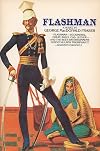
Some time ago Kingsley Amis recommended 'Flashman' as a 'good read' on a BBC radio programme so I decided to give this a try. Although not initially persuaded, it was not long before I agreed with him. It is an old-fashioned adventure tale but with some interesting twists.
The main twist is that it is the historical memoir of the bully in 'Tom Brown's Schooldays', a coward and a cad with a totally cynical attitude to the world and an attitude to women and to people with a browner shade of skin than his that is wholly reprehensible (certainly today).
Some have taken 'Flashman' to be some kind of anti-imperialist tract but the author denies it. A bit of inquiry into the man (a journalist of the old school in whom cynicism might be professionally baked in) and into his times suggest that little could be more ridiculous than such a claim.
The book appeared in 1969. The author was born in 1925 (and Kingsley Amis in 1922) so what we are seeing is the same sort of response to an older generation that inspired Lytton Strachey to have a go at the Victorians in 1918. One of Strachey's four targets was, of course, Thomas Arnold.
Whereas immediately after the First World War, Strachey and the Bloomsbury mob were unravelling the reputations of actual Victorians, the 1960s was seeing an unravelling of the culture they had left behind. This still dominated middle class education in the 1940s and 1950s.
I went to a grammar school in the late 1960s that held to the forms that Arnold at Rugby show more would have recognised until there was an almost overnight 'middle class' cultural revolution that turned things around into 'modernity' conceptually and formally by the mid-1970s.
Fraser is just having fun in this context. His cynical journalistic eye and love of history combine with a memory of imperial writing for boys, like that of Henty and perhaps Haggard, in order to dig Flashman out of Thomas Hughes' fictional Rugby to become an imperial anti-hero.
He does this superbly. Fraser writes fluidly and flawlessly in his attempt to recreate the actuality of Victorian imperial Britain and (in this particular book) the Raj. He then slots in this lucky monster who ends up a hero despite being an unpleasant coward.
The message (although this is not a novel of messages) is that the bully and the coward can thrive in any system because systems rarely ask difficult questions. The outrageous quick-witted liar (Flashman is highly intelligent) can always play to the expectations of those around him.
In that sense, although there is luck in the game (truly heroic awkward witnesses do not remain to speak of Flashman's cowardice because, being heroic, they have a tendency to die off), Flashman's sociopathic intelligence also makes his luck for him
As the character unfolded, he brought to mind more than one person I have met in corporate and political life whose ability to survive and rise would seem puzzling to anyone who bothers to think about it. They had the qualities that Flashman had.
I have also met many heroic souls who actually did the work or had the ideas or maintained a moral stance but who were thrown to the way side and even had their lives ruined as some Flashman stepped over their heroic bodies. The Labour Party is riddled with both types.
Fraser's genius lies in his research. The idea that the aged Flashman would, decades later, expose his crimes in a memoir, as a final tweak of Victorian society's nose during its last decade, may not be wholly credible. Everything else appears to be. The book even has 'notes' to explain historical points.
In this case, military life in the very early years of Victoria and the appalling farrago that was the British withdrawal from Afghanistan in 1842 are drawn with believable clarity as are pen portraits of figures like the idiotic Lord Cardigan, the Duke of Wellington or Thomas Babington Macauley.
At one point late in the novel, Fraser has fun with Macauley's poem about Horatius defending the bridge to show us how Victorian society created a problem for itself with its own mythos. In contrast we have the common sense military attitude of the great Duke of Wellington.
Wellington is not central to the story but he might be to an understanding where the Empire was to go wrong later. For all his faults, Fraser's Wellington is a practical man in a world of incompetent aristocrats and idealistic prigs. You suspect the Duke would eventually have seen through Flashy.
The point here is that Fraser is never snide about the Victorians. He tells it like it is. The issue is not Victorian decency or indecency, competence or incompetence, pomposity or heroic action at the individual level but one of social roles that hold things together yet let Flashman through the cracks.
Indeed, where the historical record shows an intelligent or competent officer or administrator, Fraser will show that man to be intelligent or competent in his story. His characters are real people, not stereotypes, and, with one or two exceptions, this applies to the Afghans he portrays.
The commitment to historical accuracy is so great that the novel stands as an imaginative and true account of the First Afghan War except, of course, whenever Flashman himself does or does not do something. The tropes of late (rather than early) Victorian adventure literature then kick in.
Of course, we are appalled by Flashman even as we engage with his rascality and find ourselves rather admiring of his ability to come out on top, more often by luck than judgement. We stand embarrassed by our own appreciation of his account of the social cant that allows him to flourish.
It is one of a series of books, eventually amounting to twelve novels that can be read chronologically as a form of fictional autobiography. I am tempted to proceed to the next one eventually. In the meantime, I can confirm that Amis was right - it is a very good read. show less
The main twist is that it is the historical memoir of the bully in 'Tom Brown's Schooldays', a coward and a cad with a totally cynical attitude to the world and an attitude to women and to people with a browner shade of skin than his that is wholly reprehensible (certainly today).
Some have taken 'Flashman' to be some kind of anti-imperialist tract but the author denies it. A bit of inquiry into the man (a journalist of the old school in whom cynicism might be professionally baked in) and into his times suggest that little could be more ridiculous than such a claim.
The book appeared in 1969. The author was born in 1925 (and Kingsley Amis in 1922) so what we are seeing is the same sort of response to an older generation that inspired Lytton Strachey to have a go at the Victorians in 1918. One of Strachey's four targets was, of course, Thomas Arnold.
Whereas immediately after the First World War, Strachey and the Bloomsbury mob were unravelling the reputations of actual Victorians, the 1960s was seeing an unravelling of the culture they had left behind. This still dominated middle class education in the 1940s and 1950s.
I went to a grammar school in the late 1960s that held to the forms that Arnold at Rugby show more would have recognised until there was an almost overnight 'middle class' cultural revolution that turned things around into 'modernity' conceptually and formally by the mid-1970s.
Fraser is just having fun in this context. His cynical journalistic eye and love of history combine with a memory of imperial writing for boys, like that of Henty and perhaps Haggard, in order to dig Flashman out of Thomas Hughes' fictional Rugby to become an imperial anti-hero.
He does this superbly. Fraser writes fluidly and flawlessly in his attempt to recreate the actuality of Victorian imperial Britain and (in this particular book) the Raj. He then slots in this lucky monster who ends up a hero despite being an unpleasant coward.
The message (although this is not a novel of messages) is that the bully and the coward can thrive in any system because systems rarely ask difficult questions. The outrageous quick-witted liar (Flashman is highly intelligent) can always play to the expectations of those around him.
In that sense, although there is luck in the game (truly heroic awkward witnesses do not remain to speak of Flashman's cowardice because, being heroic, they have a tendency to die off), Flashman's sociopathic intelligence also makes his luck for him
As the character unfolded, he brought to mind more than one person I have met in corporate and political life whose ability to survive and rise would seem puzzling to anyone who bothers to think about it. They had the qualities that Flashman had.
I have also met many heroic souls who actually did the work or had the ideas or maintained a moral stance but who were thrown to the way side and even had their lives ruined as some Flashman stepped over their heroic bodies. The Labour Party is riddled with both types.
Fraser's genius lies in his research. The idea that the aged Flashman would, decades later, expose his crimes in a memoir, as a final tweak of Victorian society's nose during its last decade, may not be wholly credible. Everything else appears to be. The book even has 'notes' to explain historical points.
In this case, military life in the very early years of Victoria and the appalling farrago that was the British withdrawal from Afghanistan in 1842 are drawn with believable clarity as are pen portraits of figures like the idiotic Lord Cardigan, the Duke of Wellington or Thomas Babington Macauley.
At one point late in the novel, Fraser has fun with Macauley's poem about Horatius defending the bridge to show us how Victorian society created a problem for itself with its own mythos. In contrast we have the common sense military attitude of the great Duke of Wellington.
Wellington is not central to the story but he might be to an understanding where the Empire was to go wrong later. For all his faults, Fraser's Wellington is a practical man in a world of incompetent aristocrats and idealistic prigs. You suspect the Duke would eventually have seen through Flashy.
The point here is that Fraser is never snide about the Victorians. He tells it like it is. The issue is not Victorian decency or indecency, competence or incompetence, pomposity or heroic action at the individual level but one of social roles that hold things together yet let Flashman through the cracks.
Indeed, where the historical record shows an intelligent or competent officer or administrator, Fraser will show that man to be intelligent or competent in his story. His characters are real people, not stereotypes, and, with one or two exceptions, this applies to the Afghans he portrays.
The commitment to historical accuracy is so great that the novel stands as an imaginative and true account of the First Afghan War except, of course, whenever Flashman himself does or does not do something. The tropes of late (rather than early) Victorian adventure literature then kick in.
Of course, we are appalled by Flashman even as we engage with his rascality and find ourselves rather admiring of his ability to come out on top, more often by luck than judgement. We stand embarrassed by our own appreciation of his account of the social cant that allows him to flourish.
It is one of a series of books, eventually amounting to twelve novels that can be read chronologically as a form of fictional autobiography. I am tempted to proceed to the next one eventually. In the meantime, I can confirm that Amis was right - it is a very good read. show less
The Book Of Symbols: Reflections On Archetypal Images (The Archive for Research in Archetypal Symbolism) by Ami Ronnberg
'The Book of Symbols' is a reference work which might overwhelm if you tried to read every word from the beginning of its near 800 pages, although half of these are excellent illustrations (as excellent as we have come to expect from the publishers Taschen).
Nevertheless, you may find it difficult not to peer into every page as the compilers explore the symbolism of word-concepts in multiple cultures, including nods to science, Jungian psychology and alchemy and not forgetting First World indigenous cultures.
Instead of the painfully useless A-Z model of so many attempts at the encyclopedic, the compilers divide the subject matter by categories we can all relate to. The five principle ones are Creation and Cosmos, the Plant World, the Animal World, the Human World and the Spirit World.
You can thus move forwards from concepts like Ocean or Darkness through Tree or Mandrake, Fish or Peacock, Ascent, Stranger, Castle or Gray (one of several explorations of colour as symbol) through to Dot/Bindu and Dismemberment. Nothing is ignored including symbols of sex and death.
Beautifully produced, accessing a variety of myths and ideas with perhaps only the obscurities of Jungian psychology as a contemporary form of magical thought sometimes going over the top, the book serves as trigger for both further research and independent thought.
As a pot-pourri, this is not the place to go for a narrative about any particular cultural system but rather a way of understanding the huge variation show more in the ways that we humans take 'things' or states of being or non-being and give them often-contradictory meanings.
Indeed, if there is an overwhelming impression it is that contradiction is central to the human condition as we follow the logic of one cultural model over and against another but also that there are some primordial human reactions to the world beneath the contradictions for the reader to consider.
As to the latter, this is work to be undertaken by the reader and not the compiler so the book is a starting point and certainly not a conclusion. There is an interesting tension here between knowing a multiplicity of meanings (the role of the book) and establishing our own firm meaning in the world.
On the one hand, the former tends to 'tolerance' but also a form of stand-offishness about making choices and belonging whose extreme variant might be Chaos Magick yet the latter can weaken its 'healing' force for the individual by being 'too tolerant' of the variation in human symbolisation.
In a globalised world, the effort to ensure that all meanings are validly human (which is true enough) undermines social meaning ('religion') and the restrictive discipline of 'belonging' to a particular framework of meaning.
This is confusing for many personality types and, though this reviewer can happily detach himself from all or any contingent meanings, as many people are made anxious by loss of shared meaning as are liberated from not having someone else's meaning thrust upon them.
There is almost certainly no going back, which is why literature like 'The Handmaid's Tale' and Islamophobia, and all the other phobias of places where meaning still exists, can be classed amongst modern liberals as an iteration of the Gothick.
Our cultural framework into which we are born or, less often, which we choose may dictate how we square the contradictions so that we no longer have to think two or more impossible things before breakfast but our modern world has turned most of us into romantic generalists or the indifferent.
The sweet but sadly weak attempt to have 'faith' that respects all other faiths is either no faith at all or the sinister patronising of the 'other' to help neutralise their potential sting by equalising them in public whilst still insisting on the secret superiority of one's own symbolic model.
The psychotherapies of meaning have emerged to try and deal with the effects of contradiction but have increasingly become imposers of meaning (despite their avowed original intention) in their turn, probably because it is actually extremely difficult for any human to detach themselves from the need.
As a sceptic about our own condition interested in the deeper underlying drivers of what it is to be human and considering the forms of being human to be very contingent in time and space, this book confirms me in that stance ... which may not be what was intended.
Nevertheless, the study of the symbol is less the study of 'man' and more the study of the covering men give themselves to avoid or evade the deeper and sometimes disturbing process of thinking what underlays what it is to be human but, as such, it is a necessary preliminary to deeper thought. show less
Nevertheless, you may find it difficult not to peer into every page as the compilers explore the symbolism of word-concepts in multiple cultures, including nods to science, Jungian psychology and alchemy and not forgetting First World indigenous cultures.
Instead of the painfully useless A-Z model of so many attempts at the encyclopedic, the compilers divide the subject matter by categories we can all relate to. The five principle ones are Creation and Cosmos, the Plant World, the Animal World, the Human World and the Spirit World.
You can thus move forwards from concepts like Ocean or Darkness through Tree or Mandrake, Fish or Peacock, Ascent, Stranger, Castle or Gray (one of several explorations of colour as symbol) through to Dot/Bindu and Dismemberment. Nothing is ignored including symbols of sex and death.
Beautifully produced, accessing a variety of myths and ideas with perhaps only the obscurities of Jungian psychology as a contemporary form of magical thought sometimes going over the top, the book serves as trigger for both further research and independent thought.
As a pot-pourri, this is not the place to go for a narrative about any particular cultural system but rather a way of understanding the huge variation show more in the ways that we humans take 'things' or states of being or non-being and give them often-contradictory meanings.
Indeed, if there is an overwhelming impression it is that contradiction is central to the human condition as we follow the logic of one cultural model over and against another but also that there are some primordial human reactions to the world beneath the contradictions for the reader to consider.
As to the latter, this is work to be undertaken by the reader and not the compiler so the book is a starting point and certainly not a conclusion. There is an interesting tension here between knowing a multiplicity of meanings (the role of the book) and establishing our own firm meaning in the world.
On the one hand, the former tends to 'tolerance' but also a form of stand-offishness about making choices and belonging whose extreme variant might be Chaos Magick yet the latter can weaken its 'healing' force for the individual by being 'too tolerant' of the variation in human symbolisation.
In a globalised world, the effort to ensure that all meanings are validly human (which is true enough) undermines social meaning ('religion') and the restrictive discipline of 'belonging' to a particular framework of meaning.
This is confusing for many personality types and, though this reviewer can happily detach himself from all or any contingent meanings, as many people are made anxious by loss of shared meaning as are liberated from not having someone else's meaning thrust upon them.
There is almost certainly no going back, which is why literature like 'The Handmaid's Tale' and Islamophobia, and all the other phobias of places where meaning still exists, can be classed amongst modern liberals as an iteration of the Gothick.
Our cultural framework into which we are born or, less often, which we choose may dictate how we square the contradictions so that we no longer have to think two or more impossible things before breakfast but our modern world has turned most of us into romantic generalists or the indifferent.
The sweet but sadly weak attempt to have 'faith' that respects all other faiths is either no faith at all or the sinister patronising of the 'other' to help neutralise their potential sting by equalising them in public whilst still insisting on the secret superiority of one's own symbolic model.
The psychotherapies of meaning have emerged to try and deal with the effects of contradiction but have increasingly become imposers of meaning (despite their avowed original intention) in their turn, probably because it is actually extremely difficult for any human to detach themselves from the need.
As a sceptic about our own condition interested in the deeper underlying drivers of what it is to be human and considering the forms of being human to be very contingent in time and space, this book confirms me in that stance ... which may not be what was intended.
Nevertheless, the study of the symbol is less the study of 'man' and more the study of the covering men give themselves to avoid or evade the deeper and sometimes disturbing process of thinking what underlays what it is to be human but, as such, it is a necessary preliminary to deeper thought. show less

Norway seems to have played little part in English and then British-Imperial strategic calculations betweeen the age of the Vikings and the twentieth century which may seem surprising if you look at a map and see how it faces off the British Isles across the North Sea.
In fact, the logic of lack of interest lies in the fact that post-Viking Norway was a dependency of powers more linked to the Baltic until 1905. Its strategically important long coastline was an impoverished add-on to its southern heartland closer to Denmark, Germany and Sweden.
Cultural relations were always good albeit a minority interest and the Scots were closer through the Shetlands and Orkneys than the English but Norway was only thrust into the British strategic spotlight when the Germans invaded the country in 1940.
Even then, the British clumsily conceded defeat in order to concentrate on France. The resulting debacle was instrumental in the removal of Neville Chamberlain from office and his replacement by a Coalition under Winston Churchill.
Norway had its own internal issues with its democratic-monarchist establishment which faced towards a relatively unresponsive London being politically matched by the rise of a native Germanophile fascism that gave us the word 'quisling' for a collaborative traitor.
There were only around 700,000 able-bodied men in Norway, largely fragmented and untrained. The German military averaged around 350,000-400,000. They were fully trained and supported by around 45,000 show more native fascists. Those are not good odds for an uprising.
The resistance movement Milorg could eventually muster 40,000 but this was only by 1945 when it was clear the odds were moving in the Allies full favour. This ratio of occupiers to occupied was extremely unusual so much so that wartime Norway has been called a 'garrison state'.
It is not often realised that the sheer scale of the German military presence and its auxiliaries would have made any direct revolt almost certain not to succeed amidst the sort of bloodletting and brutality that had been seen in Poland. Norwegian resistance was wise to limit its ambitions.
Above all, Norway escaped the worst horrors of the war including the starvation seen in the Netherlands or the mass murders of Eastern Europe but it was probably a close run thing. In the end, Milorg was able to move in fast to liberate almost by consent with minimal loss of life.
It would be naive not to believe that many but not a majority of Norwegians were sympathetic to the occupation but the 'nation' (especially the tough coastline) much more resented a loss of a sovereignty only recently acquired. On this resentment, Norwegian resistance was built.
SOE (warfare) and SIS (intelligence) therefore had a pool of tough and committed recruits, mostly quite young and often toughened by work in the unforgiving Norwegian climate. Keeping out NS infiltrators, often equally dedicated, was a full time business, especially in the early days.
Although relations started off a little less than happy at first, the identity of interest between the British Empire and Norway steadily resulted in a relationship of exceptional strategic closeness which is now central to the mutual commitment of both states to NATO.
Insall's book is the story of how a convergence of interest, the exceptional pragmatism of the Norwegian government-in-exile and a rapidly growing respect for the Norwegians amongst the British security services and political class contributed to the later strategic friendship.
This is not a diplomatic history, although diplomacy is mentioned when necessary, but essentially a history of the SOE (warfare) and SIS (intelligence) operations on Norwegian soil from 1940 to 1945. These took time to establish but, once established, were impressive in scope and achievement.
A key aspect here is the relative unimportance of Norway in the great struggle for power. It is to the Norwegians' credit that they understood this and played their game accordingly. Apart from the principle of securing democracy, there were three core reasons for Allied interest.
The first was vital intelligence on the presence of a significant German naval force of which the Tirpitz was the main concern. Its very presence stopped British naval deployment to the Far East and, with the U-Boat presence, threatened the convoy system north to Murmansk and westwards.
The second was, as we have seeen, that Norway was being held by a substantial German force. It was vital to keep it occupied so it could not join other fronts especially in its later stages. The war might have been lengthened by months if it had chosen not to surrender after Donitz' capitulation.
One of the few times Milorg (the resistance militia) broke cover in a major operation was to halt the 'quisling' attempt to conscript tens of thousands of young Norwegian males for the Eastern Front. It forced the occupation government to back down.
The third reason was that Norway's natural resources (the reason for Hitler's initial invasion designed to secure not only these resources but access to neutral Sweden's) were vital to the German war effort and increasingly so as time went on.
Of course the story is well known that Norwegian heavy water was critical to German plans to develop an atomic bomb. This would have been devastating if it could have been developed and carried to British cities or the front line on V-2 rocketry.
SOE and SIS performed different functions with largely Norwegian personnel trained in Britain separate from the resistance militia and directed more to the global strategic game plan than the more limited aim of Norwegian liberation.
There were the usual tensions and misunderstandings and negotiations - the Norwegian Government did not want actions that resulted in reprisals or risk of local starvation - but what is remarkable is how everythying tended to get sorted out in the end.
Because the story is essentially one of the British SOE and SIS, we are, of course, not getting the full story here and this must be understood. Not only is Milorg a separate story but so is the scale of collaboration and the role of the Communists and the late Russian move into Northern Norway.
Yet another story is that of neutral Sweden, primarily concerned with its own survival but vitally important in keeping the British-Norwegian special operations and intelligence flows going. It is remarkable that men were flying between Stockholm and the UK with minimal interruption.
The concentration here on Anglo-Norwegian special operations may not be the whole story but it is a very important story with two significant 'heroic' tales told within the whole - the destruction of the heavy water plant at Vemork and the intelligence war against the Tirpitz.
The book has many other remarkable stories of staggering physical toughness in entering hostile territory, maintaining intelligence outposts, undertaking commando raids, escaping across incredibly environmentally hostile territory and surviving interrogation.
Being secret service not all the relevant documentation has survived. Insall has to contend with lacunae and sometimes to read between the lines but the book remains valuable for its insights into intelligence and security decision-making in the context of total war.
He plays it straight as author. You always knows when he does not know. If the book is really are monograph rather than a complete history, this does not make it less useful. The author has even managed to give us some idea of the personalities involved to temper the necessary operational detail.
The book is instructive as to why Norway is so sensitive about its own sovereign vulnerability and why the Anglo-Norwegian relationship has since been seen by both sides as vital to the security of the other, even more so as the Northern Approaches become strategically important again.
Although they never pressed their advantage and Molotov was rather desultory in his attempt to get something for Russian efforts, Russian boots have stood briefly on Norwegian soil which perhaps concentrates minds in Oslo. This in itself pushes Norway into NATO's hawkish camp.
Perhaps best read from a knowledge of the economics of the Second World War (the convoys on the one side and natural resources on the other), this is also a useful introduction to the wartime reality of undercover operations and to a largely working class Norwegian will to survive. show less
In fact, the logic of lack of interest lies in the fact that post-Viking Norway was a dependency of powers more linked to the Baltic until 1905. Its strategically important long coastline was an impoverished add-on to its southern heartland closer to Denmark, Germany and Sweden.
Cultural relations were always good albeit a minority interest and the Scots were closer through the Shetlands and Orkneys than the English but Norway was only thrust into the British strategic spotlight when the Germans invaded the country in 1940.
Even then, the British clumsily conceded defeat in order to concentrate on France. The resulting debacle was instrumental in the removal of Neville Chamberlain from office and his replacement by a Coalition under Winston Churchill.
Norway had its own internal issues with its democratic-monarchist establishment which faced towards a relatively unresponsive London being politically matched by the rise of a native Germanophile fascism that gave us the word 'quisling' for a collaborative traitor.
There were only around 700,000 able-bodied men in Norway, largely fragmented and untrained. The German military averaged around 350,000-400,000. They were fully trained and supported by around 45,000 show more native fascists. Those are not good odds for an uprising.
The resistance movement Milorg could eventually muster 40,000 but this was only by 1945 when it was clear the odds were moving in the Allies full favour. This ratio of occupiers to occupied was extremely unusual so much so that wartime Norway has been called a 'garrison state'.
It is not often realised that the sheer scale of the German military presence and its auxiliaries would have made any direct revolt almost certain not to succeed amidst the sort of bloodletting and brutality that had been seen in Poland. Norwegian resistance was wise to limit its ambitions.
Above all, Norway escaped the worst horrors of the war including the starvation seen in the Netherlands or the mass murders of Eastern Europe but it was probably a close run thing. In the end, Milorg was able to move in fast to liberate almost by consent with minimal loss of life.
It would be naive not to believe that many but not a majority of Norwegians were sympathetic to the occupation but the 'nation' (especially the tough coastline) much more resented a loss of a sovereignty only recently acquired. On this resentment, Norwegian resistance was built.
SOE (warfare) and SIS (intelligence) therefore had a pool of tough and committed recruits, mostly quite young and often toughened by work in the unforgiving Norwegian climate. Keeping out NS infiltrators, often equally dedicated, was a full time business, especially in the early days.
Although relations started off a little less than happy at first, the identity of interest between the British Empire and Norway steadily resulted in a relationship of exceptional strategic closeness which is now central to the mutual commitment of both states to NATO.
Insall's book is the story of how a convergence of interest, the exceptional pragmatism of the Norwegian government-in-exile and a rapidly growing respect for the Norwegians amongst the British security services and political class contributed to the later strategic friendship.
This is not a diplomatic history, although diplomacy is mentioned when necessary, but essentially a history of the SOE (warfare) and SIS (intelligence) operations on Norwegian soil from 1940 to 1945. These took time to establish but, once established, were impressive in scope and achievement.
A key aspect here is the relative unimportance of Norway in the great struggle for power. It is to the Norwegians' credit that they understood this and played their game accordingly. Apart from the principle of securing democracy, there were three core reasons for Allied interest.
The first was vital intelligence on the presence of a significant German naval force of which the Tirpitz was the main concern. Its very presence stopped British naval deployment to the Far East and, with the U-Boat presence, threatened the convoy system north to Murmansk and westwards.
The second was, as we have seeen, that Norway was being held by a substantial German force. It was vital to keep it occupied so it could not join other fronts especially in its later stages. The war might have been lengthened by months if it had chosen not to surrender after Donitz' capitulation.
One of the few times Milorg (the resistance militia) broke cover in a major operation was to halt the 'quisling' attempt to conscript tens of thousands of young Norwegian males for the Eastern Front. It forced the occupation government to back down.
The third reason was that Norway's natural resources (the reason for Hitler's initial invasion designed to secure not only these resources but access to neutral Sweden's) were vital to the German war effort and increasingly so as time went on.
Of course the story is well known that Norwegian heavy water was critical to German plans to develop an atomic bomb. This would have been devastating if it could have been developed and carried to British cities or the front line on V-2 rocketry.
SOE and SIS performed different functions with largely Norwegian personnel trained in Britain separate from the resistance militia and directed more to the global strategic game plan than the more limited aim of Norwegian liberation.
There were the usual tensions and misunderstandings and negotiations - the Norwegian Government did not want actions that resulted in reprisals or risk of local starvation - but what is remarkable is how everythying tended to get sorted out in the end.
Because the story is essentially one of the British SOE and SIS, we are, of course, not getting the full story here and this must be understood. Not only is Milorg a separate story but so is the scale of collaboration and the role of the Communists and the late Russian move into Northern Norway.
Yet another story is that of neutral Sweden, primarily concerned with its own survival but vitally important in keeping the British-Norwegian special operations and intelligence flows going. It is remarkable that men were flying between Stockholm and the UK with minimal interruption.
The concentration here on Anglo-Norwegian special operations may not be the whole story but it is a very important story with two significant 'heroic' tales told within the whole - the destruction of the heavy water plant at Vemork and the intelligence war against the Tirpitz.
The book has many other remarkable stories of staggering physical toughness in entering hostile territory, maintaining intelligence outposts, undertaking commando raids, escaping across incredibly environmentally hostile territory and surviving interrogation.
Being secret service not all the relevant documentation has survived. Insall has to contend with lacunae and sometimes to read between the lines but the book remains valuable for its insights into intelligence and security decision-making in the context of total war.
He plays it straight as author. You always knows when he does not know. If the book is really are monograph rather than a complete history, this does not make it less useful. The author has even managed to give us some idea of the personalities involved to temper the necessary operational detail.
The book is instructive as to why Norway is so sensitive about its own sovereign vulnerability and why the Anglo-Norwegian relationship has since been seen by both sides as vital to the security of the other, even more so as the Northern Approaches become strategically important again.
Although they never pressed their advantage and Molotov was rather desultory in his attempt to get something for Russian efforts, Russian boots have stood briefly on Norwegian soil which perhaps concentrates minds in Oslo. This in itself pushes Norway into NATO's hawkish camp.
Perhaps best read from a knowledge of the economics of the Second World War (the convoys on the one side and natural resources on the other), this is also a useful introduction to the wartime reality of undercover operations and to a largely working class Norwegian will to survive. show less
A.N. Wilson produced this attempt at an historical biography of Jesus of Nazareth in 1992. It remains a good read today. It is an 'attempt' because there is very little that can be reliably said about the historical Jesus as opposed to the mythos constructed in subsequent years.
His approach is interesting and intuitive rather than speculative. His starting point was then-recent research by Geza Vermes into the historical context of Jesus. This account gives a high probability that Jesus came from the Jewish elite as one of many Holy Men consistent with Judaic expectations.
From there Wilson teases out of the Four Gospels what looks to be viable as humanly real and then separates it out from the propagandistic games involved in subsequent struggles over what Christianity was to become, a process in which Paul was to be central.
The resulting account is, of course, speculative. Yet a fine understanding of the probable and known cultures of Galilee and Judaea in the period in which Jesus lived (a very short period of time) gives us something that is as likely to be credible as we are ever going to get.
What is clear and going to be uncomfortable for most 'Christians' is that, by this account, Jesus was no more a Christian than Marx was a Marxist. He was a Jew thinking along severely Judaic lines within Judaic culture but with a unique and 'pure' take on what that meant.
Two things are going on in this book - what Jesus was and what Jesus became in the hands of the winners of show more that initial ideological struggle for power. The two have to be kept separate because 'Christianity' is not an event but a process that relies on turning Christ's story into an event.
This is not going to be the last word on the matter. Wilson perhaps has his own axe to grind as someone who studied theology but who became troubled by the story he was given as truth yet he retains respect for the 'noble lie' that emerged out of those early struggles.
He also makes clear, certainly to this reader, evidentially that the Jews cannot be accused of Jesus' death in the way the later Church indicated (leading to the wide acceptance of anti-semitism). Only the Romans could decide on such a killing. Making the Jews responsible was propaganda.
What Wilson introduces are two ideas that the Gospels have no interest in promoting. The first is that Jesus' nexus of relationships looks to have been larger than those implied by the Gospels and that some of those connections were much more involved in Jewish politics than we thought.
The second is that Jesus was involved in a dramatic quasi-political operation (in a nation where religion was politics) and that his intervention was mistimed and misunderstood. He emerged in a calculated way but then got outplayed by his historical situation.
The Jewish establishment, trying to protect their own people, was trapped by being subject to the risk of brutal retaliation against Jews for radical acts by the Roman occupiers. They were forced into collaboration as apparently the lesser evil (not for the last time in Jewish history).
The Romans faced by what they thought might be an incipient revolt simply dealt with what they presumed to be a ringleader in a difficult situation without any interest whatsoever in what Jesus was actually trying to say or do.
In fact, although not overly explicit, we can tease out from Wilson's account that Jesus was interested in unifying the Jewish population around their cultural and spiritual identity in a deliberate move away from violent and useless (as it proved) confrontation with Rome.
Jesus' position was not 'gentle, meek and mild' but it was also not politically revolutionary. It was rather a dynamic message directed solely at Jews which emphasised that all Jews were of equal worth in belonging to the nation under God and that they should cohere as a nation.
We will never know the precise politics of this but it is plausible that such an ethno-nationalist message might still be regarded as problematic and confrontational by Rome, that the Jewish elite forced to collaborate were worried and that revolutionary involvement was engaged.
It also seems to be the case that a belief approach that was developed in relatively free non-Roman Galilee was entering into occupied Judaea, and especially Jerusalem, and that the Galileans understood what Jesus meant better than the new enthusiasts in the occupied heartland.
As to the belief system, this is the bridge to the later Church because the spiritual purification of Judaism to ensure the survival of the nation meant inclusive values and moral standards that could be transferred to the world at large after the failure of the first mission.
And this is what seems to have happened. The family core of the mission re-established control as an elite operation within Judaism but Paul's rethinking of that mission to include the Gentiles not merely challenged this but won out in the propaganda wars through the Gospels.
Jesus who died a disappointed Jew (if he died) saw the moral core of his message to the Jews radically transformed into a belief system that followed the increasingly hellenised diaspora, drew in gentiles and became the Church, the rock on which Christianity was to be built.
Personally, though I know no more than anyone else as to the actual facts of the case, Wilson's method (though he does not say this himself) allows me the space to say that it is possible (no more) that Jesus survived and leaves the picture, exiling himself far away from the Roman world.
The book has to be read in order to capture exactly what I mean by 'Wilson's method' which I constantly take to be one of using what little evidence is to hand to suggest plausible probabilities (with few certainties) and some space for possibilities.
I found much of it persuasive though never to the point of saying that I accepted this or that to be definitively true but only that this or that claim seems to be the most probable explanation, certainly better than relying on faith or an uncritical view of often propagandistic early church writing.
So, where does this leave faith? Much where it was before. Faith is faith. It is never going to be unravelled, except for people with a mind to critical thinking, if it is already in place. Some two thousand years of history have constructed a civilisational framework hard to beat.
Faith is not about the truth of any matter objectively or scientifically speaking but rather a truth that is used for organisational, social or individual psychological cohesion. The costs of unravelling faith is disorder as much in the collapse of individual identity as in social cohesion.
For the flexible faith-based intellectual, the historical (probabilistic) truth and the truth of revelation can co-exist despite the absurdities and illogicalities because they have to co-exist. If one of these has to die, well, it has to be the historical claim rather than the claim of belief.
To be fair, Wilson's aim is not to undermine faith at all. He respects it. He simply seems to want it to be seen for what it is and respected for what it is. The facts of the matter are simply to stand alongside it. The truth of the matter will at least moderate some nastier absurdities like antisemitism.
Naturally, the Christian community did not like the book (well, they would not, would they?) but it really does not matter. They are on strong ground in worrying about Wilson's intuitive approach to what facts there are but his approach is still stronger than their simple faith ... except as faith.
My recommendation is to take a deep breath, read the book with an open mind and choose which balance of common sense and faith suits you. Certainly Wilson is rigorous in his reasoning with what material he has. Jesus as Jew first and foremost in and around 30AD just seems right. show less
His approach is interesting and intuitive rather than speculative. His starting point was then-recent research by Geza Vermes into the historical context of Jesus. This account gives a high probability that Jesus came from the Jewish elite as one of many Holy Men consistent with Judaic expectations.
From there Wilson teases out of the Four Gospels what looks to be viable as humanly real and then separates it out from the propagandistic games involved in subsequent struggles over what Christianity was to become, a process in which Paul was to be central.
The resulting account is, of course, speculative. Yet a fine understanding of the probable and known cultures of Galilee and Judaea in the period in which Jesus lived (a very short period of time) gives us something that is as likely to be credible as we are ever going to get.
What is clear and going to be uncomfortable for most 'Christians' is that, by this account, Jesus was no more a Christian than Marx was a Marxist. He was a Jew thinking along severely Judaic lines within Judaic culture but with a unique and 'pure' take on what that meant.
Two things are going on in this book - what Jesus was and what Jesus became in the hands of the winners of show more that initial ideological struggle for power. The two have to be kept separate because 'Christianity' is not an event but a process that relies on turning Christ's story into an event.
This is not going to be the last word on the matter. Wilson perhaps has his own axe to grind as someone who studied theology but who became troubled by the story he was given as truth yet he retains respect for the 'noble lie' that emerged out of those early struggles.
He also makes clear, certainly to this reader, evidentially that the Jews cannot be accused of Jesus' death in the way the later Church indicated (leading to the wide acceptance of anti-semitism). Only the Romans could decide on such a killing. Making the Jews responsible was propaganda.
What Wilson introduces are two ideas that the Gospels have no interest in promoting. The first is that Jesus' nexus of relationships looks to have been larger than those implied by the Gospels and that some of those connections were much more involved in Jewish politics than we thought.
The second is that Jesus was involved in a dramatic quasi-political operation (in a nation where religion was politics) and that his intervention was mistimed and misunderstood. He emerged in a calculated way but then got outplayed by his historical situation.
The Jewish establishment, trying to protect their own people, was trapped by being subject to the risk of brutal retaliation against Jews for radical acts by the Roman occupiers. They were forced into collaboration as apparently the lesser evil (not for the last time in Jewish history).
The Romans faced by what they thought might be an incipient revolt simply dealt with what they presumed to be a ringleader in a difficult situation without any interest whatsoever in what Jesus was actually trying to say or do.
In fact, although not overly explicit, we can tease out from Wilson's account that Jesus was interested in unifying the Jewish population around their cultural and spiritual identity in a deliberate move away from violent and useless (as it proved) confrontation with Rome.
Jesus' position was not 'gentle, meek and mild' but it was also not politically revolutionary. It was rather a dynamic message directed solely at Jews which emphasised that all Jews were of equal worth in belonging to the nation under God and that they should cohere as a nation.
We will never know the precise politics of this but it is plausible that such an ethno-nationalist message might still be regarded as problematic and confrontational by Rome, that the Jewish elite forced to collaborate were worried and that revolutionary involvement was engaged.
It also seems to be the case that a belief approach that was developed in relatively free non-Roman Galilee was entering into occupied Judaea, and especially Jerusalem, and that the Galileans understood what Jesus meant better than the new enthusiasts in the occupied heartland.
As to the belief system, this is the bridge to the later Church because the spiritual purification of Judaism to ensure the survival of the nation meant inclusive values and moral standards that could be transferred to the world at large after the failure of the first mission.
And this is what seems to have happened. The family core of the mission re-established control as an elite operation within Judaism but Paul's rethinking of that mission to include the Gentiles not merely challenged this but won out in the propaganda wars through the Gospels.
Jesus who died a disappointed Jew (if he died) saw the moral core of his message to the Jews radically transformed into a belief system that followed the increasingly hellenised diaspora, drew in gentiles and became the Church, the rock on which Christianity was to be built.
Personally, though I know no more than anyone else as to the actual facts of the case, Wilson's method (though he does not say this himself) allows me the space to say that it is possible (no more) that Jesus survived and leaves the picture, exiling himself far away from the Roman world.
The book has to be read in order to capture exactly what I mean by 'Wilson's method' which I constantly take to be one of using what little evidence is to hand to suggest plausible probabilities (with few certainties) and some space for possibilities.
I found much of it persuasive though never to the point of saying that I accepted this or that to be definitively true but only that this or that claim seems to be the most probable explanation, certainly better than relying on faith or an uncritical view of often propagandistic early church writing.
So, where does this leave faith? Much where it was before. Faith is faith. It is never going to be unravelled, except for people with a mind to critical thinking, if it is already in place. Some two thousand years of history have constructed a civilisational framework hard to beat.
Faith is not about the truth of any matter objectively or scientifically speaking but rather a truth that is used for organisational, social or individual psychological cohesion. The costs of unravelling faith is disorder as much in the collapse of individual identity as in social cohesion.
For the flexible faith-based intellectual, the historical (probabilistic) truth and the truth of revelation can co-exist despite the absurdities and illogicalities because they have to co-exist. If one of these has to die, well, it has to be the historical claim rather than the claim of belief.
To be fair, Wilson's aim is not to undermine faith at all. He respects it. He simply seems to want it to be seen for what it is and respected for what it is. The facts of the matter are simply to stand alongside it. The truth of the matter will at least moderate some nastier absurdities like antisemitism.
Naturally, the Christian community did not like the book (well, they would not, would they?) but it really does not matter. They are on strong ground in worrying about Wilson's intuitive approach to what facts there are but his approach is still stronger than their simple faith ... except as faith.
My recommendation is to take a deep breath, read the book with an open mind and choose which balance of common sense and faith suits you. Certainly Wilson is rigorous in his reasoning with what material he has. Jesus as Jew first and foremost in and around 30AD just seems right. show less
This carefully curated (one might almost say 'over-academic') collection of four Henry James' supernatural stories of the 1890s is well worth reading together rather than singly. What we see is not so much a focus on the supernatural as on the supernatural as coded social commentary.
This is the literature of unease but not an uneasiness about worlds outside our own entering ours (which is the staple of weird fiction) but of the social and psychological worlds within which the 'ghosts' speak to us.
James, whose prose style is exceptionally precise yet often convoluted and not always something that 'flows' but rather which demands attention to get meanings often at the very edge of understanding, has his supernatural express what is hard to say directly to a nineteenth century elite audience.
The 'ghosts' (such as they are) are often sublimated feelings or conditions which the author has decided to 'realise' (real-ise) so that the reader will get a frisson from his or her recognition of something on the edge of their own social perception but which is still culturally difficult to state.
'Sir Edmund Orme' treats of guilt at trivialising another's emotion, 'Owen Wingrave' of defiance of enforced social convention where heroism lies in defying the demand to be heroic and 'The Friends of Friends' tells of the dangerous emotion of instinctive desire that breaks social demands.
The ghosts and the supernatural enable the stories to be told elliptically and sometimes tragically. The show more upper middle class reader does not have to make moral judgements but only experience the unease that would be felt if they were forced to do so in company. James saves their embarrassment,
To uncover the moral problems in these cases, where individual reality comes up against social convention, would require someone to make an existential choice for or against guilty acts and for or against commitment to the self over social expectation. This is not what Victorians wanted to do.
James' realism (his supernatural is embedded in the social conditions of his time) is at its most effective when emotion explodes into direct view - as when the female narrator of 'Friends' suddenly has to breach (irrationally or socially rationally?) the conditions of her assumed future happiness.
When she sees how her intended relates to what appears to be a 'ghost', she feels betrayed. Yet she was the instrument. She can forgive neither him nor herself. They would have been happy together in convention if not for an incident (perhaps as much as Nora and Thorvald in 'A Doll's House').
James captures all the complexity of the human condition and conventional upper middle class sexual relations in this masterful story just as he explores simpler determinations and feelings in 'Orme' and 'Wingrave'. Yet always things must re-stabilise eventually into conventional social reality.
This brings us to the classic 'The Turn of the Screw' which has always had two interpretations - that the narrator is unhinged (perhaps from romantic sexual longing for an ideal) or that there really are two evil figures corrupting two innocent children.
Much ink has been expended on trying to demonstrate one case rather than the other but the operation is futile. The ambiguity strikes me as intentional. The text could be interpreted in either direction. Even an apparently decisive textual point can be made to crumble with determination.
Perhaps the contemporary perception of the story itself being 'evil' lies intuitively in this refusal to not resolve the matter for the reader. After all, hanging in the air is the death of a child which is at the hands of the ghost, of a governess or of neither.
The narrator is unreliable. Every 'fact' is told us by her and her alone. The agreement to the facts of Mrs Grose, the housekeeper, is only the agreement as constantly supplied by the narrator on her terms. Is the manuscript that of a psychotic or a victim of evil that she valiantly stands against?
This irresolution takes us back to the earlier stories where there is in each case a resolution - a happy conclusion, a death and a breach that allows the narrator to progress. But here there is a final shocking event and then a manuscript on which we may not be able to rely.
The unease thus lies in the uncertainty. The framing introduction is important here because the story is regarded as so shocking that the gentlemen seem pleased in retrospect that the ladies had to leave and could not hear its telling. The latter had expected a classic ghost story, not a tale of evil.
As to the reading audience, the shock would have been greater in 1898 than to our jaded palates because it would be difficult to admit the governess was unhinged and possibly complicit in the shocking event. The evil must lie in two lower class servants.
Bear in mind the peculiar status of governesses in Victorian society. Generally poorly qualified, they were often young and inexperienced with child-minding the only way to remain within the comfort of their class yet were no less dependant than a servant. Governesses were ambigiuous creatures.
And this is the other factor in the game. Exactly what evil are we talking about? The nature of the evil is never stated. We never really know what Miles got expelled from school for. It obviously was unmentionable by the headmaster in his letter.
Is there a dark implication of some abuse that got replayed at school since what we seem to be told (if reliable) is not that Miles did something but that he said something unmentionable? If it was unmentionable in the story, you can be sure it would be unmentionable when the story was discussed.
This air of mystery directs itself into the reader's unease - as much at his or her own inner thoughts about the story as at what happens in the story. The 'ghost' (dark thoughts) may be no more than the imaginings within the reader. The story is evil because it brings evil thoughts to mind.
It has to be said that James does get himself into a pickle once or twice in his use of language where things become a little incoherent in exchanges but this occasional incoherence seems to be necessitated by his project which requires that he can never be explicit about the core of the tale.
One incident strikes me as important. The narrator is so shaken by a conversation with Miles (where to be honest he says nothing that could not be reasonably interpreted as just 'growing up') that she cannot enter church for service and runs away.
Why? This is never truly explained. Whereas vampires and ghouls cannot enter a church, Miles and his little sister have no difficulty but our governess does. What might that say about the source of evil here - is she tainted by her thoughts and are the children truly innocent?
Time and time again, we come back to their being only one narrator to retain our faith in the tale. Are any children quite so perfect and unsullied? Is her account of Quint and Miss Jessel truly 'ab initio'? Why do others not see what she sees while she indicates that they sense their reality?
Four remarkable stories that show a most subtle literary genius at work but one who refuses both didacticism and art for art's sake. In these stories, James shows up a mirror to the secret lives of his conventional readers without intending to have them judged.
This particular edition also has a great deal of scholarly background material related to the stories but the academicism of introduction, appendices, notes and variant readings rather misses the point. Even James' own later 'Prefaces' add little. The stories stand in and of themselves. show less
This is the literature of unease but not an uneasiness about worlds outside our own entering ours (which is the staple of weird fiction) but of the social and psychological worlds within which the 'ghosts' speak to us.
James, whose prose style is exceptionally precise yet often convoluted and not always something that 'flows' but rather which demands attention to get meanings often at the very edge of understanding, has his supernatural express what is hard to say directly to a nineteenth century elite audience.
The 'ghosts' (such as they are) are often sublimated feelings or conditions which the author has decided to 'realise' (real-ise) so that the reader will get a frisson from his or her recognition of something on the edge of their own social perception but which is still culturally difficult to state.
'Sir Edmund Orme' treats of guilt at trivialising another's emotion, 'Owen Wingrave' of defiance of enforced social convention where heroism lies in defying the demand to be heroic and 'The Friends of Friends' tells of the dangerous emotion of instinctive desire that breaks social demands.
The ghosts and the supernatural enable the stories to be told elliptically and sometimes tragically. The show more upper middle class reader does not have to make moral judgements but only experience the unease that would be felt if they were forced to do so in company. James saves their embarrassment,
To uncover the moral problems in these cases, where individual reality comes up against social convention, would require someone to make an existential choice for or against guilty acts and for or against commitment to the self over social expectation. This is not what Victorians wanted to do.
James' realism (his supernatural is embedded in the social conditions of his time) is at its most effective when emotion explodes into direct view - as when the female narrator of 'Friends' suddenly has to breach (irrationally or socially rationally?) the conditions of her assumed future happiness.
When she sees how her intended relates to what appears to be a 'ghost', she feels betrayed. Yet she was the instrument. She can forgive neither him nor herself. They would have been happy together in convention if not for an incident (perhaps as much as Nora and Thorvald in 'A Doll's House').
James captures all the complexity of the human condition and conventional upper middle class sexual relations in this masterful story just as he explores simpler determinations and feelings in 'Orme' and 'Wingrave'. Yet always things must re-stabilise eventually into conventional social reality.
This brings us to the classic 'The Turn of the Screw' which has always had two interpretations - that the narrator is unhinged (perhaps from romantic sexual longing for an ideal) or that there really are two evil figures corrupting two innocent children.
Much ink has been expended on trying to demonstrate one case rather than the other but the operation is futile. The ambiguity strikes me as intentional. The text could be interpreted in either direction. Even an apparently decisive textual point can be made to crumble with determination.
Perhaps the contemporary perception of the story itself being 'evil' lies intuitively in this refusal to not resolve the matter for the reader. After all, hanging in the air is the death of a child which is at the hands of the ghost, of a governess or of neither.
The narrator is unreliable. Every 'fact' is told us by her and her alone. The agreement to the facts of Mrs Grose, the housekeeper, is only the agreement as constantly supplied by the narrator on her terms. Is the manuscript that of a psychotic or a victim of evil that she valiantly stands against?
This irresolution takes us back to the earlier stories where there is in each case a resolution - a happy conclusion, a death and a breach that allows the narrator to progress. But here there is a final shocking event and then a manuscript on which we may not be able to rely.
The unease thus lies in the uncertainty. The framing introduction is important here because the story is regarded as so shocking that the gentlemen seem pleased in retrospect that the ladies had to leave and could not hear its telling. The latter had expected a classic ghost story, not a tale of evil.
As to the reading audience, the shock would have been greater in 1898 than to our jaded palates because it would be difficult to admit the governess was unhinged and possibly complicit in the shocking event. The evil must lie in two lower class servants.
Bear in mind the peculiar status of governesses in Victorian society. Generally poorly qualified, they were often young and inexperienced with child-minding the only way to remain within the comfort of their class yet were no less dependant than a servant. Governesses were ambigiuous creatures.
And this is the other factor in the game. Exactly what evil are we talking about? The nature of the evil is never stated. We never really know what Miles got expelled from school for. It obviously was unmentionable by the headmaster in his letter.
Is there a dark implication of some abuse that got replayed at school since what we seem to be told (if reliable) is not that Miles did something but that he said something unmentionable? If it was unmentionable in the story, you can be sure it would be unmentionable when the story was discussed.
This air of mystery directs itself into the reader's unease - as much at his or her own inner thoughts about the story as at what happens in the story. The 'ghost' (dark thoughts) may be no more than the imaginings within the reader. The story is evil because it brings evil thoughts to mind.
It has to be said that James does get himself into a pickle once or twice in his use of language where things become a little incoherent in exchanges but this occasional incoherence seems to be necessitated by his project which requires that he can never be explicit about the core of the tale.
One incident strikes me as important. The narrator is so shaken by a conversation with Miles (where to be honest he says nothing that could not be reasonably interpreted as just 'growing up') that she cannot enter church for service and runs away.
Why? This is never truly explained. Whereas vampires and ghouls cannot enter a church, Miles and his little sister have no difficulty but our governess does. What might that say about the source of evil here - is she tainted by her thoughts and are the children truly innocent?
Time and time again, we come back to their being only one narrator to retain our faith in the tale. Are any children quite so perfect and unsullied? Is her account of Quint and Miss Jessel truly 'ab initio'? Why do others not see what she sees while she indicates that they sense their reality?
Four remarkable stories that show a most subtle literary genius at work but one who refuses both didacticism and art for art's sake. In these stories, James shows up a mirror to the secret lives of his conventional readers without intending to have them judged.
This particular edition also has a great deal of scholarly background material related to the stories but the academicism of introduction, appendices, notes and variant readings rather misses the point. Even James' own later 'Prefaces' add little. The stories stand in and of themselves. show less
Guy Endore's 'The Werewolf of Paris' (1933) has been touted as doing for the werewolf what 'Dracula' did for vampires but this is nonsense. Although it has its qualities, it is a literary mish-mash that is not a patch on Bram Stoker's seminal novel.
Endore himself was an American novelist and scriptwriter who had Tod Browning's 'Mark of the Vampire' to his credit as well as 'The Curse of the Werewolf' (based on this book), 'Mad Love' and other schlocky but cult Hollywood favourites. As this book testifies, he could write with facility.
So what is the problem with the book, especially as those sections that actually deal with the werewolf are very good? It is that he tries to do too many things at once. If you try to sell two things (let alone three or four) you will not sell one.
We start with a quasi-autobiographical introduction that introduces the manuscript, the trope that is the go-to for a lot of weird fiction. This indicates what is to come - a classic interwar American love affair with all things French.
This passion for France may be the heart of the problem because a folkloric tale of a loup-garou drifts into a pastiche/parody/tribute (depending on your attitude to such things) of the French novel and then into a somewhat didactic account of the Paris Commune.
None of this is bad in itself but it detracts from the authenticity of the central story which, in itself, offers some degree of confusion over the origins of the werewolf. Is it genetic, is it environmental, show more is it just plain evil? Endore seems to settle somewhere traditionalist Catholicism and Lamarckianism.
This core would have made a fine novella that could have made or enhanced Endore's reputation since, despite the obscurities as to context, it nevertheless does not shy from authentic horror, is very well written and introduces an interesting sado-masochistic element with Sophie.
This sexual element acts as counterpoint to Stoker's. Whereas with Dracula we have sublimated eroticism, seduction and female desire in the hands of the ultimate cad, Bertrand (werewolf) and Sophie (Jewish princess) create a more physical direct eroticism of cuts, pain and death.
However, although we might have tolerated the distraction of the aping of the French great novel as the framing of the monster, the Paris Commune setting that dominates the second half of the book is far too didactic, allowing Endore, the American Leftie, to excoriate violent Europeans.
The point of the didacticism is passed over lightly when Chaplin's argument from 'M. Verdoux' appears. The ordinary criminal from circumstance (after all, Bertrand can hardly be responsible for his inheritance) is contrasted with the bloody violence of both sides in the Commune.
Endore is clearly the type of the world-weary intellectual looking at the horrors of the world and wanting to vent his frustration at the species. He also resurrects the idea of Catholic evil (interesting from a Jewish writer) without irony although he himself would incline to Communism.
His excoriation of the Communards incidentally is far from incompatible with his moralistic American Communism. Marxism is disciplined - or at least was amongst interwar Anglo-Saxon Leftists. Very intellectual and disciplined Marxists had (then) little time for emotional blood-letting.
So, we get a somewhat hysterical account of that historical episode in which no horror is disallowed the reader but at the cost of our werewolf becoming a mere bit player. At a certain point we ask is this a contribution to the werewolf genre or is it a political tract using the horror novel as medium?
Endore comes to seem self-indulgent in his story-telling, wanting to express his interests and concerns and allow himself the pleasure of writing horrible things, without putting in the effort to give his story coherence or the opportunity to found a true mythos.
It is no surprise to find that, although the book has its aficionados, it cannot be said to be firmly placed at the top of the horror canon although this is not on account of it being in any way careful not to shock us. Precisely the opposite. This is a novel of real horror far more than of unease.
He closes with a detailed and gruesome account of cemetery practices in Paris but there are many instances of extremity with detailed accounts of what a murderous werewolf might do, of grave-robbing, political massacres, of the afore-mentioned sado-masochism and even of incest.
Once again, we are led to question why this horror (meant to shock) was not integrated into a better structured and frankly shorter tale and Endore perhaps written a separate French pastiche about the horrors instigated by the Communards and the countryside thugs who Thiers sent in to destroy them. show less
Endore himself was an American novelist and scriptwriter who had Tod Browning's 'Mark of the Vampire' to his credit as well as 'The Curse of the Werewolf' (based on this book), 'Mad Love' and other schlocky but cult Hollywood favourites. As this book testifies, he could write with facility.
So what is the problem with the book, especially as those sections that actually deal with the werewolf are very good? It is that he tries to do too many things at once. If you try to sell two things (let alone three or four) you will not sell one.
We start with a quasi-autobiographical introduction that introduces the manuscript, the trope that is the go-to for a lot of weird fiction. This indicates what is to come - a classic interwar American love affair with all things French.
This passion for France may be the heart of the problem because a folkloric tale of a loup-garou drifts into a pastiche/parody/tribute (depending on your attitude to such things) of the French novel and then into a somewhat didactic account of the Paris Commune.
None of this is bad in itself but it detracts from the authenticity of the central story which, in itself, offers some degree of confusion over the origins of the werewolf. Is it genetic, is it environmental, show more is it just plain evil? Endore seems to settle somewhere traditionalist Catholicism and Lamarckianism.
This core would have made a fine novella that could have made or enhanced Endore's reputation since, despite the obscurities as to context, it nevertheless does not shy from authentic horror, is very well written and introduces an interesting sado-masochistic element with Sophie.
This sexual element acts as counterpoint to Stoker's. Whereas with Dracula we have sublimated eroticism, seduction and female desire in the hands of the ultimate cad, Bertrand (werewolf) and Sophie (Jewish princess) create a more physical direct eroticism of cuts, pain and death.
However, although we might have tolerated the distraction of the aping of the French great novel as the framing of the monster, the Paris Commune setting that dominates the second half of the book is far too didactic, allowing Endore, the American Leftie, to excoriate violent Europeans.
The point of the didacticism is passed over lightly when Chaplin's argument from 'M. Verdoux' appears. The ordinary criminal from circumstance (after all, Bertrand can hardly be responsible for his inheritance) is contrasted with the bloody violence of both sides in the Commune.
Endore is clearly the type of the world-weary intellectual looking at the horrors of the world and wanting to vent his frustration at the species. He also resurrects the idea of Catholic evil (interesting from a Jewish writer) without irony although he himself would incline to Communism.
His excoriation of the Communards incidentally is far from incompatible with his moralistic American Communism. Marxism is disciplined - or at least was amongst interwar Anglo-Saxon Leftists. Very intellectual and disciplined Marxists had (then) little time for emotional blood-letting.
So, we get a somewhat hysterical account of that historical episode in which no horror is disallowed the reader but at the cost of our werewolf becoming a mere bit player. At a certain point we ask is this a contribution to the werewolf genre or is it a political tract using the horror novel as medium?
Endore comes to seem self-indulgent in his story-telling, wanting to express his interests and concerns and allow himself the pleasure of writing horrible things, without putting in the effort to give his story coherence or the opportunity to found a true mythos.
It is no surprise to find that, although the book has its aficionados, it cannot be said to be firmly placed at the top of the horror canon although this is not on account of it being in any way careful not to shock us. Precisely the opposite. This is a novel of real horror far more than of unease.
He closes with a detailed and gruesome account of cemetery practices in Paris but there are many instances of extremity with detailed accounts of what a murderous werewolf might do, of grave-robbing, political massacres, of the afore-mentioned sado-masochism and even of incest.
Once again, we are led to question why this horror (meant to shock) was not integrated into a better structured and frankly shorter tale and Endore perhaps written a separate French pastiche about the horrors instigated by the Communards and the countryside thugs who Thiers sent in to destroy them. show less
Ibsen by 1879 had removed himself from the 'theatre of ideas' exemplified by 'Brand' and 'Peer Gynt' (1866-1867). 'A Doll's House' is very different in tone and intent and all the better for that. Apart from the hysterical last act, this is complex theatre that is true to human nature.
Ibsen denied it was a 'feminist play'. He is a better judge of his own work than the liberal middle class that seized upon it for their own ideological purposes. After all, Nora is, in fact, an unimpressive human being - a rather dim young thing looking for an excuse to break free from obligations.
Torvald, her husband, is, of course, a self-deluding patriarch bound by convention and by a duty that suits his leadership position in a bourgeois family but both are victims of that convention. The last act sees him genuinely seeking to find a way to make amends in some way he barely understands.
Ibsen is, in this play, observing human interactions in a closed society with theatrical brilliance and the play hooks you with its 'truth' throughout the first two acts. These are interactions with no easy resolution but drama demands resolution and so we have to accept the sometimes risible final act.
Even that final act contains truths in the cold reaction of Nora to the possibility of a way out that would preserve a family and, incidentally, the duty of care to two small children who barely seem to matter here. This is a narcissist finding a way out and seizing it.
Of course, this is not how the play has show more been presented since. It became part of a more general search for middle class feminist justifications of rebellion reaching a peak of literary canonisation in the next century. Middle class liberals appropriated it for all the wrong reasons.
Nora's true nature was abandoned by ideologues for a 'message', turning the play back to being the vehicle for an 'idea' which is not what Ibsen intended. On the contrary, Ibsen was getting closer to a Chekovian observation of a situation and allowing us to draw our own conclusions.
In this case, the sensible conclusion is that the stable conventions of bourgeois marriage contain the seeds of their own potential unravelling and of human misery at the point when a justifiable questioning of their grounds emerged. Thinking is a problem within such a society.
The justifiable questioning of course requires triggering since most people find it difficult to think 'ab initio'. Torvald cannot but respond when he is triggered. Nora is triggered by Kristine Lynd, her 'friend', who is actually expressive of the sort of sly bitterness that gives feminism a bad name.
There are interesting sub-plots in Dr. Rank being the victim of his selfish father's syphilitic adventurism and in the blackmailing Krogstad whose 'evil' proves to be more grounded in mere mistake and desperation and perhaps deserving of redemption.
The play abounds with error - of a father irresponsibly passing on disease, of a man who forged a document, of a woman forced to give up her own child and caring for Nora's, of Nora being an irresponsible idiot because she has no understanding of money and of Torvald for being conventional.
The errors are errors of ignorance and circumstance. The hidden question is always how to come clean and forgive or not as the case may be. Convention creates order but it also creates misery in creating order yet breaking free of convention also creates misery and pain.
If there is a hidden message, it might be that the ambiguous conservative anarchism of Ibsen is struggling here with the role of truth-telling within social order. As a good dramatist, he leaves any possible answers to the conscience of his audience. Some have come up with nonsense. show less
Ibsen denied it was a 'feminist play'. He is a better judge of his own work than the liberal middle class that seized upon it for their own ideological purposes. After all, Nora is, in fact, an unimpressive human being - a rather dim young thing looking for an excuse to break free from obligations.
Torvald, her husband, is, of course, a self-deluding patriarch bound by convention and by a duty that suits his leadership position in a bourgeois family but both are victims of that convention. The last act sees him genuinely seeking to find a way to make amends in some way he barely understands.
Ibsen is, in this play, observing human interactions in a closed society with theatrical brilliance and the play hooks you with its 'truth' throughout the first two acts. These are interactions with no easy resolution but drama demands resolution and so we have to accept the sometimes risible final act.
Even that final act contains truths in the cold reaction of Nora to the possibility of a way out that would preserve a family and, incidentally, the duty of care to two small children who barely seem to matter here. This is a narcissist finding a way out and seizing it.
Of course, this is not how the play has show more been presented since. It became part of a more general search for middle class feminist justifications of rebellion reaching a peak of literary canonisation in the next century. Middle class liberals appropriated it for all the wrong reasons.
Nora's true nature was abandoned by ideologues for a 'message', turning the play back to being the vehicle for an 'idea' which is not what Ibsen intended. On the contrary, Ibsen was getting closer to a Chekovian observation of a situation and allowing us to draw our own conclusions.
In this case, the sensible conclusion is that the stable conventions of bourgeois marriage contain the seeds of their own potential unravelling and of human misery at the point when a justifiable questioning of their grounds emerged. Thinking is a problem within such a society.
The justifiable questioning of course requires triggering since most people find it difficult to think 'ab initio'. Torvald cannot but respond when he is triggered. Nora is triggered by Kristine Lynd, her 'friend', who is actually expressive of the sort of sly bitterness that gives feminism a bad name.
There are interesting sub-plots in Dr. Rank being the victim of his selfish father's syphilitic adventurism and in the blackmailing Krogstad whose 'evil' proves to be more grounded in mere mistake and desperation and perhaps deserving of redemption.
The play abounds with error - of a father irresponsibly passing on disease, of a man who forged a document, of a woman forced to give up her own child and caring for Nora's, of Nora being an irresponsible idiot because she has no understanding of money and of Torvald for being conventional.
The errors are errors of ignorance and circumstance. The hidden question is always how to come clean and forgive or not as the case may be. Convention creates order but it also creates misery in creating order yet breaking free of convention also creates misery and pain.
If there is a hidden message, it might be that the ambiguous conservative anarchism of Ibsen is struggling here with the role of truth-telling within social order. As a good dramatist, he leaves any possible answers to the conscience of his audience. Some have come up with nonsense. show less
'Peer Gynt' (1867) will mean a great deal to Norwegians especially as a verse tragedy (its original form). It was also highly innovative in its 'cinematic' quality which outdoes Shakespeare in the rapdity of scene changes. However, I have always been more interested in content than form.
In this respect, 'Peer Gynt' is less impressive - a quasi-social satire with sometimes Pythonesque qualities that tries to do what 'Brand' had done more seriously, that is, to present us with a theatre of ideas. Like 'Brand', the issue at stake is 'redemption' and justification by faith.
To work outside its culture and country of origin, putting to one side the impressive music Grieg wrote for it, requires exceptional theatrical imagination, production and direction which would probably have to 'adapt' it rather than reproduce it 'authentically'.
Peer Gynt is quite simply a different sort of narcissist to Brand (who had appeared triumphally the year before) and a narcissist (in my view) is going to reappear in 'The Doll's House'. Where Brand was 'heroic' to a degree, Gynt is, to be a blunt, a human weasel.
The unlikeability of Gynt (amusing though he may be to contemporaries as the trickster-type) mostly just leaves a bad taste in the mouth. The ambiguous 'redemptive' ending (as unclear as that in 'Brand') reeks of 'mauvaise foi'. The creature is, to all intents and purposes, a sociopath.
I suppose, in the Lutheran world of stuffy Oslo, it may be that Gynt allowed its audience to think that a show more bit of faith at the end of a life of sin might just get a man through the eye of a needle at the end of his life (or not - the ambiguity is there). A comforting thought perhaps (or not).
As drama though, regardless of the 'ideology', it is interesting and innovative but it no longer has the impact it once had, not only because this sort of circus like approach to tale-telling has become normalised to the point of theatrical cliche but the issues are mostly no longer relevant today.
Unlike 'Brand' where, even if God is dead, you can comprehend the torment of the misguided heroic idealist and universalise the dangerous power of absurd belief in abstract absolutes, there is nothing of interest in Gynt. He is a shit to the end. Solveig, a masochist, certainly deserved better!
It is said that (as with Brand) Ibsen is playing with an image of himself - in the previous case as an 'all or nothing' absolutist and, perhaps, in the second as self-centred egoist. Neither, of course, is the man because neither type could present their own negative facets in this way.
If so, there is a degree of psychoanalytic courage in both plays but, in both plays, Ibsen is looking at these facets in a peculiarly distanced and clinical way as if he was in the process of shedding parts of himself and enabling himself to move on to the realist and social observations of his later plays.
I have concentrated here on content rather than form, fully recognising the importance of Ibsen's experimental modernism and unable to comment on the use of Dano-Norwegian verse forms which are a matter for academics.
I can certainly conceive of a modern production that 'adapts' Peer Gynt 'cinematically' for our time. This would not be Ibsen as he was but could be true to the spirit of Ibsen as he might have expressed his 'facet' in today's world. I await that production with interest. show less
In this respect, 'Peer Gynt' is less impressive - a quasi-social satire with sometimes Pythonesque qualities that tries to do what 'Brand' had done more seriously, that is, to present us with a theatre of ideas. Like 'Brand', the issue at stake is 'redemption' and justification by faith.
To work outside its culture and country of origin, putting to one side the impressive music Grieg wrote for it, requires exceptional theatrical imagination, production and direction which would probably have to 'adapt' it rather than reproduce it 'authentically'.
Peer Gynt is quite simply a different sort of narcissist to Brand (who had appeared triumphally the year before) and a narcissist (in my view) is going to reappear in 'The Doll's House'. Where Brand was 'heroic' to a degree, Gynt is, to be a blunt, a human weasel.
The unlikeability of Gynt (amusing though he may be to contemporaries as the trickster-type) mostly just leaves a bad taste in the mouth. The ambiguous 'redemptive' ending (as unclear as that in 'Brand') reeks of 'mauvaise foi'. The creature is, to all intents and purposes, a sociopath.
I suppose, in the Lutheran world of stuffy Oslo, it may be that Gynt allowed its audience to think that a show more bit of faith at the end of a life of sin might just get a man through the eye of a needle at the end of his life (or not - the ambiguity is there). A comforting thought perhaps (or not).
As drama though, regardless of the 'ideology', it is interesting and innovative but it no longer has the impact it once had, not only because this sort of circus like approach to tale-telling has become normalised to the point of theatrical cliche but the issues are mostly no longer relevant today.
Unlike 'Brand' where, even if God is dead, you can comprehend the torment of the misguided heroic idealist and universalise the dangerous power of absurd belief in abstract absolutes, there is nothing of interest in Gynt. He is a shit to the end. Solveig, a masochist, certainly deserved better!
It is said that (as with Brand) Ibsen is playing with an image of himself - in the previous case as an 'all or nothing' absolutist and, perhaps, in the second as self-centred egoist. Neither, of course, is the man because neither type could present their own negative facets in this way.
If so, there is a degree of psychoanalytic courage in both plays but, in both plays, Ibsen is looking at these facets in a peculiarly distanced and clinical way as if he was in the process of shedding parts of himself and enabling himself to move on to the realist and social observations of his later plays.
I have concentrated here on content rather than form, fully recognising the importance of Ibsen's experimental modernism and unable to comment on the use of Dano-Norwegian verse forms which are a matter for academics.
I can certainly conceive of a modern production that 'adapts' Peer Gynt 'cinematically' for our time. This would not be Ibsen as he was but could be true to the spirit of Ibsen as he might have expressed his 'facet' in today's world. I await that production with interest. show less
Ibsen is rightly a hero amongst dramatists and actors but can sometimes be a little less impressive when it comes to the thought that underpins his work, In this case, a relatively early work (1865), Ibsen seems to pick up a very cursory initial reading of Kierkegaard and then hurl it at the stage.
It is a play of ideas expressed dramatically. Yet while the drama keeps you hooked, Ibsen is introducing his bourgeois audience to a bit of Kierkegaard's philosophical shock and awe and a concatenation of religio-philosophical ideas without actually getting to grips fully with anything.
This is at that strange point in European history when a combination of radical justification by faith alone, milk and water middle class religion, the new Biblical criticism and scepticism were contending for space before Darwin had truly entered into wider public consciousness.
Later, Darwin would come to be very influential on Ibsen's dramaturgy but 'Brand' is only seven years after the publication in England of 'The Origin of Species' and the latter book was not properly translated into Norwegian for quite some time.
'Brand' is thus an interesting snapshot of religious torment in a still mostly pious Lutheran culture where the Danish Kierkegaard, not Darwin, was to be a trigger for passion and doubt, for idealistic extremity in the face of a God that was still a very real presence to most people in some form.
Ibsen packs a huge amount of philosophical and 'spiritual' complexity into a couple of show more hours. He does this brilliantly but, in the end, it is like one of those popularisations of ideas that make you feel you have had some strange thoughts but which have taught you little that will be truly life-changing.
The dramatist does all the work, the audience loses itself in the flow of ideas and everyone goes home stimulated but much the same the next morning as they were on the afternoon before. Brand himself is not a person but a thing reflecting ideas in the world. He is not 'real'.
The nearest analogy I can find to this sort of drama is the Everyman play of the Middle Ages (we will see this again with 'Peer Gynt') where the drama is played out by symbolic types to endorse or raise questions about a given social reality rather than to change it.
For all his private anarchism and free-thinking, Ibsen always remained the bourgeois aware of the need to be careful not to over-stimulate his market and to trip carefully across boundaries and push them outwards but not cross over red lines. Challenging, yes, revolutionary, no.
It is certainly worth reading or seeing. There are twists and turns that are tests of a rather priggish and destructive personality. Ibsen once said Brand was him at his best which I take to mean that Ibsen's initial internal ideal was an absurd romanticism, existential commitment as a good in itself.
If, like me, you hold to a more cynical view of intellectual expressionism, you are likely to be less impressed. The flow of arguments look (as they must in drama) too obviously manufactured for effect rather than meaning. You get to see lots of intellectual sausages being made.
Incidentally, it is not going to be a popular play today so it may be hard to see it, but the 1959 BBC version of the adaptation with Patrick McGoohan as Brand is available on I-Player this year (2026). You might want to catch it before it disappears and make your own judgement. show less
It is a play of ideas expressed dramatically. Yet while the drama keeps you hooked, Ibsen is introducing his bourgeois audience to a bit of Kierkegaard's philosophical shock and awe and a concatenation of religio-philosophical ideas without actually getting to grips fully with anything.
This is at that strange point in European history when a combination of radical justification by faith alone, milk and water middle class religion, the new Biblical criticism and scepticism were contending for space before Darwin had truly entered into wider public consciousness.
Later, Darwin would come to be very influential on Ibsen's dramaturgy but 'Brand' is only seven years after the publication in England of 'The Origin of Species' and the latter book was not properly translated into Norwegian for quite some time.
'Brand' is thus an interesting snapshot of religious torment in a still mostly pious Lutheran culture where the Danish Kierkegaard, not Darwin, was to be a trigger for passion and doubt, for idealistic extremity in the face of a God that was still a very real presence to most people in some form.
Ibsen packs a huge amount of philosophical and 'spiritual' complexity into a couple of show more hours. He does this brilliantly but, in the end, it is like one of those popularisations of ideas that make you feel you have had some strange thoughts but which have taught you little that will be truly life-changing.
The dramatist does all the work, the audience loses itself in the flow of ideas and everyone goes home stimulated but much the same the next morning as they were on the afternoon before. Brand himself is not a person but a thing reflecting ideas in the world. He is not 'real'.
The nearest analogy I can find to this sort of drama is the Everyman play of the Middle Ages (we will see this again with 'Peer Gynt') where the drama is played out by symbolic types to endorse or raise questions about a given social reality rather than to change it.
For all his private anarchism and free-thinking, Ibsen always remained the bourgeois aware of the need to be careful not to over-stimulate his market and to trip carefully across boundaries and push them outwards but not cross over red lines. Challenging, yes, revolutionary, no.
It is certainly worth reading or seeing. There are twists and turns that are tests of a rather priggish and destructive personality. Ibsen once said Brand was him at his best which I take to mean that Ibsen's initial internal ideal was an absurd romanticism, existential commitment as a good in itself.
If, like me, you hold to a more cynical view of intellectual expressionism, you are likely to be less impressed. The flow of arguments look (as they must in drama) too obviously manufactured for effect rather than meaning. You get to see lots of intellectual sausages being made.
Incidentally, it is not going to be a popular play today so it may be hard to see it, but the 1959 BBC version of the adaptation with Patrick McGoohan as Brand is available on I-Player this year (2026). You might want to catch it before it disappears and make your own judgement. show less
The first thing to say is that this is late romantic tosh. The second thing is that the superb introduction (best read after the novel) and its cultural influence (a silent horror film and a musical both high in their respective canons) still makes it worth reading.
We can look it either as a cultural phenomenon or as literature. If we say that Gaston Leroux was first and foremost a journalist then we are saying that it is not in the first rank of literature but just a successful crowd pleaser suitable for its place and time - France before the First World War.
The basic story has its merits - the fantastification of the Paris Opera [Palais Granier] and the elaboration of reality (there is an underground 'lake' of sorts beneath the building and there was a Paris Commune that may have made use of the building) are truly Gothick.
The Phantom himself is a Gothick creation who lives in a simulacrum of the classical underworld. He plays the devil in relation to the innocent, young and exceptionally dim-witted heroine Christine Daae and her romantic lover, the almost as dim-witted and excitable aristocrat, Raoul de Chagny.
There are so many tropes being drawn together here - the Devil's trill, the divine nature of music, beauty and the beast, the possibility of redemption, the descent into Hades and the abduction of Proserpine - that one might mistake it for art.
Instead, it is a bit of a dog's dinner in which occult classical themes end up alongside camp comedy, bogeymen in show more graveyards, hidden doorways and trap doors, insane vengeance, emotions laid on with a trowel and a mad supervillain.
Introducing the whole is a lengthy process of trying to persuade us that music (opera in particular) is somehow at the very heights of human accomplishment where both the Phantom, though a dark force, as creator, and Daae, as performer, both sit.
The romantic tosh lies in the way these supreme achievers are drawn to each other and in how the performer must be rescued from the flawed creator. The book becomes an exercise in self-indulgent hysteria perfect for a controlled and repressed bourgeoisie. It is sub-Wagnerian in this respect.
I was tempted down the route of exposing some of the absurdities but nothing I say would deter its advocates. It is to be read not for its worth but precisely for that absurdity and its insight into what might have excited the French reading public looking for a thrill in 1910.
Typical would be the extended sequence introducing a bit of orientalism of an almost Fu Manchu nature. In fact, the oriental, 'the Persian', is a hero who enters the underworld to try and rescue Christine with Raoul but the aim seems only to give us a 'torture chamber' (an oriental cliche).
The 'torture chamber' is baroque in the extreme (the word absurd springs to mind again) with crisis after crisis similar to those that would be soon appearing in cinema serials - exciting certainly to its audience at the time no doubt but truly requiring the suspension of all critical faculties.
Indeed, the theatrical suspension of critical faculties - after all, this was written by a jobbing journalist! - is central to the novel which has started with the sort of passionate invocation of operatic theatricals that makes heavy-handed play of (you may have guessed this) Faust.
Yet, once you accept the theatrical nonsense, some longeurs from over-writing, broad and irrelevant comedy involving the Directors of the Opera and the utter lack of realism, it is possible to suspend judgement and go with the flow even if it is all rather ridiculous.
The novel sits in a no man's land, a grey area, where being appalled critically conflicts with a recognition that, although a little clumsy in places, it is a thriller fitted to its time and place, filled with sufficient incident and outrageous plot to inspire canonical films and musicals.
If you are going to read this, try and make sure you get the Penguin Classics Edition for the introduction. It may not entirely justify the book but it will explain it and in explaining it justify the time spent reading it. show less
We can look it either as a cultural phenomenon or as literature. If we say that Gaston Leroux was first and foremost a journalist then we are saying that it is not in the first rank of literature but just a successful crowd pleaser suitable for its place and time - France before the First World War.
The basic story has its merits - the fantastification of the Paris Opera [Palais Granier] and the elaboration of reality (there is an underground 'lake' of sorts beneath the building and there was a Paris Commune that may have made use of the building) are truly Gothick.
The Phantom himself is a Gothick creation who lives in a simulacrum of the classical underworld. He plays the devil in relation to the innocent, young and exceptionally dim-witted heroine Christine Daae and her romantic lover, the almost as dim-witted and excitable aristocrat, Raoul de Chagny.
There are so many tropes being drawn together here - the Devil's trill, the divine nature of music, beauty and the beast, the possibility of redemption, the descent into Hades and the abduction of Proserpine - that one might mistake it for art.
Instead, it is a bit of a dog's dinner in which occult classical themes end up alongside camp comedy, bogeymen in show more graveyards, hidden doorways and trap doors, insane vengeance, emotions laid on with a trowel and a mad supervillain.
Introducing the whole is a lengthy process of trying to persuade us that music (opera in particular) is somehow at the very heights of human accomplishment where both the Phantom, though a dark force, as creator, and Daae, as performer, both sit.
The romantic tosh lies in the way these supreme achievers are drawn to each other and in how the performer must be rescued from the flawed creator. The book becomes an exercise in self-indulgent hysteria perfect for a controlled and repressed bourgeoisie. It is sub-Wagnerian in this respect.
I was tempted down the route of exposing some of the absurdities but nothing I say would deter its advocates. It is to be read not for its worth but precisely for that absurdity and its insight into what might have excited the French reading public looking for a thrill in 1910.
Typical would be the extended sequence introducing a bit of orientalism of an almost Fu Manchu nature. In fact, the oriental, 'the Persian', is a hero who enters the underworld to try and rescue Christine with Raoul but the aim seems only to give us a 'torture chamber' (an oriental cliche).
The 'torture chamber' is baroque in the extreme (the word absurd springs to mind again) with crisis after crisis similar to those that would be soon appearing in cinema serials - exciting certainly to its audience at the time no doubt but truly requiring the suspension of all critical faculties.
Indeed, the theatrical suspension of critical faculties - after all, this was written by a jobbing journalist! - is central to the novel which has started with the sort of passionate invocation of operatic theatricals that makes heavy-handed play of (you may have guessed this) Faust.
Yet, once you accept the theatrical nonsense, some longeurs from over-writing, broad and irrelevant comedy involving the Directors of the Opera and the utter lack of realism, it is possible to suspend judgement and go with the flow even if it is all rather ridiculous.
The novel sits in a no man's land, a grey area, where being appalled critically conflicts with a recognition that, although a little clumsy in places, it is a thriller fitted to its time and place, filled with sufficient incident and outrageous plot to inspire canonical films and musicals.
If you are going to read this, try and make sure you get the Penguin Classics Edition for the introduction. It may not entirely justify the book but it will explain it and in explaining it justify the time spent reading it. show less

Jonathan Hickman's total relaunch of the X-Men mythos in 2019, otherwise known as the Krakoan Age which was to last in publishing terms through to 2024, is imaginatively masterful, so dense in its myth-making that it will eventually require a second reading.
It starts the new cycle as a massive reference text in which a 'present' (the creation of Krakoa) offsets a 'long future' or 'futures'. Hickman managed to draw relatively recent futurist speculation about the post-human into his core story of evolutionary competition between humans and mutants.
What was once a narrative about repression and cruelty that owed a great deal historically to a coming-to-terms with the crimes of national socialism has switched into a narrative of evolutionary struggle where one might be nervous of transformed national socialist tropes re-emerging.
In the older narratives mutants were persecuted victims but in the new they are a power in their own right engaged in a more equal struggle for dominance, initially intending to be moral but becoming less so out of necessity as humanity struggles to retain its species-dominant position.
The struggle is just a precursor to new states of being where post-humanity is not humanity at all and this post-humanity is destined for immersion in new forms of being that mean the end of all struggle. To cease to struggle is the end of evolution for both sides.
Where we end up can be seen as awe-inspiring or terrifying but Hickman creates an extremely clever show more multiversal model that offers more than one outcome, allowing the mythos to expand in one or many competing and conflicting directions, some in the novels and others to come.
Is Krakoa a form of futurist Israel? It is interesting to set it alongside the futurist and isolationist Wakanda. Is Krakoa caught up in struggle as victim or as perpetrator after the initial genocide of its type, with the genocided now enabled to become resurrected in a striking and distinctive eschatology?
There are many cultural tropes from our history but also from science being worked here into a creative whole. One is tempted to use the word 'genius' about Hickman. It is the sort of work that requires just a few paragraphs (as here) or a complete exegesis.
One might say that, in a wholly capitalist context (Marvel Publishing), Hinkman's market is responsive enough that he has been enabled to create a mythos that is transitional between a jaded Judaeo-Christianity and an inchoate transhumanism which definitely has religious leanings.
The two connected graphic novels are rhetorical ethical statements as obscure as those of the New Testament except that we know that it is all invention and not spiritual reality (if that even exists). The moral ambiguities of the tale are never resolved but force the reader into troubling thoughts.
Yes, it is just a set of comic books with all the posing and nonsense of a superhero universe but then most tales of gods and monsters are nonsense and made up of posturing, out of which our anxieties are expressed and our doubts and choices can be reflected.
It is good that it is just a capitalist exercise in nonsense because it reminds us of the status of all such exercises in high meaning - that they do not exist without some real world context - but Marvel has enabled Hinkman to do what Alan Moore was sometimes allowed to do, to expand thought. show less
It starts the new cycle as a massive reference text in which a 'present' (the creation of Krakoa) offsets a 'long future' or 'futures'. Hickman managed to draw relatively recent futurist speculation about the post-human into his core story of evolutionary competition between humans and mutants.
What was once a narrative about repression and cruelty that owed a great deal historically to a coming-to-terms with the crimes of national socialism has switched into a narrative of evolutionary struggle where one might be nervous of transformed national socialist tropes re-emerging.
In the older narratives mutants were persecuted victims but in the new they are a power in their own right engaged in a more equal struggle for dominance, initially intending to be moral but becoming less so out of necessity as humanity struggles to retain its species-dominant position.
The struggle is just a precursor to new states of being where post-humanity is not humanity at all and this post-humanity is destined for immersion in new forms of being that mean the end of all struggle. To cease to struggle is the end of evolution for both sides.
Where we end up can be seen as awe-inspiring or terrifying but Hickman creates an extremely clever show more multiversal model that offers more than one outcome, allowing the mythos to expand in one or many competing and conflicting directions, some in the novels and others to come.
Is Krakoa a form of futurist Israel? It is interesting to set it alongside the futurist and isolationist Wakanda. Is Krakoa caught up in struggle as victim or as perpetrator after the initial genocide of its type, with the genocided now enabled to become resurrected in a striking and distinctive eschatology?
There are many cultural tropes from our history but also from science being worked here into a creative whole. One is tempted to use the word 'genius' about Hickman. It is the sort of work that requires just a few paragraphs (as here) or a complete exegesis.
One might say that, in a wholly capitalist context (Marvel Publishing), Hinkman's market is responsive enough that he has been enabled to create a mythos that is transitional between a jaded Judaeo-Christianity and an inchoate transhumanism which definitely has religious leanings.
The two connected graphic novels are rhetorical ethical statements as obscure as those of the New Testament except that we know that it is all invention and not spiritual reality (if that even exists). The moral ambiguities of the tale are never resolved but force the reader into troubling thoughts.
Yes, it is just a set of comic books with all the posing and nonsense of a superhero universe but then most tales of gods and monsters are nonsense and made up of posturing, out of which our anxieties are expressed and our doubts and choices can be reflected.
It is good that it is just a capitalist exercise in nonsense because it reminds us of the status of all such exercises in high meaning - that they do not exist without some real world context - but Marvel has enabled Hinkman to do what Alan Moore was sometimes allowed to do, to expand thought. show less
Al-Khalili is both a theoretical physicist and a populariser of science. In this case, he tries to inform us of the full range of current thinking (2020) in physics ranging from the quantum level up to the cosmological.
As an educational project, it suffers, of course, from the fact that the highest reaches of the subject are incomprehensible to any but a few trained in advanced mathematical thought. Analogy with our world of experience only goes so far. Analogy is constantly in danger of being a little misleading.
Al-Khalili nevertheless does the best he can. His best is to a very high standard (despite his brave and nervous admission to an egregious error in one recent attempt to popularise the subject). Few can be expected to do better.
The flaw in the book has nothing to do with his core exposition or the fact that, inevitably, there have to be moments when the layman is just not going to 'get it' because 'getting it' would require more space than a book on popular science can give it ... usually involving knowledge of mathematics.
The flaw is an irritation and no more. It is the insistent and unintentionally patronising special interest argument for science in the first and last chapters. We simply do not need it. If we are reading the book, we already know what scientific method is and its superiority in describing reality.
The person who still think unicorns can be imagined into existence by magick or that assertions without evidence but believed are equal to evidenced show more assertions is not going to wade through the author's fascinating but sometimes quite difficult explanations of contemporary physics.
Al-Khalili should have trusted his readership more, restricted the 'isn't science the bee's knees' lecturing to a short chapter at the beginning and used the space profitably to tell us more about the science, perhaps expand a little on some of the more difficult topics (with fair warning).
Physicists largely prove their theoretical case through subsequent experimentation yet al-Khalili himself admits that theory is whizzing into territory that may not easily or may never be provable. The sheer multiplication of theory on specific difficult matters is some evidence of this.
It is important to keep a clear line between what has been demonstrated from theory and theory that requires demonstration. Al-Khalili actually does this rather well but his highly defensive approach to his subject perhaps fails to understand that very advanced physics might be a future gematria.
At the very highest levels (beyond the understanding of the vast majority of mortals) it is mathematics and logic on certain assumptions that takes charge. This has well served us in the past but any philosopher will say that this does not mean it necessarily will serve us well in the future.
A degree of healthy scepticism is built into the scientific method. This is a considerable part of its strength but what happens when castles are built on statements that seem coherent (as gematria did) but which just one new fact could unravel in a moment?
This is why we should be deeply impressed with the achievements of theoretical physics from the quantum to the cosmological level and use it to eliminate belief in a great deal of nonsense that has infected our species but it must not become a replacement faith.
When he is being a scientist, Al-Khalili would appear to agree with this but when he becomes an advocate for science his defensiveness, his fear of the irrational and the 'magical thought', edges towards science as belief system and so faith 'malgre lui'.
Having said this, the book is highly recommended for its vast bulk of 'fact' which is measured, intelligent, well written and, if demanding, no more demanding than the subject requires. If only the author understood that the subject does not need defending to his readers. show less
As an educational project, it suffers, of course, from the fact that the highest reaches of the subject are incomprehensible to any but a few trained in advanced mathematical thought. Analogy with our world of experience only goes so far. Analogy is constantly in danger of being a little misleading.
Al-Khalili nevertheless does the best he can. His best is to a very high standard (despite his brave and nervous admission to an egregious error in one recent attempt to popularise the subject). Few can be expected to do better.
The flaw in the book has nothing to do with his core exposition or the fact that, inevitably, there have to be moments when the layman is just not going to 'get it' because 'getting it' would require more space than a book on popular science can give it ... usually involving knowledge of mathematics.
The flaw is an irritation and no more. It is the insistent and unintentionally patronising special interest argument for science in the first and last chapters. We simply do not need it. If we are reading the book, we already know what scientific method is and its superiority in describing reality.
The person who still think unicorns can be imagined into existence by magick or that assertions without evidence but believed are equal to evidenced show more assertions is not going to wade through the author's fascinating but sometimes quite difficult explanations of contemporary physics.
Al-Khalili should have trusted his readership more, restricted the 'isn't science the bee's knees' lecturing to a short chapter at the beginning and used the space profitably to tell us more about the science, perhaps expand a little on some of the more difficult topics (with fair warning).
Physicists largely prove their theoretical case through subsequent experimentation yet al-Khalili himself admits that theory is whizzing into territory that may not easily or may never be provable. The sheer multiplication of theory on specific difficult matters is some evidence of this.
It is important to keep a clear line between what has been demonstrated from theory and theory that requires demonstration. Al-Khalili actually does this rather well but his highly defensive approach to his subject perhaps fails to understand that very advanced physics might be a future gematria.
At the very highest levels (beyond the understanding of the vast majority of mortals) it is mathematics and logic on certain assumptions that takes charge. This has well served us in the past but any philosopher will say that this does not mean it necessarily will serve us well in the future.
A degree of healthy scepticism is built into the scientific method. This is a considerable part of its strength but what happens when castles are built on statements that seem coherent (as gematria did) but which just one new fact could unravel in a moment?
This is why we should be deeply impressed with the achievements of theoretical physics from the quantum to the cosmological level and use it to eliminate belief in a great deal of nonsense that has infected our species but it must not become a replacement faith.
When he is being a scientist, Al-Khalili would appear to agree with this but when he becomes an advocate for science his defensiveness, his fear of the irrational and the 'magical thought', edges towards science as belief system and so faith 'malgre lui'.
Having said this, the book is highly recommended for its vast bulk of 'fact' which is measured, intelligent, well written and, if demanding, no more demanding than the subject requires. If only the author understood that the subject does not need defending to his readers. show less

'Soul Eater' (1983) was a great improvement on Jeter's previous romp, 'Morlock Night' (1979), which we have already reviewed but it is a very different book. Instead of outrageous fantasy, Jeter offers us a form of horror naturalism grounded in early 1980s Los Angeles.
When reading a horror novel, it is often useful to distinguish the underlying real fears and anxieties that provoke what is necessarily either fantastic or extreme or both (the covert agenda) from the overt narrative - the tale placed before our eyes intended to excite or unnerve.
The overt narrative is a tale of soul possession by the ultimate evil, a clearly unstable mummy/wife who has sought immortality through the 'left hand path' and returns to try to possess any in her bloodline, including her young daughter, to meet her needs.
The key to the story is that she is in coma after her experimentation goes wrong. She possesses as a form of living corpse so we are close here to having an unusual variant of the zombie genre - she is supposed to have died and returned from somewhere that she has no intention of returning to.
Jeter writes (except in one area) exceptionally well as he tells his story from the point of view of the husband and father left behind, Braemar, struggling with life in any case but committed to his daughter and, so we would like to think but this is not so clear, his new partner, Sarah.
He resists the fantastic reality that faces him which allows a great deal of tension to build up, leading show more to a cataclysmic finale that genuinely grips the reader and which is almost cinematic in potential. There are twists and turns that do surprise (though perhaps they should not in retrospect).
The 'covert' horror (repeated through references throughout the story) is about male anxiety. We are not entirely sure what is going on here but the general sense is of fathers and husbands left adrift and depressed by the collapse of relationships and the effects on their children.
The presumption that women are best fitted to raise a child (the cultural assumption then even more than now) is undermined by this narrative, not entirely but enough to allow a man to write of the possibility, at least, of the evil and manipulative female.
This 'evil mummy' back from the dead (maybe the clue is in the word 'mummy') seems to hold all the cards once she has reached a certain level of power and this too adds to the tension. Right until the very end, we are not sure whether she will win or not. I shall not tell you if she does.
Jeter does not seem to be writing personally (he is a very private man) since he seems to have been happily married since the 1970s until his wife's death relatively recently. It seems, as an imaginative writer, he was just picking up on a male anxiety of the period or perhaps some private 'if' fear.
There is one very clever bit of writing that creates a very different sort of discomfort. Braemar attempts to escape the evil by going on a road trip that echoes Nabokov's 'Lolita'. The evil Renee shows that such an escape is not possible and offers something that makes the skin crawl.
Already having turned a hated sister into a prostituted sex object by inhabiting her body, Renee offers a possessed child-daughter to Braemar as sex-object under her control, This is evil beyond evil and triggers Braemar into an existential self-sacrificing decision to deal with the monster.
The naturalism of Jeter's narrative shifts the slow burn of horror we develop around Humbert Humbert into a short sharp understanding of the depravity of an evil returned from the grave that exists as the potential for an immortal malevolence. You do not get darker than that!
And the literary weakness - only that, when he ceases to offer us a naturalist account of the complex and deranged family dynamic, we have passages which (although clearly comprehensible once the whole story is known) are a little too obscure but this is a minor misjudgement.
Overall, if you stick with it, an accomplished horror novel that manages to be claustrophobic and yet hint at the cosmic. The malevolence of the evil soul at the heart of the story especially in relation to the young daughter genuinely unnerves the reader. show less
When reading a horror novel, it is often useful to distinguish the underlying real fears and anxieties that provoke what is necessarily either fantastic or extreme or both (the covert agenda) from the overt narrative - the tale placed before our eyes intended to excite or unnerve.
The overt narrative is a tale of soul possession by the ultimate evil, a clearly unstable mummy/wife who has sought immortality through the 'left hand path' and returns to try to possess any in her bloodline, including her young daughter, to meet her needs.
The key to the story is that she is in coma after her experimentation goes wrong. She possesses as a form of living corpse so we are close here to having an unusual variant of the zombie genre - she is supposed to have died and returned from somewhere that she has no intention of returning to.
Jeter writes (except in one area) exceptionally well as he tells his story from the point of view of the husband and father left behind, Braemar, struggling with life in any case but committed to his daughter and, so we would like to think but this is not so clear, his new partner, Sarah.
He resists the fantastic reality that faces him which allows a great deal of tension to build up, leading show more to a cataclysmic finale that genuinely grips the reader and which is almost cinematic in potential. There are twists and turns that do surprise (though perhaps they should not in retrospect).
The 'covert' horror (repeated through references throughout the story) is about male anxiety. We are not entirely sure what is going on here but the general sense is of fathers and husbands left adrift and depressed by the collapse of relationships and the effects on their children.
The presumption that women are best fitted to raise a child (the cultural assumption then even more than now) is undermined by this narrative, not entirely but enough to allow a man to write of the possibility, at least, of the evil and manipulative female.
This 'evil mummy' back from the dead (maybe the clue is in the word 'mummy') seems to hold all the cards once she has reached a certain level of power and this too adds to the tension. Right until the very end, we are not sure whether she will win or not. I shall not tell you if she does.
Jeter does not seem to be writing personally (he is a very private man) since he seems to have been happily married since the 1970s until his wife's death relatively recently. It seems, as an imaginative writer, he was just picking up on a male anxiety of the period or perhaps some private 'if' fear.
There is one very clever bit of writing that creates a very different sort of discomfort. Braemar attempts to escape the evil by going on a road trip that echoes Nabokov's 'Lolita'. The evil Renee shows that such an escape is not possible and offers something that makes the skin crawl.
Already having turned a hated sister into a prostituted sex object by inhabiting her body, Renee offers a possessed child-daughter to Braemar as sex-object under her control, This is evil beyond evil and triggers Braemar into an existential self-sacrificing decision to deal with the monster.
The naturalism of Jeter's narrative shifts the slow burn of horror we develop around Humbert Humbert into a short sharp understanding of the depravity of an evil returned from the grave that exists as the potential for an immortal malevolence. You do not get darker than that!
And the literary weakness - only that, when he ceases to offer us a naturalist account of the complex and deranged family dynamic, we have passages which (although clearly comprehensible once the whole story is known) are a little too obscure but this is a minor misjudgement.
Overall, if you stick with it, an accomplished horror novel that manages to be claustrophobic and yet hint at the cosmic. The malevolence of the evil soul at the heart of the story especially in relation to the young daughter genuinely unnerves the reader. show less

I am not quite as enamoured of Yeats' poetry as either his fellow poets seem to be or as the Irish must needs be. He is skilled certainly and he worked within the framework of the canon - both classical and Irish mythological - but his themes often seem repetitions and his view of life narcissistic.
There is a qualification to that. There is a more impressive outpouring of work during and after the First World War and until the early 1930s. Before and after that the poetry tends to be either romantic-aspirational and volkisch (before) or a very formalised nostalgia (after).
What are the themes? Byzantium and the classics, literary tradition, melancholy, moor hens and swans, the water features of Eire, lineages (such as the brilliant interest in Sato's ancient Japanese sword), the death of romantic hopes, traces of late cynicism, decrepitude, women he has known.
The picture is of a man who aspires to the aesthetic and the eternal but is constantly faced with the passing of time, the contingent and the lack of interest of the masses in what he is interested in. Born in 1865, he remains a late Victorian/Edwardian regardless of his defiance of empire.
There is a love of the abstraction that is called Ireland and for the heroism of those who fought for its (largely but not entirely justified) liberation from the British Empire although we note that he is still alive long after the struggle where others are not. It may be arrogant 'to speak for them'.
There are gems in his early show more work, of course - 'But I, being poor, have only my dreams/I have spread my dreams under your feet/Tread softly because you tread on my dreams' ['He wishes for the cloths of heaven']
The collection has, of course, some of his most famous poems whose high status today is well merited - for example, 'An Irish Airman Foresees His Death' and 'Easter 1916' wherein the aestheticism is finally expressed in the line, 'A terrible beauty is born'. Radical nationalism indeed!
There is the often-quoted (to the point of ridiculousness) 'The Second Coming' but its ruination as a Substack or journalistic cliche has still not yet destroyed its power. There is 'Sailing to Byzantium' which opens 'That is no country for old men' and knows its originating subject.
'Among School Children' is superb in its play with time itself that ends 'How can we know the dancer from the dance?' but there is also the melancholy 'In Memory of Eva Gore-Booth and Con Marckiewicz' and the cynicism of 'The Great Day'.
"Hurrah for revolution and more cannon shot!
"A beggar upon horseback lashes a beggar on foot.
"Hurrah for revolution and cannon come again!
"The beggars have changed places, but the lash goes on."
Very true! 'Under Ben Bulben VI' asks us by way of a wayside cross to 'Cast a cold eye/On life, on death,/Horseman, pass by', in 'Politics' there is a final assertion of the emotion of young love over mere politics and towards the end of his oeuvre ['The Man and the Echo'] he asks:
"Did that play of mine send out
"Certain men the English shot?
"Did words of mine put too great a strain
"On that woman's reeling brain?"
Yes, Yeats is part of the Canon, certainly central to the Irish variant of it, but he now belongs to a long gone age while his more 'universal' messages are not particularly insightful, just nicely wrought. His volkisch attempt at the rhythms of Irish folk song can often seem forced.
His poetry often seems to be that of a wilful man who thinks he knows himself but is often just asserting his own sentiments as if they were eternal truths. He has a fine Irish turn of phrase, almost a wit, but he also has a tendency to a deliberate and wilful obscurity.
Much of the poetry in this edition could certainly have done with notes because Yeats was often either writing on contemporary themes or referring back to local myth and history that would not be common knowledge to any but the educated Irish reader.
Perhaps he at his best when he is taken as he is - a romantic nationalist fascinated with heroic death but buggered if he was going to die himself. If anything it is the fear of self-extinction and the loss of youth and sexual power that repeats and repeats through his work.
I suppose I am saying that I respect Yeats as a word-magician who sometimes got it so right that, as with Oscar Wilde, one finds it truly marvellous but the word-magic casts a spell that does not allow us to see what is under the glamour. Underneath that glamour is someone feeling rather than thinking.
But then that is the strength and weakness of the art of poetry and why people who feel more than they think like it more than do people who think more than they feel. At its best, it can convey what is hard to express through prose as incantation, as magic in fact.
There is an introduction by fellow (Brito-)Irish poet Seamus Heaney who, a Catholic Ulsterman in origin, shared, more ambiguously, Yeats' romantic national feeling but it requires some pre-existing knowledge of Yeats in order to provide us readers with fully useful meaning. show less
There is a qualification to that. There is a more impressive outpouring of work during and after the First World War and until the early 1930s. Before and after that the poetry tends to be either romantic-aspirational and volkisch (before) or a very formalised nostalgia (after).
What are the themes? Byzantium and the classics, literary tradition, melancholy, moor hens and swans, the water features of Eire, lineages (such as the brilliant interest in Sato's ancient Japanese sword), the death of romantic hopes, traces of late cynicism, decrepitude, women he has known.
The picture is of a man who aspires to the aesthetic and the eternal but is constantly faced with the passing of time, the contingent and the lack of interest of the masses in what he is interested in. Born in 1865, he remains a late Victorian/Edwardian regardless of his defiance of empire.
There is a love of the abstraction that is called Ireland and for the heroism of those who fought for its (largely but not entirely justified) liberation from the British Empire although we note that he is still alive long after the struggle where others are not. It may be arrogant 'to speak for them'.
There are gems in his early show more work, of course - 'But I, being poor, have only my dreams/I have spread my dreams under your feet/Tread softly because you tread on my dreams' ['He wishes for the cloths of heaven']
The collection has, of course, some of his most famous poems whose high status today is well merited - for example, 'An Irish Airman Foresees His Death' and 'Easter 1916' wherein the aestheticism is finally expressed in the line, 'A terrible beauty is born'. Radical nationalism indeed!
There is the often-quoted (to the point of ridiculousness) 'The Second Coming' but its ruination as a Substack or journalistic cliche has still not yet destroyed its power. There is 'Sailing to Byzantium' which opens 'That is no country for old men' and knows its originating subject.
'Among School Children' is superb in its play with time itself that ends 'How can we know the dancer from the dance?' but there is also the melancholy 'In Memory of Eva Gore-Booth and Con Marckiewicz' and the cynicism of 'The Great Day'.
"Hurrah for revolution and more cannon shot!
"A beggar upon horseback lashes a beggar on foot.
"Hurrah for revolution and cannon come again!
"The beggars have changed places, but the lash goes on."
Very true! 'Under Ben Bulben VI' asks us by way of a wayside cross to 'Cast a cold eye/On life, on death,/Horseman, pass by', in 'Politics' there is a final assertion of the emotion of young love over mere politics and towards the end of his oeuvre ['The Man and the Echo'] he asks:
"Did that play of mine send out
"Certain men the English shot?
"Did words of mine put too great a strain
"On that woman's reeling brain?"
Yes, Yeats is part of the Canon, certainly central to the Irish variant of it, but he now belongs to a long gone age while his more 'universal' messages are not particularly insightful, just nicely wrought. His volkisch attempt at the rhythms of Irish folk song can often seem forced.
His poetry often seems to be that of a wilful man who thinks he knows himself but is often just asserting his own sentiments as if they were eternal truths. He has a fine Irish turn of phrase, almost a wit, but he also has a tendency to a deliberate and wilful obscurity.
Much of the poetry in this edition could certainly have done with notes because Yeats was often either writing on contemporary themes or referring back to local myth and history that would not be common knowledge to any but the educated Irish reader.
Perhaps he at his best when he is taken as he is - a romantic nationalist fascinated with heroic death but buggered if he was going to die himself. If anything it is the fear of self-extinction and the loss of youth and sexual power that repeats and repeats through his work.
I suppose I am saying that I respect Yeats as a word-magician who sometimes got it so right that, as with Oscar Wilde, one finds it truly marvellous but the word-magic casts a spell that does not allow us to see what is under the glamour. Underneath that glamour is someone feeling rather than thinking.
But then that is the strength and weakness of the art of poetry and why people who feel more than they think like it more than do people who think more than they feel. At its best, it can convey what is hard to express through prose as incantation, as magic in fact.
There is an introduction by fellow (Brito-)Irish poet Seamus Heaney who, a Catholic Ulsterman in origin, shared, more ambiguously, Yeats' romantic national feeling but it requires some pre-existing knowledge of Yeats in order to provide us readers with fully useful meaning. show less
John Searle's 'The Construction of Social Reality' (1995) is that rare thing - a work of fairly detailed analytical philosophy that is (mostly) accessible to the intelligent general reader. This is because Searle can write well when he is not 'analysing' and his subject is about how we make sense of things.
I write 'mostly' because it is also engaged in a polemic with his profession and so significant tracts of the book are really only for professionals in philosophy. The section on the 'Slingshot Argument' for example can be skimmed and either not understood or cared about by mere mortals.
The argument that matters is neatly summarised by Searle in a page and a half at the very end and really, really lazy readers can just go to that. On the other hand, really, really lazy readers are missing the point of philosophy if they do so.
The core is that, just as mind and body cannot be separated as in the Cartesian fantasy, so our species-biology and our emergent culture cannot be separated. There is an underlying biological structure to culture much as there is an underlying brain structure to the mind.
This meets a socio-political prejudice of mine that humanity is a paradox - a 'hive' species constructing its reality through species-conformity up to a point but with individuals within it having sufficiently independent minds to adapt it creatively to new needs through struggle or persuasion.
Individual consciousness (my view not necessarily Searle's) is genetically adaptive to show more different degrees in different humans. Creative tension between this individuality and the instinct for social conformity within our many 'hives' (cultures and societies) makes us evolutionarily adaptive.
Without being overly 'Darwinian' (because consciousness has enabled us to move beyond simple genetic competition), individual and social competition in real time creates the thing - humanity - that has become impossible to model or fully control especially by itself.
Searle argues that there is no ontological break between biological and social reality and that consciousness and 'intentionality' are the bridges between them. He puts forward the existence of a collective intentionality that creates social facts that are 'bigger' than their physical baselines.
Examples might be money, religious architecture, sports or nation states. These involve things (such as bits of paper or built things) that have a meaning as a social fact within the collective. It requires the collective to accept them (believe in them) as facts.
Are they facts in the way that the atoms that define the periodic table are facts? No, but Searle argues that they are still facts because they make up a shared social reality that operates as the background to social functionality. The rules of a game are necessary to a game in order for it to be a game.
Here I am more cautious because of the contingency of these facts although Searle argues his case (as you would expect) extremely well and logically. It keeps nagging at me that more of social reality is contingent and liable to collapse than he or we might think or even hope.
Searle recognises that philosophical choices have something to do with personality. For all the sharp logic within its professional framework, there is the American pragmatic liberal wanting social cohesion lurking underneath the analytical scholasticism.
The truth values apparently aligned to the social - shared belief systems - certainly look a lot more contingent in the third decade of the twenty first century than they did to the liberal community of the penultimate decade of the twentieth century.
Searle is protecting something but while his assault on post-modernist philosophical destruction of truth is well-timed and definitely works on its own terms, perhaps he failed to see that the destruction of social truth and so of a shared social reality would emerge from below.
He cannot be blamed for this. The book seems to be partly a rearguard action against philosophy as a out-rider for what was to come. Certainly 'continental philosophy' contributed to the process by which the 'Left' sought to manipulate social reality for political and cultural ends.
It would have been interesting to have his views today on one bio-cultural conflict that might be highly relevant to the 'construction of social reality' - the idea that a human can change gender by an act of conscious will regardless of biological 'facts' previously accepted as absolute.
In fact, the post-modern-cultural Left struggle to change social reality is only part of the picture. The resistance to it also appears to have 'decided' on its own account in a hive-like manner to construct itself around the invention of 'facts' that are mere instruments of political struggle.
As we write, we are reaching perhaps the most interesting stage where geo-political struggle is conducted as 'narrative war' where the combatants not only challenge each other in material terms (physical war) but in terms of culture wars so that telling half-truths and non-truths is normal.
The changes in mass media since the 1990s have unravelled socially shared assumptions imposed by the worker bees of the hive on the drones at the orders of the Queen Bee and have created a new type of drone war where winning is more important at every stage than 'truth'.
Of course, everyone has always lied in war, struggle or competition but the lies are told and repeated despite being known widely to be lies in a completely new way. 'My' lie has become a truth because it strikes at the lies and truth of the opponent. It simply works as expression of sentiment.
This is not a moral complaint at all. The narratives of the Queen Bees were generally fairly shaky as truths in any case. They merely represented the pragmatic consensus that we could call social reality but they worked for cohesion as well as promoting sclerosis and protecting elites.
We are into a new age where it is hard to see where there can be a bridge between Searle's undoubtedly philosophically persuasive account of how social reality is constructed and the fact that the social reality of which he is writing is collapsing around us.
Are we seeing an equivalent in terms of 'meaning' to the feared collapse of physical reality in some form of 'vacuum bubble'? Things are not that bad simply because Searle's point about the biological structures underpinning social reality stand regardless and may be the saving of the system.
The probability is that 'hives' (evolved into new forms) will re-emerge from the current struggle. War regrettably may be the crucible. However, people today might not recognise the world to come any more than Puritan divines or Roman orators would recognise our world.
The central issue for Searle and for us becomes consciousness - that is, the mental states that emerge out of our being human (which is nothing to do with other philosophical concerns like relations with Being or God). He emphasises the symbolism inherent in our institutional structures.
So, perhaps this is where we have to look hardest for clues to both survival and the future , especially of institutions, many of which are going to crash and burn or have to adapt in ways that would may be unthinkable today. After all, a female Archbishop of Canterbury would certainly surprise Victorians.
Searle puts the construction of our social reality down to a biological capacity to engage in symbolisation as the underpinning of language and institutional reality. The university Left's war on 'normal' or common sense use of language is a form of reverse engineering in this respect.
By capturing institutions and language, the hope and intent is to control symbolisation and so make biology irrelevant. To the radical Enlightenment, biology is embarrassing and restrictive, the source of inherent injustice and inequity. It must be overcome.
It is interesting here that, as an unintended consequence of this attempt to reconstruct social reality, the New Right (or at least the 'Tech' elements) have sought to subvert this by enhancing biology through transhumanist lines in order to promote inequity as a sort of Nietzschean elite.
Searle (as an analytical philosopher) is particularly concerned with language as an institutional structure that imposes "a special kind of function on brute physical entities that have no natural relation to that function".
All the normal functions of society - marital states, property relations, ownership and transactions, administration and institutions - require agreement on linguistic terms relating to some shared position on social truth. This shared position is ultimately relating to our biological being.
Again, we see a struggle over language to have become central to the apparent collapse of cultural cohesion and as weapon in struggle between interests and nations although (we might be pleased or alarmed according to our politics) institutional structures still remain fairly solid regardless.
The 'hive(s)' are in ferment but they are still hives. Searle's book is worth reading three decades on as an analytical framework for critiquing the collapse of 'truth'. There may be no truth in an absolute sense but our hives depend on their having an (admittedly flexible) shared truth of some kind. show less
I write 'mostly' because it is also engaged in a polemic with his profession and so significant tracts of the book are really only for professionals in philosophy. The section on the 'Slingshot Argument' for example can be skimmed and either not understood or cared about by mere mortals.
The argument that matters is neatly summarised by Searle in a page and a half at the very end and really, really lazy readers can just go to that. On the other hand, really, really lazy readers are missing the point of philosophy if they do so.
The core is that, just as mind and body cannot be separated as in the Cartesian fantasy, so our species-biology and our emergent culture cannot be separated. There is an underlying biological structure to culture much as there is an underlying brain structure to the mind.
This meets a socio-political prejudice of mine that humanity is a paradox - a 'hive' species constructing its reality through species-conformity up to a point but with individuals within it having sufficiently independent minds to adapt it creatively to new needs through struggle or persuasion.
Individual consciousness (my view not necessarily Searle's) is genetically adaptive to show more different degrees in different humans. Creative tension between this individuality and the instinct for social conformity within our many 'hives' (cultures and societies) makes us evolutionarily adaptive.
Without being overly 'Darwinian' (because consciousness has enabled us to move beyond simple genetic competition), individual and social competition in real time creates the thing - humanity - that has become impossible to model or fully control especially by itself.
Searle argues that there is no ontological break between biological and social reality and that consciousness and 'intentionality' are the bridges between them. He puts forward the existence of a collective intentionality that creates social facts that are 'bigger' than their physical baselines.
Examples might be money, religious architecture, sports or nation states. These involve things (such as bits of paper or built things) that have a meaning as a social fact within the collective. It requires the collective to accept them (believe in them) as facts.
Are they facts in the way that the atoms that define the periodic table are facts? No, but Searle argues that they are still facts because they make up a shared social reality that operates as the background to social functionality. The rules of a game are necessary to a game in order for it to be a game.
Here I am more cautious because of the contingency of these facts although Searle argues his case (as you would expect) extremely well and logically. It keeps nagging at me that more of social reality is contingent and liable to collapse than he or we might think or even hope.
Searle recognises that philosophical choices have something to do with personality. For all the sharp logic within its professional framework, there is the American pragmatic liberal wanting social cohesion lurking underneath the analytical scholasticism.
The truth values apparently aligned to the social - shared belief systems - certainly look a lot more contingent in the third decade of the twenty first century than they did to the liberal community of the penultimate decade of the twentieth century.
Searle is protecting something but while his assault on post-modernist philosophical destruction of truth is well-timed and definitely works on its own terms, perhaps he failed to see that the destruction of social truth and so of a shared social reality would emerge from below.
He cannot be blamed for this. The book seems to be partly a rearguard action against philosophy as a out-rider for what was to come. Certainly 'continental philosophy' contributed to the process by which the 'Left' sought to manipulate social reality for political and cultural ends.
It would have been interesting to have his views today on one bio-cultural conflict that might be highly relevant to the 'construction of social reality' - the idea that a human can change gender by an act of conscious will regardless of biological 'facts' previously accepted as absolute.
In fact, the post-modern-cultural Left struggle to change social reality is only part of the picture. The resistance to it also appears to have 'decided' on its own account in a hive-like manner to construct itself around the invention of 'facts' that are mere instruments of political struggle.
As we write, we are reaching perhaps the most interesting stage where geo-political struggle is conducted as 'narrative war' where the combatants not only challenge each other in material terms (physical war) but in terms of culture wars so that telling half-truths and non-truths is normal.
The changes in mass media since the 1990s have unravelled socially shared assumptions imposed by the worker bees of the hive on the drones at the orders of the Queen Bee and have created a new type of drone war where winning is more important at every stage than 'truth'.
Of course, everyone has always lied in war, struggle or competition but the lies are told and repeated despite being known widely to be lies in a completely new way. 'My' lie has become a truth because it strikes at the lies and truth of the opponent. It simply works as expression of sentiment.
This is not a moral complaint at all. The narratives of the Queen Bees were generally fairly shaky as truths in any case. They merely represented the pragmatic consensus that we could call social reality but they worked for cohesion as well as promoting sclerosis and protecting elites.
We are into a new age where it is hard to see where there can be a bridge between Searle's undoubtedly philosophically persuasive account of how social reality is constructed and the fact that the social reality of which he is writing is collapsing around us.
Are we seeing an equivalent in terms of 'meaning' to the feared collapse of physical reality in some form of 'vacuum bubble'? Things are not that bad simply because Searle's point about the biological structures underpinning social reality stand regardless and may be the saving of the system.
The probability is that 'hives' (evolved into new forms) will re-emerge from the current struggle. War regrettably may be the crucible. However, people today might not recognise the world to come any more than Puritan divines or Roman orators would recognise our world.
The central issue for Searle and for us becomes consciousness - that is, the mental states that emerge out of our being human (which is nothing to do with other philosophical concerns like relations with Being or God). He emphasises the symbolism inherent in our institutional structures.
So, perhaps this is where we have to look hardest for clues to both survival and the future , especially of institutions, many of which are going to crash and burn or have to adapt in ways that would may be unthinkable today. After all, a female Archbishop of Canterbury would certainly surprise Victorians.
Searle puts the construction of our social reality down to a biological capacity to engage in symbolisation as the underpinning of language and institutional reality. The university Left's war on 'normal' or common sense use of language is a form of reverse engineering in this respect.
By capturing institutions and language, the hope and intent is to control symbolisation and so make biology irrelevant. To the radical Enlightenment, biology is embarrassing and restrictive, the source of inherent injustice and inequity. It must be overcome.
It is interesting here that, as an unintended consequence of this attempt to reconstruct social reality, the New Right (or at least the 'Tech' elements) have sought to subvert this by enhancing biology through transhumanist lines in order to promote inequity as a sort of Nietzschean elite.
Searle (as an analytical philosopher) is particularly concerned with language as an institutional structure that imposes "a special kind of function on brute physical entities that have no natural relation to that function".
All the normal functions of society - marital states, property relations, ownership and transactions, administration and institutions - require agreement on linguistic terms relating to some shared position on social truth. This shared position is ultimately relating to our biological being.
Again, we see a struggle over language to have become central to the apparent collapse of cultural cohesion and as weapon in struggle between interests and nations although (we might be pleased or alarmed according to our politics) institutional structures still remain fairly solid regardless.
The 'hive(s)' are in ferment but they are still hives. Searle's book is worth reading three decades on as an analytical framework for critiquing the collapse of 'truth'. There may be no truth in an absolute sense but our hives depend on their having an (admittedly flexible) shared truth of some kind. show less
Although generally not one for war memoires, this excellent book came highly recommended. I can recommend it on the same terms to others. It is the story of Captain Hart Dyke of HMS Coventry which was sunk in 1982 after intense Argentine air attacks off the Falklands.
Why is it so good? Because of the undoubted integrity and emotional honesty of Captain Hart Dyke who gives us what it is like to 'feel' your way through 'duty' and tragedy and out the other end, combined with a precisely written and readable technical account of 'modern' (1980s) warfare.
This is assisted by an exceptionally useful set of maps and diagrams giving us what we need to know about the war's conduct and the ship as well as plenty of photographs of the conflict as seen by the men of Coventry.
There is no editing out of difficult feelings here. The anxiety of going to war is honestly expressed as is the shift from anxiety to something almost like the loss of self in the task thence to the experience, where minutes become hours, of being sunk (and rescued) and so to recovery from PTSD.
The moments of being caught inside a ship hit by two aerial strikes and needing not only to get out from the Operations Room but ensure that the crew is safe are horrific. The Captain is stunned and burned and so training takes over as everyone else mobilises to help ship mates.
It is also an insight into, in particular, the service ethos of the naval mind and the way that the Royal Navy (and undoubtedly other navies) create show more the cohesion that makes both an effective fighting machine and the ability to react to a crisis in a disciplined and selfless way.
The Coventry was a full-on fighting ship, a destroyer, with alongside the Glasgow (severely damaged) and Sheffield (also sunk), in the very front line of the defence system designed to protect the aircraft carrier Invincible and the flagship Hermes.
Protecting these ships alongside Broadsword and Brilliant with their (then) advanced Sea Wolf missile systems was absolutely essential for the success of the mission. Broadsword later became involved in the battle that sunk the Coventry.
It is hard not to like and respect Captain Hart Dyke. Through his experience, the Senior Service, still probably under-resourced today, makes us appreciate that class war can only go so far. The culturally conservative mores of that service's officer caste is why the Royal Navy is so effective.
If you want an effective defence structure, you have to have officers who actually believe in something - whether it be the belief system of the Red Army or the IRGC. The British defence structure requires officers and men who actually believe in Crown, some Church, tradition and green fields.
Captain Hart Dyke, in fact, puts many armchair military and naval men to shame. This is war as it is, not the grandiosity of GA Henty and other imperial propagandists. The importance to him (as to others) is the righteousness of a cause (in this case defence of the Falklands) not war itself.
He reminds us that those in service are not at all enamoured of war, not from fear but because it is a blunt instrument that only gets used when politics and diplomacy have failed. He also reminds us that officers and men have families and live amongst us in the community.
There are some other lessons - that the Falklands victory was a much closer thing than many may think and that it could have gone horribly wrong. Whatever the weaknesses of Argentinian military conscripts, tribute is paid to the bravery and tactical ability of Argentinian airmen.
Argentinian pilots were quite capable of considerable feats of courage, prepared to sacrifice themselves for their cause as much as any Brit for his. The Captain of the Coventry, on his side, fully understood that its role was close to being a suicide mission in order to protect the landing.
There is little politics in this book. Servicemen (now women) know their place. Past underresourcing is referred to obliquely but that is a professional concern. However, it is interesting that the one political comment was to back the Archbishop of Canterbury over excitable MPs on reconciliation.
The Archbishop had been criticised by the usual posturing Tory suspects for asking us to think about Argentinian as well as British dead and had suggested working towards reconciliation (which is, after all, what Christians are supposed to do). Hart Dyke agreed with him.
This book also made me think again about the sinking of the Belgrano which probably was (strictly) outside the 'law' but the law (as we now know only too well) amounts to a hill of beans in an existential struggle. Removing a light cruiser dallying in that area may have been a no-brainer.
If you don't like the war, you can seize on the sinking as a 'war crime' (it almost certainly was not) but the fact is that the sinking had the effect of keeping the Argentinian Navy in port for fear of British submarines. This particularly meant the Argentine aircraft carrier.
Personally, I have always considered the war an absurd result of political incompetence (either in failing to put in preventative armament or coming to an understanding with Buenos Aires in advance) and that, in general, people die because politicians are stupid or malevolent.
However, once invaded, the British had little choice but to either fight or concede. Conceding to a tinpot dictatorship on a matter of national pride and principle is not what Governments can afford to do and survive, especially in a weirdly militaristic and then-proud nation still in hock to its history.
The lesson was intended. Do what you like but do not set foot uninvited on British sovereign territory. Sadly Thatcher's successors muddied those waters with liberal imperialist grandstanding which may well end up with British lives lost in the Persian Gulf to support a war of aggression.
Maybe history will see the Falklands as the last time a national defence operation of significant scale took place independent of being some poodle to a foreign power (whether the US, Israel, Ukraine) or as part of a 'Western' pack trying to secure resources.
Our military certainly rolled in with the adventures in Iraq and Afghanistan and our air force seems to be happy to defend the butchers of Gaza from the air 'defensively' and no doubt our navy will do its duty in the Persian Gulf or by boarding Russian oil tankers when the time comes.
But none of this is quite the same as defending British sovereign territory or (admittedly at worst) the 'Empire'. Over four decades everything has elided into a new form of liberal imperialism in which the half wits of politics seem confused in their aims and understanding of warfare.
This book is thus both additional useful data in assessing the human costs (British and Argentinian) of being ruled by half-wits and also evidence of just how impressive an under-resourced Royal Navy and military could and almost certainly will be under very difficult circumstances.
Let us just hope that this superb asset is maintained but not wasted on either the abstract fantasies of liberal internationalists and neo-conservatives or, equally bad, redirected into wars of resource capture and control. The Falklands actually appears like the last truly noble enterprise in retrospect. show less
Why is it so good? Because of the undoubted integrity and emotional honesty of Captain Hart Dyke who gives us what it is like to 'feel' your way through 'duty' and tragedy and out the other end, combined with a precisely written and readable technical account of 'modern' (1980s) warfare.
This is assisted by an exceptionally useful set of maps and diagrams giving us what we need to know about the war's conduct and the ship as well as plenty of photographs of the conflict as seen by the men of Coventry.
There is no editing out of difficult feelings here. The anxiety of going to war is honestly expressed as is the shift from anxiety to something almost like the loss of self in the task thence to the experience, where minutes become hours, of being sunk (and rescued) and so to recovery from PTSD.
The moments of being caught inside a ship hit by two aerial strikes and needing not only to get out from the Operations Room but ensure that the crew is safe are horrific. The Captain is stunned and burned and so training takes over as everyone else mobilises to help ship mates.
It is also an insight into, in particular, the service ethos of the naval mind and the way that the Royal Navy (and undoubtedly other navies) create show more the cohesion that makes both an effective fighting machine and the ability to react to a crisis in a disciplined and selfless way.
The Coventry was a full-on fighting ship, a destroyer, with alongside the Glasgow (severely damaged) and Sheffield (also sunk), in the very front line of the defence system designed to protect the aircraft carrier Invincible and the flagship Hermes.
Protecting these ships alongside Broadsword and Brilliant with their (then) advanced Sea Wolf missile systems was absolutely essential for the success of the mission. Broadsword later became involved in the battle that sunk the Coventry.
It is hard not to like and respect Captain Hart Dyke. Through his experience, the Senior Service, still probably under-resourced today, makes us appreciate that class war can only go so far. The culturally conservative mores of that service's officer caste is why the Royal Navy is so effective.
If you want an effective defence structure, you have to have officers who actually believe in something - whether it be the belief system of the Red Army or the IRGC. The British defence structure requires officers and men who actually believe in Crown, some Church, tradition and green fields.
Captain Hart Dyke, in fact, puts many armchair military and naval men to shame. This is war as it is, not the grandiosity of GA Henty and other imperial propagandists. The importance to him (as to others) is the righteousness of a cause (in this case defence of the Falklands) not war itself.
He reminds us that those in service are not at all enamoured of war, not from fear but because it is a blunt instrument that only gets used when politics and diplomacy have failed. He also reminds us that officers and men have families and live amongst us in the community.
There are some other lessons - that the Falklands victory was a much closer thing than many may think and that it could have gone horribly wrong. Whatever the weaknesses of Argentinian military conscripts, tribute is paid to the bravery and tactical ability of Argentinian airmen.
Argentinian pilots were quite capable of considerable feats of courage, prepared to sacrifice themselves for their cause as much as any Brit for his. The Captain of the Coventry, on his side, fully understood that its role was close to being a suicide mission in order to protect the landing.
There is little politics in this book. Servicemen (now women) know their place. Past underresourcing is referred to obliquely but that is a professional concern. However, it is interesting that the one political comment was to back the Archbishop of Canterbury over excitable MPs on reconciliation.
The Archbishop had been criticised by the usual posturing Tory suspects for asking us to think about Argentinian as well as British dead and had suggested working towards reconciliation (which is, after all, what Christians are supposed to do). Hart Dyke agreed with him.
This book also made me think again about the sinking of the Belgrano which probably was (strictly) outside the 'law' but the law (as we now know only too well) amounts to a hill of beans in an existential struggle. Removing a light cruiser dallying in that area may have been a no-brainer.
If you don't like the war, you can seize on the sinking as a 'war crime' (it almost certainly was not) but the fact is that the sinking had the effect of keeping the Argentinian Navy in port for fear of British submarines. This particularly meant the Argentine aircraft carrier.
Personally, I have always considered the war an absurd result of political incompetence (either in failing to put in preventative armament or coming to an understanding with Buenos Aires in advance) and that, in general, people die because politicians are stupid or malevolent.
However, once invaded, the British had little choice but to either fight or concede. Conceding to a tinpot dictatorship on a matter of national pride and principle is not what Governments can afford to do and survive, especially in a weirdly militaristic and then-proud nation still in hock to its history.
The lesson was intended. Do what you like but do not set foot uninvited on British sovereign territory. Sadly Thatcher's successors muddied those waters with liberal imperialist grandstanding which may well end up with British lives lost in the Persian Gulf to support a war of aggression.
Maybe history will see the Falklands as the last time a national defence operation of significant scale took place independent of being some poodle to a foreign power (whether the US, Israel, Ukraine) or as part of a 'Western' pack trying to secure resources.
Our military certainly rolled in with the adventures in Iraq and Afghanistan and our air force seems to be happy to defend the butchers of Gaza from the air 'defensively' and no doubt our navy will do its duty in the Persian Gulf or by boarding Russian oil tankers when the time comes.
But none of this is quite the same as defending British sovereign territory or (admittedly at worst) the 'Empire'. Over four decades everything has elided into a new form of liberal imperialism in which the half wits of politics seem confused in their aims and understanding of warfare.
This book is thus both additional useful data in assessing the human costs (British and Argentinian) of being ruled by half-wits and also evidence of just how impressive an under-resourced Royal Navy and military could and almost certainly will be under very difficult circumstances.
Let us just hope that this superb asset is maintained but not wasted on either the abstract fantasies of liberal internationalists and neo-conservatives or, equally bad, redirected into wars of resource capture and control. The Falklands actually appears like the last truly noble enterprise in retrospect. show less
Tessier's second novel ('The Nightwalker', 1979) has the virtues and some of the vices of his first novel ('The Fates'), the virtues to the point where I really debated with myself about giving it an additional star but decided, in the end, that the narrative flaws overwhelmed its better aspects.
As with 'The Fates', we can confirm that Tessier can write well but that the narrative flow and even the 'why' of his writing is less impressive. His Afterword to this novel may give a clue - he was a journalist in London before he committed to writing. The book can read like a succession of 'pieces'.
The Afterword also (in effect) lists the influences arising from his time in London. We can track those influences in his 'pieces' almost one by one. On the other hand, this is also an American writer who can credibly write about the London he knows which is more than many have been able to do.
In essence, this is a werewolf story where the author attempts (but does not quite succeed) in suggesting ambiguity - is Ives mad or supernaturally bad? There is a good set-up in the American obsession of the period; Vietnam. Is he suffering from post-Vietnam PTSD?
The problem is that the ambiguity is not consistent. More than once the story seems to dictate an answer veering to the supernatural so this lack of control weakens what is otherwise one of the best werewolf stories I have read.
Where (other than evoking London in the late 1970s and a particular punk ambience of that time) Tessier show more really scores is in his description of animal sexuality and of violence. Both are presented in brutally realistic terms as are the reactions and behaviours of victims.
However confusion is not ambiguity. A PTSD veteran story shifts into a putative and barely explained zombie story with reincarnation aspects and only then into a werewolf story without the connecting flow we need to take it all in.
Again there is failure with the teenage almost saintly clairvoyant (Tanith) who briefly and reluctantly tries to help Ives at enormous risk to herself but the portrayals of decent Annie the girlfriend who Ives may or may not have murdered and the 'child' punks Angel and Linda are superb.
The quiet normality of Annie's love feels credible but so does the sociopathic and vulnerable sexual animality of the two punks. These feel like real people as do so many of the minor characters. Indeed, I read the book with some frustration at the weaknesses because it was so good most of the time.
As to Ives himself, werewolf (probably) or not, Tessier handles him flawlessly. This is a young aimless man who has had bad if non-combat experiences, attempting to gain control over his situation and often in denial of the implications of his mounting number of dark acts.
Character and incident were not issues in 'The Fates' and they are not here. The book would have been better if the Gaudeloupe back story had been omitted entirely as inessential and distracting. As with 'The Fates' the issue is not even plotting but narrative flow and clarity of intent.
The point here is that inconclusiveness ('The Fates') and ambiguity ('The Nightwalker') are not in themselves bad things to write about or try to stimulate in the reader but that both require a great deal of mature literary skill which is not here in a consistent way. show less
As with 'The Fates', we can confirm that Tessier can write well but that the narrative flow and even the 'why' of his writing is less impressive. His Afterword to this novel may give a clue - he was a journalist in London before he committed to writing. The book can read like a succession of 'pieces'.
The Afterword also (in effect) lists the influences arising from his time in London. We can track those influences in his 'pieces' almost one by one. On the other hand, this is also an American writer who can credibly write about the London he knows which is more than many have been able to do.
In essence, this is a werewolf story where the author attempts (but does not quite succeed) in suggesting ambiguity - is Ives mad or supernaturally bad? There is a good set-up in the American obsession of the period; Vietnam. Is he suffering from post-Vietnam PTSD?
The problem is that the ambiguity is not consistent. More than once the story seems to dictate an answer veering to the supernatural so this lack of control weakens what is otherwise one of the best werewolf stories I have read.
Where (other than evoking London in the late 1970s and a particular punk ambience of that time) Tessier show more really scores is in his description of animal sexuality and of violence. Both are presented in brutally realistic terms as are the reactions and behaviours of victims.
However confusion is not ambiguity. A PTSD veteran story shifts into a putative and barely explained zombie story with reincarnation aspects and only then into a werewolf story without the connecting flow we need to take it all in.
Again there is failure with the teenage almost saintly clairvoyant (Tanith) who briefly and reluctantly tries to help Ives at enormous risk to herself but the portrayals of decent Annie the girlfriend who Ives may or may not have murdered and the 'child' punks Angel and Linda are superb.
The quiet normality of Annie's love feels credible but so does the sociopathic and vulnerable sexual animality of the two punks. These feel like real people as do so many of the minor characters. Indeed, I read the book with some frustration at the weaknesses because it was so good most of the time.
As to Ives himself, werewolf (probably) or not, Tessier handles him flawlessly. This is a young aimless man who has had bad if non-combat experiences, attempting to gain control over his situation and often in denial of the implications of his mounting number of dark acts.
Character and incident were not issues in 'The Fates' and they are not here. The book would have been better if the Gaudeloupe back story had been omitted entirely as inessential and distracting. As with 'The Fates' the issue is not even plotting but narrative flow and clarity of intent.
The point here is that inconclusiveness ('The Fates') and ambiguity ('The Nightwalker') are not in themselves bad things to write about or try to stimulate in the reader but that both require a great deal of mature literary skill which is not here in a consistent way. show less
Coming to a novel many decades later and much older is often a revelation (as we noted earlier when reviewing Wells' 'The Time Machine'). Unlike re-reading 'Dracula' where I had little or nothing to add in review even though greatly enjoying the read, 'The War of the Worlds' (1897) had its revelations.
The social and scientific context of the novel has been well rehearsed by other critics. Wells is a didactic writer but he covers this up well through his skill as a novelist - the message is there but effectively embedded in a truly horrific (at times) thriller.
Like 'The Time Machine', the almost-school teacher is presenting, as a lower middle class lad himself, popular scientific thinking to other lower middle class lads and making a literary career out of it. As with the earlier book, evolution, only four decades after Darwin's 'Origin', is central.
The cause of the destruction of the Martians (earthly bacteria) is so well-known as not to be a spoiler but the novel is equally at the tail end of the tussle between religion and science that ended with the victory of the latter. Wells is reflecting and popularising that victory.
This can be seen in two of the three characters that the narrator introduces in order to create a human dimension to the story - the curate and the soldier. The curate is a whining weakling. The soldier in effect a social Darwinist on the very edge of the fascism that was to come in due course.
Wells' intelligence allows him to present these extremes show more (with a sympathy much closer directed to the latter) but without accepting them. Our narrator, like many of his readers, can still have recourse to God in extremis and the soldier's ideology of resistance as human rats is detected to be posturing.
The novel, in fact, starts not with individuals but with the group of educated middle class people which are the basis of most adventure fiction of the late imperial age. Wells' innovation is to have all but one of them slaughtered in the first act and humanity then becoming ant-like and individualist.
That may seem like a contradiction but Wells is capturing a truth about our species which emerges most fully in extreme crisis. A brutal extraterrestrial invasion by a 'superior species' is going to be just the sort of crisis that presents us as we are and not as we would be.
Wells is insistent that his narrator - a moral philosopher - be painfully honest about himself and his decision-making even when that might be problematic according the ethical codes of the day. We have to assume that he is being so, of course.
Faced with the undefeatable, humanity panics. The 'ants' run from the ant-hill (the city, the town, the ever-present 'row of houses') and become a disorderly rabble seeking only to survive, often at each others' expense. Individuals act blindly as individuals in their flight.
In other words, the human hive or ant colony is the sum of biologically-directed individual actions all tending in the same direction of thought and action, whether of social conformity or panicked flight. When social organisation breaks down, civilisation collapses even if it can be re-ordered later.
Wells is often called 'prophetic' but what he actually is is clear-thinking. He looks at us as we are, creates events and then extrapolates from that how we will be under such conditions. As a result, we have an account of a refugee flight (not quite accurate) that is 'prophetic' of conditions in wars since.
This brings in the third character (the first chronologically) in the brother of the narrator who gives us an account of the flight northwards of the masses from London ending in a sea battle that reminds us that the world's greatest naval power is of little use in a land invasion.
Oddly, we never hear what happened to the brother or those under his protection and this is a minor flaw in the story's veneer of 'humanity'. The brother ends up just being the place holder for a separate narrative about panic, refugees and the Imperial Navy.
Wells is certainly determined to show us the horror of war even if this is imagined by him rather than coming from any personal experience. It will resonate with anyone who has watched footage from Gaza, the Donbas or the current (2026) mess in the Gulf.
The narrator writes: 'Never before in the history of warfare had destruction been so indiscriminate and so universal'. Yes, well, maybe in 1897 in an imagined London but that could never be said credibly 130 years later. We have all seen it now and sometimes in real time.
Many have commented on the topographical precision of the book which is one of its most fascinating features. You can walk where the narrator walked and drive where his brother drove. Often streets are named and even houses may be identifiable in the 'real world'.
Wells' fantasy is thus embedded not only in plausible scientific theory (as of the mid-1890s) but in 'location, location, location'. Not only can you trace the whole story on an OS map but Wells is assiduous in indicating soil types and flora, even the layout of suburban houses. We are there!
This is not just England but Southern England, most susceptible to continental invasion (a contemporary paranoia), and London, heart of empire but also to be the subject of many apocalyptic destructions in popular literature.
In the same year, Grant Allen, whose interest in scientific evolution and literature (and even time travel) matched Wells' own, was to publish 'The Thames Valley Catastrophe' in 'The Strand' which posited London destroyed by volcanism. Most recent tales were more specifically about invasion.
Wells' novelty lies not so much in the idea of invasion and destruction (although Wells' invasion is exceptionally and often graphically violent and disturbing) but on the merging of that idea with that of alien life. The conceptual power of this helps to explain its almost mythic subsequent influence.
Much great innovation in culture involves hybridisation. 'The War of the Worlds' is no exception - in this case, mechanical interest in science, the awe and wonder at the unknown represented by Mars and the fear at the heart of empire of vulnerability to social evolutionary competitors.
Although Welles was a socialist with a bee in his bonnet about world government, there are the seeds of fascistic thinking in here, not necessarily from Wells and certainly not the narrator but from the soldier in Putney who is only following the logic of Social Darwinism in the face of the 'other'.
The radical problem is, of course, that there is no room for multicultural perspectives with the Martians. They are not 'migrants'. They are blood-sucking intellectually superior creatures to whom we are ants or cattle depending on the moment. They are 'Daleks' in that respect.
Some commentators have tried to over-play the imperialist 'discourse'. The Martians are supposed to be us in relation to our imperial subjects but the imperial subjects are not ants or cattle (except to Nazis much later), at least from our elite's perspective. The lesson here may not be a liberal one.
If the Putney soldier is right (and he is not wrong in his analysis), the matter becomes not one of bleating about injustices today but of finding ways to become superior again ('seize the machines') in order to do to the Martians what they are doing to us - and so 'exterminate the beasts'.
I mentioned the Daleks. Well, take a look at Terry Nation's 'The Dalek Invasion of Earth' from the 1960s (dreadfully written by the way) which is still available on BBC I-Player. These analogues to Nazis are regarded in much the same way - exterminate or be exterminated.
In the end, thanks not to us but to microbes and the natural order (perhaps to God if you are so inclined), normal 'hive-life' can be resumed without such bloodthirsty resistance strategies but Wells leaves us with a doubt at the end about whether the existential struggle will be resumed one day.
With the element of surprise gone, the odds are evened up but it does not look like there is much room for diplomatic negotiation. Humanity, having returned to normal, is likely to be thinking of ways of removing the threat by travelling itself outwards and doing its bit of exterminating.
Perhaps the heirs to Wells (recalling the aerial rule in 'Things to Come') are more Heinlein-like than we have considered. The irony of 'Wings Over the World' being based in Basra, Iraq, given events in our century, is not lost on this reviewer but the dream is one of technocratic rule from above.
None of this 'world government' nonsense is to be found in 'War of the Worlds'. The politics is barely there. The British Empire is assumed. Perhaps a degree of constructive amity amongst nations supplying relief to the post-war recovery. The idea of 'humanity' and civilisation is, however, there.
Far from some late imperial guilt trip about empire, the novel is thinking ahead to a consolidated humanity extending its imperium through space. A more rational form of 'Putney militarism' scientifically directed, kind to its own but not to others, is the implicit ideology of the book. show less
The social and scientific context of the novel has been well rehearsed by other critics. Wells is a didactic writer but he covers this up well through his skill as a novelist - the message is there but effectively embedded in a truly horrific (at times) thriller.
Like 'The Time Machine', the almost-school teacher is presenting, as a lower middle class lad himself, popular scientific thinking to other lower middle class lads and making a literary career out of it. As with the earlier book, evolution, only four decades after Darwin's 'Origin', is central.
The cause of the destruction of the Martians (earthly bacteria) is so well-known as not to be a spoiler but the novel is equally at the tail end of the tussle between religion and science that ended with the victory of the latter. Wells is reflecting and popularising that victory.
This can be seen in two of the three characters that the narrator introduces in order to create a human dimension to the story - the curate and the soldier. The curate is a whining weakling. The soldier in effect a social Darwinist on the very edge of the fascism that was to come in due course.
Wells' intelligence allows him to present these extremes show more (with a sympathy much closer directed to the latter) but without accepting them. Our narrator, like many of his readers, can still have recourse to God in extremis and the soldier's ideology of resistance as human rats is detected to be posturing.
The novel, in fact, starts not with individuals but with the group of educated middle class people which are the basis of most adventure fiction of the late imperial age. Wells' innovation is to have all but one of them slaughtered in the first act and humanity then becoming ant-like and individualist.
That may seem like a contradiction but Wells is capturing a truth about our species which emerges most fully in extreme crisis. A brutal extraterrestrial invasion by a 'superior species' is going to be just the sort of crisis that presents us as we are and not as we would be.
Wells is insistent that his narrator - a moral philosopher - be painfully honest about himself and his decision-making even when that might be problematic according the ethical codes of the day. We have to assume that he is being so, of course.
Faced with the undefeatable, humanity panics. The 'ants' run from the ant-hill (the city, the town, the ever-present 'row of houses') and become a disorderly rabble seeking only to survive, often at each others' expense. Individuals act blindly as individuals in their flight.
In other words, the human hive or ant colony is the sum of biologically-directed individual actions all tending in the same direction of thought and action, whether of social conformity or panicked flight. When social organisation breaks down, civilisation collapses even if it can be re-ordered later.
Wells is often called 'prophetic' but what he actually is is clear-thinking. He looks at us as we are, creates events and then extrapolates from that how we will be under such conditions. As a result, we have an account of a refugee flight (not quite accurate) that is 'prophetic' of conditions in wars since.
This brings in the third character (the first chronologically) in the brother of the narrator who gives us an account of the flight northwards of the masses from London ending in a sea battle that reminds us that the world's greatest naval power is of little use in a land invasion.
Oddly, we never hear what happened to the brother or those under his protection and this is a minor flaw in the story's veneer of 'humanity'. The brother ends up just being the place holder for a separate narrative about panic, refugees and the Imperial Navy.
Wells is certainly determined to show us the horror of war even if this is imagined by him rather than coming from any personal experience. It will resonate with anyone who has watched footage from Gaza, the Donbas or the current (2026) mess in the Gulf.
The narrator writes: 'Never before in the history of warfare had destruction been so indiscriminate and so universal'. Yes, well, maybe in 1897 in an imagined London but that could never be said credibly 130 years later. We have all seen it now and sometimes in real time.
Many have commented on the topographical precision of the book which is one of its most fascinating features. You can walk where the narrator walked and drive where his brother drove. Often streets are named and even houses may be identifiable in the 'real world'.
Wells' fantasy is thus embedded not only in plausible scientific theory (as of the mid-1890s) but in 'location, location, location'. Not only can you trace the whole story on an OS map but Wells is assiduous in indicating soil types and flora, even the layout of suburban houses. We are there!
This is not just England but Southern England, most susceptible to continental invasion (a contemporary paranoia), and London, heart of empire but also to be the subject of many apocalyptic destructions in popular literature.
In the same year, Grant Allen, whose interest in scientific evolution and literature (and even time travel) matched Wells' own, was to publish 'The Thames Valley Catastrophe' in 'The Strand' which posited London destroyed by volcanism. Most recent tales were more specifically about invasion.
Wells' novelty lies not so much in the idea of invasion and destruction (although Wells' invasion is exceptionally and often graphically violent and disturbing) but on the merging of that idea with that of alien life. The conceptual power of this helps to explain its almost mythic subsequent influence.
Much great innovation in culture involves hybridisation. 'The War of the Worlds' is no exception - in this case, mechanical interest in science, the awe and wonder at the unknown represented by Mars and the fear at the heart of empire of vulnerability to social evolutionary competitors.
Although Welles was a socialist with a bee in his bonnet about world government, there are the seeds of fascistic thinking in here, not necessarily from Wells and certainly not the narrator but from the soldier in Putney who is only following the logic of Social Darwinism in the face of the 'other'.
The radical problem is, of course, that there is no room for multicultural perspectives with the Martians. They are not 'migrants'. They are blood-sucking intellectually superior creatures to whom we are ants or cattle depending on the moment. They are 'Daleks' in that respect.
Some commentators have tried to over-play the imperialist 'discourse'. The Martians are supposed to be us in relation to our imperial subjects but the imperial subjects are not ants or cattle (except to Nazis much later), at least from our elite's perspective. The lesson here may not be a liberal one.
If the Putney soldier is right (and he is not wrong in his analysis), the matter becomes not one of bleating about injustices today but of finding ways to become superior again ('seize the machines') in order to do to the Martians what they are doing to us - and so 'exterminate the beasts'.
I mentioned the Daleks. Well, take a look at Terry Nation's 'The Dalek Invasion of Earth' from the 1960s (dreadfully written by the way) which is still available on BBC I-Player. These analogues to Nazis are regarded in much the same way - exterminate or be exterminated.
In the end, thanks not to us but to microbes and the natural order (perhaps to God if you are so inclined), normal 'hive-life' can be resumed without such bloodthirsty resistance strategies but Wells leaves us with a doubt at the end about whether the existential struggle will be resumed one day.
With the element of surprise gone, the odds are evened up but it does not look like there is much room for diplomatic negotiation. Humanity, having returned to normal, is likely to be thinking of ways of removing the threat by travelling itself outwards and doing its bit of exterminating.
Perhaps the heirs to Wells (recalling the aerial rule in 'Things to Come') are more Heinlein-like than we have considered. The irony of 'Wings Over the World' being based in Basra, Iraq, given events in our century, is not lost on this reviewer but the dream is one of technocratic rule from above.
None of this 'world government' nonsense is to be found in 'War of the Worlds'. The politics is barely there. The British Empire is assumed. Perhaps a degree of constructive amity amongst nations supplying relief to the post-war recovery. The idea of 'humanity' and civilisation is, however, there.
Far from some late imperial guilt trip about empire, the novel is thinking ahead to a consolidated humanity extending its imperium through space. A more rational form of 'Putney militarism' scientifically directed, kind to its own but not to others, is the implicit ideology of the book. show less

Seventy years old (1956), Rowell's long Victorian era (1792-1914) is justified. This was not a period of many great works of theatre until the 1890s but it was a period where theatre was popular and reflective of wider social claims and attitudes.
It is a survey rather than an in-depth analysis but it remains valuable despite its great age. Its publication is closer to the period of which it writes than it is to our time. Perhaps some of the judgments indicate this but enough time had passed for relative objectivity.
It has an excellent bibliography and a very useful list of plays performed in the period, many, perhaps most and maybe all, of which can be recovered today through the Internet Archive. There are also some interesting illustrations to show how staging changed over time.
Where the book has great value is not only in taking theatre through time for us but in setting this art against the type of audience and commercial factors that created and then dismissed the great actor managers.
The shift towards a fashionable and upper middle class audience seeking to be entertained within its prejudices in an atmosphere of low level implicit moral censorship was not ever going to be conducive to greatness but society drama could still give us Wilde, Pinero and Shaw.
The theatre of the last three decades was lively and commercially viable with earlier melodrama for the wider public merging into musical comedy and music hall. However, cinema would remove the mass audience after show more the First World War turning theatre into the minority art it is today.
Much today is retrospectively made of Ibsen but it is clear that even where he was an influence (as with Shaw very late in the day) it was not a fully understood one. The main continental influence from the start of the period appears to have been French theatre which was genially ripped off.
The romantic poets all seem to have had a crack at the theatre (no doubt for money-making reasons) right up to and including Tennyson and Browning but none of their works, except perhaps Shelley's 'Cenci' and some of Byron at a stretch, can be called dramatic successes.
Indeed, other than Boucicault (at a pinch), it is only the Gilbert & Sullivan duo who shine by the 1870s and 1880s and who have lasted. To enjoy 'Victorian Theatre', one must have a taste for melodrama and for complicated situations resolved in the last act or 'moral dilemma' of a conventional sort.
Where popular (as opposed to minority art) theatre becomes interesting is as source material for the dialectic betweeen audience approval and expectation on the one side and actor-manager desire to meet that approval and expectation - what 'the they' hive-like thought they had to think.
What the dramatist thought privately or the audience thought privately is of far less consequence than the publicly expressed presentation of thoughts and attitudes, especially resolutions of duty and desire, that 'drama' provides at the mass level.
This aspect of drama goes back to the Greeks where dramatists were undertaking the same role, affirming unified shared cultural values and testing them, sometimes to destruction in the case of the surviving great tragedians. Perhaps the genius of Shakespeare is that he appeared to rise above this.
If I am right, then what is most noticeable about Victorian Theatre is its lack of interest in rocking any boats or testing the total culture too much. When Shaw did so with 'Mrs Warren's Profession', the invective he received was staggering but his plays were for a minority interest by a public persona.
Wilde, in this context, comes across as quite a conservative figure, providing us with dramatic complicated plot frameworks for his never-ending run of epigrams - as if a stand-up literate comedian today learned how to work and triumph in the conventions of the rom-com.
It is idle to speculate on how drama would have developed further if technology had not created its cinematic rival. Probably mass popular theatre and minority art theatre would have operated in parallel fertilising each other with talent and ideas as happens in cinema and streaming today.
Certainly an intelligent and educated audience ready to be challenged was beginning to emerge before the First World War. We can speculate on the effects of the emergence of provincial theatrical movements such as that in Lancashire which gave us Houghton's 'Hindle Wakes' (1912).
Throughout the book, Rowell gives us samples of dialogue which show that, although it would be hard to revive any of the plays that are not Gilbert and Sullivan, Wilde, Pinero, Shaw and perhaps selectively some others, they would have been genuinely entertaining in the hands of good actors.
Our problem may be that we have lost the cultural contexts of the Regency and Victorian periods. No doubt, in the 22nd century, our descendants will have lost the cultural context of our drama, our liberal middle class obsessions to be as 'samey' as we see melodrama and society drama today.
Each iteration of the human cultural 'hive' either is unable to critique itself or too frightened to do so. To have critiqued the assumptions within Victorian drama would have been scandalous, to critique those of the bulk of (say) BBC production today equally so.
Informal moral control is at the very heart of drama today as amongst the Greeks and Victorians albeit that its very existence creates opportunities for testing the boundaries of the moral - but not too far, of course, never too far because if you go too far, you will not get financed or a grant or a showing. show less
It is a survey rather than an in-depth analysis but it remains valuable despite its great age. Its publication is closer to the period of which it writes than it is to our time. Perhaps some of the judgments indicate this but enough time had passed for relative objectivity.
It has an excellent bibliography and a very useful list of plays performed in the period, many, perhaps most and maybe all, of which can be recovered today through the Internet Archive. There are also some interesting illustrations to show how staging changed over time.
Where the book has great value is not only in taking theatre through time for us but in setting this art against the type of audience and commercial factors that created and then dismissed the great actor managers.
The shift towards a fashionable and upper middle class audience seeking to be entertained within its prejudices in an atmosphere of low level implicit moral censorship was not ever going to be conducive to greatness but society drama could still give us Wilde, Pinero and Shaw.
The theatre of the last three decades was lively and commercially viable with earlier melodrama for the wider public merging into musical comedy and music hall. However, cinema would remove the mass audience after show more the First World War turning theatre into the minority art it is today.
Much today is retrospectively made of Ibsen but it is clear that even where he was an influence (as with Shaw very late in the day) it was not a fully understood one. The main continental influence from the start of the period appears to have been French theatre which was genially ripped off.
The romantic poets all seem to have had a crack at the theatre (no doubt for money-making reasons) right up to and including Tennyson and Browning but none of their works, except perhaps Shelley's 'Cenci' and some of Byron at a stretch, can be called dramatic successes.
Indeed, other than Boucicault (at a pinch), it is only the Gilbert & Sullivan duo who shine by the 1870s and 1880s and who have lasted. To enjoy 'Victorian Theatre', one must have a taste for melodrama and for complicated situations resolved in the last act or 'moral dilemma' of a conventional sort.
Where popular (as opposed to minority art) theatre becomes interesting is as source material for the dialectic betweeen audience approval and expectation on the one side and actor-manager desire to meet that approval and expectation - what 'the they' hive-like thought they had to think.
What the dramatist thought privately or the audience thought privately is of far less consequence than the publicly expressed presentation of thoughts and attitudes, especially resolutions of duty and desire, that 'drama' provides at the mass level.
This aspect of drama goes back to the Greeks where dramatists were undertaking the same role, affirming unified shared cultural values and testing them, sometimes to destruction in the case of the surviving great tragedians. Perhaps the genius of Shakespeare is that he appeared to rise above this.
If I am right, then what is most noticeable about Victorian Theatre is its lack of interest in rocking any boats or testing the total culture too much. When Shaw did so with 'Mrs Warren's Profession', the invective he received was staggering but his plays were for a minority interest by a public persona.
Wilde, in this context, comes across as quite a conservative figure, providing us with dramatic complicated plot frameworks for his never-ending run of epigrams - as if a stand-up literate comedian today learned how to work and triumph in the conventions of the rom-com.
It is idle to speculate on how drama would have developed further if technology had not created its cinematic rival. Probably mass popular theatre and minority art theatre would have operated in parallel fertilising each other with talent and ideas as happens in cinema and streaming today.
Certainly an intelligent and educated audience ready to be challenged was beginning to emerge before the First World War. We can speculate on the effects of the emergence of provincial theatrical movements such as that in Lancashire which gave us Houghton's 'Hindle Wakes' (1912).
Throughout the book, Rowell gives us samples of dialogue which show that, although it would be hard to revive any of the plays that are not Gilbert and Sullivan, Wilde, Pinero, Shaw and perhaps selectively some others, they would have been genuinely entertaining in the hands of good actors.
Our problem may be that we have lost the cultural contexts of the Regency and Victorian periods. No doubt, in the 22nd century, our descendants will have lost the cultural context of our drama, our liberal middle class obsessions to be as 'samey' as we see melodrama and society drama today.
Each iteration of the human cultural 'hive' either is unable to critique itself or too frightened to do so. To have critiqued the assumptions within Victorian drama would have been scandalous, to critique those of the bulk of (say) BBC production today equally so.
Informal moral control is at the very heart of drama today as amongst the Greeks and Victorians albeit that its very existence creates opportunities for testing the boundaries of the moral - but not too far, of course, never too far because if you go too far, you will not get financed or a grant or a showing. show less
'Ivanov' (1887) was Anton Chekhov's first play, tested (and a failure) in Moscow but revised and a triumph in St. Petersburg. It is an accomplished work albeit with flaws that relate more to theatrical taste in nineteenth century Europe than inexperience.
Where it scores is as a depiction of black depression in a man who once appeared to have everything but whose world is falling apart because he has lost his ability to cope. Nicolai Ivanov becomes withdrawn and cold and this leads to social misinterpretation of his precise motives.
What seems to be a nervous breakdown can be matched equally to a strategy of callous seduction and material greed. Chekhov allows us to believe that such a strategy could explain a lot until we see Ivanov speak for himself. Ambiguity allows us to see and even share in how society might view him.
The flaws are simply those of offering stereotypical personae, a rather ridiculous view of female passion and a highly melodramatic ending. Almost parodying the author before there are works to parody, yes, a gun appears in the first act.
These are flaws of audience expectation as nineteenth century theatre transitioned from broader entertainment to a more artistic modernism that was shifting from plot to character. Chekhov overcomes these by making his stereotypes into human beings and through Ivanov himself.
Ivanov does not easily attract our sympathy. He is mentally ill but his mental illness damages everyone around him. His self awareness knows he is show more doing this damage but he can do no other. The final solution to the story may not be to our taste but it is socially conclusive.
This aspect of the tension between society and individual is very much part of the new modernist mind-set. The social here is the sort of small-time rural gentle one that might have driven anyone with something more to them mad but there is no or little malice in these people.
Perhaps the eventual success in St. Petersburg partly owed itself to a sophisticated urban audience appreciating that Ivanov might be them if they were trapped in the country amongst peasants, shortages of money (a constant theme), rural management and small circles of people.
It is never crudely stated that Ivanov has lost his mojo because he has moved from university and urban life to the country and allowed his finances to decay to the point where his life is just one perpetual turning over of debt but it is a suspicion. Many middle class Russians would fear such a fate.
In the tension between society (small time though it is) and the individual, it is in fact society that constantly tries to do the best for Ivanov even if it cannot understand him. It is Ivanov who destroys Ivanov. The destruction comes from something deep within him that he cannot exorcise.
The play is inconclusive in that way that life is. There are no social services or internet. People cling together according to social conventions that are best not investigated too closely. There are certainly norms which it is best not to be too rigid or priggish about - Eugene Lvov, the doctor, is a prig.
Indeed, if the issue at hand is 'what is best for everyone', maybe Ivanov's eventual solution is the best although not desired by anyone. Lvov represents the destructive capacity of the excessively honest man of high principle. Society functions best outside both solipsism and moral posturing.
Is it a humane play? Actually it is not. It is a play about humanity which is a very different thing. It seems to be not only about a man at the end of his tether but about how society muddles along trying to cope with the outlier and the intellectual. In the end, the latter are surplus to requirements. show less
Where it scores is as a depiction of black depression in a man who once appeared to have everything but whose world is falling apart because he has lost his ability to cope. Nicolai Ivanov becomes withdrawn and cold and this leads to social misinterpretation of his precise motives.
What seems to be a nervous breakdown can be matched equally to a strategy of callous seduction and material greed. Chekhov allows us to believe that such a strategy could explain a lot until we see Ivanov speak for himself. Ambiguity allows us to see and even share in how society might view him.
The flaws are simply those of offering stereotypical personae, a rather ridiculous view of female passion and a highly melodramatic ending. Almost parodying the author before there are works to parody, yes, a gun appears in the first act.
These are flaws of audience expectation as nineteenth century theatre transitioned from broader entertainment to a more artistic modernism that was shifting from plot to character. Chekhov overcomes these by making his stereotypes into human beings and through Ivanov himself.
Ivanov does not easily attract our sympathy. He is mentally ill but his mental illness damages everyone around him. His self awareness knows he is show more doing this damage but he can do no other. The final solution to the story may not be to our taste but it is socially conclusive.
This aspect of the tension between society and individual is very much part of the new modernist mind-set. The social here is the sort of small-time rural gentle one that might have driven anyone with something more to them mad but there is no or little malice in these people.
Perhaps the eventual success in St. Petersburg partly owed itself to a sophisticated urban audience appreciating that Ivanov might be them if they were trapped in the country amongst peasants, shortages of money (a constant theme), rural management and small circles of people.
It is never crudely stated that Ivanov has lost his mojo because he has moved from university and urban life to the country and allowed his finances to decay to the point where his life is just one perpetual turning over of debt but it is a suspicion. Many middle class Russians would fear such a fate.
In the tension between society (small time though it is) and the individual, it is in fact society that constantly tries to do the best for Ivanov even if it cannot understand him. It is Ivanov who destroys Ivanov. The destruction comes from something deep within him that he cannot exorcise.
The play is inconclusive in that way that life is. There are no social services or internet. People cling together according to social conventions that are best not investigated too closely. There are certainly norms which it is best not to be too rigid or priggish about - Eugene Lvov, the doctor, is a prig.
Indeed, if the issue at hand is 'what is best for everyone', maybe Ivanov's eventual solution is the best although not desired by anyone. Lvov represents the destructive capacity of the excessively honest man of high principle. Society functions best outside both solipsism and moral posturing.
Is it a humane play? Actually it is not. It is a play about humanity which is a very different thing. It seems to be not only about a man at the end of his tether but about how society muddles along trying to cope with the outlier and the intellectual. In the end, the latter are surplus to requirements. show less
A classic tale of premonitionary horror, 'The Signalman' (1866) channels Dickens' own experience of a rail crash and his audience's anxieties about such events. To mid-century Victorians, the train crash had the resonance that air crashes have today - mortality out of the blue.
In this case, the tragedy and horror lies in mortality not quite coming out of the blue. A horror could have been prevented 'if only we had known' and yet we do know but the way things are means that the knowing is useless because the origin of the knowledge is evidently supernatural.
There were two incidents to note in this case - the Staplehurst Rail Crash of 1865 (which Dickens experienced) on a line which I have used frequently myself and the even more serious Clayton Tunnel Train Crash of 1861 which is more obviously inspirational to the content of the story.
Since its publication, it has influenced so much subsequent ghost fiction that its impact has been lost to some degree. The cinematic 'jump scare' mentality plunders all previous literature and so comes to minimise the effect that shocks would have had on past audiences.
In this case, the mystery (essential to the initial telling) is lost because we can guess what will probably come next. Why? Because what came next in literature was a copying of premonitionary horror ending in the way that this story ends. We are saddened but not surprised.
Having said that, Dickens, as master of character, creates a very non-comical and serious figure in The show more Signalmen, a man riddled with his anxiety about the future who seems to reflect what may have been Dickens' own immediate anxieties every time he got on a train after Staplehurst.
The story makes sense both as a personal exorcism through writing and as literature making space for social anxieties. Both aspects of the case have enabled it rightly to be regarded as a classic. It is always sad that culture must always degrade its own past through influence and regurgitation of tropes. show less
In this case, the tragedy and horror lies in mortality not quite coming out of the blue. A horror could have been prevented 'if only we had known' and yet we do know but the way things are means that the knowing is useless because the origin of the knowledge is evidently supernatural.
There were two incidents to note in this case - the Staplehurst Rail Crash of 1865 (which Dickens experienced) on a line which I have used frequently myself and the even more serious Clayton Tunnel Train Crash of 1861 which is more obviously inspirational to the content of the story.
Since its publication, it has influenced so much subsequent ghost fiction that its impact has been lost to some degree. The cinematic 'jump scare' mentality plunders all previous literature and so comes to minimise the effect that shocks would have had on past audiences.
In this case, the mystery (essential to the initial telling) is lost because we can guess what will probably come next. Why? Because what came next in literature was a copying of premonitionary horror ending in the way that this story ends. We are saddened but not surprised.
Having said that, Dickens, as master of character, creates a very non-comical and serious figure in The show more Signalmen, a man riddled with his anxiety about the future who seems to reflect what may have been Dickens' own immediate anxieties every time he got on a train after Staplehurst.
The story makes sense both as a personal exorcism through writing and as literature making space for social anxieties. Both aspects of the case have enabled it rightly to be regarded as a classic. It is always sad that culture must always degrade its own past through influence and regurgitation of tropes. show less

Katie Mack's review of the state of cosmology (the Concordance Model) and physics (the Standard Model) is an apologia for scientific curiosity before the brutal 'fact' (or presumed fact) of total universal extinction. It is also an excellent if not always easy guide to the state of current knowledge.
I write 'current knowledge' (as of 2020 in this case) but if there is one thing the book makes clear it is that there is an awful lot we do not know about either the universe or the fundamental structure of matter and that both experimentation and theory constantly tweak what we do know.
There are thus some interesting existential questions arising out of this book - why do we want to know when all things are apparently eventually doomed to the nothing, is mathematically based theory actually any use in explaining reality and is what we observe actually what there is?
Mack is firmly in the camp of curiosity as a value in itself, based on reason and experimental observation with a respect for the wilder shores of theoretical speculation. It is, however, made very clear that this arises from 'personality'. It could be no other way.
Indeed, it is not only the relative (there are necessarily going to be obscurities for the general reader) clarity of her writing but an awareness of the many different and reasonable human responses to ultimate extinction that makes this book one of high value and integrity.
She is, of course, particularly concerned to defend the particle physicists from show more the fears of those who think their search for ultimate knowledge through energetic collisions is the most immediate threat to the existence of everything (the initiation of so-called vacuum decay).
But she would, wouldn't she? This is the nature of the high scientific mind - the radical pursuit of knowledge. Such a mind 'must know' regardless of consequences and no doubt similar minds across the universe could trigger (in theory) vacuum decay and our own extinction from such a motive.
In fact, she is probably (though can we honestly say 'certainly'?) right that the proposed Future Circular Collider [FCC] presents no such risk but can we ordinary folk wholly trust a caste as driven by 'knowing' as politicians by power and artists by creativity?
If she is wrong, we will just blink out of existence without warning perhaps. No one will know. Perhaps universes are blinking in and out of existence because sentience evolves out of complexity in attempted defiance of the iron law of entropy and can never resist knowing too much.
But vacuum decay or similar abstruse nightmares are the only probable threats to Being, as we believe we understand it 'scioentifically', that are theoretically possible in our now-time. Our own being of course is at threat from all sorts, from asteroids to nearby supernovae, regardless.
Universal ending (though perhaps never the ending of Being in itself - see below) is theorised as Big Crunch, Heat Death, Big Rip and Bounce. I refer you to her lucid chapters on these as well as an excellent introductory chapter on Big Bang and the creation of the universe as we know it.
The very fact of having four main viable theories of an ending in the very far future suggests lack of knowing for certain of anything. The existential issue is not immediate threat but the extinction of whatever we have evolved into if we survive more immediate threats and of all other things as well.
This means that our personal extinction (which many cope with by referring to a legacy of some sort) is simply capped by ultimate extinction which can have some interesting psychological effects on people who have evaded the first only to be faced with the second.
The problem for the hopeful is that, whichever extinction process finally fits the facts (assuming we have the capacity for acquiring the necessary facts), extinction is what the scientists tell us to expect although this is not actually incompatible with the infinity and eternity of Being.
The truth is that we are (however) in unknown territory. Ignorance of the fundamentals of existence are still serious enough to permit space (and time) for completely new ways of understanding reality that may eventyually make current science as redundant as Aristotelian.
We just do not know. We are hobbled but our own limited human perceptual and cognitive capacity and any limits to our ability to build instrumentation to capture ever more data and analyse it (assuming such efforts do not extinguish us in the trying).
Of course, the rise of artificial intelligence (especially in analysing vast amounts of data from new assets such as space telescopes and ever-faster colliders as well as conditions in space itself) could extend understanding considerable. Already the JWST will probably require revisions in the book.
In the end, science continues to be a moving feast much as it was in the world of Thales of Miletus or Galileo and Newton. The book on cosmology and physics written in 2120 is likely to be very different. Mack appears to have the good grace to recognise this possibility.
In other words, her book is an excellent snapshot and guide to cosmology and its relationship to particle physics at the start of the third decade of the twenty-first century as Frank Close's remains in my library as a snapshot of those same sciences as they were in the late-1980s.
My own view is that we have to split our minds into a strong acceptance of science as a reasonable description of what we can see before us and as block to the fantastic inventions of those who refuse the facts as they are uncovered but also into a degree of scepticism that this is the 'truth of things'.
The scepticism is not about the scientific method per se and certainly not verified evidence but about the meaning we place on it and any attempt at excessive certainty as to its meaning. Mack, though totally committed to science, seems to recognise this existential doubt as reasonable.
There are a number of major questions here. How is reality to be understood only through human capacity (or indeed the perspective of any form of sentience including AI)? Is mathematical theory beyond certain testable limits any more 'real' than medieval theological assumptions beyond nature?
A third is whether the scientific mind's valuation procedures are not as distorting of human reality (its relationship to Being as the Heideggerians might have us emphasise) as the artist's or politician's or businessman's distortions of reality derived from what amounts to a class or interest position?
In other words, an ultimate scepticism as to absolute knowledge can sit alongside acceptance of relative knowledge. In the end a degree of belief and intuition can sit on top of the theory and the evidence because there remains a vast hole available for them.
In my case, I am relaxed about the ultimate extinction of my universe (just as I accept the unavoidability of ultimate personal extinction). However, I tend to see my universe as just a blink in something that just is - persistent, eternal, infinite, without beginning or end.
It is not sentient (pan-psychism is hog wash) but sentience emerges out of it and is extinguished to emerge again, not always and never exactly the same, despite the equal cosmological hogwash of Nietzsche's excellent existential thought experiment, always fated to its own eventual demise.
As some closing words of Mack suggest, the point is thus not the end but the journey - Heidegger's Path perhaps philosophically, although I am told reliably by a Heideggerian that I do not understand Heidegger (but then does anyone? did Heidegger understand Heidegger?).
Having said all that, this is an excellent, fair-minded, well-written, exceptionally intelligent and measured guide and is highly recommended. It is not easy in places but do not let that deter you. Mack does the best she can with very difficult ideas and the whole is sufficient to enlighten. show less
I write 'current knowledge' (as of 2020 in this case) but if there is one thing the book makes clear it is that there is an awful lot we do not know about either the universe or the fundamental structure of matter and that both experimentation and theory constantly tweak what we do know.
There are thus some interesting existential questions arising out of this book - why do we want to know when all things are apparently eventually doomed to the nothing, is mathematically based theory actually any use in explaining reality and is what we observe actually what there is?
Mack is firmly in the camp of curiosity as a value in itself, based on reason and experimental observation with a respect for the wilder shores of theoretical speculation. It is, however, made very clear that this arises from 'personality'. It could be no other way.
Indeed, it is not only the relative (there are necessarily going to be obscurities for the general reader) clarity of her writing but an awareness of the many different and reasonable human responses to ultimate extinction that makes this book one of high value and integrity.
She is, of course, particularly concerned to defend the particle physicists from show more the fears of those who think their search for ultimate knowledge through energetic collisions is the most immediate threat to the existence of everything (the initiation of so-called vacuum decay).
But she would, wouldn't she? This is the nature of the high scientific mind - the radical pursuit of knowledge. Such a mind 'must know' regardless of consequences and no doubt similar minds across the universe could trigger (in theory) vacuum decay and our own extinction from such a motive.
In fact, she is probably (though can we honestly say 'certainly'?) right that the proposed Future Circular Collider [FCC] presents no such risk but can we ordinary folk wholly trust a caste as driven by 'knowing' as politicians by power and artists by creativity?
If she is wrong, we will just blink out of existence without warning perhaps. No one will know. Perhaps universes are blinking in and out of existence because sentience evolves out of complexity in attempted defiance of the iron law of entropy and can never resist knowing too much.
But vacuum decay or similar abstruse nightmares are the only probable threats to Being, as we believe we understand it 'scioentifically', that are theoretically possible in our now-time. Our own being of course is at threat from all sorts, from asteroids to nearby supernovae, regardless.
Universal ending (though perhaps never the ending of Being in itself - see below) is theorised as Big Crunch, Heat Death, Big Rip and Bounce. I refer you to her lucid chapters on these as well as an excellent introductory chapter on Big Bang and the creation of the universe as we know it.
The very fact of having four main viable theories of an ending in the very far future suggests lack of knowing for certain of anything. The existential issue is not immediate threat but the extinction of whatever we have evolved into if we survive more immediate threats and of all other things as well.
This means that our personal extinction (which many cope with by referring to a legacy of some sort) is simply capped by ultimate extinction which can have some interesting psychological effects on people who have evaded the first only to be faced with the second.
The problem for the hopeful is that, whichever extinction process finally fits the facts (assuming we have the capacity for acquiring the necessary facts), extinction is what the scientists tell us to expect although this is not actually incompatible with the infinity and eternity of Being.
The truth is that we are (however) in unknown territory. Ignorance of the fundamentals of existence are still serious enough to permit space (and time) for completely new ways of understanding reality that may eventyually make current science as redundant as Aristotelian.
We just do not know. We are hobbled but our own limited human perceptual and cognitive capacity and any limits to our ability to build instrumentation to capture ever more data and analyse it (assuming such efforts do not extinguish us in the trying).
Of course, the rise of artificial intelligence (especially in analysing vast amounts of data from new assets such as space telescopes and ever-faster colliders as well as conditions in space itself) could extend understanding considerable. Already the JWST will probably require revisions in the book.
In the end, science continues to be a moving feast much as it was in the world of Thales of Miletus or Galileo and Newton. The book on cosmology and physics written in 2120 is likely to be very different. Mack appears to have the good grace to recognise this possibility.
In other words, her book is an excellent snapshot and guide to cosmology and its relationship to particle physics at the start of the third decade of the twenty-first century as Frank Close's remains in my library as a snapshot of those same sciences as they were in the late-1980s.
My own view is that we have to split our minds into a strong acceptance of science as a reasonable description of what we can see before us and as block to the fantastic inventions of those who refuse the facts as they are uncovered but also into a degree of scepticism that this is the 'truth of things'.
The scepticism is not about the scientific method per se and certainly not verified evidence but about the meaning we place on it and any attempt at excessive certainty as to its meaning. Mack, though totally committed to science, seems to recognise this existential doubt as reasonable.
There are a number of major questions here. How is reality to be understood only through human capacity (or indeed the perspective of any form of sentience including AI)? Is mathematical theory beyond certain testable limits any more 'real' than medieval theological assumptions beyond nature?
A third is whether the scientific mind's valuation procedures are not as distorting of human reality (its relationship to Being as the Heideggerians might have us emphasise) as the artist's or politician's or businessman's distortions of reality derived from what amounts to a class or interest position?
In other words, an ultimate scepticism as to absolute knowledge can sit alongside acceptance of relative knowledge. In the end a degree of belief and intuition can sit on top of the theory and the evidence because there remains a vast hole available for them.
In my case, I am relaxed about the ultimate extinction of my universe (just as I accept the unavoidability of ultimate personal extinction). However, I tend to see my universe as just a blink in something that just is - persistent, eternal, infinite, without beginning or end.
It is not sentient (pan-psychism is hog wash) but sentience emerges out of it and is extinguished to emerge again, not always and never exactly the same, despite the equal cosmological hogwash of Nietzsche's excellent existential thought experiment, always fated to its own eventual demise.
As some closing words of Mack suggest, the point is thus not the end but the journey - Heidegger's Path perhaps philosophically, although I am told reliably by a Heideggerian that I do not understand Heidegger (but then does anyone? did Heidegger understand Heidegger?).
Having said all that, this is an excellent, fair-minded, well-written, exceptionally intelligent and measured guide and is highly recommended. It is not easy in places but do not let that deter you. Mack does the best she can with very difficult ideas and the whole is sufficient to enlighten. show less