

Penelope Fitzgerald (1916–2000)
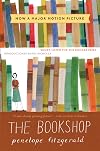
Author of The Bookshop
About the Author
In 1997 Penelope Fitzgerald's novel The Blue Flower was named one of the New York Times Book Review's eleven Best Books of the Year. Winner of the 1979 Booker Prize for Offshore, Fitzgerald was also short-listed for the Booker for The Bookshop. The Beginning of Spring, and The Gate of Angels. show more Penelope Fitzgerald lives in England. (Bowker Author Biography) Penelope Fitzgerald, one of England's most-celebrated contemporary writers, is the author of "The Blue Flower," which won the National Book Critics Circle Award. Winner of the 1979 Booker Prize for "Offshore," she was also shortlisted for the Booker for "The Bookshop," "The Beginning of Spring," & "The Gate of Angels." She lives in London. (Bowker Author Biography) Admired by many as one of the leading English novelists of her day, Penelope Fitzgerald (1916-2000) wrote some twelve books of fiction and nonfiction over the course of her writing career; which began at the age of sixty. She won the National Book Critics Circle Award for "The Blue Flower" and the Booker Prize for "Offshore". She died on April 28, 2000, at the age of eighty-three. (Bowker Author Biography) show less
Series
Works by Penelope Fitzgerald
Associated Works
For the Love of Books: 115 Celebrated Writers on the Books They Love Most (1999) — Contributor — 479 copies, 4 reviews
Chronicles of Carlingford: The Rector and The Doctor's Family (1863) — Introduction, some editions — 185 copies, 8 reviews
Tagged
Common Knowledge
- Canonical name
- Fitzgerald, Penelope
- Legal name
- Knox, Penelope Mary (born)
- Birthdate
- 1916-12-17
- Date of death
- 2000-04-28
- Gender
- female
- Education
- Somerville College, University of Oxford (BA|1938)
- Occupations
- novelist
biographer
journalist
tutor - Awards and honors
- The Heywood Hill Literary Prize (1996)
Golden PEN Award (1999) - Relationships
- Knox, E. V. (father)
Knox, Ronald (uncle)
Knox, Wilfred (uncle)
Peck, Winifred (aunt) - Short biography
- Penelope Fitzgerald (1916-2000), laureatasi ad Oxford nel 1939, ebbe varie esperienze di lavoro e di vita, fra l'altro il giornalismo e la storia dell'arte. Iniziò a scrivere opere narrative all'età di sessant'anni. Quasi tutti i suoi romanzi hanno vinto premi prestigiosi fra cui il Booker Prize. Penelope Fitzgerald definiva i suoi romanzi «microchip novels», romanzi in miniatura, scherzando sulla concisione alla quale tutti sono improntati, e che è diventata un po' il suo marchio di fabbrica; a proposito di uno di essi Auberon Waugh, critico famoso per la sua ferocia, dichiarò che per la prima volta nella sua carriera si sorprendeva a pregare una donna di scrivere non di meno, ma di più. Presto diventata popolarissima, la Fitzgerald era stata salutata fin dal debutto come «a writer's writer», un autore per autori, in quanto l'economia e la precisione del suo stile, la salda organizzazione del suo estro, la secchezza del suo umorismo, e la competenza sfoggiata in qualunque argomento ella affronti, sono particolarmente apprezzati da chi se ne intende.
- Nationality
- UK
- Birthplace
- Lincoln, Lincolnshire, England, UK
- Places of residence
- Southwold, Suffolk, England, UK
- Place of death
- London, Middlesex, England, UK
- Map Location
- England, UK
Members
Discussions
1916: Penelope Fitzgerald - Resources and General Discussion in Literary Centennials (February 2016)
Reviews
Marvelous writing. There is a general Tiffany Aching feeling in the book—though this a somewhat downbeat modern novel and not a comedy fantasy. Importantly, and I don’t think this is a spoiler, this isn’t a quaint book with an unambiguous happy ending. Some delightful things happen, and then the delight ends, and the characters’ stories end rather morosely, and then the book ends. If the reader is looking for a surprise, that’s it: That the good things that happened *during* the show more journey were the good things, and then those things ended and were washed away—like all things are, like sand castles in the tide—and now maybe the characters will go on to experience other good things, or maybe not, but this window is closed now. Books and movies don’t do this very often. The reader has to pick themselves up and take the next step forward. The book is not going to hand you a box of chocolates at the end. Recommended. show less

‘’I can’t do the things that women can’t do,’ she said. ‘I can’t turn over The Times so that the pages lie flat, I can’t fold up a map in the right creases, I can’t draw corks, I can’t drive in nails straight, I can’t go into a bar and order a drink without wondering what everyone’s thinking about it, and I can’t strike matches towards myself. I’m well educated and I’ve got two children and I can manage pretty well, there’s a number of much more essential show more things that I know how to do, but I can’t do those ones, and when they come up I feel like weeping myself sick.’’
A tender tale of a squad of ‘’eccentrics’’ who have refused to conform to society’s notions of ‘’residence’’ and ‘’family’’. Fitzgerald poignantly narrates the relationships between characters that jump right off the page, their marital woes, the fear over what tomorrow may bring, and the unavoidable uncertainty that comes with the decision to live outside the ordinary. Without judgement but tenderness, without dramatic rants but soft sadness, Penelope Fitzgerald ushers us into a world that changes.
‘’The lights dazzled, but on the broad face of the water there were innumerable V-shaped eddies, showing the exact position of whatever the river had not been able to hide. If the old Thames trades had still persisted, if boatmen had still made a living from taking the coins from the pockets of the drowned, then this was the hour for them to watch. Far above, masses of autumn clouds passed through the transparent violet sky.’’
From mudlarking to gender roles and expectations, sexuality, loyalty, obligations, decorum and estrangement, Fitzgerald’s elegant satire and acute observations elevate what may appear as a ‘’simple’’ story to a bittersweet account of individuals being ostracised, smothered even, by social rules and duty.
‘’All distances are the same to those who don’t meet.’’
My reviews can also be found on https://theopinionatedreaderblog.wordpress.com/ show less
A tender tale of a squad of ‘’eccentrics’’ who have refused to conform to society’s notions of ‘’residence’’ and ‘’family’’. Fitzgerald poignantly narrates the relationships between characters that jump right off the page, their marital woes, the fear over what tomorrow may bring, and the unavoidable uncertainty that comes with the decision to live outside the ordinary. Without judgement but tenderness, without dramatic rants but soft sadness, Penelope Fitzgerald ushers us into a world that changes.
‘’The lights dazzled, but on the broad face of the water there were innumerable V-shaped eddies, showing the exact position of whatever the river had not been able to hide. If the old Thames trades had still persisted, if boatmen had still made a living from taking the coins from the pockets of the drowned, then this was the hour for them to watch. Far above, masses of autumn clouds passed through the transparent violet sky.’’
From mudlarking to gender roles and expectations, sexuality, loyalty, obligations, decorum and estrangement, Fitzgerald’s elegant satire and acute observations elevate what may appear as a ‘’simple’’ story to a bittersweet account of individuals being ostracised, smothered even, by social rules and duty.
‘’All distances are the same to those who don’t meet.’’
My reviews can also be found on https://theopinionatedreaderblog.wordpress.com/ show less

I've wanted to read this book for years, and now I have. First published in England in 1978, it took nearly twenty years before it was published here in the U.S. I found it at an AAUW book sale earlier this month. THE BOOK SHOP is a title that naturally catches the eye and attention of booklovers. It is an absolute gem. A small one, perhaps, at just over 120 pages, but it gleams gorgeously in its perfection. Fitzgerald is a genius in knowing how to pare a story down to its bare essentials. show more Her Florence Green is a character easy to love. A tiny but determined widow wanting to do something with her life, she opens a book shop in the village of Hardborough. Unfortunately the village residents are not all that interested in books, in addition to which she unwittingly makes an enemy of the most wealthy and influential woman in town. A few other characters are so believable. Old Mr. Brundish, Mr. Raven, a ten year-old girl who comes in to help out, and others. But Mrs. Green herself is the heart and soul of the novel, and when things begin to go south for her, you may feel your own heart breaking in sympathy.
And yet there are comical moments here too, at least I thought so. Florence's worrying about the possibility of 'local authors' wanting to come to her shop, for instance -
"... the books were called 'On Foot Across the Marshes' or 'Awheel Across East Anglia,' for what else can be done with flatlands but to cross them? ... She vividly imagined their disillusionment, wedged behind a table with books and a pen in front of them, while the hours emptied away and no one came ... 'The customers will come in and ask for your book soon - of course they will, they have heard of you, you are a local author. Of course they will want your signature, they will come across the marshes, afoot and awheel.' The thought of so much suffering and embarrassment was hard to bear ..."
As one of those 'local authors' myself, I found myself chuckling and smiling, remembering the empty stores, the embarrassment. Hell, I laughed out loud. Fitzgerald knows about books and authors and book stores. But most of all she knows people, and how indifferent and even cruel they can be, perhaps especially in small towns and villages where everyone knows everyone else's business.
This is a beautifully written little book, wise and sweet all at the same time. It ends almost abruptly, but any other ending would have been wrong. Very highly recommended.
- Tim Bazzett, author of the memoir, BOOKLOVER show less
And yet there are comical moments here too, at least I thought so. Florence's worrying about the possibility of 'local authors' wanting to come to her shop, for instance -
"... the books were called 'On Foot Across the Marshes' or 'Awheel Across East Anglia,' for what else can be done with flatlands but to cross them? ... She vividly imagined their disillusionment, wedged behind a table with books and a pen in front of them, while the hours emptied away and no one came ... 'The customers will come in and ask for your book soon - of course they will, they have heard of you, you are a local author. Of course they will want your signature, they will come across the marshes, afoot and awheel.' The thought of so much suffering and embarrassment was hard to bear ..."
As one of those 'local authors' myself, I found myself chuckling and smiling, remembering the empty stores, the embarrassment. Hell, I laughed out loud. Fitzgerald knows about books and authors and book stores. But most of all she knows people, and how indifferent and even cruel they can be, perhaps especially in small towns and villages where everyone knows everyone else's business.
This is a beautifully written little book, wise and sweet all at the same time. It ends almost abruptly, but any other ending would have been wrong. Very highly recommended.
- Tim Bazzett, author of the memoir, BOOKLOVER show less

When Florence was young she worked in a bookshop and loved it. Now it’s 1959 and she’s a widow so she decides to move to a small village in Suffolk and start a bookshop where there has never been one before. She tries her best to get along, hiring a local girl to work in the shop, buying the books the townspeople want her to stock, and even starting a free lending library when the townspeople insist on it. But the building is damp and possibly haunted, Florence is not deferential enough show more to the village matriarch (who would rather have an arts center), and everyone is upset that she’s selling Lolita (even though she only bought it because someone asked for it). Can Florence make a bookshop thrive in a village that doesn’t want one?
I listened to this audiobook without knowing a single thing about it, including the year it was published. It initially seemed to me like a late-2010s cozy, charming, small-town nostalgia story and I read it with that in mind. Enjoyable enough but nothing special and I wasn’t sure how it was shortlisted for the Booker Prize (as stated on the cover). At this point in my review I do need to spoil the ending:
The village matriarch pulls some strings in Parliament to get the bookshop “eminent-domain”ed (“compulsory purchase” in the UK) and Florence’s only ally in the village dies suddenly. Florence fails and gives up and leaves the village.
This absolutely floored me. I couldn’t believe it when my audiobook just ended! Surely Florence was going to win everyone over and they would rally around her store and she would fall in love with the town grump or something?? After I realized the book is from the 1970s and accepted it for what it is, the ending makes a lot more sense. This is a scathing critique of village life and the social hierarchies and rules of the 1950s, and of people who have nostalgia for it. I’d love to revisit this as a paper book one day, because I think I would appreciate it more fully. show less
I listened to this audiobook without knowing a single thing about it, including the year it was published. It initially seemed to me like a late-2010s cozy, charming, small-town nostalgia story and I read it with that in mind. Enjoyable enough but nothing special and I wasn’t sure how it was shortlisted for the Booker Prize (as stated on the cover). At this point in my review I do need to spoil the ending:
This absolutely floored me. I couldn’t believe it when my audiobook just ended! Surely Florence was going to win everyone over and they would rally around her store and she would fall in love with the town grump or something??
Lists
Wishlist (1)
Summer Books (1)
Five star books (1)
Favourite Books (1)
Backlisted (1)
Booker Prize (4)
Female Author (3)
Spirit of Place (2)
Women in War (1)
Read This Next (1)
A Novel Cure (1)
Overdue Podcast (1)
Slightly Foxed 1 (1)
Awards


You May Also Like


Associated Authors
Statistics
- Works
- 24
- Also by
- 21
- Members
- 12,071
- Popularity
- #1,944
- Rating
- 4.0
- Reviews
- 430
- ISBNs
- 257
- Languages
- 13
- Favorited
- 60

