
Penelope Lively
Author of Moon Tiger
About the Author
Penelope Lively has written over 18 books for children, and over 15 titles for adults, distinguishing herself on both levels. Among the awards she has received are the coveted Booker Prize for the adult novel "Moon Tiger" (1987) and the Carnegie Medal for the highly acclaimed juvenile work, "The show more Ghost of Thomas Kempe" (1973). In Lively's writing, for both adults and children, the recurrent theme is interpreting the past through exploring the function of memory. "My particular preoccupation as a writer is with memory. Both with memory in the historical sense and memory in the personal sense." Beginning her writing career in the early 1970's, Lively wrote exclusively for children for over a decade. Because children have limited memories, devices were used to explore their perceptions of the past, such as ghosts in "Uninvited Ghosts and Other Stories" (1985), and a sampler in "A Stitch in Time' (1976). Lively's first adult novel, "The Road to Lichfield" (1977) was the result of turning to an older audience when she felt inspiration running out. Her adult novels include "Passing On" (1995), the story of a mother's legacy to her children and 'Oleander, Jacarandi: A Childhood Perceived' (1994) which is a memoir of Lively's childhood. Penelope (Low) Lively, born March 17, 1933 in Cairo, Egypt, had a most unusual childhood. She grew up in Cairo with no formal education until age 12, when her family put her in boarding school in England. After earning a B.A. in history at Oxford in 1955, she married Jack Lively, a university professor, whom she calls her most useful critic. They have a son and a daughter, Adam and Josephine. (Bowker Author Biography) show less
Image credit: Penelope Lively
Works by Penelope Lively
Associated Works
The Haunted Library: Tales of Cursed Books and Forbidden Shelves (British Library Tales of the Weird) (2025) — Contributor — 33 copies
Tagged
Common Knowledge
- Canonical name
- Lively, Penelope
- Legal name
- Lively, Penelope Low
- Birthdate
- 1933-03-17
- Gender
- female
- Education
- St Anne's College, Oxford (BA|1954)
- Occupations
- novelist
short story writer
memoirist
historian - Organizations
- PEN
Society of Authors
Friends of the British Library - Awards and honors
- Order of the British Empire (Dame Commander, 2012)
Order of the British Empire (Commander, 2001)
Order of the British Empire (Officer, 1989)
Royal Society of Literature (Fellow, 1985)
Carnegie Medal (1973) - Agent
- David Higham Associates
- Relationships
- Lively, Jack (husband)
Lively, Adam (son) - Short biography
- Novelist and children's writer Penelope Lively was born in Cairo, Egypt, in 1933 and brought up there. She came to England in 1945, went to school in Sussex, and read Modern History at St Ann's College, Oxford. Penelope Lively contributes regularly to a number of national daily newspapers and literary and educational journals including the Sunday Times, The Observer and the Times Educational Supplement. She has written radio and television scripts and was presenter for a BBC Radio 4 programme on children's literature. She is a Fellow of the Royal Society of Literature, a member of PEN and a former Chairman of The Society of Authors. She was awarded an OBE in 1989 and a CBE in 2001.
- Nationality
- UK
- Birthplace
- Cairo, Egypt
- Places of residence
- Sussex, England, UK
London, Middlesex, England, UK
Cairo, Egypt - Map Location
- England, UK
Members
Discussions
BRITISH AUTHOR CHALLENGE - JANUARY 2015; LIVELY & ISHIGURO in 75 Books Challenge for 2015 (March 2015)
Reviews

(13) An old 1980's Booker winner that I have been meaning to read - a recent find at a used book store. I usually love sprawling long messy fiction, but every now and then I read a masterful short novel that does so much with so few pages and I am reminded what literature as art really is. Claudia is a brilliant, headstrong, fiercely independent girl then woman who is at the end of her life and reflecting. Her life's stories spool out in a non-linear but easily read narrative that is show more spectacular. Richly imagined and deeply moving - you hardly know that Lively has aroused such deep feeling in you until some of the climactic scenes occur. Certainly her time in Egypt on the desert front during WW2 was incredibly written and likely close to home for the author who lived in Cairo for a time.
I really enjoyed Claudia despite her flaws -- she was vulnerable, generous, honest. I loved her relationship with Tom, her brother Gordon, and Lisa. I loved how Lively occasionally went omniscient and put us in the brains of Claudia's intimates. It was both effective and affecting. I can see why this won the Booker Prize as it is crafted so well and everything just . . works. It is a story; it has gravitas - history moves on when you die, you are written out of the story. . . and the characterization is amazing.
I had thought that Lively's writing was a bit too understated for me; a bit too British if you will. But this really was one of the best pieces of literary fiction I have read in quite some time. If I had to describe in comparative terms to books I have read in the recent past, I would say - it was a bit like the 'The English Patient' starring Joan Didion as the female protagonist. Highly recommended. show less
I really enjoyed Claudia despite her flaws -- she was vulnerable, generous, honest. I loved her relationship with Tom, her brother Gordon, and Lisa. I loved how Lively occasionally went omniscient and put us in the brains of Claudia's intimates. It was both effective and affecting. I can see why this won the Booker Prize as it is crafted so well and everything just . . works. It is a story; it has gravitas - history moves on when you die, you are written out of the story. . . and the characterization is amazing.
I had thought that Lively's writing was a bit too understated for me; a bit too British if you will. But this really was one of the best pieces of literary fiction I have read in quite some time. If I had to describe in comparative terms to books I have read in the recent past, I would say - it was a bit like the 'The English Patient' starring Joan Didion as the female protagonist. Highly recommended. show less

The butterfly effect is a metaphor used in the study of chaos theory to explain how a small action in a remote part of a system can have large effects far from the source. That’s the phenomena that Penelope Lively examines to great delight in How It All Began.
An elderly woman is mugged. She falls, breaks her hip, is forced to move in with her daughter and son-in-law while she recovers. And that particular flap of the butterfly’s wings leads into consequences in a multitude of lives, near show more and far.
Lively has taken a common premise — the effect of chance in all of our lives — and deftly turned out a uniquely charming and thoughtful novel. Charlotte is that elderly crime victim, a widowed retired schoolteacher. Rose is her dutiful and loving daughter, who brings her mother into her home completely unaware of the emotional havoc that will be wrought. Charlotte herself remains oblivious to much of the havoc that will result, even in the lives of people neither Rose nor Charlotte have ever met. Marriages are destroyed and saved, romances go sour and blossom, careers are ended and begun, and all because a juvenile delinquent decided to assault a total stranger.
Lively’s writing lives up to her name. On the surface it is lighthearted, breezy, casual, but I found myself stopping again and again to mark passages that managed to capture truths that felt universal:
Charlotte knows herself to ride upon a great sea of words, of language, of stories and situations and information, of knowledge, some of which she can summon up, much of which is half lost, but is in there somewhere, and has had an effect on who she is and how she thinks. She is as much a product of what she has read as of the way in which she has lived; she is like millions of others built by books, for whom books are an essential foodstuff, who could starve without.
Charlotte, left alone for great swaths of the day, has plenty of time to think about her current circumstances:
You are on the edge of things now, clinging on to life’s outer rim. You have this comet trail of your own lived life, sparks from which arrive in the head all the time, whether you want them or not — life has been lived but it is all still going on, in the mind, for better and for worse. But don’t imagine that anyone else wants to know about it; this narrative is personal, and mind you remember that.
Her injury brings her face-to-face with the reality of having lived seventy-seven years:
You slide, in old age, into a state of perpetual diffidence, of unspoken apology. You walk more slowly than normal people, you are obliged to say “what?” too often, others have to give up their seat on the bus to you, on train journeys you must ask for help with your absurdly small and light case. There is a void somewhere in your head into which tip the most familiar names. … When you were young yourself you were appropriately nice to old people, gave up your seat and so forth, but you never really thought about them. They were another species, their experience was unimaginable, and in any case it was irrelevant; you were not going there, or at least not for so long that there was no need to consider it.
Balancing a light tone with some heavy philosophical musings isn't easy, but Lively manages to walk the tightrope without a wobble. I read this book as part of the British Author Challenge in the 75 Book Challenge group, where Lively was one of two authors featured in January. How It All Began was a splendid introduction to the work of this venerable British writer. show less
An elderly woman is mugged. She falls, breaks her hip, is forced to move in with her daughter and son-in-law while she recovers. And that particular flap of the butterfly’s wings leads into consequences in a multitude of lives, near show more and far.
Lively has taken a common premise — the effect of chance in all of our lives — and deftly turned out a uniquely charming and thoughtful novel. Charlotte is that elderly crime victim, a widowed retired schoolteacher. Rose is her dutiful and loving daughter, who brings her mother into her home completely unaware of the emotional havoc that will be wrought. Charlotte herself remains oblivious to much of the havoc that will result, even in the lives of people neither Rose nor Charlotte have ever met. Marriages are destroyed and saved, romances go sour and blossom, careers are ended and begun, and all because a juvenile delinquent decided to assault a total stranger.
Lively’s writing lives up to her name. On the surface it is lighthearted, breezy, casual, but I found myself stopping again and again to mark passages that managed to capture truths that felt universal:
Charlotte knows herself to ride upon a great sea of words, of language, of stories and situations and information, of knowledge, some of which she can summon up, much of which is half lost, but is in there somewhere, and has had an effect on who she is and how she thinks. She is as much a product of what she has read as of the way in which she has lived; she is like millions of others built by books, for whom books are an essential foodstuff, who could starve without.
Charlotte, left alone for great swaths of the day, has plenty of time to think about her current circumstances:
You are on the edge of things now, clinging on to life’s outer rim. You have this comet trail of your own lived life, sparks from which arrive in the head all the time, whether you want them or not — life has been lived but it is all still going on, in the mind, for better and for worse. But don’t imagine that anyone else wants to know about it; this narrative is personal, and mind you remember that.
Her injury brings her face-to-face with the reality of having lived seventy-seven years:
You slide, in old age, into a state of perpetual diffidence, of unspoken apology. You walk more slowly than normal people, you are obliged to say “what?” too often, others have to give up their seat on the bus to you, on train journeys you must ask for help with your absurdly small and light case. There is a void somewhere in your head into which tip the most familiar names. … When you were young yourself you were appropriately nice to old people, gave up your seat and so forth, but you never really thought about them. They were another species, their experience was unimaginable, and in any case it was irrelevant; you were not going there, or at least not for so long that there was no need to consider it.
Balancing a light tone with some heavy philosophical musings isn't easy, but Lively manages to walk the tightrope without a wobble. I read this book as part of the British Author Challenge in the 75 Book Challenge group, where Lively was one of two authors featured in January. How It All Began was a splendid introduction to the work of this venerable British writer. show less
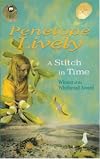
Though I haven’t yet read it Penelope Lively’s 2013 memoir, >Ammonites and Leaping Fish: a Life in Time, picks up some up the themes that permeate her 1976 Whitbread Children’s Book Award winner: growing old, books, her cat, ammonites of course, all what has been described as “her identifying cargo of possessions”. Ostensibly a ghost story this is more about what it’s like to be a solitary bookish child on the cusp of maturity, all told with sensitivity and poetry, so much so show more that it’s hard not to read aspects of her own childhood into this book. Her parents took what has been called “a rather inactive role” in the author’s life during her upbringing in pre-war Egypt; she describes it as “a childhood with enormous opportunities for solitude and imagination,” during which she spent “long hours just playing alone, building elaborate stories in my mind around my toy animals.”
In A Stitch in Time Maria Foster is an only child taken in the summer of 1975 for a four week holiday to Lyme Regis; Mr and Mrs Foster have rented from a local resident, Mrs Shand, an old Victorian house which they discover is filled with furniture and artefacts accumulated over a hundred years. Maria is prone, much as the young Penelope Low did in Egypt, to having conversations with objects and animals in lieu of friends and siblings, which her rather distant parents construe as mumblings. But Maria is also an unusual auditory sensitive who hears sounds no one else hears; these noises include the squeak of a swing in the garden, the playing of the piano and the barking of a dog. She finds she develops an interest in fossils, a fascination she shares with Martin Lucas, whose noisy extended family are staying in the hotel next door; together they search Lyme’s beach for ammonites, the sea urchin Stomechinus bigranularis and Mesozoic oyster Gryphaea. But all the while Maria is becoming obsessed with one time inhabitants of their holiday home, Victorian sisters Susan and Harriet. In particular, what happened to Harriet? Is the answer in the landscape around Lyme — the fossils, the geology, the underlying morphology of the cliffs? And why can only she hear echoes of the past in her ammonite-shaped cochleae?
A Stitch in Time is a beautifully written novel. Every few pages includes poetic passages evoking a feeling, a scene, a landscape: for example, a lovely day was better than one with a boring blue sky “because the sky was pleasantly busy with clouds, huge shining heaps of cloud that roamed across the horizon, ebbed and flowed, formed and reformed as you watched them… Everything would go grey and muted, as the sun went in, and there would be this band of golden colour sweeping along the cliffs to Weymouth, lighting up now a bright slice of rock, now a green field, now the white sparkle of a house, now the turquoise of the sea itself.”
But it’s not just descriptions that ensured the accolade of a Whitbread Award; Maria herself is a believable character, a sensitive child who tries to piece together scraps of disparate evidence without asking questions that might make her seem stupid, the way that real children do. She’s also a very likeable individual, kind and thoughtful even if a bit of an enigma to the adults around her.
How does Lively weave a story around Maria? Like any good author she includes a number of vibrantly coloured strands. Principally there is the recurrent image of the ammonite, a fossil plentiful in the rocks around Lyme; here is a natural spiral which could have suggested a tale of parallel lives separated by a hundred and ten years — though of course the match can never be exact. There are also the parallel lives of author and fictional character, though unlike Maria in the story the young Penelope was not to make real friends at boarding school in England, having to wait until she went to Oxford.
And, speaking of strands, the ‘stitch in time’ of the title refers to a sampler that Maria comes across, a sampler that Maria’s Victorian counterpart Harriet had worked on and that her sister Susan completed. Other elements show up, scraps of odd material that somehow get drawn into the story. The dog that barks in Maria’s hearing which no one else is aware of? Perhaps Lively picked up on the legend of the Black Dog of Lyme: and though her black dog only shares a colour, not a backstory, with the local tale, it does function as an omen — just what it presages is not clear till the very end. And being set in Lyme Regis, one cannot not think of The French Lieutenant’s Women (1969) with its three optional endings; perhaps Lively is subtly referencing Fowles’ earlier novel by suggesting one ending while delivering a different conclusion.
This is the first novel by the author that I’ve read since the seventies, from her other children’s books The Whispering Knights (1971) and The Wild Hunt of Hagworthy (1971) to her Treasures of Time (1979) written for an adult audience, and it’s made me keen to read more of her work. I also wanted to compare it with two other similarly-titled time-related novels, the semi-autobiographical A Traveller in Time by Alison Uttley and the science fantasy A Wrinkle in Time by Madeleine L’Engle. The fact is, while it includes some autobiography, some science and of course some fantasy, it mixes these elements in very different and individual ways. And it was such a delight to read — certainly one to read again. show less
In A Stitch in Time Maria Foster is an only child taken in the summer of 1975 for a four week holiday to Lyme Regis; Mr and Mrs Foster have rented from a local resident, Mrs Shand, an old Victorian house which they discover is filled with furniture and artefacts accumulated over a hundred years. Maria is prone, much as the young Penelope Low did in Egypt, to having conversations with objects and animals in lieu of friends and siblings, which her rather distant parents construe as mumblings. But Maria is also an unusual auditory sensitive who hears sounds no one else hears; these noises include the squeak of a swing in the garden, the playing of the piano and the barking of a dog. She finds she develops an interest in fossils, a fascination she shares with Martin Lucas, whose noisy extended family are staying in the hotel next door; together they search Lyme’s beach for ammonites, the sea urchin Stomechinus bigranularis and Mesozoic oyster Gryphaea. But all the while Maria is becoming obsessed with one time inhabitants of their holiday home, Victorian sisters Susan and Harriet. In particular, what happened to Harriet? Is the answer in the landscape around Lyme — the fossils, the geology, the underlying morphology of the cliffs? And why can only she hear echoes of the past in her ammonite-shaped cochleae?
A Stitch in Time is a beautifully written novel. Every few pages includes poetic passages evoking a feeling, a scene, a landscape: for example, a lovely day was better than one with a boring blue sky “because the sky was pleasantly busy with clouds, huge shining heaps of cloud that roamed across the horizon, ebbed and flowed, formed and reformed as you watched them… Everything would go grey and muted, as the sun went in, and there would be this band of golden colour sweeping along the cliffs to Weymouth, lighting up now a bright slice of rock, now a green field, now the white sparkle of a house, now the turquoise of the sea itself.”
But it’s not just descriptions that ensured the accolade of a Whitbread Award; Maria herself is a believable character, a sensitive child who tries to piece together scraps of disparate evidence without asking questions that might make her seem stupid, the way that real children do. She’s also a very likeable individual, kind and thoughtful even if a bit of an enigma to the adults around her.
How does Lively weave a story around Maria? Like any good author she includes a number of vibrantly coloured strands. Principally there is the recurrent image of the ammonite, a fossil plentiful in the rocks around Lyme; here is a natural spiral which could have suggested a tale of parallel lives separated by a hundred and ten years — though of course the match can never be exact. There are also the parallel lives of author and fictional character, though unlike Maria in the story the young Penelope was not to make real friends at boarding school in England, having to wait until she went to Oxford.
And, speaking of strands, the ‘stitch in time’ of the title refers to a sampler that Maria comes across, a sampler that Maria’s Victorian counterpart Harriet had worked on and that her sister Susan completed. Other elements show up, scraps of odd material that somehow get drawn into the story. The dog that barks in Maria’s hearing which no one else is aware of? Perhaps Lively picked up on the legend of the Black Dog of Lyme: and though her black dog only shares a colour, not a backstory, with the local tale, it does function as an omen — just what it presages is not clear till the very end. And being set in Lyme Regis, one cannot not think of The French Lieutenant’s Women (1969) with its three optional endings; perhaps Lively is subtly referencing Fowles’ earlier novel by suggesting one ending while delivering a different conclusion.
This is the first novel by the author that I’ve read since the seventies, from her other children’s books The Whispering Knights (1971) and The Wild Hunt of Hagworthy (1971) to her Treasures of Time (1979) written for an adult audience, and it’s made me keen to read more of her work. I also wanted to compare it with two other similarly-titled time-related novels, the semi-autobiographical A Traveller in Time by Alison Uttley and the science fantasy A Wrinkle in Time by Madeleine L’Engle. The fact is, while it includes some autobiography, some science and of course some fantasy, it mixes these elements in very different and individual ways. And it was such a delight to read — certainly one to read again. show less
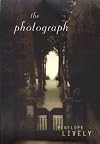
The Photograph is an unflinching and unforgettable story of the many ways the past intrudes upon the present and the present alters the past. When Glyn, a landscape historian, stumbles upon a photograph of his deceased wife, Kath, holding hands with another man, his understanding of the past is “savagely undermined.” Reading the past, uncovering and deciphering its strata, is his stock in trade, but now it is his own personal landscape, and the history of his marriage, that he must show more reinterpret. He veers from emotional vertigo to an obsessive need to know what kind of woman his wife really was. Why did she have an affair? Did she have other lovers? Was their whole life together a lie? His search takes him back into his life with Kath, and her absence becomes the most powerful presence in his life, rising up before him, speaking to him, leading him to discoveries that reveal much more—and much more disturbing truths—about himself than about his wife. Though dead, she is the novel’s most eloquent character, the still center around which the lives of all the other characters begin to swirl. Who was she, this beautiful woman who seemed to draw and hold the gaze of everyone who saw her, who seemed carefree and clearly happy, a burst of color and uncontainable energy?
And why did she have to die so young?
Lively, P. (n.d.). The Photograph by Penelope Lively - Reading Guide: 9780142004425 - PenguinRandomHouse.com: Books. Retrieved from https://www.penguinrandomhouse.com/books/288128/the-photograph-by-penelope-livel.... show less
And why did she have to die so young?
Lively, P. (n.d.). The Photograph by Penelope Lively - Reading Guide: 9780142004425 - PenguinRandomHouse.com: Books. Retrieved from https://www.penguinrandomhouse.com/books/288128/the-photograph-by-penelope-livel.... show less
Lists
Which house? (1)
TLS 6011 (1)
Women in War (1)
Unmarried women (1)
AP Lit (1)
Gardening (1)
Awards


You May Also Like


Associated Authors
Statistics
- Works
- 73
- Also by
- 36
- Members
- 14,488
- Popularity
- #1,581
- Rating
- 3.9
- Reviews
- 515
- ISBNs
- 665
- Languages
- 21
- Favorited
- 47
