
Margaret Drabble
Author of The Red Queen
About the Author
Margaret Drabble was born on June 5, 1939 in Sheffield, England. She attended The Mount School in York and Newnham College, Cambridge University. After graduation, she joined the Royal Shakespeare Company at Stratford during which time she understudied for Vanessa Redgrave. She is a novelist, show more critic, and the editor of the fifth edition of The Oxford Companion to English Literature. Her works include A Summer Bird Cage; The Millstone, which won the John Llewelyn Rhys Prize in 1966; Jerusalem the Golden, which won James Tait Black Prize in 1967; and The Witch of Exmoor. She also received the E. M. Forster award and was awarded a Society of Authors Travelling Fellowship in the 1960s and the Commander of the Order of the British Empire in 1980. (Bowker Author Biography) show less
Series
Works by Margaret Drabble
The Great Good Places 5 copies
EMMA JANE AUSTEN 1 copy
Seven Sisters, The 1 copy
Arnold Wesker 1 copy
Sığ Sularda 1 copy
Hassan's Tower 1 copy
Loistava tilaisuus 1 copy
Tornado Pratt 1 copy
Drabble, Margaret Archive 1 copy
Crossing the Alps 1 copy
Le Milieu de la Vie 1 copy
Associated Works
Twenty Thousand Leagues Under the Sea (1869) — Introduction, some editions — 21,422 copies, 283 reviews
Lady Susan / The Watsons / Sanditon (1925) — Editor, some editions; Introduction, some editions — 2,296 copies, 37 reviews
You'll Enjoy It When You Get There: The Stories of Elizabeth Taylor (New York Review Books Classics) (2014) — Editor — 152 copies, 3 reviews
David Hockney : A Bigger Picture {catalogue of the exhibition Royal Academy of Arts, London; 21 Jan - 09 April 2012, Guggenheim Museum, Bilbao 14. Mai - 30. Sept 2012; Museum… (2012) — Contributor — 114 copies, 1 review
Living with Shakespeare: Essays by Writers, Actors, and Directors (2013) — Contributor — 96 copies, 4 reviews
Tagged
Common Knowledge
- Canonical name
- Drabble, Margaret
- Legal name
- Lady Holroyd, Dame Margaret Drabble
- Birthdate
- 1939-06-05
- Gender
- female
- Education
- University of Cambridge (Newnham College)
The Mount School - Occupations
- novelist
critic
biographer - Organizations
- Royal Shakespeare Company (1960-1963)
Booktrust - Awards and honors
- Order of the British Empire (Dame Commander, 2008)
Order of the British Empire (Commander, 1980)
Royal Society of Literature (Fellow, 1973)
Golden PEN Award (2011)
St. Louis Literary Award (2003)
American Academy of Arts and Letters (Foreign Honorary Member, 2002) (show all 7)
E. M. Forster Award (1973) - Agent
- PFD, Drury House
- Relationships
- Holroyd, Michael (husband)
Byatt, A. S. (sister)
Langdon, Helen (sister)
Swift, Joe (son)
Swift, Rebecca (1) (daughter) - Short biography
- MARGARET DRABBLE is the author of The Sea Lady, The Seven Sisters, The Peppered Moth, and The Needle's Eye, among other novels. For her contributions to contemporary English literature, she was made a Dame of the British Empire in 2008.
Drabble has famously been engaged in a long-running feud with her novelist sister, A.S. Byatt, over the alleged appropriation of a family tea-set in one of her novels. The pair seldom see each other and each does not read the books of the other. - Nationality
- UK
- Birthplace
- Sheffield, South Yorkshire, England, UK
- Places of residence
- Sheffield, South Yorkshire, England, UK
York, Yorkshire, England, UK
London, England, UK - Map Location
- England, UK
Members
Discussions
BRITISH AUTHOR CHALLENGE MAY 2015 - MARGARET DRABBLE AND MARTIN AMIS in 75 Books Challenge for 2015 (June 2015)
Reviews

I was rather hoping this would come in a box, like The unfortunates, but with odd-shaped pieces you have to put together in the right order to make a 300 page book. Sadly it doesn't. But that's just about the only thing that disappointed me in this gloriously wide-ranging, unpredictable, clever and sympathetic celebration of jigsaw puzzles and the author's Auntie Phyl.
Drabble shoots off down every conceivable side-track, to look into not only the history of the puzzles themselves, but the show more way they relate to other toys and games, as well as to crafts and adult pastimes. She examines her memories of childhood holidays at her aunt's house, a B&B in a village on the Great North Road, and of her adult relationship with her aunt in old age (both of which involved doing jigsaw puzzles together, of course) and tries to make sense of where the borderline falls between kitschy nostalgia and permissible aesthetic appreciation of the artefacts of the past. She's pretty sure the brass warming-pan she rescued from her aunt's house is on the wrong side of this line, somehow, but she's hanging on to it anyway.
There's a lot here about Perec and La vie: mode d'emploi, but also about Jules Verne and his use of the Goose Game, and Southey and Coleridge on their "Aunt Hill". Meanwhile, passing by on the A1 are Doctor Johnson — who might have been more relaxed if he'd agreed to play draughts sometimes — and the mad poet John Clare. Drabble finds jigsaws and jigsaw imagery in the most surprising corners of fine art and English literature, gets to put together one of John Spilsbury's original Dissected Maps in the British Library (the pieces for Scotland and Corsica are missing), and is taken on a tour of the unexpected mosaics and interlocking pieces of London by a helpful cabbie called Kevin.
This is a book that will tell you a lot of things you didn't know you needed to know, and will probably leave you with an odd urge to get out one of your old jigsaw puzzles. Apart from that, I'm not quite sure what it is for or how to classify it, but I enjoyed it very much. show less
Drabble shoots off down every conceivable side-track, to look into not only the history of the puzzles themselves, but the show more way they relate to other toys and games, as well as to crafts and adult pastimes. She examines her memories of childhood holidays at her aunt's house, a B&B in a village on the Great North Road, and of her adult relationship with her aunt in old age (both of which involved doing jigsaw puzzles together, of course) and tries to make sense of where the borderline falls between kitschy nostalgia and permissible aesthetic appreciation of the artefacts of the past. She's pretty sure the brass warming-pan she rescued from her aunt's house is on the wrong side of this line, somehow, but she's hanging on to it anyway.
There's a lot here about Perec and La vie: mode d'emploi, but also about Jules Verne and his use of the Goose Game, and Southey and Coleridge on their "Aunt Hill". Meanwhile, passing by on the A1 are Doctor Johnson — who might have been more relaxed if he'd agreed to play draughts sometimes — and the mad poet John Clare. Drabble finds jigsaws and jigsaw imagery in the most surprising corners of fine art and English literature, gets to put together one of John Spilsbury's original Dissected Maps in the British Library (the pieces for Scotland and Corsica are missing), and is taken on a tour of the unexpected mosaics and interlocking pieces of London by a helpful cabbie called Kevin.
This is a book that will tell you a lot of things you didn't know you needed to know, and will probably leave you with an odd urge to get out one of your old jigsaw puzzles. Apart from that, I'm not quite sure what it is for or how to classify it, but I enjoyed it very much. show less
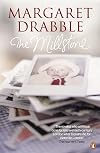
Why in the world Drabble chose to title this delightfully, humorously poignant book The Millstone is quite beyond me. Between the ominous title and the dreary Balthus painting on the cover, I was certain the book would be a perfect feminist downer. Turns out that it is a very thoughtful story about how an unmarried Renaissance literature scholar seeking her doctorate deals with her pregnancy and her child's infancy. Rosamund, after initial quandary and a humorously botched attempt at a gin show more induced miscarriage, decides to go ahead and become a mother.
Set in the early 1960s, Rosamund is torn between her own timidity towards men and the new wave of sexual promiscuity among her set, the intellectual middle class. She finds herself equally disquieted by how her membership in a more privileged class allows her to get away with having an illegitimate child. In fact, she is disquieted by much;what to do about the father of the child, how to balance her Fabian childhood with the realities of class difference; how to get nurses to pay attention to her demands. She is a woman who knows her worth and is not afraid to admit to it. She also pokes fun at her how hypocrisies and foibles. All in all, she is an witty and likable narrator for a likable, thoughtful account. show less
Set in the early 1960s, Rosamund is torn between her own timidity towards men and the new wave of sexual promiscuity among her set, the intellectual middle class. She finds herself equally disquieted by how her membership in a more privileged class allows her to get away with having an illegitimate child. In fact, she is disquieted by much;what to do about the father of the child, how to balance her Fabian childhood with the realities of class difference; how to get nurses to pay attention to her demands. She is a woman who knows her worth and is not afraid to admit to it. She also pokes fun at her how hypocrisies and foibles. All in all, she is an witty and likable narrator for a likable, thoughtful account. show less

Emma — clever daughter of a Cambridge don, formerly a successful model, now mother of two young children — has got a promising job as a television announcer lined up for herself in London, but she has to renounce it when her actor husband gets the offer of a season in provincial rep in Hereford with the fashionable director Wyndham Farrar.
A wonderfully ironic look at the inequality of the sexes and the dullness of parenthood and provincial England in the early 1960s, where even the show more inevitable backstage adultery turns into something very like a tedious social obligation. And full of witty portraits of the kind of people who were creating big egos for themselves in the English theatre of those days. But perhaps slightly undermined by Emma's rather privileged situation and her snooty contempt for anything outside London. There were a lot of young mothers of her generation for whom the prospect of an au pair to help with the kids and give them time to go out to first-nights sometimes would have seemed like a remote dream... show less
A wonderfully ironic look at the inequality of the sexes and the dullness of parenthood and provincial England in the early 1960s, where even the show more inevitable backstage adultery turns into something very like a tedious social obligation. And full of witty portraits of the kind of people who were creating big egos for themselves in the English theatre of those days. But perhaps slightly undermined by Emma's rather privileged situation and her snooty contempt for anything outside London. There were a lot of young mothers of her generation for whom the prospect of an au pair to help with the kids and give them time to go out to first-nights sometimes would have seemed like a remote dream... show less

A delight! I've always been a swimmer but for the last fifteen years or so an on and off cold water swimmer too, after noticing that when mopey a plunge into cold water is a non-medicated cure. Well, not a cure, but truly helpful for stopping black-hole-thought-spiraling. The essays approach swimming and the pond from the spiritual to the physical, the most awe-inspiring essays being by or about the all-year-rounders (breaking ice if need be) many of whom are octogenarians or more. The rule show more of thumb for winter swimming (centigrade only!) as laid out in one essay is IC=one minute, max. I made it last year down to 8C and no way was I staying in 8 minutes (that's 48F for us Yanks)! Maybe 2-3 plus a lot of screaming and panting! Cold water swimming has become a thing, but you have to love fresh water since nary a pool is kept that cold. And half the fun is the fact that with the seasons the temperatures vary. Anyway, there's a nice variety of essays too, one by a lifeguard, another by a young woman addicted to her phone, a few by young mothers going mad except for escapes to swim, by artists and by seekers. They all share the experience of reduced stress and the abundance of thoughtful peacefulness and consideration of each other in this almost holy place. Forget going to London for museums and theatre, but I might be convinced to go in order to swim in the Hampstead Pond! ****1/2 show less
Lists
Awards


You May Also Like


Associated Authors
Statistics
- Works
- 68
- Also by
- 41
- Members
- 13,803
- Popularity
- #1,677
- Rating
- 4.1
- Reviews
- 286
- ISBNs
- 458
- Languages
- 16
- Favorited
- 43
