
Doris Lessing (1919–2013)
Author of The Golden Notebook
About the Author
Doris Lessing was born in Kermanshah, Persia (later Iran) on October 22, 1919 and grew up in Rhodesia (the present-day Zimbabwe). During her two marriages, she submitted short fiction and poetry for publication. After moving to London in 1949, she published her first novel, The Grass Is Singing, in show more 1950. She is best known for her 1954 Somerset Maugham Award-winning experimental novel The Golden Notebook. Her other works include This Was the Old Chief's Country, the Children of Violence series, the Canopus in Argos - Archives series, and Alfred and Emily. She has received numerous awards for her work including the 2001 Prince of Asturias Prize in Literature, the David Cohen British Literature Prize, and the 2007 Nobel Prize for Literature. She died on November 17, 2013 at the age of 94. (Bowker Author Biography) show less
Series
Works by Doris Lessing
Walking in the Shade: Volume Two of My Autobiography, 1949–1962 (1997) — Author — 399 copies, 7 reviews
Story of General Dann and Mara's Daughter, Griot and the Snow Dog: A Novel (2005) 313 copies, 9 reviews
The Wind Blows Away Our Words and Other Documents Relating to the Afghan Resistance (1987) 135 copies, 4 reviews
Children of Violence 1-5: Martha Quest; A Proper Marriage; Landlocked; A Ripple from the Storm; The Four-Gated City (1986) 43 copies, 1 review
Cuentos europeos / To Room Nineteen / The Temptation of Jack Orkneys (Spanish Edition) (2008) 21 copies
Het zingende gras ; Martha Quest ; De zomer voor het donker ; Liefhebben uit gewoonte (1985) 8 copies
Vanaemad LRK 38/2012 3 copies
Children of Violence 1-4: Martha Quest; A Proper Marriage; Landlocked; A Ripple from the Storm 2 copies
A sunrise on the veld 2 copies
A ciascuno il suo deserto 2 copies
Why a small black child in Zimbabwe stole a book on advanced physics. Englisch und Deutsch (2004) 2 copies
Salmagundi: A Quarterly of the Humanities & Social Sciences Spring-Summer 2001 Nos. 130-131 (2001) 2 copies
The Day Stalin Died {short fiction} 2 copies
Evlenmeyen Adamın Hikâyesi 2 copies
Three Plays: Each His Own Wilderness,The Long and the Short and the Tall,Yes, and After (1960) 2 copies
Veðraþytur 1 copy
Doris Lessing Three-Book Edition: The Golden Notebook, The Grass is Singing, The Good Terrorist (English Edition) (2013) 1 copy
[Title missing] 1 copy
Novellas, inclut Les Grand-mères ; Victoria et les Staveney ; Un enfant de l'amour (2016) 1 copy, 1 review
views quarterly summer 1963 1 copy
SËRISH DASHURI 1 copy
Francois Mauriac 1 copy
Sweetest Dreams 1 copy
الدفتر الذهبي 1 copy
العشب يغني 1 copy
Collected africano stories 1 copy
MË E ËMBLA ËNDËRR 1 copy
Children of Violence 2-5: A Proper Marriage; Landlocked; A Ripple from the Storm; The Four-Gated City (1973) 1 copy
Non renseigné 1 copy
Karleksbarnet 1 copy
Vaincue Par La Brousse 1 copy
Le Carnet D' Or 1 copy
Lessing, Doris Archive 1 copy
The Antheap [short fiction] 1 copy
The reason for it 1 copy
A love child 1 copy
Liebhaber meiner Phantasie 1 copy
Mitra 1 copy
In pursuit of love 1 copy
Associated Works
Literature: An Introduction to Fiction, Poetry, and Drama (1995) — Contributor, some editions — 1,017 copies, 7 reviews
The Cambridge Guide to Literature in English (1988) — Foreword, some editions — 530 copies, 3 reviews
The World of the Short Story: A 20th Century Collection (1986) — Contributor — 514 copies, 4 reviews
For the Love of Books: 115 Celebrated Writers on the Books They Love Most (1999) — Contributor — 479 copies, 4 reviews
The Art of the Tale: An International Anthology of Short Stories (1986) — Contributor — 381 copies, 3 reviews
The Norton Anthology of English Literature, 4th Edition, Volume 2 (1979) — Contributor — 272 copies, 1 review
First Fiction: An Anthology of the First Published Stories by Famous Writers (1994) — Contributor — 196 copies, 1 review
This Is My Best: Great Writers Share Their Favorite Work (2004) — Contributor — 175 copies, 3 reviews
The Pleasure of Reading: 43 Writers on the Discovery of Reading and the Books That Inspired Them (2015) — Contributor — 104 copies, 2 reviews
Kalila and Dimna: Selected Fables of Bidpai (1980) — Introduction, some editions — 104 copies, 1 review
The Literary Lover: Great Stories of Passion and Romance (1993) — Contributor — 55 copies, 2 reviews
The Tale of the Four Dervishes and Other Sufi Tales (1976) — Introduction, some editions — 41 copies, 1 review
Sisters of Sorcery: Two Centuries of Witchcraft Stories by the Gentle Sex (1976) — Contributor — 38 copies, 1 review
Parabola: Myth and the Quest for Meaning, Vol. 7, No. 3: Ceremonies (1982) — Contributor — 14 copies
Die englische Literatur 10 in Text und Darstellung. 20. Jahrhundert 2. (2001) — Contributor — 6 copies
Sylvia Plath's Tomato Soup Cake: A Compendium of Classic Authors' Favourite Recipes (2024) — Contributor — 6 copies
Meesters der vertelkunst : zevenendertig verhalen uit de moderne wereldliteratuur (1975) — Contributor — 2 copies
Even op verhaal komen — Contributor — 1 copy
Tagged
Common Knowledge
- Canonical name
- Lessing, Doris
- Legal name
- Lessing, Doris May
- Other names
- Somers, Jane
Taylor, Doris May (birth name) - Birthdate
- 1919-10-22
- Date of death
- 2013-11-17
- Gender
- female
- Education
- Dominican Convent High School, Salisbury, Southern Rhodesia (now Harare ∙ Zimbabwe)
- Occupations
- novelist
short story writer
poet
playwright
librettist - Awards and honors
- American Academy of Arts and Letters (1974)
Austrian State Prize for European Literature (1981)
Shakespeare Prize (1982)
Trevipriset (1987)
Guest of Honor, World Science Fiction Convention (Conspiracy '87|Brighton|UK |1987)
Premio Grinzane Cavour (1989) (show all 16)
Order of the Companions of Honour (1999)
Premio Internacional, Cataluna (1999)
Royal Society of Literature (Companion of Literature, 2001)
Premio Príncipe de Asturias (2001)
David Cohen British Literature Prize (2001)
Golden PEN Award (2002)
Man Booker International Prize Finalist (2005)
Nobel Prize (Literature, 2007)
Man Booker International Prize Finalist (2007)
Order of Mapungubwe (2008) - Agent
- Jonathan Clowes Ltd.
- Nationality
- UK
- Birthplace
- Kermanshah, Iran (Persia)
- Places of residence
- England, UK
Kermanshah, Persia (now Iran)
Southern Rhodesia (Zimbabwe) - Place of death
- London, Middlesex, England, UK
- Burial location
- Royal Burial Ground, Frogmore, Windsor, Berkshire, England, UK (cremated)
- Map Location
- England, UK
Members
Discussions
Doris Lessing in Legacy Libraries (February 2017)
BRITISH AUTHOR CHALLENGE - SEPTEMBER 2016 - LESSING & LEE in 75 Books Challenge for 2016 (December 2016)
Doris Lessing (1919–2013) in Science Fiction Fans (November 2013)
1001 Group Read-July, 2012: The Golden Notebook in 1001 Books to read before you die (February 2013)
Reviews

This is the third novel in Lessings Children of Violence series and picks up the story of Martha a couple of months after she had left her husband and baby daughter and moved into a small apartment. Martha’s story continues to follow closely the life that Doris Lessing led as a twenty two year old woman in Southern Rhodesia who had just abandoned her family. It was 1942 and many of the local men had volunteered or been called up for the war effort, her home town’s social life now tended show more to revolve around the large R A F base that had been established just out of town. Martha’s progressive views and voracious appetite for reading have been noticed by the various left wing groups who are fighting to gain control of the local political organisations. Martha (Lessing) has thrown herself into political activity and soon finds herself a member of the communist party. The novel follows Martha’s life as a committed member of a communist cell.
While much of the story concerns the power struggle between factions on the left of the political arena, the real story is of the people in those groups, particularly the women. Martha is conscious at all times of the fight for equal rights with the men, but this is not easy in a small close knit community where women are valued as sexual partners first and foremost. Apart from Martha, there is Jasmine a neat super efficient young lady who finds herself nominated to be secretary of any new splinter group that comes into existence; there is twice married Maisie (both husbands killed) who is pregnant and in need of support and the attractive young Marjorie, all seemingly at a loose end in a town that seems to be marking time while the second World war is being fought thousands of miles away. Anton a German Jew is the intellectual and organisational head of the group, a coldly efficient bureaucrat locked into a Marxist blueprint to save the world. He forms an uneasy relationship with the men from the RAF base particularly Andrew who has experience of communist organisations. The other members are working class lads from the RAF, who are desperately searching for something in which they can believe and a couple of men who act more like agent provocateurs. The novel follows this group as they spat and spar and jockey for power and possession, hurrying from meeting to meeting as Anton sets a relentless pace in an effort to keep control.
From my own experience of such groups Lessing paints a realistic picture, it is almost a study of group dynamics, but this group really does believe that a glorious socialist state will come into existence when the war is over, they are so wrapped up in their own dogma that they can see nothing else. Lessing's portrait of Martha is a triumph. This is a woman who knows there is more to life than being a wife of a colonial administrator, but who suffers from the huge guilt that she feels (or is made to feel by the local establishment) for walking away from her Husband and daughter. Her only way through is to plunge into a new group where the workload and the buzz of doing something can make her forget the past and look toward to a different future. Martha is conscious of the liaisons between the men and the women in the group and she examines each of them looking for something meaningful. When she is sick for a couple of days, she finds the men almost queuing up to look after her, Lessing says :
“She was deeply anxious: her stomach was twisting with anxiety. She thought: I’ve been irritated by the way these men just fall for us, from one minute to the next….”
Anton is one of the men who wishes to act as nurse and as a reader I found myself hoping that Martha would avoid his intentions as he seems so “not right” for her.
Through Lessings eyes we see the furious workings within the group as a sort of tragicomedy. She points out that many of the men in the RAF will not survive the war, the relationships they form are bound to be short lived, but there is nothing else to be done, however that does not stop us being amused by the shenanigans that take place, at the attention to detail demanded by Anton and at the groups relationship with the other political players in the town. Lessing’s Children of Violence series continues to be a microscopic examination of life in a Southern Rhodesian town where the tensions of race relations have thrown people into extremist camps from which for most of them there will be no escape and the writing gets better and better and so I rate this at 4.5 stars. show less
While much of the story concerns the power struggle between factions on the left of the political arena, the real story is of the people in those groups, particularly the women. Martha is conscious at all times of the fight for equal rights with the men, but this is not easy in a small close knit community where women are valued as sexual partners first and foremost. Apart from Martha, there is Jasmine a neat super efficient young lady who finds herself nominated to be secretary of any new splinter group that comes into existence; there is twice married Maisie (both husbands killed) who is pregnant and in need of support and the attractive young Marjorie, all seemingly at a loose end in a town that seems to be marking time while the second World war is being fought thousands of miles away. Anton a German Jew is the intellectual and organisational head of the group, a coldly efficient bureaucrat locked into a Marxist blueprint to save the world. He forms an uneasy relationship with the men from the RAF base particularly Andrew who has experience of communist organisations. The other members are working class lads from the RAF, who are desperately searching for something in which they can believe and a couple of men who act more like agent provocateurs. The novel follows this group as they spat and spar and jockey for power and possession, hurrying from meeting to meeting as Anton sets a relentless pace in an effort to keep control.
From my own experience of such groups Lessing paints a realistic picture, it is almost a study of group dynamics, but this group really does believe that a glorious socialist state will come into existence when the war is over, they are so wrapped up in their own dogma that they can see nothing else. Lessing's portrait of Martha is a triumph. This is a woman who knows there is more to life than being a wife of a colonial administrator, but who suffers from the huge guilt that she feels (or is made to feel by the local establishment) for walking away from her Husband and daughter. Her only way through is to plunge into a new group where the workload and the buzz of doing something can make her forget the past and look toward to a different future. Martha is conscious of the liaisons between the men and the women in the group and she examines each of them looking for something meaningful. When she is sick for a couple of days, she finds the men almost queuing up to look after her, Lessing says :
“She was deeply anxious: her stomach was twisting with anxiety. She thought: I’ve been irritated by the way these men just fall for us, from one minute to the next….”
Anton is one of the men who wishes to act as nurse and as a reader I found myself hoping that Martha would avoid his intentions as he seems so “not right” for her.
Through Lessings eyes we see the furious workings within the group as a sort of tragicomedy. She points out that many of the men in the RAF will not survive the war, the relationships they form are bound to be short lived, but there is nothing else to be done, however that does not stop us being amused by the shenanigans that take place, at the attention to detail demanded by Anton and at the groups relationship with the other political players in the town. Lessing’s Children of Violence series continues to be a microscopic examination of life in a Southern Rhodesian town where the tensions of race relations have thrown people into extremist camps from which for most of them there will be no escape and the writing gets better and better and so I rate this at 4.5 stars. show less
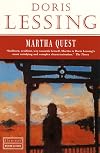
In Lessing's own words: Martha Quest has a simple plot. She has a childhood in the bush, quarrels with her mother, is taught politics by the Cohen boys, reads, escapes into a big town, Salisbury (Rhodesia), learns shorthand typing, plans all kinds of attractive futures, but is swept away into dancing and good times, and marries a suitable young civil servant while the drums are beating for the second world war. Lessing says in her autobiography "Under my Skin":
In short when I wrote Martha show more Quest I was being a novelist and not a chronicler. But if the novel is not the literal truth, then it is true in atmosphere, feeling more true than this record is trying to be factual
Martha Quest is Doris Lessing and it is amazing how closely the novel keeps to those facts revealed in her autobiography. I read the autobiography earlier this year and reading Martha Quest felt like a re-read of it, but with Lessing revealing much more about herself and the people around her. It is no secret that she used people from her life in Africa as models for her characters, what is surprising is that her memories of them in her autobiography were so similar to those is Martha Quest.
The novel starts with Martha's life as a 15 year old, already struggling with her overbearing mother and semi invalid father. They have a small farm out in the veld and are barely able to scrape a living, but it is not their hardships that are described but Martha's love of the landscape and the freedom to be herself. Racial tensions are evident not only between the White rulers and the black Africans, but more potently as far as Martha is concerned between the English, the Afrikaans and the Jews. It is the Jewish family that provide her in her seventeenth year with a means of escape to the town, by securing for her a place as a typist in their relative's law firm. At last she is free from her mother, but soon falls in with the crowd at the Rugby club. From the books that she has been devouring she is aware of racism in Africa, but the sight of a group of black prisoners chained together in town provides her with a reality check. Just as she was out of step with her parents, she finds herself out of step with the crowd at the Rugby club and it is only her alcohol fuelled life style that tides her over. She is a confused young woman, deeply conscious that the society that has embraced her is horribly at fault and some of Lessing's best writing centres around this confusion. It is a mad whirl of a life with alliances that define the young peoples place in their own devil may care society, but for Martha/Lessing undercutting all this is her need to revolt. She takes a Jewish musician as her first lover, but this feels more like a revolt and it cannot be sustained. Martha/Lessing reveals more of herself in these passages than she ever did in her biography; she comes across as prickly, super critical; this is her thoughts on Douglas the man that she will marry and the only person she meets at the Rugby club that thinks remotely like her:
She was still capable of being critical. For several days they were together for all their leisure time and she looked surreptitiously at him, with a feeling of disloyalty, and the round rather low forehead struck her unpleasantly-there was something mean about it, something commonplace; the shallow dry lines across it affected her; as for his hands, they were large and clumsy, rather red, heavily freckled, and covered with hair. Soon she averted her eyes from his hands, she did not see them, she did not see his forehead, with those unaccountably unpleasant lines, like the lines of worry on an elderly face.
This is fine writing, because it mirrors what Martha must keep hidden from herself concerning the colonial attitudes around her, in order to survive. It also reveals something of Lessing's own character as one gets the feeling she is describing her first husband. Reality, memories, feelings become inextricably linked as Lessing delves deeply into her life to write this novel. Martha sees her forthcoming marriage to Douglas as another escape. As a couple they will be able to forge a path for themselves and she will have the security she needs; she will be accepted, however she knows she does not love him and is aware she is deluding herself with the idea of a perfect marriage.
Martha Quest is an excellent study of one woman's struggle to be articulate and to make herself heard. She cannot escape the pressures of being a young single attractive woman in a society, where not only do men reign supreme, but they are in the majority. It is of course Lessing's own struggle and as such portrays brilliantly, life in an African colony just before the outbreak of world war II when attitudes are hardening and the only means of survival for someone like Lessing is to flee the country. This book is the first part of Lessing's children of violence series and I am looking forward to reading the next three. A four star read. show less
In short when I wrote Martha show more Quest I was being a novelist and not a chronicler. But if the novel is not the literal truth, then it is true in atmosphere, feeling more true than this record is trying to be factual
Martha Quest is Doris Lessing and it is amazing how closely the novel keeps to those facts revealed in her autobiography. I read the autobiography earlier this year and reading Martha Quest felt like a re-read of it, but with Lessing revealing much more about herself and the people around her. It is no secret that she used people from her life in Africa as models for her characters, what is surprising is that her memories of them in her autobiography were so similar to those is Martha Quest.
The novel starts with Martha's life as a 15 year old, already struggling with her overbearing mother and semi invalid father. They have a small farm out in the veld and are barely able to scrape a living, but it is not their hardships that are described but Martha's love of the landscape and the freedom to be herself. Racial tensions are evident not only between the White rulers and the black Africans, but more potently as far as Martha is concerned between the English, the Afrikaans and the Jews. It is the Jewish family that provide her in her seventeenth year with a means of escape to the town, by securing for her a place as a typist in their relative's law firm. At last she is free from her mother, but soon falls in with the crowd at the Rugby club. From the books that she has been devouring she is aware of racism in Africa, but the sight of a group of black prisoners chained together in town provides her with a reality check. Just as she was out of step with her parents, she finds herself out of step with the crowd at the Rugby club and it is only her alcohol fuelled life style that tides her over. She is a confused young woman, deeply conscious that the society that has embraced her is horribly at fault and some of Lessing's best writing centres around this confusion. It is a mad whirl of a life with alliances that define the young peoples place in their own devil may care society, but for Martha/Lessing undercutting all this is her need to revolt. She takes a Jewish musician as her first lover, but this feels more like a revolt and it cannot be sustained. Martha/Lessing reveals more of herself in these passages than she ever did in her biography; she comes across as prickly, super critical; this is her thoughts on Douglas the man that she will marry and the only person she meets at the Rugby club that thinks remotely like her:
She was still capable of being critical. For several days they were together for all their leisure time and she looked surreptitiously at him, with a feeling of disloyalty, and the round rather low forehead struck her unpleasantly-there was something mean about it, something commonplace; the shallow dry lines across it affected her; as for his hands, they were large and clumsy, rather red, heavily freckled, and covered with hair. Soon she averted her eyes from his hands, she did not see them, she did not see his forehead, with those unaccountably unpleasant lines, like the lines of worry on an elderly face.
This is fine writing, because it mirrors what Martha must keep hidden from herself concerning the colonial attitudes around her, in order to survive. It also reveals something of Lessing's own character as one gets the feeling she is describing her first husband. Reality, memories, feelings become inextricably linked as Lessing delves deeply into her life to write this novel. Martha sees her forthcoming marriage to Douglas as another escape. As a couple they will be able to forge a path for themselves and she will have the security she needs; she will be accepted, however she knows she does not love him and is aware she is deluding herself with the idea of a perfect marriage.
Martha Quest is an excellent study of one woman's struggle to be articulate and to make herself heard. She cannot escape the pressures of being a young single attractive woman in a society, where not only do men reign supreme, but they are in the majority. It is of course Lessing's own struggle and as such portrays brilliantly, life in an African colony just before the outbreak of world war II when attitudes are hardening and the only means of survival for someone like Lessing is to flee the country. This book is the first part of Lessing's children of violence series and I am looking forward to reading the next three. A four star read. show less
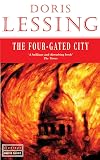
This long, dense, intense novel is not well served by some of the descriptions of it. The back cover and many of the reviews talk about it as ‘post-apocalyptic’, but this is, to put it mildly, misleading – aside from the epilogue, all 660 pages deal with London in the 1950s and early 1960s. At heart, it's a social-realist novel, which looks at the topics of the age: 50s espionage, the vogue for psychiatry, the Cold War, the protest movement, the birth of the permissive society and the show more Swinging Sixties. But there's a strange twist in the tail.
Readers who come to this having read the previous four Children of Violence novels might be a bit thrown, since at times it feels like a completely separate book whose central character happens to share the same name. Though as I write that, the continuities do suggest themselves: the frustrated obsession with social justice, the refusal to accept easy answers, Martha's wonderfully prickly and bloody-minded feminism – all these qualities are consistent, just transposed to a European context.
It is fascinating seeing Lessing's painstaking, analytical style finally being applied to English social mores – nowhere more so than when it comes to sex, which becomes a major theme of this volume. She writes about it like no one else – long, meticulous descriptions which are too long to quote but which show a constant attention to the mental gymnastics and psychological quirks that accompany any kind of sexual interaction. Often these manage to be funny and touching and frustrating all at once, as when Martha pays a visit to what we'd now call one of her FWBs – and as they're lounging around naked, one of his other girlfriends suddenly turns up, leading to a weirdly polite and English sort of pre-threesome scene:
Joanna gave Martha a slow once-over.
‘You're very pretty,’ she said.
‘I'm sure that I'd think the same of you!’
Meanwhile Jack sat, not at all embarrassed, or amused, or annoyed. He was pleased and interested. […]
‘The thing is, Jack, either we both have to get dressed, or Joanna has to be undressed.’
‘Yes, of course,’ said Joanna in her brisk fair English way.
Jack wanted Joanna to get undressed. Afterwards he said to Martha: the tears positively drowning his eyes: ‘If she had trusted me so much: if she had taken her clothes off – then I swear, I'd have been so happy, I can't make you feel how happy I'd have been. But not yet. She will though. I'm sure she will.’
He left it to them, the two women, to decide when to trust him. Martha began to dress. That had been during the heatwave, and she had put on, but not too fast, while they watched, bra, pants, slip and a narrow blue linen dress. Joanna had admired the dress. Then Jack had got dressed and they had all gone out to eat lunch at the Indian restaurant.
There are lots of scenes in here dealing with situations for which we now have a sort of pre-formed script of how people ‘normally’ behave or react, but which here come across as entirely new to the world. It's remarkable. Jack goes through a bizarre journey in this book from sexual sensitivity to sexual perversion and predation – all very uncensoriously described – and Martha is baffled by the way the same language is used to describe all points on this spectrum.
She was desperate. But what was being created in her was not the never-to-be-sated ‘woman in love’, ‘wife’, ‘mistress’, etc. etc. Sex…What is sex? We keep using all these words, and what do they mean after all? The word sex has to do for so many different experiences, and like the word energy, it is what you make of it[…]. She thought: If I were a man I'd go to a prostitute.
Martha herself is living in a strange ménage-à-trois with a wealthy writer, Mark Coldridge, and his mentally unstable wife Lynda, who (in an inversion of the madwoman-in-the-attic trope) lives in the basement. The investigation in this book into the nature of Lynda's ‘instability’ is, again, quite extraordinary: in an effort to understand her, Martha visits therapists, undergoes psychoanalysis, takes drugs, spends days sitting with Lynda in her room and banging her head against a wall; and, finally, shuts herself away for weeks on end to explore the depths of her own mind. She emerges from this self-induced breakdown to find that the rest of humanity seems completely alien to her, and there is a hallucinatory, pages-long section where she simply reels through the streets of London in horror:
There they were all around her, with their roundish bony heads, that had flaps of flesh sticking out on either side, then the protuberance in the middle, with the air vents in it, and the eyes, tinted-jelly eyes which had a swivelling movement that gave them a life of their own […] And they stank. They smelled abominable, awful, even under the sweet or pungent chemicals they used to hide their smell. They lived in an air which was like a thick soup of petrol and fumes and stink of sweat and bad air from lungs full of the smoke they used as a narcotic, and filthy air from their bowels.
And all the time, Martha is getting older. What happened to the ambitions and stresses she had as a girl in southern Africa? Now she has responsibilities! There are children to look after! Not her own – her daughter, Caroline, is still in Africa and only alluded to – but, worse, other people's children, whom Martha has reluctantly come to care about, take responsibility for – raise. Everything shifts very quickly, and Lessing doesn't miss any of it.
Oh, how hard it is to be a middle-aged woman, who has to stand in for everyone's difficult mother, and who has to take – and return – looks from younger women examining their futures, exactly as one used to do oneself, and who are thinking, what a short time I've got left.
Indeed – though time hardly seems short in this book, which even its biggest admirers would have to describe as occasionally stodgy. I always picked it up with a slight sense of weariness, but always put it down feeling hugely rewarded. Partly because I kept thinking that I've never read anyone who writes like this before, and partly just from aesthetic pleasure – there are frequent passages of descriptive beauty:
Next night, she walked down a quiet middle-class street where only two or three windows still shone yellow in a strong white moonlight. Decorous little trees, like children allowed to stay up late, stood in patches of garden that defined individual front doors, each on its best behaviour, shining knocker, letter slit, bell. […] Elsewhere the moon rocked oceans in their beds, stuffed pillows full of uncomfortable dreams, made doctors double their dosage of sedatives for sad lunatics in hospitals, set dogs howling and drew fish up to goggle at the streaming white light.
What is perhaps most extraordinary about The Four-Gated City is what happens to its form towards the end: it cannot, finally, hold the content. We are in the last fraction of the last volume in a five-novel sequence, and suddenly, almost without any warning at all, this ruthlessly focussed naturalism breaks down – or, perhaps, is augmented – with elements of…well I was about to say ‘magic realism’, but that's not right, and anyway anachronistic. Elements of the supernatural and speculative descriptions of a dystopian future. One of the minor characters in here is a science-fiction (‘space fiction’) writer, and you can see Lessing examining the genre with interest, noting its possibilities, noting also the way it better allows authors to keep their biography separate from their work.
It's as though, ultimately, realism is not enough for Lessing to say everything that she wants to say, and so this gigantic realist project ends in a flourish that announces: this is what fiction allows me to do. (After this was published in 1969, she started experimenting with science fiction in earnest, leading to the Canopus in Argos series from 1979; here you can see that concept start to take hold.)
How to sum up the Children of Violence series? I think it's a real masterpiece – a completely unblinking look at how a person engages with the pressures and responsibilities of their society, and very aware of the fact that no one is a neutral ‘person’, everyone comes with specific attributes that entail their own weight of preconditions – Martha is female in a world where men have disproportionate power, white in a society where whites have disproportionate power; most of all, perhaps, she is politically aware in a culture that has perpetrated two world wars and built the military infrastructure of global extinction. These are colossal questions, and what you see in these books is something you don't see that often: someone with fierce intelligence and literary gifts addressing them head-on. show less
Readers who come to this having read the previous four Children of Violence novels might be a bit thrown, since at times it feels like a completely separate book whose central character happens to share the same name. Though as I write that, the continuities do suggest themselves: the frustrated obsession with social justice, the refusal to accept easy answers, Martha's wonderfully prickly and bloody-minded feminism – all these qualities are consistent, just transposed to a European context.
It is fascinating seeing Lessing's painstaking, analytical style finally being applied to English social mores – nowhere more so than when it comes to sex, which becomes a major theme of this volume. She writes about it like no one else – long, meticulous descriptions which are too long to quote but which show a constant attention to the mental gymnastics and psychological quirks that accompany any kind of sexual interaction. Often these manage to be funny and touching and frustrating all at once, as when Martha pays a visit to what we'd now call one of her FWBs – and as they're lounging around naked, one of his other girlfriends suddenly turns up, leading to a weirdly polite and English sort of pre-threesome scene:
Joanna gave Martha a slow once-over.
‘You're very pretty,’ she said.
‘I'm sure that I'd think the same of you!’
Meanwhile Jack sat, not at all embarrassed, or amused, or annoyed. He was pleased and interested. […]
‘The thing is, Jack, either we both have to get dressed, or Joanna has to be undressed.’
‘Yes, of course,’ said Joanna in her brisk fair English way.
Jack wanted Joanna to get undressed. Afterwards he said to Martha: the tears positively drowning his eyes: ‘If she had trusted me so much: if she had taken her clothes off – then I swear, I'd have been so happy, I can't make you feel how happy I'd have been. But not yet. She will though. I'm sure she will.’
He left it to them, the two women, to decide when to trust him. Martha began to dress. That had been during the heatwave, and she had put on, but not too fast, while they watched, bra, pants, slip and a narrow blue linen dress. Joanna had admired the dress. Then Jack had got dressed and they had all gone out to eat lunch at the Indian restaurant.
There are lots of scenes in here dealing with situations for which we now have a sort of pre-formed script of how people ‘normally’ behave or react, but which here come across as entirely new to the world. It's remarkable. Jack goes through a bizarre journey in this book from sexual sensitivity to sexual perversion and predation – all very uncensoriously described – and Martha is baffled by the way the same language is used to describe all points on this spectrum.
She was desperate. But what was being created in her was not the never-to-be-sated ‘woman in love’, ‘wife’, ‘mistress’, etc. etc. Sex…What is sex? We keep using all these words, and what do they mean after all? The word sex has to do for so many different experiences, and like the word energy, it is what you make of it[…]. She thought: If I were a man I'd go to a prostitute.
Martha herself is living in a strange ménage-à-trois with a wealthy writer, Mark Coldridge, and his mentally unstable wife Lynda, who (in an inversion of the madwoman-in-the-attic trope) lives in the basement. The investigation in this book into the nature of Lynda's ‘instability’ is, again, quite extraordinary: in an effort to understand her, Martha visits therapists, undergoes psychoanalysis, takes drugs, spends days sitting with Lynda in her room and banging her head against a wall; and, finally, shuts herself away for weeks on end to explore the depths of her own mind. She emerges from this self-induced breakdown to find that the rest of humanity seems completely alien to her, and there is a hallucinatory, pages-long section where she simply reels through the streets of London in horror:
There they were all around her, with their roundish bony heads, that had flaps of flesh sticking out on either side, then the protuberance in the middle, with the air vents in it, and the eyes, tinted-jelly eyes which had a swivelling movement that gave them a life of their own […] And they stank. They smelled abominable, awful, even under the sweet or pungent chemicals they used to hide their smell. They lived in an air which was like a thick soup of petrol and fumes and stink of sweat and bad air from lungs full of the smoke they used as a narcotic, and filthy air from their bowels.
And all the time, Martha is getting older. What happened to the ambitions and stresses she had as a girl in southern Africa? Now she has responsibilities! There are children to look after! Not her own – her daughter, Caroline, is still in Africa and only alluded to – but, worse, other people's children, whom Martha has reluctantly come to care about, take responsibility for – raise. Everything shifts very quickly, and Lessing doesn't miss any of it.
Oh, how hard it is to be a middle-aged woman, who has to stand in for everyone's difficult mother, and who has to take – and return – looks from younger women examining their futures, exactly as one used to do oneself, and who are thinking, what a short time I've got left.
Indeed – though time hardly seems short in this book, which even its biggest admirers would have to describe as occasionally stodgy. I always picked it up with a slight sense of weariness, but always put it down feeling hugely rewarded. Partly because I kept thinking that I've never read anyone who writes like this before, and partly just from aesthetic pleasure – there are frequent passages of descriptive beauty:
Next night, she walked down a quiet middle-class street where only two or three windows still shone yellow in a strong white moonlight. Decorous little trees, like children allowed to stay up late, stood in patches of garden that defined individual front doors, each on its best behaviour, shining knocker, letter slit, bell. […] Elsewhere the moon rocked oceans in their beds, stuffed pillows full of uncomfortable dreams, made doctors double their dosage of sedatives for sad lunatics in hospitals, set dogs howling and drew fish up to goggle at the streaming white light.
What is perhaps most extraordinary about The Four-Gated City is what happens to its form towards the end: it cannot, finally, hold the content. We are in the last fraction of the last volume in a five-novel sequence, and suddenly, almost without any warning at all, this ruthlessly focussed naturalism breaks down – or, perhaps, is augmented – with elements of…well I was about to say ‘magic realism’, but that's not right, and anyway anachronistic. Elements of the supernatural and speculative descriptions of a dystopian future. One of the minor characters in here is a science-fiction (‘space fiction’) writer, and you can see Lessing examining the genre with interest, noting its possibilities, noting also the way it better allows authors to keep their biography separate from their work.
It's as though, ultimately, realism is not enough for Lessing to say everything that she wants to say, and so this gigantic realist project ends in a flourish that announces: this is what fiction allows me to do. (After this was published in 1969, she started experimenting with science fiction in earnest, leading to the Canopus in Argos series from 1979; here you can see that concept start to take hold.)
How to sum up the Children of Violence series? I think it's a real masterpiece – a completely unblinking look at how a person engages with the pressures and responsibilities of their society, and very aware of the fact that no one is a neutral ‘person’, everyone comes with specific attributes that entail their own weight of preconditions – Martha is female in a world where men have disproportionate power, white in a society where whites have disproportionate power; most of all, perhaps, she is politically aware in a culture that has perpetrated two world wars and built the military infrastructure of global extinction. These are colossal questions, and what you see in these books is something you don't see that often: someone with fierce intelligence and literary gifts addressing them head-on. show less

Like many great novelists Doris Lessing is an acute observer of life, both from her own experiences and the imagination that she can bring to bear on other peoples stories. The Habit of Loving is a collection of 17 short stories published in 1957; early in Lessings career and show her ability to think herself into the thoughts and actions of her characters. The connecting theme is a study of relationships, between men and women and between nationalities and although half of them are set in show more Southern Africa they do not cover the racial tensions that were a feature of her previous novels and short stories.
The stories and sketches have a pleasing variety and Lessing is such a good writer that she seems to take no time at all to draw the reader into the world of her stories and there are some very good ones here; ranging from an eight page description of a Locust attack to a fifty page story about a middle class British couple visiting a German ski resort six years after the end of the second world war. There are stories told in the first person as Lessing picks out incidents from her own life: in “Flavours of Exile” she remembers how as a pre pubescent thirteen year old girl she fantasised about her brother William and how it was so important for her to gain his attention, in “Getting Off The Altitude” she is a little older and has an altogether different interest in boys and tells a story of a lonely married woman who takes a lover out of desperation, but wishes she was old enough not to need him anymore and “In the Day Stalin Died” she remembers an incident in London when she was beginning to distance herself from the communist party.
The title story is one of the longer stories and is about a well known critic and man of the theatre (George) who has always had women in his life, but has now reached an age when he can no longer count on having a women of his choice. He is rejected by a woman that he had thought would come back to him after a period of separation and he becomes physically ill. A nurse is hired to look after him, a younger woman who becomes a trusted friend and lover, but George is no longer in control and fails to accept his situation. A theme of an absence of loving seems to go hand in hand with The Habit of Loving with which Lessing has titled her collection and some of the stories have a meaness about them. The Witness tells the story of Mr Brooks; a disaffected friendless elderly office worker who is despised by the women in the company, who inappropriately reaches out to a junior girl also under fire. Everybody behaves in a way that is all too familiar. In "A Road to the big City"; for once a man plays the good samaritan but his efforts to save a young girl from a life of prostitution are fruitless. In many of the stories it is the injustice that women feel in their relationships with men that guides their actions.
“Plants and Girls” turns out to be a particularly creepy horror story, told in a mere ten pages but still carries an emotional charge, whereas the final long story examines the damage to the psyche of Europeans coming to terms with the aftermath of the second world war. Whether Lessing is telling a story of a young teenager risking his life in a diving competition with older boys or the desperate efforts of a family to protect their livelihood from the ravaging locusts, or a tale of ageing military men revealing an incident from their past that has had profound effects on their thoughts and actions, she places the reader quickly within her story world and most have the power to make us think carefully about what we have just read. This is an excellent collection and a four star read. show less
The stories and sketches have a pleasing variety and Lessing is such a good writer that she seems to take no time at all to draw the reader into the world of her stories and there are some very good ones here; ranging from an eight page description of a Locust attack to a fifty page story about a middle class British couple visiting a German ski resort six years after the end of the second world war. There are stories told in the first person as Lessing picks out incidents from her own life: in “Flavours of Exile” she remembers how as a pre pubescent thirteen year old girl she fantasised about her brother William and how it was so important for her to gain his attention, in “Getting Off The Altitude” she is a little older and has an altogether different interest in boys and tells a story of a lonely married woman who takes a lover out of desperation, but wishes she was old enough not to need him anymore and “In the Day Stalin Died” she remembers an incident in London when she was beginning to distance herself from the communist party.
The title story is one of the longer stories and is about a well known critic and man of the theatre (George) who has always had women in his life, but has now reached an age when he can no longer count on having a women of his choice. He is rejected by a woman that he had thought would come back to him after a period of separation and he becomes physically ill. A nurse is hired to look after him, a younger woman who becomes a trusted friend and lover, but George is no longer in control and fails to accept his situation. A theme of an absence of loving seems to go hand in hand with The Habit of Loving with which Lessing has titled her collection and some of the stories have a meaness about them. The Witness tells the story of Mr Brooks; a disaffected friendless elderly office worker who is despised by the women in the company, who inappropriately reaches out to a junior girl also under fire. Everybody behaves in a way that is all too familiar. In "A Road to the big City"; for once a man plays the good samaritan but his efforts to save a young girl from a life of prostitution are fruitless. In many of the stories it is the injustice that women feel in their relationships with men that guides their actions.
“Plants and Girls” turns out to be a particularly creepy horror story, told in a mere ten pages but still carries an emotional charge, whereas the final long story examines the damage to the psyche of Europeans coming to terms with the aftermath of the second world war. Whether Lessing is telling a story of a young teenager risking his life in a diving competition with older boys or the desperate efforts of a family to protect their livelihood from the ravaging locusts, or a tale of ageing military men revealing an incident from their past that has had profound effects on their thoughts and actions, she places the reader quickly within her story world and most have the power to make us think carefully about what we have just read. This is an excellent collection and a four star read. show less
Lists
Favourite Books (1)
Obama Reads (1)
el (1)
. (1)
Unmarried women (1)
1980s (1)
Five star books (1)
Metafiction (1)
Best Dystopias (1)
Cats in Fiction (1)
Elegant Prose (1)
Nifty Fifties (1)
First Novels (1)
Africa (1)
Female Author (2)
Gen X Library (2)
Read This Next (2)
Unread books (1)
Booker Prize (3)
1950s (2)
A Novel Cure (2)
Women's Stories (2)
Florida (1)
My TBR list (1)
Country Life (1)
Awards


You May Also Like


Associated Authors
Statistics
- Works
- 265
- Also by
- 88
- Members
- 37,250
- Popularity
- #491
- Rating
- 4.2
- Reviews
- 766
- ISBNs
- 1,648
- Languages
- 32
- Favorited
- 128


