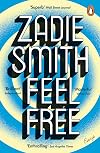
Though I still haven't read any of her fiction, I really feel, on the strength of these essays, that Zadie Smith is My Kind Of People. Her tone and references and outlook on life seem intimately familiar, drawn as they are, like mine, from that optimistic, multicultural jumble that was London in the 90s, when ‘multicultural’ wasn't yet a dirty word and when most things were going steadily, boringly in the right direction. Of course, her experiences of this were a little sharper than mine – she was a biracial girl growing up in the inner city, I was a white boy in the suburbs. But still. When she writes about her childhood, or reflects, thrillingly, on what Brexit means to her, I recognise every word, every thought, every connection.
So much is this the case that something alarmingly like jealousy comes over me when I think about these essays being sent out into the world – they can't understand! – especially when I flip to the back and see that most of them were published for American audiences in The New Yorker or The New York Review of Books (I feel a corresponding rush of resentment when she has to pause mid-flow to explain what Ofsted is, or the class implications of living in Willesden). She is particularly good – better than anyone else I've read – at capturing something I've been struggling to express myself recently: the giddy disillusionment of realising that your own understanding of the world, which you believed to represent some kind of human show more universal, comes instead (and of course it does!) from specific sociocultural roots which are just as likely to be cut out as they are to be nurtured.
Even where I went to school, I was the only white guy in my circle and all my closest friends were from Indian or Pakistani families; as a ten-year-old, I couldn't really tell the difference between these two and I'm not sure my parents could either. Back then, of course, they were all lumped together as ‘Asians’, whereas later, quite suddenly – after the autumn of 2001 – the Pakistanis found themselves abruptly rebranded as ‘Muslims’. Funny, that. September 11 is nowhere mentioned by Zadie Smith in this book, or even indirectly referred to, but it's the main invisible watershed separating that world from the world of today – the start of a fifteen-year spiral from the 2001 attacks to the 2016 elections, into a world where interviewers now ask Zadie Smith if she will renounce the joy of her early writings, and admit – confess, confess! – that ‘multiculturalism has failed’.
I am reminded that to have grown up in a homogeneous culture in a corner of rural England, say, or France, or Poland, during the seventies, eighties or nineties, is to think of oneself as having been simply alive in the world, untroubled by history, whereas to have been raised in London during the same period, with, say, Pakistani Muslims in the house next door, Indian Hindus downstairs, and Latvian Jews across the street, is thought of, by others, as evidence of a specific historical social experiment, now discredited.
Bullseye. Those of you who have read Feel Free might think I'm spending a long time on this background, given that she only addresses it directly in a couple of the essays here. But I see that context behind every sentence in the book, whether she's talking about philosophy, walking round an art gallery, or listening to Jay-Z. What I recognise in her writing is the same thing I recognise in a lot of our generation of so-called ‘X-ennials’: the sense of trying to hold on to a certain remembered lightness – a certain positivity, for want of a better word – which seemed to dissolve under the Manichaean polemics of a digital age.
What's remarkable is how often she succeeds: though it's probably not obvious from this review, she's a very witty and generous writer – encouraging, even – admirably even-handed and non-judgmental. And the connections she makes are sometimes so familiar to me that they give me a rush of pleasure even when I don't agree with her conclusions (for instance, she is a great admirer of the Peter Stamm novel Seven Years, which I thought was irredeemably dreadful), just because the reference points she reaches for are the same ones that I have available to me. These chains of references can be wonderful: at one point she starts talking about going to a rave in Smithfield in 1999, then leaps forward to The Streets' 2002 song ‘Weak Become Heroes’ (a song that makes me ache with nostalgia, despite the fact that I was never a big clubber and not particularly attached to that scene) – and then from there to the character Super Hans in long-running sitcom Peep Show, all in two paragraphs. ‘Do more!’ I want to shout.
Yes, there are areas where you can quibble with her assessments, or even with her tone. I found it difficult to care. At a deep level, I feel like Zadie Smith is speaking my language, and I'm happy someone's doing that as eloquently and passionately as she is. show less
So much is this the case that something alarmingly like jealousy comes over me when I think about these essays being sent out into the world – they can't understand! – especially when I flip to the back and see that most of them were published for American audiences in The New Yorker or The New York Review of Books (I feel a corresponding rush of resentment when she has to pause mid-flow to explain what Ofsted is, or the class implications of living in Willesden). She is particularly good – better than anyone else I've read – at capturing something I've been struggling to express myself recently: the giddy disillusionment of realising that your own understanding of the world, which you believed to represent some kind of human show more universal, comes instead (and of course it does!) from specific sociocultural roots which are just as likely to be cut out as they are to be nurtured.
Even where I went to school, I was the only white guy in my circle and all my closest friends were from Indian or Pakistani families; as a ten-year-old, I couldn't really tell the difference between these two and I'm not sure my parents could either. Back then, of course, they were all lumped together as ‘Asians’, whereas later, quite suddenly – after the autumn of 2001 – the Pakistanis found themselves abruptly rebranded as ‘Muslims’. Funny, that. September 11 is nowhere mentioned by Zadie Smith in this book, or even indirectly referred to, but it's the main invisible watershed separating that world from the world of today – the start of a fifteen-year spiral from the 2001 attacks to the 2016 elections, into a world where interviewers now ask Zadie Smith if she will renounce the joy of her early writings, and admit – confess, confess! – that ‘multiculturalism has failed’.
I am reminded that to have grown up in a homogeneous culture in a corner of rural England, say, or France, or Poland, during the seventies, eighties or nineties, is to think of oneself as having been simply alive in the world, untroubled by history, whereas to have been raised in London during the same period, with, say, Pakistani Muslims in the house next door, Indian Hindus downstairs, and Latvian Jews across the street, is thought of, by others, as evidence of a specific historical social experiment, now discredited.
Bullseye. Those of you who have read Feel Free might think I'm spending a long time on this background, given that she only addresses it directly in a couple of the essays here. But I see that context behind every sentence in the book, whether she's talking about philosophy, walking round an art gallery, or listening to Jay-Z. What I recognise in her writing is the same thing I recognise in a lot of our generation of so-called ‘X-ennials’: the sense of trying to hold on to a certain remembered lightness – a certain positivity, for want of a better word – which seemed to dissolve under the Manichaean polemics of a digital age.
What's remarkable is how often she succeeds: though it's probably not obvious from this review, she's a very witty and generous writer – encouraging, even – admirably even-handed and non-judgmental. And the connections she makes are sometimes so familiar to me that they give me a rush of pleasure even when I don't agree with her conclusions (for instance, she is a great admirer of the Peter Stamm novel Seven Years, which I thought was irredeemably dreadful), just because the reference points she reaches for are the same ones that I have available to me. These chains of references can be wonderful: at one point she starts talking about going to a rave in Smithfield in 1999, then leaps forward to The Streets' 2002 song ‘Weak Become Heroes’ (a song that makes me ache with nostalgia, despite the fact that I was never a big clubber and not particularly attached to that scene) – and then from there to the character Super Hans in long-running sitcom Peep Show, all in two paragraphs. ‘Do more!’ I want to shout.
Yes, there are areas where you can quibble with her assessments, or even with her tone. I found it difficult to care. At a deep level, I feel like Zadie Smith is speaking my language, and I'm happy someone's doing that as eloquently and passionately as she is. show less
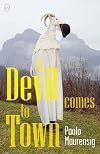
A priest takes up a pastoral post in a Swiss mountain village, where he uncovers a bizarre secret: almost every resident harbours dreams of being a published writer. The swine gelder is a passionate poet, the grocer is the author of a sci-fi trilogy, and the former minister has several volumes of memoirs stuffed into the desk drawer. So far, none of them has been published – but one day, someone new arrives in town promising to make all their dreams come true…a publisher whom the priest believes to be none other than the devil himself.
This book has a decidedly literary-European feel, combining a light and witty tone with a sense – perhaps clear from the synopsis above – of rather laboured allegory. As the devil/publisher sets about pitting all the locals against one another, we seem to be building up to a play on authorial vanity and the dangers of the literary project:
“Each time we pick up a pen we are preparing to perform a ritual for which two candles should always be lit: one white and one black. Unlike painting and sculpture, which remain anchored to a material subject, and to music, which in contrast transcends matter altogether, literature can dominate both spheres: the concrete and the abstract, the terrestrial and the otherworldly.”
And a lot of this is indeed quite good fun, not least the knowingly Gothic atmosphere, all moonless nights, remote village inns, and woods howling with rabid foxes. Translator Anne Milano Appel takes this on with gusto, show more though a couple of her vocabulary choices seem a little odd (the priest's hat which is called a saturno in Italian she translates as ‘saturn’ in English, a word I've never seen and which doesn't appear in any dictionary I own – we seem to use the Italian word, or call it a ‘cappello romano’).
The danger with any book about literary vainglory is that it invites the same sceptical attention on itself that it is gleefully scattering upon its subject; positioning itself in a world where ‘even the most banal thoughts—as long as they are printed in type—are accepted as absolute truth’. Well, quite. How well A Devil Comes to Town holds up under this attention will depend on your own appetite for light, quasi-philosophical novellas. I liked it, I must confess, but I hope Maurensig didn't sell any souls to get it into print. show less
This book has a decidedly literary-European feel, combining a light and witty tone with a sense – perhaps clear from the synopsis above – of rather laboured allegory. As the devil/publisher sets about pitting all the locals against one another, we seem to be building up to a play on authorial vanity and the dangers of the literary project:
“Each time we pick up a pen we are preparing to perform a ritual for which two candles should always be lit: one white and one black. Unlike painting and sculpture, which remain anchored to a material subject, and to music, which in contrast transcends matter altogether, literature can dominate both spheres: the concrete and the abstract, the terrestrial and the otherworldly.”
And a lot of this is indeed quite good fun, not least the knowingly Gothic atmosphere, all moonless nights, remote village inns, and woods howling with rabid foxes. Translator Anne Milano Appel takes this on with gusto, show more though a couple of her vocabulary choices seem a little odd (the priest's hat which is called a saturno in Italian she translates as ‘saturn’ in English, a word I've never seen and which doesn't appear in any dictionary I own – we seem to use the Italian word, or call it a ‘cappello romano’).
The danger with any book about literary vainglory is that it invites the same sceptical attention on itself that it is gleefully scattering upon its subject; positioning itself in a world where ‘even the most banal thoughts—as long as they are printed in type—are accepted as absolute truth’. Well, quite. How well A Devil Comes to Town holds up under this attention will depend on your own appetite for light, quasi-philosophical novellas. I liked it, I must confess, but I hope Maurensig didn't sell any souls to get it into print. show less
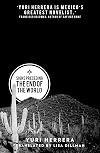
A stark, stylish novella which reads like a modern Mexican katabasis – a descent into the underworld that is also a journey over the border into the US. Herrera's prose style and his narrative framing (the story begins with a sinkhole opening in a Mexican village, and ends with a charged descent into a basement) invite mythic comparisons, with our protagonist Makina like a supercool latter-day Ishtar, who travelled to see her sister in hell, removing one item of clothing at each of the seven gates. Makina, travelling to find her own sibling, is similarly stripped of what she brings with her, though whether she is going to hell or not is very much at issue. (Then again, Mesopotamia is a long way from Mexico, so perhaps we should really be thinking about Quetzlcoatl's descent to the underworld. I don't know anything about it, unfortunately.)
And yet despite all this metaphorical layering – with which reviewers have a tendency to get too carried away – the book is, for me, at its most satisfying as a purely literal treatment of the Mexico–US border, and Makina is wonderful character just on her own terms. Laconic and resourceful, dealing coolly with changing and often frightening circumstances, she's a figure you don't see that frequently in fiction, and I would happily have spent ten times as long in her company. The language in which she is described has, like all the language in this book, a certain flexible, lapidary quality, like the liminal patois spoken across show more the illicit borderland:
More than the midpoint between homegrown and anglo their tongue is a nebulous territory between what is dying out and what is not yet born. But not a hecatomb. Makina senses in their tongue not a sudden absence but a shrewd metamorphosis, a self-defensive shift. They might be talking in perfect latin tongue and without warning begin to talk in perfect anglo tongue […] Using in one tongue the word for a thing in the other makes the attributes of both resound: if you say Give me fire when they say Give me a light, what is not to be learned about fire, light and the act of giving? It's not another way of saying things: these are new things.
The book is full of such ‘new things’, a challenge that has drawn great inventiveness and creativity from the English translator Lisa Dillman. That ‘anglo’ above is a rendering of the Spanish gabacho, a word that originally meant Pyrenean, but which in Mexican slang means something like ‘gringo’, though perhaps not quite so pejorative. A more delightful coinage of Herrera's (at least I think it's his) is his use of desgranar ‘to shell (a nut etc.)’ as a female-agentive version of ‘fuck’. Dillman translates this with neat literalness as ‘shuck’ (‘she’d been reckless and gone and shucked him as she had others on a couple of trips to the Little Town…’), which has the added bonus of rhyming felicitously. (Under a different review, someone was lamenting recently that such a word for the opposite of penetration does not exist in English, and pointed me to an article proposing ‘circlusion’ – well, here's a suggestion that's a little simpler and admirably suited.) It well expresses not just Makina's casual attitude to sex, but her complete refusal ever to be an object of anything – she is All Subject.
More notorious is Herrera's invention of jarchar, a multi-purpose verb of movement covering ‘leave’, ‘go’, ‘travel’, ‘come’, which derives from a term used of Mozarabic poetry – Dillman talks about this one directly in an afterword. Her translation, ‘to verse’, works perfectly in my opinion. On a very few occasions, there are hints of translationese in the form of not-quite-appropriate set phrases (‘A few houses had already been sent packing to the underworld’), but on the whole I thought the translation was extremely sensitive and atmospheric.
Indeed it's amazing just how much atmosphere and resonance such a short book can generate – I read it in less than an hour, but it will be with me for some time. Recommended reading for the Underground. show less
And yet despite all this metaphorical layering – with which reviewers have a tendency to get too carried away – the book is, for me, at its most satisfying as a purely literal treatment of the Mexico–US border, and Makina is wonderful character just on her own terms. Laconic and resourceful, dealing coolly with changing and often frightening circumstances, she's a figure you don't see that frequently in fiction, and I would happily have spent ten times as long in her company. The language in which she is described has, like all the language in this book, a certain flexible, lapidary quality, like the liminal patois spoken across show more the illicit borderland:
More than the midpoint between homegrown and anglo their tongue is a nebulous territory between what is dying out and what is not yet born. But not a hecatomb. Makina senses in their tongue not a sudden absence but a shrewd metamorphosis, a self-defensive shift. They might be talking in perfect latin tongue and without warning begin to talk in perfect anglo tongue […] Using in one tongue the word for a thing in the other makes the attributes of both resound: if you say Give me fire when they say Give me a light, what is not to be learned about fire, light and the act of giving? It's not another way of saying things: these are new things.
The book is full of such ‘new things’, a challenge that has drawn great inventiveness and creativity from the English translator Lisa Dillman. That ‘anglo’ above is a rendering of the Spanish gabacho, a word that originally meant Pyrenean, but which in Mexican slang means something like ‘gringo’, though perhaps not quite so pejorative. A more delightful coinage of Herrera's (at least I think it's his) is his use of desgranar ‘to shell (a nut etc.)’ as a female-agentive version of ‘fuck’. Dillman translates this with neat literalness as ‘shuck’ (‘she’d been reckless and gone and shucked him as she had others on a couple of trips to the Little Town…’), which has the added bonus of rhyming felicitously. (Under a different review, someone was lamenting recently that such a word for the opposite of penetration does not exist in English, and pointed me to an article proposing ‘circlusion’ – well, here's a suggestion that's a little simpler and admirably suited.) It well expresses not just Makina's casual attitude to sex, but her complete refusal ever to be an object of anything – she is All Subject.
More notorious is Herrera's invention of jarchar, a multi-purpose verb of movement covering ‘leave’, ‘go’, ‘travel’, ‘come’, which derives from a term used of Mozarabic poetry – Dillman talks about this one directly in an afterword. Her translation, ‘to verse’, works perfectly in my opinion. On a very few occasions, there are hints of translationese in the form of not-quite-appropriate set phrases (‘A few houses had already been sent packing to the underworld’), but on the whole I thought the translation was extremely sensitive and atmospheric.
Indeed it's amazing just how much atmosphere and resonance such a short book can generate – I read it in less than an hour, but it will be with me for some time. Recommended reading for the Underground. show less
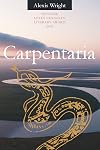
This baffling, dreamlike epic rushes you up in a semi-conscious swirl of language into the wild tropical north of Australia, where Queensland sweeps round to cradle an armful of the Pacific in the form of the Gulf of Carpentaria – a land of savannas and tropical cyclones, of eucalypts and estuary streams, melaleucas, songlines, unscrupulous mining corporations, and back-country bogan settlements.
The Gulf country is also the homeland of the Waanyi people, from whom Alexis Wright is descended on her mother's side, and what Carpentaria is most obviously and essentially is a hymn to her people and to her home. It seems necessary to establish this, because it can be difficult to work out what else it might be. Postcolonial epic? Magic-realist fantasy? Indigenous polemic?
The book doesn't present itself as a simple proposition. At more than 500 pages, it feels, just from heaving the thing up in front of your face, like something that will require some work. And the language is constantly wrong-footing you as a reader – like something that's been run through Google Translate and back twice, full of not-quite-right constructions (‘for no good rhyme or reason’), redundancies (‘it fell down, descended down’), misused verbs (‘the thought abhorred him’), even apparent spelling mistakes (‘the mother load’) which might just be editorial slips but which nevertheless contribute to a general sense that language here is unstable, not always to be trusted.
When you read show more Wright's sentences, you do it gingerly, feeling ahead with your toes, not wanting to put your full weight on a phrase until you're sure it will hold. It reminded me a bit of reading Steve Aylett, though the tone couldn't be more different. Here the method is a kind of Aboriginal English that dares you to think of it as ‘broken’, mixing myth, jokes, and natural history. And then – every now and again – it will suddenly explode into some long, flawlessly poetic excursion positively drenched in the local landscape:
Thousands of dry balls of lemon-coloured spinifex, uprooted by the storm, rolled into town and were swept out to sea. From the termite mounds dotting the old country the dust storm gathered up untold swarms of flying ants dizzy with the smell of rain and sent them flying with the wind. Dead birds flew past. Animals racing in frightened droves were left behind in full flight, impaled on barbed-wire spikes along the boundary fences. In the sheddings of the earth's waste, plastic shopping bags from the rubbish dump rose up like ghosts into the troposphere of red skies to be taken for a ride, far away. Way out above the ocean, the pollution of dust and wind-ripped pieces of plastic gathered, then dropped with the salty humidity and sank in the waters far below, to become the unsightly decoration of a groper's highway deep in the sea.
The nearest thing we have to a hero is the patriarch Normal Phantom, who lives in an indigenous settlement outside the town of Desperance. Norm's community is in a long-running feud with another Aboriginal group on the other side of the village; and between them are the whitefellas of Uptown, run by the violent Mayor Bruiser, policed by the corrupt Officer Truthful, and inhabited by a roster of colourful characters like Lloydie, who runs the pub and is in love with a mermaid trapped in the wood of his bar. Meanwhile Norm's partner, Angel Day, has run off with the religious zealot Mozzie Fishman, who leads a convoy endlessly following the Dreaming tracks, while his son Will Phantom is mounting a violent resistance against the local mining corporation…
These are figures that at times seem like characters in a joke (‘An Englishman, and Irishman and an Australian walked into a bar…’), and at other times assume the epic quality of mythic archetypes. Their stories blur into one another, with narratives that follow multiple timelines simultaneously, or loop back on themselves without warning. This is not a case of ‘magic realism’ (an unsatisfactory term), performed for metaphorical effect; rather, it deliberately reflects, I think, a completely different view of the world, one in which time and individuals are not especially important, and where the events of distant myth play an active role in current relationships and causalities.
The language of the novel is richly localised, busy with snappy gums, spearwood, eskies, myalls, skerricks, whirly-winds, gibber stones, sooty grunters, min min lights, big bikkies and a host of other Australianisms that pushed my [book:Australian National Dictionary|31867703] to the limits. Not to mention the many Aboriginal terms. The last time the Waanyi language was surveyed, in the early 80s, researchers found ‘about ten’ native speakers, so it's doubtless extinct by now; Carpentaria is, in this as in other things, an act of preservation as well as of modernisation.
I just don't know who to recommend it to. After a hundred pages I didn't understand it at all. After two hundred pages I thought I understood it, and didn't like it. I might easily have ditched it there, but the book review hanging over my head induced me to carry on – fortunately. After three hundred pages I was gripped, and by the time I finished I was deeply moved. Since then it's only kept expanding in my head, so that I now feel it's one of the most extraordinary books I've read in a long time. Lyrical, passionate, and seemingly detached from all the usual artistic traditions, it feels like you're hearing the genuine voice of a strange and distant land that has not been shown in literature before. show less
The Gulf country is also the homeland of the Waanyi people, from whom Alexis Wright is descended on her mother's side, and what Carpentaria is most obviously and essentially is a hymn to her people and to her home. It seems necessary to establish this, because it can be difficult to work out what else it might be. Postcolonial epic? Magic-realist fantasy? Indigenous polemic?
The book doesn't present itself as a simple proposition. At more than 500 pages, it feels, just from heaving the thing up in front of your face, like something that will require some work. And the language is constantly wrong-footing you as a reader – like something that's been run through Google Translate and back twice, full of not-quite-right constructions (‘for no good rhyme or reason’), redundancies (‘it fell down, descended down’), misused verbs (‘the thought abhorred him’), even apparent spelling mistakes (‘the mother load’) which might just be editorial slips but which nevertheless contribute to a general sense that language here is unstable, not always to be trusted.
When you read show more Wright's sentences, you do it gingerly, feeling ahead with your toes, not wanting to put your full weight on a phrase until you're sure it will hold. It reminded me a bit of reading Steve Aylett, though the tone couldn't be more different. Here the method is a kind of Aboriginal English that dares you to think of it as ‘broken’, mixing myth, jokes, and natural history. And then – every now and again – it will suddenly explode into some long, flawlessly poetic excursion positively drenched in the local landscape:
Thousands of dry balls of lemon-coloured spinifex, uprooted by the storm, rolled into town and were swept out to sea. From the termite mounds dotting the old country the dust storm gathered up untold swarms of flying ants dizzy with the smell of rain and sent them flying with the wind. Dead birds flew past. Animals racing in frightened droves were left behind in full flight, impaled on barbed-wire spikes along the boundary fences. In the sheddings of the earth's waste, plastic shopping bags from the rubbish dump rose up like ghosts into the troposphere of red skies to be taken for a ride, far away. Way out above the ocean, the pollution of dust and wind-ripped pieces of plastic gathered, then dropped with the salty humidity and sank in the waters far below, to become the unsightly decoration of a groper's highway deep in the sea.
The nearest thing we have to a hero is the patriarch Normal Phantom, who lives in an indigenous settlement outside the town of Desperance. Norm's community is in a long-running feud with another Aboriginal group on the other side of the village; and between them are the whitefellas of Uptown, run by the violent Mayor Bruiser, policed by the corrupt Officer Truthful, and inhabited by a roster of colourful characters like Lloydie, who runs the pub and is in love with a mermaid trapped in the wood of his bar. Meanwhile Norm's partner, Angel Day, has run off with the religious zealot Mozzie Fishman, who leads a convoy endlessly following the Dreaming tracks, while his son Will Phantom is mounting a violent resistance against the local mining corporation…
These are figures that at times seem like characters in a joke (‘An Englishman, and Irishman and an Australian walked into a bar…’), and at other times assume the epic quality of mythic archetypes. Their stories blur into one another, with narratives that follow multiple timelines simultaneously, or loop back on themselves without warning. This is not a case of ‘magic realism’ (an unsatisfactory term), performed for metaphorical effect; rather, it deliberately reflects, I think, a completely different view of the world, one in which time and individuals are not especially important, and where the events of distant myth play an active role in current relationships and causalities.
The language of the novel is richly localised, busy with snappy gums, spearwood, eskies, myalls, skerricks, whirly-winds, gibber stones, sooty grunters, min min lights, big bikkies and a host of other Australianisms that pushed my [book:Australian National Dictionary|31867703] to the limits. Not to mention the many Aboriginal terms. The last time the Waanyi language was surveyed, in the early 80s, researchers found ‘about ten’ native speakers, so it's doubtless extinct by now; Carpentaria is, in this as in other things, an act of preservation as well as of modernisation.
I just don't know who to recommend it to. After a hundred pages I didn't understand it at all. After two hundred pages I thought I understood it, and didn't like it. I might easily have ditched it there, but the book review hanging over my head induced me to carry on – fortunately. After three hundred pages I was gripped, and by the time I finished I was deeply moved. Since then it's only kept expanding in my head, so that I now feel it's one of the most extraordinary books I've read in a long time. Lyrical, passionate, and seemingly detached from all the usual artistic traditions, it feels like you're hearing the genuine voice of a strange and distant land that has not been shown in literature before. show less
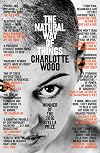
Pitched by most reviewers, inevitably, as like ‘The Handmaid's Tale in the Outback’, this is an engaging feminist paranoid fantasy about male violence and control, quick to read and more nuanced than it initially appears. It starts in medias res and we have to piece things together as we go; which is fun, but Wood never quite delivers on the intriguing set-up, and it's not even really clear what exactly we're being asked to believe has happened, let alone how believable that might be. But watching our characters get broken down and discover their inner reserves of strength (or not) is grimly satisfying – indeed, sometimes a little too inspirational – and Wood cranks the plot developments confidently. So if this is the sort of thing you like, then…well, then this is the sort of thing you'll like.
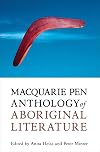
Australia for me has generally meant sun-baked vacations, family reunions, the coconut smell of sunblock, standing with my feet in the South Pacific, sandy-kneed, watching the sun go down. I have been here for work too, in the past, poking around two-bit mining towns in the middle of outback WA and drinking schooners of Toohey's New at makeshift bars lifted straight out of Slim Dusty songs; but even the most venerable cultural throwbacks here only point up a history of the last century or two at most. It's so, so easy to forget that human civilisation has been established here for tens of thousands of years.
In many areas, about the only visible sign of Australia's original inhabitants now are the placenames – strange, mostly incomprehensible words in forgotten languages with forgotten meanings. Near where most of my family live in Queensland there are all kinds of weird and wonderful towns which I love to say – Mooloolaba, Eumundi, Toowoomba – but usually when you ask what they mean, people just shrug. Occasionally one, better informed, might tell you that something means the place where two rivers meet – ‘in Aboriginal’. (The hundreds of Aboriginal languages can differ as much as English and Finnish.)
Round here, where I'm currently writing this, was the territory of the Gubbi Gubbi people, though I have never met or even seen one in the many years I've been coming. Indeed I've been told more than once that there are none left, which isn't actually true though show more it's easy to see why it could be believed. A highway near where my nephew goes to school is called Murdering Creek Road; see, there was a creek here, and all the Gubbi Gubbi nearby were murdered right along it…
The more you find out about all this, the more incredible this huge absence in Australian society seems. After a while, there is a tendency for the whole gigantic country to appear (as perhaps it should) as a vast extermination site – ‘Holocaust Island’, as the poet Graeme Dixon dubs it, a phrase that has stuck with me. The Aboriginals were poisoned, speared, shot; later, under more civilising influences, merely herded into trucks and dumped on reservations, far from white settlements, with families routinely and strategically split up in the process. Subsequent policies of ‘assimilation’ were, from a cultural point of view, just another kind of extermination, as Oodgeroo Noonuccal pointed out in the 60s:
Pour your pitcher of wine into the wide river
And where is your wine? There is only the river.
So it's understandable that Aboriginal writing basically constitutes a single-issue literature, with survival as the single issue. Originally physical survival, and subsequently cultural survival. The basic point has been eloquently expressed by generations of Aboriginal writers and is still being made.
You are the New Australians, but we are the Old Australians. We have in our arteries the blood of the Original Australians, who have lived in this land for many thousands of years. You came here only recently, and you took our land away from us by force. You have almost exterminated our people, but there are enough of us remaining to expose the humbug of your claim, as white Australians, to be a civilised, progressive, kindly and humane nation. By your cruelty and callousness towards the Aborigines you stand condemned in the eyes of the civilised world.
—William Ferguson & John Patten, 1938
The nature of this background means that a lot of what is in here stretches the definition of ‘literature’ slightly, and the early material in particular includes a lot of manifestos and legal claims of limited artistic effect or intent. Nevertheless, I found it very inspiring to have it all assembled here as a focused collection, and – by drawing attention to just how much is not talked about elsewhere – it's definitely made me rethink the way I see Australian literature. show less
In many areas, about the only visible sign of Australia's original inhabitants now are the placenames – strange, mostly incomprehensible words in forgotten languages with forgotten meanings. Near where most of my family live in Queensland there are all kinds of weird and wonderful towns which I love to say – Mooloolaba, Eumundi, Toowoomba – but usually when you ask what they mean, people just shrug. Occasionally one, better informed, might tell you that something means the place where two rivers meet – ‘in Aboriginal’. (The hundreds of Aboriginal languages can differ as much as English and Finnish.)
Round here, where I'm currently writing this, was the territory of the Gubbi Gubbi people, though I have never met or even seen one in the many years I've been coming. Indeed I've been told more than once that there are none left, which isn't actually true though show more it's easy to see why it could be believed. A highway near where my nephew goes to school is called Murdering Creek Road; see, there was a creek here, and all the Gubbi Gubbi nearby were murdered right along it…
The more you find out about all this, the more incredible this huge absence in Australian society seems. After a while, there is a tendency for the whole gigantic country to appear (as perhaps it should) as a vast extermination site – ‘Holocaust Island’, as the poet Graeme Dixon dubs it, a phrase that has stuck with me. The Aboriginals were poisoned, speared, shot; later, under more civilising influences, merely herded into trucks and dumped on reservations, far from white settlements, with families routinely and strategically split up in the process. Subsequent policies of ‘assimilation’ were, from a cultural point of view, just another kind of extermination, as Oodgeroo Noonuccal pointed out in the 60s:
Pour your pitcher of wine into the wide river
And where is your wine? There is only the river.
So it's understandable that Aboriginal writing basically constitutes a single-issue literature, with survival as the single issue. Originally physical survival, and subsequently cultural survival. The basic point has been eloquently expressed by generations of Aboriginal writers and is still being made.
You are the New Australians, but we are the Old Australians. We have in our arteries the blood of the Original Australians, who have lived in this land for many thousands of years. You came here only recently, and you took our land away from us by force. You have almost exterminated our people, but there are enough of us remaining to expose the humbug of your claim, as white Australians, to be a civilised, progressive, kindly and humane nation. By your cruelty and callousness towards the Aborigines you stand condemned in the eyes of the civilised world.
—William Ferguson & John Patten, 1938
The nature of this background means that a lot of what is in here stretches the definition of ‘literature’ slightly, and the early material in particular includes a lot of manifestos and legal claims of limited artistic effect or intent. Nevertheless, I found it very inspiring to have it all assembled here as a focused collection, and – by drawing attention to just how much is not talked about elsewhere – it's definitely made me rethink the way I see Australian literature. show less
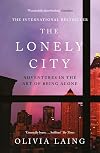
In her mid-30s, Olivia Laing moved from England to New York to live with a new boyfriend. The relationship didn't work out, and she found herself stranded on her own in an unfamiliar city, dealing with an almost crippling lack of daily human interaction.
Having spent sizeable chunks of my own life being lonely in unfamiliar cities, I immediately liked the idea as well as the melancholy tone of this book. Laing has all kinds of interesting insights to offer on how loneliness manifests itself – but it should be noted that while The Lonely City presents itself as a memoir of this time in her life, under the hood it's really a book of art criticism, examining the life and work of visual artists (mostly) who addressed loneliness as a subject.
Her main case studies are Hopper, Warhol, David Wojnarowicz, Henry Darger and Klaus Nomi, some of whom I had never heard of, but all of whose work emerges in this study as full of the pain and the hypersensitivity of loneliness – infused with (in a phrase she uses about Hopper) ‘an erotics of insufficient intimacy’. Unfortunately it is necessary for the reader to put these references together for themselves, as the book itself is critically short of illustrations.
I loved the memoir bits and thought the criticism bits were only OK, which meant I found the book as a whole a little uneven, though often fascinating. Although Laing has a load of interesting things to say about the artists she discusses, I couldn't shake off the feeling show more that they sometimes appeared to act as a cover, or safety net, for when talking about herself became too difficult. Tracing Wojnarowicz's nocturnal excursions into the New York gay scene of the 1980s, for instance, leads Laing to a moody consideration of her own sexuality – her sense that she is ‘in the wrong place, in the wrong body, in the wrong life’ – in terms that are first allusive, and finally more direct:
I'd never been comfortable with the demands of femininity, had always felt more like a boy, a gay boy, that I inhabited a gender position somewhere between the binaries of male and female, some impossible other, some impossible both. Trans, I was starting to realise, which isn't to say I was transitioning from one thing to another, but rather that I inhabited a space in the centre, which didn't exist, except there I was.
The narrative really comes alive at these points; but it isn't long before Laing ducks back behind another artist again and retreats, if that's not an unfair word, into more analytic criticism. And again – the criticism was interesting! – I just felt that the art and the memoir got in each other's way as often as they reinforced each other. Which was a shame, because I found her really excellent when concentrating on the life writing – on, for instance, the way loneliness has been mediated, yet in some ways worsened, by the modern online world – especially when it comes to the contradictory impulses that drove her on social media:
I wanted to be in contact and I wanted to retain my anonymity, my private space. I wanted to click and click and click until my synapses exploded, until I was flooded by superfluity. I wanted to hypnotise myself with data, with coloured pixels, to become vacant, to overwhelm any creeping anxious sense of who I actually was, to annihilate my feelings. At the same time I wanted to wake up, to be politically and socially engaged. And then again I wanted to declare my presence, to list my interests and objections, to notify the world that I was still there, thinking with my fingers, even if I'd almost lost the art of speech. I wanted to look and I wanted to be seen, and somehow it was easier to do both via the mediating screen.
Laing's neat summary of the internet – ‘what seemed transient was actually permanent, and what seemed free had already been bought’ – is perhaps a clue to the appeal of the artists she focuses on, who were either far outside any corporate influence or, like Warhol, were making commodification the whole point of their work. Seeing these lonely artists through Laing's gaze is enlightening – but the links and segues are so good that I spent much of the book pining for a straight-up memoir. show less
Having spent sizeable chunks of my own life being lonely in unfamiliar cities, I immediately liked the idea as well as the melancholy tone of this book. Laing has all kinds of interesting insights to offer on how loneliness manifests itself – but it should be noted that while The Lonely City presents itself as a memoir of this time in her life, under the hood it's really a book of art criticism, examining the life and work of visual artists (mostly) who addressed loneliness as a subject.
Her main case studies are Hopper, Warhol, David Wojnarowicz, Henry Darger and Klaus Nomi, some of whom I had never heard of, but all of whose work emerges in this study as full of the pain and the hypersensitivity of loneliness – infused with (in a phrase she uses about Hopper) ‘an erotics of insufficient intimacy’. Unfortunately it is necessary for the reader to put these references together for themselves, as the book itself is critically short of illustrations.
I loved the memoir bits and thought the criticism bits were only OK, which meant I found the book as a whole a little uneven, though often fascinating. Although Laing has a load of interesting things to say about the artists she discusses, I couldn't shake off the feeling show more that they sometimes appeared to act as a cover, or safety net, for when talking about herself became too difficult. Tracing Wojnarowicz's nocturnal excursions into the New York gay scene of the 1980s, for instance, leads Laing to a moody consideration of her own sexuality – her sense that she is ‘in the wrong place, in the wrong body, in the wrong life’ – in terms that are first allusive, and finally more direct:
I'd never been comfortable with the demands of femininity, had always felt more like a boy, a gay boy, that I inhabited a gender position somewhere between the binaries of male and female, some impossible other, some impossible both. Trans, I was starting to realise, which isn't to say I was transitioning from one thing to another, but rather that I inhabited a space in the centre, which didn't exist, except there I was.
The narrative really comes alive at these points; but it isn't long before Laing ducks back behind another artist again and retreats, if that's not an unfair word, into more analytic criticism. And again – the criticism was interesting! – I just felt that the art and the memoir got in each other's way as often as they reinforced each other. Which was a shame, because I found her really excellent when concentrating on the life writing – on, for instance, the way loneliness has been mediated, yet in some ways worsened, by the modern online world – especially when it comes to the contradictory impulses that drove her on social media:
I wanted to be in contact and I wanted to retain my anonymity, my private space. I wanted to click and click and click until my synapses exploded, until I was flooded by superfluity. I wanted to hypnotise myself with data, with coloured pixels, to become vacant, to overwhelm any creeping anxious sense of who I actually was, to annihilate my feelings. At the same time I wanted to wake up, to be politically and socially engaged. And then again I wanted to declare my presence, to list my interests and objections, to notify the world that I was still there, thinking with my fingers, even if I'd almost lost the art of speech. I wanted to look and I wanted to be seen, and somehow it was easier to do both via the mediating screen.
Laing's neat summary of the internet – ‘what seemed transient was actually permanent, and what seemed free had already been bought’ – is perhaps a clue to the appeal of the artists she focuses on, who were either far outside any corporate influence or, like Warhol, were making commodification the whole point of their work. Seeing these lonely artists through Laing's gaze is enlightening – but the links and segues are so good that I spent much of the book pining for a straight-up memoir. show less
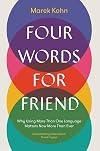
‘Among the many asymmetries that worked to Britain's disadvantage in its negotiations to leave the European Union,’ Marek Kohn notes, in one of the barbed asides that punctuate this book, ‘was the twenty-seven other nations' fluent grasp of the Daily Telegraph and the Daily Mail, unmatched by any corresponding British familiarity with the Frankfurter Allgemeine Zeitung or Bild.’
It's a point that seems especially clear from where I sit, as an Englishman living in German-speaking Central Europe, though I suppose it only takes you so far – one is loth, after all, to understress the drastic incompetence of the British politicians involved.
For a writer from the UK to be expatiating on the joys and benefits of multilingualism now, mid-Brexit, is not a timely coincidence – Kohn was inspired to the subject directly by seeing the nasty flare-up of xenophobia that followed the 2016 referendum. Kohn, whose family are from Poland, found himself responding not with a stronger desire to ‘identify as’ British, but, on the contrary, with a stronger desire to assert his Polish heritage and to properly learn the language which until then he had spoken only poorly and infrequently.
One of the themes of this book is the ways in which language is used both to bind people together and, conversely, to establish lines of difference between one community and another. ‘Pragmatic arguments – migrants should speak English to avoid misunderstandings in the workplace, or to make show more friends in the playground – shade into demands of a more dogmatic cast: this is the language of the country, so if you want to live here, you had better speak it.’ The end-point of this mindset can be lethal, as easily seen all over the world – Kohn retails several examples, including from the Middle East where not long ago, for instance,
a bus was boarded by armed men, one of whom held a tomato and demanded each passenger tell him what it was: those who said it was a ‘banadura’, identifying themselves as Lebanese, were ordered off the bus; those who called it a ‘bandura’, revealing themselves to be Palestinians, remained on the bus and were slaughtered.
Similar incidents were common during the Balkans conflicts too. (This was, remember, the original function of a shibboleth: ‘Then said they unto him, Say now Shibboleth: and he said Sibboleth: for he could not frame to pronounce it right. Then they took him, and slew him at the passages of Jordan.’)
Not all of the book, though, is on such a life-or-death level as this; a lot of it simply has to do with Kohn trying to get to grips with the latest research into bilingualism, what its beneficial effects are on the brain (if any), and how it might affect someone's view of society.
I really admired the ideas animating the book, but Kohn's layman viewpoint did occasionally give me pause. He doesn't write as a linguistic researcher, or even as an expert commentator on the field (his previous books have been on subjects as diverse as Darwinism and British drug culture); if anything, he is writing as an interested bilingual person, although given his confessedly rusty knowledge of Polish, even this is a bit of a stretch. Which makes his conclusions sometimes a little shaky.
A lot of his discussions of different languages have a decidedly neo-Whorfian tone which I think we should be cautious about; for instance, after considering languages with evidential grammar (like Turkish), he decides that ‘it is easy to infer that a population largely trusts its broadcasters if they accept that the default mode for news reports is the first-hand form’. This is quite a leap. Linguists tend to be suspicious of this kind of argument, not because it is totally without truth but rather because it so easily blends with arguments from pure stereotype (German is ordered and utilitarian, Italian baroque and expressive, etc etc).
He also sometimes displays a quasi-mystical, literalist view of languages' untranslatability, of the kind that is very rarely shared by people who actually translate professionally (or even regularly). When talking about how Spanish-speakers describe breaking a box, for example, he seems almost deliberately obtuse:
They could say ‘se me rompió’, which can only be translated nonsensically or awkwardly in English: ‘it broke to me’, ‘to me it happened that it broke’.
Huh? This example is especially weird because English actually has a very similar impersonal prepositional construction: ‘it broke on me’.
Being born in an English-speaking country used to be quite an advantage. Nowadays, it's almost a disadvantage, since everyone of basic education in the rest of the world speaks English anyway, and they speak a couple of other languages as well. And those who speak it as a second language may be getting extra benefits when it's used, since research suggests that using a non-native language helps you bypass emotional, knee-jerk reactions – something called the ‘foreign language effect’. Again, Kohn can't help seeing Brexit as a case in point:
Britain, speaking English and only English, based its decisions on emotions and found itself in disarray. The twenty-seven countries on the other side, speaking English among themselves, achieved a remarkable degree of coherence, based on a clear understanding of their collective interests.
Well, maybe. Certainly for those who do speak more than one language, or who want to speak more than one language, this book is full of fascinating anecdotes and studies to help consider what it means in a new light. And despite his flirtations with linguistic determinism, Kohn's conclusions on language are unimpeachable: ‘Its effects on thought are disputed. Its effects upon the relations between people are indisputable.’ show less
It's a point that seems especially clear from where I sit, as an Englishman living in German-speaking Central Europe, though I suppose it only takes you so far – one is loth, after all, to understress the drastic incompetence of the British politicians involved.
For a writer from the UK to be expatiating on the joys and benefits of multilingualism now, mid-Brexit, is not a timely coincidence – Kohn was inspired to the subject directly by seeing the nasty flare-up of xenophobia that followed the 2016 referendum. Kohn, whose family are from Poland, found himself responding not with a stronger desire to ‘identify as’ British, but, on the contrary, with a stronger desire to assert his Polish heritage and to properly learn the language which until then he had spoken only poorly and infrequently.
One of the themes of this book is the ways in which language is used both to bind people together and, conversely, to establish lines of difference between one community and another. ‘Pragmatic arguments – migrants should speak English to avoid misunderstandings in the workplace, or to make show more friends in the playground – shade into demands of a more dogmatic cast: this is the language of the country, so if you want to live here, you had better speak it.’ The end-point of this mindset can be lethal, as easily seen all over the world – Kohn retails several examples, including from the Middle East where not long ago, for instance,
a bus was boarded by armed men, one of whom held a tomato and demanded each passenger tell him what it was: those who said it was a ‘banadura’, identifying themselves as Lebanese, were ordered off the bus; those who called it a ‘bandura’, revealing themselves to be Palestinians, remained on the bus and were slaughtered.
Similar incidents were common during the Balkans conflicts too. (This was, remember, the original function of a shibboleth: ‘Then said they unto him, Say now Shibboleth: and he said Sibboleth: for he could not frame to pronounce it right. Then they took him, and slew him at the passages of Jordan.’)
Not all of the book, though, is on such a life-or-death level as this; a lot of it simply has to do with Kohn trying to get to grips with the latest research into bilingualism, what its beneficial effects are on the brain (if any), and how it might affect someone's view of society.
I really admired the ideas animating the book, but Kohn's layman viewpoint did occasionally give me pause. He doesn't write as a linguistic researcher, or even as an expert commentator on the field (his previous books have been on subjects as diverse as Darwinism and British drug culture); if anything, he is writing as an interested bilingual person, although given his confessedly rusty knowledge of Polish, even this is a bit of a stretch. Which makes his conclusions sometimes a little shaky.
A lot of his discussions of different languages have a decidedly neo-Whorfian tone which I think we should be cautious about; for instance, after considering languages with evidential grammar (like Turkish), he decides that ‘it is easy to infer that a population largely trusts its broadcasters if they accept that the default mode for news reports is the first-hand form’. This is quite a leap. Linguists tend to be suspicious of this kind of argument, not because it is totally without truth but rather because it so easily blends with arguments from pure stereotype (German is ordered and utilitarian, Italian baroque and expressive, etc etc).
He also sometimes displays a quasi-mystical, literalist view of languages' untranslatability, of the kind that is very rarely shared by people who actually translate professionally (or even regularly). When talking about how Spanish-speakers describe breaking a box, for example, he seems almost deliberately obtuse:
They could say ‘se me rompió’, which can only be translated nonsensically or awkwardly in English: ‘it broke to me’, ‘to me it happened that it broke’.
Huh? This example is especially weird because English actually has a very similar impersonal prepositional construction: ‘it broke on me’.
Being born in an English-speaking country used to be quite an advantage. Nowadays, it's almost a disadvantage, since everyone of basic education in the rest of the world speaks English anyway, and they speak a couple of other languages as well. And those who speak it as a second language may be getting extra benefits when it's used, since research suggests that using a non-native language helps you bypass emotional, knee-jerk reactions – something called the ‘foreign language effect’. Again, Kohn can't help seeing Brexit as a case in point:
Britain, speaking English and only English, based its decisions on emotions and found itself in disarray. The twenty-seven countries on the other side, speaking English among themselves, achieved a remarkable degree of coherence, based on a clear understanding of their collective interests.
Well, maybe. Certainly for those who do speak more than one language, or who want to speak more than one language, this book is full of fascinating anecdotes and studies to help consider what it means in a new light. And despite his flirtations with linguistic determinism, Kohn's conclusions on language are unimpeachable: ‘Its effects on thought are disputed. Its effects upon the relations between people are indisputable.’ show less

Matthew Walker really, really thinks we all need some serious shut-eye, and he's not messing around when it comes to getting you on board – he hits you with both barrels on page one, and never lets up:
Routinely sleeping less than six or seven hours a night demolishes your immune system, more than doubling your risk of cancer. Insufficient sleep is a key lifestyle factor determining whether or not you will develop Alzheimer's disease. Inadequate sleep—even moderate reductions for just one week—disrupts blood sugar levels so profoundly that you would be classified as pre-diabetic. Short sleeping increases the likelihood of your coronary arteries becoming blocked and brittle, setting you on a path to cardiovascular disease, stroke, and congestive heart failure […] sleep disruption further contributes to all major psychiatric conditions, including depression, anxiety, and suicidality.
And this is supposed to help me sleep better!? At least before, I just used to lie there going over the same three lines from ‘I Just Can't Wait to be King’; now, if I so much as drift into momentary consciousness at two a.m., I end up paralysed with alertness, calculating the gradually rising odds that my obese, cancer-ridden body will only cease to be a concern thanks to the merciful onset of my crippling dementia.
Eventually Walker just comes right out and admits that as far as the science is concerned, ‘wakefulness is low-level brain damage’, at which point you start to wonder show more how far he's really going to take this whole unconsciousness thing. But by then the damage is done. Your life is different. Come evening, when Hannah is pouring herself a glass of Sancerre and playing Gaga, I now appear in the doorway in my slippers, with a hot-water bottle clutched under one arm and a toothbrush jutting from my jaws. It may feel antisocial, but anything seems preferable to inviting the heart disease, obesity, cystitis, tennis elbow and plagues of locusts that Walker is otherwise promising.
A while back I got a Fitbit, which allows me to see in appalling detail just how much sleep I sometimes fail to get – the hypnograms, with their discrete stages of slumber, never quite stretching as far as you'd like them to. Thanks to this book, it's now possible to quantify exactly what I'm missing out on during such nights, as scientists have mapped more of the neurochemical processes involved than I ever realised: the deep, NREM sleep where memories are carefully transferred from short-term to long-term memory; then the ‘informational alchemy’ of REM-sleep dreaming, which sharpens creativity and conjures up solutions to our daytime problems.
The importance of sleep can be further appraised by its evolutionary heritage – it goes back about as far as life on earth. Walker finds that even ‘the very simplest form of unicellular organisms that survive for periods exceeding twenty-four hours, such as bacteria, have active and passive phases that correspond to the light-dark cycle of our planet’. Sleep is about the first thing natural selection locked in for us, and as far as we can tell every animal does it.
One always understood that sleep was a healthy thing, but somehow a full night of it is still often viewed as a luxury. On the evidence of this book, it's more like a medical necessity. Given working practices in many parts of the world, this is a big problem, and indeed part of Walker's mission is to explain that much of the developed world is suffering from a serious, chronic sleep deficit which is ultimately ‘a slow form of self-euthanasia’ – he is talking not just to individual sleepers, but to businesses and governments who have some responsibility to take what he says into account.
The difference between a four-star book and a five-star one is that while I might love both of them, I can keep a four-star book to myself, whereas a five-star book is one I can't shut up about to everyone around me. On that basis, despite its occasional infelicities, Why We Sleep makes the grade. It's passionate and clearly written, summarises a huge amount of research about which I knew little, and addresses a subject that obviously deserves the attention. It would take someone a lot more cynical than me to read this and not silently decide to make a few lifestyle changes – on which note, if you'll excuse me, I have some intensive, hi-octane pillow time to get to. show less
Routinely sleeping less than six or seven hours a night demolishes your immune system, more than doubling your risk of cancer. Insufficient sleep is a key lifestyle factor determining whether or not you will develop Alzheimer's disease. Inadequate sleep—even moderate reductions for just one week—disrupts blood sugar levels so profoundly that you would be classified as pre-diabetic. Short sleeping increases the likelihood of your coronary arteries becoming blocked and brittle, setting you on a path to cardiovascular disease, stroke, and congestive heart failure […] sleep disruption further contributes to all major psychiatric conditions, including depression, anxiety, and suicidality.
And this is supposed to help me sleep better!? At least before, I just used to lie there going over the same three lines from ‘I Just Can't Wait to be King’; now, if I so much as drift into momentary consciousness at two a.m., I end up paralysed with alertness, calculating the gradually rising odds that my obese, cancer-ridden body will only cease to be a concern thanks to the merciful onset of my crippling dementia.
Eventually Walker just comes right out and admits that as far as the science is concerned, ‘wakefulness is low-level brain damage’, at which point you start to wonder show more how far he's really going to take this whole unconsciousness thing. But by then the damage is done. Your life is different. Come evening, when Hannah is pouring herself a glass of Sancerre and playing Gaga, I now appear in the doorway in my slippers, with a hot-water bottle clutched under one arm and a toothbrush jutting from my jaws. It may feel antisocial, but anything seems preferable to inviting the heart disease, obesity, cystitis, tennis elbow and plagues of locusts that Walker is otherwise promising.
A while back I got a Fitbit, which allows me to see in appalling detail just how much sleep I sometimes fail to get – the hypnograms, with their discrete stages of slumber, never quite stretching as far as you'd like them to. Thanks to this book, it's now possible to quantify exactly what I'm missing out on during such nights, as scientists have mapped more of the neurochemical processes involved than I ever realised: the deep, NREM sleep where memories are carefully transferred from short-term to long-term memory; then the ‘informational alchemy’ of REM-sleep dreaming, which sharpens creativity and conjures up solutions to our daytime problems.
The importance of sleep can be further appraised by its evolutionary heritage – it goes back about as far as life on earth. Walker finds that even ‘the very simplest form of unicellular organisms that survive for periods exceeding twenty-four hours, such as bacteria, have active and passive phases that correspond to the light-dark cycle of our planet’. Sleep is about the first thing natural selection locked in for us, and as far as we can tell every animal does it.
One always understood that sleep was a healthy thing, but somehow a full night of it is still often viewed as a luxury. On the evidence of this book, it's more like a medical necessity. Given working practices in many parts of the world, this is a big problem, and indeed part of Walker's mission is to explain that much of the developed world is suffering from a serious, chronic sleep deficit which is ultimately ‘a slow form of self-euthanasia’ – he is talking not just to individual sleepers, but to businesses and governments who have some responsibility to take what he says into account.
The difference between a four-star book and a five-star one is that while I might love both of them, I can keep a four-star book to myself, whereas a five-star book is one I can't shut up about to everyone around me. On that basis, despite its occasional infelicities, Why We Sleep makes the grade. It's passionate and clearly written, summarises a huge amount of research about which I knew little, and addresses a subject that obviously deserves the attention. It would take someone a lot more cynical than me to read this and not silently decide to make a few lifestyle changes – on which note, if you'll excuse me, I have some intensive, hi-octane pillow time to get to. show less
Twenty years ago, Ronald Hutton literally wrote the book on modern witchcraft (The Triumph of the Moon: A History of Modern Pagan Witchcraft), in which he was generous and open-minded about the value of Wiccan religions, while also making clear that their claims to represent the survival of an ancient heritage of European paganism were nonsense. Now he turns his attention to the more culturally persistent kind of ‘witch’ – the figure of a maleficent magic-user, wreaking havoc on his (or more usually her) community from within.
Most people who have written about this before have tended to concentrate on the European witch-trials, which in the early-modern period saw some 40,000–60,000 people legally put to death (though probably ‘in the lower half of that range,’ Hutton judges). His own strategy is much broader, both in time and space: he goes all the way back to Ancient Mesopotamia in search of the origins of the witch figure, and ranges around the world to consider witchcraft as it is still conceived of (and feared) in many traditional societies. The results of this are enlightening, with the events of early-modern Europe emerging as part of a distinct patchwork of global-historical beliefs rather than looking like an explosive anomaly. In his summary, Europe's distinction when it comes to witchcraft is slightly different:
Europeans alone turned witches into practitioners of an evil anti-religion, and Europeans alone represent a complex of people who have show more traditionally feared and hunted witches, and subsequently and spontaneously ceased officially to believe in them. In fact, both developments came relatively late in their history and are probably best viewed as part of a single process of modernization, driven by a spirit of scientific experimentation.
Hutton's approach is ruthlessly historiographical. Every line of inquiry is examined in the context of the scholars who proposed or investigated it. The advantage of this is that you feel like you're getting real oversight of the debate: with other books, when a given idea about paganism or witchcraft comes up, you might think vaguely: yes, I've heard of that, or I've seen someone argue against that somewhere. With Hutton things are infinitely clearer: you can now think, for example, Oh yes, that's an idea that was raised by American academics in the 50s but fell out of favour after research in Italy in the 1970s. The entire subject is flooded with light and acquires edges, handles.
The downside, though, is that it gives his prose a rather cool, distant tone: the impression one gets is not of someone digging into the context of witchcraft with relish, but rather of someone sifting dispassionately through the academic sources. It's kind of a shame, since my memory of reading some of his earlier books was that he seemed to really revel in the subject matter, while also taking it seriously. Indeed this is one of Hutton's hallmarks – he writes about subjects that some serious historians only mention in sneering tones, and manages to be completely even-handed (sometimes almost to a fault: in a section about magicians who claimed to liaise with elves and fairies, Hutton concedes that ‘to be perfectly just, one might admit the final possibility that some of the people concerned actually met non-human beings’!).
There was a lot in here that was new to me, since even the familiar material is being approached from strange new perspectives – the debt owed by Germanic folklore to Egyptian ceremonial magic, for instance, or the way the scientific method is still meshing with witchcraft (as it did during the European witch hunts) in present-day South Africa. I had also been unaware of the extent to which the witch is a Swiss creation – the first witch trials were held in the Valais and the mountains east of Lake Geneva, and the literary records of these events, circulated thanks to a major church council in Basel soon afterwards, did a lot to create the modern image of the witch and the Satanic sabbath.
Minor niggles about the style notwithstanding, then, this is a huge achievement, even if it can't easily be recommended for those looking for a pop-historical overview of witchcraft. But if you already have some familiarity with the field, or if you just like academic prose generally, then this is surely the most comprehensive and wide-ranging survey around – and likely to remain so for the foreseeable future (to the extent that futures can be foreseen, with or without some eye of newt). show less
Most people who have written about this before have tended to concentrate on the European witch-trials, which in the early-modern period saw some 40,000–60,000 people legally put to death (though probably ‘in the lower half of that range,’ Hutton judges). His own strategy is much broader, both in time and space: he goes all the way back to Ancient Mesopotamia in search of the origins of the witch figure, and ranges around the world to consider witchcraft as it is still conceived of (and feared) in many traditional societies. The results of this are enlightening, with the events of early-modern Europe emerging as part of a distinct patchwork of global-historical beliefs rather than looking like an explosive anomaly. In his summary, Europe's distinction when it comes to witchcraft is slightly different:
Europeans alone turned witches into practitioners of an evil anti-religion, and Europeans alone represent a complex of people who have show more traditionally feared and hunted witches, and subsequently and spontaneously ceased officially to believe in them. In fact, both developments came relatively late in their history and are probably best viewed as part of a single process of modernization, driven by a spirit of scientific experimentation.
Hutton's approach is ruthlessly historiographical. Every line of inquiry is examined in the context of the scholars who proposed or investigated it. The advantage of this is that you feel like you're getting real oversight of the debate: with other books, when a given idea about paganism or witchcraft comes up, you might think vaguely: yes, I've heard of that, or I've seen someone argue against that somewhere. With Hutton things are infinitely clearer: you can now think, for example, Oh yes, that's an idea that was raised by American academics in the 50s but fell out of favour after research in Italy in the 1970s. The entire subject is flooded with light and acquires edges, handles.
The downside, though, is that it gives his prose a rather cool, distant tone: the impression one gets is not of someone digging into the context of witchcraft with relish, but rather of someone sifting dispassionately through the academic sources. It's kind of a shame, since my memory of reading some of his earlier books was that he seemed to really revel in the subject matter, while also taking it seriously. Indeed this is one of Hutton's hallmarks – he writes about subjects that some serious historians only mention in sneering tones, and manages to be completely even-handed (sometimes almost to a fault: in a section about magicians who claimed to liaise with elves and fairies, Hutton concedes that ‘to be perfectly just, one might admit the final possibility that some of the people concerned actually met non-human beings’!).
There was a lot in here that was new to me, since even the familiar material is being approached from strange new perspectives – the debt owed by Germanic folklore to Egyptian ceremonial magic, for instance, or the way the scientific method is still meshing with witchcraft (as it did during the European witch hunts) in present-day South Africa. I had also been unaware of the extent to which the witch is a Swiss creation – the first witch trials were held in the Valais and the mountains east of Lake Geneva, and the literary records of these events, circulated thanks to a major church council in Basel soon afterwards, did a lot to create the modern image of the witch and the Satanic sabbath.
Minor niggles about the style notwithstanding, then, this is a huge achievement, even if it can't easily be recommended for those looking for a pop-historical overview of witchcraft. But if you already have some familiarity with the field, or if you just like academic prose generally, then this is surely the most comprehensive and wide-ranging survey around – and likely to remain so for the foreseeable future (to the extent that futures can be foreseen, with or without some eye of newt). show less
Switzerland is one of those countries more written about by visitors than by locals, who are already used to the views. It makes an impression, is what I'm saying. I went for a walk with my daughter yesterday and it looked like this:
https://imgur.com/ms8imgb.jpg
Of course, if you tap a local villager on the shoulder and point, open-mouthed, at the vista behind them, they are apt to shrug and puff their pipe impassively, before turning back to their game of jass with perhaps a grumbled reflection on the impressionability of foreigners.
This is the only country I know that looks like its calendars. Yet things were not always this way. Before the beauty of the mountains became a cliché, reactions to the scenery here could be unpredictable. CCL Hirschfeld, passing through in the 1760s, commented:
What struck me most in Switzerland among the curiosities of nature were those horrid structures the Alps.
And even a century later, tourism was not to everyone's taste. Tolstoy was pleasingly irritable about the whole thing:
2 July. Got up at 3. A filthy bed with bugs. The same stupid view of nature and of people. Englishmen in blankets, with Murrays and maps. “Ah!” they exclaimed, when the sun appeared.
(Guilty!) Those that enjoyed it, though, certainly got a lot out of it, especially the writers and artists. ‘This Engadine is the birthplace of my Zarathustra,’ Nietzsche declaimed. Wagner wrote many of his masterpieces here, and later said: ‘nowhere else could I have composed show more them.’ Rilke hammered out most of the Duino Elegies here, and all of the Sonnets to Orpheus. Gibbon finished the Decline and Fall in Lausanne, and Tolkien used his travels in Switzerland as a model for Bilbo's journey from Rivendell to the far side of the Misty Mountains. Mary Shelley went as far as to invent the horror genre after a dirty weekend on Lake Geneva. And on, and on, and on.
So this collection of letters, diaries and other comments from people travelling through Switzerland, arranged thematically, has a large pool to draw on and gives you a pretty good summary of how the country's image has shifted – and, in other ways, remained the same – over the years.
As you can see from the above, it doesn't just concentrate on the positive reviews. Which is important. The Swiss, though neutral during the Second World War, did not exactly cover themselves with glory back then – the yellow star that Jews had to wear was a Swiss invention, and Switzerland turned away huge numbers of Jewish refugees at the border, with justifications that have become horribly familiar again in recent years:
When you are in command of a small lifeboat with limited carrying capacity and supplies, that is already very full, while thousands of victims of a shipping disaster are crying for help, you must seem cold-hearted when you can't take everyone.
—Eduard von Steiger, Federal Council Member, 1942
The government eventually apologised for this in 1996.
Switzerland is a hard country to understand: neutral in conflicts, but thoroughly militarised; at the heart of Europe, but politically detached from it; functionally multilingual, but speaking by preference their own incomprehensible local dialects. A lot of those quoted in here have a puzzled tone, as if struggling to get a handle on the place; many, indeed, write it off out of sheer misunderstanding. (When Frédéric Dard settled here, he wrote to his friends: Je me suis suissidé, ‘I've committed Swisside’, which is probably the wittiest thing anyone has ever said about Switzerland. It isn't in this book though.)
If you really want to understand Switzerland, the best first step is to be born here. But failing that, this compilation is a fun way to sympathise with others who have done their best to figure it out. show less
https://imgur.com/ms8imgb.jpg
Of course, if you tap a local villager on the shoulder and point, open-mouthed, at the vista behind them, they are apt to shrug and puff their pipe impassively, before turning back to their game of jass with perhaps a grumbled reflection on the impressionability of foreigners.
This is the only country I know that looks like its calendars. Yet things were not always this way. Before the beauty of the mountains became a cliché, reactions to the scenery here could be unpredictable. CCL Hirschfeld, passing through in the 1760s, commented:
What struck me most in Switzerland among the curiosities of nature were those horrid structures the Alps.
And even a century later, tourism was not to everyone's taste. Tolstoy was pleasingly irritable about the whole thing:
2 July. Got up at 3. A filthy bed with bugs. The same stupid view of nature and of people. Englishmen in blankets, with Murrays and maps. “Ah!” they exclaimed, when the sun appeared.
(Guilty!) Those that enjoyed it, though, certainly got a lot out of it, especially the writers and artists. ‘This Engadine is the birthplace of my Zarathustra,’ Nietzsche declaimed. Wagner wrote many of his masterpieces here, and later said: ‘nowhere else could I have composed show more them.’ Rilke hammered out most of the Duino Elegies here, and all of the Sonnets to Orpheus. Gibbon finished the Decline and Fall in Lausanne, and Tolkien used his travels in Switzerland as a model for Bilbo's journey from Rivendell to the far side of the Misty Mountains. Mary Shelley went as far as to invent the horror genre after a dirty weekend on Lake Geneva. And on, and on, and on.
So this collection of letters, diaries and other comments from people travelling through Switzerland, arranged thematically, has a large pool to draw on and gives you a pretty good summary of how the country's image has shifted – and, in other ways, remained the same – over the years.
As you can see from the above, it doesn't just concentrate on the positive reviews. Which is important. The Swiss, though neutral during the Second World War, did not exactly cover themselves with glory back then – the yellow star that Jews had to wear was a Swiss invention, and Switzerland turned away huge numbers of Jewish refugees at the border, with justifications that have become horribly familiar again in recent years:
When you are in command of a small lifeboat with limited carrying capacity and supplies, that is already very full, while thousands of victims of a shipping disaster are crying for help, you must seem cold-hearted when you can't take everyone.
—Eduard von Steiger, Federal Council Member, 1942
The government eventually apologised for this in 1996.
Switzerland is a hard country to understand: neutral in conflicts, but thoroughly militarised; at the heart of Europe, but politically detached from it; functionally multilingual, but speaking by preference their own incomprehensible local dialects. A lot of those quoted in here have a puzzled tone, as if struggling to get a handle on the place; many, indeed, write it off out of sheer misunderstanding. (When Frédéric Dard settled here, he wrote to his friends: Je me suis suissidé, ‘I've committed Swisside’, which is probably the wittiest thing anyone has ever said about Switzerland. It isn't in this book though.)
If you really want to understand Switzerland, the best first step is to be born here. But failing that, this compilation is a fun way to sympathise with others who have done their best to figure it out. show less
An uneven but intermittently superb collection of stories about female dislocation, in which America's obsessive anxiety about gender is refracted through a series of different formats, from fantasy to horror to experimental playfulness.
The opening story, ‘The Husband Stitch’ (a version of which can be read online), is a kind of erotic and violent folktale which inevitably brings Angela Carter to mind, and which doesn't suffer from the comparison. I loved it, finding it creepy and sexy and meaningful in all the right ways, with the oppressive mood expertly broken up by flashes of wit – especially in the occasional stage directions Machado provides: ‘If you are reading this story out loud, move aside the curtain to illustrate this final point to your listeners. It'll be raining, I promise.’
The rest of the collection didn't always live up to that. It's notable that the stories that work best are the most formally experimental, especially ‘Inventory’ – a zombie-apocalypse story presenting as a list of the narrator's past lovers – and, most notoriously, ‘Especially Heinous’, which takes the form of a TV listings guide to 272 episodes of Law & Order: SVU.
Now, admittedly I am a sucker for a gimmick. I loved that PowerPoint chapter in A Visit from the Goon Squad, and I loved this even more. The episodes become dense little bursts of microfiction which can be surreal, funny, or unexpectedly moving:
“ᴘʀᴏᴅɪɢʏ”: “Look at me, Dad!” Stabler's show more daughter says, laughing, twirling. As clearly as if he were watching a movie, he sees her in two years' time, swatting a boyfriend's hands away in a backseat, harder and harder. She screams. Stabler starts. She has fallen to the ground and is clutching her ankle, crying.
Or again:
“ʀᴇᴅᴇᴍᴘᴛɪᴏɴ”: Benson accidentally catches a rapist when she Google-stalks her newest OkCupid date. She can't decide whether or not to mark this in the “success” (“caught rapist”) or “failure” (“date didn't work out”) column. She marks it in both.
Anyone who remembers Charlie Brooker's amazing (now sadly defunct) TVGoHome website will know the potential that can be coaxed out of this kind of format. But I don't want to give the wrong impression: the reason these experimental stories work better than the others is not because Machado's ideas can't stand up on their own or need distractions. It's more that the experimentation forces a certain wit and humour into the writing which otherwise is somewhat lacking – and without that, I felt a few niggles start to creep in.
I suppose on some level I find the gender politics a bit dispiriting; there is a faint strand of political moralising which sits uneasily with how the whole book is founded on a presumed mysterious otherness of women, an otherness that is then associated with vulnerability and violence. I felt it sometimes walked a fine line between raising important issues about victimisation, and reinforcing them. (Many reviews, including mine, use the word ‘erotic’ to describe these stories, but actually a lot of the sex is described in that joyless, passive way that has become so de rigueur nowadays; ‘I got wet,’ Machado's characters will say, or ‘I see him, and I run slick’ – but that's it – arousal is reduced to pure physiology.) Another of those Law and Order pieces: “It's not that I hate men,” the woman says. “I'm just terrified of them. And I'm okay with that fear.” This is partly a joke about the interminable sexual violence in L&O:SVU, but in a way it points up a certain gendered acceptance of fear that runs through the whole book. I'm not sure what I think about it.
Well whatever I think about it, I think it's fascinatingly expressed here, in these odd, slippery stories that for me were full of unexpected delights. show less
The opening story, ‘The Husband Stitch’ (a version of which can be read online), is a kind of erotic and violent folktale which inevitably brings Angela Carter to mind, and which doesn't suffer from the comparison. I loved it, finding it creepy and sexy and meaningful in all the right ways, with the oppressive mood expertly broken up by flashes of wit – especially in the occasional stage directions Machado provides: ‘If you are reading this story out loud, move aside the curtain to illustrate this final point to your listeners. It'll be raining, I promise.’
The rest of the collection didn't always live up to that. It's notable that the stories that work best are the most formally experimental, especially ‘Inventory’ – a zombie-apocalypse story presenting as a list of the narrator's past lovers – and, most notoriously, ‘Especially Heinous’, which takes the form of a TV listings guide to 272 episodes of Law & Order: SVU.
Now, admittedly I am a sucker for a gimmick. I loved that PowerPoint chapter in A Visit from the Goon Squad, and I loved this even more. The episodes become dense little bursts of microfiction which can be surreal, funny, or unexpectedly moving:
“ᴘʀᴏᴅɪɢʏ”: “Look at me, Dad!” Stabler's show more daughter says, laughing, twirling. As clearly as if he were watching a movie, he sees her in two years' time, swatting a boyfriend's hands away in a backseat, harder and harder. She screams. Stabler starts. She has fallen to the ground and is clutching her ankle, crying.
Or again:
“ʀᴇᴅᴇᴍᴘᴛɪᴏɴ”: Benson accidentally catches a rapist when she Google-stalks her newest OkCupid date. She can't decide whether or not to mark this in the “success” (“caught rapist”) or “failure” (“date didn't work out”) column. She marks it in both.
Anyone who remembers Charlie Brooker's amazing (now sadly defunct) TVGoHome website will know the potential that can be coaxed out of this kind of format. But I don't want to give the wrong impression: the reason these experimental stories work better than the others is not because Machado's ideas can't stand up on their own or need distractions. It's more that the experimentation forces a certain wit and humour into the writing which otherwise is somewhat lacking – and without that, I felt a few niggles start to creep in.
I suppose on some level I find the gender politics a bit dispiriting; there is a faint strand of political moralising which sits uneasily with how the whole book is founded on a presumed mysterious otherness of women, an otherness that is then associated with vulnerability and violence. I felt it sometimes walked a fine line between raising important issues about victimisation, and reinforcing them. (Many reviews, including mine, use the word ‘erotic’ to describe these stories, but actually a lot of the sex is described in that joyless, passive way that has become so de rigueur nowadays; ‘I got wet,’ Machado's characters will say, or ‘I see him, and I run slick’ – but that's it – arousal is reduced to pure physiology.) Another of those Law and Order pieces: “It's not that I hate men,” the woman says. “I'm just terrified of them. And I'm okay with that fear.” This is partly a joke about the interminable sexual violence in L&O:SVU, but in a way it points up a certain gendered acceptance of fear that runs through the whole book. I'm not sure what I think about it.
Well whatever I think about it, I think it's fascinatingly expressed here, in these odd, slippery stories that for me were full of unexpected delights. show less
Given Jonathon Green's status in the field – his three-volume Dictionary of Slang is far and away the definitive one in English – this overview is disappointing. It's perhaps a case of being too close to the trees to see the morning wood. He spends a lot of time talking vaguely about how slang should be defined (an entire chapter on the etymology of the word ‘slang’! Which is unknown!) and where it might be going, and not enough looking at specific examples in their social context.
A few of his characterisations puzzled me. He describes slang as uniformly ‘racist, homophobic, and, of course, both sexist and misogynistic’, a register whose ‘male, heterosexual gaze is unflinching’. Naturally slang includes much that can be described in these terms – but everything? Is there really anything racist or sexist in describing hair as a barnet, knocking back a bevvy, or calling something awesomesauce on Twitter?
It's particularly odd when so much slang nowadays is generated through social media, which is dominated by young women – and Green refers to this, but he seems to see it as a sort of exception that proves the rule, rather than a reason to expand the whole concept of what ‘slang’ represents. (The same could be said for the way he discusses black American slang in terms of slang's ‘natural’ racism, or Polari and other gay slang vs. homophobia.)
I also wonder if more might not have been said about grammatical issues. Slang is the one register of show more English that regularly uses infixes – as in absofuckinglutely – which, again, Green refers to in a throwaway comment but doesn't follow up on. He doesn't mention, for example, the crazy proliferation of grammatical uses for a word such as like, which can now be intensifying (I was, like, wasted) or approximating (It cost me like twenty quid) or introductory (Like, how are you?) or any number of other things. Hella is another interesting case study which doesn't get a look-in – and that would be fine, if other case studies were used instead. But in fact, very few real examples are adduced, which leaves Green's arguments rather floating in the ether.
He is on firmer ground when it comes to summarising the history of slang lexicography, as you might expect. But even here, it would also have been nice to consider, at least briefly, the role of slang in languages other than English. It may be that some of Green's characterisations of slang (for instance, that it is primarily urban) are true only in the Anglophone world, which would raise questions of its own.
If you just want a new way to think about slang for a day or two, then this makes for a very serviceable introduction and therefore, I suppose, does what it says on the tin. But to be honest, you're probably just as well off browsing through one of the author's actual dictionaries instead – which have the added bonus of presenting the flair, the fun, the shock and the inventiveness of their subject without the intermediary theorising. show less
A few of his characterisations puzzled me. He describes slang as uniformly ‘racist, homophobic, and, of course, both sexist and misogynistic’, a register whose ‘male, heterosexual gaze is unflinching’. Naturally slang includes much that can be described in these terms – but everything? Is there really anything racist or sexist in describing hair as a barnet, knocking back a bevvy, or calling something awesomesauce on Twitter?
It's particularly odd when so much slang nowadays is generated through social media, which is dominated by young women – and Green refers to this, but he seems to see it as a sort of exception that proves the rule, rather than a reason to expand the whole concept of what ‘slang’ represents. (The same could be said for the way he discusses black American slang in terms of slang's ‘natural’ racism, or Polari and other gay slang vs. homophobia.)
I also wonder if more might not have been said about grammatical issues. Slang is the one register of show more English that regularly uses infixes – as in absofuckinglutely – which, again, Green refers to in a throwaway comment but doesn't follow up on. He doesn't mention, for example, the crazy proliferation of grammatical uses for a word such as like, which can now be intensifying (I was, like, wasted) or approximating (It cost me like twenty quid) or introductory (Like, how are you?) or any number of other things. Hella is another interesting case study which doesn't get a look-in – and that would be fine, if other case studies were used instead. But in fact, very few real examples are adduced, which leaves Green's arguments rather floating in the ether.
He is on firmer ground when it comes to summarising the history of slang lexicography, as you might expect. But even here, it would also have been nice to consider, at least briefly, the role of slang in languages other than English. It may be that some of Green's characterisations of slang (for instance, that it is primarily urban) are true only in the Anglophone world, which would raise questions of its own.
If you just want a new way to think about slang for a day or two, then this makes for a very serviceable introduction and therefore, I suppose, does what it says on the tin. But to be honest, you're probably just as well off browsing through one of the author's actual dictionaries instead – which have the added bonus of presenting the flair, the fun, the shock and the inventiveness of their subject without the intermediary theorising. show less
In 1917, at the height of the First World War, Germany turned to a new weapon in their fight against the Allied Powers. They found a revolutionary called Lenin, who was living in neutral Zurich, stuck him on a sealed train, and fired him (in Churchill's words) ‘like a plague bacillus’ through Germany and into Russia.
‘What Lenin brought to Russia was class hatred, German money and elaborate works on the application of Marxism in Russia,’ as the chief of police in Petrograd put it (though how much Lenin was actually financed by the Germans is debatable). The point was that he, as a revolutionary socialist, was opposed to the war and would, it was hoped, pull Russia out of it altogether – so Berlin considered that ‘the interests of the German government are identical with those of the Russian revolutionaries’.
The journey was a complicated one, logistically, and Catherine Merridale does her best to retrace the route – but in the end, the train journey itself is the least of what's being written about here. It's an excuse to examine the state of the war, and of the world, in 1917, from the swarming network of spies and chancers, to the competing intellectual arguments about people power versus government authority.
Is the sealed train enough to hold the book together thematically? Well…just about.
It's a useful book for fleshing out the character of Lenin, someone marked by his total intransigence with anyone who disagreed with him even slightly, and also by a show more sort of infuriatingly fussy authoritarianism. Even on the journey in question, he was legislating his infamous ‘in-train rules’ about when people had to go to sleep and what hand-drawn vouchers they needed to use the toilet. It sounds like sheer pettiness, but the difference between that and the regime he established in Russia – ‘a stifling, cruel, sterile one, a workshop for decades of tyranny’ – is only one of scale.
Given the aims of the Germans in putting Lenin on this train, it is frustrating that Merridale never spells out the result of the journey: namely, that after Lenin's coup, the Bolsheviks did indeed sign a peace treaty with Germany. Unless I missed it, this simple fact is not even stated in the book.
In any case, the real punchline comes when she considers the fate of Lenin's companions on the train once Lenin had died and the journey had passed into myth. The people with him had experienced it as reality, not myth – which from Stalin's point of view meant they knew too much.
Zinoviev was shot with Kamenev in 1936. His son Stefan – who as a little boy in Switzerland had enchanted Lenin so much that the leader once attempted to adopt him – was shot in 1937. Zinoviev's second wife and travelling companion of 1917, who was exiled to one of the most northern labour colonies, was shot in 1938. […] In September 1937, and still protesting his innocence, [Shlyapnikov] was shot for his supposed involvement in Zinoviev's so-called conspiracy.… Radek and Sokolnikov were beaten to death in their respective labour camps within a few days of each other.… Fürstenberg was shot, as were his wife and son, after a fifteen-minute trial.
My problems with the book had to do with its focus – Merridale's prose, by contrast, and her powers of explanation, are excellent. So you need a fair working knowledge of the context, but if you have that, this book makes for a fascinating snapshot on a particularly freighted moment in European history. It's also enjoyable to imagine someone picking it up as an imagined sequel to Girl on the Train. show less
‘What Lenin brought to Russia was class hatred, German money and elaborate works on the application of Marxism in Russia,’ as the chief of police in Petrograd put it (though how much Lenin was actually financed by the Germans is debatable). The point was that he, as a revolutionary socialist, was opposed to the war and would, it was hoped, pull Russia out of it altogether – so Berlin considered that ‘the interests of the German government are identical with those of the Russian revolutionaries’.
The journey was a complicated one, logistically, and Catherine Merridale does her best to retrace the route – but in the end, the train journey itself is the least of what's being written about here. It's an excuse to examine the state of the war, and of the world, in 1917, from the swarming network of spies and chancers, to the competing intellectual arguments about people power versus government authority.
Is the sealed train enough to hold the book together thematically? Well…just about.
It's a useful book for fleshing out the character of Lenin, someone marked by his total intransigence with anyone who disagreed with him even slightly, and also by a show more sort of infuriatingly fussy authoritarianism. Even on the journey in question, he was legislating his infamous ‘in-train rules’ about when people had to go to sleep and what hand-drawn vouchers they needed to use the toilet. It sounds like sheer pettiness, but the difference between that and the regime he established in Russia – ‘a stifling, cruel, sterile one, a workshop for decades of tyranny’ – is only one of scale.
Given the aims of the Germans in putting Lenin on this train, it is frustrating that Merridale never spells out the result of the journey: namely, that after Lenin's coup, the Bolsheviks did indeed sign a peace treaty with Germany. Unless I missed it, this simple fact is not even stated in the book.
In any case, the real punchline comes when she considers the fate of Lenin's companions on the train once Lenin had died and the journey had passed into myth. The people with him had experienced it as reality, not myth – which from Stalin's point of view meant they knew too much.
Zinoviev was shot with Kamenev in 1936. His son Stefan – who as a little boy in Switzerland had enchanted Lenin so much that the leader once attempted to adopt him – was shot in 1937. Zinoviev's second wife and travelling companion of 1917, who was exiled to one of the most northern labour colonies, was shot in 1938. […] In September 1937, and still protesting his innocence, [Shlyapnikov] was shot for his supposed involvement in Zinoviev's so-called conspiracy.… Radek and Sokolnikov were beaten to death in their respective labour camps within a few days of each other.… Fürstenberg was shot, as were his wife and son, after a fifteen-minute trial.
My problems with the book had to do with its focus – Merridale's prose, by contrast, and her powers of explanation, are excellent. So you need a fair working knowledge of the context, but if you have that, this book makes for a fascinating snapshot on a particularly freighted moment in European history. It's also enjoyable to imagine someone picking it up as an imagined sequel to Girl on the Train. show less
E.J. Bellocq: Storyville-Portraits Fotografien aus dem Red-Light District von New Orleans, um 1912 by E. J. Bellocq

·EJ Bellocq, Storyville Portraits, c. 1910–1912
·Natasha Trethewey, Bellocq's Ophelia, 2002
https://i.imgur.com/r49lc4p.jpg
I wear my best gown for the picture—
white silk with seed pearls and ostrich feathers—
my hair in a loose chignon. Behind me,
Bellocq's black scrum just covers the laundry—
tea towels, bleached and frayed, drying on the line.
I look away from his lens to appear
demure, to attract those guests not wanting
the lewd sights of Emma Johnson's circus.
Countess writes my description for the book—
“Violet,” a fair-skinned beauty, recites
poetry and soliloquies; nightly
she performs her tableau vivant, becomes
a living statue, an object of art—
and I fade again into someone I'm not.
After reading Michael Ondaatje's Coming Through Slaughter, I wanted to see more of the EJ Bellocq photographs that inspired many of the scenes – and so much of the mood – of that novel. The portraits he took of Storyville prostitutes were found many years after his death, and many of them are damaged, but this somehow adds to their air of poignancy. It's remarkable how much feeling and personality is captured in these strange shots, which Bellocq took privately and never showed to anyone except a few close friends.
They hit us, now, through multiple layers of interpretation – all carefully posed and set up by Bellocq, never candid, and therefore making you constantly aware of how we see these women through a male gaze, however complex. Natasha Trethewey's second poetry show more collection attempts to give them back a voice – an imagined one, of course, and therefore not without its own problems, but even so it's quite a powerful and inspiring feat of creative energy.
It's possible to flick back and forth between her book of poems and a book of the photographs, and look for one-to-one matches – I certainly did, and many of the sonnets do represent little bursts of direct ecphrasis:
https://i.imgur.com/LJdQ7MA.jpg
I pose nude for this photograph, awkward,
one arm folded behind my back, the other
limp at my side. Seated, I raise my chin,
my back so straight I imagine the bones
separating in my spine, my neck lengthening
like evening shadows. When I see this plate
I try to recall what I was thinking—
how not to be exposed, though naked, how
to wear skin like a garment, seamless.
Bellocq thinks I'm right for the camera, keeps
coming to my room. These plates are fragile,
he says, showing me how easy it is
to shatter this image of myself, how
a quick scratch carves a scar across my chest.
But many of them don't necessarily have direct correspondences in that way. Instead, they make up a sort of imagined biography of one (pick one) of the girls in a New Orleans ‘coloured’ brothel like Lula White's or Willie Piazza's in the second decade of the century – the letters home, the reflections on the different types of customer, the mixed feelings about posing for Bellocq.
It troubles me to think that I am suited
for this work—spectacle and fetish—
a pale odalisque. But then I recall
my earliest training—childhood—how
my mother taught me to curtsy and be still
so that I might please a white man, my father.
For him I learned to shape my gestures,
practiced expressions on my pliant face.
https://i.imgur.com/qEct5K4.jpg
I've learned the camera well—the danger
of it, the half-truths it can tell, but also
the way it fastens us to our pasts, makes grand
the unadorned moment.
https://i.imgur.com/7W6OEnX.jpg
In Trethewey's verse, these women are wry and articulate, thoughtful, analytical, well aware of their circumstances and opportunities. ‘I'm not so foolish / that I don't know this photograph that we make / will bear the stamp of his name, not mine,’ one says. How realistic it all is no one can say – certainly the faces in Bellocq's pictures suggest a variety of different responses and emotions whose range goes beyond even what can be captured in Trethewey's poems. Her writing sends you back to the photos, studying each subject anew, and thinking:
Imagine her a moment later—after
the flash, blinded—stepping out
of the frame, wide-eyed, into her life. show less
·Natasha Trethewey, Bellocq's Ophelia, 2002
https://i.imgur.com/r49lc4p.jpg
I wear my best gown for the picture—
white silk with seed pearls and ostrich feathers—
my hair in a loose chignon. Behind me,
Bellocq's black scrum just covers the laundry—
tea towels, bleached and frayed, drying on the line.
I look away from his lens to appear
demure, to attract those guests not wanting
the lewd sights of Emma Johnson's circus.
Countess writes my description for the book—
“Violet,” a fair-skinned beauty, recites
poetry and soliloquies; nightly
she performs her tableau vivant, becomes
a living statue, an object of art—
and I fade again into someone I'm not.
After reading Michael Ondaatje's Coming Through Slaughter, I wanted to see more of the EJ Bellocq photographs that inspired many of the scenes – and so much of the mood – of that novel. The portraits he took of Storyville prostitutes were found many years after his death, and many of them are damaged, but this somehow adds to their air of poignancy. It's remarkable how much feeling and personality is captured in these strange shots, which Bellocq took privately and never showed to anyone except a few close friends.
They hit us, now, through multiple layers of interpretation – all carefully posed and set up by Bellocq, never candid, and therefore making you constantly aware of how we see these women through a male gaze, however complex. Natasha Trethewey's second poetry show more collection attempts to give them back a voice – an imagined one, of course, and therefore not without its own problems, but even so it's quite a powerful and inspiring feat of creative energy.
It's possible to flick back and forth between her book of poems and a book of the photographs, and look for one-to-one matches – I certainly did, and many of the sonnets do represent little bursts of direct ecphrasis:
https://i.imgur.com/LJdQ7MA.jpg
I pose nude for this photograph, awkward,
one arm folded behind my back, the other
limp at my side. Seated, I raise my chin,
my back so straight I imagine the bones
separating in my spine, my neck lengthening
like evening shadows. When I see this plate
I try to recall what I was thinking—
how not to be exposed, though naked, how
to wear skin like a garment, seamless.
Bellocq thinks I'm right for the camera, keeps
coming to my room. These plates are fragile,
he says, showing me how easy it is
to shatter this image of myself, how
a quick scratch carves a scar across my chest.
But many of them don't necessarily have direct correspondences in that way. Instead, they make up a sort of imagined biography of one (pick one) of the girls in a New Orleans ‘coloured’ brothel like Lula White's or Willie Piazza's in the second decade of the century – the letters home, the reflections on the different types of customer, the mixed feelings about posing for Bellocq.
It troubles me to think that I am suited
for this work—spectacle and fetish—
a pale odalisque. But then I recall
my earliest training—childhood—how
my mother taught me to curtsy and be still
so that I might please a white man, my father.
For him I learned to shape my gestures,
practiced expressions on my pliant face.
https://i.imgur.com/qEct5K4.jpg
I've learned the camera well—the danger
of it, the half-truths it can tell, but also
the way it fastens us to our pasts, makes grand
the unadorned moment.
https://i.imgur.com/7W6OEnX.jpg
In Trethewey's verse, these women are wry and articulate, thoughtful, analytical, well aware of their circumstances and opportunities. ‘I'm not so foolish / that I don't know this photograph that we make / will bear the stamp of his name, not mine,’ one says. How realistic it all is no one can say – certainly the faces in Bellocq's pictures suggest a variety of different responses and emotions whose range goes beyond even what can be captured in Trethewey's poems. Her writing sends you back to the photos, studying each subject anew, and thinking:
Imagine her a moment later—after
the flash, blinded—stepping out
of the frame, wide-eyed, into her life. show less
·EJ Bellocq, Storyville Portraits, c. 1910–1912
·Natasha Trethewey, Bellocq's Ophelia, 2002
https://i.imgur.com/r49lc4p.jpg
I wear my best gown for the picture—
white silk with seed pearls and ostrich feathers—
my hair in a loose chignon. Behind me,
Bellocq's black scrum just covers the laundry—
tea towels, bleached and frayed, drying on the line.
I look away from his lens to appear
demure, to attract those guests not wanting
the lewd sights of Emma Johnson's circus.
Countess writes my description for the book—
“Violet,” a fair-skinned beauty, recites
poetry and soliloquies; nightly
she performs her tableau vivant, becomes
a living statue, an object of art—
and I fade again into someone I'm not.
After reading Michael Ondaatje's Coming Through Slaughter, I wanted to see more of the EJ Bellocq photographs that inspired many of the scenes – and so much of the mood – of that novel. The portraits he took of Storyville prostitutes were found many years after his death, and many of them are damaged, but this somehow adds to their air of poignancy. It's remarkable how much feeling and personality is captured in these strange shots, which Bellocq took privately and never showed to anyone except a few close friends.
They hit us, now, through multiple layers of interpretation – all carefully posed and set up by Bellocq, never candid, and therefore making you constantly aware of how we see these women through a male gaze, however complex. Natasha Trethewey's second poetry show more collection attempts to give them back a voice – an imagined one, of course, and therefore not without its own problems, but even so it's quite a powerful and inspiring feat of creative energy.
It's possible to flick back and forth between her book of poems and a book of the photographs, and look for one-to-one matches – I certainly did, and many of the sonnets do represent little bursts of direct ecphrasis:
https://i.imgur.com/LJdQ7MA.jpg
I pose nude for this photograph, awkward,
one arm folded behind my back, the other
limp at my side. Seated, I raise my chin,
my back so straight I imagine the bones
separating in my spine, my neck lengthening
like evening shadows. When I see this plate
I try to recall what I was thinking—
how not to be exposed, though naked, how
to wear skin like a garment, seamless.
Bellocq thinks I'm right for the camera, keeps
coming to my room. These plates are fragile,
he says, showing me how easy it is
to shatter this image of myself, how
a quick scratch carves a scar across my chest.
But many of them don't necessarily have direct correspondences in that way. Instead, they make up a sort of imagined biography of one (pick one) of the girls in a New Orleans ‘coloured’ brothel like Lula White's or Willie Piazza's in the second decade of the century – the letters home, the reflections on the different types of customer, the mixed feelings about posing for Bellocq.
It troubles me to think that I am suited
for this work—spectacle and fetish—
a pale odalisque. But then I recall
my earliest training—childhood—how
my mother taught me to curtsy and be still
so that I might please a white man, my father.
For him I learned to shape my gestures,
practiced expressions on my pliant face.
https://i.imgur.com/qEct5K4.jpg
I've learned the camera well—the danger
of it, the half-truths it can tell, but also
the way it fastens us to our pasts, makes grand
the unadorned moment.
https://i.imgur.com/7W6OEnX.jpg
In Trethewey's verse, these women are wry and articulate, thoughtful, analytical, well aware of their circumstances and opportunities. ‘I'm not so foolish / that I don't know this photograph that we make / will bear the stamp of his name, not mine,’ one says. How realistic it all is no one can say – certainly the faces in Bellocq's pictures suggest a variety of different responses and emotions whose range goes beyond even what can be captured in Trethewey's poems. Her writing sends you back to the photos, studying each subject anew, and thinking:
Imagine her a moment later—after
the flash, blinded—stepping out
of the frame, wide-eyed, into her life. show less
·Natasha Trethewey, Bellocq's Ophelia, 2002
https://i.imgur.com/r49lc4p.jpg
I wear my best gown for the picture—
white silk with seed pearls and ostrich feathers—
my hair in a loose chignon. Behind me,
Bellocq's black scrum just covers the laundry—
tea towels, bleached and frayed, drying on the line.
I look away from his lens to appear
demure, to attract those guests not wanting
the lewd sights of Emma Johnson's circus.
Countess writes my description for the book—
“Violet,” a fair-skinned beauty, recites
poetry and soliloquies; nightly
she performs her tableau vivant, becomes
a living statue, an object of art—
and I fade again into someone I'm not.
After reading Michael Ondaatje's Coming Through Slaughter, I wanted to see more of the EJ Bellocq photographs that inspired many of the scenes – and so much of the mood – of that novel. The portraits he took of Storyville prostitutes were found many years after his death, and many of them are damaged, but this somehow adds to their air of poignancy. It's remarkable how much feeling and personality is captured in these strange shots, which Bellocq took privately and never showed to anyone except a few close friends.
They hit us, now, through multiple layers of interpretation – all carefully posed and set up by Bellocq, never candid, and therefore making you constantly aware of how we see these women through a male gaze, however complex. Natasha Trethewey's second poetry show more collection attempts to give them back a voice – an imagined one, of course, and therefore not without its own problems, but even so it's quite a powerful and inspiring feat of creative energy.
It's possible to flick back and forth between her book of poems and a book of the photographs, and look for one-to-one matches – I certainly did, and many of the sonnets do represent little bursts of direct ecphrasis:
https://i.imgur.com/LJdQ7MA.jpg
I pose nude for this photograph, awkward,
one arm folded behind my back, the other
limp at my side. Seated, I raise my chin,
my back so straight I imagine the bones
separating in my spine, my neck lengthening
like evening shadows. When I see this plate
I try to recall what I was thinking—
how not to be exposed, though naked, how
to wear skin like a garment, seamless.
Bellocq thinks I'm right for the camera, keeps
coming to my room. These plates are fragile,
he says, showing me how easy it is
to shatter this image of myself, how
a quick scratch carves a scar across my chest.
But many of them don't necessarily have direct correspondences in that way. Instead, they make up a sort of imagined biography of one (pick one) of the girls in a New Orleans ‘coloured’ brothel like Lula White's or Willie Piazza's in the second decade of the century – the letters home, the reflections on the different types of customer, the mixed feelings about posing for Bellocq.
It troubles me to think that I am suited
for this work—spectacle and fetish—
a pale odalisque. But then I recall
my earliest training—childhood—how
my mother taught me to curtsy and be still
so that I might please a white man, my father.
For him I learned to shape my gestures,
practiced expressions on my pliant face.
https://i.imgur.com/qEct5K4.jpg
I've learned the camera well—the danger
of it, the half-truths it can tell, but also
the way it fastens us to our pasts, makes grand
the unadorned moment.
https://i.imgur.com/7W6OEnX.jpg
In Trethewey's verse, these women are wry and articulate, thoughtful, analytical, well aware of their circumstances and opportunities. ‘I'm not so foolish / that I don't know this photograph that we make / will bear the stamp of his name, not mine,’ one says. How realistic it all is no one can say – certainly the faces in Bellocq's pictures suggest a variety of different responses and emotions whose range goes beyond even what can be captured in Trethewey's poems. Her writing sends you back to the photos, studying each subject anew, and thinking:
Imagine her a moment later—after
the flash, blinded—stepping out
of the frame, wide-eyed, into her life. show less
This sounds like a ridiculous criticism given the subject matter, but I found this book far too sentimental. Chris Rose was a beat reporter at the Times-Picayune when Hurricane Katrina smashed into New Orleans, and in the aftermath he started writing these short columns about how the city was recovering and how the community was coping; they're supposed to be snippets of personal commentary rather than journalism per se, which perhaps explains the register. Nevertheless, for me the saccharine emotionality of Rose's writing detracted from, rather than reinforced, the impact of what he was describing.
In an open letter to ‘America’, published in September of '05, he introduces the area in a way that gives you a good idea of his general tone:
I suppose we should introduce ourselves: we're South Louisiana.
We have arrived on your doorstep on short notice and we apologize for that, but we were never much for waiting around for invitations. We're not much on formalities like that. …
We're a fiercely proud and independent people, and we don't cotton much to outside interference, but we're not ashamed to accept help when we need it. And right now, we need it. …
When you meet us now and you look into our eyes, you will see the saddest story ever told. Our hearts are broken into a thousand pieces.
But don't pity us. We're gonna make it. We're resilient. After all, we've been rooting for the Saints for thirty-five years. That's gotta count for something. …
So when all this is show more over and we move back home, we will repay you the hospitality and generosity of spirit you offer us in this season of our despair.
That is our promise. That is our faith.
There's really two options when writing about very serious and traumatic situations: either you become as dry as humanly possible (on several occasions I've sat in newsrooms next to people who were openly sobbing as they typed up their notes, but to read their report you'd think they were observing what happened from a distant satellite, not covered in blood and shit in the middle of what was happening – and the story became devastating through that distance); or, you go full gonzo and do a first-person subjective immersion à la Tom Wolfe or Hunter S Thompson.
Rose chooses not to attempt the former, and is not able to do the latter because, as he says, he himself suffered nothing more serious that a broken drainpipe on his house. So he's stuck in this awkward no-man's-land, inhabiting a kind of borrowed communal misery, buttressed with folky false modesty and clichés of determination, which is completely understandable and even admirable but which doesn't make for powerful journalism.
I feel really bad criticising this, since it's obvious that Rose was utterly traumatised by Katrina – ‘it beat the shit out of me,’ he says – and indeed, a lot of what is in here reads less like a chronicle of a ruined city, and more like a chronicle of someone succumbing to PTSD. (Rose in fact became addicted to antidepressants during this period and separated from his wife.) Still, I wish there had been a little more journalistic examination of the situation – the class and race issues which Katrina brought into such sharp relief are almost entirely absent here.
These columns do make for a revealing snapshot of what a city looks like after a big disaster (so much of what was in here reminded me of being in Port-au-Prince after the earthquake), with the lines of refrigerators on the streets, the fallen trees, the smell of masonry dust and decomposition, the hair-trigger emotions of everyone left. It's partly an audience problem. These pieces didn't connect well with me as an outsider, but when Rose wrote them, they were aimed at his fellow Louisianans, and for that audience who understood exactly what he was going through they probably worked really well. show less
In an open letter to ‘America’, published in September of '05, he introduces the area in a way that gives you a good idea of his general tone:
I suppose we should introduce ourselves: we're South Louisiana.
We have arrived on your doorstep on short notice and we apologize for that, but we were never much for waiting around for invitations. We're not much on formalities like that. …
We're a fiercely proud and independent people, and we don't cotton much to outside interference, but we're not ashamed to accept help when we need it. And right now, we need it. …
When you meet us now and you look into our eyes, you will see the saddest story ever told. Our hearts are broken into a thousand pieces.
But don't pity us. We're gonna make it. We're resilient. After all, we've been rooting for the Saints for thirty-five years. That's gotta count for something. …
So when all this is show more over and we move back home, we will repay you the hospitality and generosity of spirit you offer us in this season of our despair.
That is our promise. That is our faith.
There's really two options when writing about very serious and traumatic situations: either you become as dry as humanly possible (on several occasions I've sat in newsrooms next to people who were openly sobbing as they typed up their notes, but to read their report you'd think they were observing what happened from a distant satellite, not covered in blood and shit in the middle of what was happening – and the story became devastating through that distance); or, you go full gonzo and do a first-person subjective immersion à la Tom Wolfe or Hunter S Thompson.
Rose chooses not to attempt the former, and is not able to do the latter because, as he says, he himself suffered nothing more serious that a broken drainpipe on his house. So he's stuck in this awkward no-man's-land, inhabiting a kind of borrowed communal misery, buttressed with folky false modesty and clichés of determination, which is completely understandable and even admirable but which doesn't make for powerful journalism.
I feel really bad criticising this, since it's obvious that Rose was utterly traumatised by Katrina – ‘it beat the shit out of me,’ he says – and indeed, a lot of what is in here reads less like a chronicle of a ruined city, and more like a chronicle of someone succumbing to PTSD. (Rose in fact became addicted to antidepressants during this period and separated from his wife.) Still, I wish there had been a little more journalistic examination of the situation – the class and race issues which Katrina brought into such sharp relief are almost entirely absent here.
These columns do make for a revealing snapshot of what a city looks like after a big disaster (so much of what was in here reminded me of being in Port-au-Prince after the earthquake), with the lines of refrigerators on the streets, the fallen trees, the smell of masonry dust and decomposition, the hair-trigger emotions of everyone left. It's partly an audience problem. These pieces didn't connect well with me as an outsider, but when Rose wrote them, they were aimed at his fellow Louisianans, and for that audience who understood exactly what he was going through they probably worked really well. show less
Michael Ondaatje was already well established as a poet when he published this, a poet's first novel if ever there was one. It's an attempt to recreate the inner life of Buddy Bolden, a cornet player and pioneer of the new kind of American music that would soon become known as jass or jazz. No recordings exist of Bolden's playing, and very little is known of his life beyond the fact that he had a breakdown during a Mardi Gras parade, died years later in a Louisiana asylum, and was thought of by Louis Armstrong and his generation as having started their artistic tradition.
Into this creative vacuum Ondaatje pours his allusive, fluid prose, which darts about between internal monologue, interview snippets, quick conversation scenes, and modern-day investigative reportage. He paints a vivid picture of late-nineteenth-century New Orleans, around the legendary red-light district of Storyville, where ‘2000 prostitutes were working regularly,’ there were ‘at least 70 professional gamblers’ and ‘30 piano players took in several thousand each in weekly tips’. ‘Here the famous whore Bricktop Jackson carried a 15 inch knife,’ Ondaatje tells us, a tour guide asking us to look to our left, ‘and her lover John Miller had no left arm and wore a chain with an iron ball on the end to replace it.’
Like good jazz, the writing is rhythmic and improvisational, transposing viewpoints and images like key changes – and, sometimes, a little self-indulgent. But when Ondaatje is show more inhabiting Bolden's mind, he is very convincing, building up a detailed life and mental state from a rush of sensory impressions:
He collected and was filled by every noise as if luscious poison entering the ear like a lady's tongue thickening it and blocking it until he couldn't be entered anymore. A fat full king. The hawk its locked claws full of salmon going under greedy with it for the final time. Nicotine form the small smokes he found burning into his nails, the socks thick with dry sweat, the nose blowing out the day's dirt into a newspaper. Asking for a glass of water and pouring in the free ketchup to make soup. Sank through the pavement into the music of the town of Shell Beach.
Bolden's life is built up above all by the people around him: his wife, his lover, the customers in his barber's shop, bandmembers, an old friend who has become a policeman. An especially powerful subplot revolves around the photographer EJ Bellocq, whose revealing and touching portraits of Storyville prostitutes were found after his death.
Not the least prominent supporting character is Ondaatje himself, who is constantly interrogating his own thoughts as he writes and researches the book.
The thin sheaf of information. Why did my senses stop at you? There was the sentence, ‘Buddy Bolden who became a legend when he went berserk in a parade…’ What was there in that, before I knew your nation your colour your age, that made me push my arm forward and spill it through the front of your mirror and clutch myself?
One wants to write about this novel as though it were music – in terms of its solos, its tone, its timbre. Experimental and poetic, it's a mostly-successful attempt to get inside one exhausted, creative life within an exhausted, creative city. show less
Into this creative vacuum Ondaatje pours his allusive, fluid prose, which darts about between internal monologue, interview snippets, quick conversation scenes, and modern-day investigative reportage. He paints a vivid picture of late-nineteenth-century New Orleans, around the legendary red-light district of Storyville, where ‘2000 prostitutes were working regularly,’ there were ‘at least 70 professional gamblers’ and ‘30 piano players took in several thousand each in weekly tips’. ‘Here the famous whore Bricktop Jackson carried a 15 inch knife,’ Ondaatje tells us, a tour guide asking us to look to our left, ‘and her lover John Miller had no left arm and wore a chain with an iron ball on the end to replace it.’
Like good jazz, the writing is rhythmic and improvisational, transposing viewpoints and images like key changes – and, sometimes, a little self-indulgent. But when Ondaatje is show more inhabiting Bolden's mind, he is very convincing, building up a detailed life and mental state from a rush of sensory impressions:
He collected and was filled by every noise as if luscious poison entering the ear like a lady's tongue thickening it and blocking it until he couldn't be entered anymore. A fat full king. The hawk its locked claws full of salmon going under greedy with it for the final time. Nicotine form the small smokes he found burning into his nails, the socks thick with dry sweat, the nose blowing out the day's dirt into a newspaper. Asking for a glass of water and pouring in the free ketchup to make soup. Sank through the pavement into the music of the town of Shell Beach.
Bolden's life is built up above all by the people around him: his wife, his lover, the customers in his barber's shop, bandmembers, an old friend who has become a policeman. An especially powerful subplot revolves around the photographer EJ Bellocq, whose revealing and touching portraits of Storyville prostitutes were found after his death.
Not the least prominent supporting character is Ondaatje himself, who is constantly interrogating his own thoughts as he writes and researches the book.
The thin sheaf of information. Why did my senses stop at you? There was the sentence, ‘Buddy Bolden who became a legend when he went berserk in a parade…’ What was there in that, before I knew your nation your colour your age, that made me push my arm forward and spill it through the front of your mirror and clutch myself?
One wants to write about this novel as though it were music – in terms of its solos, its tone, its timbre. Experimental and poetic, it's a mostly-successful attempt to get inside one exhausted, creative life within an exhausted, creative city. show less
Interesting selection of poems from one of the many Francophone writers active in nineteenth-century Louisiana – a tradition I had not really been aware of. Choppin was born in 1830 and grew up on a sugar plantation, and the poems here are infused with an omnipresent awareness of the natural world around him – the bayou is an almost mythical presence:
Qu'il est beau ce bayou que j'aime, que j'admire !
J'adore son méandre, et l'air qu'on y respire.
Il serpente en silence au milieu des roseaux,
À l'ombre des géants qui reflètent ses eaux.
On dirait d'un boa se déroulant dans l'ombre,
Gracieux et tranquille…
How beautiful, this bayou mine! I love
Its twists and turns, the air wafting above…
It snakes in silence through the reeds, amid
Reflected giants…Like a boa that slid,
Slithered out of the shade, and will appear
In slow, graceful uncoilings…
I was particularly attracted to Choppin because he also wrote in Louisiana Creole, the language that emerged as the local lingua franca during the eighteenth century from a steady interaction of French and Spanish speakers with a lot of African languages. Most fascinatingly, a couple of pieces in here switch between (a heightened, ultra-formal) French and Creole and use the differences for comic and dramatic effect:
Ô ! rose du printemps qui fleuris sur les joues,
Qui ça n'homme-là pé dit ? coutez… mo cré li fou.
Toi dont le doux parfum embaume notre vie,
Pas rété côté li, couri piti, couri…
Emblême de beauté, d'amour show more et de délices,
Coutez, me cré lapé dit quichose pou cribisses.
“O rose, bloom on the cheek, rose of the spring,”
—What that guy say? Listen…Him crazy thing!
“You, whose sweet scent perfumes us, every one…”
—Little one, no stay near him! Go! You run…
“Love's—beauty's—emblem, and joys they beget,”
—You hear? Him no make sense! Him nuts, you bet!
These translations aren't mine, they're from Norman R. Shapiro. As you can see, he has chosen to translate the Creole into broken English, which is understandable but I'm not sure it adequately represents the impact of Creole to a French-speaker – and indeed has the unfortunate effect of making Creole seem like merely an ungrammatical kind of broken French. Nevertheless, this book is a stirring evocation of nineteenth-century Louisiana, and a useful reminder of America's historical bilingualism. show less
Qu'il est beau ce bayou que j'aime, que j'admire !
J'adore son méandre, et l'air qu'on y respire.
Il serpente en silence au milieu des roseaux,
À l'ombre des géants qui reflètent ses eaux.
On dirait d'un boa se déroulant dans l'ombre,
Gracieux et tranquille…
How beautiful, this bayou mine! I love
Its twists and turns, the air wafting above…
It snakes in silence through the reeds, amid
Reflected giants…Like a boa that slid,
Slithered out of the shade, and will appear
In slow, graceful uncoilings…
I was particularly attracted to Choppin because he also wrote in Louisiana Creole, the language that emerged as the local lingua franca during the eighteenth century from a steady interaction of French and Spanish speakers with a lot of African languages. Most fascinatingly, a couple of pieces in here switch between (a heightened, ultra-formal) French and Creole and use the differences for comic and dramatic effect:
Ô ! rose du printemps qui fleuris sur les joues,
Qui ça n'homme-là pé dit ? coutez… mo cré li fou.
Toi dont le doux parfum embaume notre vie,
Pas rété côté li, couri piti, couri…
Emblême de beauté, d'amour show more et de délices,
Coutez, me cré lapé dit quichose pou cribisses.
“O rose, bloom on the cheek, rose of the spring,”
—What that guy say? Listen…Him crazy thing!
“You, whose sweet scent perfumes us, every one…”
—Little one, no stay near him! Go! You run…
“Love's—beauty's—emblem, and joys they beget,”
—You hear? Him no make sense! Him nuts, you bet!
These translations aren't mine, they're from Norman R. Shapiro. As you can see, he has chosen to translate the Creole into broken English, which is understandable but I'm not sure it adequately represents the impact of Creole to a French-speaker – and indeed has the unfortunate effect of making Creole seem like merely an ungrammatical kind of broken French. Nevertheless, this book is a stirring evocation of nineteenth-century Louisiana, and a useful reminder of America's historical bilingualism. show less
POSTCARD FROM NEW ORLEANS
Every street here has its own soundtrack. I can't walk along Royal without hearing ‘One last walk down Royal Street…same old blues, sad and sweet…’ playing in my head. I can't go for a drink on Burgundy without visions of Tom Waits growling ‘Arm in arm down Burgundy, a bottle and my friends and me…’ Everything here is a song, and songs pound out of every shitty overpriced barroom in the Quarter, blues, jazz, funk, drums improvised from upturned buckets.
On Bourbon Street (‘There's a mooon…over Bourbon…Street’) I find a country bar where the bar-stools are topped by real saddles. I mount one, with some difficulty, and drink sazeracs while I watch a three-piece burn through the Hank Williams songbook. TV screens around the bar are showing commercials for rifles and other firearms. In the corner they have one of those mechanised bucking bronco things, and halfway through ‘I'm a Long Gone Daddy’, some girl in a Saints T-shirt gets up and starts riding it, and then, apparently enjoying the crowd reaction, removes her shirt and bra. Conceivably this was for aerodynamic reasons, since she really clung onto that thing for an impressive amount of time.
It is gloriously trashy, and so is the rest of the district. I am Instagramming shots of the neon signs as fast as I can take them – Boogie Woogie, Laissez Les Bons Temps Rouler, Reverend Zombi's House of Voodoo. I build my days around the food, a series of catfish po'-boys, show more blackened tuna, crab gumbo, red beans and rice. In Pat O'Brien's, where the central fountain is on fire for no good reason, I drink the obligatory hurricanes, which taste like very alcoholic flat Dr Pepper but kind of nicer than that sounds. A sober-looking middle-aged couple, dressed for dinner, come out of a posh seafood place, cross the street, and walk into the Hustler Barely Legal Club. I assume this name means that the women working there are young, although I do entertain the possibility that the dancers all have ten points on their driver's licenses, or green cards up for renewal.
If I had thought about it for more than a second I'm sure I would have realised before now that Bourbon Street is not named after the American liquor, but after the French dynasty. More surprising is to learn that New Orleans itself is not – as I had imagined – named in memory of the early settlers' hometown of Orléans, but after the Duc d'Orléans, who was Prince Regent at the time. There is a surprising amount of French here, still, what with the beignets and lagniappes and banquettes. But the French were only the first wave: perhaps the key thing that made New Orleans so unlike any other American city is that
Louisiana had what amounted to three colonial eras in rapid succession: French, Spanish, Anglo-American. Moreover, each colonial power that ruled Louisiana was associated not only with a different European language, but with a different slave regime.
And these Europeans weren't necessarily (as Donald Trump might have put it) sending their best – France originally used Louisiana as a penal colony. ‘To say “Louisiana” in the France of 1719,’ according to Sublette, ‘was more or less the equivalent of saying “Siberia” in twentieth-century Russia.’ They made a special effort to send women, because the colony had been so male-heavy when it was founded – so thousands of convicted prostitutes were sent from France, branded on the shoulder with a fleur-de-lis.
The languages now are thoroughly mixed together, their origins often disguised under multiple layers of translation. Signs on Royal Street remind you that it was originally the Calle Real. A guy I interviewed called LaBranche turned out to be from a German family called Zweig – their name was simply translated into French on arrival in the nineteenth century.
The area was settled as a strategic port for the Mississippi, which it remains – but in every other way, it's a strikingly inappropriate place to build a city. Driving along the 17th Street canal until I hit Lake Pontchartrain, I stand by the new pumping station and look out over the city. The lake, the canals, the river – New Orleans is basically defined by its water. More than one person describes the city to me as being like a bowl held in a basin of water: the slightest breach in the levees, or rise in water level, and the water will rush in and fill up the city, which is still sinking at a rate of an inch and a half a year.
That's what does the damage. Katrina in 2005 didn't actually do that much damage to the town, as a storm – the problem was that the levees broke, and the city simply filled up with water. That's why they've spent so much money on this new pumping facility, which just went online: the operations manager tells me proudly that it can pump out the volume of an Olympic swimming pool every 3.8 seconds.
The cemeteries, of which there are several either side of the road as I drive back into town, have a preponderance of above-ground mausoleums – the water table is so high that bodies buried underground are washed away within a few years. Death is, as people often remark, quite a visible presence in New Orleans. (There's a Museum of Death next to my hotel.) I associate this with the local voodoo tradition, which grew from West African religions and was then shaped by an influx of Haitians, which was a huge event in New Orleans's history.
Sublette's treatment of the Haitian Revolution is one of the best things in the book: he shows it to be the formative event of its time for the entire region. Thousands of refugees from Saint-Domingue – Creole landowners, slaves, and free blacks in roughly equal proportions – streamed over the ocean, first to eastern Cuba and then, when the French were evicted from there in 1809, over the Gulf of Mexico to New Orleans. For future generations, this would become a foundational myth – an archetypal story of independence, for Afro-Louisianans, and of paradise lost for white Creoles. ‘The ghost that haunted New Orleans was the ghost of Saint-Domingue.’
The multicultural swirl of influences, the music and food, the friendliness, all make for a very enticing atmosphere. ‘Aw, you goin' home, baby?’ says my Uber driver when I confirm I'm heading for Louis Armstrong International. ‘I won't say goodbye, 'cause I know you'll be back!’ I didn't want to say goodbye either. show less
Every street here has its own soundtrack. I can't walk along Royal without hearing ‘One last walk down Royal Street…same old blues, sad and sweet…’ playing in my head. I can't go for a drink on Burgundy without visions of Tom Waits growling ‘Arm in arm down Burgundy, a bottle and my friends and me…’ Everything here is a song, and songs pound out of every shitty overpriced barroom in the Quarter, blues, jazz, funk, drums improvised from upturned buckets.
On Bourbon Street (‘There's a mooon…over Bourbon…Street’) I find a country bar where the bar-stools are topped by real saddles. I mount one, with some difficulty, and drink sazeracs while I watch a three-piece burn through the Hank Williams songbook. TV screens around the bar are showing commercials for rifles and other firearms. In the corner they have one of those mechanised bucking bronco things, and halfway through ‘I'm a Long Gone Daddy’, some girl in a Saints T-shirt gets up and starts riding it, and then, apparently enjoying the crowd reaction, removes her shirt and bra. Conceivably this was for aerodynamic reasons, since she really clung onto that thing for an impressive amount of time.
It is gloriously trashy, and so is the rest of the district. I am Instagramming shots of the neon signs as fast as I can take them – Boogie Woogie, Laissez Les Bons Temps Rouler, Reverend Zombi's House of Voodoo. I build my days around the food, a series of catfish po'-boys, show more blackened tuna, crab gumbo, red beans and rice. In Pat O'Brien's, where the central fountain is on fire for no good reason, I drink the obligatory hurricanes, which taste like very alcoholic flat Dr Pepper but kind of nicer than that sounds. A sober-looking middle-aged couple, dressed for dinner, come out of a posh seafood place, cross the street, and walk into the Hustler Barely Legal Club. I assume this name means that the women working there are young, although I do entertain the possibility that the dancers all have ten points on their driver's licenses, or green cards up for renewal.
If I had thought about it for more than a second I'm sure I would have realised before now that Bourbon Street is not named after the American liquor, but after the French dynasty. More surprising is to learn that New Orleans itself is not – as I had imagined – named in memory of the early settlers' hometown of Orléans, but after the Duc d'Orléans, who was Prince Regent at the time. There is a surprising amount of French here, still, what with the beignets and lagniappes and banquettes. But the French were only the first wave: perhaps the key thing that made New Orleans so unlike any other American city is that
Louisiana had what amounted to three colonial eras in rapid succession: French, Spanish, Anglo-American. Moreover, each colonial power that ruled Louisiana was associated not only with a different European language, but with a different slave regime.
And these Europeans weren't necessarily (as Donald Trump might have put it) sending their best – France originally used Louisiana as a penal colony. ‘To say “Louisiana” in the France of 1719,’ according to Sublette, ‘was more or less the equivalent of saying “Siberia” in twentieth-century Russia.’ They made a special effort to send women, because the colony had been so male-heavy when it was founded – so thousands of convicted prostitutes were sent from France, branded on the shoulder with a fleur-de-lis.
The languages now are thoroughly mixed together, their origins often disguised under multiple layers of translation. Signs on Royal Street remind you that it was originally the Calle Real. A guy I interviewed called LaBranche turned out to be from a German family called Zweig – their name was simply translated into French on arrival in the nineteenth century.
The area was settled as a strategic port for the Mississippi, which it remains – but in every other way, it's a strikingly inappropriate place to build a city. Driving along the 17th Street canal until I hit Lake Pontchartrain, I stand by the new pumping station and look out over the city. The lake, the canals, the river – New Orleans is basically defined by its water. More than one person describes the city to me as being like a bowl held in a basin of water: the slightest breach in the levees, or rise in water level, and the water will rush in and fill up the city, which is still sinking at a rate of an inch and a half a year.
That's what does the damage. Katrina in 2005 didn't actually do that much damage to the town, as a storm – the problem was that the levees broke, and the city simply filled up with water. That's why they've spent so much money on this new pumping facility, which just went online: the operations manager tells me proudly that it can pump out the volume of an Olympic swimming pool every 3.8 seconds.
The cemeteries, of which there are several either side of the road as I drive back into town, have a preponderance of above-ground mausoleums – the water table is so high that bodies buried underground are washed away within a few years. Death is, as people often remark, quite a visible presence in New Orleans. (There's a Museum of Death next to my hotel.) I associate this with the local voodoo tradition, which grew from West African religions and was then shaped by an influx of Haitians, which was a huge event in New Orleans's history.
Sublette's treatment of the Haitian Revolution is one of the best things in the book: he shows it to be the formative event of its time for the entire region. Thousands of refugees from Saint-Domingue – Creole landowners, slaves, and free blacks in roughly equal proportions – streamed over the ocean, first to eastern Cuba and then, when the French were evicted from there in 1809, over the Gulf of Mexico to New Orleans. For future generations, this would become a foundational myth – an archetypal story of independence, for Afro-Louisianans, and of paradise lost for white Creoles. ‘The ghost that haunted New Orleans was the ghost of Saint-Domingue.’
The multicultural swirl of influences, the music and food, the friendliness, all make for a very enticing atmosphere. ‘Aw, you goin' home, baby?’ says my Uber driver when I confirm I'm heading for Louis Armstrong International. ‘I won't say goodbye, 'cause I know you'll be back!’ I didn't want to say goodbye either. show less
“I am at the moment writing a lengthy indictment against our century. When my brain begins to reel from my literary labors, I make an occasional cheese dip.”
A very funny but, as its detractors like to point out, slightly flabby book, A Confederacy of Dunces is dominated by the huge blancmange-like presence of its protagonist, Ignatius J Reilly. Gluttonous, onanistic, loquacious and determinedly hard done-by, he's a Falstaffian creation, a kind of demonic Oliver Hardy rolling and farting and fulminating through a brilliantly evoked 1960s New Orleans.
There is no looking past Ignatius – if you can't stand him, then you're not going to get far with this book. Still, I'm kind of surprised that so many of the negative reviews here are just complaints that Ignatius is unpleasant, or that the underlying sadness of his situation stops it from being funny. Maybe it's just different backgrounds, but for me he fits perfectly into the tradition of English comedy where I'm most comfortable, and where focusing on articulate but amoral monsters has been de rigueur from Saki to Blackadder. And yes, his situation is pretty pathetic, but you can't have good comedy without underlying pain. Besides, he wouldn't have it any other way. ‘Optimism nauseates me. It is perverse,’ as Ignatius declaims himself. ‘Since man's fall, his proper position in the universe has been one of misery.’
A failure in every aspect of his life, Ignatius, in his thirties, still lives at home with his show more mother in a dilapidated house in (what was then) the lower-class district of Constantinople Street. The novel's plotlessness follows the plotlessness of his own life, as he fails in a sequence of menial jobs (including most famously as a street hot-dog vendor), sabotages his mother's social life, tries to lead a black workers' uprising, and concocts an innovative plan to bring about world peace.
There is something almost heroic about Ignatius's refusal to accept his dismal position in life – he reacts to every indignity not with acceptance, but with voluble fury. Every time he opens his mouth to issue another misplaced denunciation against someone who's only trying to help him, I mentally rub my hands together with glee. It's just too much fun. And he's surrounded by this wonderful cast of supporting characters, all of them nonsensical stereotypes but portrayed with such disinterested, across-the-board mockery that it's impossible to find them offensive. I particularly loved Myrna Minkoff, a New York beatnik and caricature of the lefty liberated New Woman, with whom Ignatius is conducting a feverish love-hate correspondence.
When she writes him her plans to deliver a lecture at the Bronx YWCA on the theme of ‘Erotic Liberty as a Weapon Against Reactionaries’, Ignatius scribbles back in extravagant derision:
On the dark night of that dubious lecture, the sole member of your audience will probably be some desperately lonely old male librarian who saw a light in the window of the lecture hall and hopefully came in to escape the cold and the horrors of his personal hell. There in the hall, his stooped figure sitting alone before the podium, your nasal voice echoing among the empty chairs and hammering boredom, confusion and sexual reference deeper and deeper into the poor wretch's bald skull, confounded to the point of hysteria, he will doubtlessly exhibit himself, waving his crabbed organ like a club in despair against the grim sound that drones on and on over his head.
Your mileage may vary, but I could read pages and pages of this stuff. Which is just as well, because the book is not as tight as it could be, owing in part to the author's having committed suicide before getting it published instead of after. Unlike with some authors, I don't think that Toole's suicide actually has much relevance to the themes of A Confederacy of Dunces; I don't see this book as a howl of despair at an uncaring world, and I don't think Toole intended us to sympathise with Ignatius's worldview any more than we need to to find him by turns funny or tragic. It's much more knockabout and picaresque than that, as I think the ending makes clear.
It's also, among other things, a wonderful New Orleans book, in which the city's language and psychogeography play a major role. Toole's notation of the local dialect is both cartoonish and somehow completely convincing, and in a memorable aside, Ignatius describes the city as being ‘famous for its gamblers, prostitutes, exhibitionists, Antichrists, alcoholics, sodomites, drug addicts, fetishists, onanists, pornographers, frauds, jades, litterbugs, and lesbians’ – which does rather unfairly raise my hopes as someone planning a trip there next week. show less
A very funny but, as its detractors like to point out, slightly flabby book, A Confederacy of Dunces is dominated by the huge blancmange-like presence of its protagonist, Ignatius J Reilly. Gluttonous, onanistic, loquacious and determinedly hard done-by, he's a Falstaffian creation, a kind of demonic Oliver Hardy rolling and farting and fulminating through a brilliantly evoked 1960s New Orleans.
There is no looking past Ignatius – if you can't stand him, then you're not going to get far with this book. Still, I'm kind of surprised that so many of the negative reviews here are just complaints that Ignatius is unpleasant, or that the underlying sadness of his situation stops it from being funny. Maybe it's just different backgrounds, but for me he fits perfectly into the tradition of English comedy where I'm most comfortable, and where focusing on articulate but amoral monsters has been de rigueur from Saki to Blackadder. And yes, his situation is pretty pathetic, but you can't have good comedy without underlying pain. Besides, he wouldn't have it any other way. ‘Optimism nauseates me. It is perverse,’ as Ignatius declaims himself. ‘Since man's fall, his proper position in the universe has been one of misery.’
A failure in every aspect of his life, Ignatius, in his thirties, still lives at home with his show more mother in a dilapidated house in (what was then) the lower-class district of Constantinople Street. The novel's plotlessness follows the plotlessness of his own life, as he fails in a sequence of menial jobs (including most famously as a street hot-dog vendor), sabotages his mother's social life, tries to lead a black workers' uprising, and concocts an innovative plan to bring about world peace.
There is something almost heroic about Ignatius's refusal to accept his dismal position in life – he reacts to every indignity not with acceptance, but with voluble fury. Every time he opens his mouth to issue another misplaced denunciation against someone who's only trying to help him, I mentally rub my hands together with glee. It's just too much fun. And he's surrounded by this wonderful cast of supporting characters, all of them nonsensical stereotypes but portrayed with such disinterested, across-the-board mockery that it's impossible to find them offensive. I particularly loved Myrna Minkoff, a New York beatnik and caricature of the lefty liberated New Woman, with whom Ignatius is conducting a feverish love-hate correspondence.
When she writes him her plans to deliver a lecture at the Bronx YWCA on the theme of ‘Erotic Liberty as a Weapon Against Reactionaries’, Ignatius scribbles back in extravagant derision:
On the dark night of that dubious lecture, the sole member of your audience will probably be some desperately lonely old male librarian who saw a light in the window of the lecture hall and hopefully came in to escape the cold and the horrors of his personal hell. There in the hall, his stooped figure sitting alone before the podium, your nasal voice echoing among the empty chairs and hammering boredom, confusion and sexual reference deeper and deeper into the poor wretch's bald skull, confounded to the point of hysteria, he will doubtlessly exhibit himself, waving his crabbed organ like a club in despair against the grim sound that drones on and on over his head.
Your mileage may vary, but I could read pages and pages of this stuff. Which is just as well, because the book is not as tight as it could be, owing in part to the author's having committed suicide before getting it published instead of after. Unlike with some authors, I don't think that Toole's suicide actually has much relevance to the themes of A Confederacy of Dunces; I don't see this book as a howl of despair at an uncaring world, and I don't think Toole intended us to sympathise with Ignatius's worldview any more than we need to to find him by turns funny or tragic. It's much more knockabout and picaresque than that, as I think the ending makes clear.
It's also, among other things, a wonderful New Orleans book, in which the city's language and psychogeography play a major role. Toole's notation of the local dialect is both cartoonish and somehow completely convincing, and in a memorable aside, Ignatius describes the city as being ‘famous for its gamblers, prostitutes, exhibitionists, Antichrists, alcoholics, sodomites, drug addicts, fetishists, onanists, pornographers, frauds, jades, litterbugs, and lesbians’ – which does rather unfairly raise my hopes as someone planning a trip there next week. show less
During a school exchange to McCook, Nebraska, in the early 90s, my wife was asked whether they had television in Scotland. ‘We invented it,’ she frowned. Admittedly at the time this was somewhat disingenuous, since Nebraska even then had dozens of channels whereas Scotland had four (all of which were regularly interrupted by the fateful words ‘…except for viewers in Scotland’), but still, the point was made.
It's one of the eternal mysteries why so much of the modern world seems to have come out of this remote, rainy corner on the edge of Europe. Most people will point to the technology – television, telephones, macadamised road surfaces, pneumatic tyres, the bicycle, penicillin, Buckfast. But even more important were the new concepts and attitudes that made it all possible. For two hundred years, from the start of the eighteenth century to the end of the nineteenth, Scotland churned out ideas at a ridiculous pace: David Hume remade empiricist philosophy, Adam Smith invented economics, Francis Hutcheson invented modern liberalism, James Hutton invented modern geology, Walter Scott invented modern fiction….
I said it was an eternal mystery; one of the problems with this book is that the Scottish Enlightenment remains a bit of a mystery even after finishing it. Herman never quite escapes the sense of merely delivering a laundry-list of great names and inventions, most of which could be more or less grasped by consulting Wikipedia's article on Scottish inventions show more and discoveries.
That said, Herman does make a few helpful suggestions. He is – at least historically – resolutely pro-Union, and identifies the creation of Great Britain in 1707 as the primary enabler of the Enlightenment, something that ‘in the span of a single generation […] would transform Scotland from a Third World country into a modern society, and open up a cultural and social revolution’. He also recognises the crucial importance of education, pinpointing Scotland as ‘Europe's first modern literate society’ – and this, in turn, is referred back to John Knox's insane but thorough religious reformation. (This has interesting consequences: the main figures of the French Enlightenment, to take one obvious comparison, were furiously anti-religion, but that was never the case in Scotland, where even atheists like Hume did not get very worked-up about it.)
In the end, though, the explanations are speculative at best and distracting at worst – as are the sections which look at how Scots contributed to the founding principles of the United States. Herman is American, so perhaps this just reflects his own biases. In any case, without a convincing narrative through-line it's easy to find that the potted biographies start to blur into one another – though there are definitely people here that I'd like to read up on in more detail. I was particularly taken with the splenetic judge Lord Kames, who counted Hume, Boswell and Adam Smith among his protégés. When he stepped down from the justiciary in 1782, he took leave of his colleagues with the cheerful and surprisingly OG exclamation, ‘Fare ye weel, ye bitches!’, which I have now started saying whenever I leave the room. show less
It's one of the eternal mysteries why so much of the modern world seems to have come out of this remote, rainy corner on the edge of Europe. Most people will point to the technology – television, telephones, macadamised road surfaces, pneumatic tyres, the bicycle, penicillin, Buckfast. But even more important were the new concepts and attitudes that made it all possible. For two hundred years, from the start of the eighteenth century to the end of the nineteenth, Scotland churned out ideas at a ridiculous pace: David Hume remade empiricist philosophy, Adam Smith invented economics, Francis Hutcheson invented modern liberalism, James Hutton invented modern geology, Walter Scott invented modern fiction….
I said it was an eternal mystery; one of the problems with this book is that the Scottish Enlightenment remains a bit of a mystery even after finishing it. Herman never quite escapes the sense of merely delivering a laundry-list of great names and inventions, most of which could be more or less grasped by consulting Wikipedia's article on Scottish inventions show more and discoveries.
That said, Herman does make a few helpful suggestions. He is – at least historically – resolutely pro-Union, and identifies the creation of Great Britain in 1707 as the primary enabler of the Enlightenment, something that ‘in the span of a single generation […] would transform Scotland from a Third World country into a modern society, and open up a cultural and social revolution’. He also recognises the crucial importance of education, pinpointing Scotland as ‘Europe's first modern literate society’ – and this, in turn, is referred back to John Knox's insane but thorough religious reformation. (This has interesting consequences: the main figures of the French Enlightenment, to take one obvious comparison, were furiously anti-religion, but that was never the case in Scotland, where even atheists like Hume did not get very worked-up about it.)
In the end, though, the explanations are speculative at best and distracting at worst – as are the sections which look at how Scots contributed to the founding principles of the United States. Herman is American, so perhaps this just reflects his own biases. In any case, without a convincing narrative through-line it's easy to find that the potted biographies start to blur into one another – though there are definitely people here that I'd like to read up on in more detail. I was particularly taken with the splenetic judge Lord Kames, who counted Hume, Boswell and Adam Smith among his protégés. When he stepped down from the justiciary in 1782, he took leave of his colleagues with the cheerful and surprisingly OG exclamation, ‘Fare ye weel, ye bitches!’, which I have now started saying whenever I leave the room. show less
Leïla Slimani's first novel, Adèle, caused a bit of a stir when it came out. With its libidinous protagonist, who neglects her child and lurches through a series of destructive affairs, it was especially indecorous (some critics implied) for a North African novelist. And yet it is precisely those in the Maghreb, Slimani argues in this unacademic but fascinating study, who are ideally placed to tackle themes of sexual dysfunction. ‘Living or growing up in societies where sexual freedom does not exist turns sex into a permanent obsession.’
Adèle's background was never mentioned in the novel, but her father was called Kemal and there were intriguing references to the Arab Spring going on in the background. Now Slimani confesses that the character is to be read, at least in part, as ‘a somewhat extreme metaphor for the sexuality of young Moroccan women’. These are the people to whom Slimani now turns directly: the bulk of this book is extended interviews with women about sex, many of whom reached out to Slimani after reading her novel.
The picture of Morocco that emerges is one of near-total moral hypocrisy – a culture with a complete disconnect between public ethics and private behaviour. It is against the law to have sex before marriage, or outside of marriage, or with someone of the same sex as you. Of course, this does not stop people doing these things; it just means they have to be done in secret, which makes them potentially physically unsafe, legally show more dangerous, and psychologically damaging.
If you are comfortably off, you might be able to afford an apartment, or a French-run hotel to meet your boyfriend – or, if you're meeting in an empty lot or a car park, you might be able to afford to pay off any police that come round. Otherwise even these options are closed to you. Sexuality is therefore filtered, like everything, through economic or class-based structures.
Behind a lot of it is the fetish of female virginity. Men are not supposed to have extramarital sex, but everyone forgives it when they do; this was brought home to me in vivid terms when I lived in Rabat in the late 90s, and regularly had to help the guy I was staying with sneak prostitutes out of his parents' house unseen. This depressing process, which I did my best to avoid by determined sleeping or feigned misunderstanding, was seen as, at worst, a kind of manly peccadillo.
Women, on the other hand, are ruthlessly punished for similar activity, and their sex lives must therefore be lived in utter secrecy. Almost everyone interviewed here has numerous stories of how all their most conservative, veiled friends have the most debauched private lives: but when they get married, as far as the world is concerned, they are virginally ‘pure’ (and may have a certificate from their father to prove it). Even sex itself is carried out with this in mind:
‘Girls act like frightened virgins. The first time they make love with a man, for example, they won't move. Because a lot of us have heard these terrible stories where men start hitting their partners [if they're too active], saying, “Where did you learn that?”’
« Les filles jouent les vierges effarouchées. La première fois qu'elles font l'amour avec un homme, elles ne bougent pas, par exemple. Beaucoup ont entendu des histoires horribles où des hommes ont attaqué leurs partenaires en leur disant : “Où est-ce que tu as appris ça ? ” »
Culture is held ‘hostage to patriarchy and the religious,’ Slimani concludes. Western commentators tend to stress the ‘religious’ bit of that, but the situation is complex. The Moroccan law forbidding homosexual relations, for instance, has nothing to do with Islam – it was lifted wholesale from article 331 of the French penal code (since repealed). Colonialism, not sharia, is behind a lot of the repressive legal framework here.
The Moroccan director Nabil Ayouch has an interesting take:
‘Nowadays, we set identities up in opposition to each other: sex is the Other, the decadent West, while Moroccan and Muslim identity is aligned with virtue and modesty. But we forget everything. We forget that it was we, the Arabs and Muslims, who shocked the West in the 15th century with our erotic writing. We invented erotology. We've become amnesiacs.’
« Aujourd'hui, on fait face à une opposition en termes identitaires : le sexe, c'est l'autre, l'Occident décadent, alors que l'identité marocaine et musulmane s'apparenterait à la vertu et à la pudeur. Mais on oublie tout. On oublie que c'est nous, les Arabes et les musulmans, qui avons au XVe siècle choqué l'Occident par nos écrits érotiques. On a inventé l'érotologie. Nous sommes devenus amnésiques. »
Islamism has certainly increased in Morocco since I lived there in 1996–97, when face veils, for instance, were not ever so common; a lot more rightwing religious politicians are in power there now. Of course, the same can be said of the United States. It's debatable to what extent the religions involved are really to blame. ‘These things don't serve the cause of Islam,’ as one of Slimani's interviewees puts it. ‘They serve only one cause: men's.’
But then patriarchal social structures (as sometimes needs reminding) are maintained by all members of society. Otherwise, they would not be social structures. In Moroccan surveys, even more women than men say that they are opposed to sexual freedom (90 percent versus 78 percent), and even feminist groups in Morocco will usually not touch it, preferring not to devalue their cause by associating it with sex. Yet as Slimani argues, ‘To defend sexual rights is directly to defend women's rights.’ Among the consequences is the fact that between 600 and 800 illegal abortions are carried out every day in Morocco, a figure that I find incredible given that the UK only carries out five-hundred-and-something (legal) abortions a day with double the population.
Though many things in this book are depressing and will lead to frequent accesses of rage, in fact overall there is a lot of positivity. Morocco has always been at the liberal end of the Muslim world, and it has a long tradition of that to call on; the current king, who's relatively progressive, also helps. Mass media and the internet make comparisons with other cultures unavoidable. Since divorce was legalised in 2004, a great many women have availed themselves of it, and there seems to be a growing feeling that very early marriages and abusive husbands are not the life sentences that they once were. If things were not changing, there would be no conflict around this issue – and on the evidence of this book, there is, a lot.
This is not a work of academic sociology, but if you can accept that, Slimani has compiled a fascinating revelation of a society that is ‘very prudish and conservative…but at the same time completely obsessed with sex and performance’. show less
Adèle's background was never mentioned in the novel, but her father was called Kemal and there were intriguing references to the Arab Spring going on in the background. Now Slimani confesses that the character is to be read, at least in part, as ‘a somewhat extreme metaphor for the sexuality of young Moroccan women’. These are the people to whom Slimani now turns directly: the bulk of this book is extended interviews with women about sex, many of whom reached out to Slimani after reading her novel.
The picture of Morocco that emerges is one of near-total moral hypocrisy – a culture with a complete disconnect between public ethics and private behaviour. It is against the law to have sex before marriage, or outside of marriage, or with someone of the same sex as you. Of course, this does not stop people doing these things; it just means they have to be done in secret, which makes them potentially physically unsafe, legally show more dangerous, and psychologically damaging.
If you are comfortably off, you might be able to afford an apartment, or a French-run hotel to meet your boyfriend – or, if you're meeting in an empty lot or a car park, you might be able to afford to pay off any police that come round. Otherwise even these options are closed to you. Sexuality is therefore filtered, like everything, through economic or class-based structures.
Behind a lot of it is the fetish of female virginity. Men are not supposed to have extramarital sex, but everyone forgives it when they do; this was brought home to me in vivid terms when I lived in Rabat in the late 90s, and regularly had to help the guy I was staying with sneak prostitutes out of his parents' house unseen. This depressing process, which I did my best to avoid by determined sleeping or feigned misunderstanding, was seen as, at worst, a kind of manly peccadillo.
Women, on the other hand, are ruthlessly punished for similar activity, and their sex lives must therefore be lived in utter secrecy. Almost everyone interviewed here has numerous stories of how all their most conservative, veiled friends have the most debauched private lives: but when they get married, as far as the world is concerned, they are virginally ‘pure’ (and may have a certificate from their father to prove it). Even sex itself is carried out with this in mind:
‘Girls act like frightened virgins. The first time they make love with a man, for example, they won't move. Because a lot of us have heard these terrible stories where men start hitting their partners [if they're too active], saying, “Where did you learn that?”’
« Les filles jouent les vierges effarouchées. La première fois qu'elles font l'amour avec un homme, elles ne bougent pas, par exemple. Beaucoup ont entendu des histoires horribles où des hommes ont attaqué leurs partenaires en leur disant : “Où est-ce que tu as appris ça ? ” »
Culture is held ‘hostage to patriarchy and the religious,’ Slimani concludes. Western commentators tend to stress the ‘religious’ bit of that, but the situation is complex. The Moroccan law forbidding homosexual relations, for instance, has nothing to do with Islam – it was lifted wholesale from article 331 of the French penal code (since repealed). Colonialism, not sharia, is behind a lot of the repressive legal framework here.
The Moroccan director Nabil Ayouch has an interesting take:
‘Nowadays, we set identities up in opposition to each other: sex is the Other, the decadent West, while Moroccan and Muslim identity is aligned with virtue and modesty. But we forget everything. We forget that it was we, the Arabs and Muslims, who shocked the West in the 15th century with our erotic writing. We invented erotology. We've become amnesiacs.’
« Aujourd'hui, on fait face à une opposition en termes identitaires : le sexe, c'est l'autre, l'Occident décadent, alors que l'identité marocaine et musulmane s'apparenterait à la vertu et à la pudeur. Mais on oublie tout. On oublie que c'est nous, les Arabes et les musulmans, qui avons au XVe siècle choqué l'Occident par nos écrits érotiques. On a inventé l'érotologie. Nous sommes devenus amnésiques. »
Islamism has certainly increased in Morocco since I lived there in 1996–97, when face veils, for instance, were not ever so common; a lot more rightwing religious politicians are in power there now. Of course, the same can be said of the United States. It's debatable to what extent the religions involved are really to blame. ‘These things don't serve the cause of Islam,’ as one of Slimani's interviewees puts it. ‘They serve only one cause: men's.’
But then patriarchal social structures (as sometimes needs reminding) are maintained by all members of society. Otherwise, they would not be social structures. In Moroccan surveys, even more women than men say that they are opposed to sexual freedom (90 percent versus 78 percent), and even feminist groups in Morocco will usually not touch it, preferring not to devalue their cause by associating it with sex. Yet as Slimani argues, ‘To defend sexual rights is directly to defend women's rights.’ Among the consequences is the fact that between 600 and 800 illegal abortions are carried out every day in Morocco, a figure that I find incredible given that the UK only carries out five-hundred-and-something (legal) abortions a day with double the population.
Though many things in this book are depressing and will lead to frequent accesses of rage, in fact overall there is a lot of positivity. Morocco has always been at the liberal end of the Muslim world, and it has a long tradition of that to call on; the current king, who's relatively progressive, also helps. Mass media and the internet make comparisons with other cultures unavoidable. Since divorce was legalised in 2004, a great many women have availed themselves of it, and there seems to be a growing feeling that very early marriages and abusive husbands are not the life sentences that they once were. If things were not changing, there would be no conflict around this issue – and on the evidence of this book, there is, a lot.
This is not a work of academic sociology, but if you can accept that, Slimani has compiled a fascinating revelation of a society that is ‘very prudish and conservative…but at the same time completely obsessed with sex and performance’. show less
I thought this was fantastic, the kind of thing that reminds me what I first loved about feminist writing – that sense of intelligent, articulate fury levelled on behalf of common sense against the hypocrisy and idiocy of social inequalities.
Virginie Despentes identifies herself firmly as a keupone rather than a bonne meuf – these are slangy verlan terms for ‘punk’ v. ‘cool chick’ which well establish both her ideology and her idiomatic tone. One imagines her writing this in a cold rage, hammering away at her laptop in some garret apartment in Paris, Bikini Kill on the record player, eyelids at half-mast, cafetière to hand, rollie in her mouth, naked from the waist down and covered in pain-au-chocolat crumbs. Virginie Despentes is cooler than you or I will ever be.
Her polemic opens with an excoriating litany of what she sees as the women devalued by society – the ugly, the uptight, the unfuckable, she goes on and on in this vein for several long, freewheeling paragraphs until your pulse is racing and you're positively cheering her on as the underdog to root for. As well as setting out her position, it also neatly pre-empts the kind of criticism this kind of writing normally attracts:
Je trouve ça formidable qu'il y ait aussi des femmes qui aiment séduire, qui sachent séduire, d'autres se faire épouser, des qui sentent le sexe et d'autres le gâteau du goûter des enfants qui sortent de l'école. Formidable qu'il y en ait de très douces, d'autres show more épanouies dans leur féminité, qu'il y en ait de jeunes, très belles, d'autres coquettes et rayonnantes. Franchement, je suis bien contente pour toutes celles à qui les choses telles qu'elles sont conviennent. C'est dit sans le moindre ironie. Il se trouve simplement que je ne fais part de celles-là. Bien sûr que je n'écrirais pas ce que j'écris si j'étais belle, belle à changer l'attitude de tous les hommes que je croise.
[I think it's great that there are also women who like being seductive, who know how to be seductive, and others who happily marry themselves off; some who give off an air of sex appeal and others who give off an air of kids' packed lunches. It's awesome that some are very sweet and others who glow with femininity; that some are young and gorgeous, others coquettish and radiant. I'm genuinely happy for all those women who find that the way things are suits them. I say that completely unironically. It just happens that I'm not one of them. Of course I wouldn't write what I write if I were beautiful – beautiful enough to change the attitude of all the men I came across.]
Instead what interests her are the women she calls ‘femininity losers’ (la looseuse de la féminité), and what it says about society that the values associated with ‘femininity’ are what they are. Hint: nothing good.
Many of those who disagree with Despentes seem to criticise her for being either unrepresentatively damaged (because she was raped as a teenager, and later worked as an occasional prostitute); or, on the contrary, for having had too privileged an experience to talk authoritatively about sex work or abuse (because she worked for herself, never had a pimp, and is a white person in the media). There is lots to disagree with her about, but all these lines of attack miss the point, since a key part of what she is arguing is that rape and sex work are in some sense central to women's experience, whereas an identity as victims with no agency is not (despite some prevailing narratives).
Hence, the chapters on rape and prostitution are the most interesting, the most challenging, and, I think, the most divergent from mainstream feminist ideology. For instance, she quotes with approbation Camille Paglia's comments on rape (to the effect that being free to be raped is to be desired over the condition of being unfree and safe), and says that Paglia was, for Despentes, the first writer to demystify her own experience of rape and bring it out of the realm of ‘the unsayable, of something that must never happen under any circumstances’.
Whereas the rest of the book furiously (and satisfyingly) targets male assumptions and male privileges, these sections are, if anything, rather generous to men. This is especially the case when she discusses prostitution, the attitudes around which are designed in part, she says, to ensure that male sexuality ‘remains criminalised, dangerous, antisocial and threatening. This is not true in itself, it's a social construct’.
Rather, it is social attitudes in general, and those of ‘respectable women’ in particular, that attract her ire. How's this for a conversation-starter:
Difficile de ne pas penser que ce que les femmes respectables ne disent pas, quand elles se préoccupent du sort des putes, c'est qu'au fond elles en craignent la concurrence. Si la prostituée exerce son commerce dans des conditions décentes, les mêmes que l'esthéticienne ou la psychiatre, si son activité est débarrassée de toutes les pressions légales qu'elle connaît actuellement, la position de femme mariée devient brusquement moins attrayante. Car si le contrat prostitutionnel se banalise, le contrat marital apparaît plus clairement comme ce qu'il est : un marché où la femme s'engage à effectuer un certain nombre de corvées assurant le confort de l'homme à des tarifs défiant toute concurrence. Notamment les tâches sexuelles.
[It's hard not to feel that what respectable women aren't saying, when they're concerning themselves with what happens to whores, is that ultimately they fear the competition. If the prostitute practised her trade in decent conditions, like a beautician or a psychiatrist – if her activities were released from all the legal pressures they're currently under – then the position of the married woman would become suddenly less attractive. Because if the prostitute's contract becomes normalised, the marital contract can be seen more clearly for what it is: a transaction where women commit to carrying out a number of duties guaranteeing a man's comfort at unbeatable rates. Notably sexual tasks.]
It hardly needs to be pointed out that this is an insanely cynical way to describe married women, many of whom would (like Hannah, when I nervously read this bit out to her) be pretty fucking pissed at the idea that they were simply exchanging an occasional shag for physical or financial protection. As should husbands. But ultimately the moral prohibitions against sex work are, for Despentes, simply another way of ensuring that women's activities are as unremunerative as possible.
Comme le travail domestique, l'education des enfants, le service sexuel féminin doit être bénévole. L'argent, c'est l'indépendance.
[Like housework, or raising children, female sexual services must be unpaid. Money would mean independence.]
It's a very interesting way of framing it – ‘but why,’ as I scrawled in the margin here, ‘is sex seen as a “service” for women, and not for men?’ I'm not sure what Despentes would say to that; perhaps she would just give me a withering look and tell me to stop being so fucking naïve. (Not that Despentes thinks women have less interest in sex than men, far from it: she is cheerfully open about sleeping around, and in the chapter on porn and elsewhere, she defends women's right to an expansive, contradictory and freely-acted-on libido. However, she is also pragmatic about what she sees as culturally-conditioned differences in how men and women, on average, live out their sexual lives. Perhaps, in the end, it's not clear exactly where she stands.)
A lot of what she says comes out of a specific cultural context, of course, which is often different from my own (‘90s UK’™). So some of her priorities may be different. I think this is particularly clear in her long diatribes against femininity which open and close the book, and which make more sense in France, I think, where attitudes around sex are more pragmatic than in the UK, but gender differences are much more actively enforced in a variety of small ways. (My wife's a news anchor, a field where it's always been understood that looking ‘good’ is part of the job to a much greater degree than male colleagues – but it was only in France where this was said directly and where her work was debriefed by bosses with reference to her outfit and appearance.)
Despentes's conclusion, after considering the various aspects of her society throughout the book, boils down to a ‘simple proposition’ directed at the patriarchy: ‘you can all go fuck yourselves in the arse’. The simplicity of this appeals to me.
As a guy, and interested in feminism, I come to books like this with certain biases and one of them (when I'm finished feeling suitably chastened) is the tendency to seek out alliances and points of connection, of which there are many in King Kong Théorie. Though she's great at analysing male behaviour, when she comes to attribute blame she does it according to social class, not sex. In the end, Despentes considers both men and women to be victims of a system that sees them as commodities – ‘men as free corpses for the state, and women as slaves for men’.
Il ne s'agit pas d'opposer les petits avantages des femmes aux petits acquis des hommes, mais bien de tout foutre en l'air.
[It's not about setting the few advantages of women against the few gains of men, but rather about knocking the whole fucking thing down.]
As can be seen with current events, the French like a fight of this sort. And it's a project for which this smart, angry, colloquial book makes the ideal manifesto. show less
Virginie Despentes identifies herself firmly as a keupone rather than a bonne meuf – these are slangy verlan terms for ‘punk’ v. ‘cool chick’ which well establish both her ideology and her idiomatic tone. One imagines her writing this in a cold rage, hammering away at her laptop in some garret apartment in Paris, Bikini Kill on the record player, eyelids at half-mast, cafetière to hand, rollie in her mouth, naked from the waist down and covered in pain-au-chocolat crumbs. Virginie Despentes is cooler than you or I will ever be.
Her polemic opens with an excoriating litany of what she sees as the women devalued by society – the ugly, the uptight, the unfuckable, she goes on and on in this vein for several long, freewheeling paragraphs until your pulse is racing and you're positively cheering her on as the underdog to root for. As well as setting out her position, it also neatly pre-empts the kind of criticism this kind of writing normally attracts:
Je trouve ça formidable qu'il y ait aussi des femmes qui aiment séduire, qui sachent séduire, d'autres se faire épouser, des qui sentent le sexe et d'autres le gâteau du goûter des enfants qui sortent de l'école. Formidable qu'il y en ait de très douces, d'autres show more épanouies dans leur féminité, qu'il y en ait de jeunes, très belles, d'autres coquettes et rayonnantes. Franchement, je suis bien contente pour toutes celles à qui les choses telles qu'elles sont conviennent. C'est dit sans le moindre ironie. Il se trouve simplement que je ne fais part de celles-là. Bien sûr que je n'écrirais pas ce que j'écris si j'étais belle, belle à changer l'attitude de tous les hommes que je croise.
[I think it's great that there are also women who like being seductive, who know how to be seductive, and others who happily marry themselves off; some who give off an air of sex appeal and others who give off an air of kids' packed lunches. It's awesome that some are very sweet and others who glow with femininity; that some are young and gorgeous, others coquettish and radiant. I'm genuinely happy for all those women who find that the way things are suits them. I say that completely unironically. It just happens that I'm not one of them. Of course I wouldn't write what I write if I were beautiful – beautiful enough to change the attitude of all the men I came across.]
Instead what interests her are the women she calls ‘femininity losers’ (la looseuse de la féminité), and what it says about society that the values associated with ‘femininity’ are what they are. Hint: nothing good.
Many of those who disagree with Despentes seem to criticise her for being either unrepresentatively damaged (because she was raped as a teenager, and later worked as an occasional prostitute); or, on the contrary, for having had too privileged an experience to talk authoritatively about sex work or abuse (because she worked for herself, never had a pimp, and is a white person in the media). There is lots to disagree with her about, but all these lines of attack miss the point, since a key part of what she is arguing is that rape and sex work are in some sense central to women's experience, whereas an identity as victims with no agency is not (despite some prevailing narratives).
Hence, the chapters on rape and prostitution are the most interesting, the most challenging, and, I think, the most divergent from mainstream feminist ideology. For instance, she quotes with approbation Camille Paglia's comments on rape (to the effect that being free to be raped is to be desired over the condition of being unfree and safe), and says that Paglia was, for Despentes, the first writer to demystify her own experience of rape and bring it out of the realm of ‘the unsayable, of something that must never happen under any circumstances’.
Whereas the rest of the book furiously (and satisfyingly) targets male assumptions and male privileges, these sections are, if anything, rather generous to men. This is especially the case when she discusses prostitution, the attitudes around which are designed in part, she says, to ensure that male sexuality ‘remains criminalised, dangerous, antisocial and threatening. This is not true in itself, it's a social construct’.
Rather, it is social attitudes in general, and those of ‘respectable women’ in particular, that attract her ire. How's this for a conversation-starter:
Difficile de ne pas penser que ce que les femmes respectables ne disent pas, quand elles se préoccupent du sort des putes, c'est qu'au fond elles en craignent la concurrence. Si la prostituée exerce son commerce dans des conditions décentes, les mêmes que l'esthéticienne ou la psychiatre, si son activité est débarrassée de toutes les pressions légales qu'elle connaît actuellement, la position de femme mariée devient brusquement moins attrayante. Car si le contrat prostitutionnel se banalise, le contrat marital apparaît plus clairement comme ce qu'il est : un marché où la femme s'engage à effectuer un certain nombre de corvées assurant le confort de l'homme à des tarifs défiant toute concurrence. Notamment les tâches sexuelles.
[It's hard not to feel that what respectable women aren't saying, when they're concerning themselves with what happens to whores, is that ultimately they fear the competition. If the prostitute practised her trade in decent conditions, like a beautician or a psychiatrist – if her activities were released from all the legal pressures they're currently under – then the position of the married woman would become suddenly less attractive. Because if the prostitute's contract becomes normalised, the marital contract can be seen more clearly for what it is: a transaction where women commit to carrying out a number of duties guaranteeing a man's comfort at unbeatable rates. Notably sexual tasks.]
It hardly needs to be pointed out that this is an insanely cynical way to describe married women, many of whom would (like Hannah, when I nervously read this bit out to her) be pretty fucking pissed at the idea that they were simply exchanging an occasional shag for physical or financial protection. As should husbands. But ultimately the moral prohibitions against sex work are, for Despentes, simply another way of ensuring that women's activities are as unremunerative as possible.
Comme le travail domestique, l'education des enfants, le service sexuel féminin doit être bénévole. L'argent, c'est l'indépendance.
[Like housework, or raising children, female sexual services must be unpaid. Money would mean independence.]
It's a very interesting way of framing it – ‘but why,’ as I scrawled in the margin here, ‘is sex seen as a “service” for women, and not for men?’ I'm not sure what Despentes would say to that; perhaps she would just give me a withering look and tell me to stop being so fucking naïve. (Not that Despentes thinks women have less interest in sex than men, far from it: she is cheerfully open about sleeping around, and in the chapter on porn and elsewhere, she defends women's right to an expansive, contradictory and freely-acted-on libido. However, she is also pragmatic about what she sees as culturally-conditioned differences in how men and women, on average, live out their sexual lives. Perhaps, in the end, it's not clear exactly where she stands.)
A lot of what she says comes out of a specific cultural context, of course, which is often different from my own (‘90s UK’™). So some of her priorities may be different. I think this is particularly clear in her long diatribes against femininity which open and close the book, and which make more sense in France, I think, where attitudes around sex are more pragmatic than in the UK, but gender differences are much more actively enforced in a variety of small ways. (My wife's a news anchor, a field where it's always been understood that looking ‘good’ is part of the job to a much greater degree than male colleagues – but it was only in France where this was said directly and where her work was debriefed by bosses with reference to her outfit and appearance.)
Despentes's conclusion, after considering the various aspects of her society throughout the book, boils down to a ‘simple proposition’ directed at the patriarchy: ‘you can all go fuck yourselves in the arse’. The simplicity of this appeals to me.
As a guy, and interested in feminism, I come to books like this with certain biases and one of them (when I'm finished feeling suitably chastened) is the tendency to seek out alliances and points of connection, of which there are many in King Kong Théorie. Though she's great at analysing male behaviour, when she comes to attribute blame she does it according to social class, not sex. In the end, Despentes considers both men and women to be victims of a system that sees them as commodities – ‘men as free corpses for the state, and women as slaves for men’.
Il ne s'agit pas d'opposer les petits avantages des femmes aux petits acquis des hommes, mais bien de tout foutre en l'air.
[It's not about setting the few advantages of women against the few gains of men, but rather about knocking the whole fucking thing down.]
As can be seen with current events, the French like a fight of this sort. And it's a project for which this smart, angry, colloquial book makes the ideal manifesto. show less
This is pretty good for what it is, which is a book by some Weegie kid who lives with his mum and is ‘big on Twitter’. Some stories in here are little more than extended social media jokes, but the better ones play to his background in fun ways – such as ‘Leathered’, which starts off with a Scottish prison guard tweeting Kim Jong-Un? I could kick fuck out of him and ends up imagining what would happen if this got back to the North Korean leader and led ultimately to a televised bare-knuckle fight (supported by Ricky Burns v. Alex Salmond).
McQueer is at his best when writing in Scots, a language whose colloquial creativity, and ability to hardwire you into a person's brain, he has well understood. It's on display particularly well in the standout story here, the first and longest piece in the collection, ‘Big Angie Goes to Craig Tara’.
If there's wan place oan Earth ah love as much as ah love Blackpool or Benidorm, it's Craig Tara. In fact, ah'd go as far as tae say it's mah favourite place in the world. Ah know you'll be sitting there like that, ‘Really Angie? Craig Tara? The caravan park? That place is a shitehole.’ But it's no. It's fuckin amazin. It's heaven oan Earth fur a wummin like me. A wummin ae simple pleasures. Mah three favourite hings used to be booze, bowls and bingo. Since ah've gave up the bowls, ah've been huntin fur somethin tae replace it.
As a woman of a certain age, Angie is not, perhaps, the kind of character you expect a writer like show more McQueer to focus on, and it's great to see her here since most of us have known an Angie and we don't get to read about her much. At any rate, when the wee man's concentrating on his core skills of sweary Scottish ventriloquy, he definitely has the resources to flourish above 280 characters.
------
Some weeks later…The Guardian just ran a nice interview with him here. show less
McQueer is at his best when writing in Scots, a language whose colloquial creativity, and ability to hardwire you into a person's brain, he has well understood. It's on display particularly well in the standout story here, the first and longest piece in the collection, ‘Big Angie Goes to Craig Tara’.
If there's wan place oan Earth ah love as much as ah love Blackpool or Benidorm, it's Craig Tara. In fact, ah'd go as far as tae say it's mah favourite place in the world. Ah know you'll be sitting there like that, ‘Really Angie? Craig Tara? The caravan park? That place is a shitehole.’ But it's no. It's fuckin amazin. It's heaven oan Earth fur a wummin like me. A wummin ae simple pleasures. Mah three favourite hings used to be booze, bowls and bingo. Since ah've gave up the bowls, ah've been huntin fur somethin tae replace it.
As a woman of a certain age, Angie is not, perhaps, the kind of character you expect a writer like show more McQueer to focus on, and it's great to see her here since most of us have known an Angie and we don't get to read about her much. At any rate, when the wee man's concentrating on his core skills of sweary Scottish ventriloquy, he definitely has the resources to flourish above 280 characters.
------
Some weeks later…The Guardian just ran a nice interview with him here. show less
Cow by Beat Sterchi
In the early 1960s, a Spanish labourer called Ambrosio arrives in rural Switzerland to work on a cattle farm. Living with the farmer's family, he becomes intimately acquainted with their animals including their pride and joy, the head milk-cow Blösch.
Seven years later, now working relentless shifts in a city slaughterhouse, Ambrosio recognises an older, emaciated Blösch as she is pushed through the abattoir door to be shot, bled and chopped up for sausage-meat.
This is the basic contrast at the heart of this book – an important book, I think, and one which has only become more relevant and powerful since it was first published in the 80s. Sterchi's subject is not just our attitude to animals, but also industrialisation itself and the nature of our behaviour towards each other, themes which are evoked through a brilliant mixture of pastoral lyricism, dense paragraphs of Joycean, intercut conversation, and sparse industrial narration.
Sterchi's descriptions of Swiss village life are spot-on – he builds up a cast of gentle, kindly characters who, however, also exhibit an underlying communal xenophobia. It means that life for Ambrosio is always a negotiation, though one often marked by beauty, as in his first impressions of the village:
the scale and proportions of barns and outbuildings silhouetted in the night, trees and bushes, the contours of the land and the hush up above, everything etched itself into his mind, in colours and forms he barely noticed for themselves, show more in melodies and shadings. Months later, he could still remember exactly how the first, the second, the third apple tree by the track had smelled, of resinous buds, and the exact blue-grey glint of the fenceposts.
Chapters of this kind of thing – told from a genial third-person perspective – alternate with chapters in ‘the city’ (probably Bern), which are mostly narrated in a dazed, clipped first-person narrative from an unnamed apprentice at the slaughterhouse.
Piccolo slits the cows' bellies open, pulls out the guts and makes a bit of room inside. Then he saws through aitchbone and sternum.…
I'm already cutting my seventh throat.
The loneliness of the headless bodies behind me, the hopeless gurgles ahead.
The guts, still digesting, bloat the stomachs round as cannonballs. A thin whoosh of air, and I smell the pressure released through the relaxed sphincter.
Bony beside every body, the appropriate peeled skull, with empty eye sockets.
The effect of these juxtapositions can be quite dramatic. On the farm, the cows are individuals; we learn their names, their personalities; they are still all milked by hand, because the farmer ‘just couldn't conceive of his cows being fed into a network of pipes and valves and pumps’. At the abattoir, they have no names; they are kicked and sworn at; they are reduced to anatomies and fed into a grotesque conveyor belt of death and dismemberment.
It's important to understand that Sterchi's point is not that one picture is Good and the other Bad. His point is that one depends on the other: that the world of the farmyard, which everyone knows about, is built on the world of the slaughterhouse, which everyone pretends not to know about. The traditional, cosy image of Swiss rural life, of cowbells clunking over Alpine pastures, is one that depends for its existence on a second, hidden world of piss and shit and blood and exploited immigrant labour.
This is a particularly strong message from a Swiss author in a Swiss setting, since Switzerland has spun its identity around the image of a nativist agricultural idyll – but of course it's relevant anywhere cows are ‘forced by butter mountains and excess milk production into state-subsidized slaughtering programmes’. You can see why fans of this book reach for some lofty comparisons: Moby-Dick comes up a lot, which is not really about a whale in the same way that this is not really about a cow.
Michael Hofmann's translation of Blösch was first published in the late 1980s and promptly sank without trace, despite his recommendation to the publisher that the original was likely to be the best German-language book for a decade. This 2018 reissue, now unambitiously retitled Cow, should be hailed from the rooftops. ‘It's the book that made me a translator,’ Hofmann says in his foreword (though I'm sure he's previously said the same thing about the works of Joseph Roth). I go back and forth on what I think of Hofmann, but here, although he struggles with some of the slangy conversational scenes in the slaughterhouse, the rural sections are handled with exquisite sensitivity, and he wields a ruthlessly exact vocabulary in the descriptions of cutting animals to pieces.
Such descriptions are many and detailed, and have a stomach-churning cumulative quality that starts to make you feel trapped in a Dantesque nightmare – except that it's determinedly factual. Sterchi's father was a butcher, and he apparently followed him into the trade for a few years, so there is a terrifying sense of verisimilitude to this stuff – by the end of the book, you feel you could practically take a cow apart yourself.
In its final chapters, Cow builds to a hallucinatory scene of rebellion and revolution (somewhat reminiscent of the final scenes of Lindsay Anderson's If…), and here Sterchi's prose finds yet another mode – that of historic irony.
The cow stood and bled, and it was as though she knew the long history of her kind, as though she knew that she was one of those mothers cheated of their rich white milk, who had offered their teats for thousands of years, and for thousands of years been devoured in recompense. It was as though she knew that her kind had always had to beat their hooves sore on the stoniest of fields, that for her kind there was no escaping the leather harness of the plough that kept this world alive. It was as though this cow knew about her ancestors, understood that she herself could only be a pale reflection of the mighty aurochs, who with his curved, arm-length horns had established a dominion that stretched from the bright woods and rich parkland of central Europe as far as the distant heart of China, an empire on which the sun seldom set, and that neither the treacherous Asian yak nor the sullen gaur had been able to take away from him.
I stopped eating animals a couple of years ago now – and having moved to the Swiss countryside last year, right next door to a family cattle farm, this book would certainly have finished me off if I hadn't already decided. At the same time, it's only fair to warn potential readers that although I highly recommend it, it isn't the kind of book you look forward to curling up in bed with at the end of a hard day. In various ways it can be challenging. But if you like fiction that tackles big, modern themes in innovative ways, then this feels like a novel whose time has come. show less
Seven years later, now working relentless shifts in a city slaughterhouse, Ambrosio recognises an older, emaciated Blösch as she is pushed through the abattoir door to be shot, bled and chopped up for sausage-meat.
This is the basic contrast at the heart of this book – an important book, I think, and one which has only become more relevant and powerful since it was first published in the 80s. Sterchi's subject is not just our attitude to animals, but also industrialisation itself and the nature of our behaviour towards each other, themes which are evoked through a brilliant mixture of pastoral lyricism, dense paragraphs of Joycean, intercut conversation, and sparse industrial narration.
Sterchi's descriptions of Swiss village life are spot-on – he builds up a cast of gentle, kindly characters who, however, also exhibit an underlying communal xenophobia. It means that life for Ambrosio is always a negotiation, though one often marked by beauty, as in his first impressions of the village:
the scale and proportions of barns and outbuildings silhouetted in the night, trees and bushes, the contours of the land and the hush up above, everything etched itself into his mind, in colours and forms he barely noticed for themselves, show more in melodies and shadings. Months later, he could still remember exactly how the first, the second, the third apple tree by the track had smelled, of resinous buds, and the exact blue-grey glint of the fenceposts.
Chapters of this kind of thing – told from a genial third-person perspective – alternate with chapters in ‘the city’ (probably Bern), which are mostly narrated in a dazed, clipped first-person narrative from an unnamed apprentice at the slaughterhouse.
Piccolo slits the cows' bellies open, pulls out the guts and makes a bit of room inside. Then he saws through aitchbone and sternum.…
I'm already cutting my seventh throat.
The loneliness of the headless bodies behind me, the hopeless gurgles ahead.
The guts, still digesting, bloat the stomachs round as cannonballs. A thin whoosh of air, and I smell the pressure released through the relaxed sphincter.
Bony beside every body, the appropriate peeled skull, with empty eye sockets.
The effect of these juxtapositions can be quite dramatic. On the farm, the cows are individuals; we learn their names, their personalities; they are still all milked by hand, because the farmer ‘just couldn't conceive of his cows being fed into a network of pipes and valves and pumps’. At the abattoir, they have no names; they are kicked and sworn at; they are reduced to anatomies and fed into a grotesque conveyor belt of death and dismemberment.
It's important to understand that Sterchi's point is not that one picture is Good and the other Bad. His point is that one depends on the other: that the world of the farmyard, which everyone knows about, is built on the world of the slaughterhouse, which everyone pretends not to know about. The traditional, cosy image of Swiss rural life, of cowbells clunking over Alpine pastures, is one that depends for its existence on a second, hidden world of piss and shit and blood and exploited immigrant labour.
This is a particularly strong message from a Swiss author in a Swiss setting, since Switzerland has spun its identity around the image of a nativist agricultural idyll – but of course it's relevant anywhere cows are ‘forced by butter mountains and excess milk production into state-subsidized slaughtering programmes’. You can see why fans of this book reach for some lofty comparisons: Moby-Dick comes up a lot, which is not really about a whale in the same way that this is not really about a cow.
Michael Hofmann's translation of Blösch was first published in the late 1980s and promptly sank without trace, despite his recommendation to the publisher that the original was likely to be the best German-language book for a decade. This 2018 reissue, now unambitiously retitled Cow, should be hailed from the rooftops. ‘It's the book that made me a translator,’ Hofmann says in his foreword (though I'm sure he's previously said the same thing about the works of Joseph Roth). I go back and forth on what I think of Hofmann, but here, although he struggles with some of the slangy conversational scenes in the slaughterhouse, the rural sections are handled with exquisite sensitivity, and he wields a ruthlessly exact vocabulary in the descriptions of cutting animals to pieces.
Such descriptions are many and detailed, and have a stomach-churning cumulative quality that starts to make you feel trapped in a Dantesque nightmare – except that it's determinedly factual. Sterchi's father was a butcher, and he apparently followed him into the trade for a few years, so there is a terrifying sense of verisimilitude to this stuff – by the end of the book, you feel you could practically take a cow apart yourself.
In its final chapters, Cow builds to a hallucinatory scene of rebellion and revolution (somewhat reminiscent of the final scenes of Lindsay Anderson's If…), and here Sterchi's prose finds yet another mode – that of historic irony.
The cow stood and bled, and it was as though she knew the long history of her kind, as though she knew that she was one of those mothers cheated of their rich white milk, who had offered their teats for thousands of years, and for thousands of years been devoured in recompense. It was as though she knew that her kind had always had to beat their hooves sore on the stoniest of fields, that for her kind there was no escaping the leather harness of the plough that kept this world alive. It was as though this cow knew about her ancestors, understood that she herself could only be a pale reflection of the mighty aurochs, who with his curved, arm-length horns had established a dominion that stretched from the bright woods and rich parkland of central Europe as far as the distant heart of China, an empire on which the sun seldom set, and that neither the treacherous Asian yak nor the sullen gaur had been able to take away from him.
I stopped eating animals a couple of years ago now – and having moved to the Swiss countryside last year, right next door to a family cattle farm, this book would certainly have finished me off if I hadn't already decided. At the same time, it's only fair to warn potential readers that although I highly recommend it, it isn't the kind of book you look forward to curling up in bed with at the end of a hard day. In various ways it can be challenging. But if you like fiction that tackles big, modern themes in innovative ways, then this feels like a novel whose time has come. show less
This striking but undisciplined tome is a great example of why comic books are so hard to write – because good writing is primarily good editing, and cutting down something like this doesn't just mean rearranging a few paragraphs, it requires the wholesale re-drawing of multiple pages. And it really does need some editing work. Ferris throws everything into this book – a murder-mystery, a coming-of-age story, a portrait of 60s Chicago, a Holocaust tale, a child prostitution ring, transgender trauma, terminal illness, art criticism, race war, the supernatural, drug and alcohol abuse, monster comics…even some frames that include the kitchen sink. The end result is full of great ideas, but hopelessly unfocused. I had absolutely no idea what was going on most of the time.
The art is extremely endearing – not showy or groundbreaking, but very much like opening the sketchbook of a really talented friend. This impression is reinforced by the way it's presented, on lined paper with (drawn) ring-binding and holes. Very cute, and almost enough to hold the whole thing together…but not quite.
One of the central conceits is that Karen, our heroine, draws herself as a monster (because she's obsessed with monsters, and feels that she doesn't fit in). But this is never quite worked up into a productive metaphor, and it ends up feeling a little…intrusive. It doesn't seem to interact with any of the other themes of the book – in fact none of the themes really reinforce each show more other very well. There's a lot of elements like this, that seem interesting on their own but just end up rattling around in an unnecessarily baggy framework.
This is not just confusing, it also affects the tone. When we follow one character back to her tragic past in 1930s Germany, there is a serious danger that without any focus to contextualise it, the details will seem exploitative. All the more so when the elements of melodrama are piled on to the point almost of parody: not only is this character Jewish in Nazi Germany, she's also sold into sex-slavery. The reader is asked to go along with a prepubescent girl who is sold by her abusive mother to a brothel and then sent out to clients – I found this part of the book really quite hard to deal with and I wondered if the story had really earned the right to use these serious issues in such a throwaway way.
The kicker is that the whole thing – and this book is huge – is labelled as ‘book one’! There is very little resolution to reward you at the end of it, and I think the whole thing would have been much improved by trimming the cast and cutting a few of the subplots in favour of strengthening…whatever the main point is intended to be. Nevertheless it does bear repeating that any double-page spread of Monsters looks fantastic, and I would love to see more of Ferris's art in a slimmer, better controlled format. show less
The art is extremely endearing – not showy or groundbreaking, but very much like opening the sketchbook of a really talented friend. This impression is reinforced by the way it's presented, on lined paper with (drawn) ring-binding and holes. Very cute, and almost enough to hold the whole thing together…but not quite.
One of the central conceits is that Karen, our heroine, draws herself as a monster (because she's obsessed with monsters, and feels that she doesn't fit in). But this is never quite worked up into a productive metaphor, and it ends up feeling a little…intrusive. It doesn't seem to interact with any of the other themes of the book – in fact none of the themes really reinforce each show more other very well. There's a lot of elements like this, that seem interesting on their own but just end up rattling around in an unnecessarily baggy framework.
This is not just confusing, it also affects the tone. When we follow one character back to her tragic past in 1930s Germany, there is a serious danger that without any focus to contextualise it, the details will seem exploitative. All the more so when the elements of melodrama are piled on to the point almost of parody: not only is this character Jewish in Nazi Germany, she's also sold into sex-slavery. The reader is asked to go along with a prepubescent girl who is sold by her abusive mother to a brothel and then sent out to clients – I found this part of the book really quite hard to deal with and I wondered if the story had really earned the right to use these serious issues in such a throwaway way.
The kicker is that the whole thing – and this book is huge – is labelled as ‘book one’! There is very little resolution to reward you at the end of it, and I think the whole thing would have been much improved by trimming the cast and cutting a few of the subplots in favour of strengthening…whatever the main point is intended to be. Nevertheless it does bear repeating that any double-page spread of Monsters looks fantastic, and I would love to see more of Ferris's art in a slimmer, better controlled format. show less
The historian facing an unmanageably large topic has a few strategies open to her. She can knuckle down and simply plough through in chronological order – in the manner of, let's say, Diarmaid MacCulloch's History of Christianity (which is great). Another solution is to do what Simon Winder did in Danubia: throw up your hands and say, ‘Fuck it, this is impossible, so here's a few choice historical anecdotes and some postcards from my city-break to Vienna.’ This can work surprisingly well, too, if you can find a suitable prose style and if you don't mind surrendering any claim to writing an objective history.
Or you can do what Peter H. Wilson does here: abandon chronology altogether, and structure your book entirely thematically. It sounds logical but having read this, I don't think it really works. Arguably, the problem of trying to maintain a working timeline in your head is even worse than the problem of trying to maintain themes in your head when reading a chronological study. What happens here is that you leap centuries from one paragraph to the next in pursuit of details relating to (for instance) the empire's interaction with the papacy, but you never stay anywhere long enough to get a sense of the personalities or societies at play.
Frederick Barbarossa, the twelfth-century emperor, should have been a shoo-in for compelling hero: a dashingly handsome, multilingual polymath who rewrote law codes and led an army on the Third Crusade. Here, he's a nonentity who show more shuffles vaguely in and out at intervals of several hundred pages. Similarly, I've read a fair bit about Ferdinand II in books about the Thirty Years War, and was hoping to get a fuller picture of him: he remains a complete cipher. Social convulsions like the witchcraft craze or the Black Death might as well never have happened, and even such enormities as the Reformation only seem to feature when they intersect with one of Wilson's master-themes. I am told that the Nine Years War required the calling-up of 31,340 Kreistruppen – but when it comes to who they were fighting, or where, or why, I'm completely in the dark.Incidentally, am I the only one who cannot read any reference to the Schmalkaldic League without hearing it as a Jewish dismissal? ‘Balkaldic League? Schmalkaldic League!’
On page 490 of The Holy Roman Empire, Wilson pauses to note that Bishop Meinward of Paderborn ‘once had a woman dragged on her bottom across her garden until it was clear of weeds’. It's funny to see how this detail reappears in almost every printed review of the book – because it's the only thing even vaguely anecdotal in the whole one thousand pages. There is a huge lack of first-person sources – diaries, journals, letters, something to connect the history with real life. If you have a particular area of interest, and look it up in the index, then Wilson's book is sure to be very enlightening (I was interested in how Switzerland came about, and he's great on that subject). He's enlightening and thorough and admirable on loads of subjects. But the book's structure abandons any attempt at narrative history by definition – it leaves the whole thing working fairly well in an encyclopaedic way, but not as something to read through in sequence.
Perhaps the most interesting and important sections are Part Two, which discusses the geographical entities that made up the Empire (why he delays this for so long is beyond me), and the last section where Wilson looks at the empire's reputation in subsequent historiography. Through the blunt force of repetition, his central argument is at least pretty clear: that the empire, as a decentralised entity with multiple sites of power (Germany still doesn't have a single dominant metropolis), did not fit the emerging model of sovereign states – but that it worked rather well all the same, and might be a useful study for contemporary structures like the European Union.
This is a counterargument to the traditional view, which is that it was already an inefficient and moribund dinosaur when Napoleon put it out of its misery in 1806. Adolf Hitler often talked about the Holy Roman Empire for a rhetorical contrast to his own vision of a united Germany, and at one point sent an internal memo that people should stop referring to Germany as the ‘Third Reich’ because it would put people in mind of the hopelessness of the first empire. (Which is ironic, considering that one of the things that has interfered with reassessments of the Holy Roman Empire is the fact that the very word Reich, even in German, has become tainted by Nazism.)
I think overall this book feels like a necessary, but sometimes tedious, laying-out of the groundwork, presenting a lot of otherwise inaccessible German historiography to an English audience and bringing the conversation up to date. It does a really good job of that, but I am definitely looking forward to future writers who can build on this work to do something with a bit more narrative power – because it really is an interesting story, to have this huge and very unusual ‘state’ that was right in the middle of Europe for a thousand years, and then almost completely forgotten.
Nowadays, with Brexit hurtling towards us, the debate is split between people who are ‘pro-Europe’ and people who are ‘anti-Europe’ – but both sides, Wilson points out, are ‘bound by the same understanding of the state as a single, centralized monopoly of legitimate power over a recognized territory. This definition is a European invention, retrospectively backdated to the Peace of Westphalia…’. The Holy Roman Empire was qualitatively different, and including such differences might be a crucial necessity for modern politics. It's a fascinating idea, but in the end I don't think you really need to push through this whole thing to get the point. show less
Or you can do what Peter H. Wilson does here: abandon chronology altogether, and structure your book entirely thematically. It sounds logical but having read this, I don't think it really works. Arguably, the problem of trying to maintain a working timeline in your head is even worse than the problem of trying to maintain themes in your head when reading a chronological study. What happens here is that you leap centuries from one paragraph to the next in pursuit of details relating to (for instance) the empire's interaction with the papacy, but you never stay anywhere long enough to get a sense of the personalities or societies at play.
Frederick Barbarossa, the twelfth-century emperor, should have been a shoo-in for compelling hero: a dashingly handsome, multilingual polymath who rewrote law codes and led an army on the Third Crusade. Here, he's a nonentity who show more shuffles vaguely in and out at intervals of several hundred pages. Similarly, I've read a fair bit about Ferdinand II in books about the Thirty Years War, and was hoping to get a fuller picture of him: he remains a complete cipher. Social convulsions like the witchcraft craze or the Black Death might as well never have happened, and even such enormities as the Reformation only seem to feature when they intersect with one of Wilson's master-themes. I am told that the Nine Years War required the calling-up of 31,340 Kreistruppen – but when it comes to who they were fighting, or where, or why, I'm completely in the dark.
On page 490 of The Holy Roman Empire, Wilson pauses to note that Bishop Meinward of Paderborn ‘once had a woman dragged on her bottom across her garden until it was clear of weeds’. It's funny to see how this detail reappears in almost every printed review of the book – because it's the only thing even vaguely anecdotal in the whole one thousand pages. There is a huge lack of first-person sources – diaries, journals, letters, something to connect the history with real life. If you have a particular area of interest, and look it up in the index, then Wilson's book is sure to be very enlightening (I was interested in how Switzerland came about, and he's great on that subject). He's enlightening and thorough and admirable on loads of subjects. But the book's structure abandons any attempt at narrative history by definition – it leaves the whole thing working fairly well in an encyclopaedic way, but not as something to read through in sequence.
Perhaps the most interesting and important sections are Part Two, which discusses the geographical entities that made up the Empire (why he delays this for so long is beyond me), and the last section where Wilson looks at the empire's reputation in subsequent historiography. Through the blunt force of repetition, his central argument is at least pretty clear: that the empire, as a decentralised entity with multiple sites of power (Germany still doesn't have a single dominant metropolis), did not fit the emerging model of sovereign states – but that it worked rather well all the same, and might be a useful study for contemporary structures like the European Union.
This is a counterargument to the traditional view, which is that it was already an inefficient and moribund dinosaur when Napoleon put it out of its misery in 1806. Adolf Hitler often talked about the Holy Roman Empire for a rhetorical contrast to his own vision of a united Germany, and at one point sent an internal memo that people should stop referring to Germany as the ‘Third Reich’ because it would put people in mind of the hopelessness of the first empire. (Which is ironic, considering that one of the things that has interfered with reassessments of the Holy Roman Empire is the fact that the very word Reich, even in German, has become tainted by Nazism.)
I think overall this book feels like a necessary, but sometimes tedious, laying-out of the groundwork, presenting a lot of otherwise inaccessible German historiography to an English audience and bringing the conversation up to date. It does a really good job of that, but I am definitely looking forward to future writers who can build on this work to do something with a bit more narrative power – because it really is an interesting story, to have this huge and very unusual ‘state’ that was right in the middle of Europe for a thousand years, and then almost completely forgotten.
Nowadays, with Brexit hurtling towards us, the debate is split between people who are ‘pro-Europe’ and people who are ‘anti-Europe’ – but both sides, Wilson points out, are ‘bound by the same understanding of the state as a single, centralized monopoly of legitimate power over a recognized territory. This definition is a European invention, retrospectively backdated to the Peace of Westphalia…’. The Holy Roman Empire was qualitatively different, and including such differences might be a crucial necessity for modern politics. It's a fascinating idea, but in the end I don't think you really need to push through this whole thing to get the point. show less
There's a moment in The Radetzky March when a soirée at a country estate is being broken up in the early hours of the morning. Word has just arrived of the shooting of Archduke Franz Ferdinand, and the host tells his staff to silence the band and usher his guests off the property. But the musicians are so drunk that they won't stop playing even when their instruments are plucked from their hands by footmen: violinists keep drawing their bows ‘over the unresponsive material of their sleeves’, and a drummer continues ‘to beat and swish his various sticks about in the empty air’.
It's an exquisite little metaphor of life during the late Austro-Hungarian empire, where armies of civil servants, aristocrats and, indeed, soldiers continued to go through the motions, not realising that their world was already functionally dead, and they had long stopped making any ‘music’ at all. Not the least striking example of this is Joseph Roth himself, who simply could not come to terms with what had happened. Year after year, from exile in Berlin and then in Paris, he went back over the same ground in his fiction and journalism. And, for that matter, in his non-writing life, too: as late as March 1938, he was heading to Vienna on some insane scheme to convince the Chancellor to cede power back to a coterie of Habsburg ‘Legitimists’. He was turned away at the border – and three days later came the Anschluss.
The fact that what followed was so much worse has, perhaps, made show more it difficult for us to feel how baffling Roth's love of the empire was. At least, I find it rather baffling. This novel's primary mode is one of ironic but heartfelt nostalgia; it's presented as an elegy to a lost mitteleuropäisch paradise; and yet, reading between the lines, it's clear that Roth's Austria-Hungary was a dreary, hidebound, odorously masculine place, hamstrung by outdated codes of behaviour, paralysed by bureaucracy, and riven by inter-ethnic hatreds. It would be easy enough to claim that he understood all this and that he is simply ‘problematising’ it, but I don't know – it really feels like he wants to view the empire with undiluted approbation and simply can't make it work. As a consequence, the politics of the book are all over the place: he has liberal instincts, but he is forced into a position of essential conservatism (Roth referred to Strauss's ‘Radetzky March’ as ‘the “Marseilleise” of conservatism’).
Perhaps what mattered was that in the end, the Empire was his home – and after its dissolution his home just didn't exist any more, however much the towns themselves still showed up on maps. Reading Roth talking about Austria-Hungary reminds me of reading certain Pakistani writers talking about the Delhi of their childhood, pre-Partition, which cannot be returned to because it's a civilisation that no longer exists. The point was its multiculturalism, and Roth deliberately ranges around the full extent of imperial geography and linguistics in The Radetzky March. The central family, the Trottas, are from the south of the empire: the original patriarch spoke Slovenian, but his grandson, a district commissioner, speaks only ‘the nasal Austrian of upper officialdom’; his housekeeper speaks High German, and his son is stationed off in the boondocks surrounded by peasants speaking ‘Ruthenian’ (i.e. Ukrainian) and overseen by a Polish-speaking landowner.
All this is offered up as a kind of flawed Eden, with nationalism as the lurking serpent. Roth seems to sympathise with the feelings of District Commissioner von Trotta, who opines that, in imperial terms, there are ‘plenty of peoples, but no nations’. This may indeed be a utopian outlook, but it's striking that the novel makes it only too clear why the various constituent peoples wanted some autonomy. The dissolute Count Chojnicki, who is presented sympathetically and who pops up now and then to make gloomy, accurate predictions about the future, talks at some length about how abhorrent Czechs, Hungarians and Slavs are, how the state should take an iron grip over their lives, and how local peasants ought regularly to be shot. Nationalism might well seem promising in that context, which Roth nevertheless seems determined to extol.
Of course Roth was Jewish, and when nationalism finally blew the empire into a constellation of nation-states, the Slovenians, Hungarians, Slovaks et al. at least had patches of Europe to which they could stake their Tolkienesque claims of historical ownership. The Jews did not. In that sense they gained more from Austria-Hungary's existence, and suffered proportionately from its break-up. Maybe that is why he writes in such rosy tones about the otherwise soulless Silesian border towns that loom so large in his work.
The unnamed burg in which Carl Joseph, the youngest von Trotta, is stationed in The Radetzky March is a perfect example, but variants on the theme recur in many of his books (at least according to summaries and synopses – I haven't actually read any others). A tiny town near the Russian border; a Polish count in his castle; a bored military garrison whose officers are drunk on the local schnapps; a large Jewish population; and all of it surrounded by swamps full of croaking frogs. It's a perfect description of – surprise, surprise – Roth's home town of Brody. After the war and the break-up of the empire, Brody became part of interwar Poland (it's now in Ukraine), and Roth, engaged in a slow suicide-by-alcoholism in Paris, applied himself to recreating it over and over again in fictional form.
I find that riveting – more riveting, frankly, than the novel itself, which is shot through with extraordinary moments but which I can't help feeling could have benefited from a smidgen more in the way of actual plot or incident. Perhaps its main flaw though seems to me to be a slight heavy-handedness when it comes to dramatic irony. At the end of something like – oh, I don't know – Siegfried Sassoon's Memoirs of a Fox-Hunting Man, when the heroes head off cheerfully to the war, that feels properly ironic because we know so much better than they do what they have in store for them. Roth, by contrast, rather overdoes it by having characters simply come right out and explain what's going to happen: ‘The age doesn't want us any more! This age wants to establish autonomous nation states!’ as the Count says in one of his many infeasible outbursts. The pinnacle of this comes when a man looks at his sleeping children and somehow predicts the terrors of the 1930s:
‘They're still so young, my children! One of them is eight, the other ten, and when they're asleep, they have round rosy faces. And yet there's cruelty in those sleeping faces. Sometimes I think it's the cruelty of their time, the future, that comes over them. I don't want to live to see that time!’
Dun-dun-dunnnn! Now come on, that is cheating. But again, it comes back to Roth's conflicted feelings about how shitty the world around him was, and how all of it could (he felt) be traced back to the end of this multiethnic superstate, which even he can't portray as anything but fucked-up in the first place. From this point of view, The Radetzky March takes the form of a bleak joke: ‘It was awful, and then it was replaced by something worse.’ Roth was astute enough to see that disaster was inevitable one way or another – the only choice, as one character here puts it, ‘was between a sudden catastrophe and a more gradual one’. The catastrophe had already overtaken Roth, but he kept playing all the same. show less
It's an exquisite little metaphor of life during the late Austro-Hungarian empire, where armies of civil servants, aristocrats and, indeed, soldiers continued to go through the motions, not realising that their world was already functionally dead, and they had long stopped making any ‘music’ at all. Not the least striking example of this is Joseph Roth himself, who simply could not come to terms with what had happened. Year after year, from exile in Berlin and then in Paris, he went back over the same ground in his fiction and journalism. And, for that matter, in his non-writing life, too: as late as March 1938, he was heading to Vienna on some insane scheme to convince the Chancellor to cede power back to a coterie of Habsburg ‘Legitimists’. He was turned away at the border – and three days later came the Anschluss.
The fact that what followed was so much worse has, perhaps, made show more it difficult for us to feel how baffling Roth's love of the empire was. At least, I find it rather baffling. This novel's primary mode is one of ironic but heartfelt nostalgia; it's presented as an elegy to a lost mitteleuropäisch paradise; and yet, reading between the lines, it's clear that Roth's Austria-Hungary was a dreary, hidebound, odorously masculine place, hamstrung by outdated codes of behaviour, paralysed by bureaucracy, and riven by inter-ethnic hatreds. It would be easy enough to claim that he understood all this and that he is simply ‘problematising’ it, but I don't know – it really feels like he wants to view the empire with undiluted approbation and simply can't make it work. As a consequence, the politics of the book are all over the place: he has liberal instincts, but he is forced into a position of essential conservatism (Roth referred to Strauss's ‘Radetzky March’ as ‘the “Marseilleise” of conservatism’).
Perhaps what mattered was that in the end, the Empire was his home – and after its dissolution his home just didn't exist any more, however much the towns themselves still showed up on maps. Reading Roth talking about Austria-Hungary reminds me of reading certain Pakistani writers talking about the Delhi of their childhood, pre-Partition, which cannot be returned to because it's a civilisation that no longer exists. The point was its multiculturalism, and Roth deliberately ranges around the full extent of imperial geography and linguistics in The Radetzky March. The central family, the Trottas, are from the south of the empire: the original patriarch spoke Slovenian, but his grandson, a district commissioner, speaks only ‘the nasal Austrian of upper officialdom’; his housekeeper speaks High German, and his son is stationed off in the boondocks surrounded by peasants speaking ‘Ruthenian’ (i.e. Ukrainian) and overseen by a Polish-speaking landowner.
All this is offered up as a kind of flawed Eden, with nationalism as the lurking serpent. Roth seems to sympathise with the feelings of District Commissioner von Trotta, who opines that, in imperial terms, there are ‘plenty of peoples, but no nations’. This may indeed be a utopian outlook, but it's striking that the novel makes it only too clear why the various constituent peoples wanted some autonomy. The dissolute Count Chojnicki, who is presented sympathetically and who pops up now and then to make gloomy, accurate predictions about the future, talks at some length about how abhorrent Czechs, Hungarians and Slavs are, how the state should take an iron grip over their lives, and how local peasants ought regularly to be shot. Nationalism might well seem promising in that context, which Roth nevertheless seems determined to extol.
Of course Roth was Jewish, and when nationalism finally blew the empire into a constellation of nation-states, the Slovenians, Hungarians, Slovaks et al. at least had patches of Europe to which they could stake their Tolkienesque claims of historical ownership. The Jews did not. In that sense they gained more from Austria-Hungary's existence, and suffered proportionately from its break-up. Maybe that is why he writes in such rosy tones about the otherwise soulless Silesian border towns that loom so large in his work.
The unnamed burg in which Carl Joseph, the youngest von Trotta, is stationed in The Radetzky March is a perfect example, but variants on the theme recur in many of his books (at least according to summaries and synopses – I haven't actually read any others). A tiny town near the Russian border; a Polish count in his castle; a bored military garrison whose officers are drunk on the local schnapps; a large Jewish population; and all of it surrounded by swamps full of croaking frogs. It's a perfect description of – surprise, surprise – Roth's home town of Brody. After the war and the break-up of the empire, Brody became part of interwar Poland (it's now in Ukraine), and Roth, engaged in a slow suicide-by-alcoholism in Paris, applied himself to recreating it over and over again in fictional form.
I find that riveting – more riveting, frankly, than the novel itself, which is shot through with extraordinary moments but which I can't help feeling could have benefited from a smidgen more in the way of actual plot or incident. Perhaps its main flaw though seems to me to be a slight heavy-handedness when it comes to dramatic irony. At the end of something like – oh, I don't know – Siegfried Sassoon's Memoirs of a Fox-Hunting Man, when the heroes head off cheerfully to the war, that feels properly ironic because we know so much better than they do what they have in store for them. Roth, by contrast, rather overdoes it by having characters simply come right out and explain what's going to happen: ‘The age doesn't want us any more! This age wants to establish autonomous nation states!’ as the Count says in one of his many infeasible outbursts. The pinnacle of this comes when a man looks at his sleeping children and somehow predicts the terrors of the 1930s:
‘They're still so young, my children! One of them is eight, the other ten, and when they're asleep, they have round rosy faces. And yet there's cruelty in those sleeping faces. Sometimes I think it's the cruelty of their time, the future, that comes over them. I don't want to live to see that time!’
Dun-dun-dunnnn! Now come on, that is cheating. But again, it comes back to Roth's conflicted feelings about how shitty the world around him was, and how all of it could (he felt) be traced back to the end of this multiethnic superstate, which even he can't portray as anything but fucked-up in the first place. From this point of view, The Radetzky March takes the form of a bleak joke: ‘It was awful, and then it was replaced by something worse.’ Roth was astute enough to see that disaster was inevitable one way or another – the only choice, as one character here puts it, ‘was between a sudden catastrophe and a more gradual one’. The catastrophe had already overtaken Roth, but he kept playing all the same. show less

Sitzt du bequem? Then I'll begin…. The stories in this charming collection are written in the style of children's fables – which is fortunate for me, since my reading level in German is approximately that of a slow ten-year-old. (I was alarmed here to encounter the word Kranschiffwagenzieherkleiderwagenzieher, meaning ‘the person who pulls the wagon which is carrying the clothes of the person pulling the wagon that holds the boat that carries the crane’.) At any rate, the content is for all ages, and Swiss author Peter Bichsel uses the register very cleverly as a way of asking deceptively complex questions.
The characters in these tales are all fretting about knowledge – what they know, and how they know what they know. In one, a man sets off to walk around the world, just to prove that he will in fact end up back where he started; in another, a boy named Columbus invents a country called ‘America’, and is baffled when explorers promptly go out and find it – he can never be sure, afterwards, if the people who say they've been there are making it up or not.
Throughout, there is a Wittgensteinian sense of how shaky language is as a basis for knowing things. A character in one story gradually replaces every word in his vocabulary with his mysterious uncle's name, ‘Jodok’. Elsewhere, a man starts to swap words around: he calls a bed a picture, a man a foot, freezing he calls looking, standing he calls browsing, and so on, so that a description of his morning show more routine begins:
Am Mann blieb der alte Fuß lange im Bild läuten, um neun stellte das Fotoalbum, der Fuß fror auf und blätterte sich auf den Schrank, damit er nicht an die Morgen schaute.
[In the man, the old foot rang in picture for a long time; at nine o'clock the photograph album put, and the foot froze up and browsed on the fridge so his mornings wouldn't look.]
This is somewhat reminiscent of the obscure Tom Stoppard play Dogg's Hamlet, which was also based on a thought experiment in Wittgenstein. But you don't need any philosophical background to enjoy these bite-sized little brain-scramblers – they're good clean epistomological fun for kids of all ages. show less
The characters in these tales are all fretting about knowledge – what they know, and how they know what they know. In one, a man sets off to walk around the world, just to prove that he will in fact end up back where he started; in another, a boy named Columbus invents a country called ‘America’, and is baffled when explorers promptly go out and find it – he can never be sure, afterwards, if the people who say they've been there are making it up or not.
Throughout, there is a Wittgensteinian sense of how shaky language is as a basis for knowing things. A character in one story gradually replaces every word in his vocabulary with his mysterious uncle's name, ‘Jodok’. Elsewhere, a man starts to swap words around: he calls a bed a picture, a man a foot, freezing he calls looking, standing he calls browsing, and so on, so that a description of his morning show more routine begins:
Am Mann blieb der alte Fuß lange im Bild läuten, um neun stellte das Fotoalbum, der Fuß fror auf und blätterte sich auf den Schrank, damit er nicht an die Morgen schaute.
[In the man, the old foot rang in picture for a long time; at nine o'clock the photograph album put, and the foot froze up and browsed on the fridge so his mornings wouldn't look.]
This is somewhat reminiscent of the obscure Tom Stoppard play Dogg's Hamlet, which was also based on a thought experiment in Wittgenstein. But you don't need any philosophical background to enjoy these bite-sized little brain-scramblers – they're good clean epistomological fun for kids of all ages. show less