
Alice Munro (1931–2024)
Author of Runaway
About the Author
Alice Munro was born Alice Laidlaw in Wingham, Ontario on July 10, 1931. She published her first story, The Dimensions of a Shadow, while a student at the University of Western Ontario in 1950. She left the university in 1951 to get married and start a family. In 1972 she became Writer in Residence show more at the University of Western Ontario. Her first collection, Dance of the Happy Shades, was published in 1968 and won the Governor General's Award, Canada's highest literary prize. Her other works include Lives of Girls and Women, The View from Castle Rock, Something I've Been Meaning to Tell You, Too Much Happiness, and Dear Life. She has received several awards including the Governor General's Award for fiction for Who Do You Think You Are? and The Progress of Love, the Giller Prize for Runaway in 2004, the Man Booker International Prize in 2009 for her lifetime body of work, and the 2013 Nobel Prize in Literature. Her stories have appeared in numerous publications including The New Yorker, The Paris Review, and The Atlantic Monthly. Also, in 2013, her title Dear Life: Stories made The New York Times Best Seller List. (Bowker Author Biography) show less
Series
Works by Alice Munro
Il ponte galleggiante - Ortiche 20 copies
Julieta (Movie Tie-in Edition): Three Stories That Inspired the Movie (Vintage International) (2016) 19 copies, 2 reviews
Nettles 5 copies
Meneseteung 4 copies
Child's Play 4 copies
Boys and Girls 3 copies
Prue [short story] 2 copies
Leaving Maverley 1 copy
Жребий; Лицо 1 copy
In fuga 1 copy
E SHTRENJTA JETË 1 copy
ALGO QUE QUERIA CONTARTE 1 copy
La vita di chi resta 1 copy
Lífið að leysa 1 copy
Egy joravalo nö szerelme 1 copy
The Shining Houses 1 copy
"Walker Brothers Cowboy" 1 copy
Save the reaper 1 copy
"The Peace of Utrecht" 1 copy
Lišaj 1 copy
Face 1 copy
Munro, Alice Archive 1 copy
Fathers (short story) 1 copy
Munro Alice 1 copy
Stinkreich : eine Erzählung. 1 copy
A Real Life 1 copy
Silence [short story] 1 copy
Dulse (in Le lune di Giove) 1 copy
The Albanian Virgin 1 copy
Teddy Tum Tum's Boating Trip 1 copy
Scary old sex: stories 1 copy
Train 1 copy
Axis 1 copy
Wood 1 copy
Some Women 1 copy
Free Radicals 1 copy
Deep-Holes 1 copy
Wenlock Edge 1 copy
Associated Works
Literature: An Introduction to Fiction, Poetry, and Drama (1995) — Contributor, some editions — 1,017 copies, 7 reviews
The Scribner Anthology of Contemporary Short Fiction: Fifty North American American Stories Since 1970 (1999) — Contributor — 587 copies, 4 reviews
In the Stacks: Short Stories about Libraries and Librarians (2002) — Contributor — 547 copies, 13 reviews
The World of the Short Story: A 20th Century Collection (1986) — Contributor — 513 copies, 4 reviews
Points of View: An Anthology of Short Stories, Revised & Updated Edition (1995) — Contributor — 443 copies, 7 reviews
You've Got to Read This: Contemporary American Writers Introduce Stories that Held Them in Awe (1994) — Contributor — 414 copies, 3 reviews
First Fiction: An Anthology of the First Published Stories by Famous Writers (1994) — Contributor — 197 copies, 1 review
In Another Part of the Forest: An Anthology of Gay Short Fiction (1994) — Contributor — 193 copies, 2 reviews
More Stories We Tell: The Best Contemporary Short Stories by North American Women (2004) — Contributor — 66 copies
Literary Traveller: An Anthology of Contemporary Short Fiction (1994) — Contributor — 55 copies, 1 review
Jo's Girls: Tomboy Tales of High Adventure, True Grit, and Real Life (1997) — Contributor — 48 copies
Rose del Canada : Shields, Munro, Svendsen, Gallant, Birdsell, Laurence, Atwood (1994) — Contributor — 3 copies
Tagged
Common Knowledge
- Canonical name
- Munro, Alice
- Legal name
- Laidlaw, Alice Anne (born)
- Birthdate
- 1931-07-10
- Date of death
- 2024-05-13
- Gender
- female
- Education
- University of Western Ontario
- Occupations
- bookstore owner
short story writer
novelist - Organizations
- Munro's Books
- Awards and honors
- Nobel Prize (Literature, 2013)
American Academy of Arts and Letters (Foreign Honorary, Literature, 1992)
Cavaliere dell'Ordre des Arts et des Lettres (2010)
CBA Libris Award (1995, 1999, 2005)
Lannan Literary Award (1995)
Lorne Pierce Medal (1993) (show all 17)
Molson Prize (1990)
PEN/Malamud Award (1997)
Marian Engel Award (1986)
Governor General's Literary Award (1968, 1978, 1986)
National Book Critics Circle (1998)
Giller Prize (1999, 2004)
Rogers Writers' Trust Fiction Prize (2004)
Trillium Book Award (1991, 1999, 2013)
Canada-Australia Literary Prize (1977)
Canadian Booksellers Award (1971)
U.S. National Arts Club Medal of Honor for Literature (2005) - Agent
- William Loverd
- Relationships
- Munro, Sheila (daughter)
Gibson, Douglas (editor) - Cause of death
- complications of dementia
- Nationality
- Canada
- Birthplace
- Wingham, Ontario, Canada
- Places of residence
- Wingham, Ontario, Canada
Vancouver, British Columbia, Canada
Victoria, British Columbia, Canada
Clinton, Ontario, Canada
Comox, British Columbia, Canada - Place of death
- Port Hope, Ontario, Canada (care home)
- Map Location
- Ontario, Canada
Members
Discussions
Alice Munro legacy in Canadian Literature (November 2024)
Alice Munro in Folio Society Devotees (May 2024)
March 2015: Alice Munro in Monthly Author Reads (July 2015)
Three Cheers for Alice Munro! in Canadian Bookworms (October 2013)
Alice Munro in Book talk (October 2013)
Reviews

Alice Munro’s first collection of short stories is not simply a landmark work of Canadian fiction—it is a significant contribution to fiction written in English. These early stories are steeped in a glow of nostalgia and often turn their focus to young people yearning for independence and chafing against the role that society has assigned them. Also featured prominently are strained or lost emotional connections and diverging generational attitudes toward life and love. The settings are show more rural and small-town southwestern Ontario in the early to middle decades of the 20th century, a time of evolving lifestyles and hardscrabble self-sufficiency. A number of stories are narrated by children and depict their wonder and apprehension as they come face to face with a confusing but enthralling adult world. In “Walker Brothers Cowboy,” the young narrator and her younger brother go for a drive into the country with their father, a traveling salesman. Eventually they end up at a house where they meet a woman, Nora, whom, the narrator gradually realizes, is her father’s old sweetheart, and the shock of this hidden dimension of her father’s past thus revealed unveils to her the world as a place of depth and nuance that “darkens and turns strange” the moment you turn your back on it. Other stories place young women in awkward or oppressive social situations resulting from clashing attitudes toward gender roles. In “The Shining Houses,” a young mother, Mary, lives in a growing neighbourhood of newly constructed dwellings mingled in with the old. Mary admires her neighbour, Mrs. Fullerton, a resident of long standing, a cantankerous but strong-willed, independent woman who keeps chickens and sells eggs. Later, at a children’s birthday party that Mary attends with other young mothers like herself along with their young husbands, the conversation turns to a general disgust with Mrs. Fullerton’s “rundown” property and a plan to use a city ordinance to have her evicted. When Mary is asked to sign a petition she refuses, but her confusion is profound, and she leaves the party haunted by what she’s done to herself by resisting a notion that to her seems reprehensible but to others seems righteous and necessary. And in “The Office” a young mother, an aspiring fiction writer, bravely defies social and domestic norms by renting office space where she can work in peace, free of family distractions. But, to her chagrin, her concentration is disturbed, maddeningly and repeatedly, by her condescending and meddling landlord, who refuses to treat her and her artistic goals seriously. The stories are bracingly open-ended and, in their structural elasticity, imply endless vistas of narrative possibility. Throughout, Munro’s prose is precise and controlled and crowded with sensory detail. Her settings live and breathe: the natural world shimmers and pulsates; every texture, every sight, sound and smell of every interior space is rendered with stunning physicality that haunts the reader’s imagination like a lived memory. A virtuoso performance, The Dance of the Happy Shades received widespread acclaim when it was published in 1968 when the author was 37. A must-read for fans of the short story, this book also belongs on the reading list of every student of 20th-Century fiction. show less

The cover of my eighties-paperback edition of "The Progress of Love" is awful: the title done in off-shades of almost-aquamarine and mustard yellow. The stories in it are, of course, excellent, but I already knew that before picking it up. Reading Alice Munro is sometimes delightfully and sometimes frustratingly like reading a Vladimir Nabokov paragraph, or watching an NBA player hit an endless succession of free-throws. It's an awesome performance, but, at the same time, almost boring in show more its excellence. It's not a question -- as Woody Allen might have it -- of standing too close to the target. Most of the time, Alice is just that good.
It's hard not to read a certain kind of passivity into Munro's female characters after the unpleasant revelations about her family life came to light, but women trapped in domestic situations that lacked satisfying solutions were always something of a specialty of hers. In most of these stories, really leaving -- be it physically, emotionally, or simply in memory -- seems beyond most characters' abilities, and, in others, like "Eskimo," the prospect of decisive action seems fraught. This would seem, in many ways, like a recipe for frustration, were the author not able to express it so well. Munro's prose is gentle and flowing, but at the same time economical: she seems to be able to offer a complete description of a character in two sentences, or a that of the first year of a marriage in a paragraph. It takes her longer to suss out the complete picture of her characters' lives, but her stories never seem incomplete, and her readers' understanding of her characters often seems to extend exactly as far as she wishes it to. This isn't to say that she knows the full story, either, but only that, like the best modernists who preceded her, she knows where to draw the line between the knowable and the unknowable. I could go on, but in the spirit of the topic at hand, I'll stop. Four well-earned stars, despite the awful cover. We're talking about Alice Munro here. What else was it going to be? show less
It's hard not to read a certain kind of passivity into Munro's female characters after the unpleasant revelations about her family life came to light, but women trapped in domestic situations that lacked satisfying solutions were always something of a specialty of hers. In most of these stories, really leaving -- be it physically, emotionally, or simply in memory -- seems beyond most characters' abilities, and, in others, like "Eskimo," the prospect of decisive action seems fraught. This would seem, in many ways, like a recipe for frustration, were the author not able to express it so well. Munro's prose is gentle and flowing, but at the same time economical: she seems to be able to offer a complete description of a character in two sentences, or a that of the first year of a marriage in a paragraph. It takes her longer to suss out the complete picture of her characters' lives, but her stories never seem incomplete, and her readers' understanding of her characters often seems to extend exactly as far as she wishes it to. This isn't to say that she knows the full story, either, but only that, like the best modernists who preceded her, she knows where to draw the line between the knowable and the unknowable. I could go on, but in the spirit of the topic at hand, I'll stop. Four well-earned stars, despite the awful cover. We're talking about Alice Munro here. What else was it going to be? show less
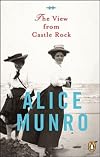
Billed as a collection of stories, spanning the centuries, connecting storytellers to writers, The View from Castle Rock is, as one reviewer stated, "a delightful fraud." It's a memoir, fleshed out with fiction but based heavily on Alice Munro's family stories, starting with Will O'Phaup, star of rumor and myth and proceeding with his descendents as a character study of all the family members who came across the ocean. Those Laidlaws and O'Phaups who wrote and were written about. The Ettick show more Valley from whence her Scots ancestors came is described it with the ease of those who did live there, as though all these things are as familiar to her as the bush at the back of her family's farm. Though she has been there, walking the wet midlands while it rained on and off, she maintains that these are all just stories. The emphasis of her Forward is more on the flow of these tales from an original source which is never obscured with her liberties.
I read slowly at first, dubiously seeing the connections of past leading to stories she may have heard at the fireplace. Themes and hand-me-downs began to quietly appear, family lines branched, yet always returned to Huron County, and to point toward Munro's own life. Once I reached my last possible return date for this library book, I began to rip through it, and found the effect not at all negative. Nearing the last half of the book the stories become even more personal, dealing with people that Munro has observed in her own life, briefly, like her grandparents, or more closely, like her own parents. This does not mean she does not illustrate their lives as she did with Will O'Phaup, or the little-known-of William Laidlaw, in fact she may be more willing to illuminate them since she can better see what would or could have been.
But I had meant, didn't he think of himself, of the boy who had trapped along the Blyth Creek, and who went into the store and asked for Signs Snow Paper, didn't he struggle for his own self? I meant, was his life now something only other people had a use for? (p166)
She takes advantage of knowing these people and conjuring bits of fancy to tie to her memories, the details of her childhood impressions filling in the gaps of old memories; reflective commentary solidifies them.
It must have meant something, though, that at this turn of my life I grabbed up a book. Because it was in books that I would find, for the next few years, my lovers. They were men, not boys. They were self-possessed and sardonic, with a ferocious streak in them, reserves of gloom. Not Edgar Linton, not Ashley Wilkes. Not one of them companionable or kind. (p226)
My favorite thing about The View from Castle Rock was being reminded that this was a collection of people who could be traced from generation to generation, and Munro's reception of this legacy; her family's affection for books, for reading, for writing, for storytelling. It's thrilling to read about readers and writers because it's a bond that we and the author share implicitly, and perhaps connects us in a way books about no other occupation can. With this, the symbols and connections come with almost no effort, occurring to me in a pleasant and gentle manner. I liked finding myself and the things I know easily reflected in several moments across the years, on both sides of the ocean.
pp349. Penguin Canada. 2007. show less
I read slowly at first, dubiously seeing the connections of past leading to stories she may have heard at the fireplace. Themes and hand-me-downs began to quietly appear, family lines branched, yet always returned to Huron County, and to point toward Munro's own life. Once I reached my last possible return date for this library book, I began to rip through it, and found the effect not at all negative. Nearing the last half of the book the stories become even more personal, dealing with people that Munro has observed in her own life, briefly, like her grandparents, or more closely, like her own parents. This does not mean she does not illustrate their lives as she did with Will O'Phaup, or the little-known-of William Laidlaw, in fact she may be more willing to illuminate them since she can better see what would or could have been.
But I had meant, didn't he think of himself, of the boy who had trapped along the Blyth Creek, and who went into the store and asked for Signs Snow Paper, didn't he struggle for his own self? I meant, was his life now something only other people had a use for? (p166)
She takes advantage of knowing these people and conjuring bits of fancy to tie to her memories, the details of her childhood impressions filling in the gaps of old memories; reflective commentary solidifies them.
It must have meant something, though, that at this turn of my life I grabbed up a book. Because it was in books that I would find, for the next few years, my lovers. They were men, not boys. They were self-possessed and sardonic, with a ferocious streak in them, reserves of gloom. Not Edgar Linton, not Ashley Wilkes. Not one of them companionable or kind. (p226)
My favorite thing about The View from Castle Rock was being reminded that this was a collection of people who could be traced from generation to generation, and Munro's reception of this legacy; her family's affection for books, for reading, for writing, for storytelling. It's thrilling to read about readers and writers because it's a bond that we and the author share implicitly, and perhaps connects us in a way books about no other occupation can. With this, the symbols and connections come with almost no effort, occurring to me in a pleasant and gentle manner. I liked finding myself and the things I know easily reflected in several moments across the years, on both sides of the ocean.
pp349. Penguin Canada. 2007. show less
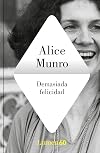
Alice Munro posee el don de condensar la calidad y las sensaciones que se tienen al leer una novela en cada uno de sus cuentos, de tal manera que cuando terminas uno de sus relatos parece que hayas leído muchas más páginas de las que realmente lo componen; es una habilidad asombrosa la de Munro. Plantea una historia, aparentemente cotidiana, y de repente sucede algo, o se nos cuenta que sucedió algo que da un vuelco absoluto a la trama. Sin duda se trata de una de las mejores escritoras show more de relatos que he leído.
La mayoría de protagonistas son mujeres a las que les ha acaecido algún percance, están afectadas por un defecto físico o han vivido una desgracia en sus vidas. Munro es única a la hora de describir a estas mujeres, sus pensamientos. Munro habla de hechos cotidianos pero que encierran una cierta complejidad, como suele suceder con todo en la vida. Desarrolla sus historias, llenas de detalles, con una prosa precisa y elegante, alejada de barroquismos pero no exenta de hondura y fascinación, en una palabra, magnífica.
Estos son los diez cuentos contenidos en ‘Demasiada felicidad’:
Dimensiones, donde poco a poco se nos va desvelando lo que le sucedió a Doree con su marido, y el porqué de sus viajes en autobús.
Ficción, donde conocemos a Joyce y su historia con Jon, y las vueltas que da la vida cuando vuelve a encontrarse con alguien del pasado.
El filo de Wenlock, donde se nos relata la excéntrica aventura de la protagonista después de conocer a Nina.
Pozos profundos, donde una simple excursión puede transformar la vida de una familia para siempre.
Radicales libres, donde una visita inesperada saca a relucir todo el ingenio de Nita.
Cara, donde el protagonista, con una mancha de nacimiento en su cara, nos relata una historia de su niñez, donde conoció a Nancy, la única en aceptarle tal como es.
Algunas mujeres, donde la protagonista rememora cómo adquirió su primer trabajo cuidando de un enfermo de leucemia, y cómo eran las mujeres de su entorno, sobre todo la excéntrica Roxanne.
Juego de niños, donde, de la mano de Marlene, se nos desvela un secreto inconfesable del que creía haberse librado.
Madera, donde sabemos de la afición de Roy por conseguir leña.
Demasiada felicidad, donde conocemos a Sofia Kovalevski, una matemática y escritora que vivió a finales del siglo XIX, a través de un viaje en tren de regreso a Suecia. show less
La mayoría de protagonistas son mujeres a las que les ha acaecido algún percance, están afectadas por un defecto físico o han vivido una desgracia en sus vidas. Munro es única a la hora de describir a estas mujeres, sus pensamientos. Munro habla de hechos cotidianos pero que encierran una cierta complejidad, como suele suceder con todo en la vida. Desarrolla sus historias, llenas de detalles, con una prosa precisa y elegante, alejada de barroquismos pero no exenta de hondura y fascinación, en una palabra, magnífica.
Estos son los diez cuentos contenidos en ‘Demasiada felicidad’:
Dimensiones, donde poco a poco se nos va desvelando lo que le sucedió a Doree con su marido, y el porqué de sus viajes en autobús.
Ficción, donde conocemos a Joyce y su historia con Jon, y las vueltas que da la vida cuando vuelve a encontrarse con alguien del pasado.
El filo de Wenlock, donde se nos relata la excéntrica aventura de la protagonista después de conocer a Nina.
Pozos profundos, donde una simple excursión puede transformar la vida de una familia para siempre.
Radicales libres, donde una visita inesperada saca a relucir todo el ingenio de Nita.
Cara, donde el protagonista, con una mancha de nacimiento en su cara, nos relata una historia de su niñez, donde conoció a Nancy, la única en aceptarle tal como es.
Algunas mujeres, donde la protagonista rememora cómo adquirió su primer trabajo cuidando de un enfermo de leucemia, y cómo eran las mujeres de su entorno, sobre todo la excéntrica Roxanne.
Juego de niños, donde, de la mano de Marlene, se nos desvela un secreto inconfesable del que creía haberse librado.
Madera, donde sabemos de la afición de Roy por conseguir leña.
Demasiada felicidad, donde conocemos a Sofia Kovalevski, una matemática y escritora que vivió a finales del siglo XIX, a través de un viaje en tren de regreso a Suecia. show less
Lists
Read These Too (1)
Booker Prize (1)
to get (1)
Unread books (1)
100 New Classics (1)
2000s decade (1)
Take Four Books (1)
Bedbooks (1)
. (2)
Canada (2)
Female Author (3)
Big Jubilee List (1)
To Read (1)
Five star books (1)
Favourite Books (1)
Awards


You May Also Like


Associated Authors
Statistics
- Works
- 127
- Also by
- 82
- Members
- 30,444
- Popularity
- #652
- Rating
- 3.9
- Reviews
- 763
- ISBNs
- 895
- Languages
- 33
- Favorited
- 191

