
Margaret Laurence (1926–1987)
Author of The Stone Angel
About the Author
Canadian author Margaret Laurence was born Jean Margaret Wemyss in Neepawa, Manitoba, Canada, on July 18, 1926. She attended United College (now the University of Winnipeg), receiving her B.A. in 1947. Shortly after graduation, she married Jack Laurence, a hydraulic engineer whose job would often show more take them overseas; the Laurences lived in England for a year, moved to British Somaliland in 1950, and then to Ghana in 1952. It was in Africa that Laurence wrote her first book, A Tree for Poverty, which was a translation of Somali poetry and stories. She also wrote about her experiences in Somaliland in a travel memoir, The Prophet's Camel Bell, and used Africa as a setting for her first fictional work, a novel called This Side Jordan, and a collection of short stories, The Tomorrow Tamers. This Side Jordan received the 1961 Beta Sigma Phi Award for the best first novel by a Canadian. Laurence is best known, however, for her Manawaka books, which are set in Canada. They include The Stone Angel, The Fire Dwellers House, A Bird in the House, A Jest of God, and The Diviners. The latter two books both received the Governor General's Award, in 1967 and 1975, respectively. After living in Africa, England, and several other countries for many years, Laurence returned to Canada in 1974, settling in Lakefield, Ontario, where she remained until her death in 1987. The Energy Probe Research Foundation, an environmental organization for which she served as one of the directors, now sponsors the Margaret Laurence Fund for projects related to the environment and peace, areas in which Laurence was very active during the last decade of her life. (Bowker Author Biography) show less
Image credit: Peter Esterhazy, with kind permission of the Estate of Margaret Laurence.
Series
Works by Margaret Laurence
Associated Works
The Story and Its Writer: An Introduction to Short Fiction (1976) — Contributor — 1,218 copies, 3 reviews
The Saturday Evening Post Stories 1962 — Contributor — 3 copies
Rose del Canada : Shields, Munro, Svendsen, Gallant, Birdsell, Laurence, Atwood (1994) — Contributor — 3 copies
Tagged
Common Knowledge
- Canonical name
- Laurence, Margaret
- Legal name
- Laurence, Jean Margaret
Wemyss, Jean Margaret (born) - Birthdate
- 1926-07-18
- Date of death
- 1987-01-05
- Gender
- female
- Education
- United College, Winnipeg (BA|1947|now University of Winnipeg)
- Occupations
- reporter
short story writer
novelist
essayist
writer-in-residence (University of Toronto, 1969 - 1970)
chancellor (Trent University, 1981 - 1983) - Organizations
- Writers' Trust of Canada
The Winnipeg Citizen
University of Toronto
Trent University - Awards and honors
- Beta Sigma Phi Award (1960)
Honorary Fellow (University of Winnipeg | 1967)
Order of Canada (Companion | 1972)
Royal Society of Canada (Fellow | 1977)
Molson Prize (1975)
Governor General's Awards (1966, 1974) (show all 7)
National Historic Person (2016) - Nationality
- Canada
- Birthplace
- Neepawa, Manitoba, Canada
- Places of residence
- Neepawa, Manitoba, Canada
Somaliland (now Somalia)
Ghana
Vancouver, British Columbia, Canada
London, Middlesex, England, UK
Penn, Buckinghamshire, England, UK (show all 8)
Peterborough, Ontario, Canada
Lakefield, Ontario, Canada - Place of death
- Lakefield, Ontario, Canada
- Burial location
- Neepawa Cemetery, Neepawa, Manitoba, Canada
- Associated Place (for map)
- Canada
Members
Discussions
Group Read, January 2020: The Diviners in 1001 Books to read before you die (February 2020)
June Read: Margaret Laurence in Virago Modern Classics (July 2017)
Reviews

Why is it that those teaching high school and undergraduate English literature courses persist in assigning Margaret Laurence? Do they want to instil a lifetime aversion to her works?
Luckily for me, Can Lit was never on any curriculum in my studies. Reading The Stone Angel, I was really glad I hadn't read it earlier in life, as much of the novel would have escaped me. I would never have realized the sheer devastation of it all, and how deftly Laurence portrays it.
The very first sentence show more speaks of a stone angel high above the town, the monument young Hagar Currie's father had had erected to his wife after she died giving birth to Hagar. Thereafter, the angel is always described as marble. It is Hagar who is the woman of stone, unmoving and unable to see the devastation she wreaks around her. It was not until after her adult son's death that she finally realized it. The night my son died I was transformed to stone.
Like a stone angel, Hagar is unyielding. Yet at the same time she was so afraid of others in that "What will the neighbours think?" way. Like the angel, she is unseeing, not recognizing the need of others for love and approval. Her young son Marvin would linger at the kitchen door each evening with his refrain of "I've finished the chores", only to be shooed away. His younger brother John lied to her to please and deceive her, going so far as to invent respectable imaginary friends. Her husband Bram never heard an "I love you", and never knew how much she actually enjoyed sex with him.
The reader only gets to know Hagar through her own words. Now ninety and dementing, she is on the one hand an unreliable narrator, while at the same time completely credible as she reveals herself. Querulous, lacking in empathy, and very strong willed, she insists on remaining with her son and daughter-in-law when they themselves are in failing health.
Hospitalized after a defiant episode, Hagar, a non believer, found herself trapped into a visit from a minister. As he sang a hymn to her about rejoicing, the need to rejoice came to her as a revelation.When did I ever speak the heart's truth?
Pride was my wilderness and the demon that led me there was fear. I was alone, never anything else, and never free, for I carried my chains with me, and they spread out from me and shackled all I touched.
Still, nothing changed. There is no sappy ending. That is not Margaret Laurence's style. Hagar may have been granted a moment of insight, but she dismissed it immediately, afraid yet again to examine her life.
Laurence wrote The Stone Angel when she was in her mid thirties. It is an astonishing insight into a character decades older. She feared her publisher would not accept the novel; ninety year old unsympathetic protagonists are a hard sell.
Writing to her good friend Adele Wiseman, with her thoughts about her novel, she quoted Martin Luther: Here I stand; God help me, I can do no other.
She may have been thinking of herself, but she managed to sum up Hagar completely. show less
Luckily for me, Can Lit was never on any curriculum in my studies. Reading The Stone Angel, I was really glad I hadn't read it earlier in life, as much of the novel would have escaped me. I would never have realized the sheer devastation of it all, and how deftly Laurence portrays it.
The very first sentence show more speaks of a stone angel high above the town, the monument young Hagar Currie's father had had erected to his wife after she died giving birth to Hagar. Thereafter, the angel is always described as marble. It is Hagar who is the woman of stone, unmoving and unable to see the devastation she wreaks around her. It was not until after her adult son's death that she finally realized it. The night my son died I was transformed to stone.
Like a stone angel, Hagar is unyielding. Yet at the same time she was so afraid of others in that "What will the neighbours think?" way. Like the angel, she is unseeing, not recognizing the need of others for love and approval. Her young son Marvin would linger at the kitchen door each evening with his refrain of "I've finished the chores", only to be shooed away. His younger brother John lied to her to please and deceive her, going so far as to invent respectable imaginary friends. Her husband Bram never heard an "I love you", and never knew how much she actually enjoyed sex with him.
The reader only gets to know Hagar through her own words. Now ninety and dementing, she is on the one hand an unreliable narrator, while at the same time completely credible as she reveals herself. Querulous, lacking in empathy, and very strong willed, she insists on remaining with her son and daughter-in-law when they themselves are in failing health.
Hospitalized after a defiant episode, Hagar, a non believer, found herself trapped into a visit from a minister. As he sang a hymn to her about rejoicing, the need to rejoice came to her as a revelation.When did I ever speak the heart's truth?
Pride was my wilderness and the demon that led me there was fear. I was alone, never anything else, and never free, for I carried my chains with me, and they spread out from me and shackled all I touched.
Still, nothing changed. There is no sappy ending. That is not Margaret Laurence's style. Hagar may have been granted a moment of insight, but she dismissed it immediately, afraid yet again to examine her life.
Laurence wrote The Stone Angel when she was in her mid thirties. It is an astonishing insight into a character decades older. She feared her publisher would not accept the novel; ninety year old unsympathetic protagonists are a hard sell.
Writing to her good friend Adele Wiseman, with her thoughts about her novel, she quoted Martin Luther: Here I stand; God help me, I can do no other.
She may have been thinking of herself, but she managed to sum up Hagar completely. show less
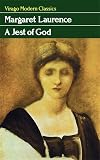
Rachel Cameron is a shy, thirty-four-year-old school teacher, leading a life of stifling conventionality in the small Canadian town she grew up in. Years before she had made a brief escape to attend college, but returned to live with and care for her mother following her father’s death. They live in the flat above the funeral directors that her father had once owned. Mrs Cameron (like Hagar Shipley in The Stone Angel) is a wonderfully drawn character, a coyly manipulative terror she is show more overbearing and demanding. Rachel’s older sister Stacey escaped – married now, living in the city with four children, she very rarely visits.
Each year, Rachel silently directs her love toward one of the pupils in her class of seven-year olds (as the novel opens it is young James) although she goes to very great lengths to make sure no one guesses. Rachel is in part surprised to find herself teaching in the school where she was once a child – there is a definite feeling that she has not had the opportunity to move her life forward, stuck still in the landscape of her childhood.
“I remember myself skipping rope to that song when I was about the age of the little girls out there now. Twenty-seven years ago, which seems impossible, and myself seven, but the same brown brick building, only a new wing added and the place smartened up. It would certainly have surprised me then to know I’d end up here…”
Rachel’s one friend in the town, is Calla; a kind hearted fellow teacher who dresses oddly, calls Rachel child, and is a member of the Tabernacle church where worshippers have recently begun speaking in tongues. Calla exacts a promise from Rachel to attend a future meeting with her, and Rachel is torn between the knowledge of how excruciating she will find it – and not wanting to hurt Calla’s feelings. The evening, when it finally happens is even worse than Rachel had anticipated, affecting her powerfully and emotionally in a way she finds acutely embarrassing.
Rachel has a powerful inner life – she is sharp, intelligent and an astute observer of those around her, the children, the school principle, Calla and her mother.
“Nothing is clear now. Something must be the matter with my way of viewing things. I have no middle view. Either I fix on a detail and see it as though it were magnified – a leaf with all its veins perceived, the fine hairs on a man’s hands – or else the world recedes and becomes blurred, artificial, indefinite, an abstract painting of a world. The darkening sky is hugely blue, gashed with rose, blood, flame from the volcano or wound or flower of the lowering sun. The wavering green, the sea of grass, piercingly bright. Black tree trunks, contorted, arching over the river.”
There are moments when she isn’t as kind as he would like to be, dimly aware of being unkind toward Calla’s friendliness, she then feels guilty for her sharpness. However, Rachel is also vulnerable, caught still in the life of her childhood, ministering to her mother and living a life of quiet, conventionality. Deep down, Rachel harbours more than a little resentment for the life she is leading, making sandwiches and serving coffee at her mother’s bridge parties, accompanying her mother to church – where she would in fact rather not go at all. Inside, Rachel isn’t quite the quiet, dutiful small town spinster school teacher that she appears.
As Rachel says goodbye to her class of children for the summer holidays, another former child of the town returns. Nick Kazlik; the son of the town’s Ukrainian milkman, returns for the summer. Nick is a high school teacher in the city, to where he will soon return. The two embark upon a passionate relationship. Nick’s attitude to their relationship is much more casual than Rachel’s. Rachel is more like a gauche young school girl than a woman in her thirties – unpractised in the ways of love and sex. Nick visits the scenes of his childhood and adolescence with Rachel, haunted a little by the memory of his twin brother who died several years earlier. As Rachel grows in sexual confidence, she becomes more reliant on Nick, worrying when he doesn’t ring for several days, even imaging a future for the two of them.
A Jest of God is beautifully written, a sympathetic, tender novel which sees Rachel come to a new understanding about herself, and her standing with her difficult mother. A thoroughly beautiful novel, Margaret Laurence is someone I shall be reading much more of.
I have The Diviners tbr – which I believe is the fourth or fifth novel in the Manawaka sequence – though I assume it doesn’t matter in which order they are read. show less
Each year, Rachel silently directs her love toward one of the pupils in her class of seven-year olds (as the novel opens it is young James) although she goes to very great lengths to make sure no one guesses. Rachel is in part surprised to find herself teaching in the school where she was once a child – there is a definite feeling that she has not had the opportunity to move her life forward, stuck still in the landscape of her childhood.
“I remember myself skipping rope to that song when I was about the age of the little girls out there now. Twenty-seven years ago, which seems impossible, and myself seven, but the same brown brick building, only a new wing added and the place smartened up. It would certainly have surprised me then to know I’d end up here…”
Rachel’s one friend in the town, is Calla; a kind hearted fellow teacher who dresses oddly, calls Rachel child, and is a member of the Tabernacle church where worshippers have recently begun speaking in tongues. Calla exacts a promise from Rachel to attend a future meeting with her, and Rachel is torn between the knowledge of how excruciating she will find it – and not wanting to hurt Calla’s feelings. The evening, when it finally happens is even worse than Rachel had anticipated, affecting her powerfully and emotionally in a way she finds acutely embarrassing.
Rachel has a powerful inner life – she is sharp, intelligent and an astute observer of those around her, the children, the school principle, Calla and her mother.
“Nothing is clear now. Something must be the matter with my way of viewing things. I have no middle view. Either I fix on a detail and see it as though it were magnified – a leaf with all its veins perceived, the fine hairs on a man’s hands – or else the world recedes and becomes blurred, artificial, indefinite, an abstract painting of a world. The darkening sky is hugely blue, gashed with rose, blood, flame from the volcano or wound or flower of the lowering sun. The wavering green, the sea of grass, piercingly bright. Black tree trunks, contorted, arching over the river.”
There are moments when she isn’t as kind as he would like to be, dimly aware of being unkind toward Calla’s friendliness, she then feels guilty for her sharpness. However, Rachel is also vulnerable, caught still in the life of her childhood, ministering to her mother and living a life of quiet, conventionality. Deep down, Rachel harbours more than a little resentment for the life she is leading, making sandwiches and serving coffee at her mother’s bridge parties, accompanying her mother to church – where she would in fact rather not go at all. Inside, Rachel isn’t quite the quiet, dutiful small town spinster school teacher that she appears.
As Rachel says goodbye to her class of children for the summer holidays, another former child of the town returns. Nick Kazlik; the son of the town’s Ukrainian milkman, returns for the summer. Nick is a high school teacher in the city, to where he will soon return. The two embark upon a passionate relationship. Nick’s attitude to their relationship is much more casual than Rachel’s. Rachel is more like a gauche young school girl than a woman in her thirties – unpractised in the ways of love and sex. Nick visits the scenes of his childhood and adolescence with Rachel, haunted a little by the memory of his twin brother who died several years earlier. As Rachel grows in sexual confidence, she becomes more reliant on Nick, worrying when he doesn’t ring for several days, even imaging a future for the two of them.
A Jest of God is beautifully written, a sympathetic, tender novel which sees Rachel come to a new understanding about herself, and her standing with her difficult mother. A thoroughly beautiful novel, Margaret Laurence is someone I shall be reading much more of.
I have The Diviners tbr – which I believe is the fourth or fifth novel in the Manawaka sequence – though I assume it doesn’t matter in which order they are read. show less

Rachel Cameron denies herself the ability to say no. She's at the mercy of everyone else's whim: her mother, the principle of the school where she's employed as a second grade teacher, her colleague whose frequent gifts and invitations don't actually appeal to her. Her entire life has become the property of those around her whom she doesn't want to disappoint or offend. The stress of trying to please everyone and avoid any kind of conflict, and to not be a fool, is stretching her show more increasingly thin until all her self-control and rationalizing can no longer contain every impulse.
It's been a long time since I read Margaret Laurence, not since I was in school. This is the first time since that I've read her as an adult, and the first time I understand her. How could any kid grasp how much growing up Rachel does in the space of one summer, making up for lost time? When the crisis arrives, it isn't a question so much of what she'll do as of who she will be. There are several wonderfully crafted callbacks in this novel: an updated sign, words spoken under anesthesia, an old photograph, a tricky heart. The one that speaks to me the most personally is that of the jester in the title. We all have a little inner jester in us, ever ready to poke some fun at our dignity, and we may as well embrace it.
In 1966 a teacher's lashing out at a student didn't have the consequences it would today. We would also be more cognizant of mental health and stress in the workplace, quicker to recognize the signs of tension in ourselves and others, better informed and more open to addressing them. I'm struck by the poor options women had; choices that would be challenging even today would feel practically impossible then. We also know a thing or two more about not drinking or smoking when pregnant. What never gets old is this novel's message about the need to grow up at some point, better late than never, and the mix of desperation and courage required to realize it. show less
It's been a long time since I read Margaret Laurence, not since I was in school. This is the first time since that I've read her as an adult, and the first time I understand her. How could any kid grasp how much growing up Rachel does in the space of one summer, making up for lost time? When the crisis arrives, it isn't a question so much of what she'll do as of who she will be. There are several wonderfully crafted callbacks in this novel: an updated sign, words spoken under anesthesia, an old photograph, a tricky heart. The one that speaks to me the most personally is that of the jester in the title. We all have a little inner jester in us, ever ready to poke some fun at our dignity, and we may as well embrace it.
In 1966 a teacher's lashing out at a student didn't have the consequences it would today. We would also be more cognizant of mental health and stress in the workplace, quicker to recognize the signs of tension in ourselves and others, better informed and more open to addressing them. I'm struck by the poor options women had; choices that would be challenging even today would feel practically impossible then. We also know a thing or two more about not drinking or smoking when pregnant. What never gets old is this novel's message about the need to grow up at some point, better late than never, and the mix of desperation and courage required to realize it. show less

It caused a fair amount of controversy upon its initial release due to language and frank depictions of a woman actually enjoying sex, but Margaret Laurence's novel stands as one of modern Canadian literature's seminal works. Author Morag Gunn looks back on her life thus far and in so doing Laurence explores the ways we recall, and occaionally twist, our past; the myriad ways the new generation follows in the footsteps of the old (Gunn's daughter truly is a chip of the old block); and the show more evolution of the artist through adversity. She also touches on issues of racism, classism, and the small town "values" which stifle more than liberate. Laurence takes Thomas Wolfe's epitaph, "You can't go home again" and gives it new meaning for as her protagonist ruminates on the past you realize that she has in fact been taking her home with her wherever she goes. show less
Lists
AP Lit (1)
Africa (1)
Women's Stories (1)
Awards


You May Also Like


Associated Authors
Statistics
- Works
- 23
- Also by
- 19
- Members
- 5,797
- Popularity
- #4,252
- Rating
- 4.0
- Reviews
- 124
- ISBNs
- 233
- Languages
- 5
- Favorited
- 40
