
Timothy Findley (1930–2002)
Author of The Wars
About the Author
Timothy Findley was born in 1930. A native of Toronto, Canada, novelist and playwright Timothy Findley initially embarked upon an acting career. Findley worked for the Canadian Stratford Festival and later, after study at London's Central School of Speech and Drama, he toured Britain, Europe, and show more the United States as a contract player. While performing in The Matchmaker by Thornton Wilder, Findley was encouraged by the playwright to write fiction. Influenced by film techniques, Findley's first novel, The Last of the Crazy People (1967) is a penetrating look at a family of "emotional cripples" from a child's perspective. With his character Hooker, Findley captures the irrational logic of a child's mind without treating childhood sentimentally.The Butterfly Plague followed in 1969. The Wars (1978), Findley's most successful novel, has been translated into numerous languages and was made into a film. The Wars uses the device of a story-within-a-story to illustrate how a personality transcends elemental forces even while being destroyed by them. In 1981 Famous Last Words was published. This fictionalization of Hugh Selwyn Mauberley by Ezra Pound, a work that was already a "fictional fact," examines fascism. In Not Wanted on the Voyage (1984), Findley rewrites the story of Noah's Ark by giving voices to women, children, workers, animals, and folklore creatures, all of whom question Noah's authority. The novel turns into a parable that seems to challenge imperialism, eugenics, fascism, and any other force that endangers human survival. Again repeating an earlier text, Findley turns to Thomas Mann's Death in Venice to write The Telling of Lies (1986). This novel draws parallels between World War II atrocities and contemporary North America, which Findley sees as a metaphoric concentration camp. Findley died on June 20, 2002 in Provence, France (Bowker Author Biography) show less
Image credit: Elisabeth Feryn
Works by Timothy Findley
Dreams {story} 1 copy
The book of pins 1 copy
If Stone Could Speak 1 copy
SOS TITLE UNKNOWN 1 copy
Piano Man's Daugher, The 1 copy
The Wars 1 copy
Associated Works
In Another Part of the Forest: An Anthology of Gay Short Fiction (1994) — Contributor — 193 copies, 2 reviews
Tagged
Common Knowledge
- Birthdate
- 1930-10-30
- Date of death
- 2002-06-21
- Gender
- male
- Education
- St Andrew's College, Aurora, Ontario, Canada
- Occupations
- actor
novelist
short story writer
scriptwriter
playwright - Organizations
- Writers' Union of Canada
International P.E.N. - Awards and honors
- Order of Canada (Officer)
CBA Libris Award (Author of the Year, 1996)
CBA Libris Award (Lifetime Achievement Award, 2000) - Relationships
- Whitehead, William (life partner)
- Nationality
- Canada
- Birthplace
- Toronto, Ontario, Canada
- Places of residence
- Stratford, Ontario, Canada
Cannington, Ontario, Canada
Cotignac, Provence, France - Place of death
- Brignoles, France
- Map Location
- Ontario, Canada
Members
Discussions
Group Read, April 2022: The Wars in 1001 Books to read before you die (June 2022)
Reviews
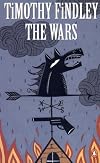
I have to start this review off by saying that I was a little shocked to see this book displaying as a "Beach Reads" book on the amazon.ca webpage. The gritty and yet metaphysical examination of the meaning of life, survival and the atrocities that humans have inflicted upon other humans doesn't quite equate into a "beach read"... not in my mind anyways. I mean, this has some similarities to the story telling of Brideshead Revisited but with the grim brutal futility of war as a full frontal show more assault, minus the whole drinking and waxing philosophical bit. Now, don't get me wrong. I happen to be a huge fan of Findley's stories, especially the way he gets under his character's skin to expose the human condition for the flawed thing that it really is. I can highly, highly recommend Findley's The Last of the Crazy People, but I digress. In The Wars, Findley experiments with story telling by presenting the narration of this story as one of an unnamed individual's work to cobble together fragments of memories, snapshots and facts to tell Ross's story. I am still undecided if this was the best mechanism to use, as the story tends to jump around a bit and I was a bit confused as to what exactly happened to one of the characters, but Findley's ability to make me experience the trench warfare of World War I in all of its mud, confusion, harrowing despair, coupled with the determination to rise above it all is what continues to resonate within me long after I finished reading this story. Findley has a knack for producing wonderful quote-worthy passages, like the following monologue by Robert's mother early in the story:
For a moment she looked at what she'd done and then, without looking up, she spoke in a voice as passionless as sleep: "You think Rowena belonged to you. Well I'm here to tell you, Robert, that no one belongs to anyone. We're all cut off at birth with a knife and left at the mercy of strangers. You hear that? Strangers. I know what you want to do. I know you're going to go away and be a solder. Well - you can go to hell. I'm not responsible. I'm just another stranger. Birth I can give you - but life I cannot. I can't keep anyone alive. Not anymore.I close off this review with two more quotes that really resonated with me while I was reading this story:
The first dead man he'd seen, I think. And he said that after a while you saw them everywhere and you sort of accepted it. But the acceptance made him mad and he said this marvelous thing: I still maintain that an ordinary human being has a right to be horrified by a mangled body seen on an afternoon walk. So what it was we were denied was to be ordinary. All our ordinary credos and expectations vanished. Vanished There was so much death. No one can imagine. These were not accidents - or the quiet, expected deaths of the old. These were murders. By the thousands. All your friends were...murdered.Overall, another brilliant, thought-provoking read from one of my favorite Canadian authors. I can see why this won the 1977 Governor General's Award. A worthy read. show less
-----------
Someone once said to Clive: do you think we will ever be forgiven for what we have done? They meant their generation and the war and waht the war had done to civilization. Clive said something that I've never forgotten. He said: I doubt we'll ever be forgiven. All I hope is - they'll remember that we were human beings.

This novel, a retelling of the story of Noah's Ark, is surprising for its unexpected degree of brutality and action. That isn't unwelcome, but be forewarned that it is nothing like the gentler tale you know. It is also filled with contradictions: subterfuge disguised as miracles, miracles disguised as magical realism. Some portions read like an adventure thriller, between mildly philosophical meanderings. It is straightforwardly told, but rewarding in its subtleties. There is more going on show more here than poking fun at a Bible fable and incorporating legendary elements like the unicorns.
By at least one reading this is an anti-fascist novel, where the surprise is the positioning of Noah as antagonist. Findley leaves an exercise for the reader: what does this say about the morality of unquestioningly following Yaweh's wishes? What morality exists outside of that model? Mottyl senses this question, when she is tempted to call Noah evil but shies away from it and the problems that it poses.
The novel's title primarily refers to what is not wanted, rather than whom. Lucy's presence and symbolism are of a piece with Noah's illusion being the inspiration for Yaweh's flood: the illusion of thinking that even a worldwide flood could eradicate all evil. It is too inherent in what we are, too well disguised to root out and destroy, as Mrs. Noyes comes to realize. Better that we work to appreciate and foster what good we are able to find, and accept what evil we must abide, than engage in hopeless attempts to start anew that will forever end in failure. show less
By at least one reading this is an anti-fascist novel, where the surprise is the positioning of Noah as antagonist. Findley leaves an exercise for the reader: what does this say about the morality of unquestioningly following Yaweh's wishes? What morality exists outside of that model? Mottyl senses this question, when she is tempted to call Noah evil but shies away from it and the problems that it poses.
The novel's title primarily refers to what is not wanted, rather than whom. Lucy's presence and symbolism are of a piece with Noah's illusion being the inspiration for Yaweh's flood: the illusion of thinking that even a worldwide flood could eradicate all evil. It is too inherent in what we are, too well disguised to root out and destroy, as Mrs. Noyes comes to realize. Better that we work to appreciate and foster what good we are able to find, and accept what evil we must abide, than engage in hopeless attempts to start anew that will forever end in failure. show less

The Wars by Timothy Findley is a short book but it packs a very large punch. The story of one Canadian lad who goes off to the trenches in World War I was an intricate and heart wrenching story. The brutality that the author describes in rich, lyrical language makes it plain that there is really nothing noble about warfare and that the psychological effects of this particular war were devastating.
This book really grabbed me and I think this had a great deal to do with my own grandfather who show more ran away at age sixteen to fight in World War I. He was caught the first time, but succeeded a year later at seventeen. The things he saw and did affected him for the rest of his life. He kept a diary about his experiences and many of his descriptions matched with this book.
The Wars was a moving account of one Canadian man’s experience during World War I, and while it is not an in-depth exploration, the author introduces his character and allows us to sample his early life, his training and his war experiences that together paint a clear and penetrating picture of the shock and struggle that these soldiers were exposed to. Although the book left me feeling emotionally drained, The Wars was a very impressive read. show less
This book really grabbed me and I think this had a great deal to do with my own grandfather who show more ran away at age sixteen to fight in World War I. He was caught the first time, but succeeded a year later at seventeen. The things he saw and did affected him for the rest of his life. He kept a diary about his experiences and many of his descriptions matched with this book.
The Wars was a moving account of one Canadian man’s experience during World War I, and while it is not an in-depth exploration, the author introduces his character and allows us to sample his early life, his training and his war experiences that together paint a clear and penetrating picture of the shock and struggle that these soldiers were exposed to. Although the book left me feeling emotionally drained, The Wars was a very impressive read. show less
Rereading this after more than a decade and half since my first encounter. I remembered very little of the plot other than the basics, and I think this was to its benefit.
The writing is sumptuous and full... but also intensely readable. Findley is tightly controlling the words on the page to easily allow you to sink into a flow of words, ideas, and images, always powerful but never overwhelming.
One review says that Findley, as a former actor, has a sense of the theatrical and I think that's show more what's so delicious about his prose here. So many small gestures are recorded with an actor's eye to what they can express, even if it is a little arch or melodramatic. It may not be to everyone's taste, but it's very intentionally and masterfully done.
Taking Jung and allowing him to be mistaken, to stumble, to be human in all of the ways that matter, actually enhances some of the Jungian thought inside the book, because we witness it come from struggle rather than some burst of inspiration.
Some of the critiques of the novel have said it meanders too far, or that it doesn't resolve it's plot threads, and again, this feels very intentionally and masterfully done. What I can see in each of these reviews is the yearning for resolution and clear meaning that we hope for in most of the stories we consume... but Findley is intending to make us face a lack of certainty, a lack of safe conclusion.
There is a thread of hope at the end, though. There is a way through everything that the novel offers, but it does require work. Again, as a theatrical writer, Findley is asking the audience to be a part of the ending, through it's attempt to interpret. show less
The writing is sumptuous and full... but also intensely readable. Findley is tightly controlling the words on the page to easily allow you to sink into a flow of words, ideas, and images, always powerful but never overwhelming.
One review says that Findley, as a former actor, has a sense of the theatrical and I think that's show more what's so delicious about his prose here. So many small gestures are recorded with an actor's eye to what they can express, even if it is a little arch or melodramatic. It may not be to everyone's taste, but it's very intentionally and masterfully done.
Taking Jung and allowing him to be mistaken, to stumble, to be human in all of the ways that matter, actually enhances some of the Jungian thought inside the book, because we witness it come from struggle rather than some burst of inspiration.
Some of the critiques of the novel have said it meanders too far, or that it doesn't resolve it's plot threads, and again, this feels very intentionally and masterfully done. What I can see in each of these reviews is the yearning for resolution and clear meaning that we hope for in most of the stories we consume... but Findley is intending to make us face a lack of certainty, a lack of safe conclusion.
There is a thread of hope at the end, though. There is a way through everything that the novel offers, but it does require work. Again, as a theatrical writer, Findley is asking the audience to be a part of the ending, through it's attempt to interpret. show less
Lists
Awards


You May Also Like


Associated Authors
Statistics
- Works
- 34
- Also by
- 14
- Members
- 7,331
- Popularity
- #3,336
- Rating
- 3.8
- Reviews
- 132
- ISBNs
- 223
- Languages
- 12
- Favorited
- 49