
David Adams Richards
Author of Mercy Among the Children
About the Author
David Adams Richards lives in Toronto with his wife and two sons. Author David Adams Richards was born in Newcastle, New Brunswick, Canada on October 17, 1950. He has received numerous awards for his works including the Canadian Authors Association Award for Evening Show Will Bring Such Peace in show more 1991, the Canada-Australia Literary Prize in 1992, and the Giller Prize for Mercy Among the Children in 2000. He also won the Governor General's Award in both the fiction and non-fiction categories with Nights below Station Street in 1988 and Lines on the Water in 1998 respectively. He currently lives with his family in Toronto, Canada. (Bowker Author Biography) show less
Image credit: photo credit: Jerry Bauer
Series
Works by David Adams Richards
Arch of Triumph 1 copy
Associated Works
Tagged
Common Knowledge
- Birthdate
- 1950-10-17
- Gender
- male
- Education
- St. Thomas University, New Brunswick (B.A.)
- Occupations
- writer
author
screenwriter - Awards and honors
- CBA Libris Award (2001)
Canada-Australia Literary Prize, awarded for the excellence of an author's complete body of work (1992)
Alden Nowlan Award for Excellence in the Arts
Writers' Federation of New Brunswick, annual David Adams Richards Award for Fiction
Order of Canada (2010)
Timothy Findley Award (2004) (show all 7)
Matt Cohen Prize (2011) - Agent
- Anne McDermid
- Short biography
- David Adams Richards (born October 17, 1950) is a Canadian novelist, essayist, screenwriter and poet.
Born in Newcastle, New Brunswick, Richards left St. Thomas University in Fredericton, New Brunswick, one course shy of completing a B.A.* Richards has been a writer-in-residence at various universities and colleges across Canada, including the University of New Brunswick.
Richards has received numerous awards including 2 Gemini Awards for scriptwriting for "Small Gifts" and "For Those Who Hunt The Wounded Down", the Alden Nowlan Award for Excellence in the Arts, and the Canadian Authors Association Award for his novel "Evening Snow Will Bring Such Peace." Richards is one of only three writers to have won in both the fiction and non-fiction categories of the Governor General's Award. He won the 1988 fiction award for "Nights Below Station Street" and the 1998 non-fiction award for "Lines on the Water: A Fisherman's Life on the Miramichi." He was also a co-winner of the 2000 Giller Prize for "Mercy Among the Children."
In 1971, he married the former Peggy MacIntyre. They have two sons, John Thomas and Anton Richards, and currently reside in Fredericton.
John Thomas was born in 1989 in Saint John, New Brunswick.
The Writers' Federation of New Brunswick administers an annual David Adams Richards Award for
Fiction.
Richards' papers are currently housed at the University of New Brunswick.
* David Adams Richards was awarded his B.A. by Saint Thomas University in 2009. Source: David Adams Richards' sister Susan Marshall. - Nationality
- Canada
- Birthplace
- Newcastle, New Brunswick, Canada
- Places of residence
- Newcastle, New Brunswick, Canada (birth)
Toronto, Ontario, Canada
Saint John, New Brunswick, Canada
Fredericton, New Brunswick, Canada
Bartibogue, New Brunswick, Canada - Associated Place (for map)
- New Brunswick, Canada
Members
Reviews

A wonderful read. I stayed up way past bed-time, and gulped down the last 100 pages. Now I want to take the time to read those pages slowly, to savor the writing and to make sure that I understand all of the plot twists.
This is a story of the Henderson family who live in rural poverty in New Brunswick. Sydney Henderson is a very intelligent and very moral man. But as the book begins, his destiny seems to be relentless suffering. His story is reminiscent of the Book of Job. His childhood was show more miserable, and in adulthood he becomes the scapegoat for the community.
Sydney accepts persecution without attempts at revenge, and without any apparent anger. He is very admirable, but his saint-like qualities are hard on his family, especially his oldest son, Lyle. The story is told by Lyle, whose relationship with his father is very ambivalent.
The book is full of marvelously twisted characters; people who do evil and yet are so heartbreakingly human that you can’t hate them, entirely. The book starts slowly, but the plot twists and bends so that I was on edge waiting to see what was going to happen next. The book is about social justice, but in this story justice has a frightening, biblical aspect. show less
This is a story of the Henderson family who live in rural poverty in New Brunswick. Sydney Henderson is a very intelligent and very moral man. But as the book begins, his destiny seems to be relentless suffering. His story is reminiscent of the Book of Job. His childhood was show more miserable, and in adulthood he becomes the scapegoat for the community.
Sydney accepts persecution without attempts at revenge, and without any apparent anger. He is very admirable, but his saint-like qualities are hard on his family, especially his oldest son, Lyle. The story is told by Lyle, whose relationship with his father is very ambivalent.
The book is full of marvelously twisted characters; people who do evil and yet are so heartbreakingly human that you can’t hate them, entirely. The book starts slowly, but the plot twists and bends so that I was on edge waiting to see what was going to happen next. The book is about social justice, but in this story justice has a frightening, biblical aspect. show less
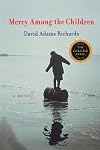
The central question of this book is what would happen if one were to take a vow to do no harm and actually lived up to it. The consequences of such a pact with God, as outlined in this heart-rending and important novel, are far-reaching and unpredictable.
I'm a huge Richards fan. (So much so that I rather hope I never meet him, for it he doesn't live up to the hugely favorable opinion I have of him, I'm afraid it will affect how I view his work!) He writes with the cadence and echo of the show more King James Version of the Bible, which is a voice little used these days, but is familiar to anyone who reads the Southern Gothic writers -- Tennessee Williams, Flannery O'Connor, James Agee, etc. It's a perfect fit here, as it is with all Richards' books since they are marvelous works of searing morality.
There are those who might argue his work is depressing, but that was not my impression. Challenging? Certainly, and I see nothing wrong with that. On the contrary, I find it thrilling that Richards expects his readers to rise to the challenge and to question their assumptions.
This story, as with the wonderfully named, FRIENDS OF MEAGRE FORTUNE, takes place in New Brunswick, Canada, along the banks of the Miramachi River. Ordinary people in extraordinary circumstances, compassionately and masterfully shared with the reader.
One of the few books on my shelf I shall re-read. show less
I'm a huge Richards fan. (So much so that I rather hope I never meet him, for it he doesn't live up to the hugely favorable opinion I have of him, I'm afraid it will affect how I view his work!) He writes with the cadence and echo of the show more King James Version of the Bible, which is a voice little used these days, but is familiar to anyone who reads the Southern Gothic writers -- Tennessee Williams, Flannery O'Connor, James Agee, etc. It's a perfect fit here, as it is with all Richards' books since they are marvelous works of searing morality.
There are those who might argue his work is depressing, but that was not my impression. Challenging? Certainly, and I see nothing wrong with that. On the contrary, I find it thrilling that Richards expects his readers to rise to the challenge and to question their assumptions.
This story, as with the wonderfully named, FRIENDS OF MEAGRE FORTUNE, takes place in New Brunswick, Canada, along the banks of the Miramachi River. Ordinary people in extraordinary circumstances, compassionately and masterfully shared with the reader.
One of the few books on my shelf I shall re-read. show less
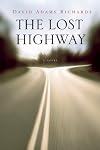
In New Brunswick, the lives of two men intertwine with disastrous results. Alex Chapman is a former seminary student and former university professor, returned home and teaching a class at the local community college. He blames his great-uncle, James, for ruining his life. When he learns that James has unknowingly been sold a lottery ticket worth $13 million, he decides to steal it.
Enter Leo Bourque. A childhood tormentor of Alex, who in later life, came to admire Alex's success at show more university. Leo becomes aware of Alex's plans and insists on a share.
This is a great story with great, complex characters and nuanced motivations. It really held my interest. My one dissatisfaction is that, at the end, the author explained his characters -- almost like a professor would -- rather than allowing the realizations emerge for the reader. show less
Enter Leo Bourque. A childhood tormentor of Alex, who in later life, came to admire Alex's success at show more university. Leo becomes aware of Alex's plans and insists on a share.
This is a great story with great, complex characters and nuanced motivations. It really held my interest. My one dissatisfaction is that, at the end, the author explained his characters -- almost like a professor would -- rather than allowing the realizations emerge for the reader. show less
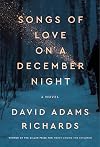
David Adams Richards is a Canadian author whose books I always purchase as hardcovers as soon as I learn of a new release. This is the twelfth novel of his that I have read.
Colonel Musselman dies of a gunshot wound. Six years later, despite his claims of innocence, Jamie Musselman is convicted of his father’s murder. His fiancée Gertie is among the very few that believe there has been a miscarriage of justice. Very early in the novel, the reader comes to understand that others are show more responsible for the Colonel’s death: one person shot him but others were present and another provided crucial information. The focus of the novel is on the events that led to the killing and what happens after Jamie has been convicted and imprisoned.
This book has all the hallmarks of a David Adams Richards novel. Of course there’s the rural setting of New Brunswick’s Miramichi River valley which is found in most of his novels. There’s an innocent person charged with a crime (like in Mary Cyr). There are exaggerated rumours and sensationalized gossip (as in Crimes Against My Brother). There are criticisms of certain groups like academics, feminists, and activists (as in The Tragedy of Eva Mott and Darkness and Principles to Live By). As in Mary Cyr, Canada is criticized: “Canada became insipid, a country hollowed out by intellectual conceit and sanctimonious self-reflection. . . . to the rest of the world, in many respects, it was [invisible].” Of course, some of the comments cannot but elicit a smile: one character “did not know that Ottawa was the capital of Canada, and believed it was Washington. Well, what the matter – more than one of our professors and political gurus did as well.” As in The Lost Highway, there is repetition of how non-believers inspired by reason rather than faith have become lost souls.
What is always impressive about DAR’s books is the memorable, authentic characters. The author takes great pains to explain the motivations of characters – why they make the choices they do. Sometimes people lash out because they feel betrayed; some are concerned about appearances and status; and some place personal ambition above all else. The backgrounds of characters are also detailed so the reader comes to understand why they behave as they do. Even someone who behaves despicably earns some sympathy when we learn about his/her past. As in previous books, the wisest characters are often those without a formal, academic education.
What is emphasized is that choices have ramifications, sometimes spanning generations. One professor tells a student, “’sometimes whatever we do affects the lives of many not yet born, or those born we do not yet know.’” For example, Gertie’s father wants to make an impression on someone, so he tells a man about money in Colonel Musselman’s house; passing on this information has disastrous consequences. A woman makes a decision to lie to save a man from a jail sentence, “And everything from that moment on changed dramatically in everyone’s life. Though none of them knew it then. All of this happened as if there would be no consequence.” One man, thinking back to events, ponders “When did it all begin?”
As in DAR’s previous novels, what also stands out is the inter-connectedness of all the characters. I grew up in a small town and know first-hand how everyone knows everyone, but sometimes the way people’s paths cross by chance seems contrived. Coincidences occur too: Pruty overhears conversations and finds a crucial letter; Marsha has a visitor when Little Nin calls.
This is not a light read; readers familiar with DAR’s books will not find this surprising. There is theft, infidelity, rape, murder, lying, family disintegration, loneliness, chronic pain, police ineptitude, and heartbreak. Several of the seven deadly sins come into play. So many elements in his books are
familiar, but what most impresses is his deep understanding of the human condition and human behaviour.
Note: Please check out my reader's blog (https://schatjesshelves.blogspot.com/) or substack (https://substack.com/@doreenyakabuski) for over 1,200 of my book reviews. show less
Colonel Musselman dies of a gunshot wound. Six years later, despite his claims of innocence, Jamie Musselman is convicted of his father’s murder. His fiancée Gertie is among the very few that believe there has been a miscarriage of justice. Very early in the novel, the reader comes to understand that others are show more responsible for the Colonel’s death: one person shot him but others were present and another provided crucial information. The focus of the novel is on the events that led to the killing and what happens after Jamie has been convicted and imprisoned.
This book has all the hallmarks of a David Adams Richards novel. Of course there’s the rural setting of New Brunswick’s Miramichi River valley which is found in most of his novels. There’s an innocent person charged with a crime (like in Mary Cyr). There are exaggerated rumours and sensationalized gossip (as in Crimes Against My Brother). There are criticisms of certain groups like academics, feminists, and activists (as in The Tragedy of Eva Mott and Darkness and Principles to Live By). As in Mary Cyr, Canada is criticized: “Canada became insipid, a country hollowed out by intellectual conceit and sanctimonious self-reflection. . . . to the rest of the world, in many respects, it was [invisible].” Of course, some of the comments cannot but elicit a smile: one character “did not know that Ottawa was the capital of Canada, and believed it was Washington. Well, what the matter – more than one of our professors and political gurus did as well.” As in The Lost Highway, there is repetition of how non-believers inspired by reason rather than faith have become lost souls.
What is always impressive about DAR’s books is the memorable, authentic characters. The author takes great pains to explain the motivations of characters – why they make the choices they do. Sometimes people lash out because they feel betrayed; some are concerned about appearances and status; and some place personal ambition above all else. The backgrounds of characters are also detailed so the reader comes to understand why they behave as they do. Even someone who behaves despicably earns some sympathy when we learn about his/her past. As in previous books, the wisest characters are often those without a formal, academic education.
What is emphasized is that choices have ramifications, sometimes spanning generations. One professor tells a student, “’sometimes whatever we do affects the lives of many not yet born, or those born we do not yet know.’” For example, Gertie’s father wants to make an impression on someone, so he tells a man about money in Colonel Musselman’s house; passing on this information has disastrous consequences. A woman makes a decision to lie to save a man from a jail sentence, “And everything from that moment on changed dramatically in everyone’s life. Though none of them knew it then. All of this happened as if there would be no consequence.” One man, thinking back to events, ponders “When did it all begin?”
As in DAR’s previous novels, what also stands out is the inter-connectedness of all the characters. I grew up in a small town and know first-hand how everyone knows everyone, but sometimes the way people’s paths cross by chance seems contrived. Coincidences occur too: Pruty overhears conversations and finds a crucial letter; Marsha has a visitor when Little Nin calls.
This is not a light read; readers familiar with DAR’s books will not find this surprising. There is theft, infidelity, rape, murder, lying, family disintegration, loneliness, chronic pain, police ineptitude, and heartbreak. Several of the seven deadly sins come into play. So many elements in his books are
familiar, but what most impresses is his deep understanding of the human condition and human behaviour.
Note: Please check out my reader's blog (https://schatjesshelves.blogspot.com/) or substack (https://substack.com/@doreenyakabuski) for over 1,200 of my book reviews. show less
Lists
Books About Boys (1)
Awards


You May Also Like


Associated Authors
Statistics
- Works
- 37
- Also by
- 1
- Members
- 2,304
- Popularity
- #11,143
- Rating
- 3.8
- Reviews
- 74
- ISBNs
- 165
- Languages
- 5
- Favorited
- 6