
Donna Morrissey
Author of Kit's Law
About the Author
Donna Morrissey was born in The Beaches, a small village on the northwest coast of Newfoundland that had neither roads nor electricity until the 1960s - a place not unlike Haire's Hollow, which she depicts in "Kit's Law". When she was sixteen, Morrissey left The Beaches & struck out across Canada, show more working odd jobs from bartending to cooking in oil rig camps to processing fish in fish plants. She went on to earn a degree in social work at Memorial University in St. Johns. It was not until she was in her late thirties that Morrissey began writing short stories, at the urging of a friend, a Jungian analyst, who insisted she was a writer. Eventually she adapted her first two stories into screenplays, which both went on to win the Atlantic Film Festival Award; one aired recently on CBC. "Kit's Law" is Morrissey's first novel, the winner of the Canadian Booksellers Association First-Time Author of the Year Award & shortlisted for many prizes, including the Atlantic Fiction Award & the Chapters/Books in Canada First Novel Award. Morrissey lives in Halifax, Nova Scotia. (Bowker Author Biography) show less
Image credit: cabottrailwritersfestival.com
Series
Works by Donna Morrissey
Tagged
Common Knowledge
- Canonical name
- Morrissey, Donna
- Birthdate
- 1956
- Gender
- female
- Education
- Memorial University, Newfoundland
- Short biography
- Donna Morrissey (born in 1956 at The Beaches, Newfoundland) is a Canadian author.
At age 16 Morrissey left her birthplace, The Beaches, a small outport on the west coast of Newfoundland. She lived in various places of Canada before returning to St. John's where she studied at Memorial University, where she obtained a Bachelor of Social Work, and a diploma in adult education. Morrissey now lives in Halifax, Nova Scotia.
Morrissey has written three prize-winning novels — Kit's Law, the national best seller Downhill Chance, and Sylvanus Now — as well as one prize-winning screenplay.
Morrissey defended Frank Parker Day's novel Rockbound in Canada Reads 2005. Rockbound eventually won the competition. In the 2007 edition of Canada Reads, an "all-star" competition pitting the five winning advocates from previous years against each other, Morrissey returned to champion Anosh Irani's novel The Song of Kahunsha.As most young people do, Morrissey left The Beaches. At sixteen, having flunked out of high school, she set off travelling that vast expanse of country to the west. “I was like, ‘Jesus, I want to see a hippie! And I want to smoke pot, and I want to do all of that stuff and travel the world.’ I didn’t do the world so much, but I certainly traipsed through this country a few times.”
For ten years, Morrissey moved from province to province, working as a waitress, a bartender, a cook on an oilrig. She got married and had two children (a son, now twenty-six, and a daughter, now nineteen). And when she tired of life “abroad,” she brought her family back to Newfoundland and worked splitting cod at a fish processing plant. - Nationality
- Canada
- Birthplace
- The Beaches, Newfoundland, Canada
- Places of residence
- The Beaches, Newfoundland, Canada
St. John's, Newfoundland, Canada
Halifax, Nova Scotia, Canada - Associated Place (for map)
- Newfoundland, Canada
Members
Reviews
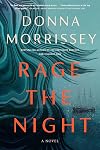
I’ve read and loved all of Donna Morrissey’s novels. She is one of my favourite Canadian authors, and this, her latest book, only adds to my regard for her writing.
It is 1914 in Newfoundland. Twenty-year-old Roan is an orphan who has been raised and educated by Dr. Wilfred Grenfell, the renowned Newfoundland medical missionary. A nurse’s deathbed confession has Roan discovering that his father may still be alive, so he sets out to discover the identity of that father and the truth show more behind his mother’s death. He travels by dog sled from St. Anthony to Deer Lake and then takes a train to St. John’s. Believing he has found his father, he follows him onto the SS Newfoundland, a ship heading to the sealing grounds for the spring hunt.
I didn’t know about the history of the Newfoundland, one of the worse marine disasters in Newfoundland history, but as soon as Roan joins the sealers on the ship, I suspected there would be a tragedy. I’ve read enough about the seal hunt to know of its dangers. The conditions are not favourable as the Newfoundland keeps getting trapped in ice so the captain and the sealers are more and more desperate to find seals; the decision to have the men walk for hours to reach a herd just ramps up the suspense.
The seal hunt is controversial, but it has been part of Newfoundland’s culture for generations. Regardless of one’s position on the hunt, a reader will feel empathy for the sealers. For them, the hunt means making some money to feed themselves and their families. The living conditions on the ship are miserable; food is very basic and there’s not much of it. Once the hunt begins, the dangers increase. The men need to earn money and it is desperation that drives the men onto shifting ice.
I love novels with a dynamic character and this one has Roan. At the beginning, Roan loves solitude: “Quiet. He loved quiet. Loved how it settled around him without shadow.” He even tells a young woman he encounters that “We are best alone, Ila, we are best alone” and believes that “She will learn, as he has, not to fear aloneness. She will learn that it is in solitude where one finds one’s courage.” As a young boy, Roan was sent to a boarding school in Boston where he was an outcast because he was considered an orphan from the backwoods, but on the ship he is accepted by the men and bonds with them. He learns that “our pathways through life are equally shaped by the others who sail with us” and realizes that he gathers courage “from living these past days among a brotherhood that breeds such courage out of misery that all things seem possible.”
Roan has other lessons to learn as well: patience and humility. The ship’s captain, for instance, is described as proud and one of the sealers says “’Men does strange things when they got that drivin ‘em.’” Roan comes to recognize “his own naked pride” and acknowledges the presence of “his old pal vanity.” Watching the sealers help and support each other, he becomes more compassionate and realizes the truth of Dr. Grenfell’s words that “What we give to others is the rent we pay for our room on this earth.” Roan does uncover the truth of his birth, but it’s the other lessons that more profoundly affect his behaviour.
Characterization in the novel is excellent. Characters are flawed like real human beings: keeping secrets, telling lies to themselves and others, and falling subject to misunderstandings. Though there are few women, they are memorable. Ila, though the same age as Roan, seems so much more mature, probably because of her life experiences. But the most authentic for me are the sealers. They speak in distinctive Newfoundland accents which I love, but it’s their supportive fellowship, resilience, and humour that stand out. Even when miserable, they break out into song to bolster morale. They watch out for and help each other. They share equally what little they have, unlike captains who keep the best food for himself and unlike Roan who in the past succumbed to the “greed of hunger.”
There is so much to recommend this novel: a suspenseful plot, authentic characters, lots of local colour, lyrical descriptions, and thematic depth – all things I’ve found in all of Donna Morrissey’s novels.
Note: I received an eARC from the publisher via NetGalley.
Please check out my reader's blog (https://schatjesshelves.blogspot.com/) and follow me on Twitter (@DCYakabuski). show less
It is 1914 in Newfoundland. Twenty-year-old Roan is an orphan who has been raised and educated by Dr. Wilfred Grenfell, the renowned Newfoundland medical missionary. A nurse’s deathbed confession has Roan discovering that his father may still be alive, so he sets out to discover the identity of that father and the truth show more behind his mother’s death. He travels by dog sled from St. Anthony to Deer Lake and then takes a train to St. John’s. Believing he has found his father, he follows him onto the SS Newfoundland, a ship heading to the sealing grounds for the spring hunt.
I didn’t know about the history of the Newfoundland, one of the worse marine disasters in Newfoundland history, but as soon as Roan joins the sealers on the ship, I suspected there would be a tragedy. I’ve read enough about the seal hunt to know of its dangers. The conditions are not favourable as the Newfoundland keeps getting trapped in ice so the captain and the sealers are more and more desperate to find seals; the decision to have the men walk for hours to reach a herd just ramps up the suspense.
The seal hunt is controversial, but it has been part of Newfoundland’s culture for generations. Regardless of one’s position on the hunt, a reader will feel empathy for the sealers. For them, the hunt means making some money to feed themselves and their families. The living conditions on the ship are miserable; food is very basic and there’s not much of it. Once the hunt begins, the dangers increase. The men need to earn money and it is desperation that drives the men onto shifting ice.
I love novels with a dynamic character and this one has Roan. At the beginning, Roan loves solitude: “Quiet. He loved quiet. Loved how it settled around him without shadow.” He even tells a young woman he encounters that “We are best alone, Ila, we are best alone” and believes that “She will learn, as he has, not to fear aloneness. She will learn that it is in solitude where one finds one’s courage.” As a young boy, Roan was sent to a boarding school in Boston where he was an outcast because he was considered an orphan from the backwoods, but on the ship he is accepted by the men and bonds with them. He learns that “our pathways through life are equally shaped by the others who sail with us” and realizes that he gathers courage “from living these past days among a brotherhood that breeds such courage out of misery that all things seem possible.”
Roan has other lessons to learn as well: patience and humility. The ship’s captain, for instance, is described as proud and one of the sealers says “’Men does strange things when they got that drivin ‘em.’” Roan comes to recognize “his own naked pride” and acknowledges the presence of “his old pal vanity.” Watching the sealers help and support each other, he becomes more compassionate and realizes the truth of Dr. Grenfell’s words that “What we give to others is the rent we pay for our room on this earth.” Roan does uncover the truth of his birth, but it’s the other lessons that more profoundly affect his behaviour.
Characterization in the novel is excellent. Characters are flawed like real human beings: keeping secrets, telling lies to themselves and others, and falling subject to misunderstandings. Though there are few women, they are memorable. Ila, though the same age as Roan, seems so much more mature, probably because of her life experiences. But the most authentic for me are the sealers. They speak in distinctive Newfoundland accents which I love, but it’s their supportive fellowship, resilience, and humour that stand out. Even when miserable, they break out into song to bolster morale. They watch out for and help each other. They share equally what little they have, unlike captains who keep the best food for himself and unlike Roan who in the past succumbed to the “greed of hunger.”
There is so much to recommend this novel: a suspenseful plot, authentic characters, lots of local colour, lyrical descriptions, and thematic depth – all things I’ve found in all of Donna Morrissey’s novels.
Note: I received an eARC from the publisher via NetGalley.
Please check out my reader's blog (https://schatjesshelves.blogspot.com/) and follow me on Twitter (@DCYakabuski). show less
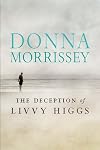
Donna Morrissey is a woman of charm and grace. She can make a cat laugh. But in behind that charming, cheery exterior is some deep deep thinking and emotion. This book was a tough read. Initially I had trouble getting into the setting and characters, but give it a chance - Morrissey's writing tendrils creep in and wrap tightly around your heart.
Family secrets are the theme here, and the damage done because of them.It isn't hard to identify with the dark struggles and the feelings of show more abandonment.
But what makes this book a worthwhile investment of time, for me, is Morrissey's voice, her swoop of phrase, the way she puts her words together. It reminds me of Newfoundland, a place laden with natural glory and filled with storytellers whose language reaches beyond expectation.
Tis a book for wallowing in... show less
Family secrets are the theme here, and the damage done because of them.It isn't hard to identify with the dark struggles and the feelings of show more abandonment.
But what makes this book a worthwhile investment of time, for me, is Morrissey's voice, her swoop of phrase, the way she puts her words together. It reminds me of Newfoundland, a place laden with natural glory and filled with storytellers whose language reaches beyond expectation.
Tis a book for wallowing in... show less
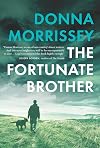
This is the third in a trilogy which began with Sylvanus Now and was followed by What They Wanted. Readers who are familiar with the Now family will want to read this third installment, but the book can certainly be read as a standalone.
This book focuses on Kyle Now who is still mourning the death of his brother Chris who died working on an Alberta oil rig. The family is a troubled one. Sylvanus, the father, takes refuge in alcohol; Abbie, the mother, is facing breast cancer; and Kyle’s show more relationship with his sister Sylvie is strained because of what he sees as her role in Chris’ death. Then a local bully, Clar Gillard, is murdered and suspicion falls on the Now family with whom he has had confrontations.
Characterization is amazing. All characters are fully developed, round characters, their traits consistent with those in the first two books of the trilogy. Kyle is a dynamic character. At the beginning he sees nothing positive in the world: “Felt like the one long day for three years now. The one long dull day, caught on a cloud of grief hovering over his house.” He has no hope: “Nope. Kyle Now was done with wishing.” He does not talk and share his grief with others but worries about everyone else, his constant fingernail-chewing and foot-jiggling clearly indicating his tension. His typical response is to run: “he’d pushed [Sylvie] away and ran and was still running. Running from everything.” The novel shows how Kyle goes from such desperation to finally running towards someone and seeing the beauty around him: “The moan’s broadening smile rose above the hills and glimmered amongst stars that were mostly dead and yet whose lights still shone through the eternal sky.”
Kyle’s foil is his mother. Addie, despite all her troubles, always remains hopeful. Chris is “struck once more by her fortitude. That whatever this new thing thickening her cloud of sorrow, hope was already ignited in her heart and offering itself as a shelter for him and his father.” The contrast is obvious when Kyle is described: “But he was done with hope. It took her babies and Chris and he had no more courage for hope. Hope had failed her too many times. Rather that she had never hoped. Rather that it was just those babies she grieved and not the pain of lost hope as well.” Kyle needs to learn what Addie has, that “hope eventually creeps through darkness, making inroads through to an easier tomorrow” and that “’There’s good to be found in everything, even grief.’”
There are, of course, other lessons that Kyle must learn: “’Some people have illness, everybody has something. It’s how you carries it – that’s what you take into the other world with you. That’s the only thing we takes’” and “’You can’t go getting down and blaming yourself for stuff you got no control over’” and “’You needs to be like everyone else, tending to your own concerns.’” I love the references to Job: “’We’re blessed like Job then, when we feels the fear of something and does it anyway’” and “’we’re sainted like Job when we can stand the pain and thrive in the end.’” A person may be given advice but does not necessarily listen, and part of the interest of the novel is in seeing if/how Kyle will learn these lessons.
As suggested, a major theme is that of hope. It is introduced in the epigraph, a quotation from George Eliot’s Adam Bede: “There is no despair so absolute as that which comes with the first moments of our first great sorrow, when we have not yet known what it is to have suffered and be healed, to have despaired and to have recovered hope.” Repetition is used to emphasize the need for hope: “’And you can’t lose hope, either. You got to trust some things’” and “’Hope’s a powerful thing. It’s what takes us into the next world, hopes of a better life’” and “’There’s always hope’” and “Hope’s contagious like that: if one believes, then another might.”
It is not just characterization and theme development that are amazing. There is such pleasure in reading Morrissey’s style. The dialogue is truly that of a Newfoundland outport. The images are also wonderful. An abstract like guilt is made concrete: “Guilt rotting him like an old shack built on wet ground, leaving no shores strong enough to shelter himself or his family.” And descriptions of setting say so much: “Sulphuric smells rose from a smoking pulp mill that headed the harbour while nice shingled homes and shops and oak trees encircled the mill’s land side as ribs might encircle the life-giving heart.”
I strongly recommend this book; it is literary fiction at its best. If you haven’t read Sylvanus Now and What They Wanted, read them first, but if you have been fortunate enough to meet the Now family, reunite with them by reading The Fortunate Brother. You will not be disappointed.
Note: I received an ARC of this book from the publisher via NetGalley.
Please check out my reader's blog (http://schatjesshelves.blogspot.ca/) and follow me on Twitter (@DCYakabuski). show less
This book focuses on Kyle Now who is still mourning the death of his brother Chris who died working on an Alberta oil rig. The family is a troubled one. Sylvanus, the father, takes refuge in alcohol; Abbie, the mother, is facing breast cancer; and Kyle’s show more relationship with his sister Sylvie is strained because of what he sees as her role in Chris’ death. Then a local bully, Clar Gillard, is murdered and suspicion falls on the Now family with whom he has had confrontations.
Characterization is amazing. All characters are fully developed, round characters, their traits consistent with those in the first two books of the trilogy. Kyle is a dynamic character. At the beginning he sees nothing positive in the world: “Felt like the one long day for three years now. The one long dull day, caught on a cloud of grief hovering over his house.” He has no hope: “Nope. Kyle Now was done with wishing.” He does not talk and share his grief with others but worries about everyone else, his constant fingernail-chewing and foot-jiggling clearly indicating his tension. His typical response is to run: “he’d pushed [Sylvie] away and ran and was still running. Running from everything.” The novel shows how Kyle goes from such desperation to finally running towards someone and seeing the beauty around him: “The moan’s broadening smile rose above the hills and glimmered amongst stars that were mostly dead and yet whose lights still shone through the eternal sky.”
Kyle’s foil is his mother. Addie, despite all her troubles, always remains hopeful. Chris is “struck once more by her fortitude. That whatever this new thing thickening her cloud of sorrow, hope was already ignited in her heart and offering itself as a shelter for him and his father.” The contrast is obvious when Kyle is described: “But he was done with hope. It took her babies and Chris and he had no more courage for hope. Hope had failed her too many times. Rather that she had never hoped. Rather that it was just those babies she grieved and not the pain of lost hope as well.” Kyle needs to learn what Addie has, that “hope eventually creeps through darkness, making inroads through to an easier tomorrow” and that “’There’s good to be found in everything, even grief.’”
There are, of course, other lessons that Kyle must learn: “’Some people have illness, everybody has something. It’s how you carries it – that’s what you take into the other world with you. That’s the only thing we takes’” and “’You can’t go getting down and blaming yourself for stuff you got no control over’” and “’You needs to be like everyone else, tending to your own concerns.’” I love the references to Job: “’We’re blessed like Job then, when we feels the fear of something and does it anyway’” and “’we’re sainted like Job when we can stand the pain and thrive in the end.’” A person may be given advice but does not necessarily listen, and part of the interest of the novel is in seeing if/how Kyle will learn these lessons.
As suggested, a major theme is that of hope. It is introduced in the epigraph, a quotation from George Eliot’s Adam Bede: “There is no despair so absolute as that which comes with the first moments of our first great sorrow, when we have not yet known what it is to have suffered and be healed, to have despaired and to have recovered hope.” Repetition is used to emphasize the need for hope: “’And you can’t lose hope, either. You got to trust some things’” and “’Hope’s a powerful thing. It’s what takes us into the next world, hopes of a better life’” and “’There’s always hope’” and “Hope’s contagious like that: if one believes, then another might.”
It is not just characterization and theme development that are amazing. There is such pleasure in reading Morrissey’s style. The dialogue is truly that of a Newfoundland outport. The images are also wonderful. An abstract like guilt is made concrete: “Guilt rotting him like an old shack built on wet ground, leaving no shores strong enough to shelter himself or his family.” And descriptions of setting say so much: “Sulphuric smells rose from a smoking pulp mill that headed the harbour while nice shingled homes and shops and oak trees encircled the mill’s land side as ribs might encircle the life-giving heart.”
I strongly recommend this book; it is literary fiction at its best. If you haven’t read Sylvanus Now and What They Wanted, read them first, but if you have been fortunate enough to meet the Now family, reunite with them by reading The Fortunate Brother. You will not be disappointed.
Note: I received an ARC of this book from the publisher via NetGalley.
Please check out my reader's blog (http://schatjesshelves.blogspot.ca/) and follow me on Twitter (@DCYakabuski). show less
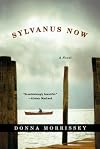
Sometimes a book may not have an action packed plot-line, but the words on the page transport the reader into the day-to-day world of the story so eloquently, that one feels as if they have been there. I know what the wind from the point of a tiny town on Newfoundland tastes like. I've heard the crash of the waves, and the sting of the salt as the fish are set to dry. I've lived with the people of that town, through their sorrows, and seen their hopes.
I was fascinated to learn about the show more coastal fishing life off the Newfoundland coast. I've heard about problems of overfishing etc, but never parlayed it into terms of technology vs tradition. I remember the salted fish, so common in my childhood, that could be seen in the delicatessens of my youth. The coppery color of the skin fascinated me as a child, though the taste didn't win me over. I now realize that I don't see those same salted, dried fish many places, though there seems to be an abundance of frozen or canned fish. I never thought on what that change might have meant to the fishermen who pulled the fish out of the waters. And though I'd heard of jigging, never understood the rhythm of it until this book.
If you're looking for a monumental, fast-paced read, put this book down. If you're looking for a complex mystery, this isn't the book for you. But if you want a glimpse in a time gone by, want to see how modern day life can change a way of life, want to immerse yourself in a world of real people, pick this book up. show less
I was fascinated to learn about the show more coastal fishing life off the Newfoundland coast. I've heard about problems of overfishing etc, but never parlayed it into terms of technology vs tradition. I remember the salted fish, so common in my childhood, that could be seen in the delicatessens of my youth. The coppery color of the skin fascinated me as a child, though the taste didn't win me over. I now realize that I don't see those same salted, dried fish many places, though there seems to be an abundance of frozen or canned fish. I never thought on what that change might have meant to the fishermen who pulled the fish out of the waters. And though I'd heard of jigging, never understood the rhythm of it until this book.
If you're looking for a monumental, fast-paced read, put this book down. If you're looking for a complex mystery, this isn't the book for you. But if you want a glimpse in a time gone by, want to see how modern day life can change a way of life, want to immerse yourself in a world of real people, pick this book up. show less
Lists
Awards


You May Also Like


Statistics
- Works
- 10
- Members
- 1,129
- Popularity
- #22,742
- Rating
- 3.8
- Reviews
- 39
- ISBNs
- 72
- Languages
- 2
- Favorited
- 2