
Frances Itani
Author of Deafening
About the Author
Image credit: Deseronto Archives
Series
Works by Frances Itani
Itani, Frances (About) 1 copy
Tagged
Common Knowledge
- Birthdate
- 1942-08-25
- Gender
- female
- Occupations
- nurse
poet
essayist
fiction writer - Awards and honors
- Order of Canada
- Short biography
- Frances Susan Itani, née Hill (born August 25, 1942) is a Canadian fiction writer, poet and essayist. She is a Member of the Order of Canada.Itani was born in Belleville, Ontario,[1] and grew up in Quebec. She studied nursing in Montreal and North Carolina, a profession which she taught and practised for eight years. However, after enrolling in a writing class taught by W. O. Mitchell, she decided to change careers.
She married Tetsuo (Ted) Itani, a retired Canadian Forces officer and humanitarian, in 1967.[2] They reside in Ottawa, Ontario.[1]
Itani has published thirteen books, ranging from fiction and poetry to a children's book. Her 2003 novel Deafening was shortlisted for the International IMPAC Dublin Award, and won the Commonwealth Writers Prize, Caribbean and Canada region, and has been published in 16 countries. - Nationality
- Canada
- Birthplace
- Belleville, Ontario, Canada
- Places of residence
- Belleville, Ontario, Canada
Edmonton, Alberta, Canada
Ottawa, Ontario, Canada
Quebec, Canada - Associated Place (for map)
- Canada
Members
Reviews

I don't give 5 star ratings lightly. In addition to superb writing, a great plot and interesting characters, a book has to have a message that is personally important to me. It goes without saying that any book by Frances Itani will fulfill those first three requirements. She is a wonderful writer especially when she is delineating the interior lives of women. This book is set partially in World War II which is always fertile ground for a plot. The main character is Hanora Oak who was show more adopted by Kenan and Tress Oak at the end of Itani's last book, Tell. Born in 1920 she is told that she was adopted by Kenan and Tress on her 18th birthday, September 23 1938 but they would not give her any details about her birth parents. Hanora spent the rest of her life looking for information about her origins and that is the main quest in this book.
Hanora sailed to France with her cousin Billie in 1939 just before World War II was declared. Duke Ellington and his orchestra were on board as passengers. Jazz and dancing were important parts of Hanora and Billie's life. Years later a picture of the two of them with Ellington would help Hanora recall details about that voyage. Hanora spent all of the war years in London helping children orphaned by the Blitz and writing. Her next-door neighbour from Deseronto, Tobe Staunford, had joined the Canadian army and they managed to meet occasionally while he was stationed in Britain. After the war Hanora returned to Deseronto briefly but soon took up the peripatetic life of a journalist. Her cousin Billie married a painter and became an English as a Second Language teacher in Toronto. In 1998, Billie is a widow and suffering from dementia. Hanora, as her closest relative, becomes her main caregiver. It is this thread of the plot that was so personally important to me. Only someone who has cared for a loved one as they slip deeper into dementia could write so convincingly about it. Hanora loves Billie but she really wants to have time to spend on her research about a woman artist who was from the same area where Hanora grew up. When Billie is convinced to move into an extended-care facility Hanora finally has some time to spend on her research but an off-hand remark by Billie about their 1939 voyage leads Hanora to the information she has always wanted about her birth parents.
I also loved the references to jazz music throughout the book. The very first chapter is entitled "The 'C' Jam Blues" and the last is "Air Conditioned Jungle" both of which are works by Duke Ellington. There really should be a CD accompanying this book but, praise be to YouTube, you can find recordings on the net. The video of "C Jam Blues" is superb. show less
Hanora sailed to France with her cousin Billie in 1939 just before World War II was declared. Duke Ellington and his orchestra were on board as passengers. Jazz and dancing were important parts of Hanora and Billie's life. Years later a picture of the two of them with Ellington would help Hanora recall details about that voyage. Hanora spent all of the war years in London helping children orphaned by the Blitz and writing. Her next-door neighbour from Deseronto, Tobe Staunford, had joined the Canadian army and they managed to meet occasionally while he was stationed in Britain. After the war Hanora returned to Deseronto briefly but soon took up the peripatetic life of a journalist. Her cousin Billie married a painter and became an English as a Second Language teacher in Toronto. In 1998, Billie is a widow and suffering from dementia. Hanora, as her closest relative, becomes her main caregiver. It is this thread of the plot that was so personally important to me. Only someone who has cared for a loved one as they slip deeper into dementia could write so convincingly about it. Hanora loves Billie but she really wants to have time to spend on her research about a woman artist who was from the same area where Hanora grew up. When Billie is convinced to move into an extended-care facility Hanora finally has some time to spend on her research but an off-hand remark by Billie about their 1939 voyage leads Hanora to the information she has always wanted about her birth parents.
I also loved the references to jazz music throughout the book. The very first chapter is entitled "The 'C' Jam Blues" and the last is "Air Conditioned Jungle" both of which are works by Duke Ellington. There really should be a CD accompanying this book but, praise be to YouTube, you can find recordings on the net. The video of "C Jam Blues" is superb. show less
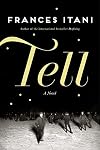
I am certainly glad I wasn't sitting on the Giller Prize committee. Tell was won of the books short listed for the prize but the winner was Us Conductors which I have also read. Both were wonderful books but completely different and I would not have known how to choose the winner.
Tell centers on the small town of Deseronto in the late fall and early winter of 1919. Kenan has returned from the war with physical and mental wounds. His left arm is useless and the left side of his face is show more severely disfigured. He has been staying indoors since his return since he doesn't want anyone to see his face. His wife, Tress, doesn't seem to care what he looks like but she is distressed about his mental state. She often talks with her aunt Maggie about it and Maggie urges her to be patient. Maggie and her husband, Am, live in an apartment in the building that houses the town clock. Am is the caretaker of the building and Maggie works part-time in the library. Maggie is also a wonderful singer. Recently a music director from Europe, Luc, has moved to Deseronto and started a choral society. He has chosen Maggie to sing several solos for the New Year's Eve concert. As Maggie gets more involved with practising for the concert she and her husband draw farther apart. When Kenan decides to venture out of the house after dark one of the places he goes is to visit Am in the clock tower. Kenan also goes skating on the rink cleared on the ice of the bay but only after 10 pm when the other skaters have left. The main characters have secrets that must be told if they are going to get on with their lives but telling is hard to do.
I didn't know before I read this book that the story continues that of Awakening, a book that I adored. Tress is the sister of Grania, the main character of that book. Grania is gone from Deseronto for most of this book but she does make brief appearances in the form of letters to her sister or recollections by other people. There are some unfinished details in this book (such as Kenan's birth parents) which makes me think that Itani perhaps has a further book in mind.
The details about the skating rink really resonated with me. I often skated on rinks cleared on the frozen river near our house (as well as on outdoor rinks constructed near school in town) when I was young. The cold wind in your face, the frozen mittens, the smell of the woodstove in the warming shack were all brought back to me. I haven't skated in years but reading this book made me wish I had a pair of skates to strap on. show less
Tell centers on the small town of Deseronto in the late fall and early winter of 1919. Kenan has returned from the war with physical and mental wounds. His left arm is useless and the left side of his face is show more severely disfigured. He has been staying indoors since his return since he doesn't want anyone to see his face. His wife, Tress, doesn't seem to care what he looks like but she is distressed about his mental state. She often talks with her aunt Maggie about it and Maggie urges her to be patient. Maggie and her husband, Am, live in an apartment in the building that houses the town clock. Am is the caretaker of the building and Maggie works part-time in the library. Maggie is also a wonderful singer. Recently a music director from Europe, Luc, has moved to Deseronto and started a choral society. He has chosen Maggie to sing several solos for the New Year's Eve concert. As Maggie gets more involved with practising for the concert she and her husband draw farther apart. When Kenan decides to venture out of the house after dark one of the places he goes is to visit Am in the clock tower. Kenan also goes skating on the rink cleared on the ice of the bay but only after 10 pm when the other skaters have left. The main characters have secrets that must be told if they are going to get on with their lives but telling is hard to do.
I didn't know before I read this book that the story continues that of Awakening, a book that I adored. Tress is the sister of Grania, the main character of that book. Grania is gone from Deseronto for most of this book but she does make brief appearances in the form of letters to her sister or recollections by other people. There are some unfinished details in this book (such as Kenan's birth parents) which makes me think that Itani perhaps has a further book in mind.
The details about the skating rink really resonated with me. I often skated on rinks cleared on the frozen river near our house (as well as on outdoor rinks constructed near school in town) when I was young. The cold wind in your face, the frozen mittens, the smell of the woodstove in the warming shack were all brought back to me. I haven't skated in years but reading this book made me wish I had a pair of skates to strap on. show less
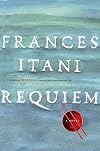
This novel examines the injustice of the internment of thousands of Japanese-Canadians during the Second World War and the scars that remain for the survivors and their families.
The narrator is Bin Okuma; chapters alternate between his boyhood at an internment camp in interior British Columbia and his westward journey from Ottawa to the camp 50 years later, after the sudden death of his wife Lena. Lena recognized that Bin is full of suppressed anger about his past and wished him to show more reconcile with his past, especially with the man whom Bin holds responsible for fracturing his family.
As a child Bin was told his fate based on his birth in the Year of the Tiger: "'A tiger may be stubborn, but can chase away ghosts and protect. . . . But . . . you are destined to be melancholy, and you will weep over nonsensical things.'" The reader soon realizes that this description fits Bin perfectly. His stubbornness is evident in his refusal to even visit B.C. for decades. He definitely has periods of deep melancholy which, like Lena suggests, will continue until he makes peace with his ghosts. It is clear that Bin wants, more than anything, to protect Lena and their son Greg from life's vicissitudes, just as it becomes obvious that some of his harsh judgments are ill-conceived. The problem is that this description of Bin, given in the opening pages, too clearly foreshadows the development of Bin's life story.
Throughout the book, rivers are a metaphor for life. Bin is trying to complete a series of river paintings in time for an exhibition, but he feels there is some essential element missing. To express the essence of rivers through his art has been his lifelong pre-occupation. Obviously, this quest is a metaphor for his trying to come to terms with his life. Towards the end of the novel, he admits that "there could be a soft or hard look to water, that there could be many ways of depicting rivers, that this was a matter of technique and choice" and perhaps some of his attitudes were the result of his choosing a harsh interpretation. In the end he finally chooses a title for his exhibition, a title that reflects his changed attitude to the past.
This book possesses similarities with Joy Kogawa's "Obasan" in its examination of a dark episode in Canada's history; nonetheless, it offers additional insight both in terms of history and human nature. show less
The narrator is Bin Okuma; chapters alternate between his boyhood at an internment camp in interior British Columbia and his westward journey from Ottawa to the camp 50 years later, after the sudden death of his wife Lena. Lena recognized that Bin is full of suppressed anger about his past and wished him to show more reconcile with his past, especially with the man whom Bin holds responsible for fracturing his family.
As a child Bin was told his fate based on his birth in the Year of the Tiger: "'A tiger may be stubborn, but can chase away ghosts and protect. . . . But . . . you are destined to be melancholy, and you will weep over nonsensical things.'" The reader soon realizes that this description fits Bin perfectly. His stubbornness is evident in his refusal to even visit B.C. for decades. He definitely has periods of deep melancholy which, like Lena suggests, will continue until he makes peace with his ghosts. It is clear that Bin wants, more than anything, to protect Lena and their son Greg from life's vicissitudes, just as it becomes obvious that some of his harsh judgments are ill-conceived. The problem is that this description of Bin, given in the opening pages, too clearly foreshadows the development of Bin's life story.
Throughout the book, rivers are a metaphor for life. Bin is trying to complete a series of river paintings in time for an exhibition, but he feels there is some essential element missing. To express the essence of rivers through his art has been his lifelong pre-occupation. Obviously, this quest is a metaphor for his trying to come to terms with his life. Towards the end of the novel, he admits that "there could be a soft or hard look to water, that there could be many ways of depicting rivers, that this was a matter of technique and choice" and perhaps some of his attitudes were the result of his choosing a harsh interpretation. In the end he finally chooses a title for his exhibition, a title that reflects his changed attitude to the past.
This book possesses similarities with Joy Kogawa's "Obasan" in its examination of a dark episode in Canada's history; nonetheless, it offers additional insight both in terms of history and human nature. show less
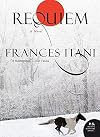
Another ten star read from Itani! I’m not sure how I missed reading this when it was first published in 2011. Luckily my book club picked this to read for September 2018 so I was able to make up the omission.
Bin Okuma was a young boy when the Japanese bombed Pearl Harbor and the government of Canada decided that all people of Japanese descent had to be moved to the interior. His family had to give up their home on the west coast of Vancouver Island and were relocated to an internment camp show more along the Fraser River. There Bin with his brother and sister and mother and father lived in a two room shack crowded onto a small shelf of land above the Fraser along with over 60 other families. Incredibly the Japanese had to pay for the lumber and other supplies to build their accommodations. Slowly the community brought some order to the place. They had a school for the children and a community garden where they grew produce to sell to Vancouver to raise funds for their needs. We learn about life through Bin’s remembrances in 1997 when he makes a cross-country drive from Ottawa to the site of the internment camp. Bin’s wife recently died and he is still grieving. He also thinks about their marriage and their son and his work as an artist. Since he was a young man rivers have figured prominently in his work and an Ottawa gallery is going to give a retrospective but Bin has to provide a few more works and also a name for the collection. Bin also must come to terms with the man he calls First Father. He has not seen him since 1946 and he has never dealt with his feelings of anger to him for giving him to a childless man in the community. Okuma-san raised Bin and was a good example of how to father which Bin could emulate with his own son. He also encouraged Bin’s artistic talent which First Father always called a waste of time. So in many ways Bin was lucky to have been adopted by Okuma-san but he never forgave First Father for giving him away. Now First Father wants to see him and Bin reluctantly agrees to include an encounter in his trip.
Every word and every phrase seems carefully chosen by Itani. She says that she took 4 years to write this book and it shows. She lovingly describes Basil the dog who accompanies Bin on his travels and it seems Basil is based upon an actual dog who was part of the Itani family. Itani is herself of Irish Canadian extraction but her husband is Japanese Canadian and experienced many of the same things Bin Okuma did. She is careful to say that Bin is not her husband and her husband did not read the book until it was published. Her research included many other sources than her husband and his family. The list of some of the books is at the back. I will be looking for some of those books myself.
Highly recommended. show less
Bin Okuma was a young boy when the Japanese bombed Pearl Harbor and the government of Canada decided that all people of Japanese descent had to be moved to the interior. His family had to give up their home on the west coast of Vancouver Island and were relocated to an internment camp show more along the Fraser River. There Bin with his brother and sister and mother and father lived in a two room shack crowded onto a small shelf of land above the Fraser along with over 60 other families. Incredibly the Japanese had to pay for the lumber and other supplies to build their accommodations. Slowly the community brought some order to the place. They had a school for the children and a community garden where they grew produce to sell to Vancouver to raise funds for their needs. We learn about life through Bin’s remembrances in 1997 when he makes a cross-country drive from Ottawa to the site of the internment camp. Bin’s wife recently died and he is still grieving. He also thinks about their marriage and their son and his work as an artist. Since he was a young man rivers have figured prominently in his work and an Ottawa gallery is going to give a retrospective but Bin has to provide a few more works and also a name for the collection. Bin also must come to terms with the man he calls First Father. He has not seen him since 1946 and he has never dealt with his feelings of anger to him for giving him to a childless man in the community. Okuma-san raised Bin and was a good example of how to father which Bin could emulate with his own son. He also encouraged Bin’s artistic talent which First Father always called a waste of time. So in many ways Bin was lucky to have been adopted by Okuma-san but he never forgave First Father for giving him away. Now First Father wants to see him and Bin reluctantly agrees to include an encounter in his trip.
Every word and every phrase seems carefully chosen by Itani. She says that she took 4 years to write this book and it shows. She lovingly describes Basil the dog who accompanies Bin on his travels and it seems Basil is based upon an actual dog who was part of the Itani family. Itani is herself of Irish Canadian extraction but her husband is Japanese Canadian and experienced many of the same things Bin Okuma did. She is careful to say that Bin is not her husband and her husband did not read the book until it was published. Her research included many other sources than her husband and his family. The list of some of the books is at the back. I will be looking for some of those books myself.
Highly recommended. show less
Lists
Five star books (2)
Canadian Fiction (1)
Awards


You May Also Like


Associated Authors
Statistics
- Works
- 16
- Members
- 1,591
- Popularity
- #16,217
- Rating
- 3.8
- Reviews
- 80
- ISBNs
- 104
- Languages
- 7
- Favorited
- 3