
Michael Crummey
Author of Galore
About the Author
Michael Crummey was born in Buchans, Newfoundland, Canada on November 18, 1965. He received a BA in English from Memorial University in 1987. He pursued graduate work at Queen's University, but dropped out of the PhD program in 1989. In 1986, he entered and won the Gregory J. Power Poetry Contest show more at Memorial University. He was first published in the St. John's-based literary mag TickleAce. In 1994, he won the inaugural Bronwen Wallace Award for Poetry. His first book of poetry, Arguments with Gravity, was published in 1996 and won the Writer's Alliance of Newfoundland and Labrador Book Award for Poetry. His works include Hard Light, Emergency Roadside Assistance, and Flesh and Blood. (Bowker Author Biography) show less
Works by Michael Crummey
Associated Works
Telegrams from Home, Vol. 1 — Contributor — 2 copies
Tagged
Common Knowledge
- Canonical name
- Crummey, Michael
- Birthdate
- 1965-11-18
- Gender
- male
- Education
- Memorial University, Newfoundland (1987)
Queen's University at Kingston - Awards and honors
- Timothy Findley Award (2007)
- Nationality
- Canada
- Birthplace
- Buchans, Newfoundland and Labrador, Canada
- Places of residence
- Buchans, Newfoundland, Canada
Wabush, Labrador, Canada
St. John's, Newfoundland, Canada - Associated Place (for map)
- Canada
Members
Discussions
Canadian Author Challenge — April: Margaret Atwood & Michael Crummey in 75 Books Challenge for 2016 (May 2016)
Reviews
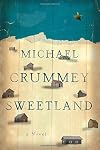
probably 4.5-stars.
this was a re-read for me, something i really don't do a lot of in my reading life. (so. many. books!) but michael crummey is one of my very favourite authors. his stories are always so layered and nuanced - they often improve on re-reading. sweetland is an excellent book - vivid and visceral. the character of moses sweetland is one that will stay with me for some time. he's broken, good-hearted, difficult. the setting for the novel is equally strong. i gained such a sense show more of place while reading!
i have often commented that i would love to have one hour in michael crummey's brain (something i hope comes across as way less creepy than that maybe sounds). he fascinates me. his use of language is incredible, and his stories always have a sightly out there moment or two or three thanks to his dabblings with magical realism, woven through with newfoundland myth and folklore, and religion. i suspect crummey's brain is an interesting, whacky and busy place. i am so glad he's putting his stories and poetry out into the world. show less
this was a re-read for me, something i really don't do a lot of in my reading life. (so. many. books!) but michael crummey is one of my very favourite authors. his stories are always so layered and nuanced - they often improve on re-reading. sweetland is an excellent book - vivid and visceral. the character of moses sweetland is one that will stay with me for some time. he's broken, good-hearted, difficult. the setting for the novel is equally strong. i gained such a sense show more of place while reading!
i have often commented that i would love to have one hour in michael crummey's brain (something i hope comes across as way less creepy than that maybe sounds). he fascinates me. his use of language is incredible, and his stories always have a sightly out there moment or two or three thanks to his dabblings with magical realism, woven through with newfoundland myth and folklore, and religion. i suspect crummey's brain is an interesting, whacky and busy place. i am so glad he's putting his stories and poetry out into the world. show less
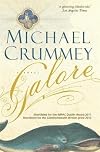
Every so often I finish a book, and can't start another one because I'm still thinking about the book I just finished. Galore is one of those books.
Galore pulled me in from the start. Part historical fiction, part magical realism, and part multi-generational family saga. Witchcraft and modern (for its time) medicine. Two feuding families. The haves vs. the have-nots. Religion. Ghosts. Galore has it all. Stories Galore. There is abundance every so often, and there are hard times more often. show more The people of this fictional town in long ago Newfoundland feel so real you would recognize any of them if you saw them on the street.
The story begins with an infant's birth and a fully grown, nearly albino, mute man, being pulled out of the belly of a whale that washed ashore. The townspeople see nothing weird about this, and neither does the reader. The author's wonderful storytelling style weaves the lives of the characters together in an unforgettable manner that will have you thinking about this book long after you've finished it.
The comparisons to One Hundred Years of Solitude are inevitable, and I started making them early in the book (and before I read reviews that make such a comparison). However, in many ways Galore is more readable than 100 years and the characters are more human. show less
Galore pulled me in from the start. Part historical fiction, part magical realism, and part multi-generational family saga. Witchcraft and modern (for its time) medicine. Two feuding families. The haves vs. the have-nots. Religion. Ghosts. Galore has it all. Stories Galore. There is abundance every so often, and there are hard times more often. show more The people of this fictional town in long ago Newfoundland feel so real you would recognize any of them if you saw them on the street.
The story begins with an infant's birth and a fully grown, nearly albino, mute man, being pulled out of the belly of a whale that washed ashore. The townspeople see nothing weird about this, and neither does the reader. The author's wonderful storytelling style weaves the lives of the characters together in an unforgettable manner that will have you thinking about this book long after you've finished it.
The comparisons to One Hundred Years of Solitude are inevitable, and I started making them early in the book (and before I read reviews that make such a comparison). However, in many ways Galore is more readable than 100 years and the characters are more human. show less
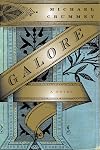
In Galore, Micheal Crummey creates a community in Newfoundland that begins in the late 1700s and stretches all the way past WWI. Through six generations of families, he explores pretty much everything that makes a community. There are memorable events and memorable characters, but the real brilliance of the book is how the community develops. In the beginning, there is a man who washes up on shore in the belly of a whale, half of one beat up Bible, medicine by superstition, no school, no show more libraries, no art for art's sake, no churches. By the end of the book there are competing churches, a doctor well-versed in the knowledge of the time, corporations and labor unions, schools, artists, etc.
But is life better? Is it progress?
These questions aren't asked directly, but they were on my mind while reading this. Crummey takes you such a long way with this community, but there are consistent references to the past that keep your mind on where it started and where it ended up.
I found it thought-provoking and smart, though as with many books that span a lot of time, some generation's characters engaged me more than others.
I enjoyed this and would like to read more by Michael Crummey. show less
But is life better? Is it progress?
These questions aren't asked directly, but they were on my mind while reading this. Crummey takes you such a long way with this community, but there are consistent references to the past that keep your mind on where it started and where it ended up.
I found it thought-provoking and smart, though as with many books that span a lot of time, some generation's characters engaged me more than others.
I enjoyed this and would like to read more by Michael Crummey. show less
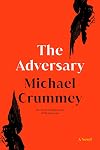
It was the kind of brutal winter day it seems only Newfoundland can produce. Only funerals had been held in the church that winter some two hundred years ago, but now a small group were gathered to witness the marriage of a fourteen year old girl to a drunken but well off man, “not so much hungover as still in his altitudes”.
The dread demand about impediments to the marriage was asked. Stunning those gathered there, a person in a man’s green velvet jacket and striped waistcoat with the show more voice of a woman stepped forward with her objection. It was the Widow Caines. Her objection was recognised. The marriage did not go through, and the alliance of the two biggest enterprises on the shore did not happen.
What followed was a lifetime of ruthless scheming, animosity, and treachery, tearing the small community of Mockbeggar apart. The Widow, and Abe Strapp the erstwhile bridegroom, were locked in an economic mortal combat until death or bankruptcy should intervene. No one who lived in or visited the outport was spared.
There were a few innocents in the community, a trio of teenagers who tried to stay as honest as they could, and their story is intimately involved with that of the two main protagonists. As for the rest, they did what they could to survive. Foremost among these was the Beadle, a character Dickens himself would have been proud to create.
Crummey’s language marvellously captures the time and the weather; the times definitely improved now, the winter only marginally so. He says he used the 1811 Dictionary of the Vulgar Tongue for some of the more arcane words. Anyone who has lived in Newfoundland for any time though will recognise the dexterity of wit and language employed here. The dictionary only augments it.
This was a strange reading experience. I could have sworn as I read along that I had read it before, but I knew that definitely wasn’t the case. Perhaps it was a result of the numerous author interviews and readings I had heard on the radio. No matter. It was an excellent book, yet one more in Michael Crummey’s oeuvre. I’d be happy to read it again, knowing this time I actually had read it. show less
The dread demand about impediments to the marriage was asked. Stunning those gathered there, a person in a man’s green velvet jacket and striped waistcoat with the show more voice of a woman stepped forward with her objection. It was the Widow Caines. Her objection was recognised. The marriage did not go through, and the alliance of the two biggest enterprises on the shore did not happen.
What followed was a lifetime of ruthless scheming, animosity, and treachery, tearing the small community of Mockbeggar apart. The Widow, and Abe Strapp the erstwhile bridegroom, were locked in an economic mortal combat until death or bankruptcy should intervene. No one who lived in or visited the outport was spared.
There were a few innocents in the community, a trio of teenagers who tried to stay as honest as they could, and their story is intimately involved with that of the two main protagonists. As for the rest, they did what they could to survive. Foremost among these was the Beadle, a character Dickens himself would have been proud to create.
Crummey’s language marvellously captures the time and the weather; the times definitely improved now, the winter only marginally so. He says he used the 1811 Dictionary of the Vulgar Tongue for some of the more arcane words. Anyone who has lived in Newfoundland for any time though will recognise the dexterity of wit and language employed here. The dictionary only augments it.
This was a strange reading experience. I could have sworn as I read along that I had read it before, but I knew that definitely wasn’t the case. Perhaps it was a result of the numerous author interviews and readings I had heard on the radio. No matter. It was an excellent book, yet one more in Michael Crummey’s oeuvre. I’d be happy to read it again, knowing this time I actually had read it. show less
Lists
World Books (1)
Awards


You May Also Like


Associated Authors
Statistics
- Works
- 18
- Also by
- 1
- Members
- 2,935
- Popularity
- #8,727
- Rating
- 3.9
- Reviews
- 180
- ISBNs
- 121
- Languages
- 5
- Favorited
- 13