
Lisa Moore (1) (1964–)
Author of February
For other authors named Lisa Moore, see the disambiguation page.
About the Author
Image credit: Flickr user knittinging
Works by Lisa Moore
Associated Works
Margaret Atwood Presents: Stories by Canada's Best New Women Writers (2004) — Contributor — 5 copies, 2 reviews
Tagged
Common Knowledge
- Canonical name
- Moore, Lisa
- Legal name
- Moore, Lisa Lynn
- Birthdate
- 1964-03-28
- Gender
- female
- Education
- Nova Scotia College of Art and Design (BA)
- Organizations
- The Burning Rock Collective
- Awards and honors
- Writers' Trust Engel/Findley Award (2013)
- Agent
- Anne McDermid (Anne McDermid and Associates)
- Nationality
- Canada
- Birthplace
- St. John's, Newfoundland and Labrador, Canada
- Places of residence
- St. John's, Newfoundland, Canada
Halifax, Nova Scotia, Canada - Associated Place (for map)
- Canada
Members
Reviews
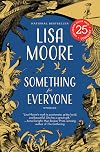
Lisa Moore’s short fiction collection, Something for Everyone, is nothing less than a virtuoso performance, a grouping of incisive modern-day tales that propels the reader through a splintered, emotionally simmering, non-linear reality that is always surprising and often shocking. Moore plays with structure, chronology and perspective in ways that few writers dare (at the moment, only George Saunders comes to mind), darting back and forth in time, piling abrupt transitions on show more conversational non-sequiturs on slippery shifts in construction. Is she daring her reader to follow along, or give up, at their peril? But anyone who does give up is missing out on what a truly gifted and original storyteller working at peak form has to offer. Moore’s stories are not only structurally ground-breaking but geographically and socially adventurous as well, observing few if any boundaries. Her characters include professionals, mothers and fathers, teens, criminals and sex workers; her chief setting is Newfoundland, but several stories range farther afield. The opener, “A Beautiful Flare” explores the working dynamic among employees of a shoe store with a sales award on the line. “The Fjord of Eternity” follows Trisha’s search for an insurance-claim fraudster. The tragic backdrop of “The Viper’s Revenge” is the Pulse nightclub massacre: a young librarian, attending a conference in Orlando, indulges in an impulsive sexual encounter, but without explanation the narrative swivels, and for much of the story we’re reading about the caretaker of the hotel where the librarian is staying, and his family. And “Skywalk,” which takes place in St. John’s in the midst of a rash of rapes, tells of university student Chelsea’s quest for a suitable apartment, ranging across her entire life in the process. Moore’s prose is razor-sharp, as are her observations regarding human desire and motivation. There is nothing sentimental in these pages. These are characters who have grit in their shoes, go hungry at night and sometimes find themselves in danger through no fault of their own. Lisa Moore is no ordinary writer: her approach to storytelling is radical and startling, but never gimmicky. Undeniably, Something for Everyone makes demands of the reader, with its loosely plotted stories that veer in unexpected directions without warning. But the challenge the book presents is worth accepting. Its rewards are too numerous to count. show less
“And all that remains is the faces and the names/of the wives and the sons and the daughters.” (The Wreck of the Edmund Fitzgerald, Gordon Lightfoot)
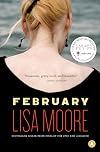
Lisa Moore’s February is a novel about a family—the wife, the son, and the daughters—of Cal, their husband and father, who perishes one stormy February night off the coast of Newfoundland. He is a fictional crew member on the real life Ocean Ranger, an oil rig that sank on Valentine’s Day 1982, killing all 84 men aboard. Helen is show more left to raise her three young children, and soon finds out that there is a fourth on the way.
Moore’s writing is astonishing in both her word play and the structure she chose for the book. All together, her take on the excruciating suffering of grief and loss was achingly beautiful. Sounds depressing and maudlin, doesn’t it? Some readers think so—the Quill & Quire even said the book was “tedious” and “overly sentimental.” Well, I didn’t find it depressing, sentimental or tedious—I found it haunting and stirring. There are several three-star “meh” reviews here at LT, and when I first started reading I thought I’d be in that crowd too. But by page twenty I had changed my mind and was loving it. Others have found it wonderful too—after all, it was nominated for last year’s Booker Prize.
Recommended for: readers who appreciate gorgeous writing and don’t mind a contemplative novel that jumps back and forth through time. show less
Lisa Moore’s February is a novel about a family—the wife, the son, and the daughters—of Cal, their husband and father, who perishes one stormy February night off the coast of Newfoundland. He is a fictional crew member on the real life Ocean Ranger, an oil rig that sank on Valentine’s Day 1982, killing all 84 men aboard. Helen is show more left to raise her three young children, and soon finds out that there is a fourth on the way.
Moore’s writing is astonishing in both her word play and the structure she chose for the book. All together, her take on the excruciating suffering of grief and loss was achingly beautiful. Sounds depressing and maudlin, doesn’t it? Some readers think so—the Quill & Quire even said the book was “tedious” and “overly sentimental.” Well, I didn’t find it depressing, sentimental or tedious—I found it haunting and stirring. There are several three-star “meh” reviews here at LT, and when I first started reading I thought I’d be in that crowd too. But by page twenty I had changed my mind and was loving it. Others have found it wonderful too—after all, it was nominated for last year’s Booker Prize.
Recommended for: readers who appreciate gorgeous writing and don’t mind a contemplative novel that jumps back and forth through time. show less

Lisa Moore's February is a fictional work based on a real-life tragedy: On the evening of Valentine's Day 1982, the Ocean Ranger, an oil rig off the Newfoundland coast, sustained catastrophic damage in a winter storm and throughout the night and into the next day, slowly sank, killing all 84 men aboard. Moore has taken this event as the starting point in the tale of Helen, the widow of one of the men who died that night; at the time, she had three children ranging in age from 10 to 8, and show more she was pregnant with another child, so that in the following years, she had four children to raise on her own. The story ranges between the time of her marriage to Cal in 1972 up through 2009, and essentially tells the story of her life and how she does, and does not, come to terms with her husband's death and her grief.... The story is very specific to this one individual, but in such a way that the reader finds global resonance with the characters and what they go through. Anybody who has ever lost a loved one will relate to this book, and Moore's ability to describe complex and difficult emotions with both clarity and poetry is terrific. The story is not told in linear form, but jumps back and forth between various years, and that technique also works well in terms of drawing the reader into Helen's life; by the time the disaster itself is described, one is fully invested in Helen's reactions to it. This book won the 2013 Canada Reads challenge, an annual project from CBC that aims to have all of English-speaking Canada read one specific book; highly recommended. show less
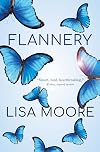
Teenagers are the worst. They’re lit by furnace hot hormones. They have the energy to do everything at once all the time. And they do it. And every bit of their childhood and upbringing is swirling around in them getting set to lock them in as the people they will (perhaps) always be. Fortunately, Flannery Malone has never suffered a dint, a lessening of any kind, in the love her nutty, artistic mom, Miranda has for her. Even her little brother, Felix, loves her, in his way. And her best show more friend, Amber. Well, Amber is going through her own changes. And it doesn’t look as though forever will end up characterizing their best friendship.
Lisa Moore presents Flannery in all her exuberant fluency and anxious present. She is a marvellous character who totally earns the first-person focus throughout. Flannery’s high school may be exceptional in being so full of “characters”. Or maybe I just went to a boring high school (or was too bored to notice). And into that mix of exceptionality comes the ever-present problem of love. It’s driving people together and driving others apart. It’s the gimmick in Flannery’s project for her Entrepreneurial class: selling love potions. And it’s the one thing Flannery doesn’t get at all, and not just because her mother can’t afford to buy her grade 12 biology textbook. But love will find a way (and other clichés, as appropriate).
Your heart will go out to Flannery. How you can help it? Clearly Lisa Moore is using some kind of love potion. Or just beautiful writing.
Recommended. show less
Lisa Moore presents Flannery in all her exuberant fluency and anxious present. She is a marvellous character who totally earns the first-person focus throughout. Flannery’s high school may be exceptional in being so full of “characters”. Or maybe I just went to a boring high school (or was too bored to notice). And into that mix of exceptionality comes the ever-present problem of love. It’s driving people together and driving others apart. It’s the gimmick in Flannery’s project for her Entrepreneurial class: selling love potions. And it’s the one thing Flannery doesn’t get at all, and not just because her mother can’t afford to buy her grade 12 biology textbook. But love will find a way (and other clichés, as appropriate).
Your heart will go out to Flannery. How you can help it? Clearly Lisa Moore is using some kind of love potion. Or just beautiful writing.
Recommended. show less
Lists
Booker Prize (1)
Awards


You May Also Like


Associated Authors
Statistics
- Works
- 11
- Also by
- 1
- Members
- 1,453
- Popularity
- #17,686
- Rating
- 3.6
- Reviews
- 87
- ISBNs
- 127
- Languages
- 4
- Favorited
- 5