
Michael Winter (1) (1965–)
Author of The Big Why
For other authors named Michael Winter, see the disambiguation page.
Works by Michael Winter
Tagged
Common Knowledge
- Birthdate
- 1965
- Gender
- male
- Education
- Memorial University, Newfoundland
- Occupations
- novelist
- Awards and honors
- Writers' Trust Engel/Findley Award (2008)
- Relationships
- Winter, Kathleen (sister)
Pountney, Christine (wife) - Short biography
- (1) Michael Winter is the partner of writer Christine Pountney.
- Nationality
- England (birth)
UK (birth)
Canada - Birthplace
- Jarrow, England, UK
- Places of residence
- Toronto, Ontario, Canada
Corner Brook, Newfoundland, Canada
St John's, Newfoundland, Canada - Associated Place (for map)
- Canada
Members
Reviews
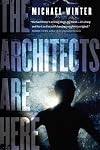
Many authors are praised for having a ‘distinctive’ voice, but what, exactly, does the phrase actually mean? If it means a voice that is singular, unique, and immediately identifiable, then most authors, no matter the level of talent, are hardly ‘distinctive;’ a reader, without foreknowledge, would be hard-pressed to offer more than an educated guess as to the author of any one particular book.
There are exceptions, of course; no one would mistake a Kurt Vonnegut, Jr. novel for the show more work of anyone other than the maestro. And while Michael Winter may be a comparable neophyte, with the publication of his latest novel The Architects Are Here, he is well on his way to having one of the most distinctive voices in Canadian literature.
Winter, along with contemporaries Wayne Johnston and Kenneth J. Harvey, is among the new wave of Atlantic Province authors who fuse modern-day sensibilities with profound respect for the heritage of their forebears. The result, especially in the cases of the above three, is works of supreme originality and shattering insight, all the while leavened with doses of bracing Canadian wit.
The Architects Are Here is a similar animal, at once familiar and innovative, a dissection of lives born in-between the Newfoundland of old and the new. It is a portrayal of lives in flux during “the last days before people began sending a hologram of themselves to conferences, before we strapped on sensory devices and experienced other places without leaving our bedrooms, before the West sent robots to war instead of real American soldiers.”
The narrator Gabe, a novelist and writer for The Auto Trader, has fallen in love with Nell Tarkington, a woman with strange ties to people in his past. Nell once had an affair with his best friend David’s father, and when she disappears after an argument, Gabe and David travel a meandering path from Toronto back to Newfoundland for answers to numerous questions.
The plot itself is the most familiar aspect of Winter’s tale, mixing elements of E. Annie Proulx’s The Shipping News with the basic elements of a Hollywood road movie (think Sideways by way of Goin’ Down the Road in reverse). The glory of Winter is his writing style, a sharp-edged yet brittle prose that cannot be adequately summarized in a few quick quotations.
Like a poem, Winter’s words must wash over the reader in its entirety, letting his asides and quick-cut thought edits bounce around in the readers’ mind, quietly revealing character through humour warm yet grim. Sentences such as, “Arthur was complicating grief-retirement with turning middle-aged and the resentment a man has of ploughing his carnal will into one woman for twenty years,” are wonderful in and of themselves, but it is Winter’s absolute command of voice which proves that his sublime previous novel The Big Why (a contender for the great 21st century Canadian novel) was no fluke.
Already in his short professional life, Winter has burst through the pack through his startling personal mix of lyrical cadence, imagination, and warmth. The Architects Are Here is proof positive that Michael Winter is something special. show less
There are exceptions, of course; no one would mistake a Kurt Vonnegut, Jr. novel for the show more work of anyone other than the maestro. And while Michael Winter may be a comparable neophyte, with the publication of his latest novel The Architects Are Here, he is well on his way to having one of the most distinctive voices in Canadian literature.
Winter, along with contemporaries Wayne Johnston and Kenneth J. Harvey, is among the new wave of Atlantic Province authors who fuse modern-day sensibilities with profound respect for the heritage of their forebears. The result, especially in the cases of the above three, is works of supreme originality and shattering insight, all the while leavened with doses of bracing Canadian wit.
The Architects Are Here is a similar animal, at once familiar and innovative, a dissection of lives born in-between the Newfoundland of old and the new. It is a portrayal of lives in flux during “the last days before people began sending a hologram of themselves to conferences, before we strapped on sensory devices and experienced other places without leaving our bedrooms, before the West sent robots to war instead of real American soldiers.”
The narrator Gabe, a novelist and writer for The Auto Trader, has fallen in love with Nell Tarkington, a woman with strange ties to people in his past. Nell once had an affair with his best friend David’s father, and when she disappears after an argument, Gabe and David travel a meandering path from Toronto back to Newfoundland for answers to numerous questions.
The plot itself is the most familiar aspect of Winter’s tale, mixing elements of E. Annie Proulx’s The Shipping News with the basic elements of a Hollywood road movie (think Sideways by way of Goin’ Down the Road in reverse). The glory of Winter is his writing style, a sharp-edged yet brittle prose that cannot be adequately summarized in a few quick quotations.
Like a poem, Winter’s words must wash over the reader in its entirety, letting his asides and quick-cut thought edits bounce around in the readers’ mind, quietly revealing character through humour warm yet grim. Sentences such as, “Arthur was complicating grief-retirement with turning middle-aged and the resentment a man has of ploughing his carnal will into one woman for twenty years,” are wonderful in and of themselves, but it is Winter’s absolute command of voice which proves that his sublime previous novel The Big Why (a contender for the great 21st century Canadian novel) was no fluke.
Already in his short professional life, Winter has burst through the pack through his startling personal mix of lyrical cadence, imagination, and warmth. The Architects Are Here is proof positive that Michael Winter is something special. show less
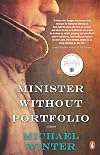
right upfront, i should probably acknowledge that i have a complete soft spot for literature about newfoundland, and for newfoundland writers. and i fairly adore michael winter. happily, this novel was a great read for me.
minister without portfolio, among many things, presents an intriguing concept: each of us has an orbit of 100 people, people to whom we have responsibilities.
when we first meet henry hayward, his life is not going well. and as the story continues, woes pile upon woes. as show more hayward works through his traumas and guilt, while rebuilding a century-old shack that lacks power and water, he regroups and tries to remake his life. but hayward is also working out his 100 people and what he's doing for them. (and if this book works for you, you may find yourself thinking about your own people and responsibilities.)
'minister without portfolio' is a concept originally misunderstood by hayward, when he is given the nickname by his friend tender morris. thinking morris meant hayward was wayward (heh!) or rootless, he took it as a not-so-flattering nickname, a reminder of the state of his life. but hayward has a realization later on in the story, one that helps tie things together, about what morris really meant in dubbing hayward 'minister without portfolio'.
winter has admitted his use of real life in the fiction he writes. and that certainly is the case in minister without portfolio a very specific incident occurs to hayward which actually happened to winter (link will be spoiler-y if you haven't read the novel). i had read this walrus essay when it was first published. revisiting it while reading MWP had me a little amused by how much of the essay appears, nearly word-for-word, in the novel. creative nonfiction? creative license with the truth? does it matter? it's an incredible story and winter is a lucky man.
and winter is a funny man, too. there was a lot of humour in this novel which i appreciated. i know that humour in fiction doesn't always work for readers so i am sure this aspect of the novel will vary from reader to reader. but i do believe you have to find the humour in life as often as possible - this can help make the seemingly unbearable manageable, if even for a moment.
winter's writing style is one i quite like. though dealing with weighty issues and traumatic instances, i never felt burdened as a reader. winter's prose could be described as simplistic -- but that shouldn't be confused with 'simple'. i found there to be an elegance in his writing and each sentence felt purposeful and right. his settings are vivid, and his characters interesting and nuanced, and i loved the dialogue.
though i have had this novel since its release, i picked it up now as it is in the running for canada reads 2016. the theme is 'starting over', and i think this is a cool choice to be included. it should make for good debate with the other panelists and books in the running. (oh yeah, in case you don't know -- canada has an annual reality show about books, 'canada reads'!)
a few articles i want to link in here, just to keep as references:
• quill & quire -- winter's move from house of anansi to penguin: http://www.quillandquire.com/authors/change-is-good/
• winter on 'the next chapter', with shelagh rogers: http://www.cbc.ca/radio/thenextchapter/shelagh-s-extended-conversation-with-mich...
• maclean's review: http://www.macleans.ca/culture/books/minister-without-portfolio/ show less
minister without portfolio, among many things, presents an intriguing concept: each of us has an orbit of 100 people, people to whom we have responsibilities.
when we first meet henry hayward, his life is not going well. and as the story continues, woes pile upon woes. as show more hayward works through his traumas and guilt, while rebuilding a century-old shack that lacks power and water, he regroups and tries to remake his life. but hayward is also working out his 100 people and what he's doing for them. (and if this book works for you, you may find yourself thinking about your own people and responsibilities.)
'minister without portfolio' is a concept originally misunderstood by hayward, when he is given the nickname by his friend tender morris. thinking morris meant hayward was wayward (heh!) or rootless, he took it as a not-so-flattering nickname, a reminder of the state of his life. but hayward has a realization later on in the story, one that helps tie things together, about what morris really meant in dubbing hayward 'minister without portfolio'.
winter has admitted his use of real life in the fiction he writes. and that certainly is the case in minister without portfolio a very specific incident occurs to hayward which actually happened to winter (link will be spoiler-y if you haven't read the novel). i had read this walrus essay when it was first published. revisiting it while reading MWP had me a little amused by how much of the essay appears, nearly word-for-word, in the novel. creative nonfiction? creative license with the truth? does it matter? it's an incredible story and winter is a lucky man.
and winter is a funny man, too. there was a lot of humour in this novel which i appreciated. i know that humour in fiction doesn't always work for readers so i am sure this aspect of the novel will vary from reader to reader. but i do believe you have to find the humour in life as often as possible - this can help make the seemingly unbearable manageable, if even for a moment.
winter's writing style is one i quite like. though dealing with weighty issues and traumatic instances, i never felt burdened as a reader. winter's prose could be described as simplistic -- but that shouldn't be confused with 'simple'. i found there to be an elegance in his writing and each sentence felt purposeful and right. his settings are vivid, and his characters interesting and nuanced, and i loved the dialogue.
though i have had this novel since its release, i picked it up now as it is in the running for canada reads 2016. the theme is 'starting over', and i think this is a cool choice to be included. it should make for good debate with the other panelists and books in the running. (oh yeah, in case you don't know -- canada has an annual reality show about books, 'canada reads'!)
a few articles i want to link in here, just to keep as references:
• quill & quire -- winter's move from house of anansi to penguin: http://www.quillandquire.com/authors/change-is-good/
• winter on 'the next chapter', with shelagh rogers: http://www.cbc.ca/radio/thenextchapter/shelagh-s-extended-conversation-with-mich...
• maclean's review: http://www.macleans.ca/culture/books/minister-without-portfolio/ show less
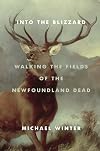
Since I am a Canadian, I decided this book would be an interesting read that would enhance my knowledge of Canada. And surprisingly, I enjoyed it a lot more than I expected!
I wanted to read the book to gain more knowledge, but I ended up really enjoying the book and getting into it.
The book follows the journey of the author through Newfoundland and past battlefields and grave sites of soldiers. The chapters in this book were short and sweet, but the nicest little gem was how much show more information and facts that were within the small chapters. Each chapter involved a small journey or task completed by the author, but little facts either about the author's childhood or the wars were included. These facts, despite being anywhere from one sentence to only a few paragraphs in length, gave an amazing and gigantic insight to how the War was fought and dealt with by soldiers.
The only downfall I saw to this book was how simple some of the language was. The read was smooth and quick, and I didn't find myself getting bored with the facts and plot laid out in the story. Overall, this book was incredibly well written and a gem I would definitely read again or suggest to anyone who is interested in history, wars, or specifically Canadian history.
I believe this book would help many high school students studying history understand it a bit more (considering the fact that this book would have helped me a lot when I sat bored in history class).
Amazing book! Four out of five stars!
I received this book for free through Goodreads First Reads. show less
I wanted to read the book to gain more knowledge, but I ended up really enjoying the book and getting into it.
The book follows the journey of the author through Newfoundland and past battlefields and grave sites of soldiers. The chapters in this book were short and sweet, but the nicest little gem was how much show more information and facts that were within the small chapters. Each chapter involved a small journey or task completed by the author, but little facts either about the author's childhood or the wars were included. These facts, despite being anywhere from one sentence to only a few paragraphs in length, gave an amazing and gigantic insight to how the War was fought and dealt with by soldiers.
The only downfall I saw to this book was how simple some of the language was. The read was smooth and quick, and I didn't find myself getting bored with the facts and plot laid out in the story. Overall, this book was incredibly well written and a gem I would definitely read again or suggest to anyone who is interested in history, wars, or specifically Canadian history.
I believe this book would help many high school students studying history understand it a bit more (considering the fact that this book would have helped me a lot when I sat bored in history class).
Amazing book! Four out of five stars!
I received this book for free through Goodreads First Reads. show less
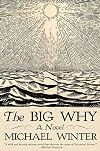
This book, "A Novel" by subtitle, is well worth reading, although I might call it an infuriatingly good novel. It played tricks on me. The story made me love the protagonist, then to hate his destructive ways, then to hate him, and finally to stand him, and ultimately to stand by him. I don't know if I liked all that so well, but the book has far more to offer than the story. The writing is sharp and evocative, the thinking is deep and nuanced, and subtle details yield far more than I could show more ever have hoped for. It kind of took my breath away. Plus you gotta love a book that uses "A Novel" as it's subtitle.
This is the second review on this page that will refuse to summarize "The Big Why." I look forward to reading what others say about this book and what it's about. Whether it's about love and being loved and loving. Whether it's about secret lives or public lives, or saying too much about oneself in a place where people are wordless or less word-full. Whether it's about art or industry. Whether it's about being oneself or how to be oneself, or, if one hasn't been oneself, then why? show less
This is the second review on this page that will refuse to summarize "The Big Why." I look forward to reading what others say about this book and what it's about. Whether it's about love and being loved and loving. Whether it's about secret lives or public lives, or saying too much about oneself in a place where people are wordless or less word-full. Whether it's about art or industry. Whether it's about being oneself or how to be oneself, or, if one hasn't been oneself, then why? show less
Lists
Awards


You May Also Like


Statistics
- Works
- 9
- Members
- 503
- Popularity
- #49,234
- Rating
- 3.5
- Reviews
- 27
- ISBNs
- 86
- Languages
- 2
- Favorited
- 4
