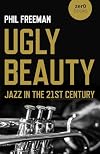
I bought this book on the strength of Phil Freeman's column in Stereogum (https://www.stereogum.com/category/franchises/ugly-beauty/) and I have not been disappointed.
Freeman writes well and introduces the listener to jazz artists they may not otherwise have known. He's got a deep interest in improvised music and a maintains a broad definition of jazz. He concentrates on examples of vital exploration in an exciting and expanding (some may say exploding) time for the music.
The book presents a survey of musicians playing now from the vantage point of 20 years into the new century--but also on the verge of the pandemic--an inflection point for a music that thrives based on live performance.
The musicians covered are building the future, and Freeman provides sharp commentary on what they're doing that's important and ends each article with a list of essential listening for anyone who wants to dive deeper into recorded works that highlight the players' work.
He focuses on the Chicago, London, LA, and New York scenes, but all the musicians tour, so you may catch them anywhere.
For anyone interested in music that brings and holds opposing ideas, sounds, images, and visions into consciousness at the same time, Ugly Beauty is for you.
Freeman writes well and introduces the listener to jazz artists they may not otherwise have known. He's got a deep interest in improvised music and a maintains a broad definition of jazz. He concentrates on examples of vital exploration in an exciting and expanding (some may say exploding) time for the music.
The book presents a survey of musicians playing now from the vantage point of 20 years into the new century--but also on the verge of the pandemic--an inflection point for a music that thrives based on live performance.
The musicians covered are building the future, and Freeman provides sharp commentary on what they're doing that's important and ends each article with a list of essential listening for anyone who wants to dive deeper into recorded works that highlight the players' work.
He focuses on the Chicago, London, LA, and New York scenes, but all the musicians tour, so you may catch them anywhere.
For anyone interested in music that brings and holds opposing ideas, sounds, images, and visions into consciousness at the same time, Ugly Beauty is for you.
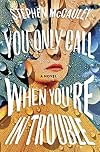

I picked up this biography on a whim and it has become an all time favorite.
Michael Tisserand uses his subject to weave together incredibly interesting and complex histories about newspapers, boxing, cartooning, a young film industry, and race in the early 20th century. It's an ambitious project, but Tisserand is fully up to the job and has written a book that hits the mark and is fun to read.
And that doesn't begin to mention how interesting George Herriman and Krazy Kat are, in and of themselves.
Tisserand treats his subject with care and does a great job describing Herriman's foundational art and work.
Michael Tisserand uses his subject to weave together incredibly interesting and complex histories about newspapers, boxing, cartooning, a young film industry, and race in the early 20th century. It's an ambitious project, but Tisserand is fully up to the job and has written a book that hits the mark and is fun to read.
And that doesn't begin to mention how interesting George Herriman and Krazy Kat are, in and of themselves.
Tisserand treats his subject with care and does a great job describing Herriman's foundational art and work.
The New Retirementality: Planning Your Life and Living Your Dreams...at Any Age You Want by Mitch Anthony
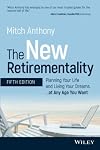
The ideas are good, but the author equates "work" with purpose, ad nauseum. Purpose is important, staying engaged is important, a meaningful life is important. I can't imagine anyone quibbling with these points--but the notion that work is the way to achieve those things is suspect, and the idea that it's the best way is just annoying.
Outwitting squirrels : 101 cunning stratagems to reduce dramatically the egregious misappropriation of seed from your birdfeeder by squirrels by Jr. Bill Adler
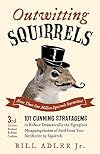
An amusing, quick read with some truly good info, but the topic doesn't bear book length discussion and the list of 101 stratagems seems to be included because the book needed a clever subtitle rather than for any real purpose.
I found it to be interesting, but also a fairly difficult book...partly because it was written for an audience of religious people (e.g., his fellow brothers), but also because it requires a deeper understanding of specific Catholic concepts like charity. I just don't have the background it assumes. Also, making sense of non-dual concepts (if that's not already an oxymoron) is just plain difficult for a reading brain! Still and all it was worth the effort.
40 scriptural passages accompanied by short essays that intend to demonstrate the method of lectio divina. A good introduction to lectio divina as a practice.
Super interviews with great cartoonists. Full of fun anecdotes and fantastic insights about comics.
Excellent and vibrantly fresh. Its a spiritual story of existence as many in between--a girl, gods and spirits. Madness. And then you get a sense for the spiritual journey that allows it to work, and finally for the depth and trauma that also makes it a psychological story.
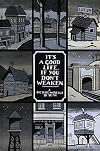
From Palookaville, this story chronicles the search for more information about a little known cartoonist of the 40s and 50s. It's full of introspection, melancholy, love, and dedication. A casual encounter with a single comic strip becomes a mission to learn more. It's a beautifully slow-paced book where each panel brings depth. I'm not sure how he does it, but landscape and architecture become characters that frame and move the story along.
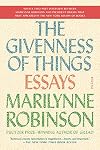
I barely kept up with this smart collection of essays, and that's one of the things I love about it--It totally stretched my mind. Marilynne Robinson presents an ontology centered squarely on our ability to know and recognize the gift in (of?) all things. She draws on Shakespeare and Calvin to argue for the humanities and an expansive Christianity, that would recognize and honor the soul in all all human struggles, and against fear, especially as it is used in politics to divide us and make us small. In this light one might be convinced to take seriously the idea that (as Neil Young sings) even Richard Nixon (or Donald Trump) has got soul, and that working with that may do us good.
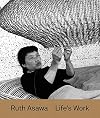
This book is a catalog to accompany a retrospective of Ruth Asawa;s work at the Pulitzer Arts Foundation. It showcases a lot of Asawa's art and also illuminates aspects of her life and experience, connecting them to her work. The book features three essays and somewhere north of 75 pieces of her work, which is exciting and fresh. From drawings to sculpture Asawa should take her place in the history of American post-war art--this book can only help.
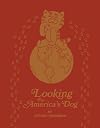
Joe Biden leaves the gate open and First Dog Bo escapes to globe trot through scenarios taken from the headlines of the day (the Boston Marathon Bombing, the Charlie Hebdo attacks, the Boko Haram kidnappings). Sasha and Malia pursue the dog--Sasha uses her psychic powers to focus the search-- and the girls fight and experience teenage angst. Obama sends Dennis Rodman to bring the dog back from Kim Jong Un's court, and the President, John Kerry and Joe Biden watch helplessly via satellite link while Dennis Rodman gets his ass kicked. It's a surreal and loosely told narrative. Very weird and wonderful shifts between geopolitical high drama and tediously mundane questions about shoes. This book is fantastic Not for the faint of heart.
Great. Especially if you like the emotional whiplash you get from bouncing between the poles of loving and detesting the main characters. I'm very glad I picked this one up.
This treatise provided a thorough exploration of what grace is, where it comes from, how it reaches people, and it's existential states.
I found that last bit to be most interesting as it discusses how grace evolved alongside man's changing relationship to god from Adam to today. Journet places all of that in relation to the evolution of the church--grace before the church existed (under natural and mosaic law, in anticipation of christ and the church); grace while christ lived (in conjunction with christ and the church); and grace after christ died (mediated by the church).
The author describes the work as "discourses given in the chapel at Ecogia in August 1956. They were presented in their collected form in August 1957 and published by PJ Kennedy in 1960, all before Vatican II.
I picked up this (dense) theological treatise after developing a vague understanding of grace as "an intimate invitation from god to be better", and because I was curious to learn more. Having read it I'd say two things: first--my initial simple understanding of grace wasn't too far off, and second, the Catholic conception of grace is complex.
I found it to be a difficult work to read at points--mostly because I am ignorant of Catholic doctrine, and had to look up even simple things like what the pentecost is and the difference between venial and mortal sin. Still and all, I found it rewarded my attention and the writing itself is fairly clear.
I found that last bit to be most interesting as it discusses how grace evolved alongside man's changing relationship to god from Adam to today. Journet places all of that in relation to the evolution of the church--grace before the church existed (under natural and mosaic law, in anticipation of christ and the church); grace while christ lived (in conjunction with christ and the church); and grace after christ died (mediated by the church).
The author describes the work as "discourses given in the chapel at Ecogia in August 1956. They were presented in their collected form in August 1957 and published by PJ Kennedy in 1960, all before Vatican II.
I picked up this (dense) theological treatise after developing a vague understanding of grace as "an intimate invitation from god to be better", and because I was curious to learn more. Having read it I'd say two things: first--my initial simple understanding of grace wasn't too far off, and second, the Catholic conception of grace is complex.
I found it to be a difficult work to read at points--mostly because I am ignorant of Catholic doctrine, and had to look up even simple things like what the pentecost is and the difference between venial and mortal sin. Still and all, I found it rewarded my attention and the writing itself is fairly clear.

A book collecting the first three issues of the Sound American journal. Great music writing, very interesting reading. The issues included are the Gospel issue, the Networking issue, and the John Cage issue.
A super biography, both easy to read and interesting. I learned a lot, not only about Louis Armstrong and his music, but also about the world in which he performed--whether that meant the effects of early recording technology on the way bands played during their sessions; how the mob was tied up with Louis' business and served as impetus for his first trips to Europe; or how Louis responded to the standoff between Eisenhower and Governor Faubus after the supreme court ordered desegregation of Arkansas schools.
Teachout refers to the book as a narrative biography and that provides a good description of the easy way the book reads. He also allows Louis to speak for himself much of the time, and includes a lot of straight quotation of the man's own words.
Teachout refers to the book as a narrative biography and that provides a good description of the easy way the book reads. He also allows Louis to speak for himself much of the time, and includes a lot of straight quotation of the man's own words.
I haven't been a big thriller reader, but this book kept me interested. It moved at a fast pace, and I read it across only a few days. I thoroughly enjoyed it.
The Mushroom at the End of the World: On the Possibility of Life in Capitalist Ruins by Anna Lowenhaupt Tsing
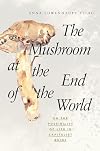
I bought this book because of my enduring fascination with mushrooms: I eat them, I cook them, I hunt for them, and I think and read about them. I'm also repeatedly rewarded by their weirdness, so the title, subtitle, and cover art for this beautiful book had me hooked from the start. The Mushroom at the End of the World: On the Possibility of Life in Capitalist Ruins by Anna Lowenhaupt Tsing is not really a book about mushrooms. It's not even a book about foraging for mushrooms. It's about both of those things, of course, but it's about so much more.
Professor Tsing is an anthropologist by trade and this is a scholalry work--as such it's part of an expert conversation that I won't ever join, a specialist discourse that aims to expand a sphere of knowledge that lies way beyond my ken. Tsing writes of precarity, assemblages, entanglements, patches, commons, machines, and translation. Don't let any of that scare you off--the writing is superb, and as your guide, Dr. Tsing brings you along on her forray. She shows you what to look for and how to read this foreign landscape. I knew I was in an immense forrest, but I was never lost.
Matsutake thrive in forrests that have been "ruined" by industrialization, administrative regulation, globalization, and capitalist profit motives. Where matsutake grow, pickers go, and ways of selling them into markets that carry them across oceans emerge. Tsing follows these flushes of mushrooms and the activities around them across continents show more describing how they work and the lives they support. It is, as the subtitle promises, a documentation of life beside, beyond, and in some ways in spite of globalized markets and the way we think they work.
This book is so rich--even for a non-expert like me--that it's hard to describe. Tsing uses matsutake and the ecosystem and trade network around it as a lens to focus thought about life (human and non-human) in our time. The result is a tumultuous re-thinking that points to alternatives that most of us haven't considered. It's pretty great. show less
Professor Tsing is an anthropologist by trade and this is a scholalry work--as such it's part of an expert conversation that I won't ever join, a specialist discourse that aims to expand a sphere of knowledge that lies way beyond my ken. Tsing writes of precarity, assemblages, entanglements, patches, commons, machines, and translation. Don't let any of that scare you off--the writing is superb, and as your guide, Dr. Tsing brings you along on her forray. She shows you what to look for and how to read this foreign landscape. I knew I was in an immense forrest, but I was never lost.
Matsutake thrive in forrests that have been "ruined" by industrialization, administrative regulation, globalization, and capitalist profit motives. Where matsutake grow, pickers go, and ways of selling them into markets that carry them across oceans emerge. Tsing follows these flushes of mushrooms and the activities around them across continents show more describing how they work and the lives they support. It is, as the subtitle promises, a documentation of life beside, beyond, and in some ways in spite of globalized markets and the way we think they work.
This book is so rich--even for a non-expert like me--that it's hard to describe. Tsing uses matsutake and the ecosystem and trade network around it as a lens to focus thought about life (human and non-human) in our time. The result is a tumultuous re-thinking that points to alternatives that most of us haven't considered. It's pretty great. show less
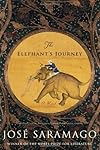
People use the words delightful, fanciful, and engaging when reviewing this book; I couldn't agree more. One reviewer wrote of the book's "sly charm"; I think that description is precise. The book is clever, funny, and fun to read: it's got the feeling of magical realism, but there's no magic in it.
I think that's how Saramago captures how very odd it must have been to see the future Holy Roman Emperor travel from Valladolid to Vienna via Trent, in 1551, with an elephant.
I picked the book up because of a review by Julie Schumacher, here..
I think that's how Saramago captures how very odd it must have been to see the future Holy Roman Emperor travel from Valladolid to Vienna via Trent, in 1551, with an elephant.
I picked the book up because of a review by Julie Schumacher, here..
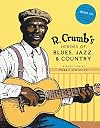
This delightful book is a fantastic read for those interested in the history and early pioneers of American music. The book collects three trading card sets that Crumb drew and painted around 1980. Crumb used historical photos to create his works, and true to the "trading card" aesthetic each picture card is accompanied by a paragraph or two about the performers.
The drawings are great, and the info accompanying them is super--especially for those who like to learn about the history of music. You get plenty of excellent biographical info about the featured performer and a lot of "color". That's what makes this book so fun--I pick it up while listening to Bix Beiderbecke and read "his tone, characterized by perfect pitch and spare, well-placed notes, was clean and bell-like". It's not a lot of info, but it's the kind of tidbit that makes listening more fun, especially for someone who's just digging into early American music.
The book really shines when it comes to the roots of country. The entries in that section are a little longer and allow for more exploration of how the music evolved. While reading the entry on the Ray Brothers you'll learn about the regional differences in fiddling in Mississippi and Alabama and how that affected the guitar accompaniment. A wealth of information buried in two short paragraphs!
While flipping through the pictures you may be surprised at how many of the bands had women guitarists. Read the entry on Fiddlin' Powers and Family to learn show more that the guitar was originally "scorned by most rural performers" and "stigmatized in its early days as a polite parlor instrument" that was fit for young girls to play. Now that's a cool little bit of cultural history that I didn't expect to learn from a book of drawings of musicians--and it's emblematic of what you get with this book, and why I loved it. show less
The drawings are great, and the info accompanying them is super--especially for those who like to learn about the history of music. You get plenty of excellent biographical info about the featured performer and a lot of "color". That's what makes this book so fun--I pick it up while listening to Bix Beiderbecke and read "his tone, characterized by perfect pitch and spare, well-placed notes, was clean and bell-like". It's not a lot of info, but it's the kind of tidbit that makes listening more fun, especially for someone who's just digging into early American music.
The book really shines when it comes to the roots of country. The entries in that section are a little longer and allow for more exploration of how the music evolved. While reading the entry on the Ray Brothers you'll learn about the regional differences in fiddling in Mississippi and Alabama and how that affected the guitar accompaniment. A wealth of information buried in two short paragraphs!
While flipping through the pictures you may be surprised at how many of the bands had women guitarists. Read the entry on Fiddlin' Powers and Family to learn show more that the guitar was originally "scorned by most rural performers" and "stigmatized in its early days as a polite parlor instrument" that was fit for young girls to play. Now that's a cool little bit of cultural history that I didn't expect to learn from a book of drawings of musicians--and it's emblematic of what you get with this book, and why I loved it. show less
Clonk by Ximo Abadía
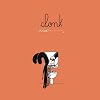
This fantastic picture book starts out anchored in reality, a sense enhanced by the way Abadia focuses on the (almost mundane) details of a child's life and his relationships. War intervenes to interrupt those relationships, and the story floats off into surreal territory, but comes full circle back to the details it starts with.
The storytelling was compelling, carried along masterfully by the illustration.
The storytelling was compelling, carried along masterfully by the illustration.
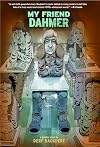
"My Friend Dahmer" is the fascinating story of what it was like to be Jeff Dahmer's classmate in High School. As you can imagine, Jeff was a strange kid--but not the strangest.
Derf tells this story with tremendous care, and insight, informed by deep research. He focuses on details that coalesce into a compelling and intimate view of a very particular time, place, and situation, without failing to ask the big questions: Where were the adults in Jeff's life? How could they have not known he was in trouble? Why didn't they try to do something?
Derf's portrayal of adolescent life in a small midwestern town in the late 70s is right on, and his drawing style makes the portrayal practically irresistible. He tells a fascinating story, highlights it with his sharp critical wit (you may know it from his weekly strip "The City"), and mines it for the added depth afforded by the long format graphic novel, all to excellent effect. It's one hell of a book.
Derf tells this story with tremendous care, and insight, informed by deep research. He focuses on details that coalesce into a compelling and intimate view of a very particular time, place, and situation, without failing to ask the big questions: Where were the adults in Jeff's life? How could they have not known he was in trouble? Why didn't they try to do something?
Derf's portrayal of adolescent life in a small midwestern town in the late 70s is right on, and his drawing style makes the portrayal practically irresistible. He tells a fascinating story, highlights it with his sharp critical wit (you may know it from his weekly strip "The City"), and mines it for the added depth afforded by the long format graphic novel, all to excellent effect. It's one hell of a book.
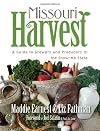
This handy book is subtitled "a guide to growers and producers in the Show-Me State," but for me it's a fantastic guide to eating locally in Missouri. And with more individual farms than any state but Texas, Missouri offers plenty of locally grown and raised food to keep me happy, from trout to black walnuts, blueberries to turkey, pork to pinto beans, and from brown rice to popcorn. The authors of this great little guidebook have written about farms and farmers from all over the state, with an emphasis on smaller family farms that raise food using sustainable practices.
Each farm gets a paragraph or two, and their stories are great--you learn details about how they grow, what they grow, how long they've been doing it, and some of the challenges and triumphs they've faced. Every entry tells you whether the farms and farmers like you to visit (most do, but call first) and if so, who to call. The descriptions also tell where you can buy the food they raise: which restaurants sell their fare, whether they have a farm stand, what markets they sell at, and if any grocery stores carry their products.
The book is divided by food type (vegetables, grains, and beans; fruits; meats; dairy; and nuts and honey) and subdivided by region. Each section gives you a solid introduction to the production of that food in Missouri, and provides info about interesting trends and practices. The regional emphasis means that no matter where you are in Missouri you can quickly find out what's show more produced and where and how to buy it.
There's a nice review of why locally and sustainably grown food matters and where it fits in the history of agriculture, and a chapter full of tips about how to cook up Missouri's bounty, some of which come from the farmers themselves. I learned a lot from this book, and think anyone who picks it up will too. Plus there's an introduction by celebrity farmer Joel Salatin, who also thinks you should get this book! show less
Each farm gets a paragraph or two, and their stories are great--you learn details about how they grow, what they grow, how long they've been doing it, and some of the challenges and triumphs they've faced. Every entry tells you whether the farms and farmers like you to visit (most do, but call first) and if so, who to call. The descriptions also tell where you can buy the food they raise: which restaurants sell their fare, whether they have a farm stand, what markets they sell at, and if any grocery stores carry their products.
The book is divided by food type (vegetables, grains, and beans; fruits; meats; dairy; and nuts and honey) and subdivided by region. Each section gives you a solid introduction to the production of that food in Missouri, and provides info about interesting trends and practices. The regional emphasis means that no matter where you are in Missouri you can quickly find out what's show more produced and where and how to buy it.
There's a nice review of why locally and sustainably grown food matters and where it fits in the history of agriculture, and a chapter full of tips about how to cook up Missouri's bounty, some of which come from the farmers themselves. I learned a lot from this book, and think anyone who picks it up will too. Plus there's an introduction by celebrity farmer Joel Salatin, who also thinks you should get this book! show less
"Sum" is a delightful, quick read that presents 40 different takes on the hereafter. It's witty and gives the reader plenty to think about. It's full of good humor, smart, well written, and loads of fun.
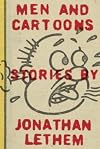
It's a collection of short stories, loosely held together by a sort of comic book theme. Each story presents an interesting conceit that promises some food for thought, but Lethem generally doesn't develop those kernels. It was like Lethem repeatedly started what promised to be an interesting conversation, only to run away before the conversation could go anywhere.
In The Spray, for example, a couple comes to possess a spray that reveals lost objects. They struggle over whether to use it on themselves, and when that happens the spray reveals another partner for each of them. And that's where the story ends.
In the end I would say I liked 2 or 3 of the 7 or 8 stories collected in the volume--a quick read, but not really my cup of tea.
In The Spray, for example, a couple comes to possess a spray that reveals lost objects. They struggle over whether to use it on themselves, and when that happens the spray reveals another partner for each of them. And that's where the story ends.
In the end I would say I liked 2 or 3 of the 7 or 8 stories collected in the volume--a quick read, but not really my cup of tea.
In "The Checklist Manifesto: How to Get Things Right", Dr. Atul Gawande proposes that using a simple checklist allows smart people to manage complex tasks more effectively. The checklist is effective, he says, because using it does three things: it forces a team into acting like a team; it double fundamentals so the team can concentrate their attention and brain power on handling unexpected situations; and it forces communication at important points in any process.
Dr. Gawande reviews the history of checklist use and creation. The historical perspective is interesting, and also allows him to draw examples to support his thesis from the disparate fields of aviation, highrise construction, and surgery.
Dr. Gawande is a surgeon and uses examples from that profession to show how checklists improve outcomes particularly in highly complex situations where we suppose that the most important factor that influences outcomes is a single smart person--the star surgeon. Gawande shows that the level of complexity to be managed in surgery is so high that human intelligence and skill can't do it well--it takes a team and a system, and systems can be improved. That latter point is what checklists do best.
Dr. Gawande reviews the history of checklist use and creation. The historical perspective is interesting, and also allows him to draw examples to support his thesis from the disparate fields of aviation, highrise construction, and surgery.
Dr. Gawande is a surgeon and uses examples from that profession to show how checklists improve outcomes particularly in highly complex situations where we suppose that the most important factor that influences outcomes is a single smart person--the star surgeon. Gawande shows that the level of complexity to be managed in surgery is so high that human intelligence and skill can't do it well--it takes a team and a system, and systems can be improved. That latter point is what checklists do best.
This book, "A Novel" by subtitle, is well worth reading, although I might call it an infuriatingly good novel. It played tricks on me. The story made me love the protagonist, then to hate his destructive ways, then to hate him, and finally to stand him, and ultimately to stand by him. I don't know if I liked all that so well, but the book has far more to offer than the story. The writing is sharp and evocative, the thinking is deep and nuanced, and subtle details yield far more than I could ever have hoped for. It kind of took my breath away. Plus you gotta love a book that uses "A Novel" as it's subtitle.
This is the second review on this page that will refuse to summarize "The Big Why." I look forward to reading what others say about this book and what it's about. Whether it's about love and being loved and loving. Whether it's about secret lives or public lives, or saying too much about oneself in a place where people are wordless or less word-full. Whether it's about art or industry. Whether it's about being oneself or how to be oneself, or, if one hasn't been oneself, then why?
This is the second review on this page that will refuse to summarize "The Big Why." I look forward to reading what others say about this book and what it's about. Whether it's about love and being loved and loving. Whether it's about secret lives or public lives, or saying too much about oneself in a place where people are wordless or less word-full. Whether it's about art or industry. Whether it's about being oneself or how to be oneself, or, if one hasn't been oneself, then why?
Great Author, good book. I haven't read Paul Auster in so many years that I had forgotten just how much I like his writing. "Man in the Dark" was a happy reintroduction, providing lovely prose, depth of thought, labyrinthine twining of stories within stories, and refreshing clarity about the simple nature of the most complex feelings--one of the reviewers calls it clichéd another calls it boring. I think it's great.
The story is about an old man who fights insomnia and invents stories to keep from thinking about his life and relationships. His latest story is about a civil war--things are so bad that he invents a character to kill the author, just to make it stop. As it turns out the old man's story doesn't keep him distracted at all--these things never do. Still, he makes it through the night. In the end it's all about his life and relationships.
The story is about an old man who fights insomnia and invents stories to keep from thinking about his life and relationships. His latest story is about a civil war--things are so bad that he invents a character to kill the author, just to make it stop. As it turns out the old man's story doesn't keep him distracted at all--these things never do. Still, he makes it through the night. In the end it's all about his life and relationships.
Well-Preserved: Recipes and Techniques for Putting Up Small Batches of Seasonal Foods by Eugenia Bone
Really good book for anyone who wants to start "putting food by". The small batch angle makes beginning less daunting. The recipes are good, and the author's style is straightforward and approachable.