
Linden MacIntyre
Author of The Bishop's Man
About the Author
Series
Works by Linden MacIntyre
Throwaway citizens 1 copy
Tagged
Common Knowledge
- Canonical name
- MacIntyre, Linden
- Birthdate
- 1943-05-29
- Gender
- male
- Education
- St. Francis Xavier University (BA)
- Occupations
- journalist
- Organizations
- Canadian Broadcasting Corporation
- Awards and honors
- eight Gemini Awards,
International Emmy Award - Relationships
- Off, Carol (wife)
- Short biography
- One of three children of Dan Rory MacIntyre and Alice Donohue, he was raised in Port Hastings, Nova Scotia. As a miner, his father was rarely at home. MacIntyre has said, "The old fellow decided the family would stay in the community and he would go away and stay as long as it took. ... My mother was a teacher and my sister and I stayed with her.” [1]
After high school, MacIntyre moved to Antigonish, Nova Scotia where he obtained a Bachelor of Arts degree from St. Francis Xavier University in 1964. He also studied at St. Mary's University and the University of King's College in Halifax. From 1964 to 1967 he worked for the Halifax Herald as a parliamentary reporter in Ottawa. He continued in the same role with the Financial Times of Canada from 1967 to 1970. He was drawn back to Cape Breton after the death of his father in 1970 and for the next six years he lived there and worked as a correspondent for the Chronicle Herald.
He joined the Canadian Broadcasting Corporation in Halifax in 1976 and for three years he hosted a regional public affairs show called The MacIntyre File. It was while with this program that he launched a successful legal challenge before the Supreme Court of Nova Scotia over access to affidavits and documents relating to search warrants. Later heard before the Supreme Court of Canada, the successful suit was a landmark case which set a precedent in support of public and media access to information in Canada.[2]
In 1980, MacIntyre moved to Toronto, where he still resides, to work as a producer and journalist on CBC’s new flagship news program, The Journal. This appointment took him around the world preparing documentary reports on international affairs, preparing such notable features as "Dirty Sky, Dying Water" (about acid rain). Various jobs at the CBC through the eighties culminated in his appointment in 1990 as co-host of the weekly newsmagazine the fifth estate, with which he is still involved. In addition, he is a frequent guest host of The Current on CBC Radio One - Nationality
- Canada
- Birthplace
- St Lawrence, Newfoundland, Canada
- Places of residence
- Toronto, Ontario, Canada
Port Hastings, Nova Scotia, Canada
Antigonish, Nova Scotia, Canada - Associated Place (for map)
- Canada
Members
Reviews
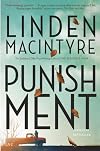
"ALL are punished!" This telling line, voiced by the Prince at the close of ROMEO AND JULIET, kept running through my mind as I literally raced through Linden MacIntyre's latest addition to his steadily growing canon of Nova Scotia books, aptly titled PUNISHMENT. Because it does indeed seem like everyone in this story is punished in one way or another. And not just the criminals, but also their keepers and their victims.
The protagonist/narrator here is Tony Breau, a prison guard and show more corrections officer forced into retirement for being a whistle blower, or a "rat," who informed on his fellow guards for looking away during a prison riot murder in Kingston. His marriage too has gone south, and he retreats to St. Ninian, the small town in Nova Scotia where he was raised by his adoptive parents, the MacMillans, both now gone. I figured out early on that MacIntyre wove some familial connections into this story which lightly link it to his much praised and award-winning Cape Breton trilogy (THE LONG STRETCH, THE BISHOP'S MAN, and WHY MEN LIE). Tony's youthful sweetheart, Caddie, is a cousin to the Gillis family that figured so prominently in those books. But now she is a grieving grandmother, and Dwayne Strickland, a charming and conniving ex-con, is suspected of supplying the drugs that killed her granddaughter. And there is a third town character looming darkly throughout the narrative, Neil Archie MacDonald, Vietnam vet and former Boston police officer who, like Tony, was forced into an early retirement for reasons that only become clear as the plot progresses.
The story is set firmly and skillfully against the aftermath of 9/11 and the lead-up to the U.S. invasion of Iraq. The tension between Tony, Caddie, Strickland, Neil Archie and the tight-knit St. Ninian community increases exponentially as Strickland is arrested and a pre-trial hearing reveals all of the small town prejudices and cruelties so often displayed toward 'outsiders' like Dwayne - and Tony.
The characters here are complex and finely drawn. There are no clearly defined 'good guys' or 'bad guys' here - a trademark of MacIntyre fiction. The justice and penal systems are both closely examined in this probing look at the whole concept of punishment and rehabilitation. Tony Breau, a man of conscience who tries repeatedly to do the right thing, is perhaps the one punished most of all as the plot becomes more and more complex. The pace of the story becomes breathtaking and I found myself literally racing to the end of this book. It is an 'unputdownable' read. I cannot recommend this book highly enough. PUNISHMENT is, quite simply, pure MacIntyre at the top of his game. show less
The protagonist/narrator here is Tony Breau, a prison guard and show more corrections officer forced into retirement for being a whistle blower, or a "rat," who informed on his fellow guards for looking away during a prison riot murder in Kingston. His marriage too has gone south, and he retreats to St. Ninian, the small town in Nova Scotia where he was raised by his adoptive parents, the MacMillans, both now gone. I figured out early on that MacIntyre wove some familial connections into this story which lightly link it to his much praised and award-winning Cape Breton trilogy (THE LONG STRETCH, THE BISHOP'S MAN, and WHY MEN LIE). Tony's youthful sweetheart, Caddie, is a cousin to the Gillis family that figured so prominently in those books. But now she is a grieving grandmother, and Dwayne Strickland, a charming and conniving ex-con, is suspected of supplying the drugs that killed her granddaughter. And there is a third town character looming darkly throughout the narrative, Neil Archie MacDonald, Vietnam vet and former Boston police officer who, like Tony, was forced into an early retirement for reasons that only become clear as the plot progresses.
The story is set firmly and skillfully against the aftermath of 9/11 and the lead-up to the U.S. invasion of Iraq. The tension between Tony, Caddie, Strickland, Neil Archie and the tight-knit St. Ninian community increases exponentially as Strickland is arrested and a pre-trial hearing reveals all of the small town prejudices and cruelties so often displayed toward 'outsiders' like Dwayne - and Tony.
The characters here are complex and finely drawn. There are no clearly defined 'good guys' or 'bad guys' here - a trademark of MacIntyre fiction. The justice and penal systems are both closely examined in this probing look at the whole concept of punishment and rehabilitation. Tony Breau, a man of conscience who tries repeatedly to do the right thing, is perhaps the one punished most of all as the plot becomes more and more complex. The pace of the story becomes breathtaking and I found myself literally racing to the end of this book. It is an 'unputdownable' read. I cannot recommend this book highly enough. PUNISHMENT is, quite simply, pure MacIntyre at the top of his game. show less
THE WINTER WIVES is the eighth Linden MacIntyre book I have read, and I have loved every one of them. MacIntyre's latest offering is, like all of his fiction, a largely character-driven novel. And it is also set in the author's own home territory of Nova Scotia, with its narrator, Byron, a native of the small community of Malignant Cove, who grew up lobstering with his widowed mother. Byron (real name Angus) is a nickname he got in high school from Peggy Winter, one of the Winter sisters show more (Peggy and Annie) because, like Lord Byron, he limped. Byron's limp, however, is not due to a birth defect, like the poet's (who was born with a club foot), but was caused by a childhood accident, which is itself central to the plot.
Besides Byron, there are three other main characters here - the Winter sisters, who become the the Winter wives of the title, when Annie marries Byron, and Peggy marries Allan Chase, the fourth character, who meets Byron at University, and becomes his lifelong, and remotely mysterious, friend. Allan, called "the great Chase," due to his football prowess in college, soon drops out of school and disappear into a shadowy career in crime which takes him all over the U.S. and Mexico, and finally brings him back to Toronto, a seemingly successful and wealthy businessman. Byron, in the meantime, finishes college and law school and joins a small firm in Halifax. What happens over the the next thirty-plus years shows us that things - and people - are often not what they seem. When Allan approaches Byron to become a part of his shadowy criminal empire, Byron is initially reluctant, but, because both the Winter sisters are already a part of Allan's enterprise, he finally joins the "family business." Then Allan suffers a stroke, the police come to call, a mysterious "Russian" shows up, and money laundering and offshore bank accounts come into play. And Byron's mother descends rapidly into dementia, causing him to wonder if he himself could be affected. And there is too the longtime unrequited love he feels for Peggy, his sister-in-law and Allan's wife.
What may sound like a stew of characters, events and circumstances all works amazingly well, and kept me up reading into the wee hours, to an ending that left me satisfied, but also wondering if there might me more, if Byron might show up in another year or two in MacIntyre's next book. I hope so. Because I love the way this guy writes. My very highest recommendation.
- Tim Bazzett, author of the memoir, BOOKLOVER show less
Besides Byron, there are three other main characters here - the Winter sisters, who become the the Winter wives of the title, when Annie marries Byron, and Peggy marries Allan Chase, the fourth character, who meets Byron at University, and becomes his lifelong, and remotely mysterious, friend. Allan, called "the great Chase," due to his football prowess in college, soon drops out of school and disappear into a shadowy career in crime which takes him all over the U.S. and Mexico, and finally brings him back to Toronto, a seemingly successful and wealthy businessman. Byron, in the meantime, finishes college and law school and joins a small firm in Halifax. What happens over the the next thirty-plus years shows us that things - and people - are often not what they seem. When Allan approaches Byron to become a part of his shadowy criminal empire, Byron is initially reluctant, but, because both the Winter sisters are already a part of Allan's enterprise, he finally joins the "family business." Then Allan suffers a stroke, the police come to call, a mysterious "Russian" shows up, and money laundering and offshore bank accounts come into play. And Byron's mother descends rapidly into dementia, causing him to wonder if he himself could be affected. And there is too the longtime unrequited love he feels for Peggy, his sister-in-law and Allan's wife.
What may sound like a stew of characters, events and circumstances all works amazingly well, and kept me up reading into the wee hours, to an ending that left me satisfied, but also wondering if there might me more, if Byron might show up in another year or two in MacIntyre's next book. I hope so. Because I love the way this guy writes. My very highest recommendation.
- Tim Bazzett, author of the memoir, BOOKLOVER show less
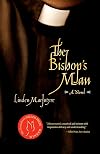
With Linden MacIntyre being one of my favourite journalists, I was thrilled to hear of his novel being honoured as the winner of the Scotiabank Giller prize for 2010. After reading the synopsis of the story, I knew it would be an uncomfortable read, but trusted in MacIntyre’s reverence and honesty to make it through. I was not disappointed.
The Bishop’s man is a story told in spirals, as we twist and turn through past and present fluidly, giving us a clearer picture of the events that can show more become cloudy through space and time. It is by way of these happenings that we are presented with brutally honest characters living lives of deceit and despair. These tragically flawed people are human in their beastliness, conflicted, damaged, and eternally struggling to break the vicious cycle of pain and suffering.
At times my anger was palpable as the Bishop insisted on covering up the harsh realities of the evil-doings administered by the hands of his precious and misunderstood brotherhood, where ‘victims’ were only the creations of over-active imaginations and troubled youth.
On more than one occasion I wrestled with my understanding of good and evil, and what faith means in today’s modern world. I am of the mind that Catholicism and its primitive structures are in need of a revamp in respect to how the world has changed, and what we’ve learned about humanity along the way. For the sake of the Catholics out there, I pray that they will make the changes that are needed to gain back so many members that they have lost due to their closed-mindedness and denial. As naïve as some may consider it, I will always believe that faith is an important and necessary part of a happy, moral and fulfilling life.
Amidst the madness and injustice, we pause to take in the haunting and beautiful descriptions of small towns, where you can hear the fiddle and smell the sea salt lifting off the page. Linden MacIntyre has proven to be an adoring poet in his love of the East coast and of the Gaelic and English languages. His words are profound and emotive, and I look forward to picking up his other novels in the hopes of more of the same.
Just a couple of his affecting offerings…
“The future has no substance until it turns the corner into history.”
“The bay is flat, endless pewter beneath the rising moon.”
Check out more of my reviews at BookSnakeReviews show less
The Bishop’s man is a story told in spirals, as we twist and turn through past and present fluidly, giving us a clearer picture of the events that can show more become cloudy through space and time. It is by way of these happenings that we are presented with brutally honest characters living lives of deceit and despair. These tragically flawed people are human in their beastliness, conflicted, damaged, and eternally struggling to break the vicious cycle of pain and suffering.
At times my anger was palpable as the Bishop insisted on covering up the harsh realities of the evil-doings administered by the hands of his precious and misunderstood brotherhood, where ‘victims’ were only the creations of over-active imaginations and troubled youth.
On more than one occasion I wrestled with my understanding of good and evil, and what faith means in today’s modern world. I am of the mind that Catholicism and its primitive structures are in need of a revamp in respect to how the world has changed, and what we’ve learned about humanity along the way. For the sake of the Catholics out there, I pray that they will make the changes that are needed to gain back so many members that they have lost due to their closed-mindedness and denial. As naïve as some may consider it, I will always believe that faith is an important and necessary part of a happy, moral and fulfilling life.
Amidst the madness and injustice, we pause to take in the haunting and beautiful descriptions of small towns, where you can hear the fiddle and smell the sea salt lifting off the page. Linden MacIntyre has proven to be an adoring poet in his love of the East coast and of the Gaelic and English languages. His words are profound and emotive, and I look forward to picking up his other novels in the hopes of more of the same.
Just a couple of his affecting offerings…
“The future has no substance until it turns the corner into history.”
“The bay is flat, endless pewter beneath the rising moon.”
Check out more of my reviews at BookSnakeReviews show less
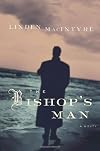
A stunningly good novel about a Nova Scotian priest facing up to the repercussions of a career spent in obedience to his Bishop's orders -- doing the dirty work of "cleaning up" after abusive priests. A deep meditation on faith, truth, justice and personal responsibility. The Cape Breton setting is brought to life perfectly. The characters are heart-breaking, human, fragile and believable. MacIntyre is a brilliant writer, and I don't often use that word. He asks the big questions fearlessly, show more but with enormous compassion. show less
Lists
Awards


You May Also Like


Associated Authors
Statistics
- Works
- 11
- Members
- 1,261
- Popularity
- #20,345
- Rating
- 3.8
- Reviews
- 83
- ISBNs
- 60
- Languages
- 1
- Favorited
- 4