
Ann-Marie MacDonald
Author of Fall on Your Knees
About the Author
Ann-Marie MacDonald was born in Baden Sölingen, in the former West Germany on October 29, 1958. She attended Carleton University before moving to Montreal to train as an actor at the National Theatre School of Canada, where she graduated in 1980. She has performed in theatres across Canada, and show more continues to act in film, television and theatre. She has appeared in several independent Canadian films including The Wars and Better Than Chocolate. She won a Gemini Award for her role in the film Where the Spirit Lives and was nominated for a Genie for her role in I've Heard the Mermaids Singing. Her play Goodnight Desdemona (Good Morning Juliet) won the Governor General's Award for Drama, the Chalmers Award for Outstanding Play, and the Canadian Authors' Association Award for Drama. Her first novel, Fall on Your Knees, was published in 1996. Her other novels include The Way the Crow Flies and Adult Onset (Bowker Author Biography) show less
Image credit: Ann-Marie MacDonald
Works by Ann-Marie MacDonald
Fall on your Knees 1 copy
Associated Works
The Pill: The Untold Story of the Drug That Changed the World [1999 film] — Narrator — 2 copies
Where the Spirit Lives [1989 film] — Actor — 1 copy
Tagged
Common Knowledge
- Canonical name
- MacDonald, Ann-Marie
- Birthdate
- 1958-10-29
- Gender
- female
- Occupations
- novelist
playwright
actor
broadcast journalist - Organizations
- Canadian Broadcasting Corporation
- Awards and honors
- Commonwealth Writers' Prize
Order of Canada
Governor General's Performing Arts Award - Relationships
- Palmer, Alisa (spouse)
- Nationality
- Canada
- Birthplace
- CFB Baden-Soellingen, West Germany
- Places of residence
- Toronto, Ontario, Canada
Montréal, Québec, Canada - Associated Place (for map)
- Canada
Members
Reviews
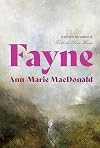
Fayne is as close to literary magic as it gets. What an incredibly complex and well-written book! It is epic. After the last page, which I read at 4 am cause I just couldn't put this down, I thought this deserved a standing ovation.
Fayne is massive, more than 700 pages, and like the isolated estate whose name it bears, it is full of secrets and mystery. It is by no means perfect, but nature prefers making things different, not perfect by human standards, as one of the characters states in show more the book.
Charlotte Bell is a daughter of a seclusive aristocrat growing up on this ancient estate in the late 19th century, hidden from the world due to her "condition". She grows up thirsty for knowledge, hoping to one day be admitted to a university where she could continue her studies despite such a thing being unheard of for women of her social class. Charlotte's mother is a rich American heiress, who we learn about in letters she wrote as a young bride. She supposedly died after giving birth to Charlotte, soon after the death of her elder brother Charles. Other characters living at Fayne and Charlotte's spinster aunt living in Edinburgh also have their secrets that will slowly start to unfold.
There are many characters in the story, all very well-developed. There are also some great, unexpected twists. The big twist concerning the main character was not that difficult to guess, but it didn't take away the magic of the story. The atmosphere is phenomenal, almost gothic and fairytale-like at the same time while at Fayne, but we are often pulled out and thrown into the real world.
The range of topics Fayne covers is very broad, in the tradition of great Victorian novels; science, social class, traditional roles, class, morality, marriage, education... Had there been trigger warnings about it, I might have never picked it up. Some parts were very difficult to read due to the emotion bursting from the pages. But, I am so glad I did. show less
Fayne is massive, more than 700 pages, and like the isolated estate whose name it bears, it is full of secrets and mystery. It is by no means perfect, but nature prefers making things different, not perfect by human standards, as one of the characters states in show more the book.
Charlotte Bell is a daughter of a seclusive aristocrat growing up on this ancient estate in the late 19th century, hidden from the world due to her "condition". She grows up thirsty for knowledge, hoping to one day be admitted to a university where she could continue her studies despite such a thing being unheard of for women of her social class. Charlotte's mother is a rich American heiress, who we learn about in letters she wrote as a young bride. She supposedly died after giving birth to Charlotte, soon after the death of her elder brother Charles. Other characters living at Fayne and Charlotte's spinster aunt living in Edinburgh also have their secrets that will slowly start to unfold.
There are many characters in the story, all very well-developed. There are also some great, unexpected twists. The big twist concerning the main character was not that difficult to guess, but it didn't take away the magic of the story. The atmosphere is phenomenal, almost gothic and fairytale-like at the same time while at Fayne, but we are often pulled out and thrown into the real world.
The range of topics Fayne covers is very broad, in the tradition of great Victorian novels; science, social class, traditional roles, class, morality, marriage, education... Had there been trigger warnings about it, I might have never picked it up. Some parts were very difficult to read due to the emotion bursting from the pages. But, I am so glad I did. show less
Lily stays sitting. “Frances. What if Ambrose is the Devil?” “He’s not the Devil. I know who the Devil is and it isn’t Ambrose.” “Who’s the Devil?” Frances crouches down as if she were talking to Trixie. “That’s something I’ll never tell you, Lily, no matter how old you get to be, because the Devil is shy. It makes him angry when someone recognizes him, so once they do the Devil gets after them. And I don’t want the Devil to get after you.” “Is the Devil after show more you?”
“Yes.”
This is Ann-Marie MacDonald's debut novel. I need to keep reminding myself about this fact that it's a debut novel because it is a polished work of complexity and beauty.
Fall on Your Knees, set in Cape Breton at in the first half of the 20th century, tells the story of Materia, Kathleen, Mercedes, Frances, and Lily - i.e. all the women of the Piper family. Each woman has a voice, a distinct history, a distinct outlook on life - and a distinct fate. So, really this is a novel with five main characters - not to mention James, who dwells at the centre of all their lives.
This book has so many layers that it was easy to be sucked into the world of the Pipers. But it is not a comfortable place. Far from it, it is a world full of harshness, brutality, and abuse, where each of the characters is trying to escape the confines of what holds them. Be it religion, loyalty, or something else - each character has their own form of imprisonment.
"God did not put me on this earth to stand by while my sister Frances is killed. Beaten is one thing. Wrongly touched is one thing. Stabbed with a bayonet is another. Push. Be strong enough to carry the burden of sin that goes with doing the right thing. There is only one saint in this family and I’m not it. God has made Mercedes a judge. No one loves you for that. Not like a crippled child who’s prone to visions. Whom Mercedes prizes. Not like a fallen woman who makes people laugh. Whom Mercedes loves."
When reading some of the reviews, the aspect that I have picked up on most is that people have read this because it was an Oprah bookclub read. I am usually hesitant to follow up hyped up books, but sometimes, just sometimes, they are a exactly the type of book that will work their way into your soul.
Fall on Your Knees is a perfectly constructed family saga, but it is also more than this. It is a beautifully sketched insight into the human condition.
Mercedes is neither a saint nor a sinner. She is somewhere in between. She is why purgatory was invented. show less
“Yes.”
This is Ann-Marie MacDonald's debut novel. I need to keep reminding myself about this fact that it's a debut novel because it is a polished work of complexity and beauty.
Fall on Your Knees, set in Cape Breton at in the first half of the 20th century, tells the story of Materia, Kathleen, Mercedes, Frances, and Lily - i.e. all the women of the Piper family. Each woman has a voice, a distinct history, a distinct outlook on life - and a distinct fate. So, really this is a novel with five main characters - not to mention James, who dwells at the centre of all their lives.
This book has so many layers that it was easy to be sucked into the world of the Pipers. But it is not a comfortable place. Far from it, it is a world full of harshness, brutality, and abuse, where each of the characters is trying to escape the confines of what holds them. Be it religion, loyalty, or something else - each character has their own form of imprisonment.
"God did not put me on this earth to stand by while my sister Frances is killed. Beaten is one thing. Wrongly touched is one thing. Stabbed with a bayonet is another. Push. Be strong enough to carry the burden of sin that goes with doing the right thing. There is only one saint in this family and I’m not it. God has made Mercedes a judge. No one loves you for that. Not like a crippled child who’s prone to visions. Whom Mercedes prizes. Not like a fallen woman who makes people laugh. Whom Mercedes loves."
When reading some of the reviews, the aspect that I have picked up on most is that people have read this because it was an Oprah bookclub read. I am usually hesitant to follow up hyped up books, but sometimes, just sometimes, they are a exactly the type of book that will work their way into your soul.
Fall on Your Knees is a perfectly constructed family saga, but it is also more than this. It is a beautifully sketched insight into the human condition.
Mercedes is neither a saint nor a sinner. She is somewhere in between. She is why purgatory was invented. show less

This is, in my opinion, great literature. Multiple themes and storylines that the author weave together so well. Strong, completely believable characters. Truth and lies. Lies that are harmless, until they are not. Guilt and innocence -- of children, of the times. Sometimes difficult to read because of the subject matter but always provocative and insightful.
I loved the setting and got swept up in memories of my own childhood.
I loved the issues probed by the story, such as the moral cost of show more the space program in Canada and U.S. And especially Jack's struggle in determining whether to condemn an innocent child to prison for the greater good of national security.
Maybe a bit long...it took a while for the story to get moving; on the other hand, I got totally immersed in the time and place of the story. There is a big jump in the story from Madeleine as a child to an adult. The t transition wasn't well managed and it took me a while to care about the adult Madeleine. But overall, a great read. show less
I loved the setting and got swept up in memories of my own childhood.
I loved the issues probed by the story, such as the moral cost of show more the space program in Canada and U.S. And especially Jack's struggle in determining whether to condemn an innocent child to prison for the greater good of national security.
Maybe a bit long...it took a while for the story to get moving; on the other hand, I got totally immersed in the time and place of the story. There is a big jump in the story from Madeleine as a child to an adult. The t transition wasn't well managed and it took me a while to care about the adult Madeleine. But overall, a great read. show less
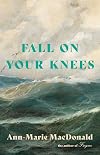
This was a re-read after more than 20 years. This book was, for those years, in my top three fiction reads of all time. Not sure it's still there, but I loved it all over again. Despite remembering almost every aspect of t he plot. The writing carried me through, as did the compelling characters (Mercedes is particularly well written) and the story. I also enjoyed the many cultural references that evoked so many memories (the author and I are almost the same age).
Ms. MacDonald controls show more revelations so that there are surprises nearly up to the end of the book. She writes in clear style, but not graphic. Her revelations are subtle until you are smacked in the fact by your own understanding.
There are so many themes here. This time, I found myself reflecting on the contract in coping mechanisms -- and consequences -- for Frances vs. Mercedes. And I'm not sure I fully understand why Frances so badly wanted a baby.
Excellent book. show less
Ms. MacDonald controls show more revelations so that there are surprises nearly up to the end of the book. She writes in clear style, but not graphic. Her revelations are subtle until you are smacked in the fact by your own understanding.
There are so many themes here. This time, I found myself reflecting on the contract in coping mechanisms -- and consequences -- for Frances vs. Mercedes. And I'm not sure I fully understand why Frances so badly wanted a baby.
Excellent book. show less
Lists
Very Long Novels (1)
Canada (1)
Morphy Pick! (1)
to get (1)
Canadian Fiction (1)
Plays I Like (1)
Allie's Wishlist (1)
Female Author (2)
First Novels (1)
My TBR list (1)
Florida (1)
Awards


You May Also Like


Associated Authors
Statistics
- Works
- 12
- Also by
- 8
- Members
- 9,174
- Popularity
- #2,613
- Rating
- 3.9
- Reviews
- 225
- ISBNs
- 162
- Languages
- 15
- Favorited
- 33
