
Helen Humphreys
Author of The Lost Garden
About the Author
Helen Humphreys is the author of four collections of poetry & one previous novel, "Leaving Earth", which won the Toronto Book Award, was a "New York Times" Notable Book, & was published in six languages. "Afterimage" was inspired by an exhibition of Julia Margaret Cameron's photographs. Humphreys show more lives in Kingston, Ontario. (Bowker Author Biography) show less
Image credit: Helen Humphreys
Works by Helen Humphreys
The Last Stoic 4 copies
Visitors 1 copy
Associated Works
Tagged
Common Knowledge
- Birthdate
- 1961-06-13
- Gender
- female
- Occupations
- poet
novelist
writer-in-residence
professor - Organizations
- Queens University, Kingston, Ontario, Canada
University of Toronto - Short biography
- Helen Humphreys was born in 1961 in England and moved to Canada when she was a young girl. She was kicked out of high school in grade 10 and attended an alternative school to finish her education. Humphreys lives in Kingston, Ontario.
- Nationality
- UK (birth)
Canada - Birthplace
- London, England, UK
- Places of residence
- Kingston, Ontario, Canada
Kingston-on-Thames, England, UK
Toronto, Ontario, Canada - Associated Place (for map)
- England, UK
Members
Discussions
Canadian Author Challenge — February: Helen Humphreys & Stephen Leacock in 75 Books Challenge for 2016 (March 2016)
Reviews

Coventry by Helen Humphreys is my first book by this author, but I am now looking forwards to reading more. In this short novel of about 175 pages, a powerful story unfolds set against the backdrop of the bombing of Coventry in November of 1940.
I found this a story of contrast as we read of Coventry’s nightmare, the streets of rubble, the bodies lying where they fell, glass raining down, fires erupting, while we are also exploring the lives of two women. Neither of these women are living show more the lives that they once thought they would. Both have known hard times and either have or will have experienced loss. Their generation has been shaped by two devastating world wars that left many women alone and grieving for the men in their lives. Yet by the end of the book one feels uplifted by how these women carry on with hope and strength of purpose.
Coventry by Helen Humphreys is a beautifully written story of destruction, war and pain, yet the author gives her audience many small glimpses into the heart and soul of real humanity and gives us the comfort of knowing that from even the worst destruction will come new beginnings. show less
I found this a story of contrast as we read of Coventry’s nightmare, the streets of rubble, the bodies lying where they fell, glass raining down, fires erupting, while we are also exploring the lives of two women. Neither of these women are living show more the lives that they once thought they would. Both have known hard times and either have or will have experienced loss. Their generation has been shaped by two devastating world wars that left many women alone and grieving for the men in their lives. Yet by the end of the book one feels uplifted by how these women carry on with hope and strength of purpose.
Coventry by Helen Humphreys is a beautifully written story of destruction, war and pain, yet the author gives her audience many small glimpses into the heart and soul of real humanity and gives us the comfort of knowing that from even the worst destruction will come new beginnings. show less

This is such a beautiful, reflective, personal story set right in the heart of a fiery, brutal, devastating night of utter terror and destruction. The night of November 14, 1940 was a night that the Germans fairly leveled the city of Coventry. It is a night that begins with a late swallow flickering and diving around Coventry Cathedral, and ends with scores dead, a city destroyed, and a woman whose life is changed not just by the bombing, but by the connections forged that night. I really show more like Ms. Humphreys's voice here -- nothing is softened for the reader, but neither is the story sensationalized. She follows two women who have two chance encounters, telling their very small stories against a near-epic backdrop in spare, lovely words. show less
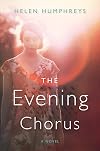
Helen Humphreys is one of those quiet, understated writers. She starts out just telling a fairly simple story. James Hunter is a prisoner of war. He has been shot down in his first bombing raid over Germany. His new wife, Rose, is left alone with barely enough time spent with him to forge a real memory. His sister, Enid, bombed out of her apartment in London. What Humphreys does with this simple, perhaps common, set of circumstances, is remarkable. She opened the lives of these people for show more inspection so masterfully that I scarcely realize what had been done before I was lamenting that the narrative had come to an end.
In a clever, but subtle, manner, Humphreys builds her book around an observation of birds. James is a birdwatcher and uses his hobby to keep himself sane while held in prison. References to birds occur throughout the book and nature is present everywhere as a kind of glue that holds the otherwise chaotic world together. When man has lost his way, nature lives and thrives.
This is my third Humphrey’s and I can see that she is a new favorite author for me. As in The Forgotten Garden, I kept marking passages that I didn’t want to forget.
It struck me that life at any time and in any guise comes with the same complications. Loneliness and faded memories and rash decisions are always there.
This is the problem with time, thinks Rose. It doesn’t follow its own rules. It stretches or compresses at will. It’s either a lingering house guest or an escape artist.
We are always pressed to choose.
It’s so hard to get life right, she thinks, pulling the blanket tight around her shoulders. All the small balances are impossible to strike most of the time. And then there are the larger choices.
And often we make the wrong choice. And who is to say that the choice that is right for us is not the one that destroys someone else?
Another time might be easier than this one, but there’s only the time you’re in, thinks Enid. And it’s always going to be lacking somehow. Best to spend some of your moments here on earth noticing what else is here with you instead of concentrating solely on your own misery.
Humphreys understands life as a journey, and one that cannot always be controlled or directed. She understands love as well, and that it isn’t always static or predictable.
It’s not only love that isn’t the same again but every moment of a life. And just as one doesn’t love two people the same way, one feels that some moments are much more important than others, but that isn’t apparent from the vantage point of the moment itself.
I highly recommend this book and I’m off to find another Humphreys. So nice to know I have several to go before I am caught up and, blessing for me, she is still writing, so there will be more to come. show less
In a clever, but subtle, manner, Humphreys builds her book around an observation of birds. James is a birdwatcher and uses his hobby to keep himself sane while held in prison. References to birds occur throughout the book and nature is present everywhere as a kind of glue that holds the otherwise chaotic world together. When man has lost his way, nature lives and thrives.
This is my third Humphrey’s and I can see that she is a new favorite author for me. As in The Forgotten Garden, I kept marking passages that I didn’t want to forget.
It struck me that life at any time and in any guise comes with the same complications. Loneliness and faded memories and rash decisions are always there.
This is the problem with time, thinks Rose. It doesn’t follow its own rules. It stretches or compresses at will. It’s either a lingering house guest or an escape artist.
We are always pressed to choose.
It’s so hard to get life right, she thinks, pulling the blanket tight around her shoulders. All the small balances are impossible to strike most of the time. And then there are the larger choices.
And often we make the wrong choice. And who is to say that the choice that is right for us is not the one that destroys someone else?
Another time might be easier than this one, but there’s only the time you’re in, thinks Enid. And it’s always going to be lacking somehow. Best to spend some of your moments here on earth noticing what else is here with you instead of concentrating solely on your own misery.
Humphreys understands life as a journey, and one that cannot always be controlled or directed. She understands love as well, and that it isn’t always static or predictable.
It’s not only love that isn’t the same again but every moment of a life. And just as one doesn’t love two people the same way, one feels that some moments are much more important than others, but that isn’t apparent from the vantage point of the moment itself.
I highly recommend this book and I’m off to find another Humphreys. So nice to know I have several to go before I am caught up and, blessing for me, she is still writing, so there will be more to come. show less
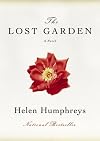
"The thing about gardens is that everyone thinks they go on growing, that in winter they sleep and in spring they rise. But it's more that they die and return, die and return. They lose themselves. They haunt themselves."
I loved this beautiful, and pain filled story set in the English countryside during World War II but I seem to be having difficulties writing a review on it. The words allude me. I am pretty sure I will fail to adequately review this one, but I will try.
The year is 1941. show more Horticulturalist Gwen Davis is a woman in her mid thirties that has never experienced love. She is a woman who fears social engagements and prefers to lock herself in her office at the Horticultural Society with her diseased parsnips - where she is looking for a cause and a cure. Her only other passion, besides horticulture, appears to be the works of Virginia Woolf. Surprisingly, even to Gwen, she agrees to leave her beloved London for the quiet Devon countryside to oversee a group of Woman's Land Army girls with the goal of growing crops for the home front on the neglected, and I am assuming requisitioned, country estate of Mosel. it is at Mosel where she encounters a group of Canadian soldiers awaiting orders of their next posting and discovers a lost garden full of hidden meanings in the choice of plants that make up the garden. Within the group at Mosel, Gwen befriends two individuals who have experienced love, and loss. The spring and summer of 1941 will change Gwen's life forever and her understanding of what it means to love.
Don't get me wrong.... this isn't a love story. Well, okay, it is a love story but not your typical love story. This is more a story of understanding what love is, how it means different things to different people, the urges of longing and how painful the loss of love, once you have experienced it, can be. It is also a beautiful story for anyone that enjoys gardening and is a fan of Virginia Woolf, and in particular, Woolf's novel To the Lighthouse, which I admit I haven't read yet, even though it is within easy reach sitting on my bookshelf.
A beautiful, heart wrenching, and at times introspective story about love, loss and longing, set against the backdrop of World War II. One that I highly recommend. show less
I loved this beautiful, and pain filled story set in the English countryside during World War II but I seem to be having difficulties writing a review on it. The words allude me. I am pretty sure I will fail to adequately review this one, but I will try.
The year is 1941. show more Horticulturalist Gwen Davis is a woman in her mid thirties that has never experienced love. She is a woman who fears social engagements and prefers to lock herself in her office at the Horticultural Society with her diseased parsnips - where she is looking for a cause and a cure. Her only other passion, besides horticulture, appears to be the works of Virginia Woolf. Surprisingly, even to Gwen, she agrees to leave her beloved London for the quiet Devon countryside to oversee a group of Woman's Land Army girls with the goal of growing crops for the home front on the neglected, and I am assuming requisitioned, country estate of Mosel. it is at Mosel where she encounters a group of Canadian soldiers awaiting orders of their next posting and discovers a lost garden full of hidden meanings in the choice of plants that make up the garden. Within the group at Mosel, Gwen befriends two individuals who have experienced love, and loss. The spring and summer of 1941 will change Gwen's life forever and her understanding of what it means to love.
Don't get me wrong.... this isn't a love story. Well, okay, it is a love story but not your typical love story. This is more a story of understanding what love is, how it means different things to different people, the urges of longing and how painful the loss of love, once you have experienced it, can be. It is also a beautiful story for anyone that enjoys gardening and is a fan of Virginia Woolf, and in particular, Woolf's novel To the Lighthouse, which I admit I haven't read yet, even though it is within easy reach sitting on my bookshelf.
A beautiful, heart wrenching, and at times introspective story about love, loss and longing, set against the backdrop of World War II. One that I highly recommend. show less
Lists
Awards


You May Also Like


Associated Authors
Statistics
- Works
- 29
- Also by
- 2
- Members
- 3,012
- Popularity
- #8,473
- Rating
- 3.9
- Reviews
- 259
- ISBNs
- 162
- Languages
- 7
- Favorited
- 21

