
W.O. Mitchell (1914–1998)
Author of Who Has Seen the Wind
About the Author
Image credit: womitchell.ca
Works by W.O. Mitchell
Associated Works
Cavalcade of the North: An Entertaining Collection of Distinguished Writing by Canadian Authors (1958) — Contributor — 70 copies, 1 review
Tagged
Common Knowledge
- Legal name
- Mitchell, William Ormond
- Birthdate
- 1914
- Date of death
- 1998
- Gender
- male
- Nationality
- Canada
- Associated Place (for map)
- Canada
Members
Reviews
10/10
William (W.K.) Kurelek, Artist
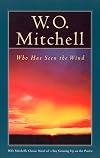
Nothing happens in this book. Nothing at all. The prairies lie flat, and the wind blows.
There are wide, wide open spaces -- flat, unbroken, endless.
The days of a life, so too, lie flat, unbroken and endless.
The prairies lie flat, the wind blows, and the sky is clear, unburdened even of clouds.
A boy cast against such a sky is as naked and defenceless as a prairie gopher: a little, wriggling ball of energy and essence fighting for breath and for life, show more bleakly battling the whirlwind.
But he is rooted to the prairie, and as expansive as the sky is, and as forceful as the wind is, his roots run deeper still. He will bend; he will lose faith, he will regain it, he will find joy. He will become a man.
As you can see, nothing happens in this book.
But then that would mean that you count life, and living and all the heartbreak and all the joy and all the lessons and all the moments and all the memories and all the revelations and all the disappointments, and all the achievements and all the losses, and all the triumphs, and all the people you've ever loved -- to be nothing at all.
There is so much blank space in this book -- so many countless moments of nothingness, that you can write your own story while still living the story of a young boy who becomes a man by the end of the last sentence.
This reads more like a long poem to the flatlands and to the sky and wind above them, and to the wide open world that lies beyond. Don't read it in one gulp, as you would a story. Pick out your page, and break open the lines, and read it as poetry, because that's what it is.
If you don't like poetry, and you don't like dancing on the edge of nothingness, even for a little while, while you experience the grandeur of the void, then you might want to give this one a pass. show less
William (W.K.) Kurelek, Artist
Nothing happens in this book. Nothing at all. The prairies lie flat, and the wind blows.
There are wide, wide open spaces -- flat, unbroken, endless.
The days of a life, so too, lie flat, unbroken and endless.
The prairies lie flat, the wind blows, and the sky is clear, unburdened even of clouds.
A boy cast against such a sky is as naked and defenceless as a prairie gopher: a little, wriggling ball of energy and essence fighting for breath and for life, show more bleakly battling the whirlwind.
But he is rooted to the prairie, and as expansive as the sky is, and as forceful as the wind is, his roots run deeper still. He will bend; he will lose faith, he will regain it, he will find joy. He will become a man.
As you can see, nothing happens in this book.
But then that would mean that you count life, and living and all the heartbreak and all the joy and all the lessons and all the moments and all the memories and all the revelations and all the disappointments, and all the achievements and all the losses, and all the triumphs, and all the people you've ever loved -- to be nothing at all.
There is so much blank space in this book -- so many countless moments of nothingness, that you can write your own story while still living the story of a young boy who becomes a man by the end of the last sentence.
This reads more like a long poem to the flatlands and to the sky and wind above them, and to the wide open world that lies beyond. Don't read it in one gulp, as you would a story. Pick out your page, and break open the lines, and read it as poetry, because that's what it is.
If you don't like poetry, and you don't like dancing on the edge of nothingness, even for a little while, while you experience the grandeur of the void, then you might want to give this one a pass. show less

I love Mitchell's sly sense of humour and how he catches the nuances of human speech. In this book, which is about an English professor who gets mauled by a grizzly bear, we get that plus some advice from Mitchell about how to write. The professor tells his Creative Writing class "All I want you to do--during the winter and spring sessions is write. I want you to write every day, every week, every month, of every term." Later he tells them "If you want to fool your reader, your poem or play show more or novel or short story must seem to be in the world of the many. They are illusions that can be smelled and tasted and heard and touched and seen. You find sensuous fragments in your past--emotions, people that you remember--then your creative partner reads through a sort of minefield with your words for triggers. He sets off explosions of recognition, and then gives you total credit for them when, in fact, the charges were already set in his own past. If the reader and the writer together do not manage such recognitions, there is no life resonance and they might better use their time in some clever, cerebral game--say chess."
I would say Mitchell succeeded in this aim. For me the explosions of recognition took place in the pre-trial and trial scenes that resulted when the taxidermist switched the grizzly skin for that of a small brown bear. Professor Dobbs didn't want a monetary value placed on the skin and he refused the offer of a grizzly that the senior taxidermist had shot himself. Even when he learned that it was his guide, Archie Nicotine, who had actually killed the bear he refused to give up his action. How many times when I was practising law did I see people refuse to compromise and fight "for the principle" and bend the truth and, yes, outright lie? Mitchell caught the intransigence of people involved in law suits perfectly. show less
I would say Mitchell succeeded in this aim. For me the explosions of recognition took place in the pre-trial and trial scenes that resulted when the taxidermist switched the grizzly skin for that of a small brown bear. Professor Dobbs didn't want a monetary value placed on the skin and he refused the offer of a grizzly that the senior taxidermist had shot himself. Even when he learned that it was his guide, Archie Nicotine, who had actually killed the bear he refused to give up his action. How many times when I was practising law did I see people refuse to compromise and fight "for the principle" and bend the truth and, yes, outright lie? Mitchell caught the intransigence of people involved in law suits perfectly. show less
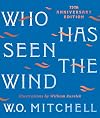
First published in 1947, Who Has Seen The Wind is set on the Saskatchewan prairies during the Great Depression. Its four parts describe the life of a boy living in a small community during the ages of four, six, eight and eleven. Most of the story is seen through his eyes, focusing on his family, friends, and his coming to terms with God’s existence, the meaning of life, and the acceptance of events beyond his control.
Like life itself, the plot often seems to meander with no clear show more purpose, following the path of Brian O’Connal’s adventures, crises, moments of enlightenment, and sometimes heartbreak, as he tries to make sense of the world around him. While Brian is the story’s centerpiece, the reader is also introduced to various members of his family and the community. Along the way, deaths occur, and conflicts in the town erupt and are dealt with, all taking place at a time when drought has stricken the region.
Born and raised in Saskatchewan, W. O. Mitchell excels in capturing the rhythm of small town life on the prairie during this period. It is a story of a child coming to terms with a world that seems magical, mysterious, and often unforgiving in its strict dictates. Although set in a time period almost a century ago, issues and reactions to them make the story a timeless one that will resonate with readers today. It is a poignant portrayal of childhood innocence and the coping that is engendered by loss. This Canadian classic deserves a wider audience here in the States, as well. show less
Like life itself, the plot often seems to meander with no clear show more purpose, following the path of Brian O’Connal’s adventures, crises, moments of enlightenment, and sometimes heartbreak, as he tries to make sense of the world around him. While Brian is the story’s centerpiece, the reader is also introduced to various members of his family and the community. Along the way, deaths occur, and conflicts in the town erupt and are dealt with, all taking place at a time when drought has stricken the region.
Born and raised in Saskatchewan, W. O. Mitchell excels in capturing the rhythm of small town life on the prairie during this period. It is a story of a child coming to terms with a world that seems magical, mysterious, and often unforgiving in its strict dictates. Although set in a time period almost a century ago, issues and reactions to them make the story a timeless one that will resonate with readers today. It is a poignant portrayal of childhood innocence and the coping that is engendered by loss. This Canadian classic deserves a wider audience here in the States, as well. show less
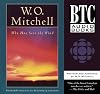
Brian O'Connel's family lives in a town on the edge of the Canadian prairie. As Brian ages from four to twelve, he stores up memories of events – his loneliness when his baby brother's life-threatening illness consumes all of his family's attention, his grandmother's sternness, the hatching of baby pigeons, the new friend who shows him where God lives, learning the rules the hard way on his first day of school, meeting the boy who lives on the prairie, getting his first dog. Brian senses show more that these things and events are important, and that there's more to them than he can see and understand. Like Jesus' mother, Mary, he “treasured up all these things and pondered them in [his] heart.”
All readers will identify with the boy Brian and his playmates. Even though I grew up in a different era than the book describes, it brought back memories of things I thought I had forgotten. Older readers may identify with Grandmother McMurray, Brian's mother's mother, who lives with the O'Connels. As her world shrinks from age and infirmity, Grandmother's thoughts turn more frequently to her homesteading days as she gazes at the prairie through her bedroom window.
I listened to the abridged audio version on a road trip. The author's performance far exceeded my modest expectations. He has the voice of a master storyteller, and it stirred strong memories from my childhood. His voice and inflection sounded a lot like broadcaster Paul Harvey, whose voice I heard almost every day on the radio during my childhood. show less
All readers will identify with the boy Brian and his playmates. Even though I grew up in a different era than the book describes, it brought back memories of things I thought I had forgotten. Older readers may identify with Grandmother McMurray, Brian's mother's mother, who lives with the O'Connels. As her world shrinks from age and infirmity, Grandmother's thoughts turn more frequently to her homesteading days as she gazes at the prairie through her bedroom window.
I listened to the abridged audio version on a road trip. The author's performance far exceeded my modest expectations. He has the voice of a master storyteller, and it stirred strong memories from my childhood. His voice and inflection sounded a lot like broadcaster Paul Harvey, whose voice I heard almost every day on the radio during my childhood. show less
Lists
Best Audiobooks (1)
AP Lit (1)
Awards


You May Also Like


Associated Authors
Statistics
- Works
- 19
- Also by
- 6
- Members
- 1,514
- Popularity
- #16,986
- Rating
- 3.6
- Reviews
- 29
- ISBNs
- 86
- Favorited
- 2