
Mavis Gallant (1922–2014)
Author of Paris Stories
About the Author
Mavis Gallant was born in Montreal, Canada on August 11, 1922. Her parents sent her to live at a French convent when she was 4. When she was 10, her father died from kidney disease. Her mother quickly remarried and moved to New York - leaving her daughter behind. During World War II, Gallant worked show more in the cutting room at the National Film Board of Canada and as a reporter for the Montreal Standard. She eventually became a columnist and feature writer. Two of her short stories appeared in the December, 1944, issue of Preview. She published more than 100 stories in The New Yorker beginning in 1951. During her lifetime, she wrote two novels and several short story collections. Her works include Green Water, Green Sky; A Fairly Good Time; Overhead in a Balloon; Across the Bridge; The Pegnitz Junction; Paris Stories; and The Cost of Living. She received several awards including the Governor-General's Award for Home Truths: Selected Canadian Stories, the Pen Nabokov Award for career achievement, the Matt Cohen Prize in 2000, and the Rea Award for the Short Story in 2002. In 1981, she was made Officer of the Order of Canada for her contribution to literature that year. She died on February 18, 2014 at the age 91. (Bowker Author Biography) show less
Image credit: chatelaine.com
Works by Mavis Gallant
Gallant Mavis 2 copies
Un fiore sconosciuto 2 copies
The Accident 2 copies
Collected Stories 1 copy
“Mlle. Dias de Corta” 1 copy
Piccoli naufragi 1 copy
Associated Works
The Story and Its Writer: An Introduction to Short Fiction (1976) — Contributor — 1,218 copies, 3 reviews
The World of the Short Story: A 20th Century Collection (1986) — Contributor — 514 copies, 4 reviews
The Art of the Tale: An International Anthology of Short Stories (1986) — Contributor — 381 copies, 3 reviews
A World of Difference: An Anthology of Short Stories from Five Continents (2008) — Contributor — 110 copies, 1 review
Antaeus No. 61, Autumn 1988 - Journals, Notebooks & Diaries (1988) — Contributor — 39 copies, 2 reviews
Rose del Canada : Shields, Munro, Svendsen, Gallant, Birdsell, Laurence, Atwood (1994) — Contributor — 3 copies
Tagged
Common Knowledge
- Other names
- Young, Mavis Leslie de Trafford (birth name)
- Birthdate
- 1922-08-11
- Date of death
- 2014-02-18
- Gender
- female
- Occupations
- journalist
short story writer - Awards and honors
- Order of Canada (Companion)
Prix Athanase-David (Quebec prize for literature)
Matt Cohen Prize (2000)
Rea Award for the Short Story
PEN/Nabokov Award (2004)
Lannan Literary Fellowship (2004) (show all 8)
Molson Prize (1996)
American Academy of Arts and Letters (Foreign Honorary ∙ Literature ∙ 1989) - Nationality
- Canada
- Birthplace
- Montréal, Québec, Canada
- Places of residence
- New York, New York, USA
Paris, Île-de-France, France - Place of death
- Paris, Île-de-France, France
Members
Reviews

I read most of these stories at some point, 90's? -- and could not recall reading a single one of them, even when I looked up what I might have written in one of my old notebooks. What I did write was very straightforward, almost clinical: about a family falling apart, about failed marriages, a person who can't manage money and that sort of thing. Then the other night the thought came to me that a Gallant story is recounted to you as if you are sitting in a corner of a cafe with someone you show more don't know very well and are not even sure you trust or even like while she (definitely a she) tells you the life story about this or that person at a nearby table--people you don't know and will forget about as soon as you leave. The stories seem formless but generally pause at a simple but skewering insight somewhere toward the end. In "August" the pause is to reflect upon how we visit on others the things done to us, by doing them again, or avoiding them or a story will circle back to a recurring image, such as the ice wagon coming down the street, in the eponymous story. The stories wander from one viewpoint to another and appear formless but are always moving toward either that pause or consist of a steady layering up one or two recurring images. Masterful stuff! The afterward, by Gallant herself, is also worth a read. **** show less

In post-war Europe a woman and her divorced older lover, travel, with his young son, to Paris. “She was at one of those turnings in a young life where no one can lead, no one can help, but where someone for the sake of love might follow.” She is engaged to marry a stuffy theology student. This is the novella that opens the collection and gives it the title.
Mavis Gallant so deftly creates characters that you sense she knows everything there is to know about them, far beyond the story. show more Many of them are marked by the tragedy of war. “Anyone who had ever known me or loved me had been killed in one period of seven weeks.” The Germans among them are marked by defeat. show less
Mavis Gallant so deftly creates characters that you sense she knows everything there is to know about them, far beyond the story. show more Many of them are marked by the tragedy of war. “Anyone who had ever known me or loved me had been killed in one period of seven weeks.” The Germans among them are marked by defeat. show less
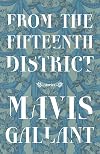
Scintillatingly stylish grownup stories about lives and relationships fragmented in the wake of World War II. There's something almost hyper about the way Gallant's narratives effloresce and claim new terrain — one minute our supposed POV character is overhearing a conversation, next minute that conversation is revealing a whole hidden world behind or adjacent to the main story. Plots are plotless, like life; the meaning is all in the experience. It's literary pointillism done in a playful show more and occasionally very moving way, but to be taken in small doses. I shudder to think what a whole novel of this would be like. show less
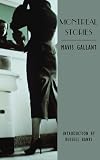
This collection of short stories brings together Mavis Gallant’s work about Montréal: the uneasy mixing between English and French before the Quiet Revolution, the province coming into its own as the twentieth century progresses, women finding their way in the workplace. As someone whose grandparents came from this era of Anglo Montréal, I found the atmosphere absorbing, and I liked best the stories about Linnet Muir, which are more closely autobiographical. Some of the stories just kind show more of end without tying things up neatly, so if you like or expect neat endings or pithy concluding statements, you may have a harder time with this collection. But I thought it interesting for the era it evoked. show less
Lists
1970 Club (1)
Awards


You May Also Like


Associated Authors
Statistics
- Works
- 54
- Also by
- 36
- Members
- 3,017
- Popularity
- #8,462
- Rating
- 3.9
- Reviews
- 60
- ISBNs
- 180
- Languages
- 7
- Favorited
- 16
