

Ethel Wilson (1888–1980)
Author of Swamp Angel
About the Author
Image credit: bcbookprizes.ca
Works by Ethel Wilson
The Vancouver Stories: West Coast Fiction from Canada's Best Writers (2005) — Contributor — 55 copies, 1 review
Mr. Sleepwalker — Author — 1 copy
Associated Works
Cavalcade of the North: An Entertaining Collection of Distinguished Writing by Canadian Authors (1958) — Contributor — 70 copies, 1 review
Tagged
Common Knowledge
- Other names
- Bryant, Ethel
Wilson, Ethel Davis - Birthdate
- 1888-01-20
- Date of death
- 1980-12-22
- Gender
- female
- Education
- Trinity Hall School, Lancashire
Vancouver Normal School - Occupations
- novelist
short story writer
essayist - Awards and honors
- Lorne Pierce Medal (1964)
Order of Canada (Officer, 1970) - Short biography
- Ethel Wilson, née Bryant, was born in Port Elizabeth, in the British Cape Colony, present-day South Africa. In 1890, following the death of her mother, she moved with her father to England. In 1898, after her father died, Ethel went to live with her maternal grandmother and several aunts in Vancouver, British Columbia. She was educated at private schools in Vancouver and England. In 1907, she gradated from the Vancouver Normal School and then taught for 13 years in city elementary schools. In 1921 she married Dr. Wallace Wilson, a professor of medical ethics at the University of British Columbia and president of the Canadian Medical Association.
In the 1930s, she published a few short stories in British magazines but then stopped until after World War II. Her debut novel, Hetty Dorval, appeared in 1947, and was quickly followed by a semi-fictional family memoir, The Innocent Traveller (1949). The novel Swamp Angel (1954) is generally considered to be her finest work.
Wilson is known as one of the first Canadian writers to truly capture the beauty of British Columbia's rugged landscape. Her small but impressive literary output earned her an important place in Canadian literature. In 1964, Wilson received the Lorne Pierce Medal from the Royal Society of Canada, and in 1970 the Order of Canada. - Nationality
- Canada
- Birthplace
- Port Elizabeth, South Africa
- Places of residence
- Port Elizabeth, South Africa
Vancouver, British Columbia, Canada
England, UK - Place of death
- British Columbia, Canada
- Burial location
- British Columbia, Canada
- Associated Place (for map)
- Canada
Members
Reviews

I once read that Ethel Wilson was British Columbia's best novelist, and after reading this novel I can understand why. I've finished about 15 or 20 early British Columbia novels and this book was the greatest. The main character Maggie Lloyd is fully realized and Nell Severance was a memorable scene stealer. I was surprised by the evocation of British Columbia scenery as I was previously informed Ethel Wilson delved primarily into the interior life of her characters, and this was manifestly show more untrue. Many times I was surprised and delighted to read about the small revealing gestures and thoughts of people familiar to my experience and yet overlooked, little shocks of recognition. Once example was when Maggie couldn't recall the face of her first husband and I have recently had the same experience with a departed friend I knew well. Another was the gabby bus passenger and the perfect emphasis of her words. I look forward to reading the rest of Wilson's books. show less

This book has appeared on so many lists of Great Canadian books that I always felt bad I had not read it. Thanks to a friend I have now remedied that lack. And it is just as good as all the lists imply.
Maggie Vardoe is unhappily married. Edward Vardoe is her second husband; her first husband, Tom Lloyd, was an airman and died during World War II. Then her child died followed soon after by her father. She worked in a store that Edward Vardoe managed somewhere in New Brunswick and when he show more asked her to marry him she accepted. They then left New Brunswick and moved all the way to Vancouver where Edward works as a real estate agent. Maggie, who learned how to tie fishing flies from her father, decides to earn money to leave the marriage by making and selling flies. Finally she accumulates enough to give her a nest egg that will provide a bus ticket out of Vancouver into the interior of BC and some money to live on until she can land a job. The author's description of that bus ride and the people who sit beside Maggie would be enough to make reading the book worthwhile. But there is more, so much more. Maggie does find a job helping a couple run a fishing lodge in the mountains outside of Kamloops. She writes back to her old neighbours, Hilda and Mrs. Severance, to let them know where she is. Mrs. Severance, a former juggler in a circus, is quite the character. The book's title comes from a gun that she used in her juggling act. She sends the gun to Maggie after she has a fall outside her house and people see the gun. She is afraid the police will confiscate the gun so she sends it to Maggie with instructions to keep it until she dies and then toss it in the deepest part of the lake. Maggie's new life has its difficulties, such as the jealous wife of the owner, but she loves the land and the creatures in it. There is a lovely little description of a kitten and a young deer playing in the forest early one morning. It is so well described that I am sure Ethel Wilson must have seen something like this herself.
This book is only about 150 pages in the New Canadian Library edition that I read but it is a book that I took my time with in order that I could savour the text. Ethel Wilson didn't publish her first novel until she was 60. I haven't read anything else by her but I am eager to do so. This late bloomer is a wonderful addition to the literary world. show less
Maggie Vardoe is unhappily married. Edward Vardoe is her second husband; her first husband, Tom Lloyd, was an airman and died during World War II. Then her child died followed soon after by her father. She worked in a store that Edward Vardoe managed somewhere in New Brunswick and when he show more asked her to marry him she accepted. They then left New Brunswick and moved all the way to Vancouver where Edward works as a real estate agent. Maggie, who learned how to tie fishing flies from her father, decides to earn money to leave the marriage by making and selling flies. Finally she accumulates enough to give her a nest egg that will provide a bus ticket out of Vancouver into the interior of BC and some money to live on until she can land a job. The author's description of that bus ride and the people who sit beside Maggie would be enough to make reading the book worthwhile. But there is more, so much more. Maggie does find a job helping a couple run a fishing lodge in the mountains outside of Kamloops. She writes back to her old neighbours, Hilda and Mrs. Severance, to let them know where she is. Mrs. Severance, a former juggler in a circus, is quite the character. The book's title comes from a gun that she used in her juggling act. She sends the gun to Maggie after she has a fall outside her house and people see the gun. She is afraid the police will confiscate the gun so she sends it to Maggie with instructions to keep it until she dies and then toss it in the deepest part of the lake. Maggie's new life has its difficulties, such as the jealous wife of the owner, but she loves the land and the creatures in it. There is a lovely little description of a kitten and a young deer playing in the forest early one morning. It is so well described that I am sure Ethel Wilson must have seen something like this herself.
This book is only about 150 pages in the New Canadian Library edition that I read but it is a book that I took my time with in order that I could savour the text. Ethel Wilson didn't publish her first novel until she was 60. I haven't read anything else by her but I am eager to do so. This late bloomer is a wonderful addition to the literary world. show less
I was so excited to read this book in its Persephone edition which I bought in April in the actual Persephone Books in Bath, UK. Going to Persephone Books was definitely a highlight of my trip. It's sort of amusing that this Canadian reader went all the way to England to buy a book by a Canadian author.
This first novella starts very strongly: the descriptions of the landscape of British Columbia are masterful. The story isn't really about the title character (Hetty Dorval) but of the show more maturing of a young girl, Frankie (Frances) Burnaby. When Frankie, aged 12, first meets Hetty Dorval, she is infatuated and pulled into a secret 'quasi-friendship.' With the help of her parents and her own maturation process, she comes to see the selfish and destructive side of Hetty. No spoilers, but the novella's descent into melodrama in the second-last chapter (and, perhaps, into bathos in the last chapter) really took me by surprise and somewhat undermined my view of the book as a whole. I can picture this story as a bad 1940s film starring Bette Davis. It's a shame because the writing itself is so strong, and the story so readable. The story ends very suddenly and I'm thankful that Wilson didn't tie everything up with a neat little bow. show less
This first novella starts very strongly: the descriptions of the landscape of British Columbia are masterful. The story isn't really about the title character (Hetty Dorval) but of the show more maturing of a young girl, Frankie (Frances) Burnaby. When Frankie, aged 12, first meets Hetty Dorval, she is infatuated and pulled into a secret 'quasi-friendship.' With the help of her parents and her own maturation process, she comes to see the selfish and destructive side of Hetty. No spoilers, but the novella's descent into melodrama in the second-last chapter (and, perhaps, into bathos in the last chapter) really took me by surprise and somewhat undermined my view of the book as a whole. I can picture this story as a bad 1940s film starring Bette Davis. It's a shame because the writing itself is so strong, and the story so readable. The story ends very suddenly and I'm thankful that Wilson didn't tie everything up with a neat little bow. show less
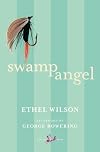
I can't believe I've never read this novel, though I had long heard of it. It's a good story about a woman in the 1950s deciding to leave an unhappy marriage and make her own way. Well written, with deep characters.
Lists
Awards


You May Also Like


Associated Authors
Statistics
- Works
- 12
- Also by
- 12
- Members
- 564
- Popularity
- #44,321
- Rating
- 3.8
- Reviews
- 24
- ISBNs
- 31
- Favorited
- 1