
Alistair MacLeod (1936–2014)
Author of No Great Mischief
About the Author
Alistair MacLeod is a professor of English at the University of Windsor, Ontario. He lives in Windsor & in Cape Breton, where he was raised. (Publisher Provided) Alistair MacLeod teaches at the University of Windsor, Ontario, and spends his summers on Cape Breton Island. (Publisher Provided) show more Alistair MacLeod was born in North Battleford, Saskatchewan, Canada on July 20, 1936. After receiving a Teacher's Certificate from the Nova Scotia Teacher's College, he obtained a B.A. and B.Ed. from St. Francis Xavier University, a M.A. from the University of New Brunswick, and a Ph.D. from the University of Notre Dame. He taught creative writing at Indiana University for three years and then moved to the University of Windsor, where he taught English and creative writing until his retirement in 2000. His wrote his first short story, The Boat, in 1968. He is best known for his short story collections including The Lost Salt Gift of Blood, As Birds Bring Forth the Sun and Other Stories, and Island. His only novel No Great Mischief received numerous awards including the Canadian Authors Association Award for Fiction, the Trillium Award, the Thomas Head Raddall Award, the Dartmouth Book and Writing Award for Fiction, the Atlantic Provinces Booksellers Choice Award, and the 2001 International IMPAC Dublin Literary Award. In 2008, he was made an officer of the Order of Canada. He died after suffering a stroke on April 20, 2014 at the age of 77. (Bowker Author Biography) show less
Disambiguation Notice:
Not to be confused with Scottish author "Alistair MacLean", the author of several works that have crept in here: Guns of Navarone, Ice Station Zebra, Force 10 from Navarone, and Circus.
Works by Alistair MacLeod
The Boat (short story) 1 copy
Associated Works
Hebbes ... : nieuwe smaakmakers voor ... — Contributor — 2 copies
Tagged
Common Knowledge
- Canonical name
- MacLeod, Alistair
- Legal name
- MacLeod, John Alexander Joseph
- Birthdate
- 1936-07-20
- Date of death
- 2014-04-20
- Gender
- male
- Education
- St. Francis Xavier University (BA ∙ BEd | 1960)
University of New Brunswick (MA|1961)
University of Notre Dame (PhD|1968)
Nova Scotia Teachers College - Occupations
- logger
miner
teacher
novelist
professor - Organizations
- University of Windsor
- Awards and honors
- Lannan Literary Award (Fiction ∙ 2003)
CBA Libris Award (Author of the Year ∙ 2000)
Order of Canada (Officer, 2007)
Portia White Prize (2001)
Royal Society of Canada (Fellow, 2007) - Relationships
- MacLeod, Alexander (son)
- Cause of death
- stroke
- Nationality
- Canada
- Birthplace
- North Battleford, Saskatchewan, Canada
- Places of residence
- Windsor, Ontario, Canada
Cape Breton, Nova Scotia, Canada
Fort Wayne, Indiana, USA
North Battleford, Saskatchewan, Canada (birthplace)
Dunvegan, Nova Scotia, Canada - Place of death
- Windsor, Ontario, Canada
- Disambiguation notice
- Not to be confused with Scottish author "Alistair MacLean", the author of several works that have crept in here: Guns of Navarone, Ice Station Zebra, Force 10 from Navarone, and Circus.
- Associated Place (for map)
- Canada
Members
Reviews

'The Zulus,' I said, recalling earlier conversations, 'always sing in the miners' componds. Our brothers said that after a while they could almost sing the songs, although they didn't know their meaning. It was as if one musical people were reaching out to join another.'
'I don't suppose,' she said after a moment of reflection, 'that you sing at your work?'
'No, I don't.'
'Do you subscribe to a concert series?'
'Yes,' I said.
'So do I. The performers are quite wonderful.'
'Yes, they are.'
Calum show more Ruadh (Calum the Red) landed in Nova Scotia in 1779 along with his six sons, six daughters, son-in-law, a dog that refused to be left behind, and a baby granddaughter born on the voyage a few days after the death of her grandmother. Two hundred years later, his gaelic-speaking Canadian descendants still have raven black hair or red hair and black eyes and own brown dogs that 'care too much and try too hard'.
The history of the highlanders in Scotland and Canada and the story of clann Chalum Ruaidh in particular, are told by orthodontist Alexander MacDonald, reminiscing when he meets up with his twin sister Catriona or his alcoholic oldest brother Calum. All three have ended up isolated from their roots after moving away from their birthplace on Cape Breton, but miss the closeness of the clan, and fall back into speaking Gaelic and telling old stories about their parents and grandparents when they meet up.
There is a lot of wistfulness, sadness and tragedy in this book, but they are balanced by warmth, togetherness and the security of belonging to a close-knit community with a shared history. I loved it. show less
'I don't suppose,' she said after a moment of reflection, 'that you sing at your work?'
'No, I don't.'
'Do you subscribe to a concert series?'
'Yes,' I said.
'So do I. The performers are quite wonderful.'
'Yes, they are.'
Calum show more Ruadh (Calum the Red) landed in Nova Scotia in 1779 along with his six sons, six daughters, son-in-law, a dog that refused to be left behind, and a baby granddaughter born on the voyage a few days after the death of her grandmother. Two hundred years later, his gaelic-speaking Canadian descendants still have raven black hair or red hair and black eyes and own brown dogs that 'care too much and try too hard'.
The history of the highlanders in Scotland and Canada and the story of clann Chalum Ruaidh in particular, are told by orthodontist Alexander MacDonald, reminiscing when he meets up with his twin sister Catriona or his alcoholic oldest brother Calum. All three have ended up isolated from their roots after moving away from their birthplace on Cape Breton, but miss the closeness of the clan, and fall back into speaking Gaelic and telling old stories about their parents and grandparents when they meet up.
There is a lot of wistfulness, sadness and tragedy in this book, but they are balanced by warmth, togetherness and the security of belonging to a close-knit community with a shared history. I loved it. show less
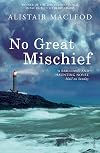
The past is ever present in the lives of the Scottish Highlanders who faced the long journey from their homelands after the debacle of the Jacobite uprisings of the mid-18th century. The descendants of the MacDonalds who emigrated to Cape Breton, Nova Scotia, are all either red haired or dark haired. Their kin tend toward twins, the speaking of Gaelic, songs of lament, and tragedy. Such is the case for these 20th century heirs in this sad but heartfelt tale. Late one March evening a husband show more and wife and their fourth son, Colin, disappear under the ice as they are making their way on foot across the ice bridge to the island on which the husband and father is the lighthouse keeper. Three older sons are left behind as well as twins just three years old. The twins, a boy and a girl, are left in the care of their paternal grandparents who live in town. The older boys retreat to the old family home in the hills to eke out a living and make their way as best they can. The youngest boy, now a grown man, is the narrator of this family saga. He is the ‘lucky, unlucky’. Lucky to be able to be raised in town by his grandparents. Unlucky in the circumstances that bring this about. But ‘lucky, unlucky’ might also describe the whole history of the Scottish Highlanders. And their collective sad tale is intermingled with the tale of this specific family of MacDonalds.
Alistair MacLeod’s writing is both sentimental and hard. He does not hide from the harshness of the lives of his subjects. Gruelling work, unexpected death, and violence abound. But so do songs and repeated adages, advice to this disparate and sometimes desperate clan. A counterpuntal narrative structure takes us from the late 20th century back through the lore to the late 18th century and forward again. And always the bond of blood remains stronger than any distance or difference that might arise.
At times the narrative structure betrays the author. It tends towards repetition, like a refrain in a long song, which becomes less palatable as the story transitions from archetype to particular. The more we know about the narrator and his siblings the less the repetitions work emotionally. They begin to feel thumping, as when in a raucous sing-along someone needs to be stomping a beat in order to keep the verse moving forward. And there is something curious about familial and national history that concentrates almost entirely on the tragic events and has very little to say of love or personal desire and achievement or thoughts beyond the most basic blood bonds. I kept wondering whether this was a peculiarity of MacLeod’s writing or a Scottish trait coming through. In either case it begins to tire the reader, I think. Or maybe I’m just inherently suspicious of writing that tugs on such nationalist and clannish heartstrings. show less
Alistair MacLeod’s writing is both sentimental and hard. He does not hide from the harshness of the lives of his subjects. Gruelling work, unexpected death, and violence abound. But so do songs and repeated adages, advice to this disparate and sometimes desperate clan. A counterpuntal narrative structure takes us from the late 20th century back through the lore to the late 18th century and forward again. And always the bond of blood remains stronger than any distance or difference that might arise.
At times the narrative structure betrays the author. It tends towards repetition, like a refrain in a long song, which becomes less palatable as the story transitions from archetype to particular. The more we know about the narrator and his siblings the less the repetitions work emotionally. They begin to feel thumping, as when in a raucous sing-along someone needs to be stomping a beat in order to keep the verse moving forward. And there is something curious about familial and national history that concentrates almost entirely on the tragic events and has very little to say of love or personal desire and achievement or thoughts beyond the most basic blood bonds. I kept wondering whether this was a peculiarity of MacLeod’s writing or a Scottish trait coming through. In either case it begins to tire the reader, I think. Or maybe I’m just inherently suspicious of writing that tugs on such nationalist and clannish heartstrings. show less
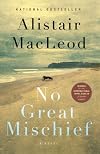
“I don’t like nostalgia unless it’s mine.” Lou Reed really sums up my feelings on this type of novel that is steeped so heavily in the past that it ceases to feel relevant. A middle aged orthodontist goes to visit his ailing alcoholic brother in downtown Toronto, and spends about 150 pages selecting a bottle of alcohol to buy for his brother (as if his brother really cares whether he gets gin or wine-- he just wants to get tight ok?!), while flashing back to his memories of the past. show more And we’re not just talking about his own memories, but also the memories of his ancestors who moved from the harsh Scottish highlands to the rugged isle of Cape Breton on the Atlantic coast of Canada. His great-great-great-grandfather is the patriarch of the clann Chalum Ruadh, a dynastic family who seem solely responsible for populating Cape Breton, whose hair only grows red or black, and whose members constantly remind each other of their insular creed “always look after your own blood.” I can see where the narrator honestly comes by his habit of dwelling on the past, as the main pastime of his family members also seems to be also be reminiscing, through sharing family legends, amusing anecdotes, or reflections on Scottish military history.
I don’t want to make fun of the difficulty of the immigration experience and how challenging it can be to preserve one’s own distinct culture in ye-olde-Canadian melting pot… but I can’t help but feel like this novel pushes it a little to far for my tastes sometimes, such as the weird wish fulfillment scene where the sister describes when on a visit to the Scottish highlands she is mystically recognized by wise locals as someone “returning home.” You know, that common experience of returning to the land of your ancestors and somehow belonging and being treated as if you never left… just because of a certain way you look?
Sometimes the stories were entertaining, but most often the recollections in this book were either dull, repetitive, or unintentionally comedic (every time I notice the moon, I can’t help but wistfully refer to it as the lamp of the poor now). It’s unfortunate that this Canadian modern-classic didn’t resonate as strongly with me as it has with other readers, but I’m hoping that MacLeod’s short stories will suit me better, as it seemed to be the structure and content, not the prose style that lost my interest with this novel. show less
I don’t want to make fun of the difficulty of the immigration experience and how challenging it can be to preserve one’s own distinct culture in ye-olde-Canadian melting pot… but I can’t help but feel like this novel pushes it a little to far for my tastes sometimes, such as the weird wish fulfillment scene where the sister describes when on a visit to the Scottish highlands she is mystically recognized by wise locals as someone “returning home.” You know, that common experience of returning to the land of your ancestors and somehow belonging and being treated as if you never left… just because of a certain way you look?
Sometimes the stories were entertaining, but most often the recollections in this book were either dull, repetitive, or unintentionally comedic (every time I notice the moon, I can’t help but wistfully refer to it as the lamp of the poor now). It’s unfortunate that this Canadian modern-classic didn’t resonate as strongly with me as it has with other readers, but I’m hoping that MacLeod’s short stories will suit me better, as it seemed to be the structure and content, not the prose style that lost my interest with this novel. show less
Had never heard of this book till a friend said it was her favourite read ever...I see what she means.
A 50-something dentist goes to visit his alcoholic brother in an insalubrious Toronto boarding house. In succeeding chapters, he recalls incidents in their shared life. Moving back and forth through time...a conversation here, an event there....going back even further to the family mythology of their first Scottish forebears to migrate to Canada...this is the most tremendously moving show more novel.
The thing that stood out for me was how the writing is SO superb that he can wring your heart, even for characters who have barely appeared. Brother Colin is hardly mentioned until...an event occurs....yet that doesnt stop the reader being completely caught up in the trauma. Subsequent references to him just add to it.
Although a family memoir, Macleod is also aware of the experience of immigrants...from the Mexican fruit-pickers to the Vietnamese facing US aggression and the Masai...encountered on an African holiday...being pushed out. He links these to his own family, fleeing the problems in Scotland for more difficulties in the harsh new life. The first Highland soldiers, serving under a sceptical General Wolfe, were seen as without value, it being, in his view, "no great mischief if they fall". And as the Gaelic-speaking clan in Canada come to face death, jail, violence,antipathy, maybe they feel the modern world views them similarly.
One of best books I've ever read. Got it from library but will order my own copy to keep..Superb writing. show less
A 50-something dentist goes to visit his alcoholic brother in an insalubrious Toronto boarding house. In succeeding chapters, he recalls incidents in their shared life. Moving back and forth through time...a conversation here, an event there....going back even further to the family mythology of their first Scottish forebears to migrate to Canada...this is the most tremendously moving show more novel.
The thing that stood out for me was how the writing is SO superb that he can wring your heart, even for characters who have barely appeared. Brother Colin is hardly mentioned until...an event occurs....yet that doesnt stop the reader being completely caught up in the trauma. Subsequent references to him just add to it.
Although a family memoir, Macleod is also aware of the experience of immigrants...from the Mexican fruit-pickers to the Vietnamese facing US aggression and the Masai...encountered on an African holiday...being pushed out. He links these to his own family, fleeing the problems in Scotland for more difficulties in the harsh new life. The first Highland soldiers, serving under a sceptical General Wolfe, were seen as without value, it being, in his view, "no great mischief if they fall". And as the Gaelic-speaking clan in Canada come to face death, jail, violence,antipathy, maybe they feel the modern world views them similarly.
One of best books I've ever read. Got it from library but will order my own copy to keep..Superb writing. show less
Lists
Canada (1)
Awards


You May Also Like


Associated Authors
Statistics
- Works
- 11
- Also by
- 10
- Members
- 3,435
- Popularity
- #7,402
- Rating
- 4.0
- Reviews
- 96
- ISBNs
- 79
- Languages
- 10
- Favorited
- 25


