

V. S. Naipaul (1932–2018)
Author of A House for Mr Biswas
About the Author
Vidiadhar Surajprasad Naipaul was born of Indian ancestry in Chaguanas, Trinidad on August 17, 1932. He was educated at University College, Oxford and lived in Great Britain since 1950. From 1954 to 1956, he edited a radio program on literature for the British Broadcasting Corporation's Caribbean show more Service. His first novel, The Mystic Masseur, was published in 1957. His other novels included A House for Mr. Biswas, A Bend in the River, Guerrillas, and Half a Life. In a Free State won the Booker Prize in 1971. He started writing nonfiction in the 1960s. His first nonfiction book, The Middle Passage, was published in 1962. His other nonfiction works included An Area of Darkness, Among the Believers, Beyond Belief, and A Turn in the South. He was knighted in 1990 and received the Nobel Prize in Literature in 2001. He died on August 11, 2018 at the age of 85. (Bowker Author Biography) show less
Series
Works by V. S. Naipaul
Een bocht in de rivierBocht in de rivier 17 copies
Oeuvres romanesques choisies : Dans un état libre, Guérilleros, A la courbe du fleuve, L'Enigme de l'arrivée (2009) 4 copies
Two worlds: the 2001 Nobel Lecture.(Column) : An article from: World Literature Today (2002) 2 copies
Fedeli a oltrananza 1 copy
un'area di tenebra 1 copy
The House For Mr Biswas 1 copy
Literary Occasions 1 copy
Indie. Miliony zbuntowanych 1 copy
QYTETI BRI LUMIT 1 copy
Măscăricii 1 copy
Un recodo en el río 1 copy
The Middle Passage 1 copy
Blant de troende 1 copy
Half a Life 1 copy
Gerilja 1 copy
Utrata el Dorado 1 copy
A new king for the Congo 1 copy
Bim 1 copy
In a Free State: One Out of Many; Tell Me Who to Kill; in a Free State (Penguin Twentieth Century Classics) (2001) 1 copy
The painter of signs 1 copy
V ohybu řeky 1 copy
La fin du roman 1 copy
“One Out of Many” 1 copy
B. Wordsworth 1 copy
במדינה חופשית 1 copy
Das Rätsel Der Ankunft 1 copy
Conrad's Darkness 1 copy
Argentine terror: a memoir 1 copy
A Bend In The River 1 copy
Associated Works
Points of View: An Anthology of Short Stories, Revised & Updated Edition (1995) — Contributor — 443 copies, 7 reviews
A World of Difference: An Anthology of Short Stories from Five Continents (2008) — Contributor — 110 copies, 1 review
Antaeus No. 61, Autumn 1988 - Journals, Notebooks & Diaries (1988) — Contributor — 38 copies, 2 reviews
Fotspår : noveller ur Sveriges radio P1:s serie Författarskap på fötter (2003) — Contributor — 5 copies
Tagged
Common Knowledge
- Canonical name
- Naipaul, V. S.
- Legal name
- Naipaul, Sir Vidiadhar Surajprasad
- Birthdate
- 1932-08-17
- Date of death
- 2018-08-11
- Gender
- male
- Education
- University of Oxford (University College|BA|1953)
- Occupations
- novelist
travel writer
essayist - Organizations
- Foreign Honorary Member, American Academy of Arts and Letters (Literature, 1981)
Fellow, Royal Asiatic Society of Great Britain and Ireland
Society of Authors (1956) - Awards and honors
- Nobel Prize (Literature ∙ 2001)
Royal Society of Literature (Fellow, 1962)
Knight Bachelor (1990)
Royal Society of Literature (Companion of Literature, 1994)
David Cohen British Literature Prize (1993)
T. S. Eliot Award (1986) (show all 10)
Trinity Cross (1989)
Phoenix Trust Award (1963)
Bennett Award (1980)
Jerusalem Prize (1983) - Agent
- Gillon Aitken Associates Ltd
William Loverd - Relationships
- Naipaul, Shiva (brother)
Naipaul, Seepersad (father)
Bissoondath, Neil (nephew)
Hale, Patricia (wife, died 1996)
Naipaul, Nadira (wife) - Nationality
- Trinidad and Tobago
UK - Birthplace
- Chaguanas, Trinidad and Tobago
- Places of residence
- Trinidad (birth)
UK - Place of death
- London, England, UK
- Burial location
- Kensal Green Cemetery, London, England, UK
- Map Location
- Trinidad and Tobago
Members
Discussions
British Author Challenge May 2021: Na'ima B. Robert & V. S. Naipaul in 75 Books Challenge for 2021 (December 2021)
May 2014: V. S. Naipaul in Monthly Author Reads (September 2018)
V. S. Naipaul 1932 - 2018 in 1001 Books to read before you die (August 2018)
Reviews

I found this one of the more enjoyable Naipaul books with his searing description of India and the Indians, and the poetic writing. There were many memorable phrases eg. 'sensationally unwashed people'. This phrase alone is indicative of Naipaul's brutal description of India, some of which seem funny and comical but is in reality, a harsh indictment of the country. He explains how the caste system leads to India's lack of progress. Enlightening for a foreigner like me, but understandably show more distasteful for a citizen of the country. There were some difficult chapters. In the end, India remains an area of darkness to him, and to us. show less
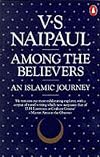
The end of the 1970s and the beginning of the 1980s were a turning point for Islam. The revolution which saw Khomeini took power in Iran inspired other countries, some of which would also sink into the same hellish darkness that was such an Islamist theocracy. The world, suddenly, seemed to be waking up to a new religious fanaticism getting more and more support and traction. Women disappeared under burkas, opponents were thrown into jail or publicly stoned to death, citizens wiped in the show more streets, embassies taken hostages, and, even Mecca itself had to witness a bloodbath within its walls.
V.S. Naipaul knew then next to nothing about Islam. Like many back then, he was completely ignorant of its history and of its theological quarrels. Yet, despite his ignorance (or, rather, because of it) he nevertheless wanted to understand, try and grab the reasons why it became more and more important, having such a growing impact into various parts of the world. Between 1979 and 1980, he decided therefore to set upon a seven months journey across four countries where such religion will take major proportions: Iran, Pakistan, Malaysia, and Indonesia.
In a chaotic climate, he made his way from urban centres to more isolated regions, meeting commoners as much as intellectual, political and religious personalities, to discover Islam even in its more totalitarian and barbaric aspects. It was about forty years ago. It all sounds all too familiar even nowadays.
Instructive, the more we progress in the book and the more we witness indeed how such countries are sinking deeper and deeper into hell. A new religious obscurantism is spreading under our eyes, serving political and nationalistic interests, and embodying the hates and frustrations of whole lands going lost. Lucid, it's more than about mere politics, though. Everywhere indeed, it's first of all about Muslims fighting other Muslims, sects of fanatics versus other sects of fanatics and using Islam as a fuel for their own profits. Faith is here more than a religious beliefs; it purport to shape a whole totalitarian mindset aspiring to be the root of whole new identities. Faith, here, is not an abstract concept dealing with the supernatural -it is, on the contrary, a dogma which ought to build a whole new civilisation and culture leaving absolutely no space for critical thinking nor compromise. To travel alongside Naipaul is therefore to have your eyes being open to the dreadful dangers of such a goal, where a fanatic view of a religion is used to try and solve problems which are first and foremost political and economic. This, of course, could only give birth to brutal proselytes, wishing the creation of a society of uncompromising believers to be a new utopia rallying many dispossessed. We know where it has led...
Here's a chilling read, but also a strange odyssey indeed. Naipaul, despite its original ignorance, remains open minded all along. He offers us to see first and foremost a divided Islam, a religion preyed upon by intense and irreconcilable theological disputes, challenging each others for sure but all being nevertheless dangerous Pandora boxes. The blind faith such fanaticisms demanded, the submission of Reason and thought to extreme religious dogma used for political gains was worrying then. We can now see its repercussions, terrible, nowadays.
A necessary read to at least understand one thing: the writing was on the wall long enough. show less
V.S. Naipaul knew then next to nothing about Islam. Like many back then, he was completely ignorant of its history and of its theological quarrels. Yet, despite his ignorance (or, rather, because of it) he nevertheless wanted to understand, try and grab the reasons why it became more and more important, having such a growing impact into various parts of the world. Between 1979 and 1980, he decided therefore to set upon a seven months journey across four countries where such religion will take major proportions: Iran, Pakistan, Malaysia, and Indonesia.
In a chaotic climate, he made his way from urban centres to more isolated regions, meeting commoners as much as intellectual, political and religious personalities, to discover Islam even in its more totalitarian and barbaric aspects. It was about forty years ago. It all sounds all too familiar even nowadays.
Instructive, the more we progress in the book and the more we witness indeed how such countries are sinking deeper and deeper into hell. A new religious obscurantism is spreading under our eyes, serving political and nationalistic interests, and embodying the hates and frustrations of whole lands going lost. Lucid, it's more than about mere politics, though. Everywhere indeed, it's first of all about Muslims fighting other Muslims, sects of fanatics versus other sects of fanatics and using Islam as a fuel for their own profits. Faith is here more than a religious beliefs; it purport to shape a whole totalitarian mindset aspiring to be the root of whole new identities. Faith, here, is not an abstract concept dealing with the supernatural -it is, on the contrary, a dogma which ought to build a whole new civilisation and culture leaving absolutely no space for critical thinking nor compromise. To travel alongside Naipaul is therefore to have your eyes being open to the dreadful dangers of such a goal, where a fanatic view of a religion is used to try and solve problems which are first and foremost political and economic. This, of course, could only give birth to brutal proselytes, wishing the creation of a society of uncompromising believers to be a new utopia rallying many dispossessed. We know where it has led...
Here's a chilling read, but also a strange odyssey indeed. Naipaul, despite its original ignorance, remains open minded all along. He offers us to see first and foremost a divided Islam, a religion preyed upon by intense and irreconcilable theological disputes, challenging each others for sure but all being nevertheless dangerous Pandora boxes. The blind faith such fanaticisms demanded, the submission of Reason and thought to extreme religious dogma used for political gains was worrying then. We can now see its repercussions, terrible, nowadays.
A necessary read to at least understand one thing: the writing was on the wall long enough. show less
Having never been to India, I feel bad criticizing a travel writer about their perceptions of the country. Unfortunately, I found V.S. Naipaul's An Area of Darkness: A Discovery of India to be disparaging, hypercritical, and persnickety.
I had previously read Naipaul's A House for Mr. Biswas and Miguel Street, two books I enjoyed despite having some of the same criticisms. I had also read several criticisms that point out Naipaul's pro-British, pro-colonialist attitudes. Those attitudes were show more on full display in this treatment of India. Every person he meets is portrayed as a one-dimensional beggar who is stuck in their misguided, antiquated ways.
In the book, Naipaul acts like a man staring out a window, casting judgments on the world around him. Reading his negative quibbles was quite a chore. Naipaul is a gifted writer and his prose can be lovely, but this wasn't enough to save the book from his constant grumbling about the uneducated people around him.
In this book, it is easy to see why many critics have found disfavor with Naipaul. The racism he shows here is less apparent than in A Bend in the River or in some of his essays, but his colonialist attitudes are on full display. show less
I had previously read Naipaul's A House for Mr. Biswas and Miguel Street, two books I enjoyed despite having some of the same criticisms. I had also read several criticisms that point out Naipaul's pro-British, pro-colonialist attitudes. Those attitudes were show more on full display in this treatment of India. Every person he meets is portrayed as a one-dimensional beggar who is stuck in their misguided, antiquated ways.
In the book, Naipaul acts like a man staring out a window, casting judgments on the world around him. Reading his negative quibbles was quite a chore. Naipaul is a gifted writer and his prose can be lovely, but this wasn't enough to save the book from his constant grumbling about the uneducated people around him.
In this book, it is easy to see why many critics have found disfavor with Naipaul. The racism he shows here is less apparent than in A Bend in the River or in some of his essays, but his colonialist attitudes are on full display. show less

Willie Chandran has a passive personality, and he knows it. But he's a useful instrument for for the author who created him: if anyone who's liable to be swept along by the tides of history, it's a man who admits that his only talent is to be invisible. So, thanks to the machinations of his strong-willed sister, Willie goes from a cosseted life as a member of the ruling class in what is now Mozambique to a Communist struggle in depths of Indias jungles in just a few pages. By the time "Magic show more Seeds" ends, he finds himself in what seems to be an unbearably faux but nonetheless prosperous simulacrum of Britain. Willie is a man who seems to have lived through the extremes of the last half of the twentieth century without really trying to. As he seems directionless and defenseless most of the time, I had to feel sorry for him.
But there are also aspects of this novel that reminded me how good a writer V.S. Naipaul really was. Even though his uncompromising conservative views were no secret, he resists the urge to speechify while Willie is fighting for class revolution in the poorest parts of rural India. He's smart enough to show the inevitable contradictions of this experience and demonstrate why most of these uprisings tend to fail. There's even a bit of dark humor in his description of middle-class Indian types who have left their old lives behind enduring privation in the wild for a class of people they barely know and cannot trust. Similarly, I can't help but see the author smiling as he describes how unbearable Willie finds his fellow communists once he is imprisoned with them. It's to his credit, though, that Naipaul's too god a writer to get mean about all of this.
As the book comes to a close, Saroji's connection to India and revolutionary dreams slowly fade and Willie finds himself in a neoliberal, increasingly postmodern Britain. But all this has less to do with any decision than these characters take than the general drift of history. If you like, it's a masterful example of plot-as-analogy: what effect do the decisions that two misfits like Willie and Saronji really have when placed against the background of world-historical change? At the very end, Willie finally seems to find a scrap of wisdom that he can hold on to, something that he can really use. A few pages beforehand, he laments that he is simply too old to make a fresh started, but I noted that he was about my age when he says this. There are some major changes I'd like to make in my own life: I'm sad to say that I identified with Willie more than I would have liked to. For his sake, and for my own, I hope he was wrong on this point. show less
But there are also aspects of this novel that reminded me how good a writer V.S. Naipaul really was. Even though his uncompromising conservative views were no secret, he resists the urge to speechify while Willie is fighting for class revolution in the poorest parts of rural India. He's smart enough to show the inevitable contradictions of this experience and demonstrate why most of these uprisings tend to fail. There's even a bit of dark humor in his description of middle-class Indian types who have left their old lives behind enduring privation in the wild for a class of people they barely know and cannot trust. Similarly, I can't help but see the author smiling as he describes how unbearable Willie finds his fellow communists once he is imprisoned with them. It's to his credit, though, that Naipaul's too god a writer to get mean about all of this.
As the book comes to a close, Saroji's connection to India and revolutionary dreams slowly fade and Willie finds himself in a neoliberal, increasingly postmodern Britain. But all this has less to do with any decision than these characters take than the general drift of history. If you like, it's a masterful example of plot-as-analogy: what effect do the decisions that two misfits like Willie and Saronji really have when placed against the background of world-historical change? At the very end, Willie finally seems to find a scrap of wisdom that he can hold on to, something that he can really use. A few pages beforehand, he laments that he is simply too old to make a fresh started, but I noted that he was about my age when he says this. There are some major changes I'd like to make in my own life: I'm sad to say that I identified with Willie more than I would have liked to. For his sake, and for my own, I hope he was wrong on this point. show less
Lists
Elegant Prose (1)
Obama Reads (1)
Five star books (1)
read in 2026 (1)
. (1)
. (1)
Read This Next (1)
AP Lit (3)
Allie's Wishlist (2)
Booker Prize (3)
A Novel Cure (3)
Favourite Books (2)
Africa (1)
Big Jubilee List (1)
Revolutions (1)
hopes (1)
1970s (2)
Awards


You May Also Like


Associated Authors
Statistics
- Works
- 96
- Also by
- 22
- Members
- 25,761
- Popularity
- #812
- Rating
- 3.6
- Reviews
- 398
- ISBNs
- 963
- Languages
- 26
- Favorited
- 80

