
William Dalrymple (1) (1965–)
Author of The Anarchy : The Relentless Rise of the East India Company
For other authors named William Dalrymple, see the disambiguation page.
About the Author
William Dalrymple wrote the highly acclaimed British best-seller In Xanadu when he was twenty-two. It won the 1990 Yorkshire Post Best First Work Award and a Scottish Arts Council Spring Book Award; it was also shortlisted for the John Llewelyn Rhys Memorial Prize. His second book, City of Djinns, show more won the 1994 Thomas Cook Travel Book Award and the Sunday Times Young British Writer of the Year Award. From the Holy Mountain was awarded the Scottish Arts Council Autumn Book Award for 1997; it was also shortlisted for the 1998 Thomas Cook Award, the John Lewelyn Rhys Memorial Prize, and the Duff Cooper Prize. A collection of his essays on India, The Age of Kali, was published in 1998. Dalrymple is a fellow of the Royal Society of Literature and of the Royal Asiatic Society and in 2002 was awarded the Mungo Park Medal by the Royal Scottish Geographic Society for his "outstanding contribution to travel literature." He is married to the artist Olivia Fraser, and they have three children. They now divide their time between London and Delhi show less
Image credit: PalFest 2008: William Dalrymple, Esther Freud and Dr. Hanan Ashrawi By palfest - https://www.flickr.com/photos/palfest/4143663148/, CC BY 2.0, https://commons.wikimedia.org/w/index.php?curid=14808652
Works by William Dalrymple
The New Cambridge History of India: A Social History of the Deccan, 1300-1761 (1993) — Contributor — 54 copies
Forgotten Masters: Indian Painting for the East India Company (2019) — Editor; Contributor — 51 copies
The Company Quartet: The Anarchy, White Mughals, Return of a King and The Last Mughal (2021) 17 copies
Associated Works
The Condé Nast Traveler Book of Unforgettable Journeys: Great Writers on Great Places (2007) — Contributor — 280 copies, 5 reviews
Not So Funny When It Happened: The Best of Travel Humor and Misadventure (2000) — Contributor — 247 copies, 8 reviews
Begums, Thugs, and White Mughals: The Journals of Fanny Parkes (2002) — Editor; Introduction — 115 copies, 4 reviews
World Monuments: 50 Irreplaceable Sites to Discover, Explore, and Champion (2015) — Contributor. — 20 copies
A Love Letter to Europe: An Outpouring of Sadness and Hope from Writers, Thinkers, and Artists (2019) — Contributor — 11 copies
Pigment, Form and Light : the Arts of India, 1550-1900. 2nd October-14th November 2015 (2015) — Contributor — 1 copy
Tipu, the Daniells and Co.: Company School Painting in India — Introduction — 1 copy
Tagged
Common Knowledge
- Canonical name
- Dalrymple, William
- Legal name
- Hamilton-Dalrymple, William Benedict
- Other names
- Dalrymple, William
- Birthdate
- 1965-03-20
- Gender
- male
- Education
- Trinity College, Cambridge (BA)
Ampleforth College - Occupations
- journalist
historian
travel writer
art historian
curator - Awards and honors
- Order of the British Empire (Commander, 2023)
Royal Astronomical Society (Fellow)
Royal Society of Edinburgh (Corresponding Fellow, 2018)
Royal Society of Literature (Fellow, 1995)
Royal Asiatic Society (Fellow)
Royal Geographical Society (Fellow) (show all 25)
Royal Historical Society (Fellow, 2022)
Royal Geographical Society Mungo Park Medal (2002)
Sir Percy Sykes Memorial Medal (2005)
Wolfson Prize for History (2001)
President's Medal, British Academy (2018)
Duff Cooper Memorial Prize (2007)
Arthur Ross Book Award (Bronze Medal, 2020)
Grierson Award (2002)
Sandford St Martin Prize (2002)
Minerva Medal (2022)
Hemingway Prize (2015)
Ryszard Kapuściński Award (2015)
French Prix d'Astrolabe (2005)
Honorary Doctorate, University of St Andrews (2006)
Honorary Doctorate, University of Aberdeen (2008)
Honorary Fellow, Association of Scottish Literature (2024)
Colonel James Tod Award (2008)
Asia House Award for Asian Literature (2010)
Vodafone Crossword Book Award (2007) - Relationships
- Fraser, Olivia (wife)
Dalrymple, Sam (son) - Nationality
- UK
- Birthplace
- Edinburgh, Scotland, UK
- Places of residence
- Firth on Forth, Scotland, UK
London, England, UK
Delhi, India
Edinburgh, Scotland, UK - Map Location
- Scotland, UK
Members
Discussions
BRITISH AUTHOR CHALLENGE FEBRUARY - CHRISTIE & DALRYMPLE in 75 Books Challenge for 2016 (March 2016)
Reviews
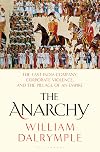
The Anarchy is a masterful, comprehensive, and ultimately frustrating account of how the British East India Company conquered India between the 1757 Battle of Plassey and it's apex at 1803. At it's height, the EIC army was twice the size of the British Army (this during the Napoleonic Wars), and ruled a territory significantly more prosperous and populated than Western Europe. The EIC was in some senses an extension of contemporary standard practice, the EIC was not the first joint stock show more company nor the first European colonial conquest, but the EIC was unique in it's multinational reach, its corporate sovereignty, its massive bailouts as perhaps the first 'too big to fail' entity, and the brutality of it's operations.
The EIC had been operating since 1600, founded by Elizabethan buccaneers like Sir Francis Drake, and a relatively minor player compared to the Portuguese and Dutch East India Companies. European tensions in the form of the Seven Years War, and the slow decay of the Mughal Empire in India, saw a series of battles that culminated at Plassey, where the brutally efficient Clive defeated the simply brutal Siraj ud-Daulah and took direct control of the rich Bengal provinces. Over the next 40 years, a swirling series of wars between Mughals, Marathas, and Afghans provided further opportunities for the EIC to expand their territories and finally crush all opposition.
The sources and writing are masterful. The frustrating part is that while Dalrymple points to the EIC as a prototype for modern corporate forms, he has little to say about how they managed to conquer India. In one sense, the situation was basically asymmetric. It was British ships anchored off Calcutta, not Mughal ships in the Thames; and who would sail halfway around the world to trade with barbaric and impoverished shepherds anyway? (That's the British, the barbarians there). European military technology, which centered on musket line infantry firing in files, was superior to Mughal armies based around heavy armored cavalry, but it was hardly a situation like Pizarro's gunpowder and steel against New World nations lacking metalworking. Most of the EIC soldiers were sepoys, Indians trained to fight European style, and Indian potentates were quick to adapt European tactics, with French mercenaries serving as a particular nemesis of the EIC. Indian princes were a distinct mixed bunch as commanders, perhaps a third solid, a third interested more in the arts than warfare, and a third absolute incompetents. The EIC was hardly free of problems. Warren Hastings, for decades the most powerful company man in India, fought a duel against his nominal British government overseer and was later impeached for his troubles.
The ultimate reason the company succeed may simply come down to finance. An EIC sepoy was paid three to four times what a Mughal equivalent would get, and that is if the local was paid at all. The EIC made strong pacts with local bankers, and paid its debts on time and in full. Perhaps the greatest irony is that Indian merchants were fully complicit in the conquest, and in draining the wealth of the subcontinent to Europe. Even as General Cornwallis (yes, that Cornwallis) instituted a series of racist laws to prevent the rise of local elites similar to those who had defeated him in North America, enough Indians saw the EIC as no worse than previous overlords to enable their conquest. show less
The EIC had been operating since 1600, founded by Elizabethan buccaneers like Sir Francis Drake, and a relatively minor player compared to the Portuguese and Dutch East India Companies. European tensions in the form of the Seven Years War, and the slow decay of the Mughal Empire in India, saw a series of battles that culminated at Plassey, where the brutally efficient Clive defeated the simply brutal Siraj ud-Daulah and took direct control of the rich Bengal provinces. Over the next 40 years, a swirling series of wars between Mughals, Marathas, and Afghans provided further opportunities for the EIC to expand their territories and finally crush all opposition.
The sources and writing are masterful. The frustrating part is that while Dalrymple points to the EIC as a prototype for modern corporate forms, he has little to say about how they managed to conquer India. In one sense, the situation was basically asymmetric. It was British ships anchored off Calcutta, not Mughal ships in the Thames; and who would sail halfway around the world to trade with barbaric and impoverished shepherds anyway? (That's the British, the barbarians there). European military technology, which centered on musket line infantry firing in files, was superior to Mughal armies based around heavy armored cavalry, but it was hardly a situation like Pizarro's gunpowder and steel against New World nations lacking metalworking. Most of the EIC soldiers were sepoys, Indians trained to fight European style, and Indian potentates were quick to adapt European tactics, with French mercenaries serving as a particular nemesis of the EIC. Indian princes were a distinct mixed bunch as commanders, perhaps a third solid, a third interested more in the arts than warfare, and a third absolute incompetents. The EIC was hardly free of problems. Warren Hastings, for decades the most powerful company man in India, fought a duel against his nominal British government overseer and was later impeached for his troubles.
The ultimate reason the company succeed may simply come down to finance. An EIC sepoy was paid three to four times what a Mughal equivalent would get, and that is if the local was paid at all. The EIC made strong pacts with local bankers, and paid its debts on time and in full. Perhaps the greatest irony is that Indian merchants were fully complicit in the conquest, and in draining the wealth of the subcontinent to Europe. Even as General Cornwallis (yes, that Cornwallis) instituted a series of racist laws to prevent the rise of local elites similar to those who had defeated him in North America, enough Indians saw the EIC as no worse than previous overlords to enable their conquest. show less
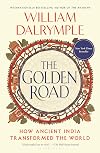
William Dalrymple’s introduction to The Golden Road opens with the words of the seventh century Chinese Buddhist monk Xuanzhang: “People of distant places, with diverse customs,” he wrote, “generally designate the land they most admire as India.”
From there the author is off exploring the rise and influence of India on China, southeast Asia, the Roman empire, Muslim rulers from India itself to Spain, and from there into medieval Europe from 250 BC to 1200 AD. Indian ideas, culture, show more art, technology, religion, language, mathematics, architecture and astronomy spread widely and were adopted and innovated on by peoples throughout Europe and Asia.
Much of this soft-power “Indosphere” of influence (soft-power meaning not as a result of conquering) has its basis in the position of the Indian subcontinent in the middle of a sea route that facilitated the movement of goods, people and ideas. This sea route is the Golden Road of the book’s title. Dalrymple convincingly lays out the case for the Golden Road preceding, and far surpassing in importance, the so called “Silk Road”, the land route for trade between China and the West.
To the Roman Empire went jewels, spices. silk, cotton, teak and sandalwood from India, usually in exchange for gold. Roman coins, Dalrymple notes, “are found today by archeologists in their tens of thousands, as they have been since the eighteenth century when [the] East India Company…report[ed] the discovery of ‘five cooly-loads’ of Roman gold coins.” Sometimes the trade was carried on Roman ships, but many times it went on Indian ships. The largest ancient Indian ships were big enough to carry 1000 people or 3000 amphorae (the Greek / Roman clay jars that held trade goods (mainly wine) in those days).
To China went teachers and monks who inspired Buddhist converts to travel back to India for education and enlightenment at the monastery university of Nolanda, which at the time wasvprobably the greatest center of education in the world, with a library holding at least as many works as the famous one at Alexandria. Nolanda drew students not only from China but from throughout southeast Asia.
Dalrymple spends a good bit in the middle of the book exploring the Indian influence on the Khmer Empire of Cambodia, of particular interest to me as I had the opportunity to travel through Cambodia last year with my husband, and visit the Hindu / Buddhist temples at Angkor Wat, the largest religious complex in the world.
Also covered is the spread and adoption of the decimal number system and the concept of zero. Long thought in the west to be Muslim (particularly Arabic) innovations, these ideas in reality have their roots in Indian mathematics.
This is not a dry academic tome, instead its a quite readable and relatively short episodic history - just shy of 300 pages of narrative plus extensive notes. Anyone with interest in world history would find this to be a welcome work that expands our understanding of ancient cultures and gives India its due for its truly world-spanning ancient influence. show less
From there the author is off exploring the rise and influence of India on China, southeast Asia, the Roman empire, Muslim rulers from India itself to Spain, and from there into medieval Europe from 250 BC to 1200 AD. Indian ideas, culture, show more art, technology, religion, language, mathematics, architecture and astronomy spread widely and were adopted and innovated on by peoples throughout Europe and Asia.
Much of this soft-power “Indosphere” of influence (soft-power meaning not as a result of conquering) has its basis in the position of the Indian subcontinent in the middle of a sea route that facilitated the movement of goods, people and ideas. This sea route is the Golden Road of the book’s title. Dalrymple convincingly lays out the case for the Golden Road preceding, and far surpassing in importance, the so called “Silk Road”, the land route for trade between China and the West.
To the Roman Empire went jewels, spices. silk, cotton, teak and sandalwood from India, usually in exchange for gold. Roman coins, Dalrymple notes, “are found today by archeologists in their tens of thousands, as they have been since the eighteenth century when [the] East India Company…report[ed] the discovery of ‘five cooly-loads’ of Roman gold coins.” Sometimes the trade was carried on Roman ships, but many times it went on Indian ships. The largest ancient Indian ships were big enough to carry 1000 people or 3000 amphorae (the Greek / Roman clay jars that held trade goods (mainly wine) in those days).
To China went teachers and monks who inspired Buddhist converts to travel back to India for education and enlightenment at the monastery university of Nolanda, which at the time wasvprobably the greatest center of education in the world, with a library holding at least as many works as the famous one at Alexandria. Nolanda drew students not only from China but from throughout southeast Asia.
Dalrymple spends a good bit in the middle of the book exploring the Indian influence on the Khmer Empire of Cambodia, of particular interest to me as I had the opportunity to travel through Cambodia last year with my husband, and visit the Hindu / Buddhist temples at Angkor Wat, the largest religious complex in the world.
Also covered is the spread and adoption of the decimal number system and the concept of zero. Long thought in the west to be Muslim (particularly Arabic) innovations, these ideas in reality have their roots in Indian mathematics.
This is not a dry academic tome, instead its a quite readable and relatively short episodic history - just shy of 300 pages of narrative plus extensive notes. Anyone with interest in world history would find this to be a welcome work that expands our understanding of ancient cultures and gives India its due for its truly world-spanning ancient influence. show less
https://fromtheheartofeurope.eu/nine-lives-by-william-dalrymple/
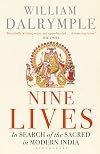
One of William Dalrymple’s lyrical explorations of India, this tells the stories of nine people with roles in Indian religion – mostly Hinduism, though the point is well made both by Dalrymple and by several of his interlocutors that it’s all a bit syncretic, and drawing strict boundaries between different faiths is not a good path to understanding.
People who think that all religion is bollocks won’t find much to like in show more this book. But if you are interested in the belief and faith systems of the largest country in the world by population, this is a very enlightening guide to what nine of the 1.4 billion think, at least as reported by one observer. (No doubt, like any good writer, he has combined material from a number of sources to create nine good stories.)
There’s the Jain nun. There’s the prison warder who becomes a dancing god for two months a year. There’s the singer of epic poems which take five days to recite. There’s the woman Sufi mystic. There’s the maker of bronze idols. There’s the tantric guardian of the cremation grounds. There’s the blind bard of Bengal. Dalrymple respectfully gives them all their voices
And saddest of all is the Devadasi, the temple prostitute who has been servicing worshippers sexually since she was a young girl. Supposedly this practice was made illegal by both the British and by independent India, but it has simply gone underground, with even less protection for the women and girls who get involved. In general my instincts are for the legalisation of sex work where all involved are consenting adults, but that’s not what is going on here, and the story of Rani Bai is heart-rending. show less
One of William Dalrymple’s lyrical explorations of India, this tells the stories of nine people with roles in Indian religion – mostly Hinduism, though the point is well made both by Dalrymple and by several of his interlocutors that it’s all a bit syncretic, and drawing strict boundaries between different faiths is not a good path to understanding.
People who think that all religion is bollocks won’t find much to like in show more this book. But if you are interested in the belief and faith systems of the largest country in the world by population, this is a very enlightening guide to what nine of the 1.4 billion think, at least as reported by one observer. (No doubt, like any good writer, he has combined material from a number of sources to create nine good stories.)
There’s the Jain nun. There’s the prison warder who becomes a dancing god for two months a year. There’s the singer of epic poems which take five days to recite. There’s the woman Sufi mystic. There’s the maker of bronze idols. There’s the tantric guardian of the cremation grounds. There’s the blind bard of Bengal. Dalrymple respectfully gives them all their voices
And saddest of all is the Devadasi, the temple prostitute who has been servicing worshippers sexually since she was a young girl. Supposedly this practice was made illegal by both the British and by independent India, but it has simply gone underground, with even less protection for the women and girls who get involved. In general my instincts are for the legalisation of sex work where all involved are consenting adults, but that’s not what is going on here, and the story of Rani Bai is heart-rending. show less
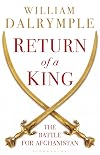
Dalrymple has steeped himself in the history of India and Afghanistan and in this book displays his knowledge and research with skill and a lightness of touch. His telling of Britain's First Afghan War and its ultimate complete failure is detailed, complete, exciting and carries warnings for our own times, connections that he often makes. The narrative is thrilling and drives forwards to an almost inevitable disaster of Britain's own making so the reader wants to find out what happens show more next.
The history of Afghanistan, the cultures, the people and the historical sources are all new to me, so this becomes a revelation to find the density of political, dynastic and cultural viewpoints available to bring the story to life. An exceptional reminder that history is not just something that happened here, but that happens everywhere.
Neither the British nor the Afghanis come out of this tale smelling so sweetly. British imperialism and an assumption of superiority led them to ignore the politics on the ground and ultimately alienate a peoples who were initially only to willing to support them. The Afghan reluctance to accept a place in the wider world and to resists cultural and political change led them to 'win' this War, but to lose the opportunity to enter a wider world' a position that has not really changed since then.
A very readable history revealing much that is new to the Western reader and which provides the opportunity to reflect on how history can teach us how to act for the better today, if only we would let it. show less
The history of Afghanistan, the cultures, the people and the historical sources are all new to me, so this becomes a revelation to find the density of political, dynastic and cultural viewpoints available to bring the story to life. An exceptional reminder that history is not just something that happened here, but that happens everywhere.
Neither the British nor the Afghanis come out of this tale smelling so sweetly. British imperialism and an assumption of superiority led them to ignore the politics on the ground and ultimately alienate a peoples who were initially only to willing to support them. The Afghan reluctance to accept a place in the wider world and to resists cultural and political change led them to 'win' this War, but to lose the opportunity to enter a wider world' a position that has not really changed since then.
A very readable history revealing much that is new to the Western reader and which provides the opportunity to reflect on how history can teach us how to act for the better today, if only we would let it. show less
Lists
Awards


You May Also Like


Associated Authors
Statistics
- Works
- 37
- Also by
- 21
- Members
- 12,773
- Popularity
- #1,835
- Rating
- 3.9
- Reviews
- 224
- ISBNs
- 241
- Languages
- 19
- Favorited
- 45

