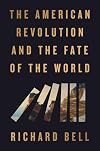
This is an interesting book about the American Revolution. Bell looks outward across the globe to help us see the place of the Revolution by the American colonists in a larger, international context that broadened out to involve France, Spain, China, India as well as the Germans, Russians and Dutch. It had implications for other British colonies including those in the Caribbean, Australia and Africa.
A blurb from author Woody Holton on the dust cover praises Bell’s book as written in “enviably handome prose” and I agree. It was a pleasure to read.
A blurb from author Woody Holton on the dust cover praises Bell’s book as written in “enviably handome prose” and I agree. It was a pleasure to read.
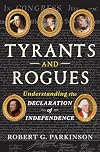
Put yourself in the mind of an American colonist in the 1770s. Can you explain to modern Americans why you are upset with the British and want independence? Most of us today, if we can think of anything to say, will probably know the phrase “taxation without representation”, and likely know that tea was thrown into Boston Harbor because of an “unfair tax” on tea. But can we explain why the tax was unfair, or what else may have driven colonists to rise up, grab their muskets and revolt? We probably couldn’t, at least not without doing some research or at least googling.
That’s where Robert G. Parkinson’s Tyrants and Rogues comes in. As we celebrate the 250th anniversary of the signing of the Declaration of Independence, Parkinson takes us beyond the famous preamble and into the 27 (by his count) grievances of the American colonists outlined in the document. Here, in the Founding Fathers’ own words, are the reasons why they declared a revolution.
Those reasons include insults and incidents that you’ve certainly heard of, and many others that you may not have.
As Parkinson explains in the Acknowledgements at the end of this book, the grievances outlined in the Declaration have been a focus of his study for almost a quarter-century. Ever since 2002 when he began work researching the background of the grievances for a museum exhibit his interest has led him back to researching the grievances repeatedly over the ensuing years. That research has made him uniquely show more suited to putting a book like this together.
Parkinson’s book walks through the grievances in the order you find them in the Declaration and tells the stories that gave rise to them. It’s a very clever and compelling (though not chronological) way of telling the story of the American Revolution. I’ve read several books about the Revolution over the years and yet I found stories here I had not encountered before.
The stories of grievance focus on those who caused them - governors, admirals and generals who brought hardship and misfortune to colonists. They are the tyrants and rogues of the book’s title. As Parkinson points out at one point, some of their names may not be familiar today but they would have been well known in the American colonies of the 1770s.
This is a well-researched, well written and highly readable book. During our nation’s 250th birthday year you may be looking for a book on the American Revolution, one that can help you better understand the forces that drove Americans to revolt. Look no further - this is that book. show less
That’s where Robert G. Parkinson’s Tyrants and Rogues comes in. As we celebrate the 250th anniversary of the signing of the Declaration of Independence, Parkinson takes us beyond the famous preamble and into the 27 (by his count) grievances of the American colonists outlined in the document. Here, in the Founding Fathers’ own words, are the reasons why they declared a revolution.
Those reasons include insults and incidents that you’ve certainly heard of, and many others that you may not have.
As Parkinson explains in the Acknowledgements at the end of this book, the grievances outlined in the Declaration have been a focus of his study for almost a quarter-century. Ever since 2002 when he began work researching the background of the grievances for a museum exhibit his interest has led him back to researching the grievances repeatedly over the ensuing years. That research has made him uniquely show more suited to putting a book like this together.
Parkinson’s book walks through the grievances in the order you find them in the Declaration and tells the stories that gave rise to them. It’s a very clever and compelling (though not chronological) way of telling the story of the American Revolution. I’ve read several books about the Revolution over the years and yet I found stories here I had not encountered before.
The stories of grievance focus on those who caused them - governors, admirals and generals who brought hardship and misfortune to colonists. They are the tyrants and rogues of the book’s title. As Parkinson points out at one point, some of their names may not be familiar today but they would have been well known in the American colonies of the 1770s.
This is a well-researched, well written and highly readable book. During our nation’s 250th birthday year you may be looking for a book on the American Revolution, one that can help you better understand the forces that drove Americans to revolt. Look no further - this is that book. show less

When you hear the term Artificial Intelligence, or AI you likely think about companies like OpenAI (the makers of ChatGPT) and Anthropic (the makers of Claude), or maybe Microsoft and it’s Copilot AI (which is based on ChatGPT). These companies products are mostly a type of AI called Large Language Models or LLMs. LLMs are trained on large amounts of text data, and they rely on predictive models to operate. Basically, they take in queries from users (which is simply more text) and, using their predictive models, they determine relevant words or phrases to string together to provide a response.
No Adult Left Behind starts out as a guide for folks who have yet to really dig in and experiment with these LLMs. The author shares his own experience and offers his tips and guidance so that the reader can learn how to get the most use out of these tools. This guidance is useful and easy to follow. It encourages you not to take the first response an LLM offers as sufficient, but to “engage in a conversation” - that is, continue to query so that you get a better, fuller response. He even suggests turning to more than one LLM with the same query to see what it will respond with, as two different AIs are likely trained on different sets of data, or might have predictive models that guide responses in different ways.
Later in the book Pillari turns his attention to other kinds of artificial intelligence, digging most deeply into advanced control systems. These systems include show more autopilots on airplanes, which respond to inputs from instruments onboard, and from the pilot, to take over the flying of large commercial jets. They also include driver assistance systems being offered on more and more cars, which can take control of your car, with observation and guidance from you the driver.
There are plenty of other examples of this type of system, including those which can control drones (unmanned vehicles) - in the air, at sea, and on the ground, and which are being relied on more in warfare, particularly by the Ukrainians in their struggle with Russia. Some Ukrainian drones are now rumored to be carrying AI modules onboard so that they can operate autonomously and not have communications with human pilots “jammed” by the Russians.
This part of the book is more of an exercise in helping the reader to understand what artificial intelligence is, how different AI systems interact with people, and what their strengths and limitations are. He also tackles the question of what happens to people when their reliance on these AI systems becomes too great.
If you’ve never used an AI tool but are curious to learn how, this book can be an excellent resource to help you get started, and I can and do recommend it for that.
NOTE: I received an advance review copy for free, and I am making this review voluntarily. show less
No Adult Left Behind starts out as a guide for folks who have yet to really dig in and experiment with these LLMs. The author shares his own experience and offers his tips and guidance so that the reader can learn how to get the most use out of these tools. This guidance is useful and easy to follow. It encourages you not to take the first response an LLM offers as sufficient, but to “engage in a conversation” - that is, continue to query so that you get a better, fuller response. He even suggests turning to more than one LLM with the same query to see what it will respond with, as two different AIs are likely trained on different sets of data, or might have predictive models that guide responses in different ways.
Later in the book Pillari turns his attention to other kinds of artificial intelligence, digging most deeply into advanced control systems. These systems include show more autopilots on airplanes, which respond to inputs from instruments onboard, and from the pilot, to take over the flying of large commercial jets. They also include driver assistance systems being offered on more and more cars, which can take control of your car, with observation and guidance from you the driver.
There are plenty of other examples of this type of system, including those which can control drones (unmanned vehicles) - in the air, at sea, and on the ground, and which are being relied on more in warfare, particularly by the Ukrainians in their struggle with Russia. Some Ukrainian drones are now rumored to be carrying AI modules onboard so that they can operate autonomously and not have communications with human pilots “jammed” by the Russians.
This part of the book is more of an exercise in helping the reader to understand what artificial intelligence is, how different AI systems interact with people, and what their strengths and limitations are. He also tackles the question of what happens to people when their reliance on these AI systems becomes too great.
If you’ve never used an AI tool but are curious to learn how, this book can be an excellent resource to help you get started, and I can and do recommend it for that.
NOTE: I received an advance review copy for free, and I am making this review voluntarily. show less
I love to read, and reading books in particular has been a favorite pastime since I was a young boy.
We tend to think that it’s a new phenomenon that people walking the sidewalks staring into their phones are in danger of stepping off the curb into oncoming traffic. But it’s not that new - I have a distinct memory, as a child, of my older sister warning me against bumping into things as I wandered from one room of the house to the next reading from an open book in my hands.
Perhaps that’s not something to brag about. But it is something to give you an idea of why I picked up today’s book.
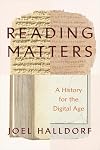
In Joel Halldorf’s Reading Matters he traces the story of reading and writing from earliest times right up to the present. He takes us from clay tablets to scrolls, from bound, handwritten manuscripts to bound books of hand-pressed pages, and from there to mass produced books, newspapers and magazines and on to the internet and social media. He traces writing materials from clay to papyrus, to calfskin, to paper, and then to the digital screen.
Halldorf is Swedish, and he focuses on the European history of writing and reading. He is also a Professor in Church History, so it’s not surprising that he spends a good deal of time exploring writing by medieval Christian monks and the beautiful manuscripts they produced.
His insights into reading in the Digital Age are interesting too - they caused me to contemplate changes to my own approach to reading.
Throughout the history he traces, show more Halldorf contrasts the concepts of deep reading and skimming. The former has become progressively less common and the latter more so as time has gone on and technologies have changed.
Medieval monks penned their manuscripts in something called “scriptio continua”, which means that the letters all immediately followed each other - with no spaces between words nor any punctuation. To read such a work was of course more challenging than a modern text, and the reader had to sit with those continuous letters and actively slow down to pull out the words and phrases.
This approach encouraged concentration and engagement with the text and encouraged readers to re-read to contemplate what they had read and ensure their understanding. This is deep reading. Books were scarce at the time, meaning few other written materials were lying around competing for the reader’s attention.
Today in the digital age, with hundreds of thousands of books published each year, and other written materials in abundance, writing is anything but scarce. Writing appears on many subjects, and readers consume written works for their practical relevance more than for edification. This makes skimming to get the relevant points out more common now.
Halldorf has produced a wide-ranging exploration of the history of reading and writing. Book lovers will enjoy this one! show less
We tend to think that it’s a new phenomenon that people walking the sidewalks staring into their phones are in danger of stepping off the curb into oncoming traffic. But it’s not that new - I have a distinct memory, as a child, of my older sister warning me against bumping into things as I wandered from one room of the house to the next reading from an open book in my hands.
Perhaps that’s not something to brag about. But it is something to give you an idea of why I picked up today’s book.
In Joel Halldorf’s Reading Matters he traces the story of reading and writing from earliest times right up to the present. He takes us from clay tablets to scrolls, from bound, handwritten manuscripts to bound books of hand-pressed pages, and from there to mass produced books, newspapers and magazines and on to the internet and social media. He traces writing materials from clay to papyrus, to calfskin, to paper, and then to the digital screen.
Halldorf is Swedish, and he focuses on the European history of writing and reading. He is also a Professor in Church History, so it’s not surprising that he spends a good deal of time exploring writing by medieval Christian monks and the beautiful manuscripts they produced.
His insights into reading in the Digital Age are interesting too - they caused me to contemplate changes to my own approach to reading.
Throughout the history he traces, show more Halldorf contrasts the concepts of deep reading and skimming. The former has become progressively less common and the latter more so as time has gone on and technologies have changed.
Medieval monks penned their manuscripts in something called “scriptio continua”, which means that the letters all immediately followed each other - with no spaces between words nor any punctuation. To read such a work was of course more challenging than a modern text, and the reader had to sit with those continuous letters and actively slow down to pull out the words and phrases.
This approach encouraged concentration and engagement with the text and encouraged readers to re-read to contemplate what they had read and ensure their understanding. This is deep reading. Books were scarce at the time, meaning few other written materials were lying around competing for the reader’s attention.
Today in the digital age, with hundreds of thousands of books published each year, and other written materials in abundance, writing is anything but scarce. Writing appears on many subjects, and readers consume written works for their practical relevance more than for edification. This makes skimming to get the relevant points out more common now.
Halldorf has produced a wide-ranging exploration of the history of reading and writing. Book lovers will enjoy this one! show less
The late Speaker Tip O’Neill from Massachusetts holds the record for longest uninterrupted time as Speaker of the US House. He led the House from 1977 until 1987, during the Presidencies of both Democrat Jimmy Carter and Republican Ronald Reagan.
O’Neill was well-known for espousing the notion that “all politics is local.” The idea being that a voter will judge the success or failure of an infrastructure bill, for example, on the basis of the number of potholes that have been fixed on their own drive to work. If it’s not important locally, and not acted on locally, no legislation will be popular or will influence a voter to vote for you.
That notion competes with the idea that in today’s world “politics is tribal”. In this reckoning it is party identity that’s most important to voters, and party identity sways what they want to see carried out at the local level. School board policies, and banning of books spring to mind as examples of people taking nationally promoted Republican-identity “culture war” ideas and turning them into local actions.
The two ideas are almost mirror images of each other. One focuses locally and is “bottom up”, while the other focuses nationally and is “top down”.
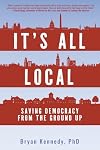
In It’s All Local author Bryan Kennedy comes to the defense of a local focus for politicians. He provides a roadmap for how to run a political campaign or guide a local political party to success by focusing on local concerns and issues.
Kennedy, the four show more term Democratic mayor of Glendale, Wisconsin is talking specifically to the Democratic Party. He feels that Democratic politicians have been too much under the influence of consultants, polling and “microtargeted messaging”. They’ve stopped talking directly “to” people and for too long have been talking “at” people.
Kennedy points to the Mamdani campaign in New York City as an example of listening to people and building the campaign’s message based on their concerns, rather than speaking to people in words crafted by polling to tell them what their concerns are. By listening to and reflecting back the concerns of your community, as priorities for your campaign, someone running for office builds trust and authenticity.
The Mamdani campaign is just one of many examples Kennedy uses in this book. Another notable example is the successful organizing done by the Obama campaign in 2008. Kennedy expresses his disappointment that the DNC more or less discarded that success in favor of continuing with the consultants, polling and messaging route.
Political campaigns are one area in which the author thinks the Democratic party needs to return to a local focus. But he also has ideas for how local party groups (usually county parties) can use the same tools and techniques he outlines to help guide candidates.
Kennedy touches on some of the issues the Republican party has as well. They do not focus locally, or listen to their constituents either, and in his assessment it is now starting to hurt them. Making it all the more important for the Democrats to get their act together.
His biggest message is that political actors need to do more listening and less “messaging”. They need to be genuine in their desire to actually represent their constituents.
I have some familiarity with the operation of my own local Democratic party, and I see the value in what Kennedy says. But his prescription for actions local parties need to take would require a commitment of time and money that I fear exceeds the capacity of most such organizations outside of major metropolitan areas.
This is a book that I would recommend to anyone involved in Democratic politics or organizing, particularly those involved in local or state elections. More casual readers would likely appreciate the analysis of campaign faults that Kennedy provides, but his recommendations for how to overcome them are realistically aimed at practitioners not laymen. show less
O’Neill was well-known for espousing the notion that “all politics is local.” The idea being that a voter will judge the success or failure of an infrastructure bill, for example, on the basis of the number of potholes that have been fixed on their own drive to work. If it’s not important locally, and not acted on locally, no legislation will be popular or will influence a voter to vote for you.
That notion competes with the idea that in today’s world “politics is tribal”. In this reckoning it is party identity that’s most important to voters, and party identity sways what they want to see carried out at the local level. School board policies, and banning of books spring to mind as examples of people taking nationally promoted Republican-identity “culture war” ideas and turning them into local actions.
The two ideas are almost mirror images of each other. One focuses locally and is “bottom up”, while the other focuses nationally and is “top down”.
In It’s All Local author Bryan Kennedy comes to the defense of a local focus for politicians. He provides a roadmap for how to run a political campaign or guide a local political party to success by focusing on local concerns and issues.
Kennedy, the four show more term Democratic mayor of Glendale, Wisconsin is talking specifically to the Democratic Party. He feels that Democratic politicians have been too much under the influence of consultants, polling and “microtargeted messaging”. They’ve stopped talking directly “to” people and for too long have been talking “at” people.
Kennedy points to the Mamdani campaign in New York City as an example of listening to people and building the campaign’s message based on their concerns, rather than speaking to people in words crafted by polling to tell them what their concerns are. By listening to and reflecting back the concerns of your community, as priorities for your campaign, someone running for office builds trust and authenticity.
The Mamdani campaign is just one of many examples Kennedy uses in this book. Another notable example is the successful organizing done by the Obama campaign in 2008. Kennedy expresses his disappointment that the DNC more or less discarded that success in favor of continuing with the consultants, polling and messaging route.
Political campaigns are one area in which the author thinks the Democratic party needs to return to a local focus. But he also has ideas for how local party groups (usually county parties) can use the same tools and techniques he outlines to help guide candidates.
Kennedy touches on some of the issues the Republican party has as well. They do not focus locally, or listen to their constituents either, and in his assessment it is now starting to hurt them. Making it all the more important for the Democrats to get their act together.
His biggest message is that political actors need to do more listening and less “messaging”. They need to be genuine in their desire to actually represent their constituents.
I have some familiarity with the operation of my own local Democratic party, and I see the value in what Kennedy says. But his prescription for actions local parties need to take would require a commitment of time and money that I fear exceeds the capacity of most such organizations outside of major metropolitan areas.
This is a book that I would recommend to anyone involved in Democratic politics or organizing, particularly those involved in local or state elections. More casual readers would likely appreciate the analysis of campaign faults that Kennedy provides, but his recommendations for how to overcome them are realistically aimed at practitioners not laymen. show less
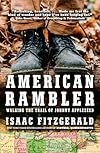
Isaac Fitzgerald is on a mission, and it sounds a bit crazy. Okay, maybe not, but it is fair to say that the author of American Rambler wonders about his own sanity as he journeys in the footsteps of American legend John Chapman, more commonly known as Johnny Appleseed.
While this book is ostensibly about Fitzgerald retracing the life of Johnny Appleseed, it’s really more of a peek into Fitzgerald’s own life, filtered through his connection with the legend, both geographically and spiritually.
Chapman/Appleseed was born in 1774 in Leominster, Massachusetts, not far from the farm where Fitzgerald’s mother grew up, and died in Fort Wayne, Indiana. Chapman was a restless soul who never settled in one place but moved from town to town planting and growing apples. He was a convert to Swedenborgianism, based on the teachings of the Christian theologian Emanuael Swedenborg. Many credit his transient lifestyle to this faith, which teaches that the more we suffer in this life the more we will be blessed in the next.
Fitzgerald was born poor, the son of two parents who were married at the time, just not to each other. As a child his family never owned a home of their own, and since he moved out, and up to the time of writing American Rambler, he’d never signed a lease himself, always crashing with friends or rooming with others. His transient life has led him across the country and back again. And his spiritual journey is on display in the book too. He often pauses for prayer show more and participates in a Swedenborgian service about midway through his Appleseed travels.
Mental health plays a role in the book as well. Fitzgerald’s mother had mental health issues when he was a child, and he has a few visions while on Appleseed’s trail that make him wonder if he may be facing mental health issues of his own.
Here’s a link with a video clip of Fitzgerald on the Today Show, reviewing books, and talking about American Rambler. I hadn’t seen this until after I read the book, but the large, intense personality he shows in this video definitely comes across in his writing.
American Rambler is in turns very funny and quietly serious. Its deeply personal while offering a vision of the humanity and kindness to be found across the country. It’s a modern Travels with Charley or Blue Highways, with a few more stops at local bars and a bit more partaking of illicit substances. It’s also one of the best books I’ve read in 2026, and my first five-star review this year. show less
While this book is ostensibly about Fitzgerald retracing the life of Johnny Appleseed, it’s really more of a peek into Fitzgerald’s own life, filtered through his connection with the legend, both geographically and spiritually.
Chapman/Appleseed was born in 1774 in Leominster, Massachusetts, not far from the farm where Fitzgerald’s mother grew up, and died in Fort Wayne, Indiana. Chapman was a restless soul who never settled in one place but moved from town to town planting and growing apples. He was a convert to Swedenborgianism, based on the teachings of the Christian theologian Emanuael Swedenborg. Many credit his transient lifestyle to this faith, which teaches that the more we suffer in this life the more we will be blessed in the next.
Fitzgerald was born poor, the son of two parents who were married at the time, just not to each other. As a child his family never owned a home of their own, and since he moved out, and up to the time of writing American Rambler, he’d never signed a lease himself, always crashing with friends or rooming with others. His transient life has led him across the country and back again. And his spiritual journey is on display in the book too. He often pauses for prayer show more and participates in a Swedenborgian service about midway through his Appleseed travels.
Mental health plays a role in the book as well. Fitzgerald’s mother had mental health issues when he was a child, and he has a few visions while on Appleseed’s trail that make him wonder if he may be facing mental health issues of his own.
Here’s a link with a video clip of Fitzgerald on the Today Show, reviewing books, and talking about American Rambler. I hadn’t seen this until after I read the book, but the large, intense personality he shows in this video definitely comes across in his writing.
American Rambler is in turns very funny and quietly serious. Its deeply personal while offering a vision of the humanity and kindness to be found across the country. It’s a modern Travels with Charley or Blue Highways, with a few more stops at local bars and a bit more partaking of illicit substances. It’s also one of the best books I’ve read in 2026, and my first five-star review this year. show less
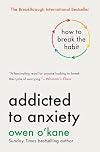
Addicted to Anxiety is a self-help book by a UK-based author. The book comes from the author’s own experience as a psychotherapist to posit that anxiety is best overcome if it’s treated like an addiction. That is an interesting premise. The author freely admits that anxiety addiction is not an official diagnosis. But treating anxiety like an addiction, based on his experience and clinical evidence, is effective.
The book is divided into three parts. In Section One you meet your anxious self and learn why anxiety is (or can be treated like) an addiction. Section Two covers steps to break the anxiety addiction, and Section Three offers advice on reclaiming your less anxious life, and words of hope and the future.
If you or someone in your life suffer from anxiety this book offers help. The reader will gain a better understanding of what causes over-anxiousness, and be armed with tools to address their anxiety addiction.
The book is divided into three parts. In Section One you meet your anxious self and learn why anxiety is (or can be treated like) an addiction. Section Two covers steps to break the anxiety addiction, and Section Three offers advice on reclaiming your less anxious life, and words of hope and the future.
If you or someone in your life suffer from anxiety this book offers help. The reader will gain a better understanding of what causes over-anxiousness, and be armed with tools to address their anxiety addiction.
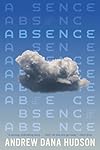
Absence is an ambitious novel by Andrew Dana Hudson. The premise? People, sometimes by themselves, sometimes in “clusters”, simply disappear. One minute they are there, then, with a popping sound, they are gone. People pop. They are no longer there. No one can explain it. No one knows what happens to those who have popped, where they go, and whether they are living or dead. They just disappear.
This has been going on for several years now, and the world has found ways to cope with the anxiety and lack of knowing that this phenomenon has engendered. For one thing, the government has formed the Bureau of Depopulation Affairs to track the disappearances and to make sure that folks are not trying to commit fraud or murder under the guise of a false pop. It’s at the Bureau that our protagonist, Harvey Ellis, works as a kind of investigator.
One day his boss calls him in and asks him to take a trip to rural Kansas to investigate a woman who claims to have returned after having popped. So far, no one has ever been known to have returned. No one even knows if “returning” is possible.
What follows is a combination of a police procedural, a vision of societal breakdown, a meditation on religion and belief, and a rumination on our mortality and the fragility of life. It’s very well done, with each new scene and event building on the ones before in a slow but satisfying revelation. There is some repetitiveness, and the book went a bit too long to reach its clever conclusion. show more But those are quibbles that didn’t take away from my enjoyment of the book.
This is a science fiction story that is more fiction than science. For my tastes that would not normally be a positive statement. But in this case, it works beautifully. As I read, I started picturing its events as part of a TV miniseries, and my mind went to the adaptation of Emily St John Mandel’s Station Eleven. All of which is to say that I think Absence is a fine American novel. Read it for a window into a dystopian future, and a reflection back to our own lives. show less
This has been going on for several years now, and the world has found ways to cope with the anxiety and lack of knowing that this phenomenon has engendered. For one thing, the government has formed the Bureau of Depopulation Affairs to track the disappearances and to make sure that folks are not trying to commit fraud or murder under the guise of a false pop. It’s at the Bureau that our protagonist, Harvey Ellis, works as a kind of investigator.
One day his boss calls him in and asks him to take a trip to rural Kansas to investigate a woman who claims to have returned after having popped. So far, no one has ever been known to have returned. No one even knows if “returning” is possible.
What follows is a combination of a police procedural, a vision of societal breakdown, a meditation on religion and belief, and a rumination on our mortality and the fragility of life. It’s very well done, with each new scene and event building on the ones before in a slow but satisfying revelation. There is some repetitiveness, and the book went a bit too long to reach its clever conclusion. show more But those are quibbles that didn’t take away from my enjoyment of the book.
This is a science fiction story that is more fiction than science. For my tastes that would not normally be a positive statement. But in this case, it works beautifully. As I read, I started picturing its events as part of a TV miniseries, and my mind went to the adaptation of Emily St John Mandel’s Station Eleven. All of which is to say that I think Absence is a fine American novel. Read it for a window into a dystopian future, and a reflection back to our own lives. show less
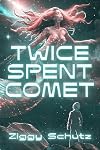
A fantasy story featuring a young trans person sentenced to labor in a small penal colony on an asteroid, clearing the way for space mansions for billionaires. The story revolves around the found family they encounter there and slowly reveals hidden connections between them.
The book has its own internal set of myths, presented in poetic snippets at the start of each chapter. The connection to the actual storyline is not clear at first and requires a bit of thought from the reader, but it all comes together in the end. Not everyone’s cup of tea perhaps, but I thought it had solid pacing and an interesting overall story arc.
The book has its own internal set of myths, presented in poetic snippets at the start of each chapter. The connection to the actual storyline is not clear at first and requires a bit of thought from the reader, but it all comes together in the end. Not everyone’s cup of tea perhaps, but I thought it had solid pacing and an interesting overall story arc.
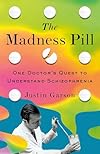
Justin Garson’s father suffered from schizophrenia. He recounts his father’s madness, and his experience with psychiatry in the introduction to The Madness Pill. At first, in the 1970s his treatment was therapy sessions. But when his illness came back in the 1980s pills became his treatment regimen. In between his first bout with mental illness and his second, psychiatry had undergone a revolution. And one of the reasons why was the work of Dr. Solomon Snyder.
Garson’s new book centers itself on the long career of Dr. Snyder. Other scientists make their appearances as well, especially as the book enters the 1960s, but Snyder was the one whose discoveries around dopamine, dopamine receptors in the brain, and their link to schizophrenia, revolutionized psychiatry.
Born in 1938, Snyder graduated from medical school at Georgetown University in DC, specializing in psychiatry. From there he spent time at Kaiser Hospital in San Francisco before landing a role as research assistant to Julius Axelrod at the National Institutes of Health. It was there where his love of laboratory science and scientific research took off. He spent decades searching for the biological roots of schizophrenia.
Garson’s book is part biography and part scientific history, and he has done an excellent job of blending the personal stories with the scientific work. Some of the experiments that Snyder and his peers conducted in the 1960s with psychedelic drugs, including LSD with themselves as the show more guinea pigs, shows both their dedication to the search for a solution to complex scientific problems, and the naiveite of the times.
This book has a lot in common with Off the Scales, Aimee Donnellan’s book about Ozempic and the discovery of GLP-1 drugs that I reviewed last November. Donnellan acknowledged in her book that obesity has both physical and psychological origins. Garson also acknowledges that the understanding of the chemical nature of mental illness, that Dr. Snyder played such a large role in uncovering, has led to the discovery of drugs much more capable of treating their effects. But there is a growing recognition that drugs cannot replace psychoanalysis but rather must supplement it.
This is an informative and interesting history of the late-twentieth century discoveries about the biology of schizophrenia. Read it for a window into the history of mental illness, psychiatry and our understanding of how the brain works. show less
Garson’s new book centers itself on the long career of Dr. Snyder. Other scientists make their appearances as well, especially as the book enters the 1960s, but Snyder was the one whose discoveries around dopamine, dopamine receptors in the brain, and their link to schizophrenia, revolutionized psychiatry.
Born in 1938, Snyder graduated from medical school at Georgetown University in DC, specializing in psychiatry. From there he spent time at Kaiser Hospital in San Francisco before landing a role as research assistant to Julius Axelrod at the National Institutes of Health. It was there where his love of laboratory science and scientific research took off. He spent decades searching for the biological roots of schizophrenia.
Garson’s book is part biography and part scientific history, and he has done an excellent job of blending the personal stories with the scientific work. Some of the experiments that Snyder and his peers conducted in the 1960s with psychedelic drugs, including LSD with themselves as the show more guinea pigs, shows both their dedication to the search for a solution to complex scientific problems, and the naiveite of the times.
This book has a lot in common with Off the Scales, Aimee Donnellan’s book about Ozempic and the discovery of GLP-1 drugs that I reviewed last November. Donnellan acknowledged in her book that obesity has both physical and psychological origins. Garson also acknowledges that the understanding of the chemical nature of mental illness, that Dr. Snyder played such a large role in uncovering, has led to the discovery of drugs much more capable of treating their effects. But there is a growing recognition that drugs cannot replace psychoanalysis but rather must supplement it.
This is an informative and interesting history of the late-twentieth century discoveries about the biology of schizophrenia. Read it for a window into the history of mental illness, psychiatry and our understanding of how the brain works. show less
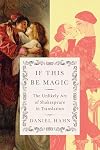
How does Shakespeare remain Shakespeare when every word has changed? That is the question this book sets out to answer. And it does so. In depth, and with a sense of humor.
The humor is appreciated, as is the way the book is organized. Each chapter takes on a different question about translation. One chapter deals with rhyming for example - how do you convey Shakespeare’s rhymes when the words you would translate to don’t rhyme? For that matter, how do you handle the iambic pentameter Shakespeare uses, a poetic structure unique to English that audiences who speak other languages won’t be familiar with?
And how does a translator deal with gendered languages like Spanish, or languages that have more specific words than English for relationships, like uncles (of which there are many in Shakespeare’s plays).
For lovers of the English language there is a lot to like in Hahn’s book, as it highlights some of the idiosyncrasies of our native tongue as viewed through translation to other languages, revealing things about English we wouldn't normally think of.
If the book were more tightly paced it would have worked better for me. I do not come from a world of literary figures or have depth of knowledge on Shakespeare’s plays. Those who do will appreciate Hahn’s stories interspersed with the discussions of translation, stories that I struggled with.
I felt that I’d bit off more than I could chew with this book. When I hit the chapter on “Latinate vocabulary” I was show more way outside my comfort zone, and I confess I began to skim.
So, sorry to say, it’s a tepid review summary from me — Read it if you have a love of the English language, a literary bent, and a working knowledge of Shakespeare’s plays. In that case, I think you’ll appreciate the author’s humor and stories more than I.
RATING: Two and a Half Stars ⭐⭐🌠 show less
The humor is appreciated, as is the way the book is organized. Each chapter takes on a different question about translation. One chapter deals with rhyming for example - how do you convey Shakespeare’s rhymes when the words you would translate to don’t rhyme? For that matter, how do you handle the iambic pentameter Shakespeare uses, a poetic structure unique to English that audiences who speak other languages won’t be familiar with?
And how does a translator deal with gendered languages like Spanish, or languages that have more specific words than English for relationships, like uncles (of which there are many in Shakespeare’s plays).
For lovers of the English language there is a lot to like in Hahn’s book, as it highlights some of the idiosyncrasies of our native tongue as viewed through translation to other languages, revealing things about English we wouldn't normally think of.
If the book were more tightly paced it would have worked better for me. I do not come from a world of literary figures or have depth of knowledge on Shakespeare’s plays. Those who do will appreciate Hahn’s stories interspersed with the discussions of translation, stories that I struggled with.
I felt that I’d bit off more than I could chew with this book. When I hit the chapter on “Latinate vocabulary” I was show more way outside my comfort zone, and I confess I began to skim.
So, sorry to say, it’s a tepid review summary from me — Read it if you have a love of the English language, a literary bent, and a working knowledge of Shakespeare’s plays. In that case, I think you’ll appreciate the author’s humor and stories more than I.
RATING: Two and a Half Stars ⭐⭐🌠 show less
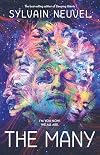
Canadian Sylvain Neuvel is the author of six previous science fiction novels, which make up two fantastic trilogies. I’ve read those six and thought they were very well done. The Many is the first that is a standalone story, with a very clear beginning, middle and end.
I had a bit of a rough start with this book. It’s set in the town of Marquette, Michigan, just a two-hour drive from my home. But it’s peopled with many characters who are not folks I’d expect to encounter on a visit to Marquette, which was a bit off putting. They include a homeless neo-Nazi prone to daily shoplifting at the local Target store. In fact, most of the characters are introduced with an emphasis on their bad points, or weaknesses - they drink too much, they have very little self-confidence, they struggle to be good parents, they never loved their wives, they rob stores regularly, they are psycho cops, etc.
It took me until about a third to halfway into the book to realize that Neuvel was giving us these superficial, stereotypical characters for a reason. And that reason is that this is a parable. It’s a book with a simple message, and it needs paper tigers to set up that message. What carries the book for me isn’t its characters, but its sly humor.
At least in my reading, Neuvel knows that he’s set up paper tigers in service of his message. But I think he’s attempting his own equivalent of something like The Grinch - a ready-for-TV parable with a simple premise and enough oddity and show more humor to it so that it might last. It’s a gamble for the author, but if you, the reader, think of the book in that way then it makes much more sense. Once that lightbulb went off for me, I found it a real pleasure to read. In fact, I finished it in one day.
This is a simple, quick read with a quirky sense of humor and a good message. Don’t read it expecting a realistic peak into small town America. Read it for its humor, its message, and its lone, rather weird alien. For sci-fi / fantasy fans this would be a good beach read this summer. show less
I had a bit of a rough start with this book. It’s set in the town of Marquette, Michigan, just a two-hour drive from my home. But it’s peopled with many characters who are not folks I’d expect to encounter on a visit to Marquette, which was a bit off putting. They include a homeless neo-Nazi prone to daily shoplifting at the local Target store. In fact, most of the characters are introduced with an emphasis on their bad points, or weaknesses - they drink too much, they have very little self-confidence, they struggle to be good parents, they never loved their wives, they rob stores regularly, they are psycho cops, etc.
It took me until about a third to halfway into the book to realize that Neuvel was giving us these superficial, stereotypical characters for a reason. And that reason is that this is a parable. It’s a book with a simple message, and it needs paper tigers to set up that message. What carries the book for me isn’t its characters, but its sly humor.
At least in my reading, Neuvel knows that he’s set up paper tigers in service of his message. But I think he’s attempting his own equivalent of something like The Grinch - a ready-for-TV parable with a simple premise and enough oddity and show more humor to it so that it might last. It’s a gamble for the author, but if you, the reader, think of the book in that way then it makes much more sense. Once that lightbulb went off for me, I found it a real pleasure to read. In fact, I finished it in one day.
This is a simple, quick read with a quirky sense of humor and a good message. Don’t read it expecting a realistic peak into small town America. Read it for its humor, its message, and its lone, rather weird alien. For sci-fi / fantasy fans this would be a good beach read this summer. show less
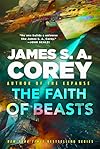
The Faith of Beasts is the second book in a planned trilogy series called The Captives War, written by Daniel Abraham and Ty Franck, the duo who write together under the pen name James S. A. Corey. I reviewed the first book, called The Mercy of Gods last June.
In that first book the authors, out of necessity, spent time creating the world of its characters, and explaining their place in it, before then dashing that world apart through an alien invasion, and sending those characters into strange and uncharted territory. With that already behind us, this second book is rooted not in spectacles of alien worlds or strange species, but in the moral and psychological weight placed on the humans at the center of the story.
Our heros are captives on an alien world, slaves to a race of beings - the Carryx - who do not care if they or the entire human species live or die. How they cope and what they do to survive continue to be the focus carried from the second half of the first book.
Somewhere off-stage is the “deathless enemy” of their captors, revealed in the first book through the presence of a “swarm” being who inhabits a human host, using that host as a vessel to conduct its spy mission. In The Faith of Beasts more about the deathless enemy is revealed.
This is a tightly paced book focused on well-written and empathetic characters. I liked it better than the first book. Read it for the smart, character-driven science fiction.
In that first book the authors, out of necessity, spent time creating the world of its characters, and explaining their place in it, before then dashing that world apart through an alien invasion, and sending those characters into strange and uncharted territory. With that already behind us, this second book is rooted not in spectacles of alien worlds or strange species, but in the moral and psychological weight placed on the humans at the center of the story.
Our heros are captives on an alien world, slaves to a race of beings - the Carryx - who do not care if they or the entire human species live or die. How they cope and what they do to survive continue to be the focus carried from the second half of the first book.
Somewhere off-stage is the “deathless enemy” of their captors, revealed in the first book through the presence of a “swarm” being who inhabits a human host, using that host as a vessel to conduct its spy mission. In The Faith of Beasts more about the deathless enemy is revealed.
This is a tightly paced book focused on well-written and empathetic characters. I liked it better than the first book. Read it for the smart, character-driven science fiction.
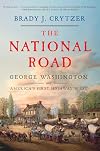
Author Brady J. Crytzer calls himself a “specialist of the frontier history of North America” and if his latest book is an indication, it’s a very apt description. This book paints a vivid picture of the evolution of the American frontier from the days of Revolution through the mid to late 1800s.
The National Road takes us on an engaging journey into one of America’s most transformative early infrastructure projects. Crytzer has taken what could have been a dry account of roads and logistics and spun it into a highly readable narrative brimming with early American ambition, risk taking, and full-on nation building. The surveyors, settlers, travelers and politicians who people this history helped shape our early republic.
Crytzer writes with the assurance of a historian who has done his research, and the storytelling instincts of a talented narrator. The result is a tale of political debates, engineering challenges, and frontier dramas that gallops along without ever losing momentum.
The “National Road” at the heart of this book is our country’s first ever federally funded interstate road. We are not talking about our current interstate highways, built as a result of the vision of President Eisenhower. This is a much earlier effort that goes all the way back to our first President, Washington, who dreamed of connecting the nation’s Eastern Seaboard with the edge of the frontier in the Northwest Territory - that early “western frontier” so far away over the show more Appalachians - in what today we call “the Midwest”.
This is the story of our early nation through the lens of its first significant infrastructure project, and it is so well done that I zipped right through it. Read it for its fascinating stories of a young United States, and for both its well-known and its forgotten history. show less
The National Road takes us on an engaging journey into one of America’s most transformative early infrastructure projects. Crytzer has taken what could have been a dry account of roads and logistics and spun it into a highly readable narrative brimming with early American ambition, risk taking, and full-on nation building. The surveyors, settlers, travelers and politicians who people this history helped shape our early republic.
Crytzer writes with the assurance of a historian who has done his research, and the storytelling instincts of a talented narrator. The result is a tale of political debates, engineering challenges, and frontier dramas that gallops along without ever losing momentum.
The “National Road” at the heart of this book is our country’s first ever federally funded interstate road. We are not talking about our current interstate highways, built as a result of the vision of President Eisenhower. This is a much earlier effort that goes all the way back to our first President, Washington, who dreamed of connecting the nation’s Eastern Seaboard with the edge of the frontier in the Northwest Territory - that early “western frontier” so far away over the show more Appalachians - in what today we call “the Midwest”.
This is the story of our early nation through the lens of its first significant infrastructure project, and it is so well done that I zipped right through it. Read it for its fascinating stories of a young United States, and for both its well-known and its forgotten history. show less
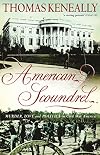
A biography of Dan Sickles. Sickles was a pre-Civil War New York politician. As a Tammany Hall Democrat, he was well liked by his constituents, but among his peers he earned a reputation for accumulating debt and frequenting ladies of the evening. He went on to marry (which did not put a stop to his sexual adventuring). But it was his wife’s infidelity that led to scandal, and then to murder. Sickles goes on from that to become an important figure for the Union during the Civil War.
The book bogs down during the murder trial but is otherwise entertaining and enlightening. It’s amazing both how much, and how little, social mores have changed in the last hundred and fifty-ish years.
The book bogs down during the murder trial but is otherwise entertaining and enlightening. It’s amazing both how much, and how little, social mores have changed in the last hundred and fifty-ish years.
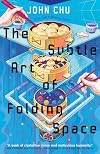
Ellie has a problem. Well, she has several actually. First, her sister keeps trying to kill her. Second, her mother is in a coma. Third, her sister tasks her with a cleanup of the underpinnings of the universe that Ellie is not thrilled to take on, and which turns into more than she bargained for.
John Chu’s debut novel The Subtle Art of Folding Space combines the dysfunctional dynamics of an immigrant family with a physics-bending multiverse-spanning scf-fi crisis. Ellie’s family, it turns out, are part of an underground group of people who keep our universe humming along as it should be. They do this by designing, building, maintaining and verifying a series of, well, I’m not sure what to call them - some kind of machines - that stop anomalies from cropping up and knocking our reality for a loop.
The metaphors for all those machines come from the worlds of plumbing, mechanics and computer science. Ellie and her compatriots work on pipes, valves, gears, gates, etc. There is some internal logic to the concept Chu puts forth but it’s pseudoscience rather than “hard science” fiction in this part of the story.
The family dynamics however would seem to spring from Chu’s real-world knowledge or even personal experience. Chu is a gay Taiwanese American author. The family is Taiwanese American and one of the main characters is Ellie’s gay cousin Daniel.
The book is written with a light tone, and with plenty of comic relief. Even the explanations of what the machines show more do and why they need fixing are not too deep - just enough explanation is given to support the story. Like the pseudoscience of a Star Trek episode, the science-y mumbo jumbo sounds good coming out of the character’s mouths, even if the science itself may be suspect.
Star Trek seems like a good reference point. If you are a fan of Star Trek or are comfortable with the pseudoscience-y part of the science fiction / fantasy spectrum, then this book will be a natural fit for you. If you are more of a fan of the knights and dragons at the fantasy end of science fiction / fantasy, this book will likely be a stretch.
Despite the light tone and the pseudoscience, the family drama is fairly serious, and Ellie’s struggle with her sister seems plausible, and grounded in realistic family tensions. Resolving this drama is the heart of the book. I fell for both the family drama and the pseudoscience and found this a quick and enjoyable read. show less
John Chu’s debut novel The Subtle Art of Folding Space combines the dysfunctional dynamics of an immigrant family with a physics-bending multiverse-spanning scf-fi crisis. Ellie’s family, it turns out, are part of an underground group of people who keep our universe humming along as it should be. They do this by designing, building, maintaining and verifying a series of, well, I’m not sure what to call them - some kind of machines - that stop anomalies from cropping up and knocking our reality for a loop.
The metaphors for all those machines come from the worlds of plumbing, mechanics and computer science. Ellie and her compatriots work on pipes, valves, gears, gates, etc. There is some internal logic to the concept Chu puts forth but it’s pseudoscience rather than “hard science” fiction in this part of the story.
The family dynamics however would seem to spring from Chu’s real-world knowledge or even personal experience. Chu is a gay Taiwanese American author. The family is Taiwanese American and one of the main characters is Ellie’s gay cousin Daniel.
The book is written with a light tone, and with plenty of comic relief. Even the explanations of what the machines show more do and why they need fixing are not too deep - just enough explanation is given to support the story. Like the pseudoscience of a Star Trek episode, the science-y mumbo jumbo sounds good coming out of the character’s mouths, even if the science itself may be suspect.
Star Trek seems like a good reference point. If you are a fan of Star Trek or are comfortable with the pseudoscience-y part of the science fiction / fantasy spectrum, then this book will be a natural fit for you. If you are more of a fan of the knights and dragons at the fantasy end of science fiction / fantasy, this book will likely be a stretch.
Despite the light tone and the pseudoscience, the family drama is fairly serious, and Ellie’s struggle with her sister seems plausible, and grounded in realistic family tensions. Resolving this drama is the heart of the book. I fell for both the family drama and the pseudoscience and found this a quick and enjoyable read. show less
True Color: The Strange and Spectacular Quest to Define Color--from Azure to Zinc Pink by Kory Stamper
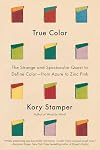
Kory Stamper is a former associate editor for Merriam-Webster dictionaries and is the author of Word by Word: The Secret Life of Dictionaries. For a time, she also was a presenter on Merriam-Webster’s online “Ask the Editor” videos. A true word-nerd full of “hard-earned vocabularic snark”, her writing in Word by Word was a pleasure to read. I gave it four stars on Goodreads back in 2018. Booklist called it a “spirited book about the science and art of making dictionaries. It is by turns amusing, frustrating, surprising, and above all, engrossing."
I’m happy to report that True Color is even more amusing, surprising and engrossing. In this book Stamper takes us on a deep dive into the definitions of color used in the Merriam-Webster’s Third New International Dictionary, Unabridged. The Third, as she calls it, was published way back in 1961. During Stamper’s time there, Merriam-Webster began the work of revising the Third and it was then, she says, that her “love affair with color began”.
And so our journey begins. First, we take a deep dive into what exactly color is (how would you describe “green” to a blind person?). Then Stamper gives us a taste of the use of color words in the real world, where frustratingly different industries (dye, paint, fashion) use different words for the same color. And at last we arrive at the heart of the book where Stamper takes us through a history of the color definitions in Merriam-Webster dictionaries. show more
Lexicographers, it seems, are mostly overworked, detail-oriented folks. This is particularly true of those who work through the ranks to earn an editor’s title. In areas like color definitions, these editors reach out to acknowledged experts. In this case that would be another set of detail-oriented folks called color scientists. You might think stories featuringdrudges characters like these, while they wrangle word definitions, would be boring. But in Stamper’s hands the quirky personalities shine, and their colorful stories come to life.
I flew through this book, and I think it will have wide appeal. Read it for your own inner word-nerd, and for the vocabularic snark, and care, that Stamper takes to reveal these fascinating stories of defining color. show less
I’m happy to report that True Color is even more amusing, surprising and engrossing. In this book Stamper takes us on a deep dive into the definitions of color used in the Merriam-Webster’s Third New International Dictionary, Unabridged. The Third, as she calls it, was published way back in 1961. During Stamper’s time there, Merriam-Webster began the work of revising the Third and it was then, she says, that her “love affair with color began”.
And so our journey begins. First, we take a deep dive into what exactly color is (how would you describe “green” to a blind person?). Then Stamper gives us a taste of the use of color words in the real world, where frustratingly different industries (dye, paint, fashion) use different words for the same color. And at last we arrive at the heart of the book where Stamper takes us through a history of the color definitions in Merriam-Webster dictionaries. show more
Lexicographers, it seems, are mostly overworked, detail-oriented folks. This is particularly true of those who work through the ranks to earn an editor’s title. In areas like color definitions, these editors reach out to acknowledged experts. In this case that would be another set of detail-oriented folks called color scientists. You might think stories featuring
I flew through this book, and I think it will have wide appeal. Read it for your own inner word-nerd, and for the vocabularic snark, and care, that Stamper takes to reveal these fascinating stories of defining color. show less
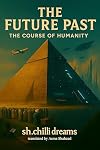
An unusual little book. Part prose poem (in layout at least) and part narrative. Part romance, and part sci-fi. It has very little in the way of character building and is lacking a coherent plot.
Even the romance is odd, as the male main character falls in love with two people who may or may not be the same person, with different names, in different times. Whether there is a connection between the two female leads isn't explained - I guess you are meant to fill in the blanks as you would like.
I will say that, at least at first, I enjoyed some of the prose poetry, and the writing style was engaging. But the plot was lacking. Even basic plot points (why were all the other women so hateful to the first love interest?) were not explained. I was hoping there would be something at the end that would wrap everything up into an "aha moment" or at least explain why the reader was on this journey, but that was not the case.
As far as I can tell this is the author's first work. I see on Everand and here on LibraryThing that ChatGPT is credited as an editor. So, take that as a point of information.
Even the romance is odd, as the male main character falls in love with two people who may or may not be the same person, with different names, in different times. Whether there is a connection between the two female leads isn't explained - I guess you are meant to fill in the blanks as you would like.
I will say that, at least at first, I enjoyed some of the prose poetry, and the writing style was engaging. But the plot was lacking. Even basic plot points (why were all the other women so hateful to the first love interest?) were not explained. I was hoping there would be something at the end that would wrap everything up into an "aha moment" or at least explain why the reader was on this journey, but that was not the case.
As far as I can tell this is the author's first work. I see on Everand and here on LibraryThing that ChatGPT is credited as an editor. So, take that as a point of information.
 This review was written for LibraryThing Early Reviewers.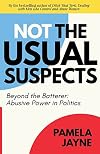
Not the Usual Suspects was a gift from a friend. Subtitled Beyond the Batterer: Abusive Power in Politics, it’s written by Michigan-based author Pamela Jayne. She has spent over 10 years working with domestic abuse victims and batterers and focuses her understanding of batterers on power hungry politicians. Trump is definitely in her sights, and as she lays out her case, you’ll find yourself nodding at the number of similar behaviors that Trump, and his coterie of money and power mad hangers-on, have with domestic abusers. Independently published and a quick read.
Open Space: From Earth to Eternity--the Global Race to Explore and Conquer the Cosmos by David Ariosto
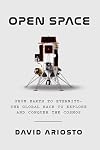
On February 15, 2024, a SpaceX Falcon 9 rocket took off from Kennedy Space Center. On board was Odysseus, a moon lander built and operated by the American space exploration company Intuitive Machines (IM). When the lander successfully touched down near Malpert-A crater, 190 miles from the moon’s south pole, it became the first craft to soft land on the moon by a private company. It was also the first American spacecraft to land on the moon since Apollo 17 in 1972. Though it landed on an angled surface causing a 30-degree tilt of the lander, it remained functional and the mission was deemed a success.
Much of Open Space covers the current focus of space agencies around the world, and of the private space industry, on the importance of the moon. It is, once again, seen as a steppingstone to exploration of the rest of the solar system. The landing of Odysseus on the moon is the capstone of that portion of the book. It is, author David Ariosto says, a key part of an ongoing race to the moon between the US and China. He explores the current capabilities of the Chinese state run space program, and its main competitors. Those include NASA, of course, but his focus is on the host of private companies who today form the space exploration industry mostly based in the US.
Ariosto then looks at what might be next after conquering the moon. He explores current thinking (and capabilities) for journeying to Mars, and then potentially on into interstellar space. Most of what he reviews show more is hard science and technology and makes for interesting reading. The most “out there” is his coverage of the potential (and its currently ALL potential) for a Star Trek inspired “warp drive”.
The book is well researched and well laid out. For a science geek it’s a fascinating read. For anyone interested in the space industry it’s a worthwhile read, with the caveat that Ariosto’s deep dives may be a little too deep for casual readers. I was surprised, given the timing of its arrival, that there is comparatively little here about the Artemis program.
Read it for the deep dive into the current state of the space race, and the ongoing achievements that don’t get the headlines they deserve. show less
Much of Open Space covers the current focus of space agencies around the world, and of the private space industry, on the importance of the moon. It is, once again, seen as a steppingstone to exploration of the rest of the solar system. The landing of Odysseus on the moon is the capstone of that portion of the book. It is, author David Ariosto says, a key part of an ongoing race to the moon between the US and China. He explores the current capabilities of the Chinese state run space program, and its main competitors. Those include NASA, of course, but his focus is on the host of private companies who today form the space exploration industry mostly based in the US.
Ariosto then looks at what might be next after conquering the moon. He explores current thinking (and capabilities) for journeying to Mars, and then potentially on into interstellar space. Most of what he reviews show more is hard science and technology and makes for interesting reading. The most “out there” is his coverage of the potential (and its currently ALL potential) for a Star Trek inspired “warp drive”.
The book is well researched and well laid out. For a science geek it’s a fascinating read. For anyone interested in the space industry it’s a worthwhile read, with the caveat that Ariosto’s deep dives may be a little too deep for casual readers. I was surprised, given the timing of its arrival, that there is comparatively little here about the Artemis program.
Read it for the deep dive into the current state of the space race, and the ongoing achievements that don’t get the headlines they deserve. show less
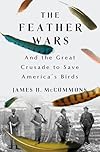
On September 1, 1914 Martha, a carrier pigeon, died in a cage at the Cincinnati Zoological Gardens. She was the last of her kind. At one time carrier pigeons flew in flocks so large they could block out the sun for hours as they passed overhead. In 1814 a roost of pigeons was reported near Shelbyville, Kentucky that was several miles wide and forty miles long. Carrier pigeons then numbered in the millions.
So how is it that carrier pigeons, once so numerous, became extinct? In one word - humans. We considered pigeons nuisance birds and hunted them ruthlessly. That large roost near Shelbyville, once discovered, was hunted day and night.
When the carrier pigeons died out, many eyes were opened to the other bird species well on their way to extinction. Canada geese were one species that had been all but eliminated in the wild.
The author begins The Feather Wars at the Seney National Wildlife Refuge in Michigan’s Upper Peninsula. It was there, in 1936 that a group of Canada geese was penned, carefully cared for over a breeding season, and reintroduced to the wild. Over decades a migratory breeding population was fully established at Seney, part of the revival of this bird species.
The book takes us from the end of the Civil War through the Great Depression, and beyond, to tell the story of how Americans went from wholesale bird slaughter to dedicated bird conservation. Each of the book’s chapters highlights individuals who had a prominent role in one or the other. There are show more plenty of colorful characters and interesting stories along the way.
One of the colorful characters is Edward Avery McIlhenney, who is most famous for putting Tabasco Sauce on American kitchen tables. But he also funded and established bird refuges along the Louisiana coast and he played a large role in saving the snowy egret from extinction. After establishing the refuges, he then bought property in the midst of them and proposed building a large, exclusive “hunt club” for the primary purpose of shooting birds the refuges were sheltering. McIlhenney, the author says, encompassed all the contradictions of bird preservation and hunting. The two continue to be intertwined today, with fees from hunting licenses funding many preservation projects.
I really enjoyed this book. Viewing American history through this prism - through our treatment of the creatures around us - is telling. But I suspect a book about bird hunting and preservation is not for everyone. That’s a shame because it’s well told and full of interesting stories.
Read it for the colorful characters, and for the telling view into American history. show less
So how is it that carrier pigeons, once so numerous, became extinct? In one word - humans. We considered pigeons nuisance birds and hunted them ruthlessly. That large roost near Shelbyville, once discovered, was hunted day and night.
When the carrier pigeons died out, many eyes were opened to the other bird species well on their way to extinction. Canada geese were one species that had been all but eliminated in the wild.
The author begins The Feather Wars at the Seney National Wildlife Refuge in Michigan’s Upper Peninsula. It was there, in 1936 that a group of Canada geese was penned, carefully cared for over a breeding season, and reintroduced to the wild. Over decades a migratory breeding population was fully established at Seney, part of the revival of this bird species.
The book takes us from the end of the Civil War through the Great Depression, and beyond, to tell the story of how Americans went from wholesale bird slaughter to dedicated bird conservation. Each of the book’s chapters highlights individuals who had a prominent role in one or the other. There are show more plenty of colorful characters and interesting stories along the way.
One of the colorful characters is Edward Avery McIlhenney, who is most famous for putting Tabasco Sauce on American kitchen tables. But he also funded and established bird refuges along the Louisiana coast and he played a large role in saving the snowy egret from extinction. After establishing the refuges, he then bought property in the midst of them and proposed building a large, exclusive “hunt club” for the primary purpose of shooting birds the refuges were sheltering. McIlhenney, the author says, encompassed all the contradictions of bird preservation and hunting. The two continue to be intertwined today, with fees from hunting licenses funding many preservation projects.
I really enjoyed this book. Viewing American history through this prism - through our treatment of the creatures around us - is telling. But I suspect a book about bird hunting and preservation is not for everyone. That’s a shame because it’s well told and full of interesting stories.
Read it for the colorful characters, and for the telling view into American history. show less
Calisthenics for Beginners: 50 Bodyweight Exercises | The #1 Bodyweight Training Starter Guide (The SUPERHUMAN Series) by Pure Calisthenics
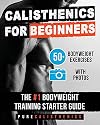
A great resource for folks new to bodyweight workouts. Includes photos and steps for several calisthenics exercises.
This review was written for LibraryThing Early Reviewers.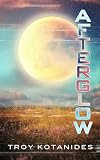
At what point in time does a memory exist? That’s the question posed by the psychologist Dr. Gordon Raine to his patient Edyn in Afterglow. This new novella is the first book from indie author Troy Kotanides, who calls it a “psychological fiction novel”.
Edyn finds himself in the Pacific Northwest in the 1990s, suffering from a form of amnesia. He can’t remember anything that happened to him before the past year. The farthest back he can recall, his first memory, is seeking refuge in a warehouse near the docks in a sleepy coastal town. Taken in by the dock manager, who accepts Edyn’s story of lost memory, he establishes a life for himself while being haunted by visions.
So, he turns to Dr. Raine for help in recapturing his past, while not completely trusting him with every detail of his visions. His primary vision is of a woman speaking to him high on a hilltop. Who she is and what she is saying is very hazy at first.
We follow along as Edyn, with some nudging from Raine, begins to unpeel the layers of memory to take himself back to his past. But not everything is at it seems.
As the book unfolds events in Edyn’s daily life are interspersed with visions and aural experiences. He remembers more and more about the hilltop scene, and the author interjects with snippets of what the woman said to Edyn. The snippets start with only the final part of what she said, and as they repeat they expand further back until the whole of what she said is revealed.
The expanding show more snippets were the cleverest bit of plotting from this first-time author. It clearly showed the progress Edyn was making peeling back the layers of his memory. The doctor felt like the weakest plot device. Every suggestion the doctor made was followed by Edyn’s visions revealing what the doctor felt Edyn needed to experience next.
Edyn’s visions begin to grow larger and longer. He goes through many experiences in what seems to be an alternate reality. He follows paths surrounded by darkness with only a pulsating swirl of light to guide him. He enters dark rooms where bright screens display haunting images. He sees visions of vine-covered structures transforming into decaying cities.
Finally, as we near the end, a whole new understanding of what Edyn is experiencing comes into view. With that the book takes an unexpected turn toward a cautionary conclusion.
The author stresses the psychological nature of the book, but a “psychedelic fiction novel” may be a more apt description. The book reads like I would expect an acid trip might feel, especially the visions Edyn experiences. Though having no experience with acid I cannot say for certain.
There is a certain 1960s experimental writing feel to the events unfolding in the book. Yet the style of writing reminded me more of late-1950’s pulp science fiction, having the kind of old-fashioned formal wording you might find in an old short short story, perhaps one called “Mission to the Inner Realm”. I have a feeling there are hidden meanings to the names in the story, and references in Edyn’s visions that I did not get. Suffice it to say parts of this book didn’t “click with me”.
It’s a short book. Read it for the psychedelic vibe, and for the cautionary ending. show less
Edyn finds himself in the Pacific Northwest in the 1990s, suffering from a form of amnesia. He can’t remember anything that happened to him before the past year. The farthest back he can recall, his first memory, is seeking refuge in a warehouse near the docks in a sleepy coastal town. Taken in by the dock manager, who accepts Edyn’s story of lost memory, he establishes a life for himself while being haunted by visions.
So, he turns to Dr. Raine for help in recapturing his past, while not completely trusting him with every detail of his visions. His primary vision is of a woman speaking to him high on a hilltop. Who she is and what she is saying is very hazy at first.
We follow along as Edyn, with some nudging from Raine, begins to unpeel the layers of memory to take himself back to his past. But not everything is at it seems.
As the book unfolds events in Edyn’s daily life are interspersed with visions and aural experiences. He remembers more and more about the hilltop scene, and the author interjects with snippets of what the woman said to Edyn. The snippets start with only the final part of what she said, and as they repeat they expand further back until the whole of what she said is revealed.
The expanding show more snippets were the cleverest bit of plotting from this first-time author. It clearly showed the progress Edyn was making peeling back the layers of his memory. The doctor felt like the weakest plot device. Every suggestion the doctor made was followed by Edyn’s visions revealing what the doctor felt Edyn needed to experience next.
Edyn’s visions begin to grow larger and longer. He goes through many experiences in what seems to be an alternate reality. He follows paths surrounded by darkness with only a pulsating swirl of light to guide him. He enters dark rooms where bright screens display haunting images. He sees visions of vine-covered structures transforming into decaying cities.
Finally, as we near the end, a whole new understanding of what Edyn is experiencing comes into view. With that the book takes an unexpected turn toward a cautionary conclusion.
The author stresses the psychological nature of the book, but a “psychedelic fiction novel” may be a more apt description. The book reads like I would expect an acid trip might feel, especially the visions Edyn experiences. Though having no experience with acid I cannot say for certain.
There is a certain 1960s experimental writing feel to the events unfolding in the book. Yet the style of writing reminded me more of late-1950’s pulp science fiction, having the kind of old-fashioned formal wording you might find in an old short short story, perhaps one called “Mission to the Inner Realm”. I have a feeling there are hidden meanings to the names in the story, and references in Edyn’s visions that I did not get. Suffice it to say parts of this book didn’t “click with me”.
It’s a short book. Read it for the psychedelic vibe, and for the cautionary ending. show less
Michael Lewis teams up with seven other authors in Who is Government? The book is a set of stories about the good work done by dedicated individuals within our Federal government.
Lewis has two other books that mine the rich vein of stories presented by the wide-ranging work done by our government. Published in 2018, The Fifth Risk is built on stories originally written for Vanity Fair. That book focused on examples of outstanding work done inside the Federal bureaucracies. Kirkus Reviews called it “a searing indictment of… Trump’s disastrous administration.”
If that book made you feel good about the work of federal employees, the follow up book The Premonition made you feel the opposite. Published in 2022, it tells the story of a group of brilliant scientists known as the Wolverines. They try to help the country through the COVID crisis but are caught within a broken public health system. In my review of that book I said it “reads like a thriller” and “had me hooked from the start.”
In Who is Government?, Lewis recruits seven other authors who return to the promise of The Fifth Risk. The book contains feel-good narratives, all but one of which first appeared as 2024 feature stories in The Washington Post. The focus here is on stories of exceptional work done by dedicated individuals who rise to meet unmet needs or answer a call to serve.
Of the eight stories my favorites were the first two. The first covers Christopher Marks' years-long effort to identify show more causes for roof collapses in coal mines. His efforts to not only find causes but also ways to stop collapses finally paid off in 2016. That was the first year in which no deaths were recorded due to coal mine roof collapses.
The second story focuses on Ronald Walters of the VA’s National Cemetery Administration. It’s the story of his dogged focus on customer service for our fallen heroes and their families. Walters and his employees show selfless service in pursuit of that goal. Under his leadership the National Cemetery Administration has topped the University of Michigan’s American Customer Satisfaction Index seven times. Most recently they did it with a score of 97 - the highest any organization of any kind has ever achieved.
That second story sums up the message of the book. Public servants are not the shiftless caricature we've been told. Public service is not populated by underachievers who would never make it in the private sector. Clock punching loafers, looking forward to retirement. Instead, there are real stories to be told of high achievers, whose quiet dedication can and sometimes does achieve excellence.
Read it for the interesting stories, and for a feel-good dose of reality in these post-DOGE times. show less
Lewis has two other books that mine the rich vein of stories presented by the wide-ranging work done by our government. Published in 2018, The Fifth Risk is built on stories originally written for Vanity Fair. That book focused on examples of outstanding work done inside the Federal bureaucracies. Kirkus Reviews called it “a searing indictment of… Trump’s disastrous administration.”
If that book made you feel good about the work of federal employees, the follow up book The Premonition made you feel the opposite. Published in 2022, it tells the story of a group of brilliant scientists known as the Wolverines. They try to help the country through the COVID crisis but are caught within a broken public health system. In my review of that book I said it “reads like a thriller” and “had me hooked from the start.”
In Who is Government?, Lewis recruits seven other authors who return to the promise of The Fifth Risk. The book contains feel-good narratives, all but one of which first appeared as 2024 feature stories in The Washington Post. The focus here is on stories of exceptional work done by dedicated individuals who rise to meet unmet needs or answer a call to serve.
Of the eight stories my favorites were the first two. The first covers Christopher Marks' years-long effort to identify show more causes for roof collapses in coal mines. His efforts to not only find causes but also ways to stop collapses finally paid off in 2016. That was the first year in which no deaths were recorded due to coal mine roof collapses.
The second story focuses on Ronald Walters of the VA’s National Cemetery Administration. It’s the story of his dogged focus on customer service for our fallen heroes and their families. Walters and his employees show selfless service in pursuit of that goal. Under his leadership the National Cemetery Administration has topped the University of Michigan’s American Customer Satisfaction Index seven times. Most recently they did it with a score of 97 - the highest any organization of any kind has ever achieved.
That second story sums up the message of the book. Public servants are not the shiftless caricature we've been told. Public service is not populated by underachievers who would never make it in the private sector. Clock punching loafers, looking forward to retirement. Instead, there are real stories to be told of high achievers, whose quiet dedication can and sometimes does achieve excellence.
Read it for the interesting stories, and for a feel-good dose of reality in these post-DOGE times. show less
I Told You So!: Scientists Who Were Ridiculed, Exiled, and Imprisoned for Being Right by Matt Kaplan
Matt Kaplan has been a science correspondent for The Economist for twenty years. Before that, as he tells us in the Introduction to his new book I Told You So, he studied paleontology. He even participated in fossil digs with the University of California, while pursuing a PhD. But he chose to leave the field and pursue science journalism after he was awarded a Knight Fellowship at MIT in that field and left the PhD unfinished.
As a result, Kaplan is well steeped in science, the scientific method, and writing. This book feels like it was a passion project for him, and in a good way. It feels as if it must be the culmination of all his interests, coalescing onto the page.
The topic here is scientists who had a hard time proving to their colleagues that they are right. Scientists who were “ridiculed, exiled and imprisoned for being right”, as the subtitle explains.
I love books that explain science to the layman, or that trace the history of a specific avenue of scientific discovery. This book is a bit different. It’s a critique of the practice of science by scientists who are all too human.
Like the rest of us they are prone to power trips and office politics. The incentives that guide them don't always favor good science or new discoveries. And as the book lays out, this is a tale as old as science.
Kaplan organizes this book in an unexpected way. Rather than tackling cases one by one in a historical framework, he intertwines the stories. Between his stories he often show more takes us to the present day. He relates conversations with scientists who feel the same pressures as their forebears. He reveals stories from active scientists who have overcome the same hurdles as scientists in his stories set a hundred or more years in the past.
By structuring the book this way Kaplan emphasizes the continuity of the problem. And it’s a problem that, as some of the stories show, can have a cost in lost human lives.
The scientific method is fact-based, based on trial and error, and based on amassing evidence to support a conclusion - a scientific theory. If later someone else uncovers evidence that disputes your conclusion, as a scientist you are meant to be open to that. Scientists should follow the truth, wherever it leads.
But scientists are also trying to build careers. They are competing for funding for their research. They are looking to build prestige by publishing papers, and having their papers cited by their peers. If their research is contradicted by some young upstart scientist, well then you can't expect them to just accept it. Right?
Alas, when careers and money are at stake sometimes people don't always do what they should do.
Which begs the question of what can be done about it? In his final chapter Kaplan provides his take on that. He describes some things that are currently being tried. Like a good scientist, he also offers a different view from another scientist.
Read it for the interesting stories, and to learn a bit about the challenges of doing science right. show less
As a result, Kaplan is well steeped in science, the scientific method, and writing. This book feels like it was a passion project for him, and in a good way. It feels as if it must be the culmination of all his interests, coalescing onto the page.
The topic here is scientists who had a hard time proving to their colleagues that they are right. Scientists who were “ridiculed, exiled and imprisoned for being right”, as the subtitle explains.
I love books that explain science to the layman, or that trace the history of a specific avenue of scientific discovery. This book is a bit different. It’s a critique of the practice of science by scientists who are all too human.
Like the rest of us they are prone to power trips and office politics. The incentives that guide them don't always favor good science or new discoveries. And as the book lays out, this is a tale as old as science.
Kaplan organizes this book in an unexpected way. Rather than tackling cases one by one in a historical framework, he intertwines the stories. Between his stories he often show more takes us to the present day. He relates conversations with scientists who feel the same pressures as their forebears. He reveals stories from active scientists who have overcome the same hurdles as scientists in his stories set a hundred or more years in the past.
By structuring the book this way Kaplan emphasizes the continuity of the problem. And it’s a problem that, as some of the stories show, can have a cost in lost human lives.
The scientific method is fact-based, based on trial and error, and based on amassing evidence to support a conclusion - a scientific theory. If later someone else uncovers evidence that disputes your conclusion, as a scientist you are meant to be open to that. Scientists should follow the truth, wherever it leads.
But scientists are also trying to build careers. They are competing for funding for their research. They are looking to build prestige by publishing papers, and having their papers cited by their peers. If their research is contradicted by some young upstart scientist, well then you can't expect them to just accept it. Right?
Alas, when careers and money are at stake sometimes people don't always do what they should do.
Which begs the question of what can be done about it? In his final chapter Kaplan provides his take on that. He describes some things that are currently being tried. Like a good scientist, he also offers a different view from another scientist.
Read it for the interesting stories, and to learn a bit about the challenges of doing science right. show less
When I read the first "Madders of Time" book, called Hive, I praised the author’s skill at character building. (You can find my review of that book here.) As a reader you get a strong sense of these characters. This is a series of books built around the author’s interest in multiverses and time travel. Those concepts that can be difficult to grasp, so having characters you can root for is a must.
I also expressed my frustration at the cliffhanger ending. That was almost a year ago, but this week I picked up the sequel and learned what happened next.
Book 2, called Jump, is full of action as the world around these characters is verging on apocalypse. The main characters, Diego and Isabel built a relationship in the first book. But were forcibly separated at the end, and spend much of Jump finding their way back to one another.
Other returning characters are Dave, Isabel’s first husband and an end-of-capitalism evil tech titan, scientist Matthew Hudson, his daughter Cassandra, and more. They are joined by some new characters. Phil, a traumatized scientist who had worked on the first time travel project joins the good guys. Evil tech-bro Dave is joined by Yuki, his Japanese counterpart. Yuki proves to be much more capable of carrying out some of Dave’s more nefarious plans.
We also meet the Artificial Intelligence called Guardian. This AI will eventually be known as Madders, as it is influenced by Matthew Hudson. Madders, who uses “peeper” technology to see across show more timelines, is the ostensible author of the book.
Madders begins each chapter with a summary of the further deterioration of the world, and an assessment of how closely events are adhering to the original timeline. Each chapter is then told in the first person, from the viewpoint of the character Madders is peeping on.
Diego and Isabel’s journey back to each other is the heart of this book. As the story progresses it becomes increasingly clear that Diego holds the key to averting the looming end of humanity. That point is driven home by a couple of other characters, time traveling alternate versions of Diego who appeared in the first book but play a much larger role here.
This book ends on a cliffhanger just like the first one. However, in my opinion, it’s a much more natural place for the book to end, as it helps to emphasize the centrality of the relationship of Diego and Isobel. The series gets all its atmospherics from the time travel and the multiverse and the futuristic bot tech. It plays the capitalism-gone-too-far card for its bad guys. But at its heart it’s a love story.
I can’t wait to see what Book 3 will bring. show less
I also expressed my frustration at the cliffhanger ending. That was almost a year ago, but this week I picked up the sequel and learned what happened next.
Book 2, called Jump, is full of action as the world around these characters is verging on apocalypse. The main characters, Diego and Isabel built a relationship in the first book. But were forcibly separated at the end, and spend much of Jump finding their way back to one another.
Other returning characters are Dave, Isabel’s first husband and an end-of-capitalism evil tech titan, scientist Matthew Hudson, his daughter Cassandra, and more. They are joined by some new characters. Phil, a traumatized scientist who had worked on the first time travel project joins the good guys. Evil tech-bro Dave is joined by Yuki, his Japanese counterpart. Yuki proves to be much more capable of carrying out some of Dave’s more nefarious plans.
We also meet the Artificial Intelligence called Guardian. This AI will eventually be known as Madders, as it is influenced by Matthew Hudson. Madders, who uses “peeper” technology to see across show more timelines, is the ostensible author of the book.
Madders begins each chapter with a summary of the further deterioration of the world, and an assessment of how closely events are adhering to the original timeline. Each chapter is then told in the first person, from the viewpoint of the character Madders is peeping on.
Diego and Isabel’s journey back to each other is the heart of this book. As the story progresses it becomes increasingly clear that Diego holds the key to averting the looming end of humanity. That point is driven home by a couple of other characters, time traveling alternate versions of Diego who appeared in the first book but play a much larger role here.
This book ends on a cliffhanger just like the first one. However, in my opinion, it’s a much more natural place for the book to end, as it helps to emphasize the centrality of the relationship of Diego and Isobel. The series gets all its atmospherics from the time travel and the multiverse and the futuristic bot tech. It plays the capitalism-gone-too-far card for its bad guys. But at its heart it’s a love story.
I can’t wait to see what Book 3 will bring. show less

Picture this - its 1971 and the military services “Don’t Ask, Don’t Tell” policy is fifteen years in the future. It is officially illegal to be gay while serving in any of the military branches, and in much of America for that matter, even though the Stonewall “riot” is two years in the past.
You are an insecure, gay 19-year-old whose best friend Dale — who is straight and comes from a military family — has just told you he is joining the Marines and heading off to boot camp for the entire summer. But all you hear is “summer” and “camp” and you impetuously decide to sign up with him.
So begins Greg Cope White’s 2016 book The Pink Marine. It’s the quintessential coming-of-age tale, but with a “closeted teenager at boot camp” twist. A gentle humor carries the book and likely masks the terror of being found gay that Cope must have felt while going through training at Parris Island. The result is a great read with appeal to anyone who remembers what it was like to be a timid kid unsure of how you’d ever fit into this world.
What Cope does have is obstinance, and an overwhelming desire not to let his best friend down. His first challenge is putting on some weight - he learns at the Marine recruiter’s office that he is fourteen pounds below the minimum weight to enter the Marines. With Dale’s help he crosses this first hurdle in the eight days before Dale goes to boot camp, ensuring they can both go together on the “buddy system”, which show more will keep them together through boot camp.
The rest of the book is a boots-on-the-ground memoir of Cope’s 13 weeklong basic training experience. As the weeks go by and the difficult challenges of boot camp somehow get met, Cope’s confidence begins to build. He starts to realize that he will come out of boot camp an entirely different person than he was when he went in. But still gay, of course, and unfortunately still having to remain closeted.
If you’ve seen last fall’s Netflix miniseries Boots, based on Cope’s book, then many of the scenes here will be familiar to you. But I would say the Netflix version, which I have seen, is a “loose” adaptation, and one that changes some significant parts of the story line. I found the book to have a more authentic feel, and to better reflect the times of the early 1970s, when men were men, and no one would ever think that a gay man could make it as a Marine. show less
You are an insecure, gay 19-year-old whose best friend Dale — who is straight and comes from a military family — has just told you he is joining the Marines and heading off to boot camp for the entire summer. But all you hear is “summer” and “camp” and you impetuously decide to sign up with him.
So begins Greg Cope White’s 2016 book The Pink Marine. It’s the quintessential coming-of-age tale, but with a “closeted teenager at boot camp” twist. A gentle humor carries the book and likely masks the terror of being found gay that Cope must have felt while going through training at Parris Island. The result is a great read with appeal to anyone who remembers what it was like to be a timid kid unsure of how you’d ever fit into this world.
What Cope does have is obstinance, and an overwhelming desire not to let his best friend down. His first challenge is putting on some weight - he learns at the Marine recruiter’s office that he is fourteen pounds below the minimum weight to enter the Marines. With Dale’s help he crosses this first hurdle in the eight days before Dale goes to boot camp, ensuring they can both go together on the “buddy system”, which show more will keep them together through boot camp.
The rest of the book is a boots-on-the-ground memoir of Cope’s 13 weeklong basic training experience. As the weeks go by and the difficult challenges of boot camp somehow get met, Cope’s confidence begins to build. He starts to realize that he will come out of boot camp an entirely different person than he was when he went in. But still gay, of course, and unfortunately still having to remain closeted.
If you’ve seen last fall’s Netflix miniseries Boots, based on Cope’s book, then many of the scenes here will be familiar to you. But I would say the Netflix version, which I have seen, is a “loose” adaptation, and one that changes some significant parts of the story line. I found the book to have a more authentic feel, and to better reflect the times of the early 1970s, when men were men, and no one would ever think that a gay man could make it as a Marine. show less

Kara Swisher’s Burn Book offers both an autobiography and an engaging, thoughtful, and sometimes funny review of the history of the internet (and the rise of Silicon Valley) almost from the beginning.
As one of the earliest reporters whose beat focused solely on the internet Kara Swisher takes us on a first-hand ride through that history as no one else can. The author herself is a person of strong views and high ideals, who can come across as irreverent, even arrogant, but also charming.
Swisher sought out a role dedicated to covering the internet because she was not only a journalist but an early adopter of and a true believer in the internet, who saw its potential. In her time covering the industry she has also proven to be a keen observer and predicter of internet business trends.
I listened to the audiobook version of the book and that’s what I’d recommend for anyone else interested in this. It’s narrated by the author, whose voice will be familiar to many who have listened to her various podcast ventures over the years. She is an excellent writer and delivers her work in crisp sentences demonstrating a keen intellect and a cutting sense of humor.
While an interesting work, here’s a word of caution about what the book is and what it is not. The book serves as a broad review of Swisher’s thirty years covering the industry and is not a deep dive into any particular company or technology. In fact, Swisher covered so many companies and their CEOs over the years show more that the repeated name dropping can become a bit much. Just about every tech CEO you can think of over the last thirty years gets a mention at one point or another. This is a personal history of the rise of the internet.
Toward the end of the book Swisher delivers her opinions on how and why those industry leaders have gone from nose-to-the-grindstone innovators not much interested in the workings of government, who thought they were changing the world for the better, into crony capitalists who see themselves as attacked by lesser folk who don’t understand them, and who are colluding with a President with an authoritarian bent. That part of the book was the best and most interesting to me.
If you’re looking for the definitive history of the internet era, this book is not it. But, if you want to hear the ruminations of a smart, funny and opinionated journalist who has covered the internet from the start, well this is that book. show less
As one of the earliest reporters whose beat focused solely on the internet Kara Swisher takes us on a first-hand ride through that history as no one else can. The author herself is a person of strong views and high ideals, who can come across as irreverent, even arrogant, but also charming.
Swisher sought out a role dedicated to covering the internet because she was not only a journalist but an early adopter of and a true believer in the internet, who saw its potential. In her time covering the industry she has also proven to be a keen observer and predicter of internet business trends.
I listened to the audiobook version of the book and that’s what I’d recommend for anyone else interested in this. It’s narrated by the author, whose voice will be familiar to many who have listened to her various podcast ventures over the years. She is an excellent writer and delivers her work in crisp sentences demonstrating a keen intellect and a cutting sense of humor.
While an interesting work, here’s a word of caution about what the book is and what it is not. The book serves as a broad review of Swisher’s thirty years covering the industry and is not a deep dive into any particular company or technology. In fact, Swisher covered so many companies and their CEOs over the years show more that the repeated name dropping can become a bit much. Just about every tech CEO you can think of over the last thirty years gets a mention at one point or another. This is a personal history of the rise of the internet.
Toward the end of the book Swisher delivers her opinions on how and why those industry leaders have gone from nose-to-the-grindstone innovators not much interested in the workings of government, who thought they were changing the world for the better, into crony capitalists who see themselves as attacked by lesser folk who don’t understand them, and who are colluding with a President with an authoritarian bent. That part of the book was the best and most interesting to me.
If you’re looking for the definitive history of the internet era, this book is not it. But, if you want to hear the ruminations of a smart, funny and opinionated journalist who has covered the internet from the start, well this is that book. show less
Why We Die is, not surprisingly, a book about death. Specifically, this is a book by a molecular biologist about why, at a cellular level, things break down and stop working to a point of causing an organism to die. It’s also a book about some of the flim-flam being pushed as ways for people to live longer lives. These so-called “longevity” products take many forms, and many are based on the kernel of a scientific idea. So, there is room for a scientist to help separate the reality from the quackery, which is what the author of this book tries to do.
The book goes into quite a bit of detail about the workings of cells, mitochondria, DNA, RNA and other such things a molecular biologist knows about. To my mind Ramakrishnan is an adept and thoughtful teacher guiding us through all this detail. As someone who does not have a biology background, much of this was new territory for me. Yet I didn’t feel overwhelmed.
Perhaps that’s because I both listened and read the book. I checked the audiobook version out of my library through the Libby app and downloaded the ebook using my Kobo Plus subscription. So I got to see the drawings of cells and cell structures (which were quite helpful) while listening to the book.
But a good portion of the time I listened along without reading - while working out or doing chores - and I was able to follow along pretty easily, only having to backup and relisten a few times.
Which is why I was surprised - going back to those other reviewers - show more that so many who gave this book four stars also commented that it “read like a textbook” at least in some places.
Now, if you’ve read my past reviews, you likely know that I am a big fan of what I call “history of science” books. These are the books that take on some specific scientific or technical subject and explain it, and how it came to be that we have such and such a scientific theory or technology today. Even I can sometimes feel that such a book gets bogged down and can “read like a textbook”.
But, at least for me, this book is not one of them. I think those other reviewers are vexed by the fact that the author says up front that he will take on some of the quackery, but then takes a long, deep dive into the science before coming back to it. Kind of like I teased up front about “other reviewers” and then went off in another direction before coming back to them. (Maybe I did that on purpose, maybe I didn’t.)
So, here’s my bottom line. This is a very enjoyable and thorough book on the science of life and the biological causes of death, with a scientist’s take on the value of some of today’s so-called longevity products. And if you pick it up and read it, you may think it’s too thorough (like some of those other reviewers) but I think you’ll still feel its a four-star read. show less
The book goes into quite a bit of detail about the workings of cells, mitochondria, DNA, RNA and other such things a molecular biologist knows about. To my mind Ramakrishnan is an adept and thoughtful teacher guiding us through all this detail. As someone who does not have a biology background, much of this was new territory for me. Yet I didn’t feel overwhelmed.
Perhaps that’s because I both listened and read the book. I checked the audiobook version out of my library through the Libby app and downloaded the ebook using my Kobo Plus subscription. So I got to see the drawings of cells and cell structures (which were quite helpful) while listening to the book.
But a good portion of the time I listened along without reading - while working out or doing chores - and I was able to follow along pretty easily, only having to backup and relisten a few times.
Which is why I was surprised - going back to those other reviewers - show more that so many who gave this book four stars also commented that it “read like a textbook” at least in some places.
Now, if you’ve read my past reviews, you likely know that I am a big fan of what I call “history of science” books. These are the books that take on some specific scientific or technical subject and explain it, and how it came to be that we have such and such a scientific theory or technology today. Even I can sometimes feel that such a book gets bogged down and can “read like a textbook”.
But, at least for me, this book is not one of them. I think those other reviewers are vexed by the fact that the author says up front that he will take on some of the quackery, but then takes a long, deep dive into the science before coming back to it. Kind of like I teased up front about “other reviewers” and then went off in another direction before coming back to them. (Maybe I did that on purpose, maybe I didn’t.)
So, here’s my bottom line. This is a very enjoyable and thorough book on the science of life and the biological causes of death, with a scientist’s take on the value of some of today’s so-called longevity products. And if you pick it up and read it, you may think it’s too thorough (like some of those other reviewers) but I think you’ll still feel its a four-star read. show less
The Reinvented Detective is a collection of short detective stories set in science fiction or fantasy worlds. There are 22 works in the collection, arranged in sections called “Reports”, “Artifacts”, and “Judgements”. Each of the three sections starts with a poem, leaving 19 detective stories in the book.
Science fiction short stories collections have a long history. Many of the most famous twentieth-century sci-fi writers got their start writing short stories for pulp magazines like Astounding Stories, Other Worlds or The Magazine of Fantasy and Science Fiction. Robert Heinlein, Issac Asimov and Arthur C. Clarke all got their start writing short stories for these and other pulp magazines. Later these short stories would be gathered up and published in book form for a new generation of readers (folks born in the 1960s or later, like me.)
Cat Rambo, one of the editors of The Reinvented Detective was co-editor from 2007 to 2011 of Fantasy Magazine, an online successor to those early pulp magazines. She also writes fantasy herself, as does Jennifer Brozek, the other editor of today’s book.
Rambo and Brozek set out to collect detective stories from 23 mostly science fiction and fantasy authors (a few stories are co-authored, thus more authors than stories). Most, if not all, of the stories were purpose-written for this collection. Writing detective stories is not necessarily in these authors’ wheelhouses, though in the short author bios at the end of the show more collection at least one confessed to a lifelong love of cozy mysteries.
As with any collection of stories, you are going to like some more than others. Personal favorites for me included The Gardner’s Mystery: Notes from a Journal, Overclocked Holmes and In the Shadow of the Great Days. The first, by Lisa Morton, is the story set in a bio-engineered caste society, where a “Level 4” gardener, plays detective against her caste. The second, co-authored by Sarah Day and Tim Pratt, tells the story of an Holmesian AI detective who meets her Moriarty in another AI. The third story, by Harry Turtledove, is set in a future dystopian Boston where the mystery is just one aspect of a multi-layered story.
And Go Ask A.L.I.C.E. was a lot of fun too. By Lydia Morehouse, it’s the story of what happens after a run-in between a cop and a “real girl” streetwalker in a time where in-person sex work is restricted to robots.
I’d happily read book length stories based on the characters and settings of these four. Others are perfect as short stories. Some tried to capture a noir detective vibe, others went for the big city cop story, others took their own direction, but all blended sci-fi with some sort of mystery story. I have to say I found them all enjoyable.
The great thing about short story collections is you can read one story, go off and live your life, then come back and read another and not worry that you’ve lost the thread of the book. Perfect for winter nights in front of the fire interrupted by episodes of Star Fleet Academy or A Knight of the Seven Kingdoms, or the English detective show (on PBS of course) Bookish. show less
Science fiction short stories collections have a long history. Many of the most famous twentieth-century sci-fi writers got their start writing short stories for pulp magazines like Astounding Stories, Other Worlds or The Magazine of Fantasy and Science Fiction. Robert Heinlein, Issac Asimov and Arthur C. Clarke all got their start writing short stories for these and other pulp magazines. Later these short stories would be gathered up and published in book form for a new generation of readers (folks born in the 1960s or later, like me.)
Cat Rambo, one of the editors of The Reinvented Detective was co-editor from 2007 to 2011 of Fantasy Magazine, an online successor to those early pulp magazines. She also writes fantasy herself, as does Jennifer Brozek, the other editor of today’s book.
Rambo and Brozek set out to collect detective stories from 23 mostly science fiction and fantasy authors (a few stories are co-authored, thus more authors than stories). Most, if not all, of the stories were purpose-written for this collection. Writing detective stories is not necessarily in these authors’ wheelhouses, though in the short author bios at the end of the show more collection at least one confessed to a lifelong love of cozy mysteries.
As with any collection of stories, you are going to like some more than others. Personal favorites for me included The Gardner’s Mystery: Notes from a Journal, Overclocked Holmes and In the Shadow of the Great Days. The first, by Lisa Morton, is the story set in a bio-engineered caste society, where a “Level 4” gardener, plays detective against her caste. The second, co-authored by Sarah Day and Tim Pratt, tells the story of an Holmesian AI detective who meets her Moriarty in another AI. The third story, by Harry Turtledove, is set in a future dystopian Boston where the mystery is just one aspect of a multi-layered story.
And Go Ask A.L.I.C.E. was a lot of fun too. By Lydia Morehouse, it’s the story of what happens after a run-in between a cop and a “real girl” streetwalker in a time where in-person sex work is restricted to robots.
I’d happily read book length stories based on the characters and settings of these four. Others are perfect as short stories. Some tried to capture a noir detective vibe, others went for the big city cop story, others took their own direction, but all blended sci-fi with some sort of mystery story. I have to say I found them all enjoyable.
The great thing about short story collections is you can read one story, go off and live your life, then come back and read another and not worry that you’ve lost the thread of the book. Perfect for winter nights in front of the fire interrupted by episodes of Star Fleet Academy or A Knight of the Seven Kingdoms, or the English detective show (on PBS of course) Bookish. show less