
Paul Theroux
Author of The Great Railway Bazaar
About the Author
Paul Edward Theroux was born on April 10, 1941 in Medford, Massachusetts and is an acclaimed travel writer. After attending the University of Massachusetts Amherst he joined the Peace Corps and taught in Malawi from 1963 to 1965. He also taught in Uganda at Makerere University and in Singapore at show more the University of Singapore. Although Theroux has also written travel books in general and about various modes of transport, his name is synonymous with the literature of train travel. Theroux's 1975 best-seller, The Great Railway Bazaar, takes the reader through Asia, while his second book about train travel, The Old Patagonian Express (1979), describes his trip from Boston to the tip of South America. His third contribution to the railway travel genre, Riding the Iron Rooster: By Train Through China, won the Thomas Cook Prize for best literary travel book in 1989. His literary output also includes novels, books for children, short stories, articles, and poetry. His novels include Picture Palace (1978), which won the Whitbread Award and The Mosquito Coast (1981), which won the James Tait Black Memorial Prize. Theroux is a fellow of both the British Royal Society of Literature and the Royal Geographic Society. His title Lower River made The New York Times Best Seller List for 2012. Currently his 2015 book, Deep South , is a bestseller. (Bowker Author Biography) Paul Theroux is the distinguished author of numerous award-winning books, including "The Mosquito Coast," "Kowloon Tong," & "Half Moon Street." (Publisher Provided) show less
Image credit: Paul Theroux, 1992
Works by Paul Theroux
The Old Patagonian Express: By Train Through the Americas (1979) — Author — 2,033 copies, 33 reviews
The Kingdom by the Sea: A Journey Around the Coast of Great Britain (1983) — Author — 1,646 copies, 32 reviews
Ghost Train to the Eastern Star: On the Tracks of the Great Railway Bazaar (2008) 1,154 copies, 35 reviews
Riding the Rails with Paul Theroux: The Great Railway Bazaar, The Old Patagonian Express, and Ghost Train to the Eastern Star (2018) 23 copies
The Cold World 10 copies
Action 3 copies
The Spell of the Trobriand Islands 2 copies
Malawi: Faces of a Quiet Land 2 copies
Leper Colony 1 copy
A Game of Dice 1 copy
China Passage 1 copy
VolPension 1 copy
'Hard lives, hard novels: ... a 'hack with an existential streak'' in TLS 5476, 14 March 2008 1 copy
Da costa a costa 1 copy
Crazy for You 1 copy
Vakantieverhalen — Contributor — 1 copy
The Furies 1 copy
Na równinie węży 1 copy
The Wicked Coast 1 copy
Associated Works
I Should Have Stayed Home: The Worst Trips of the Great Writers (1994) — Contributor — 187 copies, 5 reviews
Fakes: An Anthology of Pseudo-Interviews, Faux-Lectures, Quasi-Letters, "Found" Texts, and Other Fraudulent Artifacts (2012) — Contributor — 85 copies, 4 reviews
Who's Writing This? Notations on the Authorial I, with Self-Portraits {not Antæus} (1995) — Contributor — 75 copies
100 Journeys for the Spirit: Sacred, Inspiring, Mysterious, Enlightening (2010) — Contributor — 67 copies
Cape Cod Stories: Tales from Cape Cod, Nantucket, and Martha's Vineyard (1996) — Contributor — 59 copies, 5 reviews
Literary Traveller: An Anthology of Contemporary Short Fiction (1994) — Contributor — 55 copies, 1 review
City Sleuths and Tough Guys: Crime Stories from Poe to the Present (1989) — Contributor — 32 copies, 1 review
Reader's Digest Today's Best Nonfiction 22 1993: A Bus of My Own / Kissinger / The Happy Isles of Oceania / Marrying the Hangman (1993) — Author — 9 copies, 1 review
Op reis met — Contributor — 6 copies
Bruin's Midnight Reader: Strange and Engaging Stories for the Curious (2022) — Contributor — 3 copies
Mexico : reisverhalen — Contributor — 2 copies
Tagged
Common Knowledge
- Canonical name
- Theroux, Paul
- Birthdate
- 1941-04-10
- Gender
- male
- Education
- University of Massachusetts
- Occupations
- travel writer
novelist
journalist - Organizations
- University of Singapore
American Academy of Arts and Letters (Literature, 1984) - Awards and honors
- American Academy of Arts and Letters Academy Award (Literature, 1977)
- Relationships
- Theroux, Marcel (son)
Theroux, Louis (son)
Theroux, Alexander (brother)
Theroux, Peter (brother)
Theroux, Phyllis (sister-in-law)
Theroux, Justin (nephew) (show all 7)
Naipaul, V.S. (friend) - Nationality
- USA
- Birthplace
- Medford, Massachusetts, USA
- Places of residence
- Cape Cod, Massachusetts, USA
London, Middlesex, England, UK
Malawi
Uganda
Singapore
Dorset, England, UK (show all 7)
Hawaii, USA
Members
Discussions
Found: Short story about a village who has no written records but a kid chronicler in Name that Book (March 2022)
Reviews

When this novel first appeared in 1987, many people in the science fiction community roundly ridiculed it. Here was an author believing that, as a respected Novelist, they had some sort of moral authority over mere peddlers of science fiction and could explore themes of dystopian futures, the perils of nuclear waste, deserted toxic Zones beyond the fortified cities where a privileged caste of Owners live and play whilst the badlands beyond are inhabited by mutant aliens, all served up with show more lashings of futurespeak and new names for familiar things.
Because this novel has all these things. A group of friends make an excursion by "rotor" into the "O-Zone", visiting deserted cities and thrilling to the threat caused by the "aliens" who are probably diseased, most likely mutant, and liable to eat the protagonists' brains (assuming they can find any). Theroux invented new slang for his future, and apparently rediscovered the exclamation mark! His characters all mouth platitudes, except for the sixteen year-old son of two of the friends, who appears to be some sort of genius but gives vent to his opinions about everyone and everything in a Tourette's-like stream of Theroux's invented slang, when he isn't pronouncing his superiority to everyone else. He is apparently some sort of advanced student, majoring in particle physics, though all his discoveries are in made-up words that don't even qualify as technobabble.
Theroux obviously thinks he's being very clever. But his theme is not original, and his vocabulary a source of ridicule. Even science fiction's worst offenders when it comes to future slang don't have their characters spout it in an unceasing stream of drivel. (Later, Theroux introduces a cadre of wannabe space settlers who look forward to colonising Mars or living in an orbital station, He ridicules these people, and has them carry round pulp science fiction novels of a sort that disappeared in the 1950s. This seems to be Theroux satirising science fiction, not realising that what he depicts only shows his ignorance.)
I suspect most of the readers in the science fiction community never made it past the first part of the book, because things get very much worse as the novel progresses. The cities are full of militias who revel in extra-judicial killings of "aliens" (which word apparently is used in the American political sense, as "anyone who is not like us"). Meanwhile, society shows all the signs of decadence in its fashions and mores. We are shown some of the lives of our characters; corporate mendacity is the order of the day, and a holiday in Africa gives an opportunity for characters to indulge in some racial stereotyping. On returning from holiday, one of the characters takes the sixteen year-old back into the O-Zone, ostensibly to carry out some sort of survey, but in truth because the character has become infatuated with a fifteen year-old girl he observed on a surveillance video on the first trip.
Things go awry when the boy is kidnapped by "aliens". He slowly discovers Real Life, though his invective slows to a mere stream and he continues to see himself as some sort of intellectual and moral superior to the "aliens", though he sometimes acknowledges that they do seem to have lives that are not as he expects. Meanwhile, the other character who ventured into the Zone with him has kidnapped the "alien" girl. He proceeds to do nothing other than to subject her to intense grooming, which she nonetheless welcomes. This grooming and the subsequent sex is portrayed as all part of the story; the man expects it as a right and the girl accepts it. Nowhere does Theroux suggest that this is further evidence of the decadence of the city dwellers. Surely this was as illegal in 1987 as it is now.
If this is satire, it doesn't work. All the things that might be considered mockery of the people or the stories of the future falls flat. The society is described in terms that Aldous Huxley used in the 1930s. The militias are shown in the full exercise of their ignorance and hatred, with the support of the legal authorities; perhaps America has moved on since the 1980s, because I feel that readers coming across this book now will just see this as foresight; there is nothing to suggest otherwise. And the grooming and sexual abuse render the book unacceptable now, as it should have been 35 years ago. I cannot recommend this novel to anyone. show less
Because this novel has all these things. A group of friends make an excursion by "rotor" into the "O-Zone", visiting deserted cities and thrilling to the threat caused by the "aliens" who are probably diseased, most likely mutant, and liable to eat the protagonists' brains (assuming they can find any). Theroux invented new slang for his future, and apparently rediscovered the exclamation mark! His characters all mouth platitudes, except for the sixteen year-old son of two of the friends, who appears to be some sort of genius but gives vent to his opinions about everyone and everything in a Tourette's-like stream of Theroux's invented slang, when he isn't pronouncing his superiority to everyone else. He is apparently some sort of advanced student, majoring in particle physics, though all his discoveries are in made-up words that don't even qualify as technobabble.
Theroux obviously thinks he's being very clever. But his theme is not original, and his vocabulary a source of ridicule. Even science fiction's worst offenders when it comes to future slang don't have their characters spout it in an unceasing stream of drivel. (Later, Theroux introduces a cadre of wannabe space settlers who look forward to colonising Mars or living in an orbital station, He ridicules these people, and has them carry round pulp science fiction novels of a sort that disappeared in the 1950s. This seems to be Theroux satirising science fiction, not realising that what he depicts only shows his ignorance.)
I suspect most of the readers in the science fiction community never made it past the first part of the book, because things get very much worse as the novel progresses. The cities are full of militias who revel in extra-judicial killings of "aliens" (which word apparently is used in the American political sense, as "anyone who is not like us"). Meanwhile, society shows all the signs of decadence in its fashions and mores. We are shown some of the lives of our characters; corporate mendacity is the order of the day, and a holiday in Africa gives an opportunity for characters to indulge in some racial stereotyping. On returning from holiday, one of the characters takes the sixteen year-old back into the O-Zone, ostensibly to carry out some sort of survey, but in truth because the character has become infatuated with a fifteen year-old girl he observed on a surveillance video on the first trip.
Things go awry when the boy is kidnapped by "aliens". He slowly discovers Real Life, though his invective slows to a mere stream and he continues to see himself as some sort of intellectual and moral superior to the "aliens", though he sometimes acknowledges that they do seem to have lives that are not as he expects. Meanwhile, the other character who ventured into the Zone with him has kidnapped the "alien" girl. He proceeds to do nothing other than to subject her to intense grooming, which she nonetheless welcomes. This grooming and the subsequent sex is portrayed as all part of the story; the man expects it as a right and the girl accepts it. Nowhere does Theroux suggest that this is further evidence of the decadence of the city dwellers. Surely this was as illegal in 1987 as it is now.
If this is satire, it doesn't work. All the things that might be considered mockery of the people or the stories of the future falls flat. The society is described in terms that Aldous Huxley used in the 1930s. The militias are shown in the full exercise of their ignorance and hatred, with the support of the legal authorities; perhaps America has moved on since the 1980s, because I feel that readers coming across this book now will just see this as foresight; there is nothing to suggest otherwise. And the grooming and sexual abuse render the book unacceptable now, as it should have been 35 years ago. I cannot recommend this novel to anyone. show less

This is a different kind of travel book by Theroux. There is no difficult travel to negotiate, partly because, with growing age and recent times, he has come to loathe air travel and its ratcheting security humiliations. This book deals with his travels around the southern USA, and specifically to its poorer small towns and rural regions. The book is largely a collection of short car journeys - repeated over four seasons - and conversations with workers, shopkeepers, churchgoers, street show more encounters and vignettes of random others across this unusually hospitable but wary region, combined with reflections on travel writing, aging and writers who have attempted similar summaries. The result is insightful and revealing. The enduring poverty and racial discrimination, not surprisingly, are dominant themes that the author explores with empathy, determination and finesse. As with his previous books, Theroux's descriptions are acute. Recommended. show less
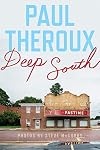
Deep South, or A Southern Man Views Himself Through a Glass, Darkly
I enjoyed reading Paul Theroux’s Deep South (2015), a travelogue of the rural southern U. S. Theroux raises several issues in the land where I’ve lived and often traveled, from central South Carolina through Alabama into Mississippi and finally into Arkansas and back. Reading this book evoked layers of memories while it raised questions about race, history, identity, and economy. In the beginning, this book documents a show more trip to find Black America, the dreaded poverty tourism but in the end, it was something altogether different. I started reading with one eye open for shared experience and one eye hypersensitive to poverty tourism and positive stereotypical messages about strange others. The book opens with a Yankee in search of the real South—not a sanitary Upper Middle-Class South as it appears in glossy magazines or the social media of the White establishment. It closes with a traveler who found what he sought. By the end, the author--and this reader--have changed as the story becomes steeped in reality.
Theroux writes about places I’ve been, often multiple times. Having driven and walked some of the roads Theroux drove for this book aroused my curiosity. I drove along the Blues Trail; Theroux drove along the Civil Rights Trail. Both of us peering into history and viewing leftovers standing along once populated roads and shelved in dim and dusty stores. Both of us learning about what it took to be oneself in a xenophobic land.
One of the most powerful experiences of this reading is the challenges leveled at race. In Deep South racial constructions are on full display and cemented into every interaction. It is a tribute to the author that he slips behind the masks and hostilities to get deep into the Black South. The experience changes the man. If we were ever to have lunch I’d like to hear his reflections and what he learned about himself. Anyway, the topic of race in the South, reflected to someone raised White in the South, seems curious and cloudy, as if the mirror used is de-silvering with age. For me, this book intensified a commitment to listening with curiosity and compassion to how a history of fear and insecurity informs everyday interactions.
Curiously, for a guy so interested in the Black experience in the modern South Theroux has little to say about Black writers. Always he comes back to Faulkner; always the enduring Truth of Faulkner. Faulkner is the filter Theroux sees his subject through. In fairness, much of what Theroux seems to be doing, at least in the beginning, is re-discovering Faulkner, challenging modern incarnations of Southern Gothic tropes and themes. But there are African American authors whose perspective on the frayed threads of history could also inform a curious reader.
Theroux spends much of his time in south-central South Carolina, where a few friendships developed. A barber/preacher, a lawyer/preacher, and a blind author, who is one of the only Whites that didn’t seem stereotyped or Gothic. In a way, Theroux has turned the tables on the voyeuristic, sensation-seeking tourists by focusing on the foibles of White Southerners. Most of them found in the numerous gun shows documented throughout this book. Much of this book is a documentation of shoestring community development in neglected and forgotten hometowns. This work deserves celebration with less comparison to the under-developed villages and towns of Central Africa. By the final section of the cycle something has changed in this author—he doesn’t tell us exactly--though he leaves behind the slow dramas of re-developing a forgotten time and place documented in the first 3/4 of the book for the focused struggles of striving farmers in a hostile land.
Deep South is a book for readers of travel books and those interested in the rural South, especially for those interested in community development and questions of race and economy. For greatest enjoyment, read with a dictionary and an atlas handy; one might say, “Theroux makes his readers smarter.” At the same time, this book is accessible and provides a mirror for the reader familiar with South. Readers can judge for themselves the clarity of the mirror. show less
I enjoyed reading Paul Theroux’s Deep South (2015), a travelogue of the rural southern U. S. Theroux raises several issues in the land where I’ve lived and often traveled, from central South Carolina through Alabama into Mississippi and finally into Arkansas and back. Reading this book evoked layers of memories while it raised questions about race, history, identity, and economy. In the beginning, this book documents a show more trip to find Black America, the dreaded poverty tourism but in the end, it was something altogether different. I started reading with one eye open for shared experience and one eye hypersensitive to poverty tourism and positive stereotypical messages about strange others. The book opens with a Yankee in search of the real South—not a sanitary Upper Middle-Class South as it appears in glossy magazines or the social media of the White establishment. It closes with a traveler who found what he sought. By the end, the author--and this reader--have changed as the story becomes steeped in reality.
Theroux writes about places I’ve been, often multiple times. Having driven and walked some of the roads Theroux drove for this book aroused my curiosity. I drove along the Blues Trail; Theroux drove along the Civil Rights Trail. Both of us peering into history and viewing leftovers standing along once populated roads and shelved in dim and dusty stores. Both of us learning about what it took to be oneself in a xenophobic land.
One of the most powerful experiences of this reading is the challenges leveled at race. In Deep South racial constructions are on full display and cemented into every interaction. It is a tribute to the author that he slips behind the masks and hostilities to get deep into the Black South. The experience changes the man. If we were ever to have lunch I’d like to hear his reflections and what he learned about himself. Anyway, the topic of race in the South, reflected to someone raised White in the South, seems curious and cloudy, as if the mirror used is de-silvering with age. For me, this book intensified a commitment to listening with curiosity and compassion to how a history of fear and insecurity informs everyday interactions.
Curiously, for a guy so interested in the Black experience in the modern South Theroux has little to say about Black writers. Always he comes back to Faulkner; always the enduring Truth of Faulkner. Faulkner is the filter Theroux sees his subject through. In fairness, much of what Theroux seems to be doing, at least in the beginning, is re-discovering Faulkner, challenging modern incarnations of Southern Gothic tropes and themes. But there are African American authors whose perspective on the frayed threads of history could also inform a curious reader.
Theroux spends much of his time in south-central South Carolina, where a few friendships developed. A barber/preacher, a lawyer/preacher, and a blind author, who is one of the only Whites that didn’t seem stereotyped or Gothic. In a way, Theroux has turned the tables on the voyeuristic, sensation-seeking tourists by focusing on the foibles of White Southerners. Most of them found in the numerous gun shows documented throughout this book. Much of this book is a documentation of shoestring community development in neglected and forgotten hometowns. This work deserves celebration with less comparison to the under-developed villages and towns of Central Africa. By the final section of the cycle something has changed in this author—he doesn’t tell us exactly--though he leaves behind the slow dramas of re-developing a forgotten time and place documented in the first 3/4 of the book for the focused struggles of striving farmers in a hostile land.
Deep South is a book for readers of travel books and those interested in the rural South, especially for those interested in community development and questions of race and economy. For greatest enjoyment, read with a dictionary and an atlas handy; one might say, “Theroux makes his readers smarter.” At the same time, this book is accessible and provides a mirror for the reader familiar with South. Readers can judge for themselves the clarity of the mirror. show less
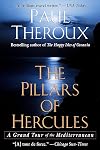
Another outstanding book by one of my all time favorite travel writers. Some my call him a grump but what Theroux brings is a critical eye and speaks his mind about what he sees and thinks. This makes for an interesting read especially when he puts himself into challenging situations. You are never bored reading a Theroux book. He is honest and puts himself out there, you learn something about the place but also about the philosophy of travel. He circles the Med clockwise starting at show more Gibraltar and ending in Morocco and a mystical meeting with the American expat author Paul Bowles. Theroux shows off a bit with a vocabulary--when I find myself reaching for something larger than Webster's Collegiate, more than a few times it gets a little thick. Recommend highly. show less
Lists
Central America (1)
Allie's Wishlist (1)
Sense of place (1)
A Novel Cure (1)
Read These Too (1)
Take Four Books (1)
Page Turners (1)
Tour of Africa (2)
Asia (2)
Fiction For Men (1)
Gen X Library (1)
Folio Society (1)
Franklit (1)
1980s (1)
Awards


You May Also Like


Associated Authors
Statistics
- Works
- 116
- Also by
- 79
- Members
- 32,336
- Popularity
- #600
- Rating
- 3.7
- Reviews
- 657
- ISBNs
- 1,079
- Languages
- 20
- Favorited
- 94


