
About the Author
Simon Winchester was born in London, England on September 28, 1944. He read geology at St. Catherine's College, Oxford. After graduation in 1966, he joined a Canadian mining company and worked as field geologist in Uganda. The following year he decided to become a journalist. His first reporting show more job was for The Journal, Newcastle upon Tyne. In 1969, he joined The Guardian and was named Britain's Journalist of the Year in 1971. He also worked for the Daily Mail and the Sunday Times before becoming a freelancer. He is the author of numerous books including In Holy Terror, The River at the Center of the World, The Alice Behind Wonderland, The Professor and the Madman: A Tale of Murder, Insanity, the Making of the Oxford English Dictionary, and.Exactly: How Precision Engineers Created the Modern World. In 2006, he was made an Officer of the Order of the British Empire for services to journalism and literature. (Bowker Author Biography) show less
Works by Simon Winchester
The Professor and the Madman: A Tale of Murder, Insanity, and the Making of the Oxford English Dictionary (1998) 13,021 copies, 312 reviews
The Map that Changed the World: The Tale of William Smith and the Birth of a Science (2001) — Author — 4,258 copies, 89 reviews
The Meaning of Everything: The Story of the Oxford English Dictionary (2003) — Narrator, some editions — 3,237 copies, 59 reviews
A Crack in the Edge of the World: America and the Great California Earthquake of 1906 (2005) 2,482 copies, 76 reviews
The Man Who Loved China: The Fantastic Story of the Eccentric Scientist Who Unlocked the Mysteries of the Middle Kingdom (2008) 1,787 copies, 75 reviews
Atlantic: Great Sea Battles, Heroic Discoveries, Titanic Storms,and a Vast Ocean of a Million Stories (2010) 1,512 copies, 61 reviews
The Perfectionists: How Precision Engineers Created the Modern World (2018) — Author & Narrator — 1,076 copies, 21 reviews
The Men Who United the States: America's Explorers, Inventors, Eccentrics and Mavericks, and the Creation of One Nation, Indivisible (2013) 987 copies, 28 reviews
The River at the Center of the World: A Journey Up the Yangtze, and Back in Chinese Time (1996) 808 copies, 16 reviews
Pacific: Silicon Chips and Surfboards, Coral Reefs and Atom Bombs, Brutal Dictators, Fading Empires, and the Coming Collision of the World's Superpowers (2015) 802 copies, 25 reviews
Knowing What We Know: The Transmission of Knowledge: From Ancient Wisdom to Modern Magic (2023) 589 copies, 10 reviews
When the Sky Breaks: Hurricanes, Tornadoes, and the Worst Weather in the World (Smithsonian) (2017) 52 copies, 4 reviews
The River at the Centre of the World; The Surgeon of Crowthorne; The Map That Changed the World (2004) 24 copies
Aerial Hong Kong 2 copies
The Fatal Equation 2 copies
The Classic Age 1 copy
"Word Imperfect" 1 copy
Zimbabwe 1 copy
Associated Works
My Bookstore: Writers Celebrate Their Favorite Places to Browse, Read, and Shop (2012) — Contributor — 621 copies, 16 reviews
The Condé Nast Traveler Book of Unforgettable Journeys: Great Writers on Great Places (2007) — Contributor — 280 copies, 5 reviews
Cascadia's Fault: The Coming Earthquake and Tsunami that Could Devastate North America (2011) — Introduction — 161 copies, 11 reviews
Worlds to Explore: Classic Tales of Travel and Adventure from National Geographic (2006) — Introduction, some editions — 118 copies, 1 review
The Dylan Companion: A Collection of Essential Writing About Bob Dylan (1990) — Contributor, some editions — 103 copies
Unsavory Elements: Stories of Foreigners on the Loose in China (2013) — Contributor — 31 copies, 1 review
MHQ: The Quarterly Journal of Military History — Autumn 1994 (1994) — Author "Eternal Argument" and "Two Centuries of the IRA" — 15 copies
MHQ: The Quarterly Journal of Military History — Autumn 1996 (1996) — Author "The Escape of the Amethyst" — 13 copies
Tagged
Common Knowledge
- Canonical name
- Winchester, Simon
- Birthdate
- 1944-09-28
- Gender
- male
- Education
- St. Catherine's College, Oxford University (BA|1966)
- Occupations
- journalist
author
broadcaster
geologist - Organizations
- The Guardian
Condé Nast Traveler
National Geographic
Smithsonian - Awards and honors
- Order of the British Empire (Officer, 2006)
Lawrence J. Burpee Medal (2016)
Royal Canadian Geological Society (Fellow) - Agent
- Bill Hamilton
Peter Matson
Jennifer Hengen - Relationships
- Sato, Setsuko (wife)
- Nationality
- UK
USA (naturalised 2011) - Birthplace
- London, Middlesex, England, UK
- Places of residence
- Berkshire Hills, Massachusetts, USA
Scotland, UK
Uganda
India
New York, New York, USA - Map Location
- USA
Members
Discussions
The Man Who Loved China group read in 75 Books Challenge for 2014 (December 2014)
Reviews
Knowing What We Know: The Transmission of Knowledge: From Ancient Wisdom to Modern Magic by Simon Winchester

This book, like all of Winchester's output, is engagingly written, interesting, and he ties together lots of research to make his point. Here is a history of how knowledge (whatever that is!?) has been transmitted in human history. Going from cuneiform to Wikipedia and Google. His chapter on modern technology makes one think.
He loses a star, however, with two strange missteps.
In his discussion on WISDOM (whatever that is!?) and its relation to knowledge, he discusses the dropping of atomic show more weapons on Hiroshima (and Nagasaki) in 1945 (pp. 359-367). His immediate conclusion, a moral one, is that the decision to drop the bomb was NOT WISE. He offers very little to explain any counter arguments to this. He even straw mans those who thought the decision to drop the bomb may have been right (wise?) by just reducing their thoughts or arguments to revenge (for Pearl, Bataan, whatever). This is wholly beneath Winchester, I think. In fact, there were and are very fine reasons (that don't have to do with cold revenge) for why dropping the bombs was a wise/right decision. Winchester has his agenda, so he beats that dead horse. All the way to the point of declaring, sans evidence (or, in my opinion, any basic common sense) that (p. 366) it would be WISE for the United States of America to unilaterally declare for nuclear disarmament, then destroy all nuclear weapons, and solemnly declare against their use ever. Yes. I am sure that Putin or the P.R.C. or any baddie you want to mention will see America's "wise" disarmament and say, "Well, dang, we'll destroy our nukes too! And all our weapons!" Yeah. I don't know what Winchester here is thinking, except maybe getting out some long unexpressed desire to support the old (and, dare I say it, discredited) anti-nuke movement that wrangled the U.S. and his beloved U.K. in the 1970s and 1980s (now proved to be funded and supported by the old Soviet K.G.B.). Silly.
And, the second misstep, his last little bit on indigenous knowledges (pp. 371-374). Indigenous knowledges are great, a fit topic for this book, and maybe even something the global West could take into account. No problem there. But, Winchester falls into the old trope that indigenous peoples were nature-loving hippies, who "were one with nature." Winchester blames "white people" alone for "the slow but ever accelerating process of ruining our planet" (p. 371) as if nobody of any darker shade has ever damaged the environment one little bitty bit. China? India? But back to the indigenous peoples of the world: the native-as-hippie trope is a sad one for Winchester to fall for. This very section praises Polynesians, okay, but has Mr. Winchester not even read (or heard of?) Jared Diamond's Collapse which details how the Polynesians(!) of Easter Island destroyed their society through ENVIRONMENTAL DESTRUCTION! What?!?! Or works underpinning Charles C. Mann's great 1491: New Revelations of the Americas Before Columbus, who showed that the Amerindian peoples lived in more complex civilizations with larger populations than were previously thought, and that they used technology to control, shape and CHANGE the natural landscape in ways (against nature!) not thought possible before. Indigenous peoples are human beings, human beings who make mistakes and greedily want stuff, and it is not just the dumb, white moderns that have the capability for destruction and evil and whatnot. Before this bit, I hadn't thought Winchester was one of those sabot-throwing Luddites who think we should commit civilizational hari-kari and all go live in Thoreau/Kaczynski cabins in the woods and eat grasshoppers and leaves.
But, I digress. Aside from these two blips, it's an informational, solid, interesting work. show less
He loses a star, however, with two strange missteps.
In his discussion on WISDOM (whatever that is!?) and its relation to knowledge, he discusses the dropping of atomic show more weapons on Hiroshima (and Nagasaki) in 1945 (pp. 359-367). His immediate conclusion, a moral one, is that the decision to drop the bomb was NOT WISE. He offers very little to explain any counter arguments to this. He even straw mans those who thought the decision to drop the bomb may have been right (wise?) by just reducing their thoughts or arguments to revenge (for Pearl, Bataan, whatever). This is wholly beneath Winchester, I think. In fact, there were and are very fine reasons (that don't have to do with cold revenge) for why dropping the bombs was a wise/right decision. Winchester has his agenda, so he beats that dead horse. All the way to the point of declaring, sans evidence (or, in my opinion, any basic common sense) that (p. 366) it would be WISE for the United States of America to unilaterally declare for nuclear disarmament, then destroy all nuclear weapons, and solemnly declare against their use ever. Yes. I am sure that Putin or the P.R.C. or any baddie you want to mention will see America's "wise" disarmament and say, "Well, dang, we'll destroy our nukes too! And all our weapons!" Yeah. I don't know what Winchester here is thinking, except maybe getting out some long unexpressed desire to support the old (and, dare I say it, discredited) anti-nuke movement that wrangled the U.S. and his beloved U.K. in the 1970s and 1980s (now proved to be funded and supported by the old Soviet K.G.B.). Silly.
And, the second misstep, his last little bit on indigenous knowledges (pp. 371-374). Indigenous knowledges are great, a fit topic for this book, and maybe even something the global West could take into account. No problem there. But, Winchester falls into the old trope that indigenous peoples were nature-loving hippies, who "were one with nature." Winchester blames "white people" alone for "the slow but ever accelerating process of ruining our planet" (p. 371) as if nobody of any darker shade has ever damaged the environment one little bitty bit. China? India? But back to the indigenous peoples of the world: the native-as-hippie trope is a sad one for Winchester to fall for. This very section praises Polynesians, okay, but has Mr. Winchester not even read (or heard of?) Jared Diamond's Collapse which details how the Polynesians(!) of Easter Island destroyed their society through ENVIRONMENTAL DESTRUCTION! What?!?! Or works underpinning Charles C. Mann's great 1491: New Revelations of the Americas Before Columbus, who showed that the Amerindian peoples lived in more complex civilizations with larger populations than were previously thought, and that they used technology to control, shape and CHANGE the natural landscape in ways (against nature!) not thought possible before. Indigenous peoples are human beings, human beings who make mistakes and greedily want stuff, and it is not just the dumb, white moderns that have the capability for destruction and evil and whatnot. Before this bit, I hadn't thought Winchester was one of those sabot-throwing Luddites who think we should commit civilizational hari-kari and all go live in Thoreau/Kaczynski cabins in the woods and eat grasshoppers and leaves.
But, I digress. Aside from these two blips, it's an informational, solid, interesting work. show less
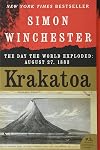
Started off 2023 with a book that has been on my shelf for years and an author that I've never read, despite his popularity and many available books. And I really enjoyed it. As is evidenced by the title, this is a nonfiction work about the explosion of Krakatoa, a volcano between Sumatra and Java. This happened in 1883 and was one of the first major natural disasters that happened when global communication was possible through telegraphs. There were also enough scientific instruments in show more place to really get a handle on some of the repercussions of the eruption. Krakatoa's explosion was so violent that the entire volcano disappeared under the ocean. The explosion was heard 3000 miles away and the shock waves circled the entire globe 7 times! Almost 40,000 people died.
Winchester goes through what we know about plate tectonics and volcanoes in clear and informative words. He also gives good insight into the Dutch colonization of Java and how the eruption began to change the island and Dutch rule. I was also really interested in what happened to the immediate surroundings of a new volcano springing up near Krakatoa and how life returned to the islands.
The book is not highly technical and it's obviously intended for the curious layperson. It's very readable nonfiction and probably won't satisfy anyone with a lot of expertise in the topic, but for me it hit just the right note. Sort of like watching a history channel hour long documentary but reading it instead. show less
Winchester goes through what we know about plate tectonics and volcanoes in clear and informative words. He also gives good insight into the Dutch colonization of Java and how the eruption began to change the island and Dutch rule. I was also really interested in what happened to the immediate surroundings of a new volcano springing up near Krakatoa and how life returned to the islands.
The book is not highly technical and it's obviously intended for the curious layperson. It's very readable nonfiction and probably won't satisfy anyone with a lot of expertise in the topic, but for me it hit just the right note. Sort of like watching a history channel hour long documentary but reading it instead. show less
The Professor and the Madman: A Tale of Murder, Insanity, and the Making of the Oxford English Dictionary by Simon Winchester
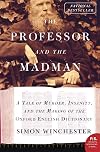
Gimmicky and overblown. This might have worked better as an essay than a book, but since Simon Winchester doesn't seem to have much of a point to make about the life of William Chester Minor and his involvement with James Murray and the creation of the Oxford English Dictionary beyond "He was mad! Isn't that luridly shocking and enthralling?", perhaps not. There's an angle here about social class that seems worthy of further exploration but that Winchester seemed uninterested in.
There's also show more a lot of jingoism, dubious psychologising, suspect logic (just because the OED doesn't record "to look up" in the sense of "to search for in a dictionary or reference work" until 1692 does not mean "it follows that there was essentially no concept either, certainly not at the time when Shakespeare was writing"), weirdness about women (Winchester really likes the word "whore"), and queasy weirdness about very young Sri Lankan women ("young, chocolate-skinned, ever-giggling naked girls with sleek wet bodies, rosebud nipples"—even allowing for an attempt to convey something of Minor's sexual monomania, this is a bit much).
Meh. show less
There's also show more a lot of jingoism, dubious psychologising, suspect logic (just because the OED doesn't record "to look up" in the sense of "to search for in a dictionary or reference work" until 1692 does not mean "it follows that there was essentially no concept either, certainly not at the time when Shakespeare was writing"), weirdness about women (Winchester really likes the word "whore"), and queasy weirdness about very young Sri Lankan women ("young, chocolate-skinned, ever-giggling naked girls with sleek wet bodies, rosebud nipples"—even allowing for an attempt to convey something of Minor's sexual monomania, this is a bit much).
Meh. show less
Pacific: Silicon Chips and Surfboards, Coral Reefs and Atom Bombs, Brutal Dictators, Fading Empires, and the Coming Collision of the World's Superpowers by Simon Winchester
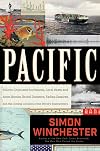
In his inimitable way, Simon Winchester sets out to prove the vast importance of the Pacific Ocean, not only in the past and present, but in our future. For the most part, he succeeds.
The size of the Pacific Ocean is immense and almost beyond our reckoning. It is the source of the world's weather and has survived atomic bombs, transistors, and the abysmal treatment of its native peoples. Winchester takes us on a mesmerizing journey from one end of the Pacific to the other, from east to west show more and north to south, with lots of stops on tiny islands and archipelagos along the way.
Winchester has been one of my favorite non-fiction writers since his unforgettable The Professor and the Madman: A Tale of Murder, Insanity, and the Making of the Oxford English Dictionary. He's opened my eyes to many things and encouraged me to read deeper into many of the subjects he brings to light. However, I have to admit that I am concerned about an error I found while reading this particular book. In it, Winchester talks about traveling up the Mississippi River past the city of Des Moines. I did some research in an attempt to discover if my memory had blown a fuse, but it hadn't. Des Moines is certainly not on the banks of the Mississippi River between Hannibal and St. Louis, Missouri, as stated in his book, and that's what has me concerned. If a simple yet glaring mistake like that can make its way to the final edition of the published book, how many other errors made it through, too? And if there are errors in this book, what about his others? One city in the wrong place can cause so much harm. show less
The size of the Pacific Ocean is immense and almost beyond our reckoning. It is the source of the world's weather and has survived atomic bombs, transistors, and the abysmal treatment of its native peoples. Winchester takes us on a mesmerizing journey from one end of the Pacific to the other, from east to west show more and north to south, with lots of stops on tiny islands and archipelagos along the way.
Winchester has been one of my favorite non-fiction writers since his unforgettable The Professor and the Madman: A Tale of Murder, Insanity, and the Making of the Oxford English Dictionary. He's opened my eyes to many things and encouraged me to read deeper into many of the subjects he brings to light. However, I have to admit that I am concerned about an error I found while reading this particular book. In it, Winchester talks about traveling up the Mississippi River past the city of Des Moines. I did some research in an attempt to discover if my memory had blown a fuse, but it hadn't. Des Moines is certainly not on the banks of the Mississippi River between Hannibal and St. Louis, Missouri, as stated in his book, and that's what has me concerned. If a simple yet glaring mistake like that can make its way to the final edition of the published book, how many other errors made it through, too? And if there are errors in this book, what about his others? One city in the wrong place can cause so much harm. show less
Lists
True Crime (1)
Summer Reading (1)
Best Biographies (1)
Career (1)
Check Library (1)
Europe (1)
For Science! (3)
Etymology (2)
Unread books (3)
My List (2)
Disaster Books (2)
Test (1)
read in 2026 (1)
Folio Society (1)
Science: Earth (1)
Awards


You May Also Like


Associated Authors
Statistics
- Works
- 53
- Also by
- 25
- Members
- 38,605
- Popularity
- #467
- Rating
- 3.8
- Reviews
- 997
- ISBNs
- 439
- Languages
- 17
- Favorited
- 130

