
Nathaniel Philbrick
Author of In the Heart of the Sea: The Tragedy of the Whaleship Essex
About the Author
Nathaniel Philbrick was born in Boston Massachusetts on June 11, 1956. He received a bachelor's degree in English from Brown University and a master's degree in American literature from Duke University. In 1978, he was Brown University's first Intercollegiate All-American sailor and he won the show more Sunfish North Americans in Barrington, Rhode Island. After graduate school, he worked for four years at Sailing World magazine. Afterward, he worked as a freelancer for a number of years and wrote/edited several sailing books including Yachting: A Parody. After moving to Nantucket in 1986, he became interested in the history of the island and wrote Away Off Shore: Nantucket Island and Its People. In 2000 he published In the Heart of the Sea: The Tragedy of the Whaleship Essex. A motion picture of the book was released in December 2015. His other books include Sea of Glory: America's Voyage of Discovery, The U.S. Exploring Expedition; Mayflower: A Story of Courage, Community, and War; The Last Stand: Custer, Sitting Bull, and the Battle of the Little Bighorn; Bunker Hill: A City, A Siege, A Revolution; Valiant Ambition: George Washington, Benedict Arnold, and the Fate of the American Revolution, and In the Hurricane's Eye: The Genius of George Washington and the Victory at Yorktown. (Bowker Author Biography) show less
Series
Works by Nathaniel Philbrick
Sea of Glory: America's Voyage of Discovery, The U.S. Exploring Expedition, 1838-1842 (2003) 1,941 copies, 25 reviews
The Last Stand : Custer, Sitting Bull, and the Battle of the Little Bighorn (2010) 1,807 copies, 41 reviews
Valiant Ambition: George Washington, Benedict Arnold, and the Fate of the American Revolution (2016) 1,401 copies, 32 reviews
In the Hurricane's Eye: The Genius of George Washington and the Victory at Yorktown (The American Revolution Series) (2018) 861 copies, 22 reviews
Second Wind: A Sunfish Sailor, an Island, and the Voyage That Brought a Family Together (1998) 69 copies, 3 reviews
Sea Stories Collection: "In the Heart of the Sea", "The Perfect Storm", "Ship of Gold in the Deep Blue Sea" (2001) — Contributor — 1 copy
Miscarriage of justice 1 copy
Associated Works
Endurance: Shackleton's Incredible Voyage (1959) — Introduction, some editions — 6,286 copies, 153 reviews
Island Practice: Cobblestone Rash, Underground Tom, and Other Adventures of a Nantucket Doctor (2012) — Foreword, some editions — 79 copies, 7 reviews
Deep Blue: Stories of Shipwreck, Sunken Treasure, and Survival (Adrenaline) (2001) — Contributor — 32 copies
MHQ: The Quarterly Journal of Military History — Autumn 2004 (2004) — Author "Young Ambition: Charles Wilkes' Antarctic Adventure" — 8 copies
Hebbes ... : nieuwe smaakmakers voor ... — Contributor — 2 copies
Tagged
Common Knowledge
- Canonical name
- Philbrick, Nathaniel
- Birthdate
- 1956-06-11
- Gender
- male
- Education
- Brown University (BA|1978 ∙ English)
Duke University (MA|1980 ∙ American Literature)
Linden Elementary School, Pittsburgh, Pennsylvania, USA - Occupations
- maritime historian
journalist - Organizations
- Egan Institute of Maritime Studies
Nantucket Historical Association
Sailing World
Boston Athenæum - Awards and honors
- Nathaniel Bowditch Maritime Scholar of the Year (2002)
Theodore and Franklin D. Roosevelt Naval History Prize (2003)
Albion-Monroe Award (2005)
America and the Sea Award (2015)
Byrne Waterman Award
Samuel Eliot Morison Award (show all 13)
Harris Collection Literary Award (2017)
George Washington Book Prize (2017)
James P. Hanlon Book Award (2017)
Harry M. Ward Book Prize (2017)
Commodore John Barry Award (2018)
New England Society Book Award (2014)
Distinguished Book Award of the Society of Colonial Wars (2014) - Agent
- Peter Jacobs (Creative Artists Agency, Inc., Lecture appearances)
Stuart Krichevsky Literary Agency, Inc. (Rights information)
Shana Cohen
Kathryne Wick - Relationships
- Philbrick, Thomas (father)
Philbrick, Charles (uncle) - Nationality
- USA
- Birthplace
- Boston, Massachusetts, USA
- Places of residence
- Boston, Massachusetts, USA
Nantucket, Massachusetts, USA - Map Location
- Massachusetts, USA
Members
Reviews
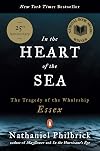
In the Heart of the Sea is a history of a 19th-century whaling disaster told in novelistic style by Nathaniel Philbrick. In 1820, the whaleship Essex, sailing from Nantucket, was rammed and destroyed by a sperm whale in the Pacific Ocean. This incident influenced Herman Melville in writing Moby Dick. Only 8 of the 21 crew members survived the arduous journey on whale boats with the survivors resorting to cannibalizing those who died of starvation.
Philbrick does a great job at establishing show more the community of early 19th century Nantucket and how it's economy centered on the whaling industry. Ships were crewed by inexperienced sailors who learned on the job under the command of captains with only a few journeys under their belt. In this case it was the first-time captain George Pollard Jr. who Philbrick characterizes as hesitant and too willing to be influenced by his crew. This includes first mate Owen Chase, perhaps resentful that he had not been appointed captain, and very assertive of doing things his way. What we know of the Essex's journey are based on accounts by Chase and 14-year-old cabin boy cabin boy, Thomas Nickerson.
Race and social caste play their part in the whaleship. Native Nantucketers were considered the superior group and tended to socialize among themselves. Other groups included white sailors from the mainland who the Nantucketers considered green hands, as well as a group of free Black sailors. While Quaker Nantucket was known for abolitionist, the Black sailors were nonetheless discriminated against, and significantly almost all of the sailors to die from starvation and then cannibalized were Black men. Philbrick draws on other historical accounts and scientific research to viscerally describe starvation's effects on the human body and mind.
Philbrick's writing is engaging, and sometimes stomach turning, as a deep dive into a significant historical event that would become part of the American mythology.
Favorite Passages:
Philbrick does a great job at establishing show more the community of early 19th century Nantucket and how it's economy centered on the whaling industry. Ships were crewed by inexperienced sailors who learned on the job under the command of captains with only a few journeys under their belt. In this case it was the first-time captain George Pollard Jr. who Philbrick characterizes as hesitant and too willing to be influenced by his crew. This includes first mate Owen Chase, perhaps resentful that he had not been appointed captain, and very assertive of doing things his way. What we know of the Essex's journey are based on accounts by Chase and 14-year-old cabin boy cabin boy, Thomas Nickerson.
Race and social caste play their part in the whaleship. Native Nantucketers were considered the superior group and tended to socialize among themselves. Other groups included white sailors from the mainland who the Nantucketers considered green hands, as well as a group of free Black sailors. While Quaker Nantucket was known for abolitionist, the Black sailors were nonetheless discriminated against, and significantly almost all of the sailors to die from starvation and then cannibalized were Black men. Philbrick draws on other historical accounts and scientific research to viscerally describe starvation's effects on the human body and mind.
Philbrick's writing is engaging, and sometimes stomach turning, as a deep dive into a significant historical event that would become part of the American mythology.
Favorite Passages:
"But the rise of the Pacific sperm-whale fishery had an unfortunate side effect. Instead of voyages that had once averaged about nine months, two- and three-year voyages had become the norm. Never before had the division between Nantucket’s whalemen and their people been so great. Long gone were the days when Nantucketers could watch from shore as the men and boys of the island pursued the whale. Nantucket was now the whaling capital of the world, but there were more than a few islanders who had never even seen a whale."show less
"...the whalemen preferred to think of it as what one commentator called “a self-propelled tub of high-income lard.” Whales were described by the amount of oil they would produce (as in a fifty-barrel whale), and although the whalemen took careful note of the mammal’s habits, they made no attempt to regard it as anything more than a commodity whose constituent parts (head, blubber, ambergris, etc.) were of value to them. The rest of it—the tons of meat, bone, and guts—was simply thrown away, creating festering rafts of offal that attracted birds, fish, and, of course, sharks. Just as the skinned corpses of buffaloes would soon dot the prairies of the American West, so did the headless gray remains of sperm whales litter the Pacific Ocean in the early nineteenth century."
"Nantucketers were suspicious of anything beyond their immediate experience. Their far-reaching success in whaling was founded not on radical technological advances or bold gambles but on a profound conservatism. Gradually building on the achievements of the generations before them, they had expanded their whaling empire in a most deliberate and painstaking manner. If new information didn’t come to them from the lips of another Nantucketer, it was suspect."
"Shipowners hoped to combine a fishy, hard-driving captain with an approachable and steady mate. But in the labor-starved frenzy of Nantucket in 1819, the Essex had ended up with a captain who had the instincts and soul of a mate, and a mate who had the ambition and fire of a captain. Instead of giving an order and sticking with it, Pollard indulged his matelike tendency to listen to others. This provided Chase—who had no qualms about speaking up—with the opportunity to impose his own will. For better or worse, the men of the Essex were sailing toward a destiny that would be determined, in large part, not by their unassertive captain but by their forceful and fishy mate."
"But if the island’s inhabitants once ventured to the far corners of the world, today it seems as if the world has made its way to Nantucket. It is not whaling, of course, that brings the tourists to the island, but the romantic glorification of whaling—the same kind of myths that historically important places all across America have learned to shine and polish to their economic advantage. Yet, despite the circus (some have called it a theme park) that is modern Nantucket, the story of the Essex is too troubling, too complex to fit comfortably into a chamber of commerce brochure.”
"Like the Donner Party, the men of the Essex could have avoided disaster, but this does not diminish the extent of the men’s sufferings, or their bravery and extraordinary discipline."
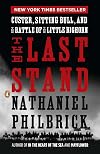
Strike up the “Garry Owen” one more time, and head back to the Little Bighorn for another retelling of George Armstrong Custer’s fateful encounter with Sitting Bull, Crazy Horse, and the assembled warriors of the Lakota and Cheyenne nations on June 25th, 1876, a rightfully legendary event in American history, that has spawned so many books, it is virtually its own publishing genre. Nathaniel Philbrick’s THE LAST STAND: CUSTER, SITTING BULL, AND THE BATTLE OF THE LITTLE BIGHORN is the show more latest book on this subject that I have read following Evan Connell’s SON OF THE MORNING STAR, and James Donovan’s A TERRIBLE GLORY, both excellent books on the battle. Like many, I have always been drawn to this story, and fascinated by the mystery at the heart of it: what really happened on that hillside in Montana on that June day that no White man lived to tell about. For that reason I was eager to read Philbrick’s book, and journey back to the Black Hills and the plains of Montana in the year of the American Centennial.
Though my paperback copy of THE LAST STAND runs to more than 450 pages, the account of the battle and the participants comes to just over 300 pages, as the rest is taken up by notes, an appendix, and other citations which attest to the tremendous amount of research Philbrick did for this book. And it shows in the concise and very informative narrative he lays out. The author’s focus is on the campaign of the summer of 1876, pausing to give brief biographical portraits of the pertinent individuals involved, but trusting that the reader is already familiar with the history of The Civil War, the western expansion that followed, and the resistance of the various Indian tribes in its way. We get a good sense of just how new and bracing the American West and the Great Plains were to those who experienced it upfront, for it was not yet the “Old West,” and many of those flocking there were not exactly the hardy pioneers and rugged cowboys of movies and TV; nearly 40% of the men making up the 7th Cavalry were foreign born, and nearly all of them were from east of the Mississippi. The Indian tribes who opposed them lived in a constant state of flux, traveling from one fertile area to the next, and not always living in harmony with each other, and far more savvy about the ways of the White world than history would have us believe. Sitting Bull was far from the bloodthirsty savage he would often be portrayed as, but a canny leader of his people who knew they were at a distinct disadvantage despite their numbers. He did not want war, but when war came to him in the form of Custer and his 7th Cavalry, his people took full advantage of the enemy’s missteps and achieved the greatest victory his people were ever to win over a foe bent on exterminating them. Perhaps it was a backhanded compliment and an acknowledgement of a worthy opponent, but after the Little Bighorn, Sitting Bull achieved genuine celebrity status in the eyes of White Americans, touring with Buffalo Bill’s Wild West Show.
But for me, the most striking part of the book is the portrait it paints of Custer and his 7th Cavalry and the dysfunctional chain of command that contributed to the disaster at the Little Bighorn. Custer was the youngest Union general of the Civil War, leading a cavalry charge on the 3rd day at Gettysburg that helped achieve victory for the Northern side. That he had a huge ego and a high opinion of himself there is no doubt, but he was also incredibly brave under fire and as fine a leader of men as the army ever produced, winning the confidence of the soldiers who served under him, and who followed him loyally into battle. He took risks to the point of being reckless, and reckless with the lives of others, and was a true self-promoter, not shy about criticizing his superiors and fellow officers, and in this he won some prominent enemies, including President Ulysses S. Grant. Among those who were less than enamored with Custer were his two chief subordinates, Major Marcus Reno and Lieutenant Frederick Benteen, both of whom assumed separate commands on the day of the battle when Custer divided his force as they approached the Indian village on the Little Bighorn. It was a fatal error on Custer’s part, as the plan was to attack what they thought was a much smaller encampment of the Lakota and Cheyenne from different sides. Reno pulled his men back after initiating what was shaping up to be a successful attack, and barely escaped being overrun himself only by the arrival of Benteen’s men, the latter taking charge on the field and organizing the defense against a much larger attacking force of Indians than anticipated. By many accounts, Reno was drunk in the saddle that day, and unable to exert his authority properly, and while Benteen is credited with saving what was left of the 7th, he was still overcome by exhaustion and sleep deprivation, and stretched out on the ground and fell asleep while the fighting raged. What neither Reno nor Benteen did was attempt to go to Custer’s aid, ignoring orders from their superior to come at once, though whether such an action would have saved the day at that point, or only added to the massacre is open to debate.
Philbrick gives a good blow by blow account of the desperate fight by Reno and Benteen’s commands that goes into detail just how brutal and gory fighting Indians on the Great Plains could be, and why desperate and wounded soldiers would save their last bullet for themselves rather than fall into the hands of their enemies. If Reno was a less than exemplary officer, Benteen comes across as prickly but capable, the kind of ornery character John Wayne played later in his career. But of course, the high point of the book is Custer’s final fight when his command was killed to the last man. Philbrick saves this for the next to last chapter, and he does as good a job as any reconstructing the battle using accounts given by Indian participants, most of which were recorded long afterward, army reports of those who had the unfortunate job of burying the dead, and archeological and forensic expeditions conducted over the years that accumulated a lot of evidence as to what happened and when.
What I really liked about THE LAST STAND was that it is not an overtly political book, as Philbrick wisely lets the facts speak for themselves. That Custer brought his fate upon himself there is little doubt, but as Philbrick notes, he came far closer to achieving a victory on the Little Bighorn than is commonly believed, if only his timing had been better, and he’d gotten the support he needed from Reno and Benteen. George Armstrong Custer was a true warrior of the 19th Century, happiest when leading his men in battle on horseback against an equally armed foe. It was a type of warfare soon to be rendered obsolete by the industrial age and the coming of automatic weapons of mass destruction. For that reason, he would look ridiculous to later generations, a fool who got what he deserved, but this book reminds us that he was more than the caricature pop culture would make him out to be. Who knows, but if he’d won the victory he’d expected to win on the Little Bighorn, he might have won the Democratic nomination for President and gone to the White House, no doubt confounding his many detractors. And Sitting Bull won something more than just a temporary victory over the White man; though his ultimate fate would be a sad one, his people would survive those who followed Custer and their determination to take the land and wipe the American Indian from the earth. Sitting Bull gave his people a legacy to hold on to, and that is no small triumph, and one all Americans should take pride in. Read Nathaniel Philbrick’s THE LAST STAND, and understand why. show less
Though my paperback copy of THE LAST STAND runs to more than 450 pages, the account of the battle and the participants comes to just over 300 pages, as the rest is taken up by notes, an appendix, and other citations which attest to the tremendous amount of research Philbrick did for this book. And it shows in the concise and very informative narrative he lays out. The author’s focus is on the campaign of the summer of 1876, pausing to give brief biographical portraits of the pertinent individuals involved, but trusting that the reader is already familiar with the history of The Civil War, the western expansion that followed, and the resistance of the various Indian tribes in its way. We get a good sense of just how new and bracing the American West and the Great Plains were to those who experienced it upfront, for it was not yet the “Old West,” and many of those flocking there were not exactly the hardy pioneers and rugged cowboys of movies and TV; nearly 40% of the men making up the 7th Cavalry were foreign born, and nearly all of them were from east of the Mississippi. The Indian tribes who opposed them lived in a constant state of flux, traveling from one fertile area to the next, and not always living in harmony with each other, and far more savvy about the ways of the White world than history would have us believe. Sitting Bull was far from the bloodthirsty savage he would often be portrayed as, but a canny leader of his people who knew they were at a distinct disadvantage despite their numbers. He did not want war, but when war came to him in the form of Custer and his 7th Cavalry, his people took full advantage of the enemy’s missteps and achieved the greatest victory his people were ever to win over a foe bent on exterminating them. Perhaps it was a backhanded compliment and an acknowledgement of a worthy opponent, but after the Little Bighorn, Sitting Bull achieved genuine celebrity status in the eyes of White Americans, touring with Buffalo Bill’s Wild West Show.
But for me, the most striking part of the book is the portrait it paints of Custer and his 7th Cavalry and the dysfunctional chain of command that contributed to the disaster at the Little Bighorn. Custer was the youngest Union general of the Civil War, leading a cavalry charge on the 3rd day at Gettysburg that helped achieve victory for the Northern side. That he had a huge ego and a high opinion of himself there is no doubt, but he was also incredibly brave under fire and as fine a leader of men as the army ever produced, winning the confidence of the soldiers who served under him, and who followed him loyally into battle. He took risks to the point of being reckless, and reckless with the lives of others, and was a true self-promoter, not shy about criticizing his superiors and fellow officers, and in this he won some prominent enemies, including President Ulysses S. Grant. Among those who were less than enamored with Custer were his two chief subordinates, Major Marcus Reno and Lieutenant Frederick Benteen, both of whom assumed separate commands on the day of the battle when Custer divided his force as they approached the Indian village on the Little Bighorn. It was a fatal error on Custer’s part, as the plan was to attack what they thought was a much smaller encampment of the Lakota and Cheyenne from different sides. Reno pulled his men back after initiating what was shaping up to be a successful attack, and barely escaped being overrun himself only by the arrival of Benteen’s men, the latter taking charge on the field and organizing the defense against a much larger attacking force of Indians than anticipated. By many accounts, Reno was drunk in the saddle that day, and unable to exert his authority properly, and while Benteen is credited with saving what was left of the 7th, he was still overcome by exhaustion and sleep deprivation, and stretched out on the ground and fell asleep while the fighting raged. What neither Reno nor Benteen did was attempt to go to Custer’s aid, ignoring orders from their superior to come at once, though whether such an action would have saved the day at that point, or only added to the massacre is open to debate.
Philbrick gives a good blow by blow account of the desperate fight by Reno and Benteen’s commands that goes into detail just how brutal and gory fighting Indians on the Great Plains could be, and why desperate and wounded soldiers would save their last bullet for themselves rather than fall into the hands of their enemies. If Reno was a less than exemplary officer, Benteen comes across as prickly but capable, the kind of ornery character John Wayne played later in his career. But of course, the high point of the book is Custer’s final fight when his command was killed to the last man. Philbrick saves this for the next to last chapter, and he does as good a job as any reconstructing the battle using accounts given by Indian participants, most of which were recorded long afterward, army reports of those who had the unfortunate job of burying the dead, and archeological and forensic expeditions conducted over the years that accumulated a lot of evidence as to what happened and when.
What I really liked about THE LAST STAND was that it is not an overtly political book, as Philbrick wisely lets the facts speak for themselves. That Custer brought his fate upon himself there is little doubt, but as Philbrick notes, he came far closer to achieving a victory on the Little Bighorn than is commonly believed, if only his timing had been better, and he’d gotten the support he needed from Reno and Benteen. George Armstrong Custer was a true warrior of the 19th Century, happiest when leading his men in battle on horseback against an equally armed foe. It was a type of warfare soon to be rendered obsolete by the industrial age and the coming of automatic weapons of mass destruction. For that reason, he would look ridiculous to later generations, a fool who got what he deserved, but this book reminds us that he was more than the caricature pop culture would make him out to be. Who knows, but if he’d won the victory he’d expected to win on the Little Bighorn, he might have won the Democratic nomination for President and gone to the White House, no doubt confounding his many detractors. And Sitting Bull won something more than just a temporary victory over the White man; though his ultimate fate would be a sad one, his people would survive those who followed Custer and their determination to take the land and wipe the American Indian from the earth. Sitting Bull gave his people a legacy to hold on to, and that is no small triumph, and one all Americans should take pride in. Read Nathaniel Philbrick’s THE LAST STAND, and understand why. show less
In the hurricane's eye : the genius of George Washington and the victory at Yorktown by Nathaniel Philbrick
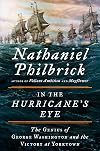
I first read In the Hurricane's Eye nearly two years ago and just finished re-reading it. I'll leave my initial review intact, but I do need to qualify it with a few remarks. When I first read the book, I had not yet read Philbrick's other works dealing with the American Revolution, Bunker Hill and Valiant Ambition. Having now read all three, I understand much better the events discussed in In the Hurricane's Eye, and I highly recommend reading all three books in the proper chronological show more order beginning with Bunker Hill and concluding with In the Hurricane's Eye. Taken together, the three give one a remarkably good understanding of the Revolution as it really was, not as most U.S. citizens today think it was. Also, considered as a single set, the books easily earn a five-star rating. Now on to the original review:
I'm quite sure that my public school history classes included the fact that the British commander Cornwallis was defeated by George Washington's Continental Army at the Battle of Yorktown, effectively ending the American Revolution and leaving the rebellious colonists victorious I was probably even told that the French were allies of the colonists and that the battle happened in 1781. Unfortunately, to too great an extent, such facts are a matter of short term memorization and regurgitation on the next exam, after which all that stuff can be mentally flushed. Fortunately, that same history as told by Nathaniel Philbrick is absolutely captivating.
In the Hurricane's Eye draws the reader into the Revolution primarily during that final year of 1781. Vividly detailed are the travails of managing armies and navies at a time when raging rivers, roads of mud, and contrary winds and currents had not yet yielded to technology and when communications had to be by signal flags and courier-borne letters. Such physical challenges, added to the inevitable jealousies and rivalries, not to mention vastly differing ability levels, among admirals, generals and their subordinate officers add critical nuances to the basic facts that were in my textbooks so many years ago.
The absolute criticality of controlling the ocean waters off the eastern seaboard of the colonies—for transporting troops and supplies, for attacking coastal defenses, for blocking the arrival of enemy reinforcements, and for conveying urgent messages—is one of the foci of Hurricane's Eye and was for me a new approach to understanding how the Revolution progressed, for heretofore I had thought of it in terms of purely land battles. Philbrick's descriptions of British and French fleet maneuvers make much of this book as intriguing as any of the sea battle scenes described in Patrick O'Brian's or C.S. Forester's popular novels of Jack Aubrey, Stephen Maturin, or Horatio Hornblower.
If I dare offer any comment critical of Hurricane's Eye it is that I found the constant repetition of the word traitor to become annoying almost every time that Benedict Arnold's name is mentioned in the book. The effect is to show Philbrick as a prating editorialist rather than as an objective historian. Arnold, after all, was a traitor only to the American colonists who were themselves traitors by engaging in armed rebellion against the legal British government of the American colonies. He was a loyal patriot to the British. The book could have well done without the editorializing.
Thinking of Arnold does recall the fact that not every colonist was a revolutionary. There were many, many loyalists in the American colonies who had no desire whatsoever to rebel against the government of King George III. I do admire Philbrick for giving the loyalists mention in Hurricane's Eye and for noting that many of these American colonists were injured and killed and had their homes destroyed in Washington's attack on Cornwallis's army in Yorktown. It appears that America's wars have always generated “unavoidable collateral damage.” We do learn that many loyalists had to abandon their property in the colonies and flee to Canadian lands following the victory of the Continental Army, another fact that somehow escaped mention in my public school history textbooks.
Along with colonial loyalists, a few thousand slaves also owed their freedom to the British, whose ships ferried them away from the many American slavers, including George Washington, who were eager to reclaim their human property from the now-defeated army. For historical facts such as these, for a fuller understanding of the beginnings of the United States (which were anything but united in the 18th century), and for a pleasurable and memorable read, In the Hurricane's Eye is fully worth the time that the reader invests in it. Had the author not harped on the “traitorism” of Benedict Arnold so incessantly, I would have easily considered the book worthy of five stars. show less
I'm quite sure that my public school history classes included the fact that the British commander Cornwallis was defeated by George Washington's Continental Army at the Battle of Yorktown, effectively ending the American Revolution and leaving the rebellious colonists victorious I was probably even told that the French were allies of the colonists and that the battle happened in 1781. Unfortunately, to too great an extent, such facts are a matter of short term memorization and regurgitation on the next exam, after which all that stuff can be mentally flushed. Fortunately, that same history as told by Nathaniel Philbrick is absolutely captivating.
In the Hurricane's Eye draws the reader into the Revolution primarily during that final year of 1781. Vividly detailed are the travails of managing armies and navies at a time when raging rivers, roads of mud, and contrary winds and currents had not yet yielded to technology and when communications had to be by signal flags and courier-borne letters. Such physical challenges, added to the inevitable jealousies and rivalries, not to mention vastly differing ability levels, among admirals, generals and their subordinate officers add critical nuances to the basic facts that were in my textbooks so many years ago.
The absolute criticality of controlling the ocean waters off the eastern seaboard of the colonies—for transporting troops and supplies, for attacking coastal defenses, for blocking the arrival of enemy reinforcements, and for conveying urgent messages—is one of the foci of Hurricane's Eye and was for me a new approach to understanding how the Revolution progressed, for heretofore I had thought of it in terms of purely land battles. Philbrick's descriptions of British and French fleet maneuvers make much of this book as intriguing as any of the sea battle scenes described in Patrick O'Brian's or C.S. Forester's popular novels of Jack Aubrey, Stephen Maturin, or Horatio Hornblower.
If I dare offer any comment critical of Hurricane's Eye it is that I found the constant repetition of the word traitor to become annoying almost every time that Benedict Arnold's name is mentioned in the book. The effect is to show Philbrick as a prating editorialist rather than as an objective historian. Arnold, after all, was a traitor only to the American colonists who were themselves traitors by engaging in armed rebellion against the legal British government of the American colonies. He was a loyal patriot to the British. The book could have well done without the editorializing.
Thinking of Arnold does recall the fact that not every colonist was a revolutionary. There were many, many loyalists in the American colonies who had no desire whatsoever to rebel against the government of King George III. I do admire Philbrick for giving the loyalists mention in Hurricane's Eye and for noting that many of these American colonists were injured and killed and had their homes destroyed in Washington's attack on Cornwallis's army in Yorktown. It appears that America's wars have always generated “unavoidable collateral damage.” We do learn that many loyalists had to abandon their property in the colonies and flee to Canadian lands following the victory of the Continental Army, another fact that somehow escaped mention in my public school history textbooks.
Along with colonial loyalists, a few thousand slaves also owed their freedom to the British, whose ships ferried them away from the many American slavers, including George Washington, who were eager to reclaim their human property from the now-defeated army. For historical facts such as these, for a fuller understanding of the beginnings of the United States (which were anything but united in the 18th century), and for a pleasurable and memorable read, In the Hurricane's Eye is fully worth the time that the reader invests in it. Had the author not harped on the “traitorism” of Benedict Arnold so incessantly, I would have easily considered the book worthy of five stars. show less
In the Hurricane's Eye: The Genius of George Washington and the Victory at Yorktown by Nathaniel Philbrick
I couldn't put this down! Of all the wars, I know the least about the Revolutionary War, which is a damn sham because my undergraduate degree was in history. Philbrick does a wonderful job taking a generally well known story and fleshes out all the small nooks and crannies you probably weren't aware of. This historical non-fiction book focuses on the importance of the navy during the revolution, even though the United States didn't have one. The presence of the French navy and many of George show more Washington's shrewd battle decisions were what really turned the tide of the war. For years the British had been clearly winning, but had yet to strike the crippling blow. The arrival of the French fleet and the subsequent victory at Yorktown changed all that. An engrossing and enlightening read. Not just for history buffs! show less
Lists
Revolutions (1)
Allie's Wishlist (1)
Days of yarrr (1)
Awards


Valiant Ambition: George Washington, Benedict Arnold, and the Fate of the American Revolution (Must-Read (Longlist) – Nonfiction – 2017)


You May Also Like


Associated Authors
Statistics
- Works
- 27
- Also by
- 7
- Members
- 23,286
- Popularity
- #906
- Rating
- 3.9
- Reviews
- 547
- ISBNs
- 276
- Languages
- 14
- Favorited
- 38
