
Candice Millard
Author of The River of Doubt: Theodore Roosevelt's Darkest Journey
About the Author
Candice Millard is a former writer and editor for National Geographic magazine. Millard's first book, The River of Doubt: Theodore Roosevelt's Darkest Journey, was a New York Times bestseller and was named one of the best books of the year by a number of publications including the New York Times, show more Washington Post, San Francisco Chronicle, and Christian Science Monitor. The River of Doubt was also a Barnes & Noble Discover Great New Writers selection and a Book Sense Pick, was a finalist for the Quill Awards, and won the William Rockhill Nelson Award. Millard's second book, The Destiny of the Republic: A Tale of Madness, Medicine & the Murder of a President, was released in September 2011. Millard's book, Hero of the Empire: The Boer War, a Daring Escape, and the Making of Winston Churchill, made the New York Times Bestseller list in 2016. (Bowker Author Biography) show less
Works by Candice Millard
Destiny of the Republic: A Tale of Madness, Medicine, and the Murder of a President (2011) 3,523 copies, 173 reviews
Hero of the Empire: The Boer War, a Daring Escape, and the Making of Winston Churchill (2016) — Author — 1,219 copies, 45 reviews
River of the Gods: Genius, Courage, and Betrayal in the Search for the Source of the Nile (2022) 992 copies, 34 reviews
The River of Doubt: Theodore Roosevelt's Darkest Journey [abridged audiobook] (1994) 4 copies, 1 review
Destiny of a Republic 1 copy
Lincoln 1 copy
Associated Works
Tagged
Common Knowledge
- Other names
- Millard, Candice Sue
- Birthdate
- 1967-06
- Gender
- female
- Education
- Baker University
Baylor University - Occupations
- journalist
author - Organizations
- National Geographic
- Agent
- Suzanne Gluck
- Nationality
- USA
- Birthplace
- Lexington, Ohio, USA
- Places of residence
- Kansas City, Missouri, USA
Ohio, USA
Leawood, Kansas, USA - Associated Place (for map)
- USA
Members
Reviews

“Less than eighteen months after Roosevelt’s dramatic, failed campaign for an unprecedented third term in the White House, the sweat-soaked figure before [ornithologist] Cherrie in the jungle darkness could not have been further removed from the power and privilege of his former office. Hundreds of miles from help or even any outside awareness of his ordeal, Roosevelt hovered agonizingly on the brink of death. Suffering from disease and near-starvation, and shuddering uncontrollably from show more fever, the man who had been the youngest and most energetic president in his nation’s history drifted in and out of delirium, too weak to sit up or even to lift his head.”
Dramatic account of the Roosevelt-Rondon Scientific Expedition into the dark reaches of the Brazilian Amazon Rainforest to explore an uncharted river in 1913-1914. After losing the presidential election in 1912, Theodore Roosevelt and his son, Kermit, embarked on a trip to South America. The above quote appears in the opening chapter, and the author then provides a riveting story of how the former president reached such an imperiled state.
Roosevelt was known for his adventurous spirit and willingness to risk his life, though this particular journey was originally not planned to be so arduous. The route was changed after the planning and supplying had already been completed. It occurred before the advent of antibiotics and any method to communicate with the outside world. The result is a harrowing experience, brilliantly described by the author and pieced together from the participants’ journals and related research.
“Even more disturbing than what they knew was what they did not know. The obvious riddle of the river’s course was only one of a thousand potentially lethal mysteries that now surrounded them. As they plunged deeper and deeper into the jungle, the riot of nature that enveloped them—from the crowded canopy overhead to the buzzing, insect-laden air around their faces to the unseen depths of the black river—became increasingly strange, unfamiliar, and threatening, to say nothing of the constant threat of Indian attack, which transformed every shadow into a potential enemy.”
Not only do we follow the details of a grueling journey, but we also get a feeling for what Roosevelt was like as a person. In addition, we learn about one of Brazil’s most renowned explorers, Colonel Cândido Mariano da Silva Rondon, co-leader of the expedition, who never wavered in his dedication to the indigenous Brazilians. I became completely absorbed in the narrative, turning the pages long into the night. Highly recommended to anyone who enjoys tales of exploration, adventure, and survival. show less
Dramatic account of the Roosevelt-Rondon Scientific Expedition into the dark reaches of the Brazilian Amazon Rainforest to explore an uncharted river in 1913-1914. After losing the presidential election in 1912, Theodore Roosevelt and his son, Kermit, embarked on a trip to South America. The above quote appears in the opening chapter, and the author then provides a riveting story of how the former president reached such an imperiled state.
Roosevelt was known for his adventurous spirit and willingness to risk his life, though this particular journey was originally not planned to be so arduous. The route was changed after the planning and supplying had already been completed. It occurred before the advent of antibiotics and any method to communicate with the outside world. The result is a harrowing experience, brilliantly described by the author and pieced together from the participants’ journals and related research.
“Even more disturbing than what they knew was what they did not know. The obvious riddle of the river’s course was only one of a thousand potentially lethal mysteries that now surrounded them. As they plunged deeper and deeper into the jungle, the riot of nature that enveloped them—from the crowded canopy overhead to the buzzing, insect-laden air around their faces to the unseen depths of the black river—became increasingly strange, unfamiliar, and threatening, to say nothing of the constant threat of Indian attack, which transformed every shadow into a potential enemy.”
Not only do we follow the details of a grueling journey, but we also get a feeling for what Roosevelt was like as a person. In addition, we learn about one of Brazil’s most renowned explorers, Colonel Cândido Mariano da Silva Rondon, co-leader of the expedition, who never wavered in his dedication to the indigenous Brazilians. I became completely absorbed in the narrative, turning the pages long into the night. Highly recommended to anyone who enjoys tales of exploration, adventure, and survival. show less
The Destiny of the Republic: A Tale of Madness, Medicine, and the Murder of a President by Candice Millard

Millard takes an engrossing look at the 20th President of the United States, a man who neither sought the office nor lived long enough to fulfill his promise, but still managed to make his mark in presidential and medical history.
James Garfield, a long-serving Congressman from Ohio, was nominated for President only because the stubborn factions of the two leading candidates brought the 1880 Republican convention to a deadlock. Garfield was dismayed at his nomination, and startled by his show more election, but he set out to govern to the best of his ability.
Through the first section of the book, Millard parallels Garfield's story with that of his eventual assassin, Charles Guiteau, a mentally unstable man who repeatedly sought an audience with Garfield and wrote a series of demented letters to Garfield, his Secretary of State James Blaine, and any number of other officials, declaring his willingness to assume an ambassadorship in the Garfield administration (a duty he believed was a direct order from God). The ignoring and eventual rebuff of his demands were the catalyst for his stalking and shooting Garfield.
You might think that a book about the assassination of a President would position the crime at the climax of the book, but in Millard's history it is the starting point in an examination of the state of contemporary medicine and the long trail of malpractice that doomed the president to death. Hindsight made me cringe at the unsanitary medical practices and the unscrupulous way Garfield's main doctor schemed jealously to keep other medical men and women from stealing his "glory".
As if that weren't enough, there's a substantial subplot involving Alexander Graham Bell's desperate attempts to devise a metal detector in time to find the bullet in Garfield's body and save his life. So much of the history in Millard's book was new to me, and fascinating. Her depiction of Garfield as an honest, forthright man made me mourn the loss of his potential as President (especially in the area of Reconstruction), although it must be said that almost any President looks pretty promising during their first 200 days in office, which is all Garfield was destined to serve.
This book shouldn't be confused with a true biography of James Garfield (which I am now inspired to seek out), but it's a compulsively readable history of how medicine and politics worked at the time, and a sobering look at how far we've come, after 4 assassinations, to the permanently guarded, virtually inaccessible presidency we have today. show less
James Garfield, a long-serving Congressman from Ohio, was nominated for President only because the stubborn factions of the two leading candidates brought the 1880 Republican convention to a deadlock. Garfield was dismayed at his nomination, and startled by his show more election, but he set out to govern to the best of his ability.
Through the first section of the book, Millard parallels Garfield's story with that of his eventual assassin, Charles Guiteau, a mentally unstable man who repeatedly sought an audience with Garfield and wrote a series of demented letters to Garfield, his Secretary of State James Blaine, and any number of other officials, declaring his willingness to assume an ambassadorship in the Garfield administration (a duty he believed was a direct order from God). The ignoring and eventual rebuff of his demands were the catalyst for his stalking and shooting Garfield.
You might think that a book about the assassination of a President would position the crime at the climax of the book, but in Millard's history it is the starting point in an examination of the state of contemporary medicine and the long trail of malpractice that doomed the president to death. Hindsight made me cringe at the unsanitary medical practices and the unscrupulous way Garfield's main doctor schemed jealously to keep other medical men and women from stealing his "glory".
As if that weren't enough, there's a substantial subplot involving Alexander Graham Bell's desperate attempts to devise a metal detector in time to find the bullet in Garfield's body and save his life. So much of the history in Millard's book was new to me, and fascinating. Her depiction of Garfield as an honest, forthright man made me mourn the loss of his potential as President (especially in the area of Reconstruction), although it must be said that almost any President looks pretty promising during their first 200 days in office, which is all Garfield was destined to serve.
This book shouldn't be confused with a true biography of James Garfield (which I am now inspired to seek out), but it's a compulsively readable history of how medicine and politics worked at the time, and a sobering look at how far we've come, after 4 assassinations, to the permanently guarded, virtually inaccessible presidency we have today. show less
The River of Doubt: Theodore Roosevelt's Darkest Journey Abridged edition by Millard, Candice published by Random House Audio Audio CD by Candice Millard
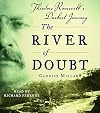
I listened to the audio version of River of Doubt. The story is masterfully written. President Theodore Roosevelt had recently lost his bid for a third term. As with every hardship and defeat, President Theodore Roosevelt decided to plunge forward with a new daring adventure or challenge.
His son, Kermit, who was always under the shadow of his father, decided to go with him even though he had been recently engaged to a beautiful socialite. An expedition was planned to go to the River of show more Doubt which is an incredibly dangerous one that included piranha-infested waters, malaria-carrying insects, termites, unpredictable currents, and stone-age Indians (some were cannibals). It was also extraordinarily difficult to find anything to eat outside of their rations.
One scene that I will never be able to get out of my head is that of President Roosevelt reciting the poem, Kubla Khan over and over again while fighting a very high fever.
My admiration for President Theodore Roosevelt doubled after listening to this audiobook, please give it a try. show less
His son, Kermit, who was always under the shadow of his father, decided to go with him even though he had been recently engaged to a beautiful socialite. An expedition was planned to go to the River of show more Doubt which is an incredibly dangerous one that included piranha-infested waters, malaria-carrying insects, termites, unpredictable currents, and stone-age Indians (some were cannibals). It was also extraordinarily difficult to find anything to eat outside of their rations.
One scene that I will never be able to get out of my head is that of President Roosevelt reciting the poem, Kubla Khan over and over again while fighting a very high fever.
My admiration for President Theodore Roosevelt doubled after listening to this audiobook, please give it a try. show less
The destiny of the republic : a tale of madness, medicine and the murder of a president by Candice Millard
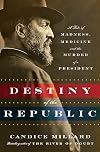
My brother and I were on the phone this week, and (watching coverage about the Boston Marathon bomber) I commented what a crazy world it is today. He (a retired history teacher) replied that the world has always been some kind of crazy. My latest read is a reminder of that.
As a week dominated by terrorism unfolded in our country, I was drawn into this narrative history of the assassination of President Garfield. The world was, indeed, a rather crazy place even back then. From the politics of show more the day, where the support of a "spoils" system for government appointments were considered perfectly proper; to a medical establishment that stubbornly refused to accept the knowledge of antisepsis pioneered by Joseph Lister; to a public mentality that felt the President of the US should be open to visits from virtually any person wishing to see him at any time, and travel to and fro as a "regular" citizen with no security protection whatsoever; to the mind of one very disturbed drifter who felt entitled to be consul to France, and eventually decided God was calling him to kill the President. There was plenty in this book to amaze the reader unfamiliar with this period of history in general, and the details of our country's second Presidential assassination in particular.
Millard's writing brought the historical figures to life. I got a real sense of President Garfield, and have a much greater appreciation of him as a person and a leader. This reluctant president, the first ever nominated and elected without even giving consent for his name to be placed into nomination, was an intelligent and insightful man. I loved the description of his house full of books! In contrast, the assassin Charles Guiteau was a most irresponsible and -- yes, I'll use the word -- crazy man. Roscoe Conkling comes across as an obnoxious wheeler-dealer bullying politico. And then, after shots are fired and the medical drama unfolds, we see where Alexander Graham Bell fits into the picture, attempting to create a machine that might find the elusive bullet lodged in the President's body. And then there's the controlling Dr. Bliss, who takes charge of the President's care with a firm (and unsanitary) hand. And there are so many more figures of the time, drawn in vivid detail.
I really enjoyed this well-written book, and learned a lot from it. I appreciated the extensive notes at the end, knowing that the author did her homework before embarking on this wonderful job of story-telling. At least in my e-book, there were no numbers in the actual text to link to the endnotes. The endnote numbers appeared as links, but only took me back to the previous page of notes . . . not helpful. That's my only criticism of this book. Highly recommended! show less
As a week dominated by terrorism unfolded in our country, I was drawn into this narrative history of the assassination of President Garfield. The world was, indeed, a rather crazy place even back then. From the politics of show more the day, where the support of a "spoils" system for government appointments were considered perfectly proper; to a medical establishment that stubbornly refused to accept the knowledge of antisepsis pioneered by Joseph Lister; to a public mentality that felt the President of the US should be open to visits from virtually any person wishing to see him at any time, and travel to and fro as a "regular" citizen with no security protection whatsoever; to the mind of one very disturbed drifter who felt entitled to be consul to France, and eventually decided God was calling him to kill the President. There was plenty in this book to amaze the reader unfamiliar with this period of history in general, and the details of our country's second Presidential assassination in particular.
Millard's writing brought the historical figures to life. I got a real sense of President Garfield, and have a much greater appreciation of him as a person and a leader. This reluctant president, the first ever nominated and elected without even giving consent for his name to be placed into nomination, was an intelligent and insightful man. I loved the description of his house full of books! In contrast, the assassin Charles Guiteau was a most irresponsible and -- yes, I'll use the word -- crazy man. Roscoe Conkling comes across as an obnoxious wheeler-dealer bullying politico. And then, after shots are fired and the medical drama unfolds, we see where Alexander Graham Bell fits into the picture, attempting to create a machine that might find the elusive bullet lodged in the President's body. And then there's the controlling Dr. Bliss, who takes charge of the President's care with a firm (and unsanitary) hand. And there are so many more figures of the time, drawn in vivid detail.
I really enjoyed this well-written book, and learned a lot from it. I appreciated the extensive notes at the end, knowing that the author did her homework before embarking on this wonderful job of story-telling. At least in my e-book, there were no numbers in the actual text to link to the endnotes. The endnote numbers appeared as links, but only took me back to the previous page of notes . . . not helpful. That's my only criticism of this book. Highly recommended! show less
Lists
Awards


You May Also Like


Associated Authors
Statistics
- Works
- 8
- Also by
- 1
- Members
- 9,895
- Popularity
- #2,405
- Rating
- 4.2
- Reviews
- 404
- ISBNs
- 56
- Languages
- 2
- Favorited
- 12
