
Winston S. Churchill (1) (1874–1965)
Author of The Gathering Storm
For other authors named Winston S. Churchill, see the disambiguation page.
About the Author
Sir Winston S. Churchill (1874-1965) was Prime Minister of the United Kingdom on two occasions, from 1940-1945 and again from 1951 to 1955. Celebrated as one of the greatest leaders of the twentieth century, he was also a gifted orator, statesman and historian. The author of more than 40 books, he show more was awarded the Nobel Prize for Literature in 1953 and in 1963 was made an honorary citizen of the United States. show less
Image credit: Yousuf Karsh, colorisation : Madelgarius
Series
Works by Winston S. Churchill
The Irrepressible Churchill: Through His Own Words and the Eyes of His Contemporaries (1985) 56 copies
Great destiny; sixty years of the memorable events in the life of the man of the century recounted in his own incomparable words (1962) 31 copies
Winston S. Churchill and the Editors of Life ~ The Second World War ~ Special Edition for Young Readers (1960) 31 copies
The Churchill War Papers: Never Surrender May 1940-December 1940 (Churchill War Papers) (1994) 30 copies, 1 review
The Churchill Documents, Volume 7: "The Escaped Scapegoat", May 1915-December 1916 (Official Biography of Winston S. Churchill) (1972) — Author — 26 copies, 1 review
The World Crisis 1911-1918 13 copies
Stemming the Tide (Winston Churchill's Post-War Speeches Collection Book 4) (1953) 13 copies, 1 review
The Epic of Malta — Foreword — 11 copies
The Churchill Documents, Volume 22, Leader of the Opposition, August 1945 to October 1951 (2019) — Author — 10 copies
A History of the English-Speaking Peoples, Blenheim Edition Volume 3: The End of the Feudal Age (1965) 8 copies
Winston Churchill Three Volume Set: Churchill His Life and Times, Painting as a Pastime, A Churchill Anthology (1962) 8 copies
The war speeches of Winston Churchill. Vol. 1, From the rise of Hitler to the invasion of Russia, June 22, 1941 (1952) 8 copies
The war speeches of Winston Churchill. Vol. 3, From September 11, 1943 to August 16, 1945 (1952) 7 copies
A History of the English-Speaking Peoples, Blenheim Edition Volume 6: The Restoration (1965) 7 copies
Min bundsförvant 7 copies
A History of the English-Speaking Peoples, Blenheim Edition Volume 2: The Making of the Nation (1965) 7 copies
A Sutileza Bem-Humorada Winston Churchill. Suas Grandes Tiradas (Em Portuguese do Brasil) (2012) 6 copies
A History of the English-Speaking Peoples, Blenheim Edition Volume 4: Renaissance and Reformation (1965) 5 copies
The First Collected Works of Sir Winston Churchill Centenary Limited Edition Volume I, My Early Life A Roving Commission and My African Journey (1973) 4 copies
Taler 4 copies
Winston Churchill on America and Britain: a selection of his thoughts on Anglo-American relations (1970) 4 copies
WINSTON S. CHURCHILL: HIS MEMOIRS AND HIS SPEECHES: FROM ARMISTICE TO VICTORY, 1918 TO 1945, W/ AN APPRAISAL BY A. BRYANT (1994) 4 copies
Blenheim, from "Marlborough (Vol II)", illustrated with maps and plans, Gould Books No 2 (1941) 4 copies
Det stora kriget. Bd 1 4 copies
Det stora kriget. Bd 2 4 copies
مذكرات تشرشل - الجزء الأول 4 copies
Sir Winston Churchill, 1874-1974: An exhibition to commemorate the centenary of the birth of Sir Winston Churchill ..., 10 May-30 September 1974 (1974) 4 copies
Immortal jester: A treasury of the great good humour of Sir Winston Churchill, 1874-1965 (1973) 4 copies
Europa unida. Dieciocho Discursos y Una: Dieciocho discursos y una carta: 8 (Nuevo Ensayo) (2016) 4 copies
Churchill talar! Sverige i fara 3 copies
A History of the English-Speaking Peoples, Blenheim Edition Volume 7: England's Advance To World Power 1688-1714 (1966) 3 copies
Marlborough His Life and times (4 Volumes) by Winston S.; Commager, Henry Steele (intro & abridger) Churchill (1968-08-01) (1710) 3 copies
Winston and Archie: The collected correspondence of Winston Churchill and Sir Archibald Sinclair (2005) — Author — 3 copies
Second World War Volume I 3 copies
La Segunda Guerra Mundial : Memorias / Vol.6, Parte. 2, Triunfo y tragedia. El telón de acero 3 copies
The collected works of Sir Winston Churchill. Vol.20 : The war speeches. Vol.2 : June 1941-September 1943 (1975) 3 copies, 1 review
Sir Winston Churchill, a self-portrait; constructed from his own sayings and writings, and framed with an introd., by Co (2005) 3 copies
The Sinews of Peace A Speech by Winston Churchill to Westminster College Fulton, Missouri 5 March 1946 (1996) 3 copies
Sir Winston Churchill, K. G., P. C., O. M., C. H., M. P.; selections from his writings and speeches; 3 copies
War Speeches Volume II 3 copies
Anecdotes of the hour 2 copies
Churchill in His Own Words: Years of Adventure: The Man of the Century Tells the Exciting Story of His Role in the Boer War and World War I (1966) 2 copies
L' Onda della Vittoria Vol. I parte VI - La Cortina di Ferro Vol. II parte VI. Trionfo e tragedia. (1953) 2 copies
THE GREAT WAR, VOLUME III 2 copies
La Germania punta ad Oriente Vol. I parte III -La Guerra investe l' America Vol. II parte III. La grande alleanza 1941 . 1942. (1950) 2 copies
Det stora kriget. Bd 3 2 copies
La Segunda Guerra Mundial : Memorias / Vol.6, Parte. 2, Triunfo y tragedia. El telón de acero 2 copies
De as gebroken 2 copies
Den annen verdenskrig, 12 bind 2 copies
The Complete Collection of Winston S. Churchill. The World Crisis Vol. 1-5. Illustrated (2025) 2 copies
A Minha Viagem Por África 2 copies
A history of the English-speaking peoples: the age of revolution V3; the great democracies V4 2 copies
Mémoires sur la deuxième guerre mondiale 1. L'orage approche : la "drôle de guerre" (3 septembre 1939 - 10 mai 1940) (1948) 2 copies
Memoires sur la deuxieme guerrre mondiale i - l'orage approché - vol 1 : d'une guerre à l'autre 1919 - 1939 / vol 2 : la "drôle de guerre" 3… (1947) 2 copies
Het tij der victorie 2 copies
THE SECOND WORLD WAR: I THE GATHERING STORM: II THEIR FINEST HOUR: III THE GRAND ALLIANCE. (1948) 2 copies
Mémoires de guerre T1: 1919-1941 2 copies
The Second World War, Volume I 2 copies
The Second World War Volume 2 2 copies
Le meilleur de Sir Winston : Bons mots, petites phrases et grands discours de Winston Churchill (2004) 2 copies
A History of the English-Speaking Peoples, Blenheim Edition Volume 8: The First British Empire 1714-1782 (1966) 2 copies
Tankar och minnen 2 copies
Dunkirk to Berlin June 1940-July 1945: A Map of the Historic Wartime Journeys undertaken by The Right Hon. Sir Winston Churchill, K.G., O.M., C.H., F.R.S., M.P. In Defence of the… (1956) 2 copies, 1 review
War Speeches 1940-45 2 copies
Memoires over de Tweede Wereldoorlog : De grote omsingeling : De as gebroken Van Teheran tot Rome 1 copy
ELPREMIO NOBEL 1 copy
Os meus primeiros anos 1 copy
Land price as a cause of poverty: extracts from two outstanding speeches by Sir Winston Churchill 1 copy
The Tide of Victory 1 copy
Volume I - Closing the Ring 1 copy
Selected Speeches 1 copy
Quotations 1 copy
Den annen verdenskrig 6 1 copy
La deuxième guerre mondiale 1 copy
Mémoires de la Grande guerre 1 copy
La Seconda Guerra Mondiale - La Campagna d' Italia Vol. 1 Arnoldo Mondadori Editore 1951 Parte V 1 copy
Wit and Wisdom 1 copy
LA SECONDA GUERRA MONDIALE Volume secondo GUERRA IN SORDINA 3 settembre 1939- 10 maggio 1940 (1948) 1 copy
La Seconda Guerra Mondiale da Pearl Harbor alla Cortina di Ferro Vol. 2 Universale Rizzoli 2001 1 copy
The Second World War. IV 1 copy
Nascita dell' Inghilterra 1 copy
Verdenskrigens historie 1 copy
Second World War Volume II 1 copy
Hitler's War: Part One 1 copy
The Second World War Abridged One Volume Edition with a new epilogue on the years 1945 to 1957 (1965) 1 copy
World Crisis, The 1 copy
La difesa della democrazia 1 copy
Det stora kriget 1 copy
Zionism Versus Bolshevism 1 copy
Verdenskrigens historie [1] 1 copy
Verdenskrigens historie [2] 1 copy
Mein Bundesgenosse : Aussprüche aus 2 Jahrzehnten, illustr. v. engl. u. amerikan. Pressezeichnern 1 copy
Opere 1 copy
La cortina di ferro. Trad. di Glauco Cambon. La seconda guerra mondiale; Trionfo e tragedia; II. (1953) 1 copy
The War Speeches of Winston S. Churchill [1939-1945] Three-Volume Leatherbound Easton Press Collector's Set (2001) 1 copy
Mémoires sur la deuxième guerre mondiale 2. L'orage approche : d'une guerre à l'autre (1919-1939) (1959) 1 copy
A history of the English-speaking peoples (Volume I: The Birth of Britain; Volume II: The New World) 1 copy
Memorie di guerra 1 copy
Memorie: 1874-1903 1 copy
Mr Churchill: A Pictorial Cavalcade of his Life and Extracts from his Immortal Speeches (1946) 1 copy
Det stora kriget I, II, III 1 copy
Andra världskriget : minnen 1 copy
Relatos de Churchill 1 copy
THE GREAT WAR, VOLUME II 1 copy
Second World War. Book V The Grand Alliance; Germany Drives East January 2 - June 22, 1941 (1967) 1 copy
Speech of June 4, 1040 1 copy
THE GREAT WAR , VOLUME I 1 copy
A második világháború / 2 1 copy
A második világháború / 1 1 copy
Associated Works
In the Dark Streets Shineth: A 1941 Christmas Eve Story (2010) — Contributor — 467 copies, 12 reviews
The Arbor House Treasury of Horror and the Supernatural (1981) — Contributor — 220 copies, 3 reviews
Masterpieces of Terror and the Unknown: A Treasury of Bizarre Tales Old and New (1993) — Contributor — 213 copies, 2 reviews
The Lincoln Anthology: Great Writers on His Life and Legacy from 1860 to Now (2008) — Contributor — 172 copies, 1 review
D-Day : Operation "Overlord" : from the landing at Normandy to the liberation of Paris 1944 (1993) — Foreword, some editions — 105 copies, 1 review
The lucifer society;: Macabre tales by great modern writers (1972) — Contributor — 52 copies, 1 review
MHQ: The Quarterly Journal of Military History — Autumn 1996 (1996) — Author "Operation Deletion" — 13 copies
Reader's Digest Condensed Books 1951 v04: Fallen Away / Return to Paradise / A Roving Commission / The Southwest Corner / The Arms of Venus (1951) — Author — 5 copies
Reader's Digest Condensed Books (The Lady / The Scapegoat / My Early Life / Onions in the Stew / Boon Island) — Contributor — 4 copies
North Borneo — Foreword — 2 copies
Tagged
Common Knowledge
- Legal name
- Churchill, Winston Leonard Spencer
- Birthdate
- 1874-11-30
- Date of death
- 1965-01-24
- Gender
- male
- Education
- St George's, Ascot
Brunswick School, Hove
Harrow School (1888-1892)
Royal Military Academy, Sandhurst (1894) - Occupations
- journalist
Member of Parliament of the United Kingdom (1900-1964)
artist
Prime Minister of the United Kingdom (1940-1945)
historian
politician (show all 22)
Under-Secretary of State for the Colonies (1905-1908)
President of the Board of Trade (1908-1910)
United Kingdom Home Secretary (1910-1911)
United Kingdom First Lord of the Admiralty (1911-1915)
United Kingdom Chancellor of the Duchy of Lancaster (1915-1915)
United Kingdom Minister of Munitions (1917-1919)
United Kingdom Secretary of State for Air (1919-1921)
United Kingdom Secretary of State for the Colonies (1921-1922)
United Kingdom Chancellor of the Exchequer (1924-1929)
United Kingdom Secretary of State for Defence (1940-1945)
Prime Minister of the United Kingdom (1951-1955)
United Kingdom First Lord of the Admiralty (1939-1940)
United Kingdom Secretary of State for Defence (1951-1952)
Leader of the Conservative Party of the United Kingdom (1940-1955)
United Kingdom Secretary of State for War (1919-1921)
military officer (British Army|lieutenant-colonel) - Organizations
- Conservative Party
Liberal Party
Budget League
British Army - Awards and honors
- Nobel Prize (Literature, 1953)
Royal Society of Literature (Companion of Literature, 1961)
Congressional Gold Medal (1969)
Order of the Garter (Knight Companion, 1953)
Order of Merit (1946)
Order of the Companion of Honour (1922) (show all 20)
Royal Society (Fellow, 1941)
Order of the Netherlands Lion (Knight Grand Cross, 1946)
Royal Norwegian Order of St Olav (Grand Cross with Chain, 1948)
Order of Léopold (Grand Cordon (with Palm), 1945)
Honorary Citizen of the United States (1963)
Order of the Elephant (Knight, 1950)
Man of the Year, Time Magazine (1940)
Queen Elizabeth II grants the honour of a State Funeral (1965)
Lord Warden of the Cinque Ports (1941)
Oldest sitting Member of Parliament (1964)
Time Magazine (Man of the Year, 1949)
Charlemagne Prize (1956)
Honorary Citizen of the City of Paris (1944)
Royal Academy of Arts (Honorary Academician Extraordinary, 1948) - Relationships
- Spencer-Churchill, John Strange (brother)
Soames, Mary (daughter)
Churchill, Sarah (daughter)
Churchill, Peregrine (nephew)
Churchill, Lady Randolph Spencer (mother)
Churchill, Randolph S. (son) (show all 9)
Churchill, Lord Randolph (father)
Leslie, Shane (cousin)
Sheridan, Clare (cousin) - Cause of death
- stroke
- Nationality
- UK
- Birthplace
- Blenheim Palace, Oxford, Oxfordshire, England, UK
- Places of residence
- Chartwell, Kent, England, UK
Woodstock, Oxfordshire, England, UK
London, Middlesex, England, UK - Place of death
- London, Middlesex, England, UK
- Burial location
- St. Martin's Church, Bladon, Oxfordshire, England, UK
- Map Location
- England, UK
Members
Discussions
Which book by Winston Churchill should I read? in The Green Dragon (June 25)
British Author Challenge August 2024: KJ Charles & Winston Churchill in 75 Books Challenge for 2024 (August 2024)
Reviews

At the end of the Great War, the victorious Allies dismembered the Austro-Hungarian and Turkish Empires, and buried Germany beneath a mountain of restrictions so heavy that she could never again menace the European order. Within two decades, like a dark Phoenix, Nazi Germany forever shattered that order with overwhelming force and shocking brutality. What happened?
In this first volume of Winston Churchill’s history of the Second World War, Churchill offers tremendously fascinating show more insights, both personal and historical, into how the great democracies frittered away their victory to the brink of national suicide and the sunset of the democratic ideal itself. Authors of memoirs naturally cast themselves in the best possible light, but Churchill has the unique advantage of being proven right about Hitler and the Nazis. As the voice in the wilderness whose warnings went unheeded for many years, his narrative of the interwar years is well worth reading to understand the descent of Western Europe’s democracies from total victory to total war. show less
In this first volume of Winston Churchill’s history of the Second World War, Churchill offers tremendously fascinating show more insights, both personal and historical, into how the great democracies frittered away their victory to the brink of national suicide and the sunset of the democratic ideal itself. Authors of memoirs naturally cast themselves in the best possible light, but Churchill has the unique advantage of being proven right about Hitler and the Nazis. As the voice in the wilderness whose warnings went unheeded for many years, his narrative of the interwar years is well worth reading to understand the descent of Western Europe’s democracies from total victory to total war. show less
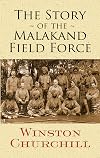
Winston Churchill’s first book. Churchill got himself attached as a war correspondent to a force sent to “chastise” border tribes; an interesting accomplishment since he was on active duty with another unit and already had a reputation for reporting that was less than fully complementary to the military. Rumor has it that this assignment was accomplished by his mother’s bedroom negotiations with commanding officer Sir Bindon Blood. Perhaps; Churchill certainly is more complimentary show more to Blood than he is to Kitchener in The River War. Relatively straightforward accounts of action on the Northwest Frontier. Mullahs rouse the local tribes; skirmishes with garrisons ensue, an expeditionary force gets organized to “teach them a lesson”; it does so (it doesn’t take, though). Contains the famous quote “There is nothing in life so exhilarating as to be shot at without result”, although it’s applied to a cavalry unit Churchill observes returning from action, not to himself personally. Churchill’s politics are interesting; he’s contemptuous of home politicians who don’t understand the realities of war on the frontier, particularly how civilian casualties are unavoidable since there aren’t any civilians. However, Churchill is sympathetic to native units in the Indian Army, suggesting that the Victoria Cross be awarded regardless of race and that British and native officers be treated equally (he suggests that since they meet as equals on the polo field they should meet as equals elsewhere). A short, quick read; much of the book is appendices consisting of dispatches mentioning various officers (this, of course, is back when being “mentioned in despatches” was a major boost to promotion chances). show less

I have a fondness for ornate, old-fashioned pen-portrait essays like those to be found in Great Contemporaries by Winston Churchill. A great benefit of the book is that Churchill knew many of the historical and political figures he discusses personally, and so such essays can be coloured by interesting anecdote and personal insight.
Articles on his contemporaries from British politics naturally form the bulk of the book (former prime ministers and the like). At first glance, these look less show more interesting, but the personal side of things Churchill is able to give provides them with some uniqueness and colour. However, it does also mean Churchill ends up writing more like a politician than an essayist – safely, diplomatically, and with an eye on posterity for himself.
There's a lot of magnanimity in the book, not only for Churchill's domestic allies and opponents, but also, surprisingly, for the likes of Kaiser Wilhelm and Adolf Hitler. Churchill excuses the Kaiser much of the blame for the start of World War One and, writing in 1935, credits Hitler for Germany's revival and suggests that, while the outlook is bleak and the character sinister, he may yet prove to be an asset to his country and the world.
Of course, we now know that not to be the case, but the excessive political even-handedness of the pieces does limit their interest today (an entertaining condemnation of Trotsky is an outlier in the book), for Churchill is not necessarily giving us his full views. He writes well, even if he overdoes it sometimes with the lofty prose we know from his wartime speeches (an essay on King George V lays it on very thick), but nor is he at the level of bold mythologising we can find in William Bolitho's Twelve Against the Gods – a gold standard for this sort of thing.
Ultimately, Great Contemporaries is a dated book that could have retained a stature if it had not so effectively restrained itself. By enabling Churchill's caution, diplomacy and indulgence, rather than allowing his boldness, humour and energy to flourish, the book maintains itself for modern readers largely as a curiosity (particularly for that Hitler essay) rather than a commentary. show less
Articles on his contemporaries from British politics naturally form the bulk of the book (former prime ministers and the like). At first glance, these look less show more interesting, but the personal side of things Churchill is able to give provides them with some uniqueness and colour. However, it does also mean Churchill ends up writing more like a politician than an essayist – safely, diplomatically, and with an eye on posterity for himself.
There's a lot of magnanimity in the book, not only for Churchill's domestic allies and opponents, but also, surprisingly, for the likes of Kaiser Wilhelm and Adolf Hitler. Churchill excuses the Kaiser much of the blame for the start of World War One and, writing in 1935, credits Hitler for Germany's revival and suggests that, while the outlook is bleak and the character sinister, he may yet prove to be an asset to his country and the world.
Of course, we now know that not to be the case, but the excessive political even-handedness of the pieces does limit their interest today (an entertaining condemnation of Trotsky is an outlier in the book), for Churchill is not necessarily giving us his full views. He writes well, even if he overdoes it sometimes with the lofty prose we know from his wartime speeches (an essay on King George V lays it on very thick), but nor is he at the level of bold mythologising we can find in William Bolitho's Twelve Against the Gods – a gold standard for this sort of thing.
Ultimately, Great Contemporaries is a dated book that could have retained a stature if it had not so effectively restrained itself. By enabling Churchill's caution, diplomacy and indulgence, rather than allowing his boldness, humour and energy to flourish, the book maintains itself for modern readers largely as a curiosity (particularly for that Hitler essay) rather than a commentary. show less

Winston Churchill closes his 1930 memoirs with the line that, in September 1908, he “married and lived happily ever afterward.” The irony of this sentence works at two levels. First, there’s a roguish twinkle in the authorial eye since he and we both know that the Great War awaited those newlyweds. Second, we alone know what Churchill at the time could not: that his greatest adventure, and his place in history, lay ten years ahead in the shadow of the swastika.
We can, of course, show more forgive Churchill a certain complaisance. At age 55, he had already outlived his father by nearly a decade and hadn’t expected to live even this long. He was out of office and politically isolated with no reason to expect a twilight revival. His best days were behind him, and this was as good a time as any to reminisce about a youth spent trotting the globe in defense of Queen and Empire.
That perhaps is the best way to understand “My Early Life,” which is otherwise a book about nothing. I mean this in the most complimentary way possible. Apart from some sophistical but charming digressions about his flirtation with atheism (which he rejected in favor of holding head and heart in a pleasant tension), Churchill has no agenda beyond jotting down the best memories of an adventurous life. The result is a book that is light, breezy, witty, and takes itself none too seriously.
Of course, in our decolonized and decolonizing era, the murderous underbelly of the British Empire is hard to miss. Young Churchill’s military jaunts in Cuba, India, the Sudan, and South Africa run alongside or through a lot of dead locals. Without his later service in rallying Britain against Hitler, no doubt he would be remembered (if at all) as a quintessential Victorian never quite able to understand why the rest of the world should put up such a fuss about being managed well.
That’s not to say that he doesn’t recognize the ironies of empire, and this is one of the book’s graces. Beneath the rakish style is a recognition that Europeans aren’t always all they’re cracked up to be. For instance, Churchill observes that the “genial influence” of modern rifles on the Indian frontier allowed local tribes to kill each other more efficiently and thus improved “the respect which [they] entertained for Christian civilization.” He writes not as a secret revolutionary, but as a committed imperial who is nevertheless willing to puncture the fiction that empire’s side effects are unfailingly benign.
This dry British humor runs the length of the book, and Churchill is not averse to aiming that wit at his own follies. He’s the hero of his own story, but is more likely than not to stumble accidentally into triumph. As a student, he failed at classical languages and dropped into the study of English, turning him into one of history’s great orators. He attributes his political career to his celebrity status as an escaped P.O.W., but that escape succeeded only because he chanced to knock on the door of the only British sympathizer within 20 miles. Time and again Churchill ruminates that we never can anticipate or control life’s twists, concluding that fate and free will are just two sides of the same coin.
I couldn’t help but contrast Churchill’s boyish and self-aware realism with the overweening arrogance of Adolf Hitler as revealed in “Mein Kampf,” published five years prior. Where the one author thinks himself fading into the sunset, the other promotes himself as humanity’s new dawn. One is suffused with wry amusement at himself, the other with towering self-regard. One recoils from the bloody jaws of industrial war, and the other hungers to close them on the world’s neck. One rides fate to a grand adventure, and the other seeks to master it. The divergence between these books — not just in content, but in tone — reminds me that you’re usually better off not with the leader consumed by cosmic destiny, but with the one who frankly finds it all a bit funny. show less
We can, of course, show more forgive Churchill a certain complaisance. At age 55, he had already outlived his father by nearly a decade and hadn’t expected to live even this long. He was out of office and politically isolated with no reason to expect a twilight revival. His best days were behind him, and this was as good a time as any to reminisce about a youth spent trotting the globe in defense of Queen and Empire.
That perhaps is the best way to understand “My Early Life,” which is otherwise a book about nothing. I mean this in the most complimentary way possible. Apart from some sophistical but charming digressions about his flirtation with atheism (which he rejected in favor of holding head and heart in a pleasant tension), Churchill has no agenda beyond jotting down the best memories of an adventurous life. The result is a book that is light, breezy, witty, and takes itself none too seriously.
Of course, in our decolonized and decolonizing era, the murderous underbelly of the British Empire is hard to miss. Young Churchill’s military jaunts in Cuba, India, the Sudan, and South Africa run alongside or through a lot of dead locals. Without his later service in rallying Britain against Hitler, no doubt he would be remembered (if at all) as a quintessential Victorian never quite able to understand why the rest of the world should put up such a fuss about being managed well.
That’s not to say that he doesn’t recognize the ironies of empire, and this is one of the book’s graces. Beneath the rakish style is a recognition that Europeans aren’t always all they’re cracked up to be. For instance, Churchill observes that the “genial influence” of modern rifles on the Indian frontier allowed local tribes to kill each other more efficiently and thus improved “the respect which [they] entertained for Christian civilization.” He writes not as a secret revolutionary, but as a committed imperial who is nevertheless willing to puncture the fiction that empire’s side effects are unfailingly benign.
This dry British humor runs the length of the book, and Churchill is not averse to aiming that wit at his own follies. He’s the hero of his own story, but is more likely than not to stumble accidentally into triumph. As a student, he failed at classical languages and dropped into the study of English, turning him into one of history’s great orators. He attributes his political career to his celebrity status as an escaped P.O.W., but that escape succeeded only because he chanced to knock on the door of the only British sympathizer within 20 miles. Time and again Churchill ruminates that we never can anticipate or control life’s twists, concluding that fate and free will are just two sides of the same coin.
I couldn’t help but contrast Churchill’s boyish and self-aware realism with the overweening arrogance of Adolf Hitler as revealed in “Mein Kampf,” published five years prior. Where the one author thinks himself fading into the sunset, the other promotes himself as humanity’s new dawn. One is suffused with wry amusement at himself, the other with towering self-regard. One recoils from the bloody jaws of industrial war, and the other hungers to close them on the world’s neck. One rides fate to a grand adventure, and the other seeks to master it. The divergence between these books — not just in content, but in tone — reminds me that you’re usually better off not with the leader consumed by cosmic destiny, but with the one who frankly finds it all a bit funny. show less
Lists
Wishlist (6)
Ambleside Year 7 (1)
. (1)
Ambleside Year 8 (1)
Awards


You May Also Like


Associated Authors
Statistics
- Works
- 550
- Also by
- 44
- Members
- 35,176
- Popularity
- #537
- Rating
- 4.1
- Reviews
- 377
- ISBNs
- 1,168
- Languages
- 21
- Favorited
- 55


