
Timothy Egan
Author of The Worst Hard Time: The Untold Story of Those Who Survived the Great American Dust Bowl
About the Author
Timothy Egan is a Pulitzer Prize-winning reporter, a New York Times columnist, a winner of the Andrew Carnegie Medal for excellence in nonfiction, and the author of seven books, including Short Nights of the Shadow Catcher, The Worst Hard Time, which won a National Book Award, and the national show more bestseller The Big Burn. show less
Works by Timothy Egan
The Worst Hard Time: The Untold Story of Those Who Survived the Great American Dust Bowl (2006) 5,024 copies, 211 reviews
A Fever in the Heartland: The Ku Klux Klan's Plot to Take Over America, and the Woman Who Stopped Them (2023) 1,102 copies, 49 reviews
Short Nights of the Shadow Catcher: The Epic Life and Immortal Photographs of Edward Curtis (2012) 992 copies, 47 reviews
The Immortal Irishman: The Irish Revolutionary Who Became an American Hero (2016) 718 copies, 28 reviews
A Pilgrimage to Eternity: From Canterbury to Rome in Search of a Faith (2019) 395 copies, 20 reviews
Associated Works
My Bookstore: Writers Celebrate Their Favorite Places to Browse, Read, and Shop (2012) — Contributor — 622 copies, 16 reviews
Fight of the Century: Writers Reflect on 100 Years of Landmark ACLU Cases (2020) — Contributor — 262 copies, 5 reviews
Tales of Two Americas: Stories of Inequality in a Divided Nation (2017) — Contributor — 229 copies, 7 reviews
The New York Times Seafood Cookbook: 250 Recipes for More than 70 Kinds of Fish and Shellfish (2003) — Contributor — 35 copies
Tagged
Common Knowledge
- Canonical name
- Egan, Timothy
- Birthdate
- 1954-11-08
- Gender
- male
- Education
- University of Washington (BA)
- Occupations
- journalist
columnist - Organizations
- The New York Times
- Awards and honors
- Pacific Northwest Booksellers Association Award (1991)
Pulitzer Prize for National Reporting (2001)
Pacific Northwest Booksellers Association Award (2010)
Chautauqua Prize (2013)
Andrew Carnegie Medal for Excellence in Nonfiction (2013) - Agent
- Carol Mann
- Nationality
- USA
- Birthplace
- Seattle, Washington, USA
- Places of residence
- Seattle, Washington, USA
- Map Location
- Seattle, Washington, Etats-Unis
- Associated Place (for map)
- Seattle, Washington, USA
Members
Reviews
A Fever in the Heartland: The Ku Klux Klan's Plot to Take Over America, and the Woman Who Stopped Them by Timothy Egan
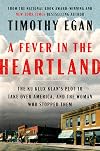
Hands down, he best book I read in 2023
If this book were published ten years ago, many of us would have read it, thought it was good, and set it aside, gratefully thinking that it was good to live in a country where such things no longer happen. In light of recent events, though, the book’s impact is chilling.
The 1920s America that Timothy Egan describes sounds more like a fantasy akin to PKD’s [book:The Man in the High Castle|216363] than a serious work of American history, but it show more really happened, however much our parents and grandparents would like to pretend that it didn’t.
After World War One, a host of changes threatened to undermine the stability that many white Americans across the country believed they were entitled to. Immigrants from Europe were pouring into the country. Added to that, millions of black families were fleeing north to escape Jim Crow oppression in what would come to be called the Great Migration. Added to that, the whole world was changing. Women’s dresses and hairstyles were getting shorter and the music, well, enough about that. America needed someone who could stand up and defend good old white protestant family values. Enter the Ku Klux Klan. Crushed and outlawed by President Grant, the Klan reappeared in 1915 and quickly became a political powerhouse with membership as high as 6 million. The Klan boasted 15 senators in its ranks, as well as three governors (Oregon, Colorado & Indiana).
Much of the credit for the Klan’s rapid growth was attributed to a charismatic flim-flam artist from Texas, D.C. Stephenson, who settled in Indiana and realized early on “that he could make far more money from the renewable hate of everyday white people than he could ever make as an honest businessman or a member of Congress”. With that thought in mind, he joined the Klan and in no time at all was appointed Grand Dragon of the Indiana Klan. Soon, an estimated 400,000 Hoosiers were “induced to pay $10 for the privilege of hating their neighbors and wearing a sheet.” $4 out of every ten went straight into Stephenson’s pocket, along with a substantial profit from sheet sales. His political power was such that he hand-picked Klansman Ed Jackson to be elected governor. Jackson promised to appoint Stephenson to a soon-to-be-vacant senate seat but Stephenson set his sites even higher, on the White House. He often boasted “I am the law in Indiana,” and few doubted that it was true.
Then he met Marge Oberholzer, a bright, quick-witted and strong-willed young woman who was well-known and liked throughout Irvington. This meeting set off a tragic chain of events that led to one of Indiana’s most notorious murder trials and changed the lives and fortunes of millions.
What shocked me the most about this book is how much it reminded me of recent events. That anyone could boast that they would face no consequences for crimes they could or did commit tells me that they have no moral compass. Furthermore, to build one’s political power on hatred, bigotry and intolerance is unconscionable. Finally, when Stephenson said “He believed the trial was a hoax and a witch hunt. The only way they could bring down this giant of a man was…to entrap him,” I couldn’t help but think of someone else who has said the same thing, and that person actually did make it into the White House.
I cannot recommend this book highly enough. W.E.B. Du Bois wrote that behind "the yelling, cruel-eyed demons who break, destroy, maim, lynch, and burn at the stake is a knot, large or small, of normal human beings, and these human beings at heart are desperately afraid of something." We all need to face our fears like civilized human beings and not cave in to the baser instincts that some would use to control us.
…
FYI: On a 5-point scale I assign stars based on my assessment of what the book needs in the way of improvements:
*5 Stars – Nothing at all. If it ain’t broke, don’t fix it.
*4 Stars – It could stand for a few tweaks here and there but it’s pretty good as it is.
*3 Stars – A solid C grade. Some serious rewriting would be needed in order for this book to be considered great or memorable.
*2 Stars – This book needs a lot of work. A good start would be to change the plot, the character development, the writing style and the ending.
*1 Star – The only thing that would improve this book is a good bonfire. show less
If this book were published ten years ago, many of us would have read it, thought it was good, and set it aside, gratefully thinking that it was good to live in a country where such things no longer happen. In light of recent events, though, the book’s impact is chilling.
The 1920s America that Timothy Egan describes sounds more like a fantasy akin to PKD’s [book:The Man in the High Castle|216363] than a serious work of American history, but it show more really happened, however much our parents and grandparents would like to pretend that it didn’t.
After World War One, a host of changes threatened to undermine the stability that many white Americans across the country believed they were entitled to. Immigrants from Europe were pouring into the country. Added to that, millions of black families were fleeing north to escape Jim Crow oppression in what would come to be called the Great Migration. Added to that, the whole world was changing. Women’s dresses and hairstyles were getting shorter and the music, well, enough about that. America needed someone who could stand up and defend good old white protestant family values. Enter the Ku Klux Klan. Crushed and outlawed by President Grant, the Klan reappeared in 1915 and quickly became a political powerhouse with membership as high as 6 million. The Klan boasted 15 senators in its ranks, as well as three governors (Oregon, Colorado & Indiana).
Much of the credit for the Klan’s rapid growth was attributed to a charismatic flim-flam artist from Texas, D.C. Stephenson, who settled in Indiana and realized early on “that he could make far more money from the renewable hate of everyday white people than he could ever make as an honest businessman or a member of Congress”. With that thought in mind, he joined the Klan and in no time at all was appointed Grand Dragon of the Indiana Klan. Soon, an estimated 400,000 Hoosiers were “induced to pay $10 for the privilege of hating their neighbors and wearing a sheet.” $4 out of every ten went straight into Stephenson’s pocket, along with a substantial profit from sheet sales. His political power was such that he hand-picked Klansman Ed Jackson to be elected governor. Jackson promised to appoint Stephenson to a soon-to-be-vacant senate seat but Stephenson set his sites even higher, on the White House. He often boasted “I am the law in Indiana,” and few doubted that it was true.
Then he met Marge Oberholzer, a bright, quick-witted and strong-willed young woman who was well-known and liked throughout Irvington. This meeting set off a tragic chain of events that led to one of Indiana’s most notorious murder trials and changed the lives and fortunes of millions.
What shocked me the most about this book is how much it reminded me of recent events. That anyone could boast that they would face no consequences for crimes they could or did commit tells me that they have no moral compass. Furthermore, to build one’s political power on hatred, bigotry and intolerance is unconscionable. Finally, when Stephenson said “He believed the trial was a hoax and a witch hunt. The only way they could bring down this giant of a man was…to entrap him,” I couldn’t help but think of someone else who has said the same thing, and that person actually did make it into the White House.
I cannot recommend this book highly enough. W.E.B. Du Bois wrote that behind "the yelling, cruel-eyed demons who break, destroy, maim, lynch, and burn at the stake is a knot, large or small, of normal human beings, and these human beings at heart are desperately afraid of something." We all need to face our fears like civilized human beings and not cave in to the baser instincts that some would use to control us.
…
FYI: On a 5-point scale I assign stars based on my assessment of what the book needs in the way of improvements:
*5 Stars – Nothing at all. If it ain’t broke, don’t fix it.
*4 Stars – It could stand for a few tweaks here and there but it’s pretty good as it is.
*3 Stars – A solid C grade. Some serious rewriting would be needed in order for this book to be considered great or memorable.
*2 Stars – This book needs a lot of work. A good start would be to change the plot, the character development, the writing style and the ending.
*1 Star – The only thing that would improve this book is a good bonfire. show less
The Worst Hard Time: The Untold Story of Those Who Survived the Great American Dust Bowl by Timothy Egan
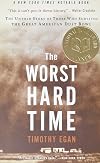
In the forward, Egan points out that we are on the cusp of losing the last generation of Americans who lived through the horror of the dust bowl. This book is part history, part cautionary tale – but also part homage, an ode to the hundreds of thousands of people who demonstrated enormous courage, and who experienced enormous tragedy, in their attempt to establish farms and start new lives on the arid Great Plains.
Egan does a terrific job of telling the story of the dust bowl through show more memories of people who were actually there. Through their eyes, we experience the hopefulness with which settlers stepped off their trains into towns that barely existed, lured to the Great Plains by promises of good air (ironic, that), cheap land, and the chance to achieve financial independence. The heady optimism of the “wheat boom years” when, driven by war-spawned demand for wheat, settlers plowed millions of acres into submission. The frustration of the cowboys who saw the coming ecological disaster but could do nothing to prevent it. The mounting desperation as wheat prices relentlessly dropped, to the point where the costs of planting exceeded market prices. The disquiet occasioned by the first year of drought … and then another … and then another …. The almost supernatural terror inspired by “dusters” that grew in intensity until they became monstrous forces of death, spitting static electricity and robbing the air of oxygen. The unimaginable horror of mothers trying to stave off starvation by pickling tumbleweed nettles, of families watching in desperation as their children died, one after the other, of “dust pneumonia.” The rage of citizens begging their government to intervene, their pleas not only ignored but dismissed. The ultimate hopelessness of realizing that starvation was no longer a possibility but an inevitability.
Here on the East Coast, US schools spend a half hour (maybe less) on the history of the dust bowl, a brief detour along the narrative that races from WW1 to the Great Depression to WW2. Having read this book, I now appreciate how appallingly unacceptable that is. The story of the dust bowl isn’t just about dust storms. It’s about politicians who, in the pockets of the railroad monopoly, lied to people about the suitability of farming in a semi-arid wasteland so that railroads could profit from new markets. It’s about unregulated free markets that allowed half a country to starve while the other half watched their crops rot in silos. It’s about what happens when humans wreak havoc on ecosystems in the name of profit. It’s about a society without any social safety nets to protect people from poverty, despair, and death. It’s about racism, antisemitism, unbridled capitalism, exploitation, magical thinking, the cruel inevitability of natural forces, political gamesmanship, and the “American Dream” transformed into a form of toxic boosterism that convinced citizens that their suffering was somehow noble. In other words, it is absolutely a cautionary tale about what’s happening in the US today (rule by oligarchy, climate change, populism), and a reminder that those who don’t learn from history (because they aren’t bothering to study it) are doomed to repeat it.
Egan’s prose is efficient, vivid and gritty; history storytelling haunting. Highly recommended: in fact, if I could, I’d add some version of this to every US high school history curriculum. show less
Egan does a terrific job of telling the story of the dust bowl through show more memories of people who were actually there. Through their eyes, we experience the hopefulness with which settlers stepped off their trains into towns that barely existed, lured to the Great Plains by promises of good air (ironic, that), cheap land, and the chance to achieve financial independence. The heady optimism of the “wheat boom years” when, driven by war-spawned demand for wheat, settlers plowed millions of acres into submission. The frustration of the cowboys who saw the coming ecological disaster but could do nothing to prevent it. The mounting desperation as wheat prices relentlessly dropped, to the point where the costs of planting exceeded market prices. The disquiet occasioned by the first year of drought … and then another … and then another …. The almost supernatural terror inspired by “dusters” that grew in intensity until they became monstrous forces of death, spitting static electricity and robbing the air of oxygen. The unimaginable horror of mothers trying to stave off starvation by pickling tumbleweed nettles, of families watching in desperation as their children died, one after the other, of “dust pneumonia.” The rage of citizens begging their government to intervene, their pleas not only ignored but dismissed. The ultimate hopelessness of realizing that starvation was no longer a possibility but an inevitability.
Here on the East Coast, US schools spend a half hour (maybe less) on the history of the dust bowl, a brief detour along the narrative that races from WW1 to the Great Depression to WW2. Having read this book, I now appreciate how appallingly unacceptable that is. The story of the dust bowl isn’t just about dust storms. It’s about politicians who, in the pockets of the railroad monopoly, lied to people about the suitability of farming in a semi-arid wasteland so that railroads could profit from new markets. It’s about unregulated free markets that allowed half a country to starve while the other half watched their crops rot in silos. It’s about what happens when humans wreak havoc on ecosystems in the name of profit. It’s about a society without any social safety nets to protect people from poverty, despair, and death. It’s about racism, antisemitism, unbridled capitalism, exploitation, magical thinking, the cruel inevitability of natural forces, political gamesmanship, and the “American Dream” transformed into a form of toxic boosterism that convinced citizens that their suffering was somehow noble. In other words, it is absolutely a cautionary tale about what’s happening in the US today (rule by oligarchy, climate change, populism), and a reminder that those who don’t learn from history (because they aren’t bothering to study it) are doomed to repeat it.
Egan’s prose is efficient, vivid and gritty; history storytelling haunting. Highly recommended: in fact, if I could, I’d add some version of this to every US high school history curriculum. show less
A Fever in the Heartland: The Ku Klux Klan's Plot to Take Over America, and the Woman Who Stopped Them by Timothy Egan
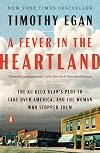
When I came across a photocopied news article from the 1920s in my deceased mother's papers telling of a meeting of the Ku Klux Klan chapter in my own little (population 1700) hometown in central Illinois, my jaw dropped in total shock (just as I imagine my mother's did). I had no idea that the KKK had ever been anywhere near my hometown. When I discovered that one of my favorite authors, Timothy Egan, had written a book about the KKK in the 1920s, I knew I had to read it. To call A Fever in show more the Heartland eye-opening, compelling, and disturbing is the mere tip of the iceberg when describing the book's effect on me.
To learn of the presidents who either condoned or turned a blind eye to this hate group's actions was enlightening. To learn that the KKK had a group for everyone (the KKK for males, the KKK Women's Auxiliary, Ku Klux Kiddies, and Klan Klubs for high school students). To learn that there was a KKK chapter aboard a U.S. battleship and that there was Klan Day at the Indiana State Fair... all this was sobering. The Klan used Indiana's Horse Thief Brigades as its own morality police, and it had its own "poison squads" disseminating fake news. To learn how Indiana became the most saturated Klan state that passed the world's first eugenic sterilization law (which was later picked up by an additional thirty states) was chilling.
The Klan in Indiana had tentacles everywhere, from the governor's mansion to the smallest town, and the Grand Dragon of them all, D.C. Stephenson, was responsible for the huge upsurge in membership across the country. The man was a con man of the highest caliber-- and a violent sexual predator. After each scene in which Stephenson took center stage, I wanted to take a hot shower to wash him off. Repulsive isn't a strong enough word to describe this person. After all that Madge Oberholtzer suffered, it was wonderful to see that she, and she alone, was strong enough to take down this monster.
However, after finishing A Fever in the Heartland, I came away with a feeling of dread.
"Isn't it strange that with all our educational advantages," noted the Hoosier writer Meredith Nicholson, "so many Indiana citizens could be induced to pay $10 [the KKK membership fee] for the privilege of hating their neighbors and wearing a sheet?"
With the events of recent years, I can't help but think that many of us haven't moved very far away from the emotions that overwhelmed the people of Indiana in the 1920s. May we not be doomed to repeat such a dark chapter of our history. show less
To learn of the presidents who either condoned or turned a blind eye to this hate group's actions was enlightening. To learn that the KKK had a group for everyone (the KKK for males, the KKK Women's Auxiliary, Ku Klux Kiddies, and Klan Klubs for high school students). To learn that there was a KKK chapter aboard a U.S. battleship and that there was Klan Day at the Indiana State Fair... all this was sobering. The Klan used Indiana's Horse Thief Brigades as its own morality police, and it had its own "poison squads" disseminating fake news. To learn how Indiana became the most saturated Klan state that passed the world's first eugenic sterilization law (which was later picked up by an additional thirty states) was chilling.
The Klan in Indiana had tentacles everywhere, from the governor's mansion to the smallest town, and the Grand Dragon of them all, D.C. Stephenson, was responsible for the huge upsurge in membership across the country. The man was a con man of the highest caliber-- and a violent sexual predator. After each scene in which Stephenson took center stage, I wanted to take a hot shower to wash him off. Repulsive isn't a strong enough word to describe this person. After all that Madge Oberholtzer suffered, it was wonderful to see that she, and she alone, was strong enough to take down this monster.
However, after finishing A Fever in the Heartland, I came away with a feeling of dread.
"Isn't it strange that with all our educational advantages," noted the Hoosier writer Meredith Nicholson, "so many Indiana citizens could be induced to pay $10 [the KKK membership fee] for the privilege of hating their neighbors and wearing a sheet?"
With the events of recent years, I can't help but think that many of us haven't moved very far away from the emotions that overwhelmed the people of Indiana in the 1920s. May we not be doomed to repeat such a dark chapter of our history. show less
A Fever in the Heartland: The Ku Klux Klan's Plot to Take Over America, and the Woman Who Stopped Them by Timothy Egan
A Fever in the Heartland focuses on the increasing power of the Ku Klux Klan in the 1920s, particularly in Indiana, and the vicious grifter, D.C. Stephenson, who led them. The book's subtitle oversells things a bit. While Stephenson and his coterie of racists and bigots undoubtedly had designs on national power, saying that the trial about the death of Madge Oberholtzer was the thing that stalled the KKK both exaggerates the agency of a dead woman and minimises other key, large-scale forces show more that Timothy Egan touches on briefly at the end of the book. Still, this is an engrossing read and Egan has a good eye for compelling detail and for the contexts (like the complicity of various Protestant churches) that enabled the KKK's rise. Egan doesn't force any comparisons between the United States of the 1920s and of the 2020s, but they're there for the reader to see and they are disturbing. show less
Lists
Spirituality (1)
Awards


A Fever in the Heartland: The Ku Klux Klan's Plot to Take Over America, and the Woman Who Stopped Them (Winner – General Nonfiction/Biography – 2024)
The Worst Hard Time: The Untold Story of Those Who Survived the Great American Dust Bowl (Winner – 2006)
Short Nights of the Shadow Catcher: The Epic Life and Immortal Photographs of Edward Curtis (Winner – Biography/Memoir – 2013)


You May Also Like


Associated Authors
Statistics
- Works
- 18
- Also by
- 6
- Members
- 10,970
- Popularity
- #2,155
- Rating
- 4.1
- Reviews
- 456
- ISBNs
- 104
- Languages
- 2
- Favorited
- 11

