
David Laskin
Author of The Children's Blizzard
About the Author
David Laskin's writing has appeared in the New York Times, the Wall Street Journal, Preservation, and Smithsonian. He lives in Seattle
Works by David Laskin
The Long Way Home: An American Journey from Ellis Island to the Great War (2010) 208 copies, 7 reviews
Partisans: Marriage, Politics, and Betrayal among the New York Intellectuals (2000) 78 copies, 1 review
Rains All the Time: a Connoisseur's History of Weather in the Pacific Northwest (1997) 54 copies, 3 reviews
Tagged
Common Knowledge
- Canonical name
- Laskin, David
- Birthdate
- 1953-10-25
- Gender
- male
- Education
- Harvard (B.A.)
University of Oxford (M.A.|Literature) - Short biography
- A lifelong weather enthusiast and a student of history and literature, David Laskin has written a number of nonfiction books about weather history, American writers, artists, gardens, and travel.
- Nationality
- USA
- Places of residence
- New York, New York, USA
Seattle, Washington, USA - Associated Place (for map)
- USA
Members
Reviews
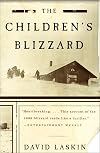
I applaud Laskin for his effort - it must be hard work to take an account of the scariest blizzard ever and turn it into a sloppy, sodden, boring mess.
The blatant, sloppy mistakes early on were my first clue that all was not quite right in the state of Denmark. (For instance! Laskin quotes from Laura Ingalls Wilder's The Long Winter and mis-identifies one of the schoolgirls as Laura's sister, Mary. No, dipshit - Mary was blind and she stayed at home. Reading comprehension is key.)
... Laskin show more is one of those writers who feels like the reader should suffer just as much reading the book as the author did researching for it. So everything is included. Did you want to know about the beauty of 19-century ... wherever? Here's 3 pages on it! How about the weather forecasting apparatus of 19-c St. Paul? Have an entire chapter!
Really, all that crap is crap that I can forgive. We all get a little excited over our pet subjects. What pissed me right off were the choppy, inter-twined narratives. On page 135, we left Ella keeled over in a snowdrift, apparently dead; on p. 152 we join her again, resurrected and safe. Page 136, five children walk home together; it is implied that they live. Page 161, all five children are dead. (And Laskin goes deep into obvious lies about their final conversations, their final thoughts, their final steps. What arrogant presumption.)
The graphic, horrifying detail of hypothermia and frostbite, gangrene and amputations was quite a surprise, after the gosh-let's-sit-you-youngins-down-and-tell-you-a-story-about-the-olden-days paternalistic tone of the rest of the book, which - chapters of tedious meteorological detail aside - seemed to focus mainly on Our Brave Little Soldiers and Our Good Little Women, all living in the makebelieve world of longago when everyone just did their part.
Two stars for a whole lot of blah, blah, blah. show less
The blatant, sloppy mistakes early on were my first clue that all was not quite right in the state of Denmark. (For instance! Laskin quotes from Laura Ingalls Wilder's The Long Winter and mis-identifies one of the schoolgirls as Laura's sister, Mary. No, dipshit - Mary was blind and she stayed at home. Reading comprehension is key.)
... Laskin show more is one of those writers who feels like the reader should suffer just as much reading the book as the author did researching for it. So everything is included. Did you want to know about the beauty of 19-century ... wherever? Here's 3 pages on it! How about the weather forecasting apparatus of 19-c St. Paul? Have an entire chapter!
Really, all that crap is crap that I can forgive. We all get a little excited over our pet subjects. What pissed me right off were the choppy, inter-twined narratives. On page 135, we left Ella keeled over in a snowdrift, apparently dead; on p. 152 we join her again, resurrected and safe. Page 136, five children walk home together; it is implied that they live. Page 161, all five children are dead. (And Laskin goes deep into obvious lies about their final conversations, their final thoughts, their final steps. What arrogant presumption.)
The graphic, horrifying detail of hypothermia and frostbite, gangrene and amputations was quite a surprise, after the gosh-let's-sit-you-youngins-down-and-tell-you-a-story-about-the-olden-days paternalistic tone of the rest of the book, which - chapters of tedious meteorological detail aside - seemed to focus mainly on Our Brave Little Soldiers and Our Good Little Women, all living in the makebelieve world of longago when everyone just did their part.
Two stars for a whole lot of blah, blah, blah. show less
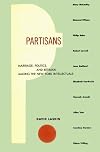
This is like a good gossip story. At the center are six women who ruled their lives without thought of public image or reputation. They were writers who lived before the age of feminism and railed against its confines. It was a compliment to be told "you write like a man." They were allowed to have egos, be promiscuous, vicious, betraying...all without a second thought. If feminine wile got you somewhere, so much the better. These were the New York Intellectuals who slept with men show more indiscriminately, married or otherwise. At their center is the Partisan Review and everyone who was associated with the magazine. Probably the best known, Mary McCarthy sleeps with the editor of PR before marrying writer Edmund Wilson. Then there's Jean Stafford who wrote for PR while married to Robert Lowell. When the two divorced Lowell went on to marry another PR insider, Elizabeth Hardwick. Allan Tate was married to Caroline Gordon but had an affair with Elizabeth Hardwick. Are you keeping track? Other intellectuals include Hannah Arendt and Diane Trilling. They had their own dramas as well. show less
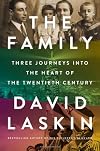
Family sagas, both fiction and non, are among my favorite genres. This one has three unique branches: the Kaganoviches, a Jewish family from the Pale of Settlement, sends brave emigrants to Palestine and to NYC, leaving the doomed group to be murdered by Nazis and their Lithuanian accomplices. The author gives equal weight and time to each story, and they are pretty remarkable: the Palestinians are pioneers, but complicit in the destruction of Bedouin and Arab villages; the Americans launch show more the Maidenform Bra Company but don't do much to heed the desperate calls from the old country, and the dead speak only through diaries of the few neighbors who survivored the Holocaust.
In another response to the ever-puzzling "Why did the Jews put up so little resistance?", there's a fascinating and new-to-me chapter on the expectations of the Kaganoviches living in Volozhin, who'd been through a German invasion back in 1918 and were not treated any worse by those invaders than they were by the Russian/Polish/Romanian Christians who constantly conducted progroms.
Well-written and researched, the "Notes" section alone is riveting. Highly recommended. show less
In another response to the ever-puzzling "Why did the Jews put up so little resistance?", there's a fascinating and new-to-me chapter on the expectations of the Kaganoviches living in Volozhin, who'd been through a German invasion back in 1918 and were not treated any worse by those invaders than they were by the Russian/Polish/Romanian Christians who constantly conducted progroms.
Well-written and researched, the "Notes" section alone is riveting. Highly recommended. show less
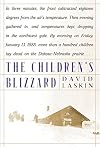
This is a very, very good book and one that I will re-read at some point to re-capture the details that escaped on the first go round. And it was also delightful to read a weather geek explain the phenomenon that caused this catastrophic blizzard: high pressure, low pressure, and how they work. Maybe someday I'll understand that aspect!
Laskin does a phenomenal job researching the lives of the families caught up in this push into the Western US plains. He researches the history and places show more where 5 or 6 families originated, their customs, reasons for making the voyage, experiences to get to their ports, and other similar stories from the time. So we get to know some families, know that they had stories similar to other people from the same region or on the same transport, and they were not plucked up and placed in the Dakotas or Nebraska out of thin air.
There is a great deal of research into early American weather forecasting, especially what worked and what didn't. And the Signal Corps and Lieutenant Woodruff, who was an active duty soldier in charge of the weather forecasting and relaying messages East from the various points in Montana and the Great Plains, interpreting them, and drawing them on a map ready for the telegraph machines.
When the storm hits, Laskin again goes into detail about the snow and ice and crystals, as well as what extreme cold does to the human body based on survivors' stories and medical evidence. It is also important to know, and I didn't, that there were survivors who lasted the night, only to die the next morning when the blood from their freezing limbs began to circulate around their hearts.
So it's a heart-wrenching historical account, very similar to "Isaac's Storm" and tales about the Northwest Passage, of people who left one land and set of difficult circumstances for hope of a better life, only to have that life changed so tragically. show less
Laskin does a phenomenal job researching the lives of the families caught up in this push into the Western US plains. He researches the history and places show more where 5 or 6 families originated, their customs, reasons for making the voyage, experiences to get to their ports, and other similar stories from the time. So we get to know some families, know that they had stories similar to other people from the same region or on the same transport, and they were not plucked up and placed in the Dakotas or Nebraska out of thin air.
There is a great deal of research into early American weather forecasting, especially what worked and what didn't. And the Signal Corps and Lieutenant Woodruff, who was an active duty soldier in charge of the weather forecasting and relaying messages East from the various points in Montana and the Great Plains, interpreting them, and drawing them on a map ready for the telegraph machines.
When the storm hits, Laskin again goes into detail about the snow and ice and crystals, as well as what extreme cold does to the human body based on survivors' stories and medical evidence. It is also important to know, and I didn't, that there were survivors who lasted the night, only to die the next morning when the blood from their freezing limbs began to circulate around their hearts.
So it's a heart-wrenching historical account, very similar to "Isaac's Storm" and tales about the Northwest Passage, of people who left one land and set of difficult circumstances for hope of a better life, only to have that life changed so tragically. show less
Lists
Awards


You May Also Like


Associated Authors
Statistics
- Works
- 17
- Members
- 2,669
- Popularity
- #9,616
- Rating
- 4.0
- Reviews
- 110
- ISBNs
- 48