

Susan Cheever
Author of American Bloomsbury
About the Author
Susan Cheever, the daughter of the great American writer John Cheever, is the author of nine previous books, including Home Before Dark, a best-selling memoir about her father, & the novel Looking for Work. She has written award-winning articles on parenting for New York Newsday & is a contributing show more writer to Architectural Digest. She teaches writing at Bennington College & Yale University & lives in New York. (Bowker Author Biography) show less
Image credit: Photograph by Sigrid Estrada
Works by Susan Cheever
My Name Is Bill: Bill Wilson--His Life and the Creation of Alcoholics Anonymous (2004) 124 copies, 1 review
Work: A Story of Experience 1 copy
Associated Works
Tagged
Common Knowledge
- Canonical name
- Cheever, Susan
- Birthdate
- 1943-07-31
- Gender
- female
- Education
- Brown University (BA|1965)
- Occupations
- author
novelist
university teacher - Organizations
- Authors Guild
Bennington College
The New School - Awards and honors
- Guggenheim Fellowship (1983)
L.L. Winship/PEN New England Award (1985) - Relationships
- Cheever, John (father)
Cheever, Benjamin (brother)
Hinckle, Warren (husband-divorced)
Cowley, Robert (husband-divorced)
Cheever, Federico (brother) - Nationality
- USA
- Birthplace
- New York, New York, USA
- Places of residence
- New York, New York, USA
- Associated Place (for map)
- New York, New York, USA
Members
Reviews

Looking for Work, Susan Cheever’s first novel, is the story of Salley Gardens, daughter of a respected Columbia University professor. The book describes Salley’s haphazard quest for personal fulfillment in America at an unspecified moment in time—likely the early 1970s. Cheever makes it clear that Salley has come of age in a world that has more regard for her looks than her abilities and treats her as an appendage of the men in her life. When the novel begins, Salley, a recent show more Radcliffe graduate, is living in Wyoming, working for the Laramie Eagle, “the only newspaper that offered me a job when I graduated from college with a gentlewoman’s C- average.” But Salley is ambitious. Smart and confident, she enjoys her independence and does not like the idea of being tied down. But, confident or not, she cannot defy expectations and say no when her beau, Jason Gardens (the son of close friends of her parents), proposes. Setting her doubts aside, Salley leaves her job, moves to New York, and marries Jason, an editor at a prestigious magazine, and to her regret is instantly subsumed into his life and milieu. From this point Cheever’s novel becomes a series of encounters as Salley struggles to escape the smothering cocoon of her marriage and establish an identity for herself and thereby achieve a kind of rebirth. Her confusion is brilliantly evoked in the set pieces that are Cheever’s primary focus. These episodes establish her growing ambivalence toward the institution of marriage, her attraction to men other than Jason, and her doubts regarding children and motherhood. Along the way Salley endures one humiliating interview after another as she hunts for satisfying work and becomes attuned to the body language of the men (it is always men doing the interviewing) seated across the desk as they smile and cheerily dismiss her accomplishments and qualifications and tell her to keep in touch. Eventually, her marriage having fizzled, she embarks on a series of casual dalliances, eventually falling in love with Max Angelo, a famous sculptor, an impulsive, intensely selfish, sensual man of the world. But even here the luster dims because the relationship proceeds on Max’s terms: Salley is always being called upon to accommodate Max’s schedule and cater to Max’s whims and desires. In the end Salley accepts a lowly position with a national publication. But it’s a foot in the door, and she understands that as a young woman navigating a man’s world, she must take whatever crumbs fall her way. Salley’s story may not be spellbinding, but it is never less than amusing, and Cheever’s sophisticated, crystalline prose frequently achieves dazzling poetic heights. Inevitably some readers will be put off by Salley’s moneyed lineage and secure standing as the daughter of white, east-coast privilege—How can we be expected to sympathize with someone who’s never known a moment of hardship in her life? Indeed, the novel provoked annoyance on precisely this score when it was published in 1980, and Cheever’s heroine was dismissed as insipid and self-centred. However, assessed on its own terms, Susan Cheever’s debut fiction achieves an extraordinary feat: it draws us into the rarefied world of a spoiled, coddled young woman whom we would probably detest in real life, and keeps us entertained until the end. show less
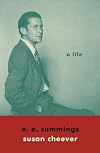
E.E. Cummings made more money reading his poems than writing them. That's just one of the fascinating tidbits Susan Cheever gives us in her excellent 2014 biography “E. E. Cummings: A Life.”
Another is this: Cummings may have been a radical in his poetic style, yet he was a firm anti-communist, unlike so many of his fellow intellectuals. Friends returned from Russia with praise for what they had found there, but Cummings turned against Stalin and communism almost from the moment he show more entered Russia. Everyone there seemed afraid. Nobody seemed happy.
Cheever gives us plentiful examples of his poetry, often playful, sometimes angry, usually obscure, always thoughtful. These poems provide commentary on his life, from loving memories of his clergyman father to his late-in-life fondness for birds.
The poet had difficulties with women: two marriages, two divorces. He never married the love of his life, who stayed by him until the end, although she was jealous even of his own daughter.
His relationship with Nancy, his daughter, makes a wonderful story in itself, perhaps even worthy of a movie. Cummings knew her when she was a little girl, but then his ex-wife took her away to Ireland, changed her name and refused to tell her anything about her real father. Years later, after Nancy herself had become a poet, Cummings reentered her life, yet for a long time refused to tell her he was her father. Only after Nancy declared her love for him did he reveal the truth.
Like her father, John Cheever, Susan Cheever is an outstanding writer, as her other books such as American Bloomsbury, have shown. This is a fine, revealing biography, perhaps too brief to be definitive, but beautifully written. show less
Another is this: Cummings may have been a radical in his poetic style, yet he was a firm anti-communist, unlike so many of his fellow intellectuals. Friends returned from Russia with praise for what they had found there, but Cummings turned against Stalin and communism almost from the moment he show more entered Russia. Everyone there seemed afraid. Nobody seemed happy.
Cheever gives us plentiful examples of his poetry, often playful, sometimes angry, usually obscure, always thoughtful. These poems provide commentary on his life, from loving memories of his clergyman father to his late-in-life fondness for birds.
The poet had difficulties with women: two marriages, two divorces. He never married the love of his life, who stayed by him until the end, although she was jealous even of his own daughter.
His relationship with Nancy, his daughter, makes a wonderful story in itself, perhaps even worthy of a movie. Cummings knew her when she was a little girl, but then his ex-wife took her away to Ireland, changed her name and refused to tell her anything about her real father. Years later, after Nancy herself had become a poet, Cummings reentered her life, yet for a long time refused to tell her he was her father. Only after Nancy declared her love for him did he reveal the truth.
Like her father, John Cheever, Susan Cheever is an outstanding writer, as her other books such as American Bloomsbury, have shown. This is a fine, revealing biography, perhaps too brief to be definitive, but beautifully written. show less
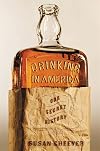
I LOVED this book! I'm a huge fan of micro-histories, and while this subject is a little broad it all come back to the booze. Soo intriguing! Author, Susan Cheever, does a brilliant job of cataloging many of the incidents that helped make America great and then launches in to how booze played a part. Trust me, a big part. Why did the pilgrims land at Plymouth? Because they were running out of beer and didn't think they could make it to the land they were actually granted. Why did everyone show more really love Johnny Appleseed? Because the nasty apple trees he planted weren't good for eating but WERE good for turning into cider. How much did soldiers drink in the American Revolution and the Civil War? Triple what you thought, maybe more. How did booze play a part in President KEnnedy's assassination? His security detail had partied hard the night before and were too hungover to react quickly. My view of American history is forever altered. Booze has been present every step of our country's way and it is NEVER mentioned (unless it's about the prohibition). Cheever talks about how laws have changed as is how we define drunkenness. In the eighteenth century this little diddy helped define who was drunk: "Not drunk is he who from the floor, / Can rise again and still drink more, / But drunk is he who prostrate lies, / Without the power to drink or rise." I doubt that version of sobriety would pass today. In fact during the 1820's Americans were drinking TRIPLE what we consume today!! Crazy! Cheever doesn't condone drinking but she does a great job of illustrating the negative AND positive effects booze has had on our country. A fascinating book! show less
Susan Cheever offers a sensitive, well-written account of e.e.cummings's life. At under two hundred pages, the book is rather short as biographies go, which makes it a great introduction to the poet. Cheever does an excellent job of contextualizing cummings's work, and it is clear that she approaches her subject with empathy and honesty: not quick to judge, she refuses to occupy a position of knowledge, and reveals some of the biographer's moral dilemmas in addressing touchy issues such as show more the poet's infamous anti-Semitism or some of his poor personal ethical choices.
"On the one hand, a biographer's responsibility is to bring the past to life on the page in all its details--including the relative knowledge and ignorance of the community described. On the other hand, shouldn't the biographer give the reader and the subject the benefit of everything known at the time of writing? Should poems and books be understood in a vacuum--in the historical silence in which a writer connects viscerally and spiritually with a reader? Or should they be understood as pieces of the web of their time and ours?" (p. 176)
Cheever's book leaves room for the reader to make her or his own interpretive choices, and, in someone who hasn't read cummings in some time, inspires the desire to return to the poems. show less
"On the one hand, a biographer's responsibility is to bring the past to life on the page in all its details--including the relative knowledge and ignorance of the community described. On the other hand, shouldn't the biographer give the reader and the subject the benefit of everything known at the time of writing? Should poems and books be understood in a vacuum--in the historical silence in which a writer connects viscerally and spiritually with a reader? Or should they be understood as pieces of the web of their time and ours?" (p. 176)
Cheever's book leaves room for the reader to make her or his own interpretive choices, and, in someone who hasn't read cummings in some time, inspires the desire to return to the poems. show less
Lists
Awards


You May Also Like


Associated Authors
Statistics
- Works
- 20
- Also by
- 5
- Members
- 2,037
- Popularity
- #12,617
- Rating
- 4.0
- Reviews
- 75
- ISBNs
- 89
- Languages
- 3
- Favorited
- 4