
Megan Marshall
Author of The Peabody Sisters: Three Women Who Ignited American Romanticism
About the Author
Image credit: Photo by Gail Samuelson.
Works by Megan Marshall
Peabody Sisters 1 copy
Tagged
Common Knowledge
- Canonical name
- Marshall, Megan
- Birthdate
- 1954-06-08
- Gender
- female
- Education
- Harvard University (AB)
Bennington College - Occupations
- professor
- Organizations
- Emerson College (Assistant Professor)
- Nationality
- USA
- Birthplace
- Oakland, California, USA
- Places of residence
- Belmont, Massachusetts, USA
- Associated Place (for map)
- USA
Members
Reviews
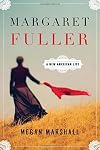
Although I've found the name Margaret Fuller familiar probably since my women's studies classes in college, I didn't really learn about her until our minister gave a sermon about her this spring. After the sermon I asked the minister for suggestions for further reading, and she recommended The Lives of Margaret Fuller by John Matteson. I bought the book because I like our minister and trust her opinion, but I procrastinated starting it. I wanted a book about Margaret Fuller that was written show more by a woman. I was pretty sure there was one because I'd heard a radio interview with a woman on the subject of Margaret Fuller, and when I went to investigate, I found Megan Marshall's Margaret Fuller: A New American Life, which had just won a Pullitzer.
A Pullitzer and a woman author? Clearly this was the biography I wanted to read first.
I didn't have to read far into the book to decide that I really like Marshall's book, and I love Margaret Fuller. I feel like I can relate to her. I, like her, was taught from a young age by a father delighted by my precociousness and tickled at the idea of seeing what the brain of this child of his could absorb. I, too, received detailed critical commentary from my father on my essays and stories. I, too, was left directionless when my father for stopped directing my education.
Fuller's father worried he was making her unmarriageable by promoting her masculine intellect, so he stopped her classical education and sent her to finishing school. I don't know my father's reasons for abandoning my at-home math and science education, but I'm pretty sure it had nothing to do with my marriageability. I do blame him in part for my somewhat stilted social style. His no-nonsense model of critique gave me both the ability to handle criticism and the inability to recognize that others might want me to pull a few punches when I critique their work. This hasn't negatively impacted my ability to marry (although it's possible it's part of the reason I'm married to a scientist rather than a writer).
I also relate to Fuller as she moves into adulthood, great responsibility thrust upon her due to family circumstances, tremendous doubt assailing her at every turn. She's pulled between her passions and her intellect, what's expected of her and what she wishes to do (I say as my five-year-old whines at me and the clock flashes annoyingly, reminding me that I need to start dinner instead of trying to write a book review).
As she reaches her 30's, her growing success highlights our differences. We both started a discussion group, we both have rather sensitive constitutions, and for both of us motherhood was a catalyst for a more balanced union between intellect and heart, but Fuller's genius and ambition and bravery and clear sense of purpose take her places that I'm unlikely ever to go. She becomes the first woman war correspondent (although she has to take a governess job because her newspaper doesn't pay enough to support her), while it's a major accomplishment for me to go into Boston for the day. She feels comfortable and confident hanging out with the big thinkers of her time, and impresses them in the process with her poise and her clear, logical thinking, while I stretch and strain and stumble about for the right words to express the thought I'm trying to form.
A nineteenth-century sybil, Fuller speaks for an America nearly 200 years in the future. This opinion, expressed in 1837, is just one of many examples of the ways in which Margaret Fuller was ahead of her time:
This is an idea that could be---and frequently is---expressed in the 21st century. In fact, it's a big reason I started my own discussion group.
I wish to see my surroundings with Fuller's clarity and to express my thoughts about them in a way that touches people as much as Fuller's words have, effecting change even when her name is eclipsed in national memory by her male counterparts.
Marshall's biography has been a pleasure to read and has given me not only a lot to think about but a role model of sorts to encourage me as I make my own way. show less
A Pullitzer and a woman author? Clearly this was the biography I wanted to read first.
I didn't have to read far into the book to decide that I really like Marshall's book, and I love Margaret Fuller. I feel like I can relate to her. I, like her, was taught from a young age by a father delighted by my precociousness and tickled at the idea of seeing what the brain of this child of his could absorb. I, too, received detailed critical commentary from my father on my essays and stories. I, too, was left directionless when my father for stopped directing my education.
Fuller's father worried he was making her unmarriageable by promoting her masculine intellect, so he stopped her classical education and sent her to finishing school. I don't know my father's reasons for abandoning my at-home math and science education, but I'm pretty sure it had nothing to do with my marriageability. I do blame him in part for my somewhat stilted social style. His no-nonsense model of critique gave me both the ability to handle criticism and the inability to recognize that others might want me to pull a few punches when I critique their work. This hasn't negatively impacted my ability to marry (although it's possible it's part of the reason I'm married to a scientist rather than a writer).
I also relate to Fuller as she moves into adulthood, great responsibility thrust upon her due to family circumstances, tremendous doubt assailing her at every turn. She's pulled between her passions and her intellect, what's expected of her and what she wishes to do (I say as my five-year-old whines at me and the clock flashes annoyingly, reminding me that I need to start dinner instead of trying to write a book review).
As she reaches her 30's, her growing success highlights our differences. We both started a discussion group, we both have rather sensitive constitutions, and for both of us motherhood was a catalyst for a more balanced union between intellect and heart, but Fuller's genius and ambition and bravery and clear sense of purpose take her places that I'm unlikely ever to go. She becomes the first woman war correspondent (although she has to take a governess job because her newspaper doesn't pay enough to support her), while it's a major accomplishment for me to go into Boston for the day. She feels comfortable and confident hanging out with the big thinkers of her time, and impresses them in the process with her poise and her clear, logical thinking, while I stretch and strain and stumble about for the right words to express the thought I'm trying to form.
A nineteenth-century sybil, Fuller speaks for an America nearly 200 years in the future. This opinion, expressed in 1837, is just one of many examples of the ways in which Margaret Fuller was ahead of her time:
She allowed that society as a whole may have improved, but what of the individual? The very signs of progress others pointed to---innovations such as the railroad and the steamship---created or exacerbated "immense wants" in the individual: "the diffusion of information is not necessarily the diffusion of knowledge," she explained, and "the triumph over matter does not always or often lead to the triumph of the Soul." And "when it is made easy for men to communicate with one another, they learn less from on another." (p 114)
This is an idea that could be---and frequently is---expressed in the 21st century. In fact, it's a big reason I started my own discussion group.
I wish to see my surroundings with Fuller's clarity and to express my thoughts about them in a way that touches people as much as Fuller's words have, effecting change even when her name is eclipsed in national memory by her male counterparts.
Marshall's biography has been a pleasure to read and has given me not only a lot to think about but a role model of sorts to encourage me as I make my own way. show less
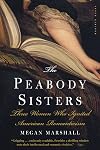
I can’t resist books about sisters, I've read more by and about the Mitford sisters than I’d care to admit, and this thoroughly researched book about the Peabody sisters has all the charms that the best of such books can offer--fascinating personalities, in-depth observations of their family dynamics, and an intimate window into the history of their time. It’s just as informative and moving as author Megan Marshall’s more recent book on Margaret Fuller. Those two books complement show more each other since they are both about women who were leading thinkers and influential players during the pre-Civil War era when American Romanticism and Transcendentalism were flowering, a time mainly dominated by men.
Money was always an issue for the Peabody family, but that seemed to push each of the sisters to excel. Elizabeth had a voracious intellect and her ideas helped inspire the likes of Emerson, Thoreau, and Bronson Alcott. She published their early works, urged them to curb their individualistic philosophies to connect more with others, and has had a lasting impact by promoting the benefits of kindergarten. Mary was a compassionate reformer who married statesman and educator Horace Mann. Sophia, though sickly, was recognized as a talented artist and she married novelist Nathaniel Hawthorne. The book’s tone is sympathetic, but honest, and the sisters come to life on the page to such an extent that it made me feel like I know them. show less
Money was always an issue for the Peabody family, but that seemed to push each of the sisters to excel. Elizabeth had a voracious intellect and her ideas helped inspire the likes of Emerson, Thoreau, and Bronson Alcott. She published their early works, urged them to curb their individualistic philosophies to connect more with others, and has had a lasting impact by promoting the benefits of kindergarten. Mary was a compassionate reformer who married statesman and educator Horace Mann. Sophia, though sickly, was recognized as a talented artist and she married novelist Nathaniel Hawthorne. The book’s tone is sympathetic, but honest, and the sisters come to life on the page to such an extent that it made me feel like I know them. show less
I do so love reading about exceptional and unconventional women, especially one from the early 1800s, and doubly especially one who is disagreeable by contemporary accounts (triply so if they were not from the usual privileged background which is not the case here).
Educated beyond society standards for a woman at the time (a combination of her father's strict homeschooling fueled by his own failed ambitions, not by any proto-feminist beliefs, and mostly her own uncompromising discipline), show more Fuller acutely felt the disadvantages of her sex and immense intellect (the necessity/expectation of marriage, the tertiary education denied to women, y'know, the usual patriarchy nonsense). The life of Margaret Fuller is remarkable not just for her role as one of the few women in history whom we can point to as having achieved success in a public domain and herald as an inspiration to future women, but also for her extraordinary intellect matched only by her intense discipline.
The scene where Margaret welcomed her male contemporaries (friends, even) to join her Conversations (weekly-themed discussion group intended to inspire like-minded women to question, to define, to state and examine their opinions, to learn to art of intellectual debates and discussions, and most of all, to question their own positions in society) only for it to be dominated by the men deriding the theme of Greek mythos, claiming it lacking and requiring the completeness of Christian revelations, and eventually bringing it around to contemporary church matters, that is, avenues from which women were/are excluded, that scene, it made my blood boil. Another blood-boiling instance was when her father, failing another ambition and now secretly of meagre income, moved the entire family to a farm and assumed her to be a spinster for the foreseeable future, promising her a Europe trip if she tutors all her younger brothers into Harvard (youngest is seven now). Frustrations all round for Fuller and all women denied their full potentials!
Marshall is as detailed as it is possible for a biography to be, quoting from period documents and making it clear when she's extrapolating. Recommended for feminism studies or general interest.
Aside: incredible seduction line that I was not expecting from Fuller: some day when you are not bound to buying and selling, and I, too, am free... you will perhaps... show me some one of those beautiful places which I do not yet know. show less
Educated beyond society standards for a woman at the time (a combination of her father's strict homeschooling fueled by his own failed ambitions, not by any proto-feminist beliefs, and mostly her own uncompromising discipline), show more Fuller acutely felt the disadvantages of her sex and immense intellect (the necessity/expectation of marriage, the tertiary education denied to women, y'know, the usual patriarchy nonsense). The life of Margaret Fuller is remarkable not just for her role as one of the few women in history whom we can point to as having achieved success in a public domain and herald as an inspiration to future women, but also for her extraordinary intellect matched only by her intense discipline.
The scene where Margaret welcomed her male contemporaries (friends, even) to join her Conversations (weekly-themed discussion group intended to inspire like-minded women to question, to define, to state and examine their opinions, to learn to art of intellectual debates and discussions, and most of all, to question their own positions in society) only for it to be dominated by the men deriding the theme of Greek mythos, claiming it lacking and requiring the completeness of Christian revelations, and eventually bringing it around to contemporary church matters, that is, avenues from which women were/are excluded, that scene, it made my blood boil. Another blood-boiling instance was when her father, failing another ambition and now secretly of meagre income, moved the entire family to a farm and assumed her to be a spinster for the foreseeable future, promising her a Europe trip if she tutors all her younger brothers into Harvard (youngest is seven now). Frustrations all round for Fuller and all women denied their full potentials!
Marshall is as detailed as it is possible for a biography to be, quoting from period documents and making it clear when she's extrapolating. Recommended for feminism studies or general interest.
Aside: incredible seduction line that I was not expecting from Fuller: some day when you are not bound to buying and selling, and I, too, am free... you will perhaps... show me some one of those beautiful places which I do not yet know. show less
Megan Marshall’s book is a wonderfully readable account of the life of Boston-born Margaret Fuller (1810-1850), an early feminist. Her father was her primary educator, “designing” her course of study at home. A tough taskmaster he was, which turned out to be of great value to her, for he died young. She needed then to provide for her mother and her siblings. After a short teaching gig, she realized that, although she was successful, it was not her passion - she desperately wanted to show more write. Another passion was engaging women in developing their intellect. To this end, she led a series of Conversations, to which the women of Boston subscribed, meeting weekly to discuss literary topics. These two passions served to support her family.
Though not born of wealth, she was a friend of the Transcendalists in New England, in particular of Ralph Waldo Emerson whom she held in thrall. She wrote constantly, letters and essays, always looking to Emerson for intellectual commentary and discussion. In fact, she probably would have liked a closer union, but he couldn’t be moved in that direction, and sometimes treated her harshly.
The book traces the life of a woman ahead of her time. In her early years, she envied her friends who married and had children. Though that would come later for her, she was content to be a woman of intellect and action. A trip to the Midwest that opened her eyes to a world away from Boston, the publishing of two well-received books and numerous articles, the “plum” job as literary editor of Horace Greeley’s New York Tribune where she finally gained confidence and received the accolades that she deserved, and the trip as foreign correspondent in Europe that was to prove so momentous for her and bring her fulfillment of the wish for a child – all these events unfold beautifully with Marshall’s prose to guide the reader and with Fuller’s words that are liberally quoted throughout.
Not only did Fuller’s writing display her wide range of literary knowledge, but it is styled so beautifully with just the right turn of phrase. In the 1970’s, during the heat of the women’s liberation movement, T-shirts were printed with a quote from her famous book, Woman of the Nineteenth Century. Taken out of context from her belief that women should be able to be what they want to be, the quote was “Let Them Be Sea-Captains.” But it’s probably not one she would have picked. Instead, believing as she did that women should be taught and held to high standards, she might have preferred this one:
"Who would be a goody that could be a genius" show less
Though not born of wealth, she was a friend of the Transcendalists in New England, in particular of Ralph Waldo Emerson whom she held in thrall. She wrote constantly, letters and essays, always looking to Emerson for intellectual commentary and discussion. In fact, she probably would have liked a closer union, but he couldn’t be moved in that direction, and sometimes treated her harshly.
The book traces the life of a woman ahead of her time. In her early years, she envied her friends who married and had children. Though that would come later for her, she was content to be a woman of intellect and action. A trip to the Midwest that opened her eyes to a world away from Boston, the publishing of two well-received books and numerous articles, the “plum” job as literary editor of Horace Greeley’s New York Tribune where she finally gained confidence and received the accolades that she deserved, and the trip as foreign correspondent in Europe that was to prove so momentous for her and bring her fulfillment of the wish for a child – all these events unfold beautifully with Marshall’s prose to guide the reader and with Fuller’s words that are liberally quoted throughout.
Not only did Fuller’s writing display her wide range of literary knowledge, but it is styled so beautifully with just the right turn of phrase. In the 1970’s, during the heat of the women’s liberation movement, T-shirts were printed with a quote from her famous book, Woman of the Nineteenth Century. Taken out of context from her belief that women should be able to be what they want to be, the quote was “Let Them Be Sea-Captains.” But it’s probably not one she would have picked. Instead, believing as she did that women should be taught and held to high standards, she might have preferred this one:
"Who would be a goody that could be a genius" show less
Lists
Awards


You May Also Like


Statistics
- Works
- 6
- Members
- 1,150
- Popularity
- #22,331
- Rating
- 4.1
- Reviews
- 30
- ISBNs
- 18
- Languages
- 2
- Favorited
- 2
