
Jill Lepore
Author of These Truths: A History of the United States
About the Author
Jill Lepore is the David Woods Kemper '41 Professor of American History at Harvard University and a staff writer at The New Yorker. She has written several books including Book of Ages: The Life and Opinions of Jane Franklin, The Whites of Their Eyes: The Tea Party's Revolution and the Battle over show more American History, The Secret History of Wonder Woman, Joe Gould's Teeth, and These Truths: A History of the United States. (Bowker Author Biography) show less
Image credit: Dari Michele
Works by Jill Lepore
The Name of War: King Philip's War and the Origins of American Identity (1998) 891 copies, 13 reviews
New York Burning: Liberty, Slavery, and Conspiracy in Eighteenth-Century Manhattan (2005) 507 copies, 5 reviews
The Whites of Their Eyes: The Tea Party's Revolution and the Battle over American History (2010) 350 copies, 17 reviews
A Is for American: Letters and Other Characters in the Newly United States (2002) 167 copies, 5 reviews
Associated Works
Contact Points: American Frontiers from the Mohawk Valley to the Mississippi, 1750-1830 (1998) — Contributor — 49 copies
Tagged
Common Knowledge
- Canonical name
- Lepore, Jill
- Birthdate
- 1966-08-27
- Gender
- female
- Education
- Tufts University
University of Michigan
Yale University - Occupations
- historian
professor
journalist - Organizations
- Harvard University (professor of history)
The New Yorker - Nationality
- USA
- Birthplace
- West Boylston, Massachusetts, USA
- Places of residence
- West Boylston, Massachusetts, USA
- Map Location
- Massachusetts, USA
Members
Reviews
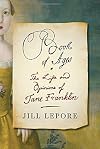
This is a wonderful biography of Jane Franklin who lived from 1712 to 1794 in Boston. She was married at 15 to a man who turned out to never amount to much and had 12 children, and outlived all but one of them. She was taught to read and write and loved reading, searching out books wherever she could get them, for her whole life. She lived through the Revolution and helped to raise her grandchildren and great grandchildren. And, oh yeah, she was the sister of Benjamin Franklin.
Jane and show more Benjamin were close though the ended up in very different walks of life. Lepore uses Benjamin Franklin's life to contrast with Jane's. They wrote each other letters throughout their adult lives; most of Franklin's to Jane survive, very few of Jane's to him (or anyone) survive.
I found this an interesting look at the life of a woman, a reader, in the 18th century. It's also an interesting discussion of what is important in history - the large personalities, like Franklin, or the every day people, like Jane Franklin. Lepore makes a good argument that Jane Franklin's history can be every bit as interesting and important to the knowledge of where our country has been. I have to say that she also did a fantastic job in this book of not letting Benjamin Franklin overwhelm his sister's voice. Even with the scanty source material, I felt like I had a good picture of Jane Franklin - her sorrows, her political views, and her sense of humor - by the time I was finished reading.
Loved this book - highly recommended. show less
Jane and show more Benjamin were close though the ended up in very different walks of life. Lepore uses Benjamin Franklin's life to contrast with Jane's. They wrote each other letters throughout their adult lives; most of Franklin's to Jane survive, very few of Jane's to him (or anyone) survive.
I found this an interesting look at the life of a woman, a reader, in the 18th century. It's also an interesting discussion of what is important in history - the large personalities, like Franklin, or the every day people, like Jane Franklin. Lepore makes a good argument that Jane Franklin's history can be every bit as interesting and important to the knowledge of where our country has been. I have to say that she also did a fantastic job in this book of not letting Benjamin Franklin overwhelm his sister's voice. Even with the scanty source material, I felt like I had a good picture of Jane Franklin - her sorrows, her political views, and her sense of humor - by the time I was finished reading.
Loved this book - highly recommended. show less
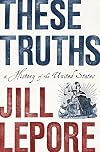
I’ve been reading this tome since January as part of the group read and the last part which dealt with recent history and right up to the 2016 election was the most riveting, probably because of its presence in our daily lives and the idea that our democracy may be unilaterally damaged by the unfit President that was elected. Lepore went to great lengths to draw lines between historical instances of threats to our democracy and what’s happening today and the biggest takeaway for me was show more that our country has dealt with issues of incredible tyranny in the past and gone on to mend the fissures and reinvigorate our democracy and we will be able to do it again when this period is over.
"A nation born in revolution will forever struggle against chaos. A nation founded on universal rights will wrestle against the forces of particularism. A nation that toppled a hierarchy of birth only to erect a hierarchy of wealth will never know tranquility. A nation of immigrants cannot close its borders. And a nation born in contradiction, liberty in a land of slavery, sovereignty in a land of conquest, will fight, forever, over the meaning of its history.”
There are many instances throughout the book where I realized there were times in our history where I was truly embarrassed and ashamed of our country. This took me by surprise. I won’t forget the names of Leone Baxter and Clem Whitaker, who founded Campaigns Inc. in 1933 and are responsible for the defeat of health insurance for all and began the kind of dirty, scheming politics that have become a way of life for our elections today. Money, money, money has led to where we’re stuck and they can claim a large share of the blame/credit depending on your point of view.
The role of technology, public opinion and polling has not really been beneficial to our democracy in many, many ways.
So much to learn and this book goes a long way toward informing those of us who appreciate being educated. Very highly recommended. show less
"A nation born in revolution will forever struggle against chaos. A nation founded on universal rights will wrestle against the forces of particularism. A nation that toppled a hierarchy of birth only to erect a hierarchy of wealth will never know tranquility. A nation of immigrants cannot close its borders. And a nation born in contradiction, liberty in a land of slavery, sovereignty in a land of conquest, will fight, forever, over the meaning of its history.”
There are many instances throughout the book where I realized there were times in our history where I was truly embarrassed and ashamed of our country. This took me by surprise. I won’t forget the names of Leone Baxter and Clem Whitaker, who founded Campaigns Inc. in 1933 and are responsible for the defeat of health insurance for all and began the kind of dirty, scheming politics that have become a way of life for our elections today. Money, money, money has led to where we’re stuck and they can claim a large share of the blame/credit depending on your point of view.
The role of technology, public opinion and polling has not really been beneficial to our democracy in many, many ways.
So much to learn and this book goes a long way toward informing those of us who appreciate being educated. Very highly recommended. show less
In an age of political polarization, Jill Lepore reminds us that there has never been an age without political polarization. The faintest familiarity with United States history should convince you that political conflict has deep roots.
Some examples: the revolutionaries and loyalists fought vigorously over the issue of independence during the Revolutionary War; the Federalists and Anti-Federalists fought over federal versus state rights; the Mexican-American War was vigorously defended and show more opposed, as was the Indian removal policy, during the presidency of Andrew Jackson; proslavery and antislavery advocates fought intensely over whether new states should be admitted as free states or slave states; business has battled against labor since the 19th century; and the equality of races and sexes was vehemently defended and opposed for virtually all of US history.
Further, congressional violence was common throughout the 1800s, as when John Wilson stabbed Representative J. J. Anthony to death during a dispute about the administration of bounties for the killing of wolves. In 1865, Charles Sumner, a prominent abolitionist, was attacked and almost killed with a walking cane by Representative Preston Brooks for criticizing slaveholders. For this act of violence Brooks was praised by many and then later reelected. Political duels were also common, as when Aaron Burr shot and killed Alexander Hamilton in 1804.
The mass manipulation of voters is also as old as newspapers themselves, which have always been in the business of supporting candidates and causes. Radio and television were always used for purposes of propaganda, and advertising agencies were immediately employed for political purposes. In 1945, Harry Truman proposed a universal healthcare bill, only to see the bill killed by a targeted advertising campaign deployed by Campaigns Inc., a political consulting firm, that ran thousands of ads capitalizing on widespread Communist fears. Labeling the bill “socialized medicine” and “a product of Germany,” the agency manipulated the psychology of millions of people with scientific precision, long before Russia interfered with the latest 2016 US presidential election.
The problems we face today are old problems with new technology, but the problems cannot be said to be more barbaric or more violent than the problems of the past. As Martin Luther King Jr. said, “The arc of the moral universe is long, but it bends toward justice.” Even if this progress is frustratingly slow, the conditions of today are far superior for most people compared to almost any point in the past, as horrific act after horrific act is painstakingly documented by Lepore throughout the book.
The United States, like any other nation, has a complex history of conflicting ideas, motivations, events, and institutions, with an equal mixture of well-intentioned and noble ideas along with racist, evil, and destructive ideas. Lepore doesn’t hide the negative aspects of US history, but at the same time doesn’t focus on them exclusively. Lepore notes that the US was founded on the concepts of truth, reason, science, liberty, and equality, and that current and future progress hinges on these truths.
Lepore reminds us that the founders of the United States were scientists and political philosophers before they were politicians. They drafted the first secular constitution the world had ever seen—one which did not mention God or Christianity a single time—and one that mentioned religion only for the purposes of granting religious liberty. Religion is mentioned in the Constitution exactly twice: Article 6 states that “no religious Test shall ever be required as a Qualification to any Office or public Trust under the United States,” and the First Amendment states that “Congress shall make no law respecting an establishment of religion, or prohibiting the free exercise thereof.”
Thomas Jefferson noted that the three greatest men that ever lived, in his opinion, were Francis Bacon, Isaac Newton, and John Locke—a philosopher of science, a physicist, and a political philosopher. Notice that, during an age where everyone believed in God and everyone was Christian, Jefferson didn’t include Jesus or St. Augustine or any religious figure in his list. Likewise, James Madison, Benjamin Franklin, John Adams, and John Jay were all well-versed in the writings of the scientific revolution and Enlightenment philosophy, including Bacon, Locke, Newton, and Montesquieu, in addition to Plato and Aristotle. (How familiar do you think the current president is with the writings of Aristotle or Montesquieu?)
The founders were creating, in their own words, the “American experiment,” based not on divine rule but rather on experimentation, freedom of speech, press, and religion, and open debate and free discussion based on principles of rationality. This is the essence of democracy as a political experiment; everyone is free to express their views, and differences of opinion are resolved through debates and votes rather than through violence. This is Enlightenment philosophy applied to the founding of a nation.
Of course, the implementation of this ideal was far from perfect. It was not lost on anyone that the author of the Declaration of Independence owned hundreds of slaves. While arguing against the arbitrary power of English rule and stating that all men were created equal, Jefferson simultaneously denied liberty to hundreds of African Americans working his plantation. In fact, four of the first five presidents owned slaves, including George Washington, Jefferson, James Madison, and James Monroe.
At the same time, Jefferson was ambivalent about slavery and did work to gradually end the slave trade, while others like Benjamin Lay were strident abolitionists even before the Revolutionary War. And so slavery, an obvious stain on the character of the United States, was a complicated issue with people on both sides and sometimes on both sides at the same time.
While the United States has much to be ashamed of in regard to slavery and racism, the founders established the principles that the country could slowly live up to, even if the founders themselves fell short. By establishing a country based on the principles of reason, democracy, freedom, and equality, rather than on religion or divine rule, the founders set up the conditions for continued progress.
But progress, like always, depends on living up to the ideals of reason, free speech, humanism, liberty, and equality, and not backsliding into religiosity, racism, violence, and authoritarianism. And, like always, it also depends on an informed public, able to leverage the power of their own reason without falling victim to the manipulation of mass media or to the echo chambers of their favorite news outlet or internet site.
As citizens of the US, each of us has access to more information than any previous generation, yet in practice most of us consume information from a much narrower range of sources. The remedy to the problem of mass manipulation has always been the same: the development of critical thinking skills within the population, a commitment to reason, intellectual humility, and the toleration of competing viewpoints that can be debated in a civilized manner. Regardless of which technology becomes available, progress forever hinges on our ability to live up to these ideals and these truths. show less
Some examples: the revolutionaries and loyalists fought vigorously over the issue of independence during the Revolutionary War; the Federalists and Anti-Federalists fought over federal versus state rights; the Mexican-American War was vigorously defended and show more opposed, as was the Indian removal policy, during the presidency of Andrew Jackson; proslavery and antislavery advocates fought intensely over whether new states should be admitted as free states or slave states; business has battled against labor since the 19th century; and the equality of races and sexes was vehemently defended and opposed for virtually all of US history.
Further, congressional violence was common throughout the 1800s, as when John Wilson stabbed Representative J. J. Anthony to death during a dispute about the administration of bounties for the killing of wolves. In 1865, Charles Sumner, a prominent abolitionist, was attacked and almost killed with a walking cane by Representative Preston Brooks for criticizing slaveholders. For this act of violence Brooks was praised by many and then later reelected. Political duels were also common, as when Aaron Burr shot and killed Alexander Hamilton in 1804.
The mass manipulation of voters is also as old as newspapers themselves, which have always been in the business of supporting candidates and causes. Radio and television were always used for purposes of propaganda, and advertising agencies were immediately employed for political purposes. In 1945, Harry Truman proposed a universal healthcare bill, only to see the bill killed by a targeted advertising campaign deployed by Campaigns Inc., a political consulting firm, that ran thousands of ads capitalizing on widespread Communist fears. Labeling the bill “socialized medicine” and “a product of Germany,” the agency manipulated the psychology of millions of people with scientific precision, long before Russia interfered with the latest 2016 US presidential election.
The problems we face today are old problems with new technology, but the problems cannot be said to be more barbaric or more violent than the problems of the past. As Martin Luther King Jr. said, “The arc of the moral universe is long, but it bends toward justice.” Even if this progress is frustratingly slow, the conditions of today are far superior for most people compared to almost any point in the past, as horrific act after horrific act is painstakingly documented by Lepore throughout the book.
The United States, like any other nation, has a complex history of conflicting ideas, motivations, events, and institutions, with an equal mixture of well-intentioned and noble ideas along with racist, evil, and destructive ideas. Lepore doesn’t hide the negative aspects of US history, but at the same time doesn’t focus on them exclusively. Lepore notes that the US was founded on the concepts of truth, reason, science, liberty, and equality, and that current and future progress hinges on these truths.
Lepore reminds us that the founders of the United States were scientists and political philosophers before they were politicians. They drafted the first secular constitution the world had ever seen—one which did not mention God or Christianity a single time—and one that mentioned religion only for the purposes of granting religious liberty. Religion is mentioned in the Constitution exactly twice: Article 6 states that “no religious Test shall ever be required as a Qualification to any Office or public Trust under the United States,” and the First Amendment states that “Congress shall make no law respecting an establishment of religion, or prohibiting the free exercise thereof.”
Thomas Jefferson noted that the three greatest men that ever lived, in his opinion, were Francis Bacon, Isaac Newton, and John Locke—a philosopher of science, a physicist, and a political philosopher. Notice that, during an age where everyone believed in God and everyone was Christian, Jefferson didn’t include Jesus or St. Augustine or any religious figure in his list. Likewise, James Madison, Benjamin Franklin, John Adams, and John Jay were all well-versed in the writings of the scientific revolution and Enlightenment philosophy, including Bacon, Locke, Newton, and Montesquieu, in addition to Plato and Aristotle. (How familiar do you think the current president is with the writings of Aristotle or Montesquieu?)
The founders were creating, in their own words, the “American experiment,” based not on divine rule but rather on experimentation, freedom of speech, press, and religion, and open debate and free discussion based on principles of rationality. This is the essence of democracy as a political experiment; everyone is free to express their views, and differences of opinion are resolved through debates and votes rather than through violence. This is Enlightenment philosophy applied to the founding of a nation.
Of course, the implementation of this ideal was far from perfect. It was not lost on anyone that the author of the Declaration of Independence owned hundreds of slaves. While arguing against the arbitrary power of English rule and stating that all men were created equal, Jefferson simultaneously denied liberty to hundreds of African Americans working his plantation. In fact, four of the first five presidents owned slaves, including George Washington, Jefferson, James Madison, and James Monroe.
At the same time, Jefferson was ambivalent about slavery and did work to gradually end the slave trade, while others like Benjamin Lay were strident abolitionists even before the Revolutionary War. And so slavery, an obvious stain on the character of the United States, was a complicated issue with people on both sides and sometimes on both sides at the same time.
While the United States has much to be ashamed of in regard to slavery and racism, the founders established the principles that the country could slowly live up to, even if the founders themselves fell short. By establishing a country based on the principles of reason, democracy, freedom, and equality, rather than on religion or divine rule, the founders set up the conditions for continued progress.
But progress, like always, depends on living up to the ideals of reason, free speech, humanism, liberty, and equality, and not backsliding into religiosity, racism, violence, and authoritarianism. And, like always, it also depends on an informed public, able to leverage the power of their own reason without falling victim to the manipulation of mass media or to the echo chambers of their favorite news outlet or internet site.
As citizens of the US, each of us has access to more information than any previous generation, yet in practice most of us consume information from a much narrower range of sources. The remedy to the problem of mass manipulation has always been the same: the development of critical thinking skills within the population, a commitment to reason, intellectual humility, and the toleration of competing viewpoints that can be debated in a civilized manner. Regardless of which technology becomes available, progress forever hinges on our ability to live up to these ideals and these truths. show less
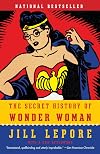
I was never a reader of the comics as a kid, so I probably would have passed this title up if not for a strong recommendation from Jim. And so I'm not sure the title does the story justice, because it is really the story of the women's rights struggle from the beginning of the 20th century onward.
William M. Marsden, Wonder Woman's creator and the inventor of the first lie detector, was an odd mixture of intellect and P.T. Barnum, a man unable to hold a job but very able to build an show more unconventional family life with devoted women who seem both his intellectual equals and his practical superiors. Their collective story is intimately related to such feminists as Margaret Sanger and Emmeline Pankhurst, as well as significant events of the century. Marsen is in many ways an unlikely champion of women's rights, but Lepore uses him as the center post around which to swirl the history of feminism, birth control, comic books, bogus science and primitive psychological research. And although he died comparatively young, the women in his family, bound up with Wonder Woman and feminism, lived on through most of the century and bore witness to the accomplishment of at least some of their dreams.
I'd give it five stars, but must subtract a little for repetition now and then. It's still an excellent social history of the U.S. in the 20th century. The print edition has many photos and Wonder Woman strips and drawings; I listened to the audio read by the author, which held my full attention. show less
William M. Marsden, Wonder Woman's creator and the inventor of the first lie detector, was an odd mixture of intellect and P.T. Barnum, a man unable to hold a job but very able to build an show more unconventional family life with devoted women who seem both his intellectual equals and his practical superiors. Their collective story is intimately related to such feminists as Margaret Sanger and Emmeline Pankhurst, as well as significant events of the century. Marsen is in many ways an unlikely champion of women's rights, but Lepore uses him as the center post around which to swirl the history of feminism, birth control, comic books, bogus science and primitive psychological research. And although he died comparatively young, the women in his family, bound up with Wonder Woman and feminism, lived on through most of the century and bore witness to the accomplishment of at least some of their dreams.
I'd give it five stars, but must subtract a little for repetition now and then. It's still an excellent social history of the U.S. in the 20th century. The print edition has many photos and Wonder Woman strips and drawings; I listened to the audio read by the author, which held my full attention. show less
Lists
United States (1)
Awards


You May Also Like


Associated Authors
Statistics
- Works
- 34
- Also by
- 6
- Members
- 9,077
- Popularity
- #2,649
- Rating
- 3.9
- Reviews
- 292
- ISBNs
- 148
- Languages
- 6
- Favorited
- 14