
Gordon S. Wood (1933–2026)
Author of The Radicalism of the American Revolution
About the Author
History professor and award-winning author Gordon S. Wood was born in Concord, Massachusetts on November 27, 1933. After graduating in 1955 from Tufts University he served in the US Air Force in Japan and earned his master's degree from Harvard University. In 1964, Wood earned his Ph. D. in history show more from Harvard, and he taught there, as well as at the College of William and Mary and the University of Michigan, before joining the Brown University faculty in 1969. Wood has published a number of articles and books, including The Creation of the American Republic, 1776-1787, which won the Bancroft Prize and the John H. Dunning Prize in 1970, and The Radicalism of the American Revolution, winner of the Pulitzer Prize for History and the Ralph Waldo Emerson Prize in 1993. He has won many other awards in the past five decades from organizations such as the American Historical Association, the New York Historical Society, and the Fraunces Tavern Museum. Wood is a fellow of both the American Academy of Arts and Sciences and the American Philosophical Society. In 2014, his book, The American Revolution: A History, was on the New York Times bestseller list. (Bowker Author Biography) show less
Image credit: reading at the National Book Festival, Washington, D.C. By slowking4 - Own work, GFDL 1.2, https://commons.wikimedia.org/w/index.php?curid=72267165
Series
Works by Gordon S. Wood
The American Revolution: Writings from the Pamphlet Debate Vol. 1 1764-1772 (LOA #265) (Library of America: The American Revolution Collection) (2013) — Editor — 112 copies
The American Revolution: Writings from the Pamphlet Debate 1773-1776: (Library of America #266) (2015) — Editor — 103 copies
Associated Works
Beyond Confederation: Origins of the Constitution and American National Identity (1987) — Contributor — 61 copies, 1 review
The Transformation of Early American History: Society, Authority, and Ideology: How the Writings and Influence of Bernard Bailyn Have Changed Our Understanding of the American… (1991) — Contributor — 39 copies, 2 reviews
The Mormon History Association's Tanner Lectures: The First Twenty Years (2006) — Contributor — 9 copies
Recent Themes in Early American History: Historians in Conversation (2008) — Contributor — 8 copies, 1 review
The William and Mary Quarterly, July 1987: Constitution of the United States — Contributor — 2 copies
Dialogue: A Journal of Mormon Thought - Volume 44, Number 3 (Fall 2011) (2011) — Contributor — 1 copy
Journal of the Early Republic: Summer 1996 Vol.16, No.2 — Contributor — 1 copy
Tagged
Common Knowledge
- Canonical name
- Wood, Gordon S.
- Legal name
- Wood, Gordon Stewart
- Birthdate
- 1933-11-27
- Date of death
- 2026-06-07
- Gender
- male
- Education
- Tufts University (BA | 1955)
Harvard University (AM | Ph. D | History | 1964) - Occupations
- professor
historian - Organizations
- Brown University
Harvard University
College of William and Mary
University of Michigan
Cambridge University
One Day University (show all 7)
United States Air Force - Awards and honors
- National Humanities Medal (2010)
Pulitzer Prize for History (1993)
Bancroft Prize (1970)
American Academy of Arts and Sciences (1988)
American Philosophical Society (1994) - Relationships
- Goss, Louise (wife)
Wood, Christopher S. (son)
Wood, Elizabeth (daughter)
Wood, Amy Louise (daughter) - Short biography
- Gordon Stewart Wood (born November 27, 1933 in Concord, Massachusetts) is Alva O. Way University Professor and Professor of History Emeritus at Brown University, and the recipient of the 1993 Pulitzer Prize for History for The Radicalism of the American Revolution (1992). His book The Creation of the American Republic, 1776–1787 (1969) won a 1970 Bancroft Prize. In 2010 he was awarded the National Humanities Medal. Gordon S. Woods in Wikipedia
- Cause of death
- hit by a car
- Nationality
- USA
- Birthplace
- Concord, Massachusetts, USA
- Places of residence
- Worcester, Massachusetts, USA
Waltham, Massachusetts, USA - Associated Place (for map)
- Massachusetts, USA
Members
Reviews
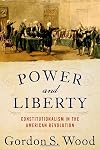
A fascinating look at the early period of the formation of America government. The central theme from which the title derives is the tradeoff between power (enabling those in government) and liberty (the rights of individuals). Wood lays this out in chapters that review the debate over separating from England, how the States paved the way for self-government in the form we have today through their own constitutions, and how the resulting “democracy gone wild” led to a conservative shift show more and the increased Federal power in the Constitution of 1787 that we now revere. Getting his insights into how this played out over time, when the Revolutionary period is all too easily lumped together in one’s mind, was wonderful. He goes on in further chapters to address slavery, the rise of power in the Judicial branch, and the debate between public and private spheres, which set the context for each in startling ways, as well as an epilogue that focuses on the wild (yet productive) state of Rhode Island as a case study. As any form of government has its flaws, and as Wood deftly represents the framework for the government in Great Britain, it’s a work that really made me think, and all the more so because of the relevance of these same debates in the present day.
Jefferson and Madison, while they differed on the proper amount of Federal authority, both saw with great frustration what democracy was in the first decade of America. Wood writes, “Such men [the elected representatives] rarely had any concern for public honor or honesty and always seemed to have a ‘particular interest to serve’ regardless of the needs of the whole state or the nation. They made a travesty of the legislative process and were reluctant to do anything that might appear unpopular with their constituents. They postponed taxes, subverted debts owed to the subjects of Great Britain, and passed, defeated, and repassed bills in the most haphazard manner.” Madison realized that “too many Americans could not see beyond their own pocketbooks or their own neighborhoods.” Sound familiar? This is what led to the Constitutional Congress, and the ensuing debate between all-Federal authority, essentially demolishing the States, and allowing States some authority without creating an “imperium in imperio,” an empire within an empire. Wood’s description of its formation and the compromises along the way is excellent.
Wood probably should have included content on how the Constitution notably did not allow its states to secede from the Union, since this would be the drama that would play out in the 19th century. That said, he summarizes the viewpoints and debates without apparent bias, simply trying to present truth and historical accuracy, which I appreciated. He lauds the achievements of the early American government, noting how many of its aspects were unprecedented in the world, while at the same time, makes it clear that American democracy was not without its drawbacks, and that its leaders struggled with where to place power.
The formation of the electoral college was another fascinating passage. “…how would the people in such a huge nation know who were the best men qualified to be president?” Wood writes. “Finally after much discussion and many votes, the Convention decided to create an alternative Congress composed of notables who would know who was competent to be president; it would have one function: to elect the president every four years. … Many expected the electoral college to work as a nominating body in which no one normally would get a majority of electoral votes; therefore, most elections would take place in the House of Representatives among the top five candidates, with each state’s congressional delegation voting as a unit.” It’s just fascinating to ponder the original intention vs. the usage of this body today.
Wood is not without the occasional clunker, however. Early on he states that because Americans come from a wider set of cultures, “other nations are having greater problems with immigrants than we are,” completely overlooking America’s long history of persecuting successive waves of immigrant groups, to the present day. I’m also not sure quoting Charles Beard’s treatise from 1913 on the Constitution was such a great idea, given his “specific arguments and proofs have been eviscerated and were too crudely presented to be persuasive today.” Overall, though, this is a good read, and certainly insightful in many more areas beyond the points I’ve mentioned here. show less
Jefferson and Madison, while they differed on the proper amount of Federal authority, both saw with great frustration what democracy was in the first decade of America. Wood writes, “Such men [the elected representatives] rarely had any concern for public honor or honesty and always seemed to have a ‘particular interest to serve’ regardless of the needs of the whole state or the nation. They made a travesty of the legislative process and were reluctant to do anything that might appear unpopular with their constituents. They postponed taxes, subverted debts owed to the subjects of Great Britain, and passed, defeated, and repassed bills in the most haphazard manner.” Madison realized that “too many Americans could not see beyond their own pocketbooks or their own neighborhoods.” Sound familiar? This is what led to the Constitutional Congress, and the ensuing debate between all-Federal authority, essentially demolishing the States, and allowing States some authority without creating an “imperium in imperio,” an empire within an empire. Wood’s description of its formation and the compromises along the way is excellent.
Wood probably should have included content on how the Constitution notably did not allow its states to secede from the Union, since this would be the drama that would play out in the 19th century. That said, he summarizes the viewpoints and debates without apparent bias, simply trying to present truth and historical accuracy, which I appreciated. He lauds the achievements of the early American government, noting how many of its aspects were unprecedented in the world, while at the same time, makes it clear that American democracy was not without its drawbacks, and that its leaders struggled with where to place power.
The formation of the electoral college was another fascinating passage. “…how would the people in such a huge nation know who were the best men qualified to be president?” Wood writes. “Finally after much discussion and many votes, the Convention decided to create an alternative Congress composed of notables who would know who was competent to be president; it would have one function: to elect the president every four years. … Many expected the electoral college to work as a nominating body in which no one normally would get a majority of electoral votes; therefore, most elections would take place in the House of Representatives among the top five candidates, with each state’s congressional delegation voting as a unit.” It’s just fascinating to ponder the original intention vs. the usage of this body today.
Wood is not without the occasional clunker, however. Early on he states that because Americans come from a wider set of cultures, “other nations are having greater problems with immigrants than we are,” completely overlooking America’s long history of persecuting successive waves of immigrant groups, to the present day. I’m also not sure quoting Charles Beard’s treatise from 1913 on the Constitution was such a great idea, given his “specific arguments and proofs have been eviscerated and were too crudely presented to be persuasive today.” Overall, though, this is a good read, and certainly insightful in many more areas beyond the points I’ve mentioned here. show less
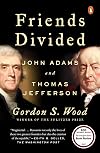
Summary: An account of the sometimes troubled and unlikely friendship between John Adams and Thomas Jefferson.
They could not be more different in many respects. One irascible, the other sophisticated. One a modestly successful New England lawyer and farmer. The other a southern plantation owner. One inclined toward aristocracy. The other toward people. One was a prosaic writer, the other had a gift for elevated prose.
They also shared some things in common. Both were inveterate readers, among show more the most widely read of their times. Both knew tragedy in their lives. They came together around declaring their country’s independence from England. They worked together to foster their country’s relationship with France. Both were part of the first administration of George Washington, and both in turn were presidents.
John Adams and Thomas Jefferson.
Gordon S. Wood has written here what may be the definitive account of this friendship that spanned over 50 years, ending July 4, 1826, when both men died on the Jubilee anniversary of the country’s Declaration of Independence, drafted largely by Jefferson and signed by both of them. He traces the parallel courses of their lives, the differences and misunderstandings that frayed their early friendship, and the wonderful reconciliation of their latter years giving us one an exceptional correspondence (perhaps rivaled only by that between John and Abigail Adams).
Wood begins with the very different circumstances in which they grew up, their early careers and marriages and then recounts the crisis that brought them together as signers, and then emissaries for their fledgling country in France. Adams it seemed, never understood French ways, nor had he the skills to negotiate them well. Jefferson did, so much so that he fell in love with the country. Adams always remembered his American commitments. All this becomes evident in their very different assessments of the French Revolution. We see the first signs of strain here–the monarchical tendencies of Adams, the republican ones of Jefferson, who could not see the dangers of revolution.
These strains became worse in Washington’s administration as fault lines between what became known as the Federalists and the Democrat Republicans became evident and worsened when Adams became president and Jefferson vice-president. Adams inclined toward the Federalists, although was never fully one of them, costing him the next election. Jefferson believed in the people. About the only thing the two agreed on is that they both distrusted Hamilton.
Wood covers the campaign of 1800 in which Adams lost to Jefferson. The charges and countercharges appeared to cost them their friendship. It was perhaps the first truly contentious campaign, revealing the emergence of parties. If anything the misunderstandings between Abigail and Jefferson, especially over the Alien and Sedition Act, was even worse. Jefferson and Adams wouldn’t speak for another decade.
A mutual friend, physician Benjamin Rush, played the key role of clearing the way for the famous correspondence of these two men, each explaining himself to the other. Wood recounts this developing correspondence and the most famous passages between the two. He also narrates the shift in fortunes of the two from Jefferson acclaimed while Adams forgotten to Jefferson’s financial difficulties in his last years and Adam’s increasing esteem in the eyes of his countrymen, particularly after the election of John Quincy to the presidency in 1824. Jefferson became more pessimistic about the unfolding commercial trends in the country while Adams became more sanguine.
Wood deeply regards both of his subjects, but in the end is drawn to the expansive mind of Jefferson and his vision of forging one nation out of all the varieties of people that make up our country. Yet I found myself wondering if in fact his book articulates the need we have as a nation for both kinds of leaders, both those with lofty visions and those of rock-ribbed integrity with two feet firmly planted in American soil, both those who believe in the people, and those who value institutions, and recognize the existing inequalities of people who enjoy equal rights. Without Adams, Jefferson was inclined to build “castles in the air.” Without Jefferson, Adams may have tried to fashion himself a monarch. Perhaps what Wood has given us in the story of these two men is a parable for our country, especially in this divided time. show less
They could not be more different in many respects. One irascible, the other sophisticated. One a modestly successful New England lawyer and farmer. The other a southern plantation owner. One inclined toward aristocracy. The other toward people. One was a prosaic writer, the other had a gift for elevated prose.
They also shared some things in common. Both were inveterate readers, among show more the most widely read of their times. Both knew tragedy in their lives. They came together around declaring their country’s independence from England. They worked together to foster their country’s relationship with France. Both were part of the first administration of George Washington, and both in turn were presidents.
John Adams and Thomas Jefferson.
Gordon S. Wood has written here what may be the definitive account of this friendship that spanned over 50 years, ending July 4, 1826, when both men died on the Jubilee anniversary of the country’s Declaration of Independence, drafted largely by Jefferson and signed by both of them. He traces the parallel courses of their lives, the differences and misunderstandings that frayed their early friendship, and the wonderful reconciliation of their latter years giving us one an exceptional correspondence (perhaps rivaled only by that between John and Abigail Adams).
Wood begins with the very different circumstances in which they grew up, their early careers and marriages and then recounts the crisis that brought them together as signers, and then emissaries for their fledgling country in France. Adams it seemed, never understood French ways, nor had he the skills to negotiate them well. Jefferson did, so much so that he fell in love with the country. Adams always remembered his American commitments. All this becomes evident in their very different assessments of the French Revolution. We see the first signs of strain here–the monarchical tendencies of Adams, the republican ones of Jefferson, who could not see the dangers of revolution.
These strains became worse in Washington’s administration as fault lines between what became known as the Federalists and the Democrat Republicans became evident and worsened when Adams became president and Jefferson vice-president. Adams inclined toward the Federalists, although was never fully one of them, costing him the next election. Jefferson believed in the people. About the only thing the two agreed on is that they both distrusted Hamilton.
Wood covers the campaign of 1800 in which Adams lost to Jefferson. The charges and countercharges appeared to cost them their friendship. It was perhaps the first truly contentious campaign, revealing the emergence of parties. If anything the misunderstandings between Abigail and Jefferson, especially over the Alien and Sedition Act, was even worse. Jefferson and Adams wouldn’t speak for another decade.
A mutual friend, physician Benjamin Rush, played the key role of clearing the way for the famous correspondence of these two men, each explaining himself to the other. Wood recounts this developing correspondence and the most famous passages between the two. He also narrates the shift in fortunes of the two from Jefferson acclaimed while Adams forgotten to Jefferson’s financial difficulties in his last years and Adam’s increasing esteem in the eyes of his countrymen, particularly after the election of John Quincy to the presidency in 1824. Jefferson became more pessimistic about the unfolding commercial trends in the country while Adams became more sanguine.
Wood deeply regards both of his subjects, but in the end is drawn to the expansive mind of Jefferson and his vision of forging one nation out of all the varieties of people that make up our country. Yet I found myself wondering if in fact his book articulates the need we have as a nation for both kinds of leaders, both those with lofty visions and those of rock-ribbed integrity with two feet firmly planted in American soil, both those who believe in the people, and those who value institutions, and recognize the existing inequalities of people who enjoy equal rights. Without Adams, Jefferson was inclined to build “castles in the air.” Without Jefferson, Adams may have tried to fashion himself a monarch. Perhaps what Wood has given us in the story of these two men is a parable for our country, especially in this divided time. show less
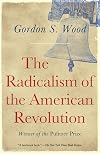
THAT ENDING. WOW. Wood takes us through an entire description of how radical politicians tore down monarchy... and then adds a sarcastic, bitter, twist ending revealing that every founding father eventually came to hate the America they had created.

Gordon Wood, in a well-researched and well-written book, shows why the American Revolution was so revolutionary. In grad school and academe, there is a tendency to say the French Revolution was a REAL revolution, or so the Russian, etc., but that the American Revolution really wasn't. They say it was a civil war and rebellion, but NOT a revolution. They say it was conservative, reactionary, and all orchestrated by (à la Charles Beard) by the wealthy to help the wealthy. Some will even call show more it a counter-revolution or "conservative revolution." But historian Gordon Wood wants to show you all the ways it WAS revolutionary. It undermined monarchical, patriarchal society. It put the ideas of equality and democracy out in the open. And there was no going back. To prove his thesis, Gordon talks about the lead up to the Revolution, the Revolution, and through the 1700s to the start of the Jacksonian Era to show you all the ways the American Revolution influenced the opening and democratization of society. There were some glaring omissions, like slavery—of course. But, the idea that all white men were EQUAL was radical. And it inevitably led to "aren't black men equal too?" and "aren't women equal too?" and so forth. Lots of examples, lots of primary sources discussed. No pics. Lots of endnotes, some discursive; no separate bibliography. There are some things that Wood might get wrong, and I don't agree with all of his interpretations or all the implications for American history. I think the Founders were not so hateful about the changes to society as he may lead on. And, he seems to praise democracy over republics, but, the Founders chose republic for a reason. And we still operate as such for a reason. show less
Lists
Awards


You May Also Like


Associated Authors
Statistics
- Works
- 37
- Also by
- 18
- Members
- 10,149
- Popularity
- #2,339
- Rating
- 4.0
- Reviews
- 128
- ISBNs
- 122
- Languages
- 5
- Favorited
- 21
