
Ron Chernow
Author of Alexander Hamilton
About the Author
Educated at Yale and Cambridge University in England, Ron Chernow is a biographer who specializes in hard-hitting exposes on historical business figures. Among Chernow's early accomplishments was his unmasking of corruption in Chinatown for New York magazine in 1973. In the book The House of show more Morgan, winner of the National Book Award in 1990, Chernow outlines the extraordinary path of J.P. Morgan's empire and its influence on the American banking industry. Chernow is also the author of Titan: The Life of John D. Rockefeller, which chronicles the life and times of the richest man in the United States in the early 1900s. His other work includes The Warburgs, The Death of a Banker, Alexander Hamilton, Washington: A Life, and Grant. Chernow is regular guest on the National Public Radio programs Fresh Air with Terry Gross and All Things Considered. (Bowker Author Biography) show less
Image credit: Sigrid Estrada
Works by Ron Chernow
The House of Morgan: An American Banking Dynasty and the Rise of Modern Finance (1990) 1,675 copies, 19 reviews
The Warburgs: The Twentieth-Century Odyssey of a Remarkable Jewish Family (1993) 647 copies, 7 reviews
The Death of the Banker: The Decline and Fall of the Great Financial Dynasties and the Triumph of the Small Investor (1997) 199 copies, 2 reviews
Grant, Part 4 1 copy
Grant, Part 3 1 copy
Grant, Part 2 1 copy
Grant, Part 1 1 copy
Selected Writings 1 copy
Grant, Part 5 1 copy
Associated Works
Hamilton: An American Musical: Original 2015 Broadway Cast Recording (2015) — Original story — 139 copies, 4 reviews
Know the Past, Find the Future: The New York Public Library at 100 (2011) — Contributor — 133 copies, 4 reviews
Reader's Digest Today's Best Nonfiction 53 1999: Titan / The Day Diana Died / Seductive Poison / Rocket Boys (1999) — Author — 4 copies
Tagged
Common Knowledge
- Legal name
- Chernow, Ronald
- Birthdate
- 1949-03-03
- Gender
- male
- Education
- Pembroke College, Cambridge (M.Phil ∙ Literature ∙ 1972)
Yale College (B.A.|1970) - Occupations
- journalist
- Organizations
- PEN American Center
The Century Foundation
Society of American Historians - Awards and honors
- National Humanities Medal (2015)
American History Book Prize (2011)
George S. Eccles Prize for Excellence in Economic Writing (1993)
George Washington Book Prize (2004)
BIO Award (2013)
National Institute of Social Science Gold Medal Honoree (2017) - Agent
- Melanie Jackson
Caitlin McKenna - Short biography
- Ronald "Ron" Chernow (born March 3, 1949) is an American writer, journalist, historian, and biographer. He has written bestselling and award-winning biographies of historical figures from the world of business, finance, and American politics.
- Nationality
- USA
- Birthplace
- Brooklyn, New York, USA
- Places of residence
- Brooklyn, New York, New York, USA
- Associated Place (for map)
- Brooklyn, New York, New York, USA
Members
Reviews

Extremely detailed cradle-to-grave biography of George Washington that provides an excellent idea of his character and how he was perceived during his lifetime. Chernow is a beautiful writer with a great grasp of language. He captures scenes from Washington’s life in vivid detail. It is told in six parts:
- “The Frontiersman” tells of his ancestry, early life, participation in the British military in the French and Indian War, and introduction to his future wife, Martha Dandridge show more Custis.
- “The Planter” relates his return to Mount Vernon and introduces the issue of slave ownership.
- “The General” describes many people who will play key roles in the American Revolution (including especially Alexander Hamilton, Henry Knox, Nathanael Greene, and the Marquis de Lafayette) and covers Washington’s style of command, battles, horrible conditions faced by his troops, and eventual victory.
- “The Statesman” depicts Washington’s life after the Revolutionary War, the droves of visitors he hosted at his home, his aversion to mass popularity, leadership at the Constitutional Convention, the struggle for ratification, and election as the first President of the United States.
- “The President” recounts the eight years of Washington’s presidency – policies, appointments, actions, disagreements with Thomas Jefferson and James Madison, Whiskey Rebellion, Jay Treaty with Great Britain,
- “The Legend” provides an account of Washington’s final years, his death, how his slaves were eventually freed, and how his image was burnished after his death.
-
Chernow excels at providing the context for all of these sections. We learn quite a bit about Washington’s family relationships, especially his mother, wife, stepchildren, step-grandchildren, and the many relatives he helped support and brought into his home.
Luckily, Washington left massive amounts of documentation and Chernow has fashioned this information into a relatable narrative, combining history, biography, and storytelling. It contains an amazing amount of information beautifully conveyed in one volume with only occasional digressions. It is a massive tome, coming in around 900 pages, so it requires a significant time commitment. It is, in my opinion, well worth it. show less
- “The Frontiersman” tells of his ancestry, early life, participation in the British military in the French and Indian War, and introduction to his future wife, Martha Dandridge show more Custis.
- “The Planter” relates his return to Mount Vernon and introduces the issue of slave ownership.
- “The General” describes many people who will play key roles in the American Revolution (including especially Alexander Hamilton, Henry Knox, Nathanael Greene, and the Marquis de Lafayette) and covers Washington’s style of command, battles, horrible conditions faced by his troops, and eventual victory.
- “The Statesman” depicts Washington’s life after the Revolutionary War, the droves of visitors he hosted at his home, his aversion to mass popularity, leadership at the Constitutional Convention, the struggle for ratification, and election as the first President of the United States.
- “The President” recounts the eight years of Washington’s presidency – policies, appointments, actions, disagreements with Thomas Jefferson and James Madison, Whiskey Rebellion, Jay Treaty with Great Britain,
- “The Legend” provides an account of Washington’s final years, his death, how his slaves were eventually freed, and how his image was burnished after his death.
-
Chernow excels at providing the context for all of these sections. We learn quite a bit about Washington’s family relationships, especially his mother, wife, stepchildren, step-grandchildren, and the many relatives he helped support and brought into his home.
Luckily, Washington left massive amounts of documentation and Chernow has fashioned this information into a relatable narrative, combining history, biography, and storytelling. It contains an amazing amount of information beautifully conveyed in one volume with only occasional digressions. It is a massive tome, coming in around 900 pages, so it requires a significant time commitment. It is, in my opinion, well worth it. show less
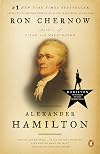
Hamilton was better than Jefferson: there, I said it. This biography can shade into sycophancy at times, but you're almost forced to come away from it impressed by what a badass Hamilton was, and how fickle the ledgers of history can be to even someone as accomplished as he was, both due to his own failings and to the machinations of his rivals. TJ ranks highly among those, of course, and it's instructive to compare the life stories of the philosophizing plantation aristocrat on one hand, show more and the self-made immigrant entrepreneur on the other. America owes much to both men, but even though Jefferson's name is more prominent, Hamilton might have had the more lasting influence as one of the finest political economists, statesmen, and administrators of his era. If he hadn't been stupid enough to be into dueling, the country would have benefited greatly. show less
Grant by Ron Chernow
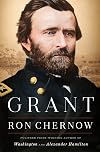
One of those books that is so exhaustive that it walks on the edge of (and occasionally topples over into) exhausting, it might have benefited from being split into two volumes much the same way Grant's auto-biography was split in two (by Mark Twain, apparently!)
The first half, or so, concluding with the end of the civil war, is a rousing war story, full of details and triumphant flourishes and finishes.
The second half, dealing with Grant's presidency is considerably less happy. It has a show more few more apologies than may be strictly necessary, but the real grimness is the parallels with today proving that the hideousness of racial relations and its interaction with politics and power hasn't changed nearly so much as one might have hoped.
On the other hand, reading about the sheer number of men and women murdered in the south in the 1870s reminds that things are better and the arc does bend toward progress. So slowly. So so slowly, though. show less
The first half, or so, concluding with the end of the civil war, is a rousing war story, full of details and triumphant flourishes and finishes.
The second half, dealing with Grant's presidency is considerably less happy. It has a show more few more apologies than may be strictly necessary, but the real grimness is the parallels with today proving that the hideousness of racial relations and its interaction with politics and power hasn't changed nearly so much as one might have hoped.
On the other hand, reading about the sheer number of men and women murdered in the south in the 1870s reminds that things are better and the arc does bend toward progress. So slowly. So so slowly, though. show less
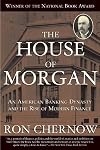
I find financial histories riveting. At first glance, I found the mammoth size of this book a bit of a deterrent, but this was not at all the case once I got into it.
"The House of Morgan" is much more than the story of a banking house—it's the story of finance, the United States, and the world, over the past 150 years.
I can't hope to summarize a book of such monumental scope over the course of this review, so instead I'll offer some snapshots.
Did you know that the bankers of yore worked show more four-hour days and took three months of vacation a year? Instead of the mad rush of 100-hour work weeks and exhaustion-induced suicides commonplace over the past thirty or forty years in finance, banking used to be largely a leisurely and respectable field.
John Pierpont Morgan was actually third in a line of financiers laying the foundation for the J. P. Morgan. The first was British-American banker George Peabody. The second was Pierpont's father, Junius Spencer Morgan. Pierpont was essentially third-generation, so he had a significant head start and a lot of inherited privilege and wealth that made his venture possible! J. P. "Jack" Morgan Jr. was Pierpont's son, and oversaw the pinnacle of Morgan eminence.
J. P. Morgan & Co. was founded in 1971 and died in 1935 with the implementation of Glass-Steagall, which split commercial and "investment" banking. After that, remnants of the Morgan empire remained, but you can't really call them J. P Morgan & Co.
One of the most fascinating stories in the book is the parallel and eventually divergent careers of Tom Lamont (financier to Mussolini and enabler of WWII) and Hjalmar Schacht (German financier, and part of the resistance against Hitler). Basically it came down to the question of is there a point when keeping a friendship easygoing needs to be sidelined to uphold a certain set of ethics or values. Lamont said no when Hjalmar said yes.
Another fascinating fact: pretty much every government defaulted on their debt at some point during the timeline covered in the book; not just "developing" countries like Brazil, but also countries like Japan and Germany. Investors today seem to think of bonds as safe, but in the historical perspective, they don't look that safe...
The book becomes a little jumbled after the split of the bank, as there’s no longer one coherent storyline. Also, there isn’t really any analysis given at the end of the book.
Overall, I found the book fascinating, and would recommend it to anyone interested in the financial history of the United States. show less
"The House of Morgan" is much more than the story of a banking house—it's the story of finance, the United States, and the world, over the past 150 years.
I can't hope to summarize a book of such monumental scope over the course of this review, so instead I'll offer some snapshots.
Did you know that the bankers of yore worked show more four-hour days and took three months of vacation a year? Instead of the mad rush of 100-hour work weeks and exhaustion-induced suicides commonplace over the past thirty or forty years in finance, banking used to be largely a leisurely and respectable field.
John Pierpont Morgan was actually third in a line of financiers laying the foundation for the J. P. Morgan. The first was British-American banker George Peabody. The second was Pierpont's father, Junius Spencer Morgan. Pierpont was essentially third-generation, so he had a significant head start and a lot of inherited privilege and wealth that made his venture possible! J. P. "Jack" Morgan Jr. was Pierpont's son, and oversaw the pinnacle of Morgan eminence.
J. P. Morgan & Co. was founded in 1971 and died in 1935 with the implementation of Glass-Steagall, which split commercial and "investment" banking. After that, remnants of the Morgan empire remained, but you can't really call them J. P Morgan & Co.
One of the most fascinating stories in the book is the parallel and eventually divergent careers of Tom Lamont (financier to Mussolini and enabler of WWII) and Hjalmar Schacht (German financier, and part of the resistance against Hitler). Basically it came down to the question of is there a point when keeping a friendship easygoing needs to be sidelined to uphold a certain set of ethics or values. Lamont said no when Hjalmar said yes.
Another fascinating fact: pretty much every government defaulted on their debt at some point during the timeline covered in the book; not just "developing" countries like Brazil, but also countries like Japan and Germany. Investors today seem to think of bonds as safe, but in the historical perspective, they don't look that safe...
The book becomes a little jumbled after the split of the bank, as there’s no longer one coherent storyline. Also, there isn’t really any analysis given at the end of the book.
Overall, I found the book fascinating, and would recommend it to anyone interested in the financial history of the United States. show less
Lists
Check (1)
Which house? (1)
Economix (1)
Best Biographies (1)
Awards


You May Also Like


Associated Authors
Statistics
- Works
- 20
- Also by
- 5
- Members
- 22,682
- Popularity
- #936
- Rating
- 4.3
- Reviews
- 421
- ISBNs
- 136
- Languages
- 7
- Favorited
- 30