
Compilation of fifteen short stories set in early 1900s Dublin. The stories are vignettes of life. As with most short story collections, I liked some more than others, but they are all high quality. My favorites are A Painful Case, A Mother, and The Dead. The tone is quiet and melancholy. The writing is superb. I listened to the audio book, read masterfully by Jim Norton. The audio includes snippets of music recordings of the era, which added to the atmosphere.

Ursula Todd is born in 1910 to an English family. She experiences multiple versions of her life. I had avoided this book initially, thinking it may be too repetitive, similar to Groundhog Day, but I was pleasantly surprised. The use of a single character allows the author to shed light on many aspects of WWI and WWII without having to introduce numerous characters.
I will not go into too many details since this is a book best experienced. It will likely inspire “love it or hate it” reactions. It portrays the randomness of life. As a warning, there are some gruesome descriptions of war-related violence and domestic abuse. I listened to the audio book, beautifully read by Fenella Woolgar. She reads distinctly and does an excellent job of voice acting.
I will not go into too many details since this is a book best experienced. It will likely inspire “love it or hate it” reactions. It portrays the randomness of life. As a warning, there are some gruesome descriptions of war-related violence and domestic abuse. I listened to the audio book, beautifully read by Fenella Woolgar. She reads distinctly and does an excellent job of voice acting.

Historical fiction set in French Indochina, present day Vietnam, in the 1930s. Protagonist Jessie Lesage, an American with a troubled childhood, has arrived in Hanoi from Paris with her French husband, Victor Michelin Lesage, and young daughter, Lucie. Victor is the new manager of the Michelin rubber plantations near Saigon, which have recently been a source of scandal. Jessie meets French expat Marcelle de Fabray, a glamorous woman having an affair with an Indochinese silk magnate. The story is told in alternating points of view by Jessie and Marcelle.
The historical fiction portion of this book is very well done. It conveys a sense of place and time. The narrative portrays the lavish life of French expatriates, contrasted against the poverty and grim working conditions of the local residents. It covers the rise of communist, anti-communist, and anti-colonialist sentiments.
The less effective part, for me, is the attempt to turn the story into a thriller. Is someone gaslighting Jessie? Is she losing her mind? Jessie is harboring the secrets of her past. Dramatic tension is attained by gradually revealing these secrets. While it contains elements of a psychological thriller, it is not fast-paced or tense until near the end.
The dialogue is not particularly well-written. It is not the way people speak. Lots of “information dumping” takes place through characters talking to each other. I am sure the author felt a need to provide readers with a history lesson, but there show more are other ways. I found the epilogue unnecessary, but I am, in general, not a fan of epilogues.
So, the positives and negatives offset. I liked the historical parts and disliked the thriller sections. I think readers who enjoy twists and turns will like this book more than I did. show less
The historical fiction portion of this book is very well done. It conveys a sense of place and time. The narrative portrays the lavish life of French expatriates, contrasted against the poverty and grim working conditions of the local residents. It covers the rise of communist, anti-communist, and anti-colonialist sentiments.
The less effective part, for me, is the attempt to turn the story into a thriller. Is someone gaslighting Jessie? Is she losing her mind? Jessie is harboring the secrets of her past. Dramatic tension is attained by gradually revealing these secrets. While it contains elements of a psychological thriller, it is not fast-paced or tense until near the end.
The dialogue is not particularly well-written. It is not the way people speak. Lots of “information dumping” takes place through characters talking to each other. I am sure the author felt a need to provide readers with a history lesson, but there show more are other ways. I found the epilogue unnecessary, but I am, in general, not a fan of epilogues.
So, the positives and negatives offset. I liked the historical parts and disliked the thriller sections. I think readers who enjoy twists and turns will like this book more than I did. show less

The blurb on this book is a little misleading. I expected a book about a Nigerian couple going against the tradition of multiple marriages. Unfortunately, this is only a small part of the story. The rest of it involves lots of suffering. It is primarily the story Yejide and her husband, Akin, struggling with infertility and loss. It is told in alternating perspectives and multiple timelines from the 1980s to 2000s.
I enjoyed the author’s writing style, but there are a few issues with the construction. The characters are somewhat thin, and act in ways that are puzzling. The plot contains numerous holes, which become glaring by the end. One plot twist is completely unbelievable, and in fact, is negated several chapters later. I think it would have worked better for me if there were moments of lightness to offset the oppressive misery.
I enjoyed the author’s writing style, but there are a few issues with the construction. The characters are somewhat thin, and act in ways that are puzzling. The plot contains numerous holes, which become glaring by the end. One plot twist is completely unbelievable, and in fact, is negated several chapters later. I think it would have worked better for me if there were moments of lightness to offset the oppressive misery.
Protagonist Parker Westfall is a thirty-something minor league baseball player signed for one year by the Independent League’s Colorado Miners. Courtney Morgan is a rookie knuckleball pitcher, the only woman on the team. The narrative follows the team over the course of one season.
Upsides:
- Kaufmann obviously knows the game well – the in-game scenes are detailed and realistic.
- It portrays a platonic friendship between a man and woman.
- Teamwork is highlighted.
- The quotes that open each chapter are well-selected. Some address serious topics. Others are humorous.
Downsides:
- Parker, our hero, is, to quote Mary Poppins, “practically perfect in every way.” He works two jobs, supports his mom and sister, knows more than everyone else, takes the rookies under his wing, and rescues a drunk woman. His only flaw is his fielding.
- The manager is a cardboard cutout villain.
- The plot takes a hard turn at the three-quarters mark. Something horrible happens out of the blue, which derails the story and adds nothing.
- Lots (and I mean a boatload) of crude language and sexual harassment. I get that a female teammate may have to deal with some of this, but the author goes over the top, in my opinion.
I am a baseball fan. I tend to enjoy books that contain elements of the game. This one was a disappointment.
Upsides:
- Kaufmann obviously knows the game well – the in-game scenes are detailed and realistic.
- It portrays a platonic friendship between a man and woman.
- Teamwork is highlighted.
- The quotes that open each chapter are well-selected. Some address serious topics. Others are humorous.
Downsides:
- Parker, our hero, is, to quote Mary Poppins, “practically perfect in every way.” He works two jobs, supports his mom and sister, knows more than everyone else, takes the rookies under his wing, and rescues a drunk woman. His only flaw is his fielding.
- The manager is a cardboard cutout villain.
- The plot takes a hard turn at the three-quarters mark. Something horrible happens out of the blue, which derails the story and adds nothing.
- Lots (and I mean a boatload) of crude language and sexual harassment. I get that a female teammate may have to deal with some of this, but the author goes over the top, in my opinion.
I am a baseball fan. I tend to enjoy books that contain elements of the game. This one was a disappointment.
Historical fiction set in Yorkshire, England, in the early 1900s at Sharston, a mental asylum. Ella Fay is sent to the asylum for an outburst at her workplace. John Mulligan is suffering from melancholy after the death of his wife and child. Charles Fuller is a doctor attempting to treat the patients, but often inflicting more harm than healing due to the misguided notions of the time period. Charles establishes regular music and dancing in the ballroom, where Ella and John meet. The story follows their blossoming relationship and the doctor’s ambitions to publish a paper that will advance his career. We wonder if Ella and John ever needed to be confined in the first place, while watching the doctor’s mind and actions deteriorate.
The characters are realistic, and the plot is multifaceted. It is based upon a real institution of the time period. Though the plot and characters are fictional, the issues it explores were very real. It examines the prevailing concepts of eugenics and forced sterilization. It is sad to think that so many people who had fallen on hard times, or were poor, or had simply made a mistake were locked up with others who truly needed mental treatment. It will make the reader glad that mental issues are no longer handled the way they were in the early 1900s.
This novel is well-crafted and well-researched historical fiction. I found it a powerful story about the role of hope and personal connection in conditions of powerlessness.
The characters are realistic, and the plot is multifaceted. It is based upon a real institution of the time period. Though the plot and characters are fictional, the issues it explores were very real. It examines the prevailing concepts of eugenics and forced sterilization. It is sad to think that so many people who had fallen on hard times, or were poor, or had simply made a mistake were locked up with others who truly needed mental treatment. It will make the reader glad that mental issues are no longer handled the way they were in the early 1900s.
This novel is well-crafted and well-researched historical fiction. I found it a powerful story about the role of hope and personal connection in conditions of powerlessness.
This book consists of three novellas: 1) Revenge, 2) The Man Who Gave Up His Name, and 3) Legends of the Fall. In Revenge, a man has an affair with the wife of a drug lord and consequences are paid by all. In The Man Who Gave Up His Name, a business tycoon feels a growing dissatisfaction and decides to change his life. In Legends of the Fall, three sons of a Montana rancher travel to Canada to join the armed forces in the Great War. Multiple tragedies befall the family.
Each novella contains violent dramatic action. The tone is dark. Revenge is a shared theme. Harrison somehow manages to keep these three tragic stories from becoming too depressing. His writing has a macho edge. The endings of the first two novellas are not as effective as the third, which was my personal favorite.
Each novella contains violent dramatic action. The tone is dark. Revenge is a shared theme. Harrison somehow manages to keep these three tragic stories from becoming too depressing. His writing has a macho edge. The endings of the first two novellas are not as effective as the third, which was my personal favorite.
The Secret Knowledge of Water: There Are Two Easy Ways to Die in the Desert: Thirst and Drowning by Craig Childs
In this book, Craig Childs takes the reader on a journey to the deserts of the Southwestern US and northern Mexico in search of water. When traveling in the desert on foot, he takes with him only enough water to get him to the next source. Childs’s writing is a combination of travel, adventure, nature, and science.
In a similar vein as Barry Lopez or Edward Abbey, Childs combines his personal musings with descriptions of his adventures in the wilderness. He educates while he entertains, providing information about fossils, animal life, and conservation. Anyone who has seen a flash flood in a desert area will appreciate his harrowing experiences with too much water during several of his treks.
It appears to be Childs’ goal to highlight the interdependence of humans and nature, and to encourage “a respect for life and its uniqueness that goes almost unspoken, a reverence for the incomprehensible diversity of organisms that has woven itself into patterns across the earth.” His writing is more poetic than many writers of non-fiction, though his topics are sometimes not as tightly focused. I can also recommend his engrossing book [b:Atlas of a Lost World: Travels in Ice Age America|36983480|Atlas of a Lost World Travels in Ice Age America|Craig Childs|https://i.gr-assets.com/images/S/compressed.photo.goodreads.com/books/1512606875l/36983480._SX50_.jpg|57597792].
In a similar vein as Barry Lopez or Edward Abbey, Childs combines his personal musings with descriptions of his adventures in the wilderness. He educates while he entertains, providing information about fossils, animal life, and conservation. Anyone who has seen a flash flood in a desert area will appreciate his harrowing experiences with too much water during several of his treks.
It appears to be Childs’ goal to highlight the interdependence of humans and nature, and to encourage “a respect for life and its uniqueness that goes almost unspoken, a reverence for the incomprehensible diversity of organisms that has woven itself into patterns across the earth.” His writing is more poetic than many writers of non-fiction, though his topics are sometimes not as tightly focused. I can also recommend his engrossing book [b:Atlas of a Lost World: Travels in Ice Age America|36983480|Atlas of a Lost World Travels in Ice Age America|Craig Childs|https://i.gr-assets.com/images/S/compressed.photo.goodreads.com/books/1512606875l/36983480._SX50_.jpg|57597792].
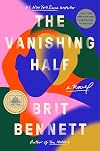
At age sixteen, identical twins Desire and Stella run away from their small Louisiana town and make their way to New Orleans. Ten years later, Desire winds up back home with her young daughter, after fleeing an abusive marriage. Stella marries a businessman, has a child, and moves to California. She disappears from the lives of her family members. Her husband is unaware of her heritage. The plot follows Desire’s search for her missing twin, which is eventually picked up by her daughter.
The non-linear narrative is told from a number of perspectives. It covers a period of time from the 1950s to 1990s. The author examines identity, race, and the impact of decisions. The only drawback for me is that the plot relies on a number of unlikely coincidences. I listened to the audio book, beautifully read by Shayna Small. I can also recommend a book that explores a similar theme and was published in 1929: [b:Passing|349929|Passing|Nella Larsen|https://i.gr-assets.com/images/S/compressed.photo.goodreads.com/books/1388214730l/349929._SY75_.jpg|2369306] by [a:Nella Larsen|7894|Nella Larsen|https://images.gr-assets.com/authors/1275230863p2/7894.jpg].
The non-linear narrative is told from a number of perspectives. It covers a period of time from the 1950s to 1990s. The author examines identity, race, and the impact of decisions. The only drawback for me is that the plot relies on a number of unlikely coincidences. I listened to the audio book, beautifully read by Shayna Small. I can also recommend a book that explores a similar theme and was published in 1929: [b:Passing|349929|Passing|Nella Larsen|https://i.gr-assets.com/images/S/compressed.photo.goodreads.com/books/1388214730l/349929._SY75_.jpg|2369306] by [a:Nella Larsen|7894|Nella Larsen|https://images.gr-assets.com/authors/1275230863p2/7894.jpg].
“If I could just arrange for her happiness first, he thought, and in the confusing night he forgot for the while what experience had taught him—that no human being can really understand another, and no one can arrange another’s happiness.”
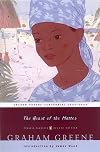
Published in 1948, this book is a psychological character study of Henry Scobie, a British police official living with his wife in Sierra Leone in 1942. He has recently been passed over for promotion. His wife is unhappy. He borrows money from a corrupt individual to send her to South Africa, setting off a spiral of poor choices. He meets a young widow who reminds him of his deceased daughter. “He was touched by uneasiness, as though he had accidentally set in motion a powerful machine he couldn’t control.”
Greene excels at describing flawed individuals and their struggles. He puts the reader into Scobie’s mind. Scobie, a Catholic, is consumed by guilt for his choices, though he cannot seem to extract himself from his dilemma. He uses the excuse that he is acting out of love, but the reader will discern that love is not the source. This book portrays the futility of trying to predict what will happen as a result of our actions.
Published in 1948, this book is a psychological character study of Henry Scobie, a British police official living with his wife in Sierra Leone in 1942. He has recently been passed over for promotion. His wife is unhappy. He borrows money from a corrupt individual to send her to South Africa, setting off a spiral of poor choices. He meets a young widow who reminds him of his deceased daughter. “He was touched by uneasiness, as though he had accidentally set in motion a powerful machine he couldn’t control.”
Greene excels at describing flawed individuals and their struggles. He puts the reader into Scobie’s mind. Scobie, a Catholic, is consumed by guilt for his choices, though he cannot seem to extract himself from his dilemma. He uses the excuse that he is acting out of love, but the reader will discern that love is not the source. This book portrays the futility of trying to predict what will happen as a result of our actions.
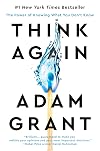
Adam Grant examines how we know what we know and asks us to rethink our beliefs, assumptions, and 0pinions. Rigid adherence to beliefs, and “knowing,” without questioning, usually results in poor outcomes. He asks us to regularly update our beliefs based on new evidence.
Many people are more concerned about being right or defending beliefs or seeking approval, and these often take precedence over the truth. He asks us to take the mental role of a scientist, searching for what is true by hypothesizing, experimenting, and analyzing. The result, he argues, is a path to integrity, improved thinking skills, knowledge, and lifelong learning.
The book is structured in three parts: the individual level, one-on-one, and group level. Each part makes the argument for rethinking. Grant is an excellent writer, and it is certainly a timely topic. The book is entertaining and presents a strong case. The only drawback, for me, is that he covers lots of ground at a high level, and it leaves lots of room to dig deeper. Even so, I can only applaud a book that encourages curiosity, open-mindedness, listening, flexibility, and empathy.
Many people are more concerned about being right or defending beliefs or seeking approval, and these often take precedence over the truth. He asks us to take the mental role of a scientist, searching for what is true by hypothesizing, experimenting, and analyzing. The result, he argues, is a path to integrity, improved thinking skills, knowledge, and lifelong learning.
The book is structured in three parts: the individual level, one-on-one, and group level. Each part makes the argument for rethinking. Grant is an excellent writer, and it is certainly a timely topic. The book is entertaining and presents a strong case. The only drawback, for me, is that he covers lots of ground at a high level, and it leaves lots of room to dig deeper. Even so, I can only applaud a book that encourages curiosity, open-mindedness, listening, flexibility, and empathy.
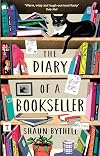
Bookseller Shaun Bythell, owner of The Bookshop in Wigtown, Scotland, kept a diary over the course of a year from February 2014 to early 2015. It gives the reader a good idea of what it is like to run an independent second-hand bookstore. The reader accompanies Bythell as he travels to various locations to sort through a collection of books, which are usually remnants of the former owner’s lifetime interests. We view the employees, customers, friends, the occasional writer, townsfolk, and even the resident cat through his eyes. Many of these are eccentric characters, and Bythell sketches them with wry humor.
He describes his rocky relationship with online e-commerce giants, who almost arbitrarily change the company’s status and demand corrective action. One of the highlights is the local festival of books in all its chaotic glory, providing a boost to the local economy. It is surprising to learn what types of books generally sell well and was not at all what I would have expected. I found it entertaining and enjoyed this peek inside the book trade. It will appeal to secondhand bookshop enthusiasts.
He describes his rocky relationship with online e-commerce giants, who almost arbitrarily change the company’s status and demand corrective action. One of the highlights is the local festival of books in all its chaotic glory, providing a boost to the local economy. It is surprising to learn what types of books generally sell well and was not at all what I would have expected. I found it entertaining and enjoyed this peek inside the book trade. It will appeal to secondhand bookshop enthusiasts.
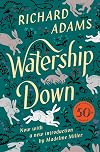
Published in 1972, I had heard of this book for years, but never read it. I always thought it was a book for children, but it is one that adults can appreciate too. In fact, it may be too intense and sad in places for younger children. Set in rural England, a warren of wild rabbits finds their turf threatened by humans, so a group of brave adventurers embark on a journey to find a new home. They survive dangerous wildlife, weather, and wars with other warrens.
These rabbits find entertainment and education through storytelling. The primary narrative is supplemented with side stories of the rabbits’ folklore heroes. It contains new words, reflecting their distinct language. It is extremely creative. The only drawback, for me, is the lack of any significant presence of female characters.
This is a perfect book for audio, and it is wonderfully read by Peter Capaldi. There are many characters, and he gives each one a distinct voice. It felt listening to a bedtime story or a play on the radio. Just marvelous! If you are on a long driving trip with kids, this would be a great choice for an audio the whole family could enjoy.
These rabbits find entertainment and education through storytelling. The primary narrative is supplemented with side stories of the rabbits’ folklore heroes. It contains new words, reflecting their distinct language. It is extremely creative. The only drawback, for me, is the lack of any significant presence of female characters.
This is a perfect book for audio, and it is wonderfully read by Peter Capaldi. There are many characters, and he gives each one a distinct voice. It felt listening to a bedtime story or a play on the radio. Just marvelous! If you are on a long driving trip with kids, this would be a great choice for an audio the whole family could enjoy.
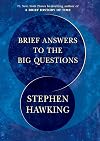
In the last book he wrote before his death, Stephen Hawking provides his thoughts on ten of the “big questions” he has been asked frequently over the years:
1. Is there a God?
2. How did [the Universe] begin?
3. What is inside a black hole?
4. Can we predict the future?
5. Is time travel possible?
6. Will we survive on Earth?
7. Is there other intelligent life in the Universe?
8. Should we colonize space?
9. Will artificial intelligence outsmart us?
10. How do we shape the future?
This is a book of popular science, written in such a way as to be accessible to those not well-versed in his specialty, theoretical physics. These ten questions are posed in a straight-forward way and contain answers that touch on such complex topics, such as universal relativity, quantum mechanics, scientific determinism, string theory, gravitational waves, and the uncertainty principle. Luckily, the reader does not need a deep knowledge of any of these subjects to benefit from Hawking’s insights.
The book reads as a series of essays, with the occasional repetition. I particularly enjoyed the segments on Artificial Intelligence and finding another habitable planet in space. In addition to the scientific content, Hawking includes a partial autobiography. In relating his experiences, Hawking’s self-deprecating sense of humor shines through. It contains an Introduction by Hawking’s colleague, Kip Thorne, and an Afterword by his daughter, Lucy, describing the last years of his life and funeral. show more
There are significant warnings in this book, which we would do well to heed. Hawking points out that scientific understanding will be critical to the future of humanity. He provides guidance and points out some of the big challenges. Hawking remains optimistic that our global society, working together, can tackle them. show less
1. Is there a God?
2. How did [the Universe] begin?
3. What is inside a black hole?
4. Can we predict the future?
5. Is time travel possible?
6. Will we survive on Earth?
7. Is there other intelligent life in the Universe?
8. Should we colonize space?
9. Will artificial intelligence outsmart us?
10. How do we shape the future?
This is a book of popular science, written in such a way as to be accessible to those not well-versed in his specialty, theoretical physics. These ten questions are posed in a straight-forward way and contain answers that touch on such complex topics, such as universal relativity, quantum mechanics, scientific determinism, string theory, gravitational waves, and the uncertainty principle. Luckily, the reader does not need a deep knowledge of any of these subjects to benefit from Hawking’s insights.
The book reads as a series of essays, with the occasional repetition. I particularly enjoyed the segments on Artificial Intelligence and finding another habitable planet in space. In addition to the scientific content, Hawking includes a partial autobiography. In relating his experiences, Hawking’s self-deprecating sense of humor shines through. It contains an Introduction by Hawking’s colleague, Kip Thorne, and an Afterword by his daughter, Lucy, describing the last years of his life and funeral. show more
There are significant warnings in this book, which we would do well to heed. Hawking points out that scientific understanding will be critical to the future of humanity. He provides guidance and points out some of the big challenges. Hawking remains optimistic that our global society, working together, can tackle them. show less
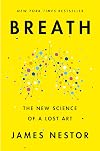
James Nestor calls attention to the art and science of breathing. He traveled extensively and used himself as a subject to study breathing methods. He cites scientific studies that have proven the medical benefits of proper breathing. He sprinkles the narrative with personal anecdotes. Breathing exercises are included.
I listened to the audiobook, capably read by the author. Nestor is obviously excited about his topic. He makes a few extraordinary claims, which I plan to investigate further. I probably will not be using a special device to expand the size of my mouth, but I do plan to adopt a few small changes, such as the breathing patterns that facilitate sleeping.
I listened to the audiobook, capably read by the author. Nestor is obviously excited about his topic. He makes a few extraordinary claims, which I plan to investigate further. I probably will not be using a special device to expand the size of my mouth, but I do plan to adopt a few small changes, such as the breathing patterns that facilitate sleeping.
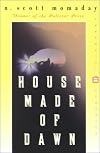
“There was a house made of dawn. It was made of pollen and of rain, and the land was very old and everlasting. There were many colors on the hills, and the plain was bright with different-colored clays and sands. Red and blue and spotted horses grazed in the plain, and there was a dark wilderness on the mountains beyond. The land was still and strong. It was beautiful all around.”
As the story opens, protagonist Abel, a young Native American, has recently returned to New Mexico after serving in WWII. He lives with his grandfather, develops a relationship with a woman, interacts with the local priest, and commits a crime. Years later, he is living in Los Angeles with a friend. He experiences drug-induced hallucinations and drinks heavily. He attends Native American ceremonies. He is beaten and left for dead. In the country or city, he has trouble assimilating.
The storyline is fragmented and told in non-linear fashion. It is one of those books where I appreciate the literary merit, but it held little appeal for me. It toggles back and forth between the current experiences, flashbacks, and stories of Native American ceremonies. I was not always sure when events were supposed to be taking place. The writing is descriptive. The concept is creative. However, I found it disjointed and never felt truly engaged.
As the story opens, protagonist Abel, a young Native American, has recently returned to New Mexico after serving in WWII. He lives with his grandfather, develops a relationship with a woman, interacts with the local priest, and commits a crime. Years later, he is living in Los Angeles with a friend. He experiences drug-induced hallucinations and drinks heavily. He attends Native American ceremonies. He is beaten and left for dead. In the country or city, he has trouble assimilating.
The storyline is fragmented and told in non-linear fashion. It is one of those books where I appreciate the literary merit, but it held little appeal for me. It toggles back and forth between the current experiences, flashbacks, and stories of Native American ceremonies. I was not always sure when events were supposed to be taking place. The writing is descriptive. The concept is creative. However, I found it disjointed and never felt truly engaged.
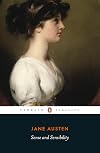
Story of two sisters of different temperaments. Elinor and Marianne Dashwood, their younger sister and mother, are forced to relocate when their father dies, and his estate passes to their half-brother. They become interested in men who are either not available or not responsible. Elinor “possessed a strength of understanding, and coolness of judgment, which qualified her, though only nineteen, to be the counsellor of her mother.” Marianne “was sensible and clever; but eager in everything; her sorrows, her joys, could have no moderation. She was generous, amiable, interesting: she was everything but prudent.”
Published in 1811, it is Jane Austen’s first novel and reflects social mores related to money, inheritance, and social classes of the time period. It is a story of overcoming obstacles and disappointments. It is also a comedy of manners, though the humor is subtle. The prose is elaborate and circuitous, as is typical of the era, so it requires a bit of patience to get through it. It contains love triangles, misunderstandings, and drama. I tend to enjoy reading the classics and found this a pleasant reading experience.
Published in 1811, it is Jane Austen’s first novel and reflects social mores related to money, inheritance, and social classes of the time period. It is a story of overcoming obstacles and disappointments. It is also a comedy of manners, though the humor is subtle. The prose is elaborate and circuitous, as is typical of the era, so it requires a bit of patience to get through it. It contains love triangles, misunderstandings, and drama. I tend to enjoy reading the classics and found this a pleasant reading experience.
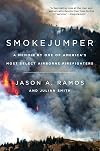
This book is part memoir, part history of wildfires, and part smokejumper publicity. The author recounts his early experiences in California to his training as a smokejumper to his smoke jumping assignments in the Washington Cascades. He provides an account of both triumphs and tragedies in wildland firefighting history. It gives the background of smokejumping, dating back to 1939, and outlook for the future. It is a story of hard work, dedication, and comradeship.
Each summer, I am a first-hand observer of the results of wildfires – either from the smoky environment where we are encouraged to stay indoors or observing burning areas from a distance. So, I was interested to find out more about the ways these fires are managed and extinguished. This book provides a detailed description of the methods and gear used.
The strength of this book is the sheer amount of information conveyed in a relatively short number of pages. The style is direct and colloquial. Ramos expresses his opinions and ideas for improvements. It certainly fit the bill for what I had been seeking. I particularly enjoyed segment of past and personal photos.
3.5
Each summer, I am a first-hand observer of the results of wildfires – either from the smoky environment where we are encouraged to stay indoors or observing burning areas from a distance. So, I was interested to find out more about the ways these fires are managed and extinguished. This book provides a detailed description of the methods and gear used.
The strength of this book is the sheer amount of information conveyed in a relatively short number of pages. The style is direct and colloquial. Ramos expresses his opinions and ideas for improvements. It certainly fit the bill for what I had been seeking. I particularly enjoyed segment of past and personal photos.
3.5
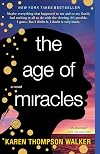
Coming of age science fiction based on the premise that the earth’s rotation is gradually slowing. Eleven-year-old protagonist Julia lives with her parents in Southern California. Julia’s parents are experiencing marital difficulties. Julia is going through the usual preteen struggles with school, friends, ostracism, and crushes.
Julia narrates the story from the perspective of ten years into the future, in her twenties, looking back to when “the slowing” began. People attempt to adapt to the changes in the number of hours in a day. They split into two camps – one elects to stay on a 24-hour clock, as the government recommends, and the other decides to live according to a “natural” cycle, adjusting their biorhythms to the lengthening days and nights.
Many environmental challenges must be faced. The lengthening of daylight means more exposure to radiation from the sun. During extended darkness, kids still go to school and parents go to work. Birds mysteriously die off. The magnetic field changes. The supply chain is disrupted. Crops can no longer be grown naturally. People experience gravitational sickness.
I was expecting more analysis of the strange phenomena. While the idea of “the slowing” is creative, it is never adequately explained. The science remains in the background. I found the ending rather disappointing. If you are interested in young adult coming-of-age stories you will find more to enjoy than if you are looking for science fiction.
Julia narrates the story from the perspective of ten years into the future, in her twenties, looking back to when “the slowing” began. People attempt to adapt to the changes in the number of hours in a day. They split into two camps – one elects to stay on a 24-hour clock, as the government recommends, and the other decides to live according to a “natural” cycle, adjusting their biorhythms to the lengthening days and nights.
Many environmental challenges must be faced. The lengthening of daylight means more exposure to radiation from the sun. During extended darkness, kids still go to school and parents go to work. Birds mysteriously die off. The magnetic field changes. The supply chain is disrupted. Crops can no longer be grown naturally. People experience gravitational sickness.
I was expecting more analysis of the strange phenomena. While the idea of “the slowing” is creative, it is never adequately explained. The science remains in the background. I found the ending rather disappointing. If you are interested in young adult coming-of-age stories you will find more to enjoy than if you are looking for science fiction.
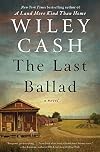
Historical fiction set mostly in 1929 in North Carolina where mill workers are trying to organize. They are striking for higher wages and better working conditions. They are opposed by mill owners and a group of local residents who associate unions with “Bolshevists.” Protagonist Ella May Wiggins is abandoned by her husband and joins the union movement after struggling to feed her children on nine dollars per seventy-hour work week. She works at one of the few racially integrated mills. She wants the union to include blacks in their ranks but is resisted by other mill workers.
The story is told from eight different perspectives in two timelines. It is based on the life of a real person. Ella Wiggins is a distant relative of the author. He had grown up in the same region of the American south but had not heard her story until he was in college.
It is a beautifully written, tragic story. The only downside, for me, is the eight perspectives. I found I was just getting into one person’s account, when the narrative shifts to something completely different. It does not flow as well as some, but it is a moving account and one I am glad to have read.
The story is told from eight different perspectives in two timelines. It is based on the life of a real person. Ella Wiggins is a distant relative of the author. He had grown up in the same region of the American south but had not heard her story until he was in college.
It is a beautifully written, tragic story. The only downside, for me, is the eight perspectives. I found I was just getting into one person’s account, when the narrative shifts to something completely different. It does not flow as well as some, but it is a moving account and one I am glad to have read.
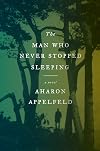
As the story opens, World War II has just ended. Sixteen-year-old protagonist Erwin, a Ukrainian of Jewish heritage, is joining a group of refugees on the way to Palestine. He learns Hebrew and is asked to change his name. In the fighting in Palestine, prior to Israel’s independence, he is wounded. While he heals, he contemplates life and copies biblical texts.
This is a low-key book. The journey is over quickly, and he is quickly wounded in the fighting. The vast majority of time is spent in recuperation. During this period, Erwin, renamed Aharon discusses many deep topics with doctors and visitors. He attempts to heal both emotionally and physically. He remembers his parents, who were killed in the Holocaust, and interacts with them in his dreams.
It is a different take on themes we often find in Holocaust literature. It portrays the anguish suffered by young adults who lost their parents and are not prepared to face life alone. The author explores the healing power of sleep, the importance of a name, and the desire to connect with the past.
This is a low-key book. The journey is over quickly, and he is quickly wounded in the fighting. The vast majority of time is spent in recuperation. During this period, Erwin, renamed Aharon discusses many deep topics with doctors and visitors. He attempts to heal both emotionally and physically. He remembers his parents, who were killed in the Holocaust, and interacts with them in his dreams.
It is a different take on themes we often find in Holocaust literature. It portrays the anguish suffered by young adults who lost their parents and are not prepared to face life alone. The author explores the healing power of sleep, the importance of a name, and the desire to connect with the past.
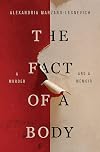
In this combination memoir and true crime, the author draws parallels between the case of convicted murderer and pedophile Ricky Langley and her own sexual abuse at the hands of her grandfather. This book is an extremely personal disclosure, to the point where I felt uncomfortable with it. I think the connections between the two cases are tenuous at best, at least to an outside observer. The true crime portion involves Langley’s (admitted) murder of a six-year-old child. It is portrayed using trial transcripts, supplemented by the author’s many imaginings. I have to wonder how the family of the murdered child felt about this book. Plus, there are so many suppositions that I would not classify it as non-fiction.
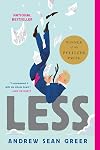
Protagonist Arthur Less is a middle-aged gay novelist living in San Francisco. When he is invited to the wedding of his former lover, he decides to avoid attending by going on a lengthy trip around the world, combining his need to escape with various literary events and opportunities. He travels to New York, Mexico, Italy, Germany, France, Morocco, India, and Japan. He had success with an earlier novel, but his publisher has declined his latest effort.
It flows back and forth in time. The narrator, initially unnamed, creates a slight disconnect for the reader. It is told in first person present, as if the narrator is on the trip with Arthur, when we know Arthur is traveling solo. This is eventually sorted out, but it is good to be aware of it going in.
It is full of literary references, and pokes fun at the publishing industry. It contains flashes of humor. Its theme seems to be that it is never too late for a journey of self-discovery. The writing is clever. The ending is satisfying. There is a lengthy section where Arthur comes close but does not find out a key element of the story, which wears thin toward the end. But overall, I enjoyed accompanying Arthur on his journey.
It flows back and forth in time. The narrator, initially unnamed, creates a slight disconnect for the reader. It is told in first person present, as if the narrator is on the trip with Arthur, when we know Arthur is traveling solo. This is eventually sorted out, but it is good to be aware of it going in.
It is full of literary references, and pokes fun at the publishing industry. It contains flashes of humor. Its theme seems to be that it is never too late for a journey of self-discovery. The writing is clever. The ending is satisfying. There is a lengthy section where Arthur comes close but does not find out a key element of the story, which wears thin toward the end. But overall, I enjoyed accompanying Arthur on his journey.
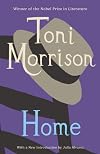
Story of siblings Frank Money and his sister Cee who grow up in an abusive environment in the small town of Lotus, Georgia. Frank returns from the Korean War suffering from PTSD. While he was away, Cee married, moved to Atlanta, and was deserted by her husband. Frank is notified that Cee is in trouble, so he travels to Atlanta to find her. On the way, he reminisces about his life.
Morrison is describing a time of systemic racism, and vividly describes the harsh realities her characters face. There is a lot of disturbing content in this book, such as eugenics experiments, a man beaten to death, killing of a young girl by a soldier. In addition to racism, we find gender inequality, sexism, poverty, and senseless violence.
I loved Morrison’s A Mercy. I could not love this one. It is one disturbing scene after another. I did not find anything new or enlightening – only a litany of atrocities. It is not something I should have ever picked up.
Morrison is describing a time of systemic racism, and vividly describes the harsh realities her characters face. There is a lot of disturbing content in this book, such as eugenics experiments, a man beaten to death, killing of a young girl by a soldier. In addition to racism, we find gender inequality, sexism, poverty, and senseless violence.
I loved Morrison’s A Mercy. I could not love this one. It is one disturbing scene after another. I did not find anything new or enlightening – only a litany of atrocities. It is not something I should have ever picked up.
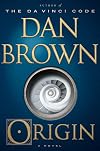
The fifth book in the Robert Langdon series, this book is a mystery-thriller set in Spain in current times. Though it is part of a series, this book can easily be read as a stand-alone. Harvard professor of symbology Robert Langdon is attending a major scientific announcement by billionaire futurist Edmond Kirsh, one of Langdon’s former students, at the Bilbao Guggenheim museum. It is reported to be of such importance that it will create a paradigm shift in the thinking on the origins of the human species and drastically impact the world’s religions. A violent event interrupts Kirsch’s presentation, sending Langdon and Ambra Vidal, the museum’s curator and future Queen of Spain, on a dramatic chase across the countryside.
Brown combines elements of science, technology, religion, and history into an entertaining and thought-provoking story. One of the most intriguing characters in the novel is Winston, an advanced artificial intelligence charged with maximizing the exposure of his creator’s scientific discovery. The reader is exposed to a wide variety of concepts, including the latest thinking in evolutionary biology, artificial intelligence, machine learning, and a host of topics espoused by such scientists as Darwin, Gould, and Hawking. It also features the art of Antoni Gaudi, the poetry of William Blake, and other real works of art and literature.
Ethical and moral questions are examined from both religious and scientific viewpoints. Contemporary issues are show more included – conspiracy theories, fake news, information leaking from unnamed sources, fanning the flames of disagreement in internet audiences. We have religious disputes, a traditionalist church bordering on cult, and religious leaders disappearing. At various times, suspicion falls on church leaders, the Royal Guard, and, of course, protagonist Robert Langdon.
It is somewhat formulaic in structure. If you have read others in the series, you will recognize Robert Langdon having to flee with a local woman, the primary conflict setting science against religion, and the need to solve a complex puzzle to achieve an objective. There are a few scenes that seem to be inserted solely to draw out the narrative and chase scenes across Spain. There is a major motivational issue with one significant element. Even so, it is a book that engages the brain while it entertains. show less
Brown combines elements of science, technology, religion, and history into an entertaining and thought-provoking story. One of the most intriguing characters in the novel is Winston, an advanced artificial intelligence charged with maximizing the exposure of his creator’s scientific discovery. The reader is exposed to a wide variety of concepts, including the latest thinking in evolutionary biology, artificial intelligence, machine learning, and a host of topics espoused by such scientists as Darwin, Gould, and Hawking. It also features the art of Antoni Gaudi, the poetry of William Blake, and other real works of art and literature.
Ethical and moral questions are examined from both religious and scientific viewpoints. Contemporary issues are show more included – conspiracy theories, fake news, information leaking from unnamed sources, fanning the flames of disagreement in internet audiences. We have religious disputes, a traditionalist church bordering on cult, and religious leaders disappearing. At various times, suspicion falls on church leaders, the Royal Guard, and, of course, protagonist Robert Langdon.
It is somewhat formulaic in structure. If you have read others in the series, you will recognize Robert Langdon having to flee with a local woman, the primary conflict setting science against religion, and the need to solve a complex puzzle to achieve an objective. There are a few scenes that seem to be inserted solely to draw out the narrative and chase scenes across Spain. There is a major motivational issue with one significant element. Even so, it is a book that engages the brain while it entertains. show less
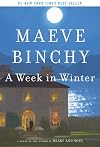
Group of interrelated short stories about a quaint Irish residence converted into a Bed & Breakfast. It starts with the stories of the people running the inn, then moves to the backstories of the people staying or working there during the titular “week in winter.” I particularly enjoyed the descriptions of the west coast of Ireland. This is the first book I have read by Maeve Binchy and I would read another. I found it a perfectly pleasant “beach read.”
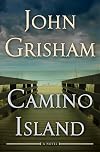
Camino Island, a book-related mystery set on a fictional island off the coast of Florida. It opens with a heist of five hand-written manuscripts by F. Scott Fitzgerald, housed at a Princeton University library. Female protagonist Mercer Mann, a debt-ridden out-of-work novelist, is hired by a woman allegedly representing a security company to track down information about a bookseller on Camino Island, who may be involved in selling the manuscripts on the black market.
The premise sounded good to me. I usually appreciate books about books, and I enjoyed the many literary references. But, overall, I was severely disappointed. I have read other books by Grisham, and this is not one of his best. It does not flow well and includes the standard checklist of today’s contemporary novel (beautiful woman, handsome man, sex, violence, and plot twists). The characters and plot are thinly developed, and the ending is atrocious. It is too formulaic for my taste.
The premise sounded good to me. I usually appreciate books about books, and I enjoyed the many literary references. But, overall, I was severely disappointed. I have read other books by Grisham, and this is not one of his best. It does not flow well and includes the standard checklist of today’s contemporary novel (beautiful woman, handsome man, sex, violence, and plot twists). The characters and plot are thinly developed, and the ending is atrocious. It is too formulaic for my taste.
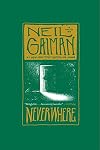
In this gothic urban fantasy, protagonist Richard is on his way to a restaurant with his fiancé. He comes across a bleeding girl who obviously needs help. By helping her, he eventually finds himself in London Below, a complex labyrinth underneath the city of London. Each district in London Above has a contrasting counterpart in London Below. In London Below, he finds himself on a quest. It is an inventive story of friends, villains, angels, beasts, and betrayal.
Richard’s journeys in London Below reminded me of a dark fairy tale – a place of adventure and danger, where resourcefulness is paramount. Gaiman excels at evoking images in the mind’s eye. He is also a particularly effective narrator. He does a great job with various accents, pacing, and articulation. The audio also includes special effects.
“Anaesthesia's hand sought Richard's. He held it tightly, her tiny hand in his. She smiled at him, squeezed his hand. And then they set foot on Night's Bridge and Richard began to understand darkness: darkness as something solid and real, so much more than a simple absence of light. He felt it touch his skin, questing, moving, exploring: gliding through his mind. It slipped into his lungs, behind his eyes, into his mouth...With each step they took the light of the candle became dimmer. He realized the same thing was happening to the leather woman's torch. It felt not so much as if the lights were being turned down but as if the darkness were being turned up.”
This show more book is a classic example of a battle between good and evil, except it is not always clear at first who is on which side. Our protagonist is one of the good guys, of course, and it is easy to root for him. Even though I do not typically read much fantasy or urban gothic, I found this book extremely creative and entertaining. show less
Richard’s journeys in London Below reminded me of a dark fairy tale – a place of adventure and danger, where resourcefulness is paramount. Gaiman excels at evoking images in the mind’s eye. He is also a particularly effective narrator. He does a great job with various accents, pacing, and articulation. The audio also includes special effects.
“Anaesthesia's hand sought Richard's. He held it tightly, her tiny hand in his. She smiled at him, squeezed his hand. And then they set foot on Night's Bridge and Richard began to understand darkness: darkness as something solid and real, so much more than a simple absence of light. He felt it touch his skin, questing, moving, exploring: gliding through his mind. It slipped into his lungs, behind his eyes, into his mouth...With each step they took the light of the candle became dimmer. He realized the same thing was happening to the leather woman's torch. It felt not so much as if the lights were being turned down but as if the darkness were being turned up.”
This show more book is a classic example of a battle between good and evil, except it is not always clear at first who is on which side. Our protagonist is one of the good guys, of course, and it is easy to root for him. Even though I do not typically read much fantasy or urban gothic, I found this book extremely creative and entertaining. show less
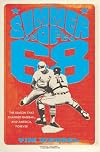
This is a book about a tumultuous year in US history as seen through the lens of baseball. 1968 is considered “The Year of the Pitcher” and this book recounts the many pitching accomplishments. The next year, the height of the mound was changed – a decision the author questions. It includes historical events such as war protests, civil unrest, and the assassination of two prominent leaders.
I enjoyed reading anecdotes about skilled baseball players of the era, such as Lou Brock, Curt Flood, Bob Gibson, Willie Horton, Mickey Lolich, and Denny McLain. The World Series between the Detroit Tigers and St. Louis Cardinals is described in just the right amount of detail. The baseball-focused segments are nicely done.
The rest is, however, a bit of a hodgepodge. Many of the events described in the book take place in seasons other than summer. The football stories, and a few about other sports, seemed “thrown in” and are not integrated into the narrative. I remain unconvinced that football supplanted baseball as the “national sport.” In my opinion, it is a regional preference. Football has been king for a long time in the south, but in the west, baseball remains extremely popular.
There is not much depth. It is more a chronicle than an analysis. As a fan of both baseball and history, I found it interesting but the theme could have been better developed.
I enjoyed reading anecdotes about skilled baseball players of the era, such as Lou Brock, Curt Flood, Bob Gibson, Willie Horton, Mickey Lolich, and Denny McLain. The World Series between the Detroit Tigers and St. Louis Cardinals is described in just the right amount of detail. The baseball-focused segments are nicely done.
The rest is, however, a bit of a hodgepodge. Many of the events described in the book take place in seasons other than summer. The football stories, and a few about other sports, seemed “thrown in” and are not integrated into the narrative. I remain unconvinced that football supplanted baseball as the “national sport.” In my opinion, it is a regional preference. Football has been king for a long time in the south, but in the west, baseball remains extremely popular.
There is not much depth. It is more a chronicle than an analysis. As a fan of both baseball and history, I found it interesting but the theme could have been better developed.
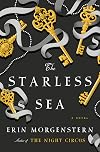
Graduate student Zachary Ezra Rawlins finds an old book in which he appears to be a character, though it was written before he was born. He goes on a quest to find the author to find out why part of his own past appears in the book. He soon discovers a series of magical doors that open into a world of fantasy and fairytales, a place below ground filled with books and storytellers.
Excerpts from different books are Interspersed into Zachary’s narrative. On the plus side, these stories within a story are creative, and the detailed descriptions of the fantasy world are intriguing. I liked the atmosphere of wonder. On the minus side, there is a lack of connection and continuity.
I had previously read and very much enjoyed The Night Circus, so I thought I would read Morgenstern’s latest. I found the individual stories in The Starless Sea to be pleasant reading. If you are a regular reader of fantasy, you may like it more than I did.
Excerpts from different books are Interspersed into Zachary’s narrative. On the plus side, these stories within a story are creative, and the detailed descriptions of the fantasy world are intriguing. I liked the atmosphere of wonder. On the minus side, there is a lack of connection and continuity.
I had previously read and very much enjoyed The Night Circus, so I thought I would read Morgenstern’s latest. I found the individual stories in The Starless Sea to be pleasant reading. If you are a regular reader of fantasy, you may like it more than I did.