
H. W. Brands
Author of The First American: The Life and Times of Benjamin Franklin
About the Author
H.W. Brands was born Henry William Brands in Oregon. He graduated from Stanford University in 1975 with a B.A. in history, and from Jesuit High School in Portland, Oregon. He went on to earn his graduate degree in mathematics and history in Oregon and Texas. He taught at Vanderbilt University and show more Texas A&M University before he joined the faculty at the University of Texas at Austin. He acquired the title of Dickson Allen Anderson Centennial Professor of History at the U of Texas. He specializes in American History and politics, with books including Traitor to His Class, Andrew Jackson, The Age of Gold, the First American, and TR. Several of his books have been best sellers, including one recently published, The General vs. the President. Two of them - Traitor to His Class and The First American were finalist for the Pulitzer Prize. He lectures often on historical and current events and he can be seen and heard on national television and radio programs. (Bowker Author Biography) H. W. Brands lives in Austin, Texas. (Publisher Provided) H. W. Brands is Distinguished Professor of History and Ralph R. Thomas '21 Professor in Liberal Arts, Texas A&M University. (Bowker Author Biography) show less
Image credit: Credit: Larry D. Moore, Texas Book Festival, Austin, TX, Nov. 1, 2008
Works by H. W. Brands
Traitor to His Class: The Privileged Life and Radical Presidency of Franklin Delano Roosevelt (2008) 1,074 copies, 23 reviews
Heirs of the Founders: The Epic Rivalry of Henry Clay, John Calhoun, and Daniel Webster, the Second Generation of American Giants (2018) 502 copies, 11 reviews
The General vs. the President: MacArthur and Truman at the Brink of Nuclear War (2016) 462 copies, 8 reviews
Lone Star Nation: How a Ragged Army of Volunteers Won the Battle for Texas Independence and Changed America (2004) 431 copies, 6 reviews
The Zealot and the Emancipator: John Brown, Abraham Lincoln, and the Struggle for American Freedom (2020) 334 copies, 5 reviews
The Money Men: Capitalism, Democracy, and the Hundred Years' War over the American Dollar (2006) 187 copies, 4 reviews
The Murder of Jim Fisk for the Love of Josie Mansfield: A Tragedy of the Gilded Age (American Portraits) (2011) 177 copies, 5 reviews
Founding Partisans: Hamilton, Madison, Jefferson, Adams and the Brawling Birth of American Politics (2023) 162 copies, 1 review
The Heartbreak of Aaron Burr: A Tale of Homicide, Intrigue and a Father's Worst Fear (2012) 153 copies, 3 reviews
Masters of Enterprise: Giants of American Business from John Jacob Astor and J.P. Morgan to Bill Gates and Oprah Winfrey (1999) 97 copies, 1 review
Greenback Planet: How the Dollar Conquered the World and Threatened Civilization as We Know It (Discovering America) (2011) 41 copies
The Modern Scholar: Masters of Enterprise: American Business History and the People Who Made it (2008) 7 copies
Theodore Roosevelt and His Sagamore Hill Home: Historic Resource Study Sagamore Hill National Historic Site (2012) 2 copies
Kirk Gün Kirk Gece. 1 copy
Heirs of the Founders 1 copy
Associated Works
Presidential Leadership: Rating the Best and the Worst in the White House (2004) — Contributor — 158 copies, 3 reviews
America Past and Present, Volume I: Chapters 1-16 (6th Edition) (1997) — some editions — 88 copies, 3 reviews
10 Days That Unexpectedly Changed America: Volume 1 [2005 TV mini series] (2006) — Narrator — 11 copies
Tagged
Common Knowledge
- Canonical name
- Brands, H. W.
- Legal name
- Brands, Henry William, Jr.
- Other names
- Brands, Bill
- Birthdate
- 1953-08-07
- Gender
- male
- Education
- University of Texas at Austin (Ph.D|1985)
Portland State University (MS|1981)
Reed College (MA|1978)
Stanford University (BA|1975)
Jesuit High School, Beaverton, Oregon, USA - Occupations
- historian
university professor
teacher - Organizations
- University of Texas at Austin
Texas A & M University
Vanderbilt University
Philosophical Society of Texas
Society of American Historians - Relationships
- Brands, Henry William (father)
Brands, Hal (son) - Nationality
- USA
- Birthplace
- Portland, Oregon, USA
- Places of residence
- Portland, Oregon, USA
Barton Hills, Austin, Texas, USA - Associated Place (for map)
- USA
Members
Reviews
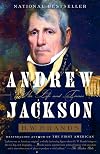
Andrew Jackson was a destitute frontier orphan at the age of 14, an Indian fighter, reluctant politician, enthusiastic and hugely successful general, and two-term President late in life during the tumultuous 1830s, when the boundaries between Texas and Mexico were in flux and Texas declared independence. He was also a farmer, slave holder, dedicated duelist, loyal husband, father of an adopted son and of several foster Indian children, and devoted to preserving and expanding the Union show more against foreign incursions and internal strife. He was an errand boy during the Revolution yet lived long enough to be photographed. He believed that the people (i.e., white males) were able to make the best decisions for themselves, an issue which divided early leaders, many of whom thought the uneducated were not knowledgeable enough to make informed decisions. (I can't imagine what he and other leaders would make of the ability of today's talk media to sway the masses.) When Jackson died, arguments over states' rights and the issue of slavery in new states was heating up towards what astute observers realized would be a war. Jackson feared for the future of the Union, not foreseeing a Lincoln to save it.
Brands' book is quite long (650+ pages) and seemed to take me forever to read it, but none of it is wasted space. Jackson is used to link our earliest history as a nation and the war that almost tore us apart, and Brands does a good job of explaining how important Jackson was in simultaneously expanding and protecting our borders and encouraging some policies, such as slavery, which led to the Civil War. Jackson could be brutal, especially in his treatment of Indians, whom he felt should get out of the way of the conquerors or face extinction. He seemed to feel badly about the possibility of wiping them out, but he felt they were responsible for their own safety and should stay out of the way of the settlers, whom he didn't expect to take the high road. (Isn't this the argument made by apologists in societies that keep women hidden away: the dominant group can't be trusted so rather than police them, the powerless group should in effect be punished?)
The book is very readable, with a good mix of anecdotes, discussion of policy and politics, and quotes from letters and documents. There were some topics which could have been treated in more depth, and I'd have liked to hear more of what happened to the various native children Jackson fostered (one apparently died of TB at the age of 16, but that isn't mentioned). But Jackson was an important participant in so many pivotal events that to do them all justice would have been impossible without a multi-volume treatment. Extensive source notes and a bibliography provide ideas for expanded reading. In the Kindle edition there was no index (although Kindle searching is much more comprehensive than with a print index), and I don't know if there is an index in the print volume. Highly recommended. show less
Brands' book is quite long (650+ pages) and seemed to take me forever to read it, but none of it is wasted space. Jackson is used to link our earliest history as a nation and the war that almost tore us apart, and Brands does a good job of explaining how important Jackson was in simultaneously expanding and protecting our borders and encouraging some policies, such as slavery, which led to the Civil War. Jackson could be brutal, especially in his treatment of Indians, whom he felt should get out of the way of the conquerors or face extinction. He seemed to feel badly about the possibility of wiping them out, but he felt they were responsible for their own safety and should stay out of the way of the settlers, whom he didn't expect to take the high road. (Isn't this the argument made by apologists in societies that keep women hidden away: the dominant group can't be trusted so rather than police them, the powerless group should in effect be punished?)
The book is very readable, with a good mix of anecdotes, discussion of policy and politics, and quotes from letters and documents. There were some topics which could have been treated in more depth, and I'd have liked to hear more of what happened to the various native children Jackson fostered (one apparently died of TB at the age of 16, but that isn't mentioned). But Jackson was an important participant in so many pivotal events that to do them all justice would have been impossible without a multi-volume treatment. Extensive source notes and a bibliography provide ideas for expanded reading. In the Kindle edition there was no index (although Kindle searching is much more comprehensive than with a print index), and I don't know if there is an index in the print volume. Highly recommended. show less
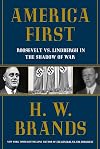
American aviator, Charles Lindbergh, was the first person to complete a nonstop solo transatlantic flight in 1927. In doing so, he became an international celebrity, and highly respected across the United States. With the rise of Nazi Germany, and then the outbreak of war in Europe in 1939, Lindbergh became alarmed that President Roosevelt was taking steps that would eventually lead to the U.S. being dragged into the conflict. As a strong isolationist, to prevent this from happening, show more Lindbergh took to the radio airwaves. After World War I, a good many American citizens came to feel that the United States should avoid involvement in future European conflicts. This had led to the creation of the “America First” movement in the 1930s, and after speaking out, Lindbergh became the most recognizable “face” of the organization.
In this book, America First, published in 2024, H. W. Brands recreates the 1939-1941 period in which Lindbergh and Roosevelt debated the issue of American involvement in overseas conflicts. Brands draws heavily from Lindbergh’s personal diary and speech transcripts. Roosevelt’s side is gleaned from personal memoranda, interviews, speeches, and his secret correspondence with Winston Churchill. As this book clearly details, while denying the fact, Roosevelt clearly knew that war with Nazi Germany was inevitable, and he was indeed trying to create the need for U.S. intervention. To discredit Lindbergh and other leading America First leaders, Roosevelt did not refrain from using deception and British disinformation.
Brands does an excellent job of presenting both sides of the story. In starting this book, I had strong negative feelings about Lindbergh’s isolationist beliefs. To my surprise, his diary entries showed him in a more favorable light, presenting him as someone who truly feared the cost that warfare would bring to this country. Rather than being pro-German, anti-Semitic, or opposed to the democratic way of life, his main intent was to improve our defenses to insure America would not be overrun by hostile forces. Roosevelt, on the other hand, is shown to be the less honest person in the debate. The irony is that FDR ultimately was proved correct in taking the steps he did. After Japan attacked Pearl Harbor, Lindbergh came around to fully supporting the war effort, but by then his star had already been tarnished. America First is a thought provoking read and an educational one today as the United States continues to debate our place on the international stage. show less
In this book, America First, published in 2024, H. W. Brands recreates the 1939-1941 period in which Lindbergh and Roosevelt debated the issue of American involvement in overseas conflicts. Brands draws heavily from Lindbergh’s personal diary and speech transcripts. Roosevelt’s side is gleaned from personal memoranda, interviews, speeches, and his secret correspondence with Winston Churchill. As this book clearly details, while denying the fact, Roosevelt clearly knew that war with Nazi Germany was inevitable, and he was indeed trying to create the need for U.S. intervention. To discredit Lindbergh and other leading America First leaders, Roosevelt did not refrain from using deception and British disinformation.
Brands does an excellent job of presenting both sides of the story. In starting this book, I had strong negative feelings about Lindbergh’s isolationist beliefs. To my surprise, his diary entries showed him in a more favorable light, presenting him as someone who truly feared the cost that warfare would bring to this country. Rather than being pro-German, anti-Semitic, or opposed to the democratic way of life, his main intent was to improve our defenses to insure America would not be overrun by hostile forces. Roosevelt, on the other hand, is shown to be the less honest person in the debate. The irony is that FDR ultimately was proved correct in taking the steps he did. After Japan attacked Pearl Harbor, Lindbergh came around to fully supporting the war effort, but by then his star had already been tarnished. America First is a thought provoking read and an educational one today as the United States continues to debate our place on the international stage. show less
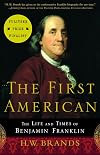
Reason read: Benjamin Franklin was born in January. Read in his honor.
Any book you pick up by H.W. Brands is going to be entertaining. Never dry or boring, in First American, Brands not only brings his subject of Benjamin Franklin to living and breathing life, but also the era in which Franklin lived. Society, religion, politics, and the arts are vividly presented to the reader as the backdrop to Franklin's life. For example, details like explaining how apprentices were not allowed to visit show more taverns, inns, or alehouses served to give insight into Franklin's future beliefs. As a young man, he could not play cards, dice, or even enter into marriage. Franklin was essentially slaves with pay.
Brands also brings to light what an interesting man Benjamin Franklin became in his older years. His range of interests, his need for self-improvement, his contradictory beliefs, and his ambitions were nothing short of astounding. His goals and resolutions surrounding virtue and the way he went about trying to master his them were admirable for all mankind. Everyone knows the story of the silk kite and key, but who remembers Franklin deciding that Philadelphia needed more academia to teach the subjects that were useful to the youth? His quest for vegetarianism? His ability to change his mind about slavery?
With Franklin's use of aliases (Silence Dogood, Martha Careful, Caelia Shortface, and Polly Baker to name a few), I wonder what Franklin would have thought about our ability to hide behind user names and criticize our fellow man for everything from the color of her skin to the way our neighbor mows the lawn. show less
Any book you pick up by H.W. Brands is going to be entertaining. Never dry or boring, in First American, Brands not only brings his subject of Benjamin Franklin to living and breathing life, but also the era in which Franklin lived. Society, religion, politics, and the arts are vividly presented to the reader as the backdrop to Franklin's life. For example, details like explaining how apprentices were not allowed to visit show more taverns, inns, or alehouses served to give insight into Franklin's future beliefs. As a young man, he could not play cards, dice, or even enter into marriage. Franklin was essentially slaves with pay.
Brands also brings to light what an interesting man Benjamin Franklin became in his older years. His range of interests, his need for self-improvement, his contradictory beliefs, and his ambitions were nothing short of astounding. His goals and resolutions surrounding virtue and the way he went about trying to master his them were admirable for all mankind. Everyone knows the story of the silk kite and key, but who remembers Franklin deciding that Philadelphia needed more academia to teach the subjects that were useful to the youth? His quest for vegetarianism? His ability to change his mind about slavery?
With Franklin's use of aliases (Silence Dogood, Martha Careful, Caelia Shortface, and Polly Baker to name a few), I wonder what Franklin would have thought about our ability to hide behind user names and criticize our fellow man for everything from the color of her skin to the way our neighbor mows the lawn. show less
The Zealot and the Emancipator: John Brown, Abraham Lincoln, and the Struggle for American Freedom by H. W. Brands
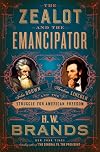
This is much more than factual history. Telling Brown’s and Lincoln’s stories side-by-side presents a striking moral and political contrast. Brown, for whom the abolition of the slaves could not be compromised for any supposedly competing considerations. And Lincoln the skillful politician, convinced of the ultimate validity of the abolitionist cause but placing the preservation of the Union above it.
Brown is someone you can deplore and respect in the same breath. This is someone who show more fully dedicated his life to a virtuous and selfless cause. But it is also someone who went to extremes in doing so, most egregiously the infamous 1856 Pottawatomie killings (in the wake of the pro-slavery forces’ sacking of Lawrence, Kansas).
I found it interesting that, as the author, Brands, notes, Brown never admitted to the Pottawatomie killings. In his own way, Brown was a very honest man, and he was honest and forthright in his admission that those who stood directly in the way of his cause deserved the fate that they got. But Pottawatomie was something else — the men killed at Pottawatomie were taken at night from their homes and families, then killed brutally, with swords, and apparently tortured. It is almost as if, in the rage following the incident at Lawrence (in which pro-slavery forces destroyed property, not lives), Brown did something he could not admit of even to himself.
He was admired, and is admirable I think, for his singlemindedness and his unshakeable conviction that his cause was just. It was just. And the admiration, on the part of many, even among his captors at Harpers Ferry, was genuine. Such dedication is awe inspiring, although not worthy of imitation. Even his ill-conceived occupation of Harpers Ferry seems quixotic in the way we admire the pursuit of the just even when it is unobtainable.
Brown had the singlemindedness that Lincoln, in the eyes of some of his critics, lacked.
Despite his fame as “the great emancipator,” Lincoln placed his priority on the preservation of the Union:
“If I could save the Union without freeing any slave I would do it, and if I could save it by freeing all the slaves I would do it; and if I could save it by freeing some and leaving others alone I would also do that. What I do about slavery, and the colored race, I do because I believe it helps to save the Union; and what I forbear, I forbear because I do not believe it would help to save the Union.”
Lincoln was certainly opposed to slavery, and if he had had his way, slavery would have been abolished, although he wavered over how and over what period of time. At one point during his presidency, he proposed that slavery continue, by law, until an expiration in 1900, to provide time for the nation to heal and adjust.
And he was no proponent of equality between whites and blacks — in fact, he saw a future state of whites and blacks living together in peace and equality impossible as a practical matter. At times he even favored colonization of freed slaves in Africa or South America as an eventual solution.
Thus the one overriding goal of the war, in Lincoln’s mind, was the preservation of the Union. And, in the course of it, the Emancipation Proclamation became a means to winning that war, a “military necessity” as stated in the proclamation’s text By freeing slaves in the rebellious states, the Union would deprive those states of the slaves’ contributions to the war effort, both directly as potential soldiers and indirectly via their agricultural and other services. And freed slaves would be welcomed, as they were, into the Union army to fight for freedom. All in service of the preservation of the Union.
In that position, Lincoln was subject to pressure to compromise with the south, but he came to the conclusion that compromise was no longer possible. He thought a compromise, e.g., some sort of agreement on the limits of slavery’s extension into new territories, would only postpone the crisis.
And, from the other side, he was subject to pressure for full emancipation, both as a moral matter and as a practical matter. Full emancipation though risked turning the border slave states (Kentucky, Missouri, Delaware, and Maryland) that had not joined the Confederacy, to join it, making winning the war and preserving the Union unlikely, in Lincoln’s eyes. What’s more, full emancipation was not, he thought, enforceable against a south in rebellion.
Could Lincoln have freed the slaves by proclamation even had he wanted? The Emancipation Proclamation freed slaves as property Lincoln claimed necessary to carry out a war against the states where the slaves were held, something he claimed justified by the president’s war powers in the Constitution. But an actual emancipation of all slaves, including those in the border states that were not at war against the United States? That wouldn’t come until the 13th Amendment was ratified three years later. The Emancipation Proclamation itself may well have faced legal opposition, especially if considered as providing freedom for the former slaves of the south after the end of the war.
The contrast between Brown and Lincoln is obvious — one a self-righteous, undeterrable force aimed suicidally toward abolition, and the other a cautious, pragmatic politician squarely opposed to slavery but placing a sometimes conflicting goal above abolition, the preservation of the Union.
The moral questions are probably obvious, but no less important for their obviousness. What means are justifiable in pursuit of righting such an deplorable wrong as slavery? To what end might compromising or delaying the achievement of abolition be justifiable? How do you weigh the fate of a population of slaves against the political and economic fate of a nation? Can a just cause become a moral extreme?
There is a third man in the story. Frederick Douglass knew both Lincoln and Brown well. He was frustrated with Lincoln’s pace, and with his prioritization of the Union over slavery. And, as much as he supported Brown’s zeal for abolition, he was almost incredulous when Brown presented his plan for Harpers Ferry and asked for Douglass’s support. He thought it was a suicide mission, with assured counterproductive consequences.
Brown’s zeal for abolition was greater even than Douglass’s, by Douglass’s own admission. At Harpers Ferry, Douglass seems to have thought that Brown, though, was crossing both a practical and a moral line. The mission would fail, and lives would be needlessly lost. It wasn’t just a counter-productive folly, it was a moral calamity.
In the end Douglass seems to have admired Lincoln’s patience, but he did not retreat from his own impatience to end something that should have ended well before it did.
I should mention that another person in the story serves as a link between Lincoln and Brown. John Wilkes Booth was present for the death of both, having attended Brown’s execution before assassinating Lincoln. In Booth’s eyes, the nation’s fortunes had turned in the wrong direction. What had been Brown’s vice, his all-encompassing zeal for abolition, had become, in the aftermath of emancipation, Lincoln’s virtue, at least in the eyes of the nation. That was something he could not countenance. But really, it was also Brown’s triumph.
I learned a LOT from Brands’ book. I learned facts and connections I hadn’t known before. But the real meat of the book, I think, is the moral contrast that you’ll keep thinking about for a long time after you’ve read the book. show less
Brown is someone you can deplore and respect in the same breath. This is someone who show more fully dedicated his life to a virtuous and selfless cause. But it is also someone who went to extremes in doing so, most egregiously the infamous 1856 Pottawatomie killings (in the wake of the pro-slavery forces’ sacking of Lawrence, Kansas).
I found it interesting that, as the author, Brands, notes, Brown never admitted to the Pottawatomie killings. In his own way, Brown was a very honest man, and he was honest and forthright in his admission that those who stood directly in the way of his cause deserved the fate that they got. But Pottawatomie was something else — the men killed at Pottawatomie were taken at night from their homes and families, then killed brutally, with swords, and apparently tortured. It is almost as if, in the rage following the incident at Lawrence (in which pro-slavery forces destroyed property, not lives), Brown did something he could not admit of even to himself.
He was admired, and is admirable I think, for his singlemindedness and his unshakeable conviction that his cause was just. It was just. And the admiration, on the part of many, even among his captors at Harpers Ferry, was genuine. Such dedication is awe inspiring, although not worthy of imitation. Even his ill-conceived occupation of Harpers Ferry seems quixotic in the way we admire the pursuit of the just even when it is unobtainable.
Brown had the singlemindedness that Lincoln, in the eyes of some of his critics, lacked.
Despite his fame as “the great emancipator,” Lincoln placed his priority on the preservation of the Union:
“If I could save the Union without freeing any slave I would do it, and if I could save it by freeing all the slaves I would do it; and if I could save it by freeing some and leaving others alone I would also do that. What I do about slavery, and the colored race, I do because I believe it helps to save the Union; and what I forbear, I forbear because I do not believe it would help to save the Union.”
Lincoln was certainly opposed to slavery, and if he had had his way, slavery would have been abolished, although he wavered over how and over what period of time. At one point during his presidency, he proposed that slavery continue, by law, until an expiration in 1900, to provide time for the nation to heal and adjust.
And he was no proponent of equality between whites and blacks — in fact, he saw a future state of whites and blacks living together in peace and equality impossible as a practical matter. At times he even favored colonization of freed slaves in Africa or South America as an eventual solution.
Thus the one overriding goal of the war, in Lincoln’s mind, was the preservation of the Union. And, in the course of it, the Emancipation Proclamation became a means to winning that war, a “military necessity” as stated in the proclamation’s text By freeing slaves in the rebellious states, the Union would deprive those states of the slaves’ contributions to the war effort, both directly as potential soldiers and indirectly via their agricultural and other services. And freed slaves would be welcomed, as they were, into the Union army to fight for freedom. All in service of the preservation of the Union.
In that position, Lincoln was subject to pressure to compromise with the south, but he came to the conclusion that compromise was no longer possible. He thought a compromise, e.g., some sort of agreement on the limits of slavery’s extension into new territories, would only postpone the crisis.
And, from the other side, he was subject to pressure for full emancipation, both as a moral matter and as a practical matter. Full emancipation though risked turning the border slave states (Kentucky, Missouri, Delaware, and Maryland) that had not joined the Confederacy, to join it, making winning the war and preserving the Union unlikely, in Lincoln’s eyes. What’s more, full emancipation was not, he thought, enforceable against a south in rebellion.
Could Lincoln have freed the slaves by proclamation even had he wanted? The Emancipation Proclamation freed slaves as property Lincoln claimed necessary to carry out a war against the states where the slaves were held, something he claimed justified by the president’s war powers in the Constitution. But an actual emancipation of all slaves, including those in the border states that were not at war against the United States? That wouldn’t come until the 13th Amendment was ratified three years later. The Emancipation Proclamation itself may well have faced legal opposition, especially if considered as providing freedom for the former slaves of the south after the end of the war.
The contrast between Brown and Lincoln is obvious — one a self-righteous, undeterrable force aimed suicidally toward abolition, and the other a cautious, pragmatic politician squarely opposed to slavery but placing a sometimes conflicting goal above abolition, the preservation of the Union.
The moral questions are probably obvious, but no less important for their obviousness. What means are justifiable in pursuit of righting such an deplorable wrong as slavery? To what end might compromising or delaying the achievement of abolition be justifiable? How do you weigh the fate of a population of slaves against the political and economic fate of a nation? Can a just cause become a moral extreme?
There is a third man in the story. Frederick Douglass knew both Lincoln and Brown well. He was frustrated with Lincoln’s pace, and with his prioritization of the Union over slavery. And, as much as he supported Brown’s zeal for abolition, he was almost incredulous when Brown presented his plan for Harpers Ferry and asked for Douglass’s support. He thought it was a suicide mission, with assured counterproductive consequences.
Brown’s zeal for abolition was greater even than Douglass’s, by Douglass’s own admission. At Harpers Ferry, Douglass seems to have thought that Brown, though, was crossing both a practical and a moral line. The mission would fail, and lives would be needlessly lost. It wasn’t just a counter-productive folly, it was a moral calamity.
In the end Douglass seems to have admired Lincoln’s patience, but he did not retreat from his own impatience to end something that should have ended well before it did.
I should mention that another person in the story serves as a link between Lincoln and Brown. John Wilkes Booth was present for the death of both, having attended Brown’s execution before assassinating Lincoln. In Booth’s eyes, the nation’s fortunes had turned in the wrong direction. What had been Brown’s vice, his all-encompassing zeal for abolition, had become, in the aftermath of emancipation, Lincoln’s virtue, at least in the eyes of the nation. That was something he could not countenance. But really, it was also Brown’s triumph.
I learned a LOT from Brands’ book. I learned facts and connections I hadn’t known before. But the real meat of the book, I think, is the moral contrast that you’ll keep thinking about for a long time after you’ve read the book. show less
Lists
Best Biographies (4)
Evan's Wish List (1)
BLM (1)
Founding Father (1)
Ben Franklin (1)
The Presidents (1)
Awards


You May Also Like


Associated Authors
Statistics
- Works
- 55
- Also by
- 5
- Members
- 12,104
- Popularity
- #1,938
- Rating
- 3.9
- Reviews
- 183
- ISBNs
- 250
- Languages
- 4
- Favorited
- 22
