
Eric Foner
Author of Reconstruction: America's Unfinished Revolution, 1863-1877
About the Author
Eric Foner is the preeminent historian of his generation. His books have won the top awards in the profession, and he has been president of both major history organizations, the American Historical Association and the Organization of American Historians. He is the author of Give Me Liberty!, which show more displays all of his trademark strengths as a scholar, teacher, and writer. A specialist on the Civil War/Reconstruction period, he regularly teaches the nineteenth-century survey at Columbia University, where he is DeWitt Clinton Professor of History. In 2011, Foner's The Fiery Trial: Abraham Lincoln and American Slavery won the Pulitzer Prize in History, the Bancroft Prize, and the Lincoln Prize. His Gateway to Freedom: The Hidden History of the Underground Railroad is a 2015 New York Times bestseller. (Bowker Author Biography) show less
Image credit: Photo by Greer Gattuso (© 2005 Eric Foner)
Works by Eric Foner
Free Soil, Free Labor, Free Men: The Ideology of the Republican Party before the Civil War (1970) 611 copies, 4 reviews
The Second Founding: How the Civil War and Reconstruction Remade the Constitution (2019) 513 copies, 9 reviews
A Short History of Reconstruction [Updated Edition] (Harper Perennial Modern Classics) (2015) 194 copies, 1 review
Our Lincoln: New Perspectives on Lincoln and His World (2008) — Editor; Contributor — 134 copies, 3 reviews
Give me liberty 1 copy
BATTLE PIECES 1 copy
Registration Access Code for Give Me Liberty!: An American History VOL 1 (Fifth Brief Edition) (2017) 1 copy
A New View of Reconstruction 1 copy
Associated Works
Thomas Paine : Collected Writings: Common Sense / The American Crisis / Rights of (1995) — Editor, some editions — 1,148 copies, 4 reviews
Who Built America?: Working People and the Nation's Economy, Politics, Culture, and Society: Volume One (1989) — Consulting editor, some editions — 139 copies
The Modern Temper: American Culture and Society in the 1920s (1995) — Consulting editor — 119 copies
The American Revolution: Explorations in the History of American Radicalism (1976) — Contributor — 90 copies
Major Problems in the Gilded Age and the Progressive Era: Documents and Essays (1993) — Contributor — 85 copies
The Origins of American Slavery: Freedom and Bondage in the English Colonies (1997) — Consulting editor — 82 copies, 1 review
Audacious Democracy: Labor, Intellectuals, and the Social Reconstruction of America (1997) — Contributor — 33 copies
After Slavery: Race, Labor, and Citizenship in the Reconstruction South (New Perspectives on the History of the South) (2013) — Afterword — 15 copies
Beyond the Civil War Synthesis: Political Essays of the Civil War Era (Contributions in American History) (1975) — Contributor — 7 copies
Anti-slavery, religion, and reform : essays in memory of Roger Anstey (1980) — Contributor — 4 copies
Why is there no socialism in the United States? = Pourquoi n'y a-t-il pas de socialisme aux États-Unis? (1988) — Contributor — 1 copy
Tagged
Common Knowledge
- Canonical name
- Foner, Eric
- Birthdate
- 1943-02-07
- Gender
- male
- Education
- Columbia University (BA | 1963)
University of Oxford (Oriel College)
Columbia University (PhD | 1969) - Occupations
- historian
- Organizations
- Columbia University
American Historical Association (president | 2000) - Awards and honors
- Avery O. Craven Award (1989)
Great Teacher Award from the Society of Columbia Graduates (1991)
New York Council for the Humanities Scholar of the Year (1995)
Anisfield-Wolf Lifetime Achievement Award (2020) - Relationships
- Garafola, Lynn (wife)
Foner, Jack D. (father)
Foner, Philip S. (uncle)
Foner, Moe (uncle)
Foner, Henry (uncle)
Foner, Nancy (cousin) (show all 7)
Garb, Margaret (student) - Nationality
- USA
- Birthplace
- New York, New York, USA
- Places of residence
- New York, New York, USA
- Associated Place (for map)
- New York, New York, USA
Members
Reviews
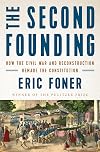
Pulitzer Prize winner Eric Foner is recognized as America’s leading expert on the history of the period immediately after the U.S. Civil War, known as Reconstruction, during which the North tried to build an egalitarian society. The title of his latest book, The Second Founding, encapsulates his thesis that the changes to American society effected during Reconstruction were so profound they amounted to a new beginning - indeed, a second founding - of the nation.
The principal purpose of the show more original ten amendments to the Constitution, the Bill Of Rights, was to protect individuals from the power of the new central government. Though the original authors of these documents (often hallowed as “the Founders”) wanted a national government more formidable than the one established by the feckless Articles of Confederation, they sought to limit the power it could exercise over its citizens. But those constraints did not apply to individual states. For example, many of the states continued to have established religions even though the first Amendment forbade the national government from establishing any single religion.
Foner argues convincingly that the Civil War was fought over the southern states’ efforts to preserve the institution of slavery. [Although the declarations of secession by Southern states clearly articulated that the protection of slavery was the paramount impetus for the rupture per, for example, Confederate Vice President Alexander Stephens, enough later Southern history revisionists averred that secession was actually about "states' rights" that the argument has to be constantly relitigated.] But even though the North had won the war, there was no immediate legal basis for eliminating slavery or for protecting the newly freed slaves from the depredations or their former masters. Ironically, the Emancipation Proclamation of 1863 had “freed” only those slaves still under the control of the rebel armies, leaving slaves in the northern and border states in a legal no-man’s-land concerning servitude.
The legal scaffolding for reorganizing the country took the form of three transformative amendments to the Constitution: the 13th, 14th, and 15th. The 13th abolished slavery throughout the country. The 14th established birthright citizenship for any person born in the United States “and subject to the jurisdiction thereof,” along with requiring the states to provide “due process” and “equal protection” to all “persons within their jurisdiction.” The 15th prohibited the states from denying the right to vote to any person on the basis of “race, color, or previous condition of servitude.” The effect of these amendments and the Civil Rights Act of 1866 was to attempt to put into practice the ideal of equality expressed in the Declaration of Independence. To that end, the amendments invested substantially more power in the national government and provided the means to make the national government the protector of individuals against discrimination and unfair treatment by states or local governments.
This indeed was revolutionary.
Discussion: Foner is not only superb historian, he is an excellent legal analyst. As an historian, his description of the political maneuvering behind the adoption of the amendments is riveting. But what really stands out in his narration is his explication of the legal niceties behind the language adopted. [Well, maybe that’s just the lawyer in me enjoying some good legal writing.]
Unfortunately, the story of the second founding does not end with the adoption of praiseworthy amendments. As Foner recounts, the language of the amendments left enough wiggle room for malevolent racists in the postwar South to reestablish white race-based hegemony. With the end of U.S. Grant’s presidency in 1877 (Grant was dedicated to ensuring that freed blacks realized their newly legislated rights), national commitment to helping and protecting blacks ended in large part as well. Northern troops were withdrawn from the South. “Jim Crow” laws taking rights away from blacks were enacted in one state of the South after another. The Klan was given free rein to exercise police power over blacks without fear of reprisal. Schools and other public services for blacks were defunded. History textbooks used in southern schools were designed to teach white superiority and black backwardness, so that children imbibed these ideas from the earliest age. These practices persisted until the Civil Rights movement of the 1960s, but did not end entirely. Rather, they took on new shapes; the battle for racial justice continues to this day.
Foner recapitulates the sorry history of how a complicit United States Supreme Court abetted racist politicians and lower court judges in their efforts to eviscerate the original intent of Civil War Amendments for almost 100 years after their enactment. Again, his legal skills come to the fore as he takes us through the intricacies of numerous cases that constitute the corpus of civil rights jurisprudence.
Evaluation: This book is surprisingly brief (only 176 pages) considering the depth with which it treats a complex subject. It’s principal thesis, that the Civil War and Reconstruction completely overhauled the Constitution and the society it governed, is ably and cogently argued. I very highly recommend it as required history for all American citizens.
(JAB) show less
The principal purpose of the show more original ten amendments to the Constitution, the Bill Of Rights, was to protect individuals from the power of the new central government. Though the original authors of these documents (often hallowed as “the Founders”) wanted a national government more formidable than the one established by the feckless Articles of Confederation, they sought to limit the power it could exercise over its citizens. But those constraints did not apply to individual states. For example, many of the states continued to have established religions even though the first Amendment forbade the national government from establishing any single religion.
Foner argues convincingly that the Civil War was fought over the southern states’ efforts to preserve the institution of slavery. [Although the declarations of secession by Southern states clearly articulated that the protection of slavery was the paramount impetus for the rupture per, for example, Confederate Vice President Alexander Stephens, enough later Southern history revisionists averred that secession was actually about "states' rights" that the argument has to be constantly relitigated.] But even though the North had won the war, there was no immediate legal basis for eliminating slavery or for protecting the newly freed slaves from the depredations or their former masters. Ironically, the Emancipation Proclamation of 1863 had “freed” only those slaves still under the control of the rebel armies, leaving slaves in the northern and border states in a legal no-man’s-land concerning servitude.
The legal scaffolding for reorganizing the country took the form of three transformative amendments to the Constitution: the 13th, 14th, and 15th. The 13th abolished slavery throughout the country. The 14th established birthright citizenship for any person born in the United States “and subject to the jurisdiction thereof,” along with requiring the states to provide “due process” and “equal protection” to all “persons within their jurisdiction.” The 15th prohibited the states from denying the right to vote to any person on the basis of “race, color, or previous condition of servitude.” The effect of these amendments and the Civil Rights Act of 1866 was to attempt to put into practice the ideal of equality expressed in the Declaration of Independence. To that end, the amendments invested substantially more power in the national government and provided the means to make the national government the protector of individuals against discrimination and unfair treatment by states or local governments.
This indeed was revolutionary.
Discussion: Foner is not only superb historian, he is an excellent legal analyst. As an historian, his description of the political maneuvering behind the adoption of the amendments is riveting. But what really stands out in his narration is his explication of the legal niceties behind the language adopted. [Well, maybe that’s just the lawyer in me enjoying some good legal writing.]
Unfortunately, the story of the second founding does not end with the adoption of praiseworthy amendments. As Foner recounts, the language of the amendments left enough wiggle room for malevolent racists in the postwar South to reestablish white race-based hegemony. With the end of U.S. Grant’s presidency in 1877 (Grant was dedicated to ensuring that freed blacks realized their newly legislated rights), national commitment to helping and protecting blacks ended in large part as well. Northern troops were withdrawn from the South. “Jim Crow” laws taking rights away from blacks were enacted in one state of the South after another. The Klan was given free rein to exercise police power over blacks without fear of reprisal. Schools and other public services for blacks were defunded. History textbooks used in southern schools were designed to teach white superiority and black backwardness, so that children imbibed these ideas from the earliest age. These practices persisted until the Civil Rights movement of the 1960s, but did not end entirely. Rather, they took on new shapes; the battle for racial justice continues to this day.
Foner recapitulates the sorry history of how a complicit United States Supreme Court abetted racist politicians and lower court judges in their efforts to eviscerate the original intent of Civil War Amendments for almost 100 years after their enactment. Again, his legal skills come to the fore as he takes us through the intricacies of numerous cases that constitute the corpus of civil rights jurisprudence.
Evaluation: This book is surprisingly brief (only 176 pages) considering the depth with which it treats a complex subject. It’s principal thesis, that the Civil War and Reconstruction completely overhauled the Constitution and the society it governed, is ably and cogently argued. I very highly recommend it as required history for all American citizens.
(JAB) show less

Foner’s reevaluation of the Underground Railroad, using some relatively recently unearthed materials; the book starts out as largely white political history, then in its last part delves more deeply into the activities of the people, many of whom were free blacks, who risked their freedom to help others become free. Although I didn’t think the book hung together all that well, there were some memorable points. As always, no matter how important the cause, the narcissism of small show more differences was in effect and there were competing factions of abolitionists. The infinite capacity of people—particularly oppressors—to delude themselves about the world was on full display in the slaveowner who wrote in his diary about how his escaped slave must have been kidnapped and then induced to perjure herself when she testified that she wanted to leave (this was important because non-fugitive slaves brought by their enslavers to free states became free); also in the slaveowner who wrote to an escapee, many years after his escape, that she’d give up all claim to him for $1000 and that she’d raised him as if he were her own son.
I was reminded that the Fugitive Slave Act of 1850 was probably the worst legislation enacted by any American government ever; it provided that the written statement of a slaveowner that a person in custody was their escaped slave was conclusive evidence of that claim and paid commissioners more when they sent a person (back) into slavery than when they refused to do so. I was in addition worryingly reminded of our present political polarization when Foner recounted how the North and South grew further apart and began to take opposing each other as almost a good in itself. New York City shows itself as an inhospitable place for escaped slaves; the white businessmen of the city got too much of their wealth from trade with the South to be sympathetic to abolition. And this I didn’t know: abolitionism and the commercialization of Christmas are connected, because abolitionists raised a lot of funds by selling luxury goods (many sent from the UK by antislavery societies there) in pre-Christmas sales—“buy to help the slaves” was an actual slogan. show less
I was reminded that the Fugitive Slave Act of 1850 was probably the worst legislation enacted by any American government ever; it provided that the written statement of a slaveowner that a person in custody was their escaped slave was conclusive evidence of that claim and paid commissioners more when they sent a person (back) into slavery than when they refused to do so. I was in addition worryingly reminded of our present political polarization when Foner recounted how the North and South grew further apart and began to take opposing each other as almost a good in itself. New York City shows itself as an inhospitable place for escaped slaves; the white businessmen of the city got too much of their wealth from trade with the South to be sympathetic to abolition. And this I didn’t know: abolitionism and the commercialization of Christmas are connected, because abolitionists raised a lot of funds by selling luxury goods (many sent from the UK by antislavery societies there) in pre-Christmas sales—“buy to help the slaves” was an actual slogan. show less
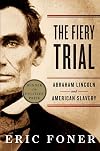
Eric Foner writes brilliant nonfiction focused on the era of Civil War and Reconstruction in America. As a professor at Columbia University, his writing is scholarly, smart, focused, and researched. In this book, he focuses on Abraham Lincoln's personal and political journey in addressing slavery. This was fascinating to me and revealed Lincoln in a new way. As Americans, we are all used to revering Lincoln as the man who brought down slavery with the Emancipation Proclamation (which freed show more the enslaved in the rebellious confederate states) and the 13th Amendment (abolishing slavery everywhere in America), but this book firmly grounds Lincoln as a human being whose personal opinions grew over time and whose political views sometimes took a front seat over his personal beliefs.
Lincoln was always personally against slavery, but this does not mean he didn't espouse some of the racist views of his times. For instance, for a large part of his life, he couldn't envision Blacks having any sort of equality with white Americans. He was very intrigued with the idea of recolonizing all Blacks, freed and the currently enslaved, to a new home country in Africa or Central America. I also learned that many of his policies, especially during his early political career and first term as President, were heavily influenced by the desire to keep the country together. He supported gradual emancipation, envisioning a system of apprenticeship for freed slaves and having the U.S. government reimburse slave-owners (no thought of reimbursing the enslaved, of course). During the Civil War, the border states, who had a high percentage of slaves and slave-owners but who did not secede from the Union, were appeased over and over. Those enslaved were not included in the Emancipation Proclamation. Lincoln really wanted each state to provide its own plan for freeing the enslaved. Like the vast majority of the rest of the country, though, he continued to have a hard time envisioning Blacks as full citizens. He believed they were entitled to the basic rights outlined in the Declaration of Independence, but likely was only starting to see a path to true equality when he was assassinated.
What I loved about this book is that Foner presents Lincoln's views in a balanced manner. He doesn't revere Lincoln blindly. He shows that Lincoln was ahead of his time in terms of the will to end slavery and the belief that slavery was a great wrong, but that Lincoln was also a product of his times and we shouldn't assume that he had a 21st century idea of equality. What is so impressive about Lincoln, a quality that shines through in this book, is his ability to change and grow his ideas. Lincoln was a thinker and a listener. He surrounded himself with people who would challenge him in both political directions, forcing him to truly think through his beliefs and how to best act on them. These are the reasons to respect and, yes, revere, Lincoln. This book does an impressive job of showing how his beliefs grew over time and make it even more depressing that he wasn't the one to lead our country through Reconstruction. If he had been the guiding voice, I wonder how different our country would be today. I feel strongly that it would be wildly different and for the better.
This is a book to read after you already know a bit about the history of the era. I highly recommend it. I highlighted many passages and learned so much. show less
Lincoln was always personally against slavery, but this does not mean he didn't espouse some of the racist views of his times. For instance, for a large part of his life, he couldn't envision Blacks having any sort of equality with white Americans. He was very intrigued with the idea of recolonizing all Blacks, freed and the currently enslaved, to a new home country in Africa or Central America. I also learned that many of his policies, especially during his early political career and first term as President, were heavily influenced by the desire to keep the country together. He supported gradual emancipation, envisioning a system of apprenticeship for freed slaves and having the U.S. government reimburse slave-owners (no thought of reimbursing the enslaved, of course). During the Civil War, the border states, who had a high percentage of slaves and slave-owners but who did not secede from the Union, were appeased over and over. Those enslaved were not included in the Emancipation Proclamation. Lincoln really wanted each state to provide its own plan for freeing the enslaved. Like the vast majority of the rest of the country, though, he continued to have a hard time envisioning Blacks as full citizens. He believed they were entitled to the basic rights outlined in the Declaration of Independence, but likely was only starting to see a path to true equality when he was assassinated.
What I loved about this book is that Foner presents Lincoln's views in a balanced manner. He doesn't revere Lincoln blindly. He shows that Lincoln was ahead of his time in terms of the will to end slavery and the belief that slavery was a great wrong, but that Lincoln was also a product of his times and we shouldn't assume that he had a 21st century idea of equality. What is so impressive about Lincoln, a quality that shines through in this book, is his ability to change and grow his ideas. Lincoln was a thinker and a listener. He surrounded himself with people who would challenge him in both political directions, forcing him to truly think through his beliefs and how to best act on them. These are the reasons to respect and, yes, revere, Lincoln. This book does an impressive job of showing how his beliefs grew over time and make it even more depressing that he wasn't the one to lead our country through Reconstruction. If he had been the guiding voice, I wonder how different our country would be today. I feel strongly that it would be wildly different and for the better.
This is a book to read after you already know a bit about the history of the era. I highly recommend it. I highlighted many passages and learned so much. show less
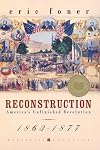
This is a heartbreaking book.
Some brief thoughts-
- Foner does a good job showing how the Reconstruction period was a tremendous missed opportunity for the USA. Briefly on the track to some kind of political representation for black people, for want of political strength and fear of conflict we turned out back on our black citizens.
- The author also highlights the missed opportunity in not teaching Reconstruction in schools. I feel like I am typical among Americans in that I had no idea that show more there was a time following the Civil War where black people were elected to Congress, served as high level state officials, and even law enforcement in the Deep South. The authors epilogue which describes how the collective memory of this flowering of a black political voice was intentionally erased after only a few decades is so upsetting.
- The issues that the Radical Republicans we’re attempting to tackle at the time (support of voting rights, reparations for slavery in the form of land and or money, public education) are shamefully, still controversial in USA today. And yet we are still living with the long term effects of our failure to tackle these problems
- only giving this book 4 stars since I’ve never read anything else on Reconstruction/the Civil War, so I don’t feel suited to judge all its merits. Still think it’s essential reading for anyone trying to understand the US and cut thru the thick mist of our national mythology. show less
Some brief thoughts-
- Foner does a good job showing how the Reconstruction period was a tremendous missed opportunity for the USA. Briefly on the track to some kind of political representation for black people, for want of political strength and fear of conflict we turned out back on our black citizens.
- The author also highlights the missed opportunity in not teaching Reconstruction in schools. I feel like I am typical among Americans in that I had no idea that show more there was a time following the Civil War where black people were elected to Congress, served as high level state officials, and even law enforcement in the Deep South. The authors epilogue which describes how the collective memory of this flowering of a black political voice was intentionally erased after only a few decades is so upsetting.
- The issues that the Radical Republicans we’re attempting to tackle at the time (support of voting rights, reparations for slavery in the form of land and or money, public education) are shamefully, still controversial in USA today. And yet we are still living with the long term effects of our failure to tackle these problems
- only giving this book 4 stars since I’ve never read anything else on Reconstruction/the Civil War, so I don’t feel suited to judge all its merits. Still think it’s essential reading for anyone trying to understand the US and cut thru the thick mist of our national mythology. show less
Lists
Awards


You May Also Like


Associated Authors
Statistics
- Works
- 66
- Also by
- 28
- Members
- 10,379
- Popularity
- #2,290
- Rating
- 4.0
- Reviews
- 108
- ISBNs
- 260
- Languages
- 4
- Favorited
- 14