

C. Vann Woodward (1908–1999)
Author of The Strange Career of Jim Crow
About the Author
One of the world's most distinguished historians, C. Vann Woodward was born in Vanndale, Arkansas, and educated at Emory University and the University of North Carolina, where he received his Ph.D. in 1937. After teaching at Georgia Institute of Technology, the University of Florida, and Scripps show more College for a time, in 1946 he joined the faculty at The Johns Hopkins University, where he began producing the many young Ph.D.s who have followed him into the profession. In 1961 he became Sterling Professor at Yale University, where he remains today as emeritus professor. He has been the Jefferson Lecturer in the Humanities, Harmsworth Professor at Oxford University, and Commonwealth Lecturer at the University of London. Past president of all the major historical associations, he holds the Gold Medal of the National Academy and Institute of Arts and Letters and is a member of the British Academy and the Royal Historical Society. His honors also include a Bancroft Prize for Origins of the New South, 1876--1913 (1951) and a 1982 Pulitzer Prize for Mary Chesnut's Civil War (1981). A premier historian of the American South and of race relations in the United States, Woodward studies the South in a way that sheds light on the human condition everywhere. In recent years he has turned his attention increasingly to comparative history. (Bowker Author Biography) show less
Image credit: World War II Personages, 1941-45
Works by C. Vann Woodward
Reunion and Reaction: The Compromise of 1877 and the End of Reconstruction (1951) 185 copies, 1 review
The Battle for Leyte Gulf: The Incredible Story of World War II's Largest Naval Battle (1947) 175 copies
The age of reinterpretation 3 copies
Associated Works
The Sound and the Fury, A Norton Critical Edition (1929) — Contributor, some editions — 2,054 copies, 22 reviews
The Glorious Cause: The American Revolution, 1763-1789 (1982) — Introduction, some editions — 1,934 copies, 23 reviews
Freedom from Fear: The American People in Depression and War, 1929-1945 (1999) — Introduction — 1,699 copies, 15 reviews
Patriotic Gore: Studies in the Literature of the American Civil War (1962) — Foreword — 440 copies, 6 reviews
Rehearsal for Reconstruction: The Port Royal Experiment (1964) — Introduction — 142 copies, 1 review
Black Studies: Myths & Realities — Contributor — 3 copies
The future of history : essays in the Vanderbilt University Centennial Symposium (1977) — Contributor — 1 copy
Tagged
Common Knowledge
- Canonical name
- Woodward, C. Vann
- Legal name
- Woodward, Comer Vann
- Birthdate
- 1908-11-13
- Date of death
- 1999-12-17
- Gender
- male
- Education
- Henderson-Brown College
Emory University (1930)
Columbia University (1932)
University of North Carolina (1937) - Occupations
- professor
historian - Organizations
- American Academy of Arts and Letters ( [1970])
Fellowship of Southern Writers (charter member)
American Historical Association ( [1969])
Southern Historical Association ( [1952])
Johns Hopkins University
Yale University - Awards and honors
- Cleanth Brooks Medal for Lifetime Achievement (1993)
Bruce Catton Prize for Lifetime Achievement (1986)
American Academy of Arts and Letters Academy Award ( [1954])
Jefferson Lecture (1978) - Nationality
- USA
- Birthplace
- Vanndale, Arkansas, USA
- Places of residence
- Vanndale, Arkansas, USA (birthplace)
Hamden, Connecticut, USA (death)
Morrilton, Arkansas, USA - Place of death
- Hamden, Connecticut, USA
- Associated Place (for map)
- USA
Members
Reviews
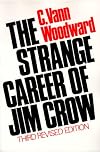
I was appalled when I read that some of the manipulative figures featured in this book deliberately produced racist propaganda, in which they did not truly believe, that undid any gains in civil rights and racial tolerance that resulted from Reconstruction. Not that I thought such cynical behavior is beyond pundits or politicians, but I had the general impression from history classes and other sources that the majority of Southern whites simply would not accept equal rights for the former show more slaves for decades after the Civl War, and that the deterioration of gains enforced during Reconstruction was inevitable after the federal troops left. The revelation that a better society had emerged and could have continued had not the selfish ambitions for short-term political goals led to overwhelming horror is devastating. show less
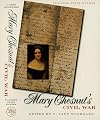
I would say this is mostly a woman's book, that is, looking at things that women are more likely to enjoy or appreciate. She considers the impact on the household of various events, including changes in clothing options, food, modes of travel. We get commentary on those who did not go to war and the praise for those who did. We share the sorrows of mothers who lost sons and wives who lost their husbands of only a few days. What I did not expect were the number of women who died, sometimes show more along with their babies, leaving behind distraught soldier husbands unable to get furloughs.
I was keenly interested in the close friendship between Mrs. Chesnut and Mrs. Davis, wife of President Jefferson Davis. Even as public outcry against that President devolved into viciousness toward his wife, Mary Chesnut never abandoned her friend and remained a stolid admirer. She also tracked most closely the relationship between Sally "Buck" Preston and General AP "Sam" Hood. I found myself rooting for a marriage between the two. Even though they eventually parted, Buck's mother deeply opposed to the marriage, Mary remained fast friends with each, valuing each time she saw either of them.
What this contributes to the history of the Civil War is a behind the scenes picture of the lives of citizens, mostly wealthy citizens, of part of the Confederacy. We meet the wives and families of familiar Confederate leaders and learn of their losses and reactions to wider events. Mary Chesnut is somewhat unusual in that she had always opposed slavery although she relied heavily on slaves to enable her life style. While she did not mourn the end of slavery, she also paints a rarely reported fact that slaves were also not always welcomed nor helped by the invading Yankees. We also have a chance to observe as the wealthy come to have nothing, much of their posessions stolen and their homes burned. How do you find a place to live when your Confederate money is worthless? How do you eat when your extra clothes went long ago just to buy food? You have no money to pay your debts and those who owe you can't pay because they have no money either. And you can't pay the former slaved who have chosen to remain with you. Now what? show less
I was keenly interested in the close friendship between Mrs. Chesnut and Mrs. Davis, wife of President Jefferson Davis. Even as public outcry against that President devolved into viciousness toward his wife, Mary Chesnut never abandoned her friend and remained a stolid admirer. She also tracked most closely the relationship between Sally "Buck" Preston and General AP "Sam" Hood. I found myself rooting for a marriage between the two. Even though they eventually parted, Buck's mother deeply opposed to the marriage, Mary remained fast friends with each, valuing each time she saw either of them.
What this contributes to the history of the Civil War is a behind the scenes picture of the lives of citizens, mostly wealthy citizens, of part of the Confederacy. We meet the wives and families of familiar Confederate leaders and learn of their losses and reactions to wider events. Mary Chesnut is somewhat unusual in that she had always opposed slavery although she relied heavily on slaves to enable her life style. While she did not mourn the end of slavery, she also paints a rarely reported fact that slaves were also not always welcomed nor helped by the invading Yankees. We also have a chance to observe as the wealthy come to have nothing, much of their posessions stolen and their homes burned. How do you find a place to live when your Confederate money is worthless? How do you eat when your extra clothes went long ago just to buy food? You have no money to pay your debts and those who owe you can't pay because they have no money either. And you can't pay the former slaved who have chosen to remain with you. Now what? show less
I kept thinking of Scarlett O'Hara while reading this. It's the portrait of a hot-blooded, cocky, pugnacious society that was teetering on the brink of destruction, like Carthage during the Punic Wars.
It's hard to have much sympathy. Chesnut is snide, hard-nosed, delusional, insightful, and vulnerable all at the same time. Her view into the minds and actions of the Confederate upper crust as things crumble around them touched my heart even as their motivations escaped me.
The irony is that show more once the hotheads had their way they were shoved aside and spent the rest of the war kvetching on the sidelines, excreting the same poisonous grease on their own side as they'd poured on Lincoln and the North a few scant months before.
Chesnut's book was originally published in a truncated edition after her death. Here Woodward has pieced together and deciphered her original text giving Chesnut's portraits of the Civil War's most compelling personalities a modern freshness that everyone can enjoy. show less
It's hard to have much sympathy. Chesnut is snide, hard-nosed, delusional, insightful, and vulnerable all at the same time. Her view into the minds and actions of the Confederate upper crust as things crumble around them touched my heart even as their motivations escaped me.
The irony is that show more once the hotheads had their way they were shoved aside and spent the rest of the war kvetching on the sidelines, excreting the same poisonous grease on their own side as they'd poured on Lincoln and the North a few scant months before.
Chesnut's book was originally published in a truncated edition after her death. Here Woodward has pieced together and deciphered her original text giving Chesnut's portraits of the Civil War's most compelling personalities a modern freshness that everyone can enjoy. show less
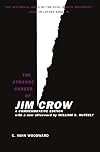
Analyzes the rise of racial segregation in the American South after Reconstruction. The book argues that the formalized segregation laws, which became known as Jim Crow, were a relatively recent development, not an age-old tradition, and were implemented as a political strategy to divide the white and Black masses.
Lists
Awards


You May Also Like


Associated Authors
Statistics
- Works
- 25
- Also by
- 26
- Members
- 4,220
- Popularity
- #5,952
- Rating
- 4.2
- Reviews
- 33
- ISBNs
- 95
- Languages
- 1
- Favorited
- 9