
George Fitzhugh (1806–1881)
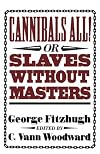
Author of Cannibals All! Or, Slaves without Masters
About the Author
Works by George Fitzhugh
Associated Works
The Heath Anthology of American Literature, Volume 1 (1990) — Contributor, some editions — 252 copies, 1 review
The American Intellectual Tradition, A Sourcebook: Volume I, 1630-1865 (1989) — Contributor, some editions — 204 copies
American Literature: The Makers and the Making (In Two Volumes) (1973) — Contributor, some editions — 25 copies
Tagged
Common Knowledge
- Birthdate
- 1806-11-04
- Date of death
- 1881-07-30
- Gender
- male
- Occupations
- law clerk
judge (Freedman's Court)
lawyer
painter
sociologist - Nationality
- USA
- Birthplace
- Prince William County, Virginia, USA
- Places of residence
- Port Royal, Virginia, USA
Washington, D.C., USA
Richmond, Virginia, USA
Kentucky, USA
Huntsville, Texas, USA
Alexandria, Virginia, USA - Place of death
- Huntsville, Texas, USA
- Associated Place (for map)
- USA
Members
Reviews

George Fitzhugh pens an antebellum, sophistic justification for slavery. Prior to reading his works, I understood him to be a Socialist; this however is inaccurate. On a scale of societal arrangements, according to Fitzhugh, socialism is a failed attempt at a perfect structure.
Taking many shots at the North, Adam Smith and free trade (being the same as "liberty"), the 19th Century sociologist works hard to claim mankind needs chattel slavery to progress. He reasons that nothing is more show more altruistic than a master and his slaves. Likewise, usurpation of chattel slavery is an attempt to deconstruct the institution of family, which is basically a microcosm of plantation slavery.
I don't blame the one time slave-owner from coming at this topic from a selfish perspective, I do the same for freedom from a limited government. Yet he explains that leaving Negroes to their own devices, they will either revert to animalism or die. Unlike an honest philosopher, he evades exploration that personal responsibility is a trait capable of those of African descent.
Digging deep, he uses Biblical and Roman history as examples that chattel slavery is innate in human nature. show less
Taking many shots at the North, Adam Smith and free trade (being the same as "liberty"), the 19th Century sociologist works hard to claim mankind needs chattel slavery to progress. He reasons that nothing is more show more altruistic than a master and his slaves. Likewise, usurpation of chattel slavery is an attempt to deconstruct the institution of family, which is basically a microcosm of plantation slavery.
I don't blame the one time slave-owner from coming at this topic from a selfish perspective, I do the same for freedom from a limited government. Yet he explains that leaving Negroes to their own devices, they will either revert to animalism or die. Unlike an honest philosopher, he evades exploration that personal responsibility is a trait capable of those of African descent.
Digging deep, he uses Biblical and Roman history as examples that chattel slavery is innate in human nature. show less
i love this. it's a primary source in its own right for the antebellum period, but still is meaningful today for those of us trapped in the corporate culture we inherited after the industrial revolution. a fresh perspective on work and society.
Insightful commentary into the meaning of labor and its relation to capital. Fitzhugh proves himself a more than capable defender of the antebellum South while offering a damning critique of values we now take for granted in the modern world.

"Lincoln was said to have been more angered By George Fitzhugh than by any other pro-slavery writer..."
Lists
You May Also Like


Associated Authors
Statistics
- Works
- 4
- Also by
- 3
- Members
- 189
- Popularity
- #115,305
- Rating
- 3.8
- Reviews
- 4
- ISBNs
- 15