Mr. Ellis offers a concise recount of one summer, or as he phrases it the end of the beginning of Americ's independence. Conversely, given tactical decisions on behalf of the British, there failure to deliver a decicisive blow to a fledgling rebel army, it was the beginning of the end for the Brits.
With shrewd observations, Mr. Ellis explains drafting of the Declaration of Independence, the relative impotence of the Contintal Congress and the fateful event on New York battlefields in the fall of 1776.
The one fault I found with this book was rough transitions between topics. Neatly compartmentalized evaluations of the political and military were well written and thoughtful. However, jumping between the two interrupted the flow.
With shrewd observations, Mr. Ellis explains drafting of the Declaration of Independence, the relative impotence of the Contintal Congress and the fateful event on New York battlefields in the fall of 1776.
The one fault I found with this book was rough transitions between topics. Neatly compartmentalized evaluations of the political and military were well written and thoughtful. However, jumping between the two interrupted the flow.

I had no idea this would be such a timeless examination of society and it's construct. Sir More's exploration of the idealic world, where there is no want and harmony reigns supreme, is fascinating how it exemplifies aspects of all government systems.
One theme that weaves all facets of Utopian society is the "permission" needed from those who seek it elected. Essentially travel, food, profession, and marriage/divorce require approbation from leaders.
It was honestly an interesting read, and surprisingly fast for being classic philosophic literature, but it's fantastical and to-good-to-be-true coordinated society will always be desired but never attained. It is a unreachable goal because of one thing: human nature.
One theme that weaves all facets of Utopian society is the "permission" needed from those who seek it elected. Essentially travel, food, profession, and marriage/divorce require approbation from leaders.
It was honestly an interesting read, and surprisingly fast for being classic philosophic literature, but it's fantastical and to-good-to-be-true coordinated society will always be desired but never attained. It is a unreachable goal because of one thing: human nature.
Thanks to common presentation of American history, those born after the volatile 1960s see Blacks historically as docile slaves, hanging from trees at the turn of the 20th Century, or being bitten by dogs or sprayed with fire hoses. In short, helpless victims; only through virtue of government was segregation broken and voting rights granted. Unfortunately, this picture of subservience buries yet another aspect of Black history: self-sufficiency through the exercise of our Second Amendment right.
Professor Johnson has put together a seemingly exhaustive compendium of written records attesting to the crucial role fire arms played in racially unjust times. For much of the South, the government was imposing unconstitutional restrictions and local law enforcement was complicit in illegal activity ranging from harassment to murder. This fact alone should solidify any claims that, reliance on government protection supports progressive ideas that guns are not needed.
Beginning with what records there are of slaves and freemen using guns for self preservation, Johnson amasses stories to lay the foundation of a history of Black self defense. Myriad of isolated incidences are brought together in Negroes and the Gun to weave an undeniable argument for individuals' rights to bear arms.
The stories continue into Reconstruction and the fact that guns maintained some political franchise is justified by the accounts where guns were used to minimize firebombings and personal violence. Soon show more localities, where Democrats regained political power, instituted laws preventing Blacks from possessing the one tool which "leveled the playing field," to borrow a modern cliche of fairness and power balance.
One theme that becomes evident, as the book enters the 20th Century, is households were known for having piles of guns resting in every corner of homes. Popular accounts lament the firebombings of Black homes by whites, but these were often less effective than hoped due to homeowners emerging with guns a blazing. Two lessons were learned from several accounts revealed by Prof. Johnson. First, many Blacks were not helpless victims, losing homes and property without a fight; as well, the costs of potential losses are unknown because of the gun. Second, numerous accounts show injured white terrorists fled scenes to other states in order to hide the fact Black home defenders counted coup.
As the 20th Century advanced, so did the argument over Blacks using guns. As the NAACP rose in prominence, so did the concern over political violence as compared to self defense. This theme is carried and explored throughout the book. It is the '60s and '70s when old school self-defense advocates, faith-based civil rights activists, and extreme left-wing "Black Power" freedom fighters began an internecine conflict that led to gun control populism. Previously, gun control did not seem to be a popular stance in America's consciousness; it was, however, racially based desires of local law enforcement, arguably because Blacks so often successfully defended home, family, and property.
It is with this shift in national politics that Professor Johnson concludes his book with an argument against gun control. No longer are claims of supply side gun control aimed at only Blacks, national politicians and special interest want race-neutral gun control.
In attorney fashion, Professor Johnson concludes many vignettes offered in his book of self-defense with open-ended questions about the virtue or lack thereof, allowing the reader to decide for him or herself. However, it is clear, as if defending a client, where the law professor stands: pro-gun owning and using for legitimate self-defense. He goes to great lengths to stress the difference between responsible use in self-defense and untenable use to perpetrate political violence. He is for the former and cautions against the latter.
In the final chapter, he continues his defense of guns with discussing contemporary arguments against personal ownership and use of fire arms. From start to finish, the role of guns in attaining civil rights cannot be denied, but first it needs to be known. The gun-toting Negro protecting self and home has been whitewashed from history in favor of pacifistic marchers. In my estimation, illustrating Blacks as helpless slaves, being freed by Northern whites with guns or enduring fire hoses until portly white Sheriffs grew tired of oppressing them, removes an important aspect of self-reliance for an entire race.
There is an interesting aspect that Professor Johnson touches on, but diverges from the main aspect of his book. What he talks about is the nearly blind eye or tacit acceptance by society of black-on-black crime, such as "gangsta" turf wars or the political violence of groups like The Black Panthers. This is sad when, in his book, he recounts hundreds of stories of responsible gun use to thwart white violence with the goal of oppression. Civil War and World War vets used and organized communities to stand up to Klan intimidation. Upstanding Black citizens, like store owners and doctors, took up arms only for self-defense. Exemplifying the notion of "peace through strength," merely making it known a potential Black victim was carrying was enough to prevent an assault or murder. Yet these brave Americans have been locked in a gun cabinet and kept out of minds of society by those wanting to take away our Second Amendment right. show less
Professor Johnson has put together a seemingly exhaustive compendium of written records attesting to the crucial role fire arms played in racially unjust times. For much of the South, the government was imposing unconstitutional restrictions and local law enforcement was complicit in illegal activity ranging from harassment to murder. This fact alone should solidify any claims that, reliance on government protection supports progressive ideas that guns are not needed.
Beginning with what records there are of slaves and freemen using guns for self preservation, Johnson amasses stories to lay the foundation of a history of Black self defense. Myriad of isolated incidences are brought together in Negroes and the Gun to weave an undeniable argument for individuals' rights to bear arms.
The stories continue into Reconstruction and the fact that guns maintained some political franchise is justified by the accounts where guns were used to minimize firebombings and personal violence. Soon show more localities, where Democrats regained political power, instituted laws preventing Blacks from possessing the one tool which "leveled the playing field," to borrow a modern cliche of fairness and power balance.
One theme that becomes evident, as the book enters the 20th Century, is households were known for having piles of guns resting in every corner of homes. Popular accounts lament the firebombings of Black homes by whites, but these were often less effective than hoped due to homeowners emerging with guns a blazing. Two lessons were learned from several accounts revealed by Prof. Johnson. First, many Blacks were not helpless victims, losing homes and property without a fight; as well, the costs of potential losses are unknown because of the gun. Second, numerous accounts show injured white terrorists fled scenes to other states in order to hide the fact Black home defenders counted coup.
As the 20th Century advanced, so did the argument over Blacks using guns. As the NAACP rose in prominence, so did the concern over political violence as compared to self defense. This theme is carried and explored throughout the book. It is the '60s and '70s when old school self-defense advocates, faith-based civil rights activists, and extreme left-wing "Black Power" freedom fighters began an internecine conflict that led to gun control populism. Previously, gun control did not seem to be a popular stance in America's consciousness; it was, however, racially based desires of local law enforcement, arguably because Blacks so often successfully defended home, family, and property.
It is with this shift in national politics that Professor Johnson concludes his book with an argument against gun control. No longer are claims of supply side gun control aimed at only Blacks, national politicians and special interest want race-neutral gun control.
In attorney fashion, Professor Johnson concludes many vignettes offered in his book of self-defense with open-ended questions about the virtue or lack thereof, allowing the reader to decide for him or herself. However, it is clear, as if defending a client, where the law professor stands: pro-gun owning and using for legitimate self-defense. He goes to great lengths to stress the difference between responsible use in self-defense and untenable use to perpetrate political violence. He is for the former and cautions against the latter.
In the final chapter, he continues his defense of guns with discussing contemporary arguments against personal ownership and use of fire arms. From start to finish, the role of guns in attaining civil rights cannot be denied, but first it needs to be known. The gun-toting Negro protecting self and home has been whitewashed from history in favor of pacifistic marchers. In my estimation, illustrating Blacks as helpless slaves, being freed by Northern whites with guns or enduring fire hoses until portly white Sheriffs grew tired of oppressing them, removes an important aspect of self-reliance for an entire race.
There is an interesting aspect that Professor Johnson touches on, but diverges from the main aspect of his book. What he talks about is the nearly blind eye or tacit acceptance by society of black-on-black crime, such as "gangsta" turf wars or the political violence of groups like The Black Panthers. This is sad when, in his book, he recounts hundreds of stories of responsible gun use to thwart white violence with the goal of oppression. Civil War and World War vets used and organized communities to stand up to Klan intimidation. Upstanding Black citizens, like store owners and doctors, took up arms only for self-defense. Exemplifying the notion of "peace through strength," merely making it known a potential Black victim was carrying was enough to prevent an assault or murder. Yet these brave Americans have been locked in a gun cabinet and kept out of minds of society by those wanting to take away our Second Amendment right. show less

This is definitely an interesting book and an important accounting for traditions of the Sioux. Yet it is done from a perspective "after the white man's arrival." And this leads to my conclusion that Mr. Eastman's histrionics are putting an acceptable slant on this Native American's culture.
Essentially The Soul of the Indian is a comparison of Sioux religiosity to Christianity. Self-admittedly, the author explains the basis of Indian culture and religion is the antithesis of Biblical religion. Yet he then proceeds to find similarities of varying proportion. He extolls the virtue of Indian religion and expresses disdain for the materialism or monetarism of Christianity.
Mr. Eastman takes time to include a section on familiar hierarchy and societal culture. One aspect I found suspect was his play down of the warrior culture. Understanding this book was written after the segregation of Indians to reservations Mr. Eastman likely tempered this profile of his people, in an effort to "humanize" the Native Americans.
Hence, I sensed that while the author was conveying his culture to white man, he was simultaneously trying to raise the Sioux religion to the level he perceives Christianity. Struggling to veil his contempt for Christianity but fully cognizant that his target audience was Americans, he paints the Sioux as simply a different strain of Christianity.
Blaming some of the misconceptions and alterations of long-standing cultural modalities on arrival of the White, this book show more needs to be read with a grain of salt. Granted his interpretations may be truly a perspective free of my suspected distortion towards his audience, the same caution afforded to autobiographies applies to this first-person defense of culture and religion. show less
Essentially The Soul of the Indian is a comparison of Sioux religiosity to Christianity. Self-admittedly, the author explains the basis of Indian culture and religion is the antithesis of Biblical religion. Yet he then proceeds to find similarities of varying proportion. He extolls the virtue of Indian religion and expresses disdain for the materialism or monetarism of Christianity.
Mr. Eastman takes time to include a section on familiar hierarchy and societal culture. One aspect I found suspect was his play down of the warrior culture. Understanding this book was written after the segregation of Indians to reservations Mr. Eastman likely tempered this profile of his people, in an effort to "humanize" the Native Americans.
Hence, I sensed that while the author was conveying his culture to white man, he was simultaneously trying to raise the Sioux religion to the level he perceives Christianity. Struggling to veil his contempt for Christianity but fully cognizant that his target audience was Americans, he paints the Sioux as simply a different strain of Christianity.
Blaming some of the misconceptions and alterations of long-standing cultural modalities on arrival of the White, this book show more needs to be read with a grain of salt. Granted his interpretations may be truly a perspective free of my suspected distortion towards his audience, the same caution afforded to autobiographies applies to this first-person defense of culture and religion. show less

Just when I grew tired of Gordon Comstock's stream of consciousness tirade against money, the dead horse topic wove one experience with the next remarkable experience for the main character of Keep the Aspidistra Flying.
I am sure I have said it before, if it wasn't for my first encounter with Orwell's writing being 1984, I probably wouldn't care for his conflicted, but pro-Socialist views.
Embracing my "inner Gordon Comstock" at an earlier age than he, I chose a fiscally minimalist track at eighteen-years-old. Working just enough for a month's rent and two weeks of sparse meals, unlike Gordon, I panhandled for supplemental income. I too had a war on money of sorts, but my campaign lasted a few years longer than Gordon's.
Now embracing a better appreciation for currency, I can easily see the folly in Gordon's lament. I read with disdain his immature and futile goal of purposeful pauperism. I hoped he failed... or is it, succeeded? I was rooting for him to be successful in alienating everyone concerned for him and for him to sink into the mud. I have come to lack sympathy for those like Gordon, too mired in self-pity. Especially in Gordon's case, his war against a society writ large was unaware or affected by his personal battle. His selfishness, not clearly due to mental defect, was causing strife in others.
Overall, the story was of one man's downward spiral. A Sisyphean task to be sure. With Orwell's fiction comes truth and wisdom. For he concludes it often takes more show more effort to descend into privation than to stay out of it. show less
I am sure I have said it before, if it wasn't for my first encounter with Orwell's writing being 1984, I probably wouldn't care for his conflicted, but pro-Socialist views.
Embracing my "inner Gordon Comstock" at an earlier age than he, I chose a fiscally minimalist track at eighteen-years-old. Working just enough for a month's rent and two weeks of sparse meals, unlike Gordon, I panhandled for supplemental income. I too had a war on money of sorts, but my campaign lasted a few years longer than Gordon's.
Now embracing a better appreciation for currency, I can easily see the folly in Gordon's lament. I read with disdain his immature and futile goal of purposeful pauperism. I hoped he failed... or is it, succeeded? I was rooting for him to be successful in alienating everyone concerned for him and for him to sink into the mud. I have come to lack sympathy for those like Gordon, too mired in self-pity. Especially in Gordon's case, his war against a society writ large was unaware or affected by his personal battle. His selfishness, not clearly due to mental defect, was causing strife in others.
Overall, the story was of one man's downward spiral. A Sisyphean task to be sure. With Orwell's fiction comes truth and wisdom. For he concludes it often takes more show more effort to descend into privation than to stay out of it. show less
An extremely concise book recapping the housing collapse of late 2000s. Not mincing words or pulling punches, Dr. Sowell likely refers to President Bush by name more than he did to President Obama. But that is not to say he doesn't squarely place much of the blame for regulatory and economic meddling on those who deserve the "credit."
Most interesting was his lesson of the Great Depression and federal involvement which only worsened, or at least prolonged the misery of unemployment. Dr. Sowell illustrates that is was World War II which ended the lingering effects of horrible economic circumstances of the late 1930's. Yet is was not for the popular reason of "ramped up war production"; rather it was the war effort put an end to the New Deal! Also, consider those serving in the military are not factored into unemployment numbers.
The conclusion of the first chapter sets the tone for the rest of the book (p. 29):
Most interesting was his lesson of the Great Depression and federal involvement which only worsened, or at least prolonged the misery of unemployment. Dr. Sowell illustrates that is was World War II which ended the lingering effects of horrible economic circumstances of the late 1930's. Yet is was not for the popular reason of "ramped up war production"; rather it was the war effort put an end to the New Deal! Also, consider those serving in the military are not factored into unemployment numbers.
The conclusion of the first chapter sets the tone for the rest of the book (p. 29):
" When it comes to the home mortgage boom and bust, who was to blame? The borrowers? The lenders? The government? The financial markets?
The answer is yes. All were responsible and many were irresponsible.
Economics cannot explain such things. For that, we must turn to the politics of housing."

My first take after beginning this book was the title is misleading. Not because it isn't about Benjamin Franklin, but that it is not simply a biography. But upon further reflection, the title is exactly what the book is about: who was Benjamin Franklin.
From a well respected biographer-historian, Edmund S. Morgan boils down the essence of the prolific Founding Father. More like a philosophical work, Mr. Morgan skips an introductory chapter and begins exploring Franklin's scientific work.
"What was he thinking?" is the currency this book trades on and unfortunately, Benjamin Franklin was efficient at compartmentalizing his personal and public lives. Morgan is honest in prefacing aspects of the statesman's that shall remain mysteries.
Written in a manner allowing any reader to understand, only those familiar with Franklin's life will appreciate the scrutiny given one of America's finest scientist, humorist, printer, and politician.
From a well respected biographer-historian, Edmund S. Morgan boils down the essence of the prolific Founding Father. More like a philosophical work, Mr. Morgan skips an introductory chapter and begins exploring Franklin's scientific work.
"What was he thinking?" is the currency this book trades on and unfortunately, Benjamin Franklin was efficient at compartmentalizing his personal and public lives. Morgan is honest in prefacing aspects of the statesman's that shall remain mysteries.
Written in a manner allowing any reader to understand, only those familiar with Franklin's life will appreciate the scrutiny given one of America's finest scientist, humorist, printer, and politician.
I liked this book extremely well. Being born and raised in Montana, many of the names and places were familiar. Besides that, the story and its narration were compelling and well researched.
One reservation I have (no pun intended), is the authors' use of "holy roller" and "Bible thumper" to describe some whites. These expose some suspected underlying historical prejudices against the white man. As I read more history of western expansion and Native American-American conflict that is based on unimpeachable research, I am less likely to automatically decry the transgressions of the white man that is so en-vogue in modern times.
It is inevitable for modern historians to put past events into contemporary mores and disdain foments for a particular group. Yet critical evaluation can expose human nature as universal and embracing the past for what it is, is helpful in prevention of self-loathing.
Kernels of this human universality are found throughout The Heart of Everything That Is. Too often the life-and-death animosity between white emigrants and natives is set in the context of white man's land greed. However, much like land grabs by Americans, American Indians spent hundreds of years taking land of other nations and pushing losers west. The Lakota, Red Clouds nation, is noted as liking the central plains, and "[w]hen the Lakotas like what they saw of a country, it was not a good omen for the inhabitants" (p. 60).
In several places Drury and Clavin mention the illiterate "Head show more Men" simply touched an ink pen to signify agreement with a treaty. It is a common perception that Indians didn't always know what was agreed upon in these treaties and the pacts were only broken by white man. This may not be so true, given that chieftains "signing" didn't always intend on keeping their promise or couldn't given that they fully didn't understand the idea of a legal document and all it encompassed. "No Head Man could as yet 'order' any braves to obey his commands. (Nor would he ever be able to.)" (p. 64) could possibly explain why continuous wagon train attacks occurred despite "peace treaties."
Conversely, Washington had little control over the actions of private citizens in the frontier west so remote it could have been on another planet. Given the low priority and undesirable deployments to the western frontier, military command was somewhat of a problem. Later, the need for trained troops diverted soldiers to the Civil War battlefields, resulting in lesser trained commanders and subordinates to populate outpost forts. Aside from the different fighting tactics, modern terminology would be guerrilla, all of these components led to "the few officers stationed at Fort Laramie were young and inexperienced, unable to control their enlisted men, most of whom considered the Indians subhuman" (p. 124).
Consider another point of contention and what the authors offer as either a justification or simply an explanation: the differing views of animals between the two cultures. In religious terms, animals were seen as "nearly equal, sentient beings" (p. 66) and divulge that a single buffalo escaping a herd was seen as a message capable of alerting other buffalo to the danger of predators. This was reason enough for a hunter to kill it out of "not greed but of necessity." While the authors don't elaborate upon it, perhaps this is one reason why Native Americans would strike down fleeing women and children from wagon trains or forts.
There are several other passages which dispel modern reflection upon Indian culture as utopian and equitable, but I digress. I must give credit to Messrs. Drury's and Clavin's lamentation over past events is at a minimum but still present.
One interesting aspect of this chapter in history is acceptance of military losses and murder of citizens. Again, I am not expressing anger at Natives or calling for retribution. Yet it is remarkable how the military has honored some of the most violent warriors responsible for killing "bluecoats." During the time I was reading The Heart of Everything That Is, I happened to see a 2011 troop photo of a cavalry group subtitled "Crazy Horse". This lead to wonderment of why and the realization that many vehicles, ordinance and other value is paid to the Native American, such as the Code Talkers of World War II. After all, as far as I know, the army doesn't name division after other "enemies."
There is a valued history of the 19th century western frontier; there is reason to reflect and ensure transgressions aren't perpetrated once again. However, these dreadful acts happened over a century ago and we can move past disciplining our collective selves over, especially since no one alive today was a part of any ill-conceived act of yesteryear. This book is instrumental in understanding the barbarism on both sides and place it in historical context. show less
One reservation I have (no pun intended), is the authors' use of "holy roller" and "Bible thumper" to describe some whites. These expose some suspected underlying historical prejudices against the white man. As I read more history of western expansion and Native American-American conflict that is based on unimpeachable research, I am less likely to automatically decry the transgressions of the white man that is so en-vogue in modern times.
It is inevitable for modern historians to put past events into contemporary mores and disdain foments for a particular group. Yet critical evaluation can expose human nature as universal and embracing the past for what it is, is helpful in prevention of self-loathing.
Kernels of this human universality are found throughout The Heart of Everything That Is. Too often the life-and-death animosity between white emigrants and natives is set in the context of white man's land greed. However, much like land grabs by Americans, American Indians spent hundreds of years taking land of other nations and pushing losers west. The Lakota, Red Clouds nation, is noted as liking the central plains, and "[w]hen the Lakotas like what they saw of a country, it was not a good omen for the inhabitants" (p. 60).
In several places Drury and Clavin mention the illiterate "Head show more Men" simply touched an ink pen to signify agreement with a treaty. It is a common perception that Indians didn't always know what was agreed upon in these treaties and the pacts were only broken by white man. This may not be so true, given that chieftains "signing" didn't always intend on keeping their promise or couldn't given that they fully didn't understand the idea of a legal document and all it encompassed. "No Head Man could as yet 'order' any braves to obey his commands. (Nor would he ever be able to.)" (p. 64) could possibly explain why continuous wagon train attacks occurred despite "peace treaties."
Conversely, Washington had little control over the actions of private citizens in the frontier west so remote it could have been on another planet. Given the low priority and undesirable deployments to the western frontier, military command was somewhat of a problem. Later, the need for trained troops diverted soldiers to the Civil War battlefields, resulting in lesser trained commanders and subordinates to populate outpost forts. Aside from the different fighting tactics, modern terminology would be guerrilla, all of these components led to "the few officers stationed at Fort Laramie were young and inexperienced, unable to control their enlisted men, most of whom considered the Indians subhuman" (p. 124).
Consider another point of contention and what the authors offer as either a justification or simply an explanation: the differing views of animals between the two cultures. In religious terms, animals were seen as "nearly equal, sentient beings" (p. 66) and divulge that a single buffalo escaping a herd was seen as a message capable of alerting other buffalo to the danger of predators. This was reason enough for a hunter to kill it out of "not greed but of necessity." While the authors don't elaborate upon it, perhaps this is one reason why Native Americans would strike down fleeing women and children from wagon trains or forts.
There are several other passages which dispel modern reflection upon Indian culture as utopian and equitable, but I digress. I must give credit to Messrs. Drury's and Clavin's lamentation over past events is at a minimum but still present.
One interesting aspect of this chapter in history is acceptance of military losses and murder of citizens. Again, I am not expressing anger at Natives or calling for retribution. Yet it is remarkable how the military has honored some of the most violent warriors responsible for killing "bluecoats." During the time I was reading The Heart of Everything That Is, I happened to see a 2011 troop photo of a cavalry group subtitled "Crazy Horse". This lead to wonderment of why and the realization that many vehicles, ordinance and other value is paid to the Native American, such as the Code Talkers of World War II. After all, as far as I know, the army doesn't name division after other "enemies."
There is a valued history of the 19th century western frontier; there is reason to reflect and ensure transgressions aren't perpetrated once again. However, these dreadful acts happened over a century ago and we can move past disciplining our collective selves over, especially since no one alive today was a part of any ill-conceived act of yesteryear. This book is instrumental in understanding the barbarism on both sides and place it in historical context. show less
The book quickly became a slogging read and I put it down for several months after barely making it three-quarters of the way through.
I really liked the profiles of Black Americans around the Revolutionary War. Their stories are important and should not be lost, which this book helps to prevent. However, their tales become overshadowed by Douglas R. Egerton's unveiled contempt for 18th century racial duplicity. Yes, slavery and disenfranchisement of Black Americans was woefully contrary to our founding principles, but Egerton goes to great length to essentially minimize any benefit to America's hard fought independence.
In essence, Death or Liberty castigates every American. Without disagreement slave-holders who worked hard to justify their system of labor resorted to contemporary scientific theory. Yet there is much disdain for abolitionists from the author because they worked too slowly, ineffectively, or with ulterior motives in "freeing" blacks.
I believe the seething disgust woven into this recount of American history detracts from all the scholarship related in this work, that is why I awarded it two and one-half stars.
I really liked the profiles of Black Americans around the Revolutionary War. Their stories are important and should not be lost, which this book helps to prevent. However, their tales become overshadowed by Douglas R. Egerton's unveiled contempt for 18th century racial duplicity. Yes, slavery and disenfranchisement of Black Americans was woefully contrary to our founding principles, but Egerton goes to great length to essentially minimize any benefit to America's hard fought independence.
In essence, Death or Liberty castigates every American. Without disagreement slave-holders who worked hard to justify their system of labor resorted to contemporary scientific theory. Yet there is much disdain for abolitionists from the author because they worked too slowly, ineffectively, or with ulterior motives in "freeing" blacks.
I believe the seething disgust woven into this recount of American history detracts from all the scholarship related in this work, that is why I awarded it two and one-half stars.
George Fitzhugh pens an antebellum, sophistic justification for slavery. Prior to reading his works, I understood him to be a Socialist; this however is inaccurate. On a scale of societal arrangements, according to Fitzhugh, socialism is a failed attempt at a perfect structure.
Taking many shots at the North, Adam Smith and free trade (being the same as "liberty"), the 19th Century sociologist works hard to claim mankind needs chattel slavery to progress. He reasons that nothing is more altruistic than a master and his slaves. Likewise, usurpation of chattel slavery is an attempt to deconstruct the institution of family, which is basically a microcosm of plantation slavery.
I don't blame the one time slave-owner from coming at this topic from a selfish perspective, I do the same for freedom from a limited government. Yet he explains that leaving Negroes to their own devices, they will either revert to animalism or die. Unlike an honest philosopher, he evades exploration that personal responsibility is a trait capable of those of African descent.
Digging deep, he uses Biblical and Roman history as examples that chattel slavery is innate in human nature.
Taking many shots at the North, Adam Smith and free trade (being the same as "liberty"), the 19th Century sociologist works hard to claim mankind needs chattel slavery to progress. He reasons that nothing is more altruistic than a master and his slaves. Likewise, usurpation of chattel slavery is an attempt to deconstruct the institution of family, which is basically a microcosm of plantation slavery.
I don't blame the one time slave-owner from coming at this topic from a selfish perspective, I do the same for freedom from a limited government. Yet he explains that leaving Negroes to their own devices, they will either revert to animalism or die. Unlike an honest philosopher, he evades exploration that personal responsibility is a trait capable of those of African descent.
Digging deep, he uses Biblical and Roman history as examples that chattel slavery is innate in human nature.

The good doctor Robinson trots out standard eugenic bromides to push for the legalizing the discussion of contraception in the 1920s. He does "package" the typical lamentations of those seeking to prevent proliferation of pauperism. Dr. Robinson writes in a patronizing manner towards the less capable so that he tempers a eugenicist's stance to sound humanitarian.

The ReadaClassic.com edition I have includes a synopsis, which includes the explanation it is "poorly written." Yes indeed it is, yet that is because, in my estimation, is the fact it is policy goals cloaked in fiction.
Many chapters are little more than party platform planks written as either character conversation or narrative. In true propagandist form, Philip Dru is a man of "supernormal intellect, tireless energy, and splendid constructive ability" (p. 127).
The Union's tactics to impose policies of Reconstruction upon the benevolent people's of the South leads to Edward Mandell House's justification for Administrator Dru's militaristic overthrow of America's Constitutional Republic. This negation of a corrupted American system allows Dru to impose one shaped in his more perfect version.
Typically, dystopian stories begin with little to no mention of their creation. This book details the evolution of one such world. Its main character is altruistic and steps down to self-appointed exile after his expertly designed equitable society is well-in-hand.
Philip Dru: Administrator is not a fun read. Although nearly a century after its publication and two presidents to whom its author advised, ideas found within are recognizable in hindsight.
Many chapters are little more than party platform planks written as either character conversation or narrative. In true propagandist form, Philip Dru is a man of "supernormal intellect, tireless energy, and splendid constructive ability" (p. 127).
The Union's tactics to impose policies of Reconstruction upon the benevolent people's of the South leads to Edward Mandell House's justification for Administrator Dru's militaristic overthrow of America's Constitutional Republic. This negation of a corrupted American system allows Dru to impose one shaped in his more perfect version.
Typically, dystopian stories begin with little to no mention of their creation. This book details the evolution of one such world. Its main character is altruistic and steps down to self-appointed exile after his expertly designed equitable society is well-in-hand.
Philip Dru: Administrator is not a fun read. Although nearly a century after its publication and two presidents to whom its author advised, ideas found within are recognizable in hindsight.
As a defender of capitalism but not someone with more than a macroeconomics course under my belt, this book wasn't surprising or Earth-shattering for me.
What The Politically Incorrect Guide to Capitalism did for me, was put some arguments into simpler terms; it explained free market economics in easy to grasp scenarios. While I inherently understood myths about capitalism were wrong, I couldn't explain why I knew this. Unfortunately, new ways to argue for free-markets won't necessarily win disagreements, I will at least have better ways to state my case.
What The Politically Incorrect Guide to Capitalism did for me, was put some arguments into simpler terms; it explained free market economics in easy to grasp scenarios. While I inherently understood myths about capitalism were wrong, I couldn't explain why I knew this. Unfortunately, new ways to argue for free-markets won't necessarily win disagreements, I will at least have better ways to state my case.

A collection of political essays revolving around race and modern day perceptions fill this book with controversial discussions. Great minds cover topics near-and-dear to historical Black societal norms; yet these family-centered ethics have eroded in the past few decades, giving cause to the authors in this book.
The contributors of this book wish to return the strength of Black families, as strong as these bonds were prior to Civil Rights accomplishments. It has been argued by many, that the 1960's successes also opened the door to Progressives dismantling a strong family unit.
Unless I missed extremely subtle contrariwise meaning solely to provoke thought, Diann Ellen Cameron's piece, The Black Family and Parental Licensure, its spirit is counter to the conservative freedom expressed throughout this book. I agree, too many children are born into abject poverty and unfit homes, but to impose the government to pick and choose who can be parents, harkens back to a less free time.
The contributors of this book wish to return the strength of Black families, as strong as these bonds were prior to Civil Rights accomplishments. It has been argued by many, that the 1960's successes also opened the door to Progressives dismantling a strong family unit.
Unless I missed extremely subtle contrariwise meaning solely to provoke thought, Diann Ellen Cameron's piece, The Black Family and Parental Licensure, its spirit is counter to the conservative freedom expressed throughout this book. I agree, too many children are born into abject poverty and unfit homes, but to impose the government to pick and choose who can be parents, harkens back to a less free time.

I liked the selected short fiction stories in this book. Many of Mr. Dunbar's stories are set around religion, but not religious. His stories are frank and deal with real problems that any race can encounter. However, the era in which he wrote these short stories emerged from the shadows of slavery and reconstruction. An undercurrent of uplifting themes carried these vignettes without admonishment. Human kindness came from a former slave and a white mine foreman and church congregants were unChristian-like.
Some stories may be difficult to read quickly, as most are written in a dialect and phonetic manner.
Some stories may be difficult to read quickly, as most are written in a dialect and phonetic manner.

About half way through the book, I decided Mr. Brookhiser is not as enamored with Alexander Hamilton as he is with other Founders. I didn't find the same passion in his writing. Upon further reflection, I realized my interest was not as piqued with Mr. Hamilton as it is with other Founders.
I found that more and longer comparisons to other contemporaries of Mr. Hamilton were made. Frequently, other pen-friendly Founders earned several pages of coverage; often, nary a mention of our first Secretary of Treasury was made. This is understandable. Very little is known of Hamilton's youth and correspondence with his wife was burned by her after his death. Richard Brookhiser does note Hamilton as being the most prolific Founder, but his missives tended to be for the public consumption and topical not personal.
Alexander Hamilton could easily be the most interesting Founder. His story incorporated a shrewd mind for rights and governance with a healthy dose of licentiousness. He strove to institute a central bank that would entail more government involvement in personal life, but he was also an unabashed abolitionist. His death combined honor and illegality.
I appreciate this book for providing Hamilton's biography. I understand what I considered tangents, were necessary to provide social context. And I greatly enjoy Richard Brookhiser's matter-of-fact conveying information without excusing or admonishing his subject. My enthusiasm for this book waxed and waned, depending on what show more was being discussed at the time. show less
I found that more and longer comparisons to other contemporaries of Mr. Hamilton were made. Frequently, other pen-friendly Founders earned several pages of coverage; often, nary a mention of our first Secretary of Treasury was made. This is understandable. Very little is known of Hamilton's youth and correspondence with his wife was burned by her after his death. Richard Brookhiser does note Hamilton as being the most prolific Founder, but his missives tended to be for the public consumption and topical not personal.
Alexander Hamilton could easily be the most interesting Founder. His story incorporated a shrewd mind for rights and governance with a healthy dose of licentiousness. He strove to institute a central bank that would entail more government involvement in personal life, but he was also an unabashed abolitionist. His death combined honor and illegality.
I appreciate this book for providing Hamilton's biography. I understand what I considered tangents, were necessary to provide social context. And I greatly enjoy Richard Brookhiser's matter-of-fact conveying information without excusing or admonishing his subject. My enthusiasm for this book waxed and waned, depending on what show more was being discussed at the time. show less
Plymouth Plantation: Selections from the Narratives of William Bradford and Edward Winslow (Lakeside Classics) by William Bradford

A great array of selected portions of the diary accounting for the Plymouth Plantation.

Gordon S. Wood's book is a collection of his essays through numerous decades of scholarship. He provides a retrospective look and explanations about each work.
What makes him such an important historian in my estimation can be summed up in a paragraph from his introduction:
I don't believe that historians should take sides with the contestants of the past.... The responsibility of the historian, it seems to me, is not to decide who in the past was right or who was wrong but to explain why the different contestants thought and behave as they did (p. 21).
What makes him such an important historian in my estimation can be summed up in a paragraph from his introduction:
I don't believe that historians should take sides with the contestants of the past.... The responsibility of the historian, it seems to me, is not to decide who in the past was right or who was wrong but to explain why the different contestants thought and behave as they did (p. 21).

Brian Sussman writes a compelling book documenting the liberty-limiting goals of global warming alarmists. Work has been done in recent years to discredit weathermen as just five-day forecasters and television personalities, and therefore not to be looked to as experts on anthropogenic global warming (AGW). In fact, any scientist, be they experts in geology, hydrology, entomology or statistics have no credibility as long as they dispute man's continued domestic abuse of Mother Earth.
I can just imagine it now, AGW alarmists discredit Sussman, as a once trusted meteorologist who knew his place in science. For some reason, he snapped and became a right-wing radio talk show host broadcasting from a bunker. In his psychosis, he writes a book in between doses of antipsychotics, where he contends Karl Marx hopped in his black helicopter, that left a chemtrail on his way to America. Marx then strafed our continent with DDT impregnated with the seeds of antiAmericanism.
Brian Sussman does assign blame to the rising loss of freedom to disciples of Marx, but it is made easy due to the Marxist idea that money corrupts and other perceived laws of nature. Any "outlier" of "scientific consensus" is infected by money from environmental movement opponents. Never mind that environmental movement proponents could be buying like minded scientists who crunch numbers favorably and produce calamitous reports. Nope, it is now only experts who agree that can be trusted; science is no longer a show more discipline to push boundaries, it has been settled. Period.
Much of the scientific work cited as the impetus for drastic lawmaking does not portend what the legislators contend. Sussman shows that reading the next paragraph or supplemental interview of the researcher sheds light on the truth. In many cases, quotations put forward by a senator were merely acknowledgements by rational scientists that an alternative may be possible. However, these "proof-positive conclusions" do not actually represent what may have come about through research.
The first half of Climategate dismantles false claims based on myth and faulty research. Rachel Carson's research, hailed as giving birth to the modern environmental movement has been poked full of holes. This doesn't matter any more, her claims have become settled science, despite unsettling facts. Thinning bird egg shells and trout liver cancer are now known not to be DDT related, but that doesn't stop the near worldwide ban on this effective and life saving insecticide. Despite people practically bathing in DDT and consuming glass fully of it, respected authorities like Washington state's Department of Health warn of the short- and long-term exposure dangers of the chemical. Washington state even cites fish liver as a reason to be cautious of DDT use. Yet it was discovered later a fungal toxin, aflatoxin, caused the fishes ailment.
Sussman tries to get across the fact that carbon dioxide, the bad boy of AGW, accounts for 38/1000th of our atmosphere. Of this gas, even government bodies can attribute a scant 3% to being man-made. As with discrediting outlier scientists, I suppose the agricultural scholars who proved that tripling CO2 significantly shortened growing times of food crops were given truckloads of cash from Big Petroleum.
But, increasing the food supply is not the goal of the environmental elite. Neither is inexpensive energy. After a couple of chapters skewering Vice President Al Gore, and linking him to a proponent of Marxism (as well as Big Petroleum), Brian Sussman connects environmental activism to goals of making Earth one big commune.
The first two-thirds of the book lays the ground work that leads a frightful population to accept the liberty-stripping laws waiting for us. Agenda 21, condoning off large masses of America as biospheres, and legislating remotely controlled thermostats, we are loosing individual independence. Once fossil fuel energy sources are diminished, the alternative sources we turn to fail to meet demand.
This book is disheartening, as it successfully puts into context two seemingly incongruous movements connected out of public view by money. As we diminish the output of carbon dioxide, we can't estimate the decrease in food production. Our lives will soon regress to third-world status as the food stuff we rely on becomes fuel. Energy will become more expensive and controlled from afar. All in the name of saving Mother Earth. show less
I can just imagine it now, AGW alarmists discredit Sussman, as a once trusted meteorologist who knew his place in science. For some reason, he snapped and became a right-wing radio talk show host broadcasting from a bunker. In his psychosis, he writes a book in between doses of antipsychotics, where he contends Karl Marx hopped in his black helicopter, that left a chemtrail on his way to America. Marx then strafed our continent with DDT impregnated with the seeds of antiAmericanism.
Brian Sussman does assign blame to the rising loss of freedom to disciples of Marx, but it is made easy due to the Marxist idea that money corrupts and other perceived laws of nature. Any "outlier" of "scientific consensus" is infected by money from environmental movement opponents. Never mind that environmental movement proponents could be buying like minded scientists who crunch numbers favorably and produce calamitous reports. Nope, it is now only experts who agree that can be trusted; science is no longer a show more discipline to push boundaries, it has been settled. Period.
Much of the scientific work cited as the impetus for drastic lawmaking does not portend what the legislators contend. Sussman shows that reading the next paragraph or supplemental interview of the researcher sheds light on the truth. In many cases, quotations put forward by a senator were merely acknowledgements by rational scientists that an alternative may be possible. However, these "proof-positive conclusions" do not actually represent what may have come about through research.
The first half of Climategate dismantles false claims based on myth and faulty research. Rachel Carson's research, hailed as giving birth to the modern environmental movement has been poked full of holes. This doesn't matter any more, her claims have become settled science, despite unsettling facts. Thinning bird egg shells and trout liver cancer are now known not to be DDT related, but that doesn't stop the near worldwide ban on this effective and life saving insecticide. Despite people practically bathing in DDT and consuming glass fully of it, respected authorities like Washington state's Department of Health warn of the short- and long-term exposure dangers of the chemical. Washington state even cites fish liver as a reason to be cautious of DDT use. Yet it was discovered later a fungal toxin, aflatoxin, caused the fishes ailment.
Sussman tries to get across the fact that carbon dioxide, the bad boy of AGW, accounts for 38/1000th of our atmosphere. Of this gas, even government bodies can attribute a scant 3% to being man-made. As with discrediting outlier scientists, I suppose the agricultural scholars who proved that tripling CO2 significantly shortened growing times of food crops were given truckloads of cash from Big Petroleum.
But, increasing the food supply is not the goal of the environmental elite. Neither is inexpensive energy. After a couple of chapters skewering Vice President Al Gore, and linking him to a proponent of Marxism (as well as Big Petroleum), Brian Sussman connects environmental activism to goals of making Earth one big commune.
The first two-thirds of the book lays the ground work that leads a frightful population to accept the liberty-stripping laws waiting for us. Agenda 21, condoning off large masses of America as biospheres, and legislating remotely controlled thermostats, we are loosing individual independence. Once fossil fuel energy sources are diminished, the alternative sources we turn to fail to meet demand.
This book is disheartening, as it successfully puts into context two seemingly incongruous movements connected out of public view by money. As we diminish the output of carbon dioxide, we can't estimate the decrease in food production. Our lives will soon regress to third-world status as the food stuff we rely on becomes fuel. Energy will become more expensive and controlled from afar. All in the name of saving Mother Earth. show less
Maurizio Viroli writes a philosophical examination of small "R" republicanism. His premise is classic republican government actually had its genesis in Italy, taking various forms between the 14th- and 16th centuries. Republicanism is not a history of two centuries of burgeoning patchwork federalism, but rather a philosophical comparison between Italy's contribution and a more contemporary version of republicanism.

Glenn Beck refutes gun control proponents' claims based on selective research and popular misconceptions. He delves deeper than the one out of context finding from a decades old study. Beck also uses fact-based suppositions to defend a protection found in our Bill of Rights.
But none of this matters to those who dislike others' like for fire arms. Guns, the great equalizer, decrease the reliance of average Americans on benevolent government. As he recently said on his radio show: share this with those who agree, but don't have the true facts to affirm their gut instinct that guns are not evil.
But none of this matters to those who dislike others' like for fire arms. Guns, the great equalizer, decrease the reliance of average Americans on benevolent government. As he recently said on his radio show: share this with those who agree, but don't have the true facts to affirm their gut instinct that guns are not evil.
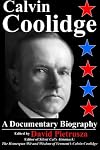
This is quite the eclectic collection of Calvin Coolidge documents. Mr. Pietrusza has amassed a comprehensive volume of correspondence, speeches, articles by Coolidge and those writing about him, as well as a heartfelt speech delivered by Mr. Pietrusza in 2010.
General sentiment is never short of wishing politicians would do the right thing. Calvin Coolidge did. Always, with no fear of the next election. The documents in this book prove this repetitively. Much of what Calvin Coolidge opined in his veto statements as Governor of Massachusetts rings true today, yet the public service of elected officials are not treated with an inkling of sacrifice.
On page 158 is a reprint of his "Appeal for Aid to Japan." President Coolidge didn't send $12 million dollars to Japan following several, simultaneous natural disasters in a self-aggrandizing gesture of good will. Rather, his appeal to have voluntary contributions sent to the American Red Cross surpassed the anticipated goal of $10 million.
Actions speak louder than words, as the cliche goes. As president, he spoke at Howard University when, as Mr. Pietrusza points out KKK activity was resurgent. He is seen in a photograph shaking the hand of a Black hero, Mr. Thomas Lee, who saved some thirty people from the Mississippi River. And, was known to endorse two Black congressional aspirants in 1924.
It is so nice to put into context Silent Cal's well-known quips and quotes. This is a must have collection of historical documents.
General sentiment is never short of wishing politicians would do the right thing. Calvin Coolidge did. Always, with no fear of the next election. The documents in this book prove this repetitively. Much of what Calvin Coolidge opined in his veto statements as Governor of Massachusetts rings true today, yet the public service of elected officials are not treated with an inkling of sacrifice.
On page 158 is a reprint of his "Appeal for Aid to Japan." President Coolidge didn't send $12 million dollars to Japan following several, simultaneous natural disasters in a self-aggrandizing gesture of good will. Rather, his appeal to have voluntary contributions sent to the American Red Cross surpassed the anticipated goal of $10 million.
Actions speak louder than words, as the cliche goes. As president, he spoke at Howard University when, as Mr. Pietrusza points out KKK activity was resurgent. He is seen in a photograph shaking the hand of a Black hero, Mr. Thomas Lee, who saved some thirty people from the Mississippi River. And, was known to endorse two Black congressional aspirants in 1924.
It is so nice to put into context Silent Cal's well-known quips and quotes. This is a must have collection of historical documents.
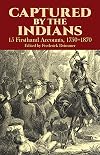
What can I say about the "firsthand accounts" aside from they were captivating! The tales ranged from a few, short pages to one recount which was approximately forty.
I primarily found this book thought-provoking. Juxtaposing a contemporary, politically correct view of indigenous peoples to the reality of their myriad cultures through the ages actually takes away the humanity of Indians.
Modern apologists for "paleface" atrocities of yore have selectively picked and chosen favorable characteristics of various nations or peoples to paint all natives with a broad brush. A few tribes allegedly led by women have been used to illustrate all North American Indians as being more enlightened than misogynistic Euro-centric cultures. However, no stories in the book indicate a matriarchal tribe and document defined gender-specific roles and responsibilities, including what would be considered domestic violence today.
An overarching lesson I learned from the whole of the book is that Native Americans were not concerned with things of stored value... like money. So, when modern day admonishments talk about stealing by virtue of trading land for beads (I am not speaking of breaking contractual obligations via treaties), I am sure the Indians found beads, blankets, arms and rum as more lucrative than specie. Almost every account denotes a hand-to-mouth existence, likely one cause of their nomadism. Numerous mentions were made of "starving times" or stretches of days where no game was show more harvested and the whole community suffered from hunger.
One item held in esteem, holding intrinsic value, were carried about in preparation for battle: scalps. These were removed from enemies, both red and white. The horrendous treatment of enemies in battle and after captivity are painted by present day as a natural reaction to interaction with European-Americans. As if docile, peaceful land cultivators and animal lovers only turning savage in self-defense once white land grabbers encroached, removes the humanity and preexisting cultures of Native Americans. In disregard for their humanity, the modern politically correct actually, in my estimation, make out Natives as little more than reacting to stimuli and shedding their culture as it was previous to 1492.
Many today likely will disbelieve the torturous actions of the Indians or write them off as frenzied reaction to sod farmers written about in Captured by the Indians. Some of the executions (burned at the stake or sliced and eviscerated over hours) were done in sacrifice while others were done in retribution for loss in battles. Furthermore, to dispel the docile persona attributed to the Indians by modern "historians" was the described enslavement and savage treatment of whites. Often, conquered and captured enemies were treated as spoils of war. Being how slave owning is now assigned a white race affliction, despite every peoples throughout history practiced it as well as being subjected to its bondage, these various Indian tribes maltreated captives; ultimately either a prisoner was adopted, tribal elders received word from The Great Spirit that said captive was to be sacrificed, or used as a laborer and even traded for goods and offered as dowry enhancements.
In nearly all the stories, when alcohol was obtained, the captives were sequestered away from the revelry of intoxication. This was done for their own safety and, like designated driver's of today, selected tribe members were to remain sober and "protect" the imprisoned whites. Just as often as these instances were described, rogue intoxicants were stopped from harassing and murdering their prisoners-of-war. Further illustrating how there was some intrinsic value in the captives.
Unknown to me prior to reading this book was the various reasons captives were taken by Indians. Some, as mentioned above, were for murderous reasons but others were for more humanly calculated reasons. A couple of stories showed captives were held for ransom; the last account showed how ransom was only subterfuge as the female captive was to be a Trojan Horse to get Indian warriors into an army fort. In another story, a British armorer, traveling aboard the ship Boston, was let live by Pacific Northwest Indians for his skill at fabrication. Several others captives were kidnapped to be "replacements" for dead offspring. One story of a boy, abducted at eight-years-old actually returned to the native life after finding white civilization unfamiliar in his twenties.
One account mentioned suicide. The captive author, welcomed into the tribe as a member was allowed to try; but only with forehand experience, wise Indians removed any capability for the despondent author to complete his task.
Another account mentions agokwa, to the best of my understanding is a cross-dresser. He/she is not shunned but becomes a wife in the memoir and makes the author uncomfortable.
And for the animal rights advocates who elevate Native cultures as superior to white customs, Comanches were mentioned as having a special feast of their beloved companions. They apparently felt the highest honor to dogs was to sacrifice them at certain times and consume their meat.
In my view, what the Politically Correct, two centuries later, have done is select the most virtuous characteristics of indigenous culture and highlight these as their complete way of life. If modern apologists are challenged with negative aspects of native culture, these are couched in the aspect of being self-defense or the avenue of last resort - never something of ingrained cultural heritage. This in itself is stealing Indian history and changing their culture; dissecting its totality and isolating the great in an effort to promote contemporary ideals of benevolence.
In short, the stories found in Captured by the Indians may be drafted by former captives but overwhelming animosity was not conveyed. Obviously, when a family is slain or acquaintances are fatally tormented in the most horrendous manner, some emotion will seep into personal accounts. However, nearly all stories in this collection treat these encounters as matter-of-fact. show less
I primarily found this book thought-provoking. Juxtaposing a contemporary, politically correct view of indigenous peoples to the reality of their myriad cultures through the ages actually takes away the humanity of Indians.
Modern apologists for "paleface" atrocities of yore have selectively picked and chosen favorable characteristics of various nations or peoples to paint all natives with a broad brush. A few tribes allegedly led by women have been used to illustrate all North American Indians as being more enlightened than misogynistic Euro-centric cultures. However, no stories in the book indicate a matriarchal tribe and document defined gender-specific roles and responsibilities, including what would be considered domestic violence today.
An overarching lesson I learned from the whole of the book is that Native Americans were not concerned with things of stored value... like money. So, when modern day admonishments talk about stealing by virtue of trading land for beads (I am not speaking of breaking contractual obligations via treaties), I am sure the Indians found beads, blankets, arms and rum as more lucrative than specie. Almost every account denotes a hand-to-mouth existence, likely one cause of their nomadism. Numerous mentions were made of "starving times" or stretches of days where no game was show more harvested and the whole community suffered from hunger.
One item held in esteem, holding intrinsic value, were carried about in preparation for battle: scalps. These were removed from enemies, both red and white. The horrendous treatment of enemies in battle and after captivity are painted by present day as a natural reaction to interaction with European-Americans. As if docile, peaceful land cultivators and animal lovers only turning savage in self-defense once white land grabbers encroached, removes the humanity and preexisting cultures of Native Americans. In disregard for their humanity, the modern politically correct actually, in my estimation, make out Natives as little more than reacting to stimuli and shedding their culture as it was previous to 1492.
Many today likely will disbelieve the torturous actions of the Indians or write them off as frenzied reaction to sod farmers written about in Captured by the Indians. Some of the executions (burned at the stake or sliced and eviscerated over hours) were done in sacrifice while others were done in retribution for loss in battles. Furthermore, to dispel the docile persona attributed to the Indians by modern "historians" was the described enslavement and savage treatment of whites. Often, conquered and captured enemies were treated as spoils of war. Being how slave owning is now assigned a white race affliction, despite every peoples throughout history practiced it as well as being subjected to its bondage, these various Indian tribes maltreated captives; ultimately either a prisoner was adopted, tribal elders received word from The Great Spirit that said captive was to be sacrificed, or used as a laborer and even traded for goods and offered as dowry enhancements.
In nearly all the stories, when alcohol was obtained, the captives were sequestered away from the revelry of intoxication. This was done for their own safety and, like designated driver's of today, selected tribe members were to remain sober and "protect" the imprisoned whites. Just as often as these instances were described, rogue intoxicants were stopped from harassing and murdering their prisoners-of-war. Further illustrating how there was some intrinsic value in the captives.
Unknown to me prior to reading this book was the various reasons captives were taken by Indians. Some, as mentioned above, were for murderous reasons but others were for more humanly calculated reasons. A couple of stories showed captives were held for ransom; the last account showed how ransom was only subterfuge as the female captive was to be a Trojan Horse to get Indian warriors into an army fort. In another story, a British armorer, traveling aboard the ship Boston, was let live by Pacific Northwest Indians for his skill at fabrication. Several others captives were kidnapped to be "replacements" for dead offspring. One story of a boy, abducted at eight-years-old actually returned to the native life after finding white civilization unfamiliar in his twenties.
One account mentioned suicide. The captive author, welcomed into the tribe as a member was allowed to try; but only with forehand experience, wise Indians removed any capability for the despondent author to complete his task.
Another account mentions agokwa, to the best of my understanding is a cross-dresser. He/she is not shunned but becomes a wife in the memoir and makes the author uncomfortable.
And for the animal rights advocates who elevate Native cultures as superior to white customs, Comanches were mentioned as having a special feast of their beloved companions. They apparently felt the highest honor to dogs was to sacrifice them at certain times and consume their meat.
In my view, what the Politically Correct, two centuries later, have done is select the most virtuous characteristics of indigenous culture and highlight these as their complete way of life. If modern apologists are challenged with negative aspects of native culture, these are couched in the aspect of being self-defense or the avenue of last resort - never something of ingrained cultural heritage. This in itself is stealing Indian history and changing their culture; dissecting its totality and isolating the great in an effort to promote contemporary ideals of benevolence.
In short, the stories found in Captured by the Indians may be drafted by former captives but overwhelming animosity was not conveyed. Obviously, when a family is slain or acquaintances are fatally tormented in the most horrendous manner, some emotion will seep into personal accounts. However, nearly all stories in this collection treat these encounters as matter-of-fact. show less

While this is not his first book, nor his first biography of important American politicians, it is decidedly written differently. In a New Englander matter-of-fact tone, with a smattering of don't-take-my-word-for-it and a texture of this-is-the-way-it-was, Mr. Brookhiser writes with an authority from a standpoint of emotional detachment.
Perhaps, realizing Richard Brookhiser was the editor of a premier conservative magazine, he remained arm's length away from the antithesis of the contemporary Bush Dynasty. Brookhiser pulled countless punches; authoring a book that fellow conservatives might label "benign" and liberals would undoubtedly attach as biased.
Rather than a prosy, pseudo-novel styled biography, Brookhiser remains clinical in his approach and spares the reader from delving into unauthorized biography muckraking. For instance he writes: "John Randolph, his power long lost to opium, alcohol, and irresponsibility, but his tongue still bright and gleaming, attacked [Henry] Clay with sparkling malice.... The secretary of state [Clay] challenged him [Randolph] to a duel. Both men missed twice and shook hands." (pg 94) While literarily elegant, he refrains from unnecessary elaboration.
As the perennial disagreement goes, the party name at the genesis of the Democrat Party can be a plethora of monikers; however Brookhiser insists on calling it the Republican Party [First Generation], opting to forgo a more clear delineation between the modern Republican Party and that of show more the Anti-Federalists. I merely mention this aspect of the book to illustrate his non-partisanship and sticking to historical facts, rather than retooling four Adamses lives to disparage a party.
Incorporating four men's biographies into one work, not a lot of depth is expected. But delightfully, the quartet of men spanning generations from pre-Revolutionary War to the start of World War I is surprisingly comprehensive. I especially enjoyed the sections on the lesser known Adamses, Charles Francis and Henry. show less
Perhaps, realizing Richard Brookhiser was the editor of a premier conservative magazine, he remained arm's length away from the antithesis of the contemporary Bush Dynasty. Brookhiser pulled countless punches; authoring a book that fellow conservatives might label "benign" and liberals would undoubtedly attach as biased.
Rather than a prosy, pseudo-novel styled biography, Brookhiser remains clinical in his approach and spares the reader from delving into unauthorized biography muckraking. For instance he writes: "John Randolph, his power long lost to opium, alcohol, and irresponsibility, but his tongue still bright and gleaming, attacked [Henry] Clay with sparkling malice.... The secretary of state [Clay] challenged him [Randolph] to a duel. Both men missed twice and shook hands." (pg 94) While literarily elegant, he refrains from unnecessary elaboration.
As the perennial disagreement goes, the party name at the genesis of the Democrat Party can be a plethora of monikers; however Brookhiser insists on calling it the Republican Party [First Generation], opting to forgo a more clear delineation between the modern Republican Party and that of show more the Anti-Federalists. I merely mention this aspect of the book to illustrate his non-partisanship and sticking to historical facts, rather than retooling four Adamses lives to disparage a party.
Incorporating four men's biographies into one work, not a lot of depth is expected. But delightfully, the quartet of men spanning generations from pre-Revolutionary War to the start of World War I is surprisingly comprehensive. I especially enjoyed the sections on the lesser known Adamses, Charles Francis and Henry. show less
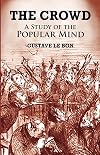
I picked up this book after reading Ann Coulter's Demonic. In her book, she uses the study of mob (what in Le Bon's time was referred to as "crowd") to illustrate how correct he was and how human nature has not changed.
Even without Ms. Coulter's examples, one cannot read the original publication and not think of contemporary representations of Le Bon's findings. Just a few generations post-French Revolution the social psychologist utilizes occurrences during the French uprisings and unreasoned actions of the mob, especially when mob sentiment contradicted itself soon after one riotous action after another.
I did find Le Bon's philosophy irreligious as he frequently lumped Buddha, Mahomet and Jesus as leaders of mobs and instigators of deadly actions long after their deaths.
Even without Ms. Coulter's examples, one cannot read the original publication and not think of contemporary representations of Le Bon's findings. Just a few generations post-French Revolution the social psychologist utilizes occurrences during the French uprisings and unreasoned actions of the mob, especially when mob sentiment contradicted itself soon after one riotous action after another.
I did find Le Bon's philosophy irreligious as he frequently lumped Buddha, Mahomet and Jesus as leaders of mobs and instigators of deadly actions long after their deaths.

Paul Revere's Ride was a great book in its comprehensiveness but not much unlike a trio of alarm raisers on that midnight ride, the author veers in a separate direction from its title subject.
The body of David Hackett Fischer's work is five pages shy of 300, another 148 pages make up several appendices, bibliography, notes and an index of scholarly caliber. Yet looking at the first three-hundred pages, only the first quarter to one-third can be classified as biographical specifically to Paul Revere.
It is as if the reader was William Dawes, one of Revere's compatriots on that midnight ride. We get to know Paul Revere's life and times up to and including the famous horse ride to wake the countryside. Yet once the three horse-backed messengers are thwarted by British Regulars, Revere's fellow riders branch off into the night as does Mr. Fischer in his tale of the Revolutionary War. Only a scant few times does the author mention, in passing, on speculation what Paul Revere might have been doing while heated battle raged between Lexington and Concord.
A very short chapter details Paul Revere's assistance in moving and burying a trunk of John Hancock, containing a treasure trove of important papers and documents. The rest of the book, until the last three pages (found in the epilogue), rarely mention Paul Revere.
This book is important, nonetheless. The bulk of the story describes and documents the muster or British-Americans; the march of General Gage's troops which incite show more war; pitched battles and encounters on April 19, 1775 between Lexington, Concord and Boston; the hasty and deadly retreat of British elite troops from harassing militia assaults; and response from humiliated General Gage. Mr Fischer dispels myths such as the Americans were hapless warriors and only won the first skirmish by luck; rather many in command were hardened veterans from combat with Indians and French-Canadians. Most commonly stated, no one said "the British are coming." These revolutionary Americans were (and considered themselves) British, rather the "Red Coats" were known as "regulars." There are tidbits like this throughout the book making it difficult to thoughtlessly skim over sections one may find dull due to the author's making the events of the opening battle scrutable.
Perchance this book could have been better served with a title referencing General Thomas Gage and the battles at Lexington & Concord. Don't let my nitpicking deter you, Paul Revere's Ride is a much needed recount of important history! show less
The body of David Hackett Fischer's work is five pages shy of 300, another 148 pages make up several appendices, bibliography, notes and an index of scholarly caliber. Yet looking at the first three-hundred pages, only the first quarter to one-third can be classified as biographical specifically to Paul Revere.
It is as if the reader was William Dawes, one of Revere's compatriots on that midnight ride. We get to know Paul Revere's life and times up to and including the famous horse ride to wake the countryside. Yet once the three horse-backed messengers are thwarted by British Regulars, Revere's fellow riders branch off into the night as does Mr. Fischer in his tale of the Revolutionary War. Only a scant few times does the author mention, in passing, on speculation what Paul Revere might have been doing while heated battle raged between Lexington and Concord.
A very short chapter details Paul Revere's assistance in moving and burying a trunk of John Hancock, containing a treasure trove of important papers and documents. The rest of the book, until the last three pages (found in the epilogue), rarely mention Paul Revere.
This book is important, nonetheless. The bulk of the story describes and documents the muster or British-Americans; the march of General Gage's troops which incite show more war; pitched battles and encounters on April 19, 1775 between Lexington, Concord and Boston; the hasty and deadly retreat of British elite troops from harassing militia assaults; and response from humiliated General Gage. Mr Fischer dispels myths such as the Americans were hapless warriors and only won the first skirmish by luck; rather many in command were hardened veterans from combat with Indians and French-Canadians. Most commonly stated, no one said "the British are coming." These revolutionary Americans were (and considered themselves) British, rather the "Red Coats" were known as "regulars." There are tidbits like this throughout the book making it difficult to thoughtlessly skim over sections one may find dull due to the author's making the events of the opening battle scrutable.
Perchance this book could have been better served with a title referencing General Thomas Gage and the battles at Lexington & Concord. Don't let my nitpicking deter you, Paul Revere's Ride is a much needed recount of important history! show less

Interesting concept, to have an annually updated textbook to remain contemporary. As well, the cover keenly resembles a magazine cover family asked if I subscribed to some journal.
The content, however, is typically left-leaning with pallid attempts to appear non-partisan. This edition contains The Declaration of Independence; The Constitution of the United States of America and Federalist Papers 10 and 51 (James Madison). Also, each chapter is concluded with an excerpted article from National Journal.
The content, however, is typically left-leaning with pallid attempts to appear non-partisan. This edition contains The Declaration of Independence; The Constitution of the United States of America and Federalist Papers 10 and 51 (James Madison). Also, each chapter is concluded with an excerpted article from National Journal.
In a world where Republicans feel compelled to seem reasonable, acquiescing to admit ~ gasp ~ George W. Bush made a few mistakes, Ann Coulter refuses to play nice. And how refreshing it is!
In her signature fact-laden sardonic style, Ms. Coulter lays out the facts and proves that Liberals have been the violent and irascible upstarts.
Demonic is a chronology of mob action carried out by the Left. Beginning with the serial revolutions of the French, as a pale imitation of the American Revolution, she provides two chapters detailing the misguided and meandering venture of murderous mayhem in the guise of liberty. Outlining French attempts at recreating man and society, practically all its leaders were engulfed by the mobs they helped rile and executed. The next chapter is a side-by-side comparison of the reasoned and debated, transparent shedding of British monarchy from American shores.
The book is fueled by an undercurrent of French psychologist Gustave Le Bon and his seminal work, The Crowd: A Study of the Popular Mind. Le Bon's notions of mob action and mindset are applied to Ann Coulter's view of modern day Leftists and politicians. Her use of the 1896 book was so convincing, I purchased a copy for myself.
What is lamentable is that she argues Liberals are unreasonable, which only means they will not be able to see her profile of them is spot-on.
In her signature fact-laden sardonic style, Ms. Coulter lays out the facts and proves that Liberals have been the violent and irascible upstarts.
Demonic is a chronology of mob action carried out by the Left. Beginning with the serial revolutions of the French, as a pale imitation of the American Revolution, she provides two chapters detailing the misguided and meandering venture of murderous mayhem in the guise of liberty. Outlining French attempts at recreating man and society, practically all its leaders were engulfed by the mobs they helped rile and executed. The next chapter is a side-by-side comparison of the reasoned and debated, transparent shedding of British monarchy from American shores.
The book is fueled by an undercurrent of French psychologist Gustave Le Bon and his seminal work, The Crowd: A Study of the Popular Mind. Le Bon's notions of mob action and mindset are applied to Ann Coulter's view of modern day Leftists and politicians. Her use of the 1896 book was so convincing, I purchased a copy for myself.
What is lamentable is that she argues Liberals are unreasonable, which only means they will not be able to see her profile of them is spot-on.
Another book deemed controversial by economist Thomas Sowell. In it, he parses the figures used by civil rights "advocates" to portray America as no better today than it was in 1830. Yet honest examination of numbers and true comparisons show racial and gender situations were actually improving on their own, prior to the 1960s and 70s.
He also touches on advocates' aversion to recognize unintended consequences as they strive for "equality." Dr. Sowell inadvertently exposes the advocates as treating "minorities" as helpless victims, much like sociologist George Fitzhugh did in his pro-slavery stance.
He also touches on advocates' aversion to recognize unintended consequences as they strive for "equality." Dr. Sowell inadvertently exposes the advocates as treating "minorities" as helpless victims, much like sociologist George Fitzhugh did in his pro-slavery stance.

I don't know why I have such an affinity for Mr. Orwell, because our politics are nearly polar opposite. However, I do enjoy reading his take on the need for Socialism and how the slogans and "arguments" have not changed since the 1930s.
The Road to Wigan Pier is a two-part work by Mr. 1984. The first section is an expose on the horrid living and working conditions of working class Britons in the coal mines. He uses this introductory section to set-up his justification for bringing about Socialism (which I thought Great Britain always was). Part Two makes up the bulk of the section, a sort of philosophical dissertation about how previous attempts to unite the citizenry of England have failed and his fear of sliding towards Fascism is ever present.
The more I read works by those who bemoan the "class" society, the more I realize a "classless" world will never exist; abolishing classes is to abolish an innate human function of compartmentalizing. Try to deny it as the may, Leftists do it despite their best personal efforts to pretend they don't. We need not abuse others in separate classes, but we shouldn't imagine a radical change in human psychology.
Mr. Orwell laments the dichotomy of an all-for-one society made up of humans whom are interested in "selfish" goals. He is trying to win over the populace, the majority he realizes cares more about a local cricket team than the growing threat of Hitler and Fascism. His consternation comes from commandeering by "elites" and show more professorial types in a uninspired Marxism. He also knows from history, a top down Socialism leads to a dictatorship rather than a utopian, classless equality. show less
The Road to Wigan Pier is a two-part work by Mr. 1984. The first section is an expose on the horrid living and working conditions of working class Britons in the coal mines. He uses this introductory section to set-up his justification for bringing about Socialism (which I thought Great Britain always was). Part Two makes up the bulk of the section, a sort of philosophical dissertation about how previous attempts to unite the citizenry of England have failed and his fear of sliding towards Fascism is ever present.
The more I read works by those who bemoan the "class" society, the more I realize a "classless" world will never exist; abolishing classes is to abolish an innate human function of compartmentalizing. Try to deny it as the may, Leftists do it despite their best personal efforts to pretend they don't. We need not abuse others in separate classes, but we shouldn't imagine a radical change in human psychology.
Mr. Orwell laments the dichotomy of an all-for-one society made up of humans whom are interested in "selfish" goals. He is trying to win over the populace, the majority he realizes cares more about a local cricket team than the growing threat of Hitler and Fascism. His consternation comes from commandeering by "elites" and show more professorial types in a uninspired Marxism. He also knows from history, a top down Socialism leads to a dictatorship rather than a utopian, classless equality. show less