
Eugene D. Genovese (1930–2012)
Author of Roll, Jordan, Roll: The World the Slaves Made
About the Author
Born in Brooklyn, New York, Eugene Genovese was educated at Brooklyn College and Columbia University, where he received his Ph.D. in 1959. He has served as Pitt Professor of American History at Cambridge University and Distinguished Scholar in Residence at the University Center in Georgia. An show more erudite, unconventional, and often unpredictable Marxist, Genovese has forced historians of the Old South---and especially of slavery---to think in new ways about important questions. Ranging over a multitude of topics, his work is concerned mainly with the relationship between economic factors, social conditions, and culture. Of his best-known work. Roll, Jordan, Roll (1974), David Brion Davis wrote: "Genovese's great gift is his ability to penetrate the minds of both slaves and masters, revealing not only how they viewed themselves and each other, but also how their contradictory perceptions interacted" (N.Y. Times Book Review). (Bowker Author Biography) show less
Works by Eugene D. Genovese
The Political Economy of Slavery: Studies in the Economy and Society of the Slave South (1965) 303 copies
The Mind of the Master Class: History and Faith in the Southern Slaveholders' Worldview (2005) 138 copies, 1 review
From Rebellion to Revolution: Afro-American Slave Revolts in the Making of the Modern World (1979) 127 copies
The Southern Tradition : The Achievement and Limitations of an American Conservatism (1994) 102 copies, 1 review
A Consuming Fire: The Fall of the Confederacy in the Mind of the White Christian South (1999) 96 copies
Slavery in White and Black: Class and Race in the Southern Slaveholders' New World Order (2008) 52 copies
The Slaveholders' Dilemma: Freedom and Progress in Southern Conservative Thought, 1820-1860 (Jack N. and Addie D. Averitt Lecture Series) (1992) 52 copies
Fruits of Merchant Capital: Slavery and Bourgeois Property in the Rise and Expansion of Capitalism (1983) 46 copies
Plantation, Town and County: Essays on the Local History of American Slave Society (1974) — Editor — 21 copies
The Slave Economy of the Old South: Selected Essays in Economic and Social History (1968) — Editor — 17 copies
Neri d'America 2 copies
Marxist Perspectives Vol. 1, Nu. 3 2 copies
"Slavery ordained of God" : the southern slaveholders' view of biblical history and modern politics 2 copies
Marxist perspectives. 06 (summer 1979) — Editor — 1 copy
Marxist perspectives. 04 (winter 1978) — Director — 1 copy
Associated Works
Novel History: Historians and Novelists Confront America's Past and Each Other (2001) — Contributor — 139 copies, 1 review
American Negro Slavery: A Survey of the Supply, Employment and Control of Negro Labor as Determined by the Plantation Regime (1966) — Foreword — 104 copies
For a New America: Essays in History and Politics from Studies on the Left, 1959-1967 (1970) — Contributor — 21 copies
In Resistance: Studies in African, Caribbean, and Afro-American History (1986) — Contributor — 14 copies
Tagged
Common Knowledge
- Legal name
- Genovese, Eugene Dominick
- Birthdate
- 1930-05-19
- Date of death
- 2012-09-26
- Gender
- male
- Education
- Brooklyn College (BA)
Columbia University (MA, PhD) - Occupations
- historian
professor
editor - Organizations
- Organization of American Historians
Rutgers University
University of Rochester
United States Army (1953-1954)
Polytechnic Institute of Brooklyn
Historical Society (Founder) (show all 7)
Sir George Williams University, Montreal QC Canada - Awards and honors
- American Academy of Arts and Letters (1976)
Richard M. Weaver Award (1993) - Relationships
- Fox-Genovese, Elizabeth (wife)
- Short biography
- The New York Times said in his obituary: Eugene D. Genovese was a prizewinning historian who challenged conventional thinking on slavery in the American South by stressing its paternalism as he traveled a personal intellectual journey from Marxism to conservative Catholicism. His most famous book, “Roll, Jordan, Roll: The World the Slaves Made,” won the Bancroft Prize for American history writing in 1975.
- Nationality
- USA
- Birthplace
- Brooklyn, New York, USA
- Places of residence
- Atlanta, Georgia, USA
- Place of death
- Atlanta, Georgia, USA
- Associated Place (for map)
- Georgia, USA
Members
Reviews
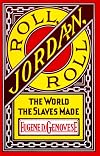
In this massive work, Genovese uses Marxist categories to analyze the world the slaves created for themselves in the Old South. His theme, which is documented by intensive examination of primary sources, is that the hegemony of the southern planters over the black slaves was based not only on physical power but on a paternalist ideology which the slaveholders adopted both to provide stability to a system ultimately based on violence and to salve their own consciences in justifying holding show more other human beings in bondage. Given the impracticality of insurrection, Genovese argues that the slaves accepted paternalism as an accommodation to their oppressive and harsh circumstances but turned it to their own use as a form of resistance to slavery. They turned the paternalistic gestures of the planters into non-legal rights or customs that became expectations that the planters could not ignore and in the process the slaves limited in various ways the scope of the planters’ power over them. The development of African-American Christianity played a key role in giving the slaves a sense of community among themselves that enabled them to face the challenges of slavery not just as individuals but as a collectivity and provided them a sense of self-worth which resisted the psychological demoralization that could so easily be the result of slavery. The result was the creation of their own world which became a part of American culture but also provided the basis for the development of black political culture to the civil rights era. (The book was published in 1972.)
The vast bulk of the book is devoted to examining a complete range of life experiences of the slave in the context of this analytical framework, which Genovese applies with a light touch and great sensitivity to the variations and differences in real life. He looks to statements of the slaves in their narratives and interviews as well as reminiscences after the Civil War. He also makes extensive use of the letters and other testimony of white slaveholders and white visitors from the North (e.g. Frederick Law Olmsted). He comes back again and again to the contradictions faced by both the slaveholders and the slaves. By law, the slaves generally had the status of mere objects, instruments of their owner. But in practice, slaveholders had to recognize that the slaves were full human beings that could not be managed purely as things. The slaves combined both accommodation and resistance in the relationships with their masters.
Genovese examines the complexity of these relations, and their inherent contradictions, in the law, religion, emancipation, the role of preachers and drivers, working in the “Big House” or the fields, life in the slave quarters, work ethic, marriage, funerals, cooking, language, surnames, children, old people, clothing and many more areas. He draws on West African roots, makes comparisons with slave culture in other parts of the Western Hemisphere including the Caribbean and Brazil and with the treatment of the working class in Europe and finds the roots of paternalism in medieval Europe. At the end he contrasts paternalist social values with the capitalist market economy in a short case study of Japan.
The paternalistic system consisted of reciprocal duties and obligations for both the masters and the slaves. Having persuaded themselves of their generosity and the slaves’ appreciation of it, the whites faced a rude awakening when the system collapsed and the slaves welcomed emancipation. show less
The vast bulk of the book is devoted to examining a complete range of life experiences of the slave in the context of this analytical framework, which Genovese applies with a light touch and great sensitivity to the variations and differences in real life. He looks to statements of the slaves in their narratives and interviews as well as reminiscences after the Civil War. He also makes extensive use of the letters and other testimony of white slaveholders and white visitors from the North (e.g. Frederick Law Olmsted). He comes back again and again to the contradictions faced by both the slaveholders and the slaves. By law, the slaves generally had the status of mere objects, instruments of their owner. But in practice, slaveholders had to recognize that the slaves were full human beings that could not be managed purely as things. The slaves combined both accommodation and resistance in the relationships with their masters.
Genovese examines the complexity of these relations, and their inherent contradictions, in the law, religion, emancipation, the role of preachers and drivers, working in the “Big House” or the fields, life in the slave quarters, work ethic, marriage, funerals, cooking, language, surnames, children, old people, clothing and many more areas. He draws on West African roots, makes comparisons with slave culture in other parts of the Western Hemisphere including the Caribbean and Brazil and with the treatment of the working class in Europe and finds the roots of paternalism in medieval Europe. At the end he contrasts paternalist social values with the capitalist market economy in a short case study of Japan.
The paternalistic system consisted of reciprocal duties and obligations for both the masters and the slaves. Having persuaded themselves of their generosity and the slaves’ appreciation of it, the whites faced a rude awakening when the system collapsed and the slaves welcomed emancipation. show less

Eugene Genovese, in his Roll, Jordan, Roll: The World the Slaves Made, reinterpreted the history of slavery in the antebellum South. Genovese posited that slaves and masters lived in a type of symbiotic relationship, a paternalism “accepted by both masters and slaves” that “afforded a fragile bridge across… a society based on racism, slavery, and class exploitation” (p. 5). This idea of a “two-sided” paternalism stood in opposition to the earlier view, held by scholars like show more Ulrich B. Phillips, that slaveowners held unbridled power over their conversely powerless charges. Instead, slaves made their own world, adapting to their lot in life in various ways, from religion to family life. This often resulted in slaves seeking and retaining better living and working conditions for themselves. Though these ideas descend from Marx via Antonio Gramsci’s idea of social hegemony, and Genovese refers too often to the then recently passed social movements, often radical, of the late 1960s, his ideas must be considered by all who study the course and nature of American slavery.
Genovese utilized a wealth of sources, most of them primary, to buttress his thesis. He cited numerous diaries, plantation records, and travel accounts to get the white side of the story and used court records and published interviews, many of them from the WPA, to get the black side. He even employed the cliometrical work of Stanley Engerman and Robert Fogel, then in its infancy (p. xxi). A helpful “Note on Sources” serves as a sort of bibliographical essay and accompanies his notes, though a separate bibliography would have been appreciated. Genovese’s command and grasp of this material shows both his familiarity with and mastery of the subject matter.
Genovese’s chief argument in Roll, Jordan, Rollis that the slaves were not, as traditionally thought, at the mercy of their all-powerful masters. Nor did the slaveowners necessarily control their captives through brute force but they imposed their collective will through what Gramsci called “hegemony.” The slaveholding class, like other ruling classes, held society together not by lone brute force, but through a set of hegemonic values and mores that kept the working classes, in this case black slaves, in check. The slaves in this case accepted the paternalism of their masters not because they “liked” or “accepted” slavery, but “by accepting a paternalistic ethos and legitimizing class rule, developed their most powerful defense against the dehumanization implicit in slavery” (p. 7). The paternalism of the slaveholders served not only to keep the slaves “happy,” but justified to themselves that they were good people—enlightened despots, in a sense. Genovese notes numerous instances were the masters lightened the burdens and punishments of slavery, perhaps to assuage their own moral guilt. Thus castration and other forms of mutilations as a form of punishment for a wide range of offenses nearly disappeared, to the point a Tennessee slaveholder in 1850 was punished for castrating a “turbulent, insolent, and ungovernable slave” (pp. 67-68). The slaves knew, according to Genovese and the evidence he amasses, that they could make their experience better by exploiting the paternalistic ideas of their masters. Genovese summarizes his thesis by stating: “Southern paternalism may have reinforced racism as well as class exploitation, but it also unwittingly invited its victims to fashion their own interpretation of the social order it was intended to justify” (p. 7).
The rest of Genovese’s Book One attempts to prove this thesis. He draws on various sources to show, what at first glance my be paradoxical, that in the thirty years before the Civil War opportunities for manumission decreased while working conditions got better. Genovese notes how paternalistic attitudes ensured that laws protected the humanity of the slave even as they denied them that humanity. He notes, for instance, the wrenchingly ambiguous ruling of Kentucky’s high court in 1836: “…although the law of this state considers slaves as property, yet it recognizes their personal existence, and, to a qualified extent, their natural rights” (p. 30). The first section of the second book details slave religion on this same theme. If religion was merely a tool of the masters to keep their chattel servile and docile, an opiate of the masses, Christianity would have been roundly rejected by the slaves. Instead, they created a syncretic Christianity, sometimes under the nose of their superiors, with a different salvific focus and eschatology. This religion was creative, vibrant, and, oftentimes, undermined the worldview of the slaveholders. Yet it was allowed to exist and even flourish. The last part of Book Two discusses how slaves were able to retain and create their own working rhythms even under the pressure of their owners: “The actual work rhythm of the slaves, then, had to be hammered out as a compromise between themselves and their masters” (p. 303). Genovese continues: “The masters held the upper hand, but the slaves set limits as best they could” (p. 303).
Book Three adds more evidence to substantiate Genovese’s main thesis. Slaves had vibrant families under a system that seemed dead set against allowing the institution to exist. It is yet another instance of slaves having “agency,” to use that well-worn word, in their lives. Book Four discusses various incidences of slaves directly challenging the authority of the master class. The most intriguing notion is explaining why large-scale slave revolts were relatively rare in the antebellum South when compared to other areas of the slaveholding New World. Genovese posits that slaves insurrections were uncommon not only because slaves were rather few in number or that they were kept down by a continuous, oppressive violence. Instead, perhaps, the lack of many rebellions indicates that slaves were quite able to carve out tolerable lives for themselves, without ever accepting or enjoying the institution of slavery itself (pp. 590-591). Still, revolts proved to Genovese that the Southern slave system was not one where owners held all the power and the slaves held none. The “very existence” of slave insurrections, he wrote, was the “ultimate manifestation of class war under the most unfavorable conditions” (p. 588).
All the evidence that Genovese covers in his book is aimed at portraying the master’s paternalism as a form of hegemony, a socio-cultural control mechanism by which the ruling class rules over the working class. In this Marxian paradigm, the slaves have agency, a modicum of power that can be used as a shield to blunt the blows of the slaveowners. The slaves were able to carve out a life for themselves under the umbrella of paternalism and they knew it. The slaves agitated for and often received “concessions” from their oppressors because they had some power to make demands. In the traditional paradigm of master-slave relations in the antebellum South, the paternalism of Ulrich B. Phillips for example, slaves had no power and lived at the whim of their owners. Genovese’s book provides a thesis and the attendant evidence to counter customary assumptions about slavery. show less
Genovese utilized a wealth of sources, most of them primary, to buttress his thesis. He cited numerous diaries, plantation records, and travel accounts to get the white side of the story and used court records and published interviews, many of them from the WPA, to get the black side. He even employed the cliometrical work of Stanley Engerman and Robert Fogel, then in its infancy (p. xxi). A helpful “Note on Sources” serves as a sort of bibliographical essay and accompanies his notes, though a separate bibliography would have been appreciated. Genovese’s command and grasp of this material shows both his familiarity with and mastery of the subject matter.
Genovese’s chief argument in Roll, Jordan, Rollis that the slaves were not, as traditionally thought, at the mercy of their all-powerful masters. Nor did the slaveowners necessarily control their captives through brute force but they imposed their collective will through what Gramsci called “hegemony.” The slaveholding class, like other ruling classes, held society together not by lone brute force, but through a set of hegemonic values and mores that kept the working classes, in this case black slaves, in check. The slaves in this case accepted the paternalism of their masters not because they “liked” or “accepted” slavery, but “by accepting a paternalistic ethos and legitimizing class rule, developed their most powerful defense against the dehumanization implicit in slavery” (p. 7). The paternalism of the slaveholders served not only to keep the slaves “happy,” but justified to themselves that they were good people—enlightened despots, in a sense. Genovese notes numerous instances were the masters lightened the burdens and punishments of slavery, perhaps to assuage their own moral guilt. Thus castration and other forms of mutilations as a form of punishment for a wide range of offenses nearly disappeared, to the point a Tennessee slaveholder in 1850 was punished for castrating a “turbulent, insolent, and ungovernable slave” (pp. 67-68). The slaves knew, according to Genovese and the evidence he amasses, that they could make their experience better by exploiting the paternalistic ideas of their masters. Genovese summarizes his thesis by stating: “Southern paternalism may have reinforced racism as well as class exploitation, but it also unwittingly invited its victims to fashion their own interpretation of the social order it was intended to justify” (p. 7).
The rest of Genovese’s Book One attempts to prove this thesis. He draws on various sources to show, what at first glance my be paradoxical, that in the thirty years before the Civil War opportunities for manumission decreased while working conditions got better. Genovese notes how paternalistic attitudes ensured that laws protected the humanity of the slave even as they denied them that humanity. He notes, for instance, the wrenchingly ambiguous ruling of Kentucky’s high court in 1836: “…although the law of this state considers slaves as property, yet it recognizes their personal existence, and, to a qualified extent, their natural rights” (p. 30). The first section of the second book details slave religion on this same theme. If religion was merely a tool of the masters to keep their chattel servile and docile, an opiate of the masses, Christianity would have been roundly rejected by the slaves. Instead, they created a syncretic Christianity, sometimes under the nose of their superiors, with a different salvific focus and eschatology. This religion was creative, vibrant, and, oftentimes, undermined the worldview of the slaveholders. Yet it was allowed to exist and even flourish. The last part of Book Two discusses how slaves were able to retain and create their own working rhythms even under the pressure of their owners: “The actual work rhythm of the slaves, then, had to be hammered out as a compromise between themselves and their masters” (p. 303). Genovese continues: “The masters held the upper hand, but the slaves set limits as best they could” (p. 303).
Book Three adds more evidence to substantiate Genovese’s main thesis. Slaves had vibrant families under a system that seemed dead set against allowing the institution to exist. It is yet another instance of slaves having “agency,” to use that well-worn word, in their lives. Book Four discusses various incidences of slaves directly challenging the authority of the master class. The most intriguing notion is explaining why large-scale slave revolts were relatively rare in the antebellum South when compared to other areas of the slaveholding New World. Genovese posits that slaves insurrections were uncommon not only because slaves were rather few in number or that they were kept down by a continuous, oppressive violence. Instead, perhaps, the lack of many rebellions indicates that slaves were quite able to carve out tolerable lives for themselves, without ever accepting or enjoying the institution of slavery itself (pp. 590-591). Still, revolts proved to Genovese that the Southern slave system was not one where owners held all the power and the slaves held none. The “very existence” of slave insurrections, he wrote, was the “ultimate manifestation of class war under the most unfavorable conditions” (p. 588).
All the evidence that Genovese covers in his book is aimed at portraying the master’s paternalism as a form of hegemony, a socio-cultural control mechanism by which the ruling class rules over the working class. In this Marxian paradigm, the slaves have agency, a modicum of power that can be used as a shield to blunt the blows of the slaveowners. The slaves were able to carve out a life for themselves under the umbrella of paternalism and they knew it. The slaves agitated for and often received “concessions” from their oppressors because they had some power to make demands. In the traditional paradigm of master-slave relations in the antebellum South, the paternalism of Ulrich B. Phillips for example, slaves had no power and lived at the whim of their owners. Genovese’s book provides a thesis and the attendant evidence to counter customary assumptions about slavery. show less
The Southern Tradition : The Achievement and Limitations of an American Conservatism by Eugene Genovese

The Southern Tradition is a short monograph based on Genovese's Massey Lectures at Harvard.
The basic argument of the book is as follows: Southern Conservatism (a tradition spanning from Antebellum figures like Calhoun, Mason, and Randolph to more recent figures like the Fugitive Poets and Richard Weaver) can provide an historic, legitimate, and often insightful critique of present day global capitalist liberal culture. Genovese seems to be writing to an audience of fellow scholars and show more fellow leftist, quasi-marxist thinkers who he thinks might have something to learn from traditionalist opponents of "the market qua culture." The reason for enganing in this task and writing to this audience is made clear several times in the text. Due to the unfortunate intermixing of Southern Conservative politics and the viciously racist practices of many Southern Conservatives, mainstream consideration of the arguments and ideology emerging from Southern Conservatives has been minimal. Genovese seems to fear that the baby has been thrown out with the bath-water. That is, because, for example, state rights arguments were invoked in defense of segregation, they've been summarily dismissed because of the bad company they've kept rather than on their own merits. This seems to me to be the correct road to take and I think Genovese does a nice (if perhaps ultimately unsuccessful) job laying out the basic zeitgeist and arguments associated with Southern Conservatism in a way that neither glosses over the warts nor unnecessarily belabors the underlying racism of many of the figures discussed.
The basic insight (which I think is probably correct) of Southern Conservatism is that the market needs to have some kind of moral and cultural foundation that keeps it rooted in and responsible to the communities in which it operates. Whether these foundation are to be some how enacted in legislation or simply inculcated in schools and churches remain undecided. The other basic insight is that man is a fallible creature that cannot be perfected, that the notion of equality cannot be made to fit a species of exceedingly diverse individuals with exceedingly diverse skills and interests, and thus the idea that power should be concentrated into that hands of one or several men in a centralized government is reject while the notion of populist, tyranny of the majority, direct democracy is also rejected. Instead we should look to republicanism as the proper model for government, one which will provide the people with a voice but is inegalitarian enough to filter that voice through representatives that are (hopefully) prudent enough to avoid whims, fads, potentially destructive majoritarian desires.
Overall, this is only a 3 1/2 star book (even though I liked it) because, it seems to me that for anyone with any background in this area the first chapter is simply treading over well worn ground and it goes by too quickly to get below the surface. Further, the third chapter raises interesting questions about "where to go from here" (given the admission that we'll never go back to being yeoman farmers and never fully recapture the traditionalist set of values) but ultimately fails to provide much in the way of an answer. Of course a complete answer would be asking far too much, but Genovese seems to end on a sour note. The Soviet Union collapsed and Southern Conservatism doesn't really provide us with a workable model for a right-wing alternative to global capitalism so the best we can do now is throw up our hands.
I'd have liked a bit more than that.
Anyhow, the real meat of the book is found in the second chapter, where Genovese focuses on the constitutional interpretations and legal arguments the emanated from the Old South in the years preceding the civil war. Lots of this stuff was very interesting and the depth of analysis was sufficient to take me into some unfamiliar territory. Especially nice was the compare and contrast between Yankee traditionalists (like Joseph Story) and their Southern analogs on matters of constitutional interpretation and the like.
Another high-light is that, although I've criticized him for throwing up his hands at the end, Genovese, in true conservative fashion, is not particularly optimistic about the prospects for a traditionalist "revolution." Furthermore, he is able to present a faithful and generous rendering of the Southern Conservative view point without having to apply all the gloss that straight forward ADVOCATES of the view often resort to. His outsider status seems to allow him to look at the view with clear eyes and point to its failings without reservation. Southern Conservatism is kind of a niche market in the academic world; thus there are really not very many works like this one because, unsurprisingly, most folks writing ABOUT the view are proponents of it. Genovese provides a nice change of pace, although one suspects that he'll never be able to convince most of our leftist colleagues that the Southern Tradition has anything to offer the world (beyond Jim Crow and SEC football) no matter how carefully he siphons out the racialist element.
Final note: the book is clearly written and easy to read. I was able to get through it in a day. show less
The basic argument of the book is as follows: Southern Conservatism (a tradition spanning from Antebellum figures like Calhoun, Mason, and Randolph to more recent figures like the Fugitive Poets and Richard Weaver) can provide an historic, legitimate, and often insightful critique of present day global capitalist liberal culture. Genovese seems to be writing to an audience of fellow scholars and show more fellow leftist, quasi-marxist thinkers who he thinks might have something to learn from traditionalist opponents of "the market qua culture." The reason for enganing in this task and writing to this audience is made clear several times in the text. Due to the unfortunate intermixing of Southern Conservative politics and the viciously racist practices of many Southern Conservatives, mainstream consideration of the arguments and ideology emerging from Southern Conservatives has been minimal. Genovese seems to fear that the baby has been thrown out with the bath-water. That is, because, for example, state rights arguments were invoked in defense of segregation, they've been summarily dismissed because of the bad company they've kept rather than on their own merits. This seems to me to be the correct road to take and I think Genovese does a nice (if perhaps ultimately unsuccessful) job laying out the basic zeitgeist and arguments associated with Southern Conservatism in a way that neither glosses over the warts nor unnecessarily belabors the underlying racism of many of the figures discussed.
The basic insight (which I think is probably correct) of Southern Conservatism is that the market needs to have some kind of moral and cultural foundation that keeps it rooted in and responsible to the communities in which it operates. Whether these foundation are to be some how enacted in legislation or simply inculcated in schools and churches remain undecided. The other basic insight is that man is a fallible creature that cannot be perfected, that the notion of equality cannot be made to fit a species of exceedingly diverse individuals with exceedingly diverse skills and interests, and thus the idea that power should be concentrated into that hands of one or several men in a centralized government is reject while the notion of populist, tyranny of the majority, direct democracy is also rejected. Instead we should look to republicanism as the proper model for government, one which will provide the people with a voice but is inegalitarian enough to filter that voice through representatives that are (hopefully) prudent enough to avoid whims, fads, potentially destructive majoritarian desires.
Overall, this is only a 3 1/2 star book (even though I liked it) because, it seems to me that for anyone with any background in this area the first chapter is simply treading over well worn ground and it goes by too quickly to get below the surface. Further, the third chapter raises interesting questions about "where to go from here" (given the admission that we'll never go back to being yeoman farmers and never fully recapture the traditionalist set of values) but ultimately fails to provide much in the way of an answer. Of course a complete answer would be asking far too much, but Genovese seems to end on a sour note. The Soviet Union collapsed and Southern Conservatism doesn't really provide us with a workable model for a right-wing alternative to global capitalism so the best we can do now is throw up our hands.
I'd have liked a bit more than that.
Anyhow, the real meat of the book is found in the second chapter, where Genovese focuses on the constitutional interpretations and legal arguments the emanated from the Old South in the years preceding the civil war. Lots of this stuff was very interesting and the depth of analysis was sufficient to take me into some unfamiliar territory. Especially nice was the compare and contrast between Yankee traditionalists (like Joseph Story) and their Southern analogs on matters of constitutional interpretation and the like.
Another high-light is that, although I've criticized him for throwing up his hands at the end, Genovese, in true conservative fashion, is not particularly optimistic about the prospects for a traditionalist "revolution." Furthermore, he is able to present a faithful and generous rendering of the Southern Conservative view point without having to apply all the gloss that straight forward ADVOCATES of the view often resort to. His outsider status seems to allow him to look at the view with clear eyes and point to its failings without reservation. Southern Conservatism is kind of a niche market in the academic world; thus there are really not very many works like this one because, unsurprisingly, most folks writing ABOUT the view are proponents of it. Genovese provides a nice change of pace, although one suspects that he'll never be able to convince most of our leftist colleagues that the Southern Tradition has anything to offer the world (beyond Jim Crow and SEC football) no matter how carefully he siphons out the racialist element.
Final note: the book is clearly written and easy to read. I was able to get through it in a day. show less
The Mind of the Master Class: History and Faith in the Southern Slaveholders' Worldview by Elizabeth Fox-Genovese

I enjoyed this book immensely. It greatly added to my knowledge and understanding of the ante-bellum South and why secession and the Civil War occurred. Reading this book was like reading one of the books about what I didn't learn about American history. It seems that most of the history I have read was written from a Northern point of view and showed little understanding of the Southern attitudes portrayed in this book. This book helped me to understand how fundamental and very real were show more the differences between North and South. In the book the authors state that the Southerners shared a government with the free North. Their book is a lengthy exposition on how true that was.
The volume of research cited in the book is imposing. The footnotes comprise one-third of the 718 pages of text. After the text are 80 pages of supplementary references on topics from Addison and Cato to Women and the Classics. Instead of a descriptive review I will provide a few examples of what I learned by reading the book.
The intellectual life in the South centered around the fact that is was a slaveholding, agrarian, republican society. I say republican to emphasize that Southerners did not believe in true democracy. In commenting on the French Revolution Southern writers saw a democracy leading to the tyranny of Napoleon.
Much of Southern intellectual life was an attempt to justify slavery and define how to administer their duties as slave masters in accordance with historical and Christian standards. There is a discussion of Abramic slavery, slavery as practiced by Abraham. The South saw itself as a different and better place and some Southern writers recommended slavery for the workers of the North.
The section on religion in Southern intellectual life is approximately one-third of the book. The South was a country of small towns and villages and the church was the primary social activity.
The Southerners made great use of the Bible to justify slavery. They often cited the fact that Jews and other peoples in the Bible owned slaves and there was no criticism of slavery in the Bible. Southerners tried to justify African slavery with the curse of Noah and referred to Africans as "The sons of Ham". Southern theologians strongly criticized the Northern Transcendentalists and Unitarians.
The chapter on John Brown's raid on the Harper's Ferry armory corroborated my understanding of how it contributed to sectional hatreds. John Brown had been financed by Northern abolitionists and took over Harper's Ferry armory to control the weapons there. While he publicly stated that he did not intend to start a slave uprising that was his plan. In the North John Brown became a hero and was compared to Jesus. The Southerners saw this incident as proof that Northern abolitionists intended to promote slave uprisings that would lead to the slaughter of white Southerners. I agree with the statement of the authors that for many Southerners Harper's Ferry or its aftermath either proved to be the last straw or put them in a frame of mind to reject Lincoln's election more firmly than they might have done. The North and the South during this time were two societies who didn't know each other and increasingly didn't like each other.
After secession and before the Civil War Abraham Lincoln and other Northerners thought that Union sentiment in the South would lead to reconciliation before any conflict. Reading this book helped me to understand why that was never a real possibility. show less
The volume of research cited in the book is imposing. The footnotes comprise one-third of the 718 pages of text. After the text are 80 pages of supplementary references on topics from Addison and Cato to Women and the Classics. Instead of a descriptive review I will provide a few examples of what I learned by reading the book.
The intellectual life in the South centered around the fact that is was a slaveholding, agrarian, republican society. I say republican to emphasize that Southerners did not believe in true democracy. In commenting on the French Revolution Southern writers saw a democracy leading to the tyranny of Napoleon.
Much of Southern intellectual life was an attempt to justify slavery and define how to administer their duties as slave masters in accordance with historical and Christian standards. There is a discussion of Abramic slavery, slavery as practiced by Abraham. The South saw itself as a different and better place and some Southern writers recommended slavery for the workers of the North.
The section on religion in Southern intellectual life is approximately one-third of the book. The South was a country of small towns and villages and the church was the primary social activity.
The Southerners made great use of the Bible to justify slavery. They often cited the fact that Jews and other peoples in the Bible owned slaves and there was no criticism of slavery in the Bible. Southerners tried to justify African slavery with the curse of Noah and referred to Africans as "The sons of Ham". Southern theologians strongly criticized the Northern Transcendentalists and Unitarians.
The chapter on John Brown's raid on the Harper's Ferry armory corroborated my understanding of how it contributed to sectional hatreds. John Brown had been financed by Northern abolitionists and took over Harper's Ferry armory to control the weapons there. While he publicly stated that he did not intend to start a slave uprising that was his plan. In the North John Brown became a hero and was compared to Jesus. The Southerners saw this incident as proof that Northern abolitionists intended to promote slave uprisings that would lead to the slaughter of white Southerners. I agree with the statement of the authors that for many Southerners Harper's Ferry or its aftermath either proved to be the last straw or put them in a frame of mind to reject Lincoln's election more firmly than they might have done. The North and the South during this time were two societies who didn't know each other and increasingly didn't like each other.
After secession and before the Civil War Abraham Lincoln and other Northerners thought that Union sentiment in the South would lead to reconciliation before any conflict. Reading this book helped me to understand why that was never a real possibility. show less
Lists
Awards


You May Also Like


Associated Authors
Statistics
- Works
- 43
- Also by
- 12
- Members
- 2,435
- Popularity
- #10,540
- Rating
- 3.8
- Reviews
- 12
- ISBNs
- 84
- Favorited
- 2